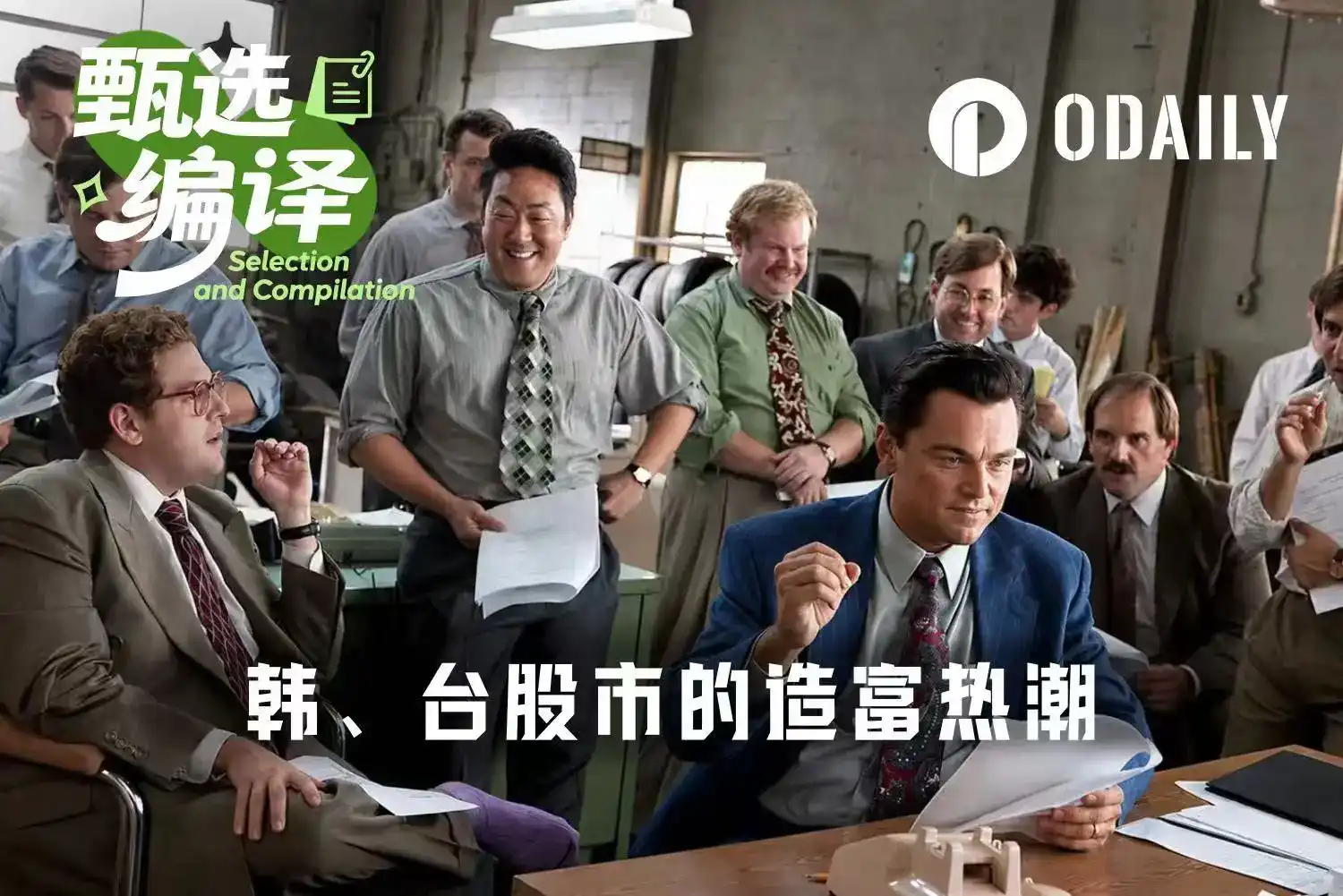
This Generation of East Asian Ordinary People Getting Rich Thanks to TSMC and AI-Related Korean Stocks

marsbitPublié le 2026-06-22Dernière mise à jour le 2026-06-22

Résumé

The article describes how the global AI boom, driven by demand for semiconductors, is creating newfound wealth for ordinary young investors and professionals in East Asia, particularly in South Korea and Taiwan. Fueled by massive capital expenditure from tech giants, the surge in AI-related exports has propelled stock markets in South Korea, Taiwan, and Japan to significant gains. This has led to a widespread retail investing frenzy. In South Korea, individuals like 24-year-old programmer Na Se-bin and 35-year-old teacher Choi Sung-ho are investing heavily and seeing substantial returns, altering their spending habits. In Taiwan, the chipmaker TSMC, a dominant force in advanced manufacturing, is central to the economic euphoria, offering high salaries and social prestige. The company's stock surge has significantly boosted the local market. The phenomenon extends to Japan, where even companies in seemingly unrelated sectors are benefiting from the AI supply chain. The narrative highlights a region capitalizing on its role as the essential hardware provider for the AI "gold rush," with its tech giants acting as the "sellers of shovels." This has translated into rapid wealth accumulation, a booming luxury market, and a pervasive culture of stock trading among everyday people, including younger generations.

Originally fromThe Wall Street Journal

Compiled by / Odaily Planet Daily Golem(@web 3_golem)
Na Se-bin has completely lost her sense of consumption.

Since January this year, attracted by the global AI boom, she has poured almost her entire life savings (about $47,000) into the stock market, a frenzy that is filling the coffers of tech giants in South Korea, Taiwan, and Japan.

The 24-year-old South Korean programmer says that during sharp market swings, she has made or lost the equivalent of a month's salary in a single second. Despite the huge risks, she can't resist, especially after seeing the stock she holds double in price. South Korea's stock market has been one of the world's best performers over the past 18 months, and Na jokes with her colleagues that they should sell their underwear to buy more stocks.

"Even friends who never touched stocks before are now starting to jump in," Na says. "Everyone is speculating on something."

Na Se-bin, a 24-year-old software developer in Seoul, started investing in January this year and quickly became addicted. (Image credit: Tim Franco for The Wall Street Journal)

Trillions of dollars are pouring into the global construction of AI, which relies on the semiconductors and chip-making technology supplied by a handful of Asian exporters. The surge in global chip demand seems endless, fueling export growth, corporate profits, and wealth for many investors.

Even after recent pullbacks, Taiwan's stock market has still doubled in value over the past year, South Korea's has tripled, and Japan's Nikkei index has risen over 80% in the same period, three times the gain of the S&P 500.

The accelerating demand for AI-related products is stimulating investor enthusiasm and pushing up wages. In Taipei, taxi drivers even trade stocks while driving, and in the job market, the high salaries in the tech industry are enviable. Nowadays, one of the most effective "pick-up lines" in Taiwan is to tell someone you work for Taiwan Semiconductor Manufacturing Co. (TSMC), the world's largest chip foundry and also one of the most generous local employers. Employees in the memory-chip division of South Korea's Samsung Electronics are expecting an average bonus of about $400,000 this year. The company is forecast to generate more profit by 2026 than any global company except Nvidia.

Whether AI services from OpenAI's ChatGPT, Anthropic, and SpaceX can deliver on the promise of commercialization, this part of the tech sector seems destined to benefit. These Asian tech giants, which provide indispensable hardware for the AI industry, are the "shovel sellers" of the AI gold rush.

The four Silicon Valley hyperscale data centers — Microsoft, Meta Platforms, Amazon, and Alphabet's Google — plan to spend up to $670 billion this year on AI-related capital expenditures. This spending far exceeds the inflation-adjusted expenditure of the U.S. railroad expansion in the 1850s and the decades-long construction cost of the U.S. interstate highway system launched a century later.

According to an Allianz Trade report, global exports of AI-related products reached nearly $4 trillion last year, with Asia accounting for two-thirds. These products include semiconductors, data storage servers, and cooling systems.

Market research firm Gartner predicts that direct spending in the AI field (covering services, infrastructure, and software) is expected to reach $2.6 trillion this year, a 47% increase from 2025. Next year, that number is forecast to reach about $3.5 trillion.

Nvidia CEO Jensen Huang recently concluded an 18-day high-profile visit, participating in a series of events, speeches, and business meetings in Taiwan and South Korea.

In Taipei, convenience stores sell lottery tickets with a top prize of 500 shares of Nvidia stock. Huang announced plans to invest $150 billion annually in Taiwan, which he called the center of the AI revolution. In South Korea, Huang signed cooperation agreements with local companies in robotics, memory chips, and AI.

During Huang's visit to Seoul, the KOSPI index halted trading on June 8 after plunging more than 8%, following a sell-off in U.S. chip stocks (including Nvidia). Huang, wearing his signature leather jacket even in Seoul's summer heat, was unfazed by the stock drop.

"People should be very happy with the current stock prices," he said. "Because now you can buy stocks more cheaply."
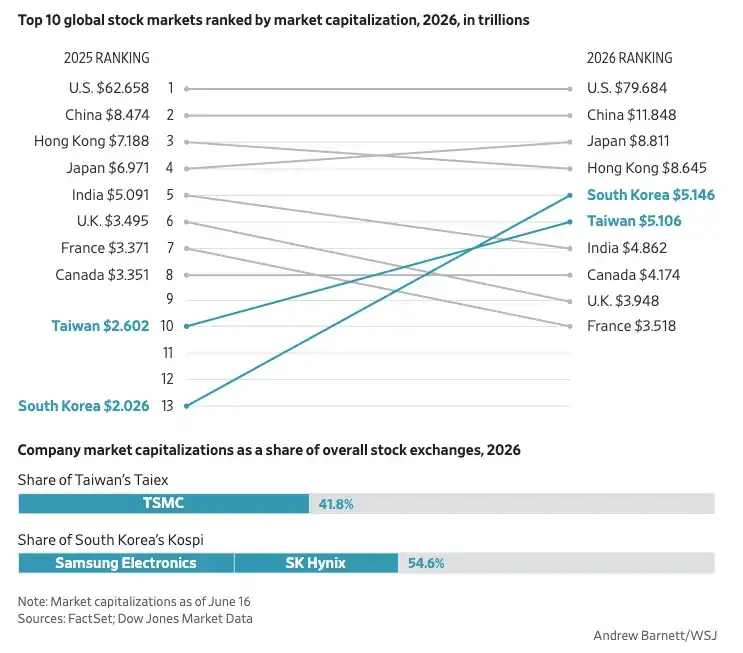
Global Top 10 Stock Market Capitalizations in 2026 and the Share of TSMC and SK Hynix in Their Respective Market's Total Capitalization

Na only started trading stocks this year. She estimates that over 80% of her social circle actively invests, as do her colleagues. One colleague, she says, made enough money from stock investments to spend tens of thousands of dollars on an engagement ring.

Now, Na is "extravagant" when it comes to concert tickets, branded clothing, and treating her parents to meals. She planned to buy a gold ring for her mother to celebrate her parents' 30th wedding anniversary, but her mother declined.

"She told me to just give her cash," Na said, "so she could buy stocks."

TSMC, Put on a Pedestal

Ye Lunhao, a 37-year-old insurance agent, invests more than half of his roughly $2,100 monthly salary in local AI and chip-related companies. His investment returns have quadrupled, and he recently bought a $440,000 four-bedroom apartment in Taichung, Taiwan.

For years, his friends steered clear of stock market investing. Now, they all ask him for investment advice.
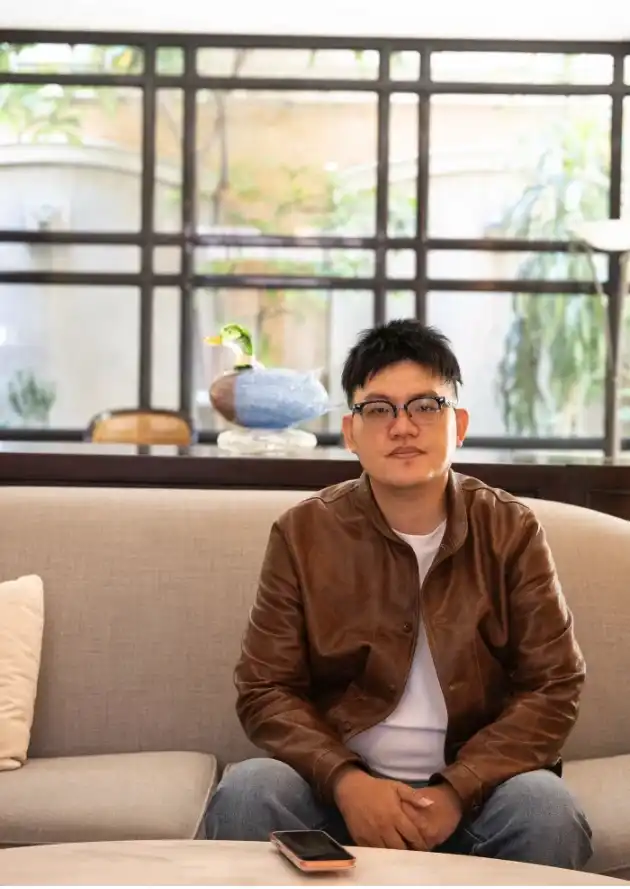
37-year-old insurance agent Ye Lunhao sits in the lobby of his apartment building in Taichung, Taiwan. Photo by Lin Yifei for The Wall Street Journal

"Without semiconductors, none of this would have happened," Mr. Ye said. "Investing has freed me from mere drudgery and given me a chance to enjoy the beauty of this world."

TSMC is the main driver of Taiwan's stock market surge. According to tech market research firm Counterpoint Research, the company captured over 90% of revenue share in the most advanced chip manufacturing last year. TSMC is the world's seventh-highest valued company, with a market cap exceeding $2.2 trillion, surpassing Tesla and Meta.

The company's stock price has more than doubled in the past year, pushing Taiwan's benchmark index past markets like France, the U.K., and India.

The chipmaker accounts for over 41% of Taiwan's benchmark index. In comparison, the seven tech giants Apple, Microsoft, Alphabet, Amazon, Nvidia, Meta, and Tesla combined account for about one-third of the S&P 500.

TSMC engineers' salaries can be three times the low end of what other companies pay for similar roles. Choc Chiang, co-founder of Taipei recruitment platform WeFer, said some managers poached by TSMC from smaller companies saw salary increases of up to 30%.

Wang Canlong, owner of an upscale liquor store in Zhubei, Taiwan, has supplied TSMC numerous times. He said he once sold a bottle of Napa Valley whiskey to TSMC founder Morris Chang. Now, his store is too small to meet TSMC's demands. "We look up to them," he said. "With awe and respect in our hearts."

Wang Canlong, owner of a liquor store in Zhubei, Taiwan, has sold large quantities of alcohol to TSMC. (Lin Yifei/The Wall Street Journal)

Wang Weiwen earned an engineering degree in Taiwan. Part of his coursework was visiting a TSMC factory where the base salary was about $62,000 a year. He said such a salary level was simply unheard of. "Every household talks about TSMC."

He is now a graduate student at the University of Michigan, and TSMC recruiters have also called him. Wang Weiwen has concerns about the company's heavy workload, but he sees benefits beyond the hefty paycheck. The social status that comes with being a TSMC engineer is highly attractive to Taiwanese parents who are very picky about their daughters' suitors.

Mr. Wang said, "Your opening line can simply be 'You work at TSMC.'"

Products bearing the TSMC logo also command high prices in the secondary market. A rice cooker with the company logo and circuit board motif sells for about $312 on e-commerce platforms, more than four times the price TSMC employees pay. Buyers scramble for TSMC-branded luggage, thermoses, and shoes. Even the envelope for holiday red packets received by TSMC employees can be sold online for nearly $15 each.

A Carnival for Ordinary People

The South Korean market is dominated by two chip giants, Samsung and SK Hynix, which dominate the production of the two main types of memory chips used in AI computing and data storage.
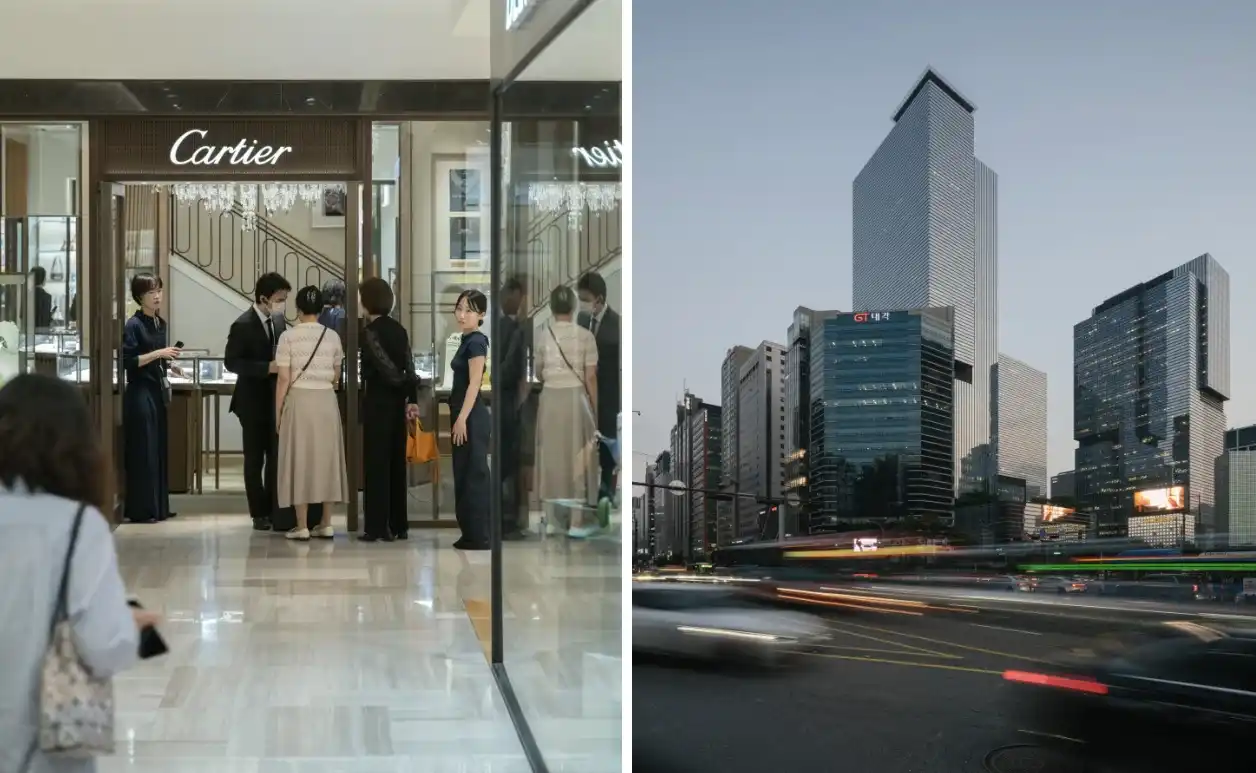
Customers line up outside a Cartier boutique inside the Shinsegae Department Store in Seoul; Samsung Electronics campus. Tim Franco for The Wall Street Journal

Both companies recently surpassed the trillion-dollar market cap mark, accounting for over half of the total market capitalization of South Korea's KOSPI index. KOSPI was the world's best-performing index last year and continues to lead global rankings this year.

Choi Sung-ho, 35, an ordinary elementary school teacher, is another beneficiary of the Korean stock market. Over the past year, his Korean stock portfolio grew nearly fivefold, exceeding $300,000, including investments in ETFs tracking semiconductor stocks. He says he has upgraded his mobile devices and plans to spend six figures on his next car, perhaps a Mercedes S-Class or Tesla Model X.

"Even the kids at my school are saying their parents are happy with stock gains," Choi said.

In the first quarter of this year, South Korean brokerage Toss Securities opened over 180,000 trading accounts for children aged 18 and under. These accounts require parental approval to open and allow children to trade independently. Recently, the company launched a promotion offering $14 in "experience money" to newly opened accounts for high school students.

On YouTube, the "ETF-explaining Bro" channel is one of the emerging "finfluencer" media that offer market advice. Channel owner Park Soo-in says the channel has attracted over 127,000 followers since launching in July last year. "Many people seem to think this rally will continue," she said.

The stock market surge has further boosted an already strong luxury market. The Cartier boutique inside a major Seoul department store is so crowded that part of its "D'Amour" jewelry collection is now only available online.

Lim Chae-hoon, sales manager at a BMW dealership in Seoul, said his customers often mention their profits from the stock market rise. "There are definitely more people with money to spare now," he said.
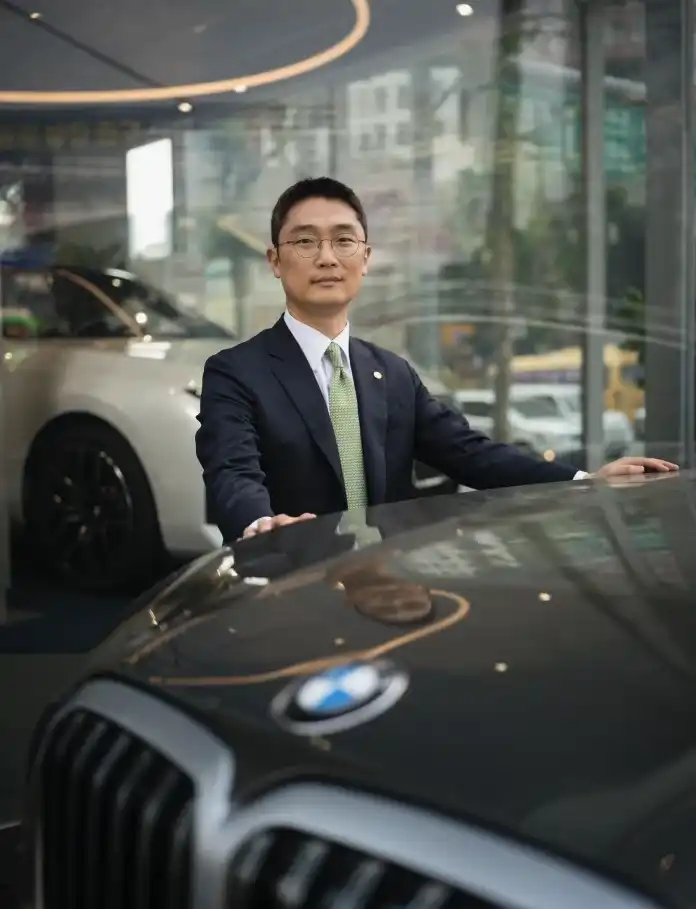
Lim Chae-hoon, sales manager at a BMW dealership in Seoul, says customers now feel flush with cash. Tim Franco for The Wall Street Journal

In Japan, Toyota Motor held the title of highest-valued company for 22 consecutive years but was surpassed this month by SoftBank Group, which has made huge bets on OpenAI and data centers.

SoftBank's reign didn't last long. Last Friday, a little-known memory chip maker, Kioxia, jumped to the top spot. A year ago, Kioxia's stock was around $14; now it's about $600. Kioxia's success has sparked investor hunting for the next potential stock market blockbuster.

Even Japan's luxury bathroom fixture maker TOTO is profiting from the AI boom. Its high-tech ceramics are used to hold silicon wafers still while circuits are etched. The company's stock has more than doubled.

Another company, Ajinomoto, uses a byproduct from its world-famous umami seasoning to make insulating films for AI chips. Its stock is up 50%.

Ryoki Nao, a 21-year-old top student in semiconductor engineering at a university in Kumamoto, Japan, says his classmates are investing, but he isn't. While he follows market trends, he plans to graduate, find a job, and then consider investing.

"I want to wait until I can earn a decent income before investing," he said, but the stock market frenzy might not wait for him.


Cryptos en tendance

Questions liées

QWhat are the main AI-related companies driving the wealth boom for ordinary people in East Asia, as described in the article?

AThe main companies are TSMC (Taiwan Semiconductor Manufacturing Company) in Taiwan, and Samsung Electronics and SK Hynix in South Korea. These companies are key suppliers of semiconductors and chip manufacturing technology essential for the global AI infrastructure boom.

QWhat evidence does the article provide to show how deeply the stock market and AI investment craze has penetrated everyday life in South Korea and Taiwan?

AThe article provides multiple examples: In Taiwan, telling someone you work at TSMC is a highly effective pickup line, and taxi drivers trade stocks while driving. In South Korea, people are joking about selling their underwear to buy more stocks, a teacher reports his school children talking about their parents' stock gains, and securities firms are opening thousands of trading accounts for minors.

QAccording to the article, what role do TSMC, Samsung, and SK Hynix play in the global AI 'gold rush'?

AThey play the role of the 'shovel sellers' in the AI gold rush. They provide the indispensable hardware—semiconductors and memory chips—that powers AI development and data centers, profiting from the massive capital expenditure by tech giants regardless of which AI service companies ultimately succeed.

QWhat significant statement did NVIDIA's CEO Jensen Huang make about Taiwan during his visit, as mentioned in the article?

AJensen Huang announced plans to invest $150 billion annually in Taiwan, calling it the center of the AI revolution. His high-profile visit underscored Taiwan's critical role in the global AI supply chain.

QHow has the AI boom indirectly benefited seemingly unrelated Japanese companies like TOTO and Ajinomoto?

AThe AI boom has created demand for their specialized materials. TOTO's high-tech ceramics are used to hold silicon wafers steady during chip manufacturing, and Ajinomoto uses a byproduct from its flavor enhancer production to make insulating films for AI chips, leading to significant stock price increases for both companies.

Lectures associées

Point de vue : La relation de couverture entre les obligations d'État américaines et le marché boursier a pris fin, le BTC, en tant qu'actif à risque, subit une double pression

Au cours des 20 dernières années, la relation de couverture traditionnelle entre les obligations américaines et les actions s'est effondrée. Désormais, ces deux classes d'actifs évoluent en tandem à la baisse, éliminant le "coussin de sécurité" habituel des portefeuilles. Le Bitcoin, en tant qu'actif risqué à l'extrémité de la courbe de risque, subit une double pression. Cette rupture de corrélation, à son niveau le plus bas depuis 1996 selon l'UBS, est principalement due à la volatilité de l'inflation qui est devenue le facteur dominant des marchés, contrairement aux préoccupations liées à la croissance. Les investisseurs recherchent désormais la sécurité sans risque de durée, privilégiant les liquidités et les titres à court terme tandis qu'ils vendent les obligations à long terme. Cette dynamique est renforcée par des déficits élevés, une charge d'intérêt croissante et un recul de la demande étrangère pour la dette américaine. Dans ce contexte, le Bitcoin est devenu aussi sensible aux conditions macroéconomiques que le dollar ou l'or. Il bénéficie d'un dollar faible et de taux bas, mais souffre lorsque les rendements obligataires grimpent. La hausse des taux sans risque augmente le coût d'opportunité de détenir un actif ne versant pas de revenus, tandis que les baisses des actions réduisent l'appétit pour le risque. Ainsi, le BTC absorbe simultanément ces deux pressions. Les conditions qui renforcent sa proposition de valeur à long terme (déficits, rendements élevés) le pénalisent donc à court terme. Pour que les obligations redeviennent un actif refuge, il faudrait que la volatilité inflationniste s'atténue et que les risques de croissance redeviennent prédominants. En attendant, dans un marché où la plus grande classe d'actifs au monde n'absorbe plus les chocs, le plancher est retiré sous tous les actifs risqués, en particulier ceux, comme le Bitcoin, qui ne versent aucun revenu.

marsbitIl y a 15 mins

Point de vue : La relation de couverture entre les obligations d'État américaines et le marché boursier a pris fin, le BTC, en tant qu'actif à risque, subit une double pression

marsbitIl y a 15 mins

Bulletin de financement | Crypto.com obtient 400 millions de dollars d'investissement, les secteurs de la CeFi et des stablecoins continuent d'attirer des capitaux

**Résumé des Investissements Hebdomadaires (13-19 Juillet)** Le marché du financement crypto a connu une nette accélération la semaine dernière, avec 17 transactions totalisant plus de 812 millions de dollars, soit un doublement en nombre et en volume. Les secteurs de la finance centralisée (CeFi) et des stablecoins ont dominé les investissements. L'échange **Crypto.com** a levé 4 milliards de dollars auprès de Citadel Securities, portant sa valorisation à 200 milliards de dollars. **Alpaca** (infrastructure de courtage API) a levé 135 millions de dollars, tandis que **Flex** (plateforme bancaire transfrontalière basée sur des stablecoins) a obtenu 70 millions de dollars. **Velocity** (solutions de règlement par stablecoins) a sécurisé 38 millions de dollars. **Tether** a investi 20 millions de dollars dans la banque numérique argentine Ualá. Dans l'infrastructure financière, **ADI Chain** (règlement de stablecoins) a levé 50 millions de dollars, **Cyclops** (infrastructure de paiement par stablecoins) 20 millions de dollars, et **Pact Labs** (intégration de l'USDT dans les salaires) 7 millions de dollars dirigés par Tether. Le secteur DeFi a annoncé deux levées, dont **Quote Trade** (DEX axé sur l'IA) avec 4 millions de dollars. Un tour de table notable est celui de la plateforme de marché prédictif **Pascal**, qui a levé 9 millions de dollars. Parallèlement, le secteur IA/robotique reste très actif. L'entreprise de cloud IA **Fireworks** (soutenue par Nvidia) a levé 1.5 milliard de dollars, la startup de robots humanoïdes **Walden Robotics** (filiale de Toyota) 300 millions de dollars, et le fabricant chinois de robots humanoïdes **逐际动力 (Climber Robotics)** près de 200 millions de dollars dans un tour Pre-IPO. Enfin, plusieurs acquisitions ont eu lieu, notamment celle de l'échange singapourien **Coinhako** par le japonais SBI Holdings, et de la startup de dépôts crypto **Glide** par **MoonPay**.

marsbitIl y a 1 h

Bulletin de financement | Crypto.com obtient 400 millions de dollars d'investissement, les secteurs de la CeFi et des stablecoins continuent d'attirer des capitaux

marsbitIl y a 1 h

Le bear market le plus doux ? Les vendeurs de BTC délaissent le marché, ARK et Bitwise affichent un optimisme collectif

La volatilité demeure sur le marché des cryptomonnaies. Le bitcoin (BTC) évolue autour de 75 000 USD, tandis que l'ether (ETH) lutte pour maintenir 1 900 USD. Les liquidations à court terme ont principalement affecté les positions vendeuses. Les perspectives des institutions sont mitigées mais montrent des signes de retour de l'optimisme prudent. Polymarket estime à 33% la probabilité que le BTC passe sous 50 000 USD cette année. ARK Invest relève des signaux de tension vendeuse, avec une part historiquement élevée des BTC détenus à long terme. Bitwise qualifie ce ralentissement de "baissier structurellement le plus doux" jamais enregistré, notant que les creux de cycle sont de plus en plus hauts et que les investisseurs institutionnels voient les baisses comme des opportunités. D'un point de vue technique, Bit estime que le creux de la vague baissière (C) est probablement formé, une zone de fond idéale se situant entre 50 000 et 55 000 USD. Cependant, un analyste de Glassnode met en garde : si le BTC ne dépasse pas durablement 66 000 USD, un risque de sommet à court terme subsiste. L'analyste Darkfost identifie quant à lui une bande de soutien cruciale entre 59 000 et 70 000 USD. Signe notable d'un changement de sentiment, le trader Doctor Profit a annoncé avoir fermé toutes ses positions vendeuses sur les cryptos, réalisant d'importants bénéfices, et a recommencé à accumuler du BTC au comptant depuis 64 000 USD. Il estime que le marché anticipe trop uniformément un creux vers 40 000-50 000 USD à l'automne, ce qui pourrait ne pas se matérialiser.

Foresight NewsIl y a 2 h

Le bear market le plus doux ? Les vendeurs de BTC délaissent le marché, ARK et Bitwise affichent un optimisme collectif

Foresight NewsIl y a 2 h

Trading

Spot

Articles tendance

Comment acheter PEOPLE

Bienvenue sur HTX.com ! Nous vous permettons d'acheter ConstitutionDAO (PEOPLE) de manière simple et pratique. Suivez notre guide étape par étape pour commencer votre parcours crypto.Étape 1 : Création de votre compte HTXUtilisez votre adresse e-mail ou votre numéro de téléphone pour ouvrir un compte sur HTX gratuitement. L'inscription se fait en toute simplicité et débloque toutes les fonctionnalités.Créer mon compteÉtape 2 : Choix du mode de paiement (rubrique Acheter des cryptosCarte de crédit/débit : utilisez votre carte Visa ou Mastercard pour acheter instantanément ConstitutionDAO (PEOPLE).Solde :utilisez les fonds du solde de votre compte HTX pour trader en toute simplicité.Prestataire tiers :pour accroître la commodité d'utilisation, nous avons ajouté des modes de paiement populaires tels que Google Pay et Apple Pay.P2P :tradez directement avec d'autres utilisateurs sur HTX.OTC (de gré à gré) : nous offrons des services personnalisés et des taux de change compétitifs aux traders.Étape 3 : stockage de vos ConstitutionDAO (PEOPLE)Après avoir acheté vos ConstitutionDAO (PEOPLE), stockez-les sur votre compte HTX. Vous pouvez également les envoyer ailleurs via un transfert sur la blockchain ou les utiliser pour trader d'autres cryptos.Étape 4 : tradez des ConstitutionDAO (PEOPLE)Tradez facilement ConstitutionDAO (PEOPLE) sur le marché Spot de HTX. Il vous suffit d'accéder à votre compte, de sélectionner la paire de trading, d'exécuter vos trades et de les suivre en temps réel. Nous offrons une expérience conviviale aux débutants comme aux traders chevronnés.

622 vues totalesPublié le 2024.12.12Mis à jour le 2026.06.02

Comment acheter PEOPLE

Discussions

Bienvenue dans la Communauté HTX. Ici, vous pouvez vous tenir informé(e) des derniers développements de la plateforme et accéder à des analyses de marché professionnelles. Les opinions des utilisateurs sur le prix de PEOPLE (PEOPLE) sont présentées ci-dessous.

活动图片