Pantera Partner: The Return of Professionalism and Rationality in Crypto VC, Where Is the Next Investment Hotspot?

marsbitPublié le 2025-12-19Dernière mise à jour le 2025-12-19

Résumé

Pantera Capital partners Paul Veradittakit and Franklin Bi discuss the current state and future trends of crypto venture capital. Despite a record $34 billion in total funding this year, deal volume has halved compared to 2021-2022, signaling a market shift toward professional, institutional capital focused on later-stage projects with rigorous due diligence. They attribute the previous "metaverse" and "altcoin" speculation frenzy to low interest rates and excess liquidity, which funded many unsustainable projects. The market is now rationalizing. Key developments include a clearer exit path via IPOs (e.g., Circle) and the emergence of Digital Asset Treasuries (DATs), which are actively managed vehicles for yield generation. DAT competition will hinge on execution and asset growth. Future investment themes include: - **Tokenization**: A multi-decade trend enabling programmable assets and new financial products, with stablecoins as a killer app. - **ZK-TLS (Zero-Knowledge TLS)**: Crucial for verifying off-chain data authenticity without exposing raw data, enabling new applications. - **Consumer/Prediction Markets**: Platforms like Polymarket offer democratized information discovery and entertainment. In a "bull or bear" segment: - **Stocks**: Divergent views on Robinhood (bullish for integration) vs. Coinbase (bullish for global institutional expansion). - **Payment Chains**: Skepticism about user lock-in vs. potential for optimized chains. - **Privacy**: Debate on whether ...

Original: Pantera Capital

Compiled & Edited: Yuliya, PANews

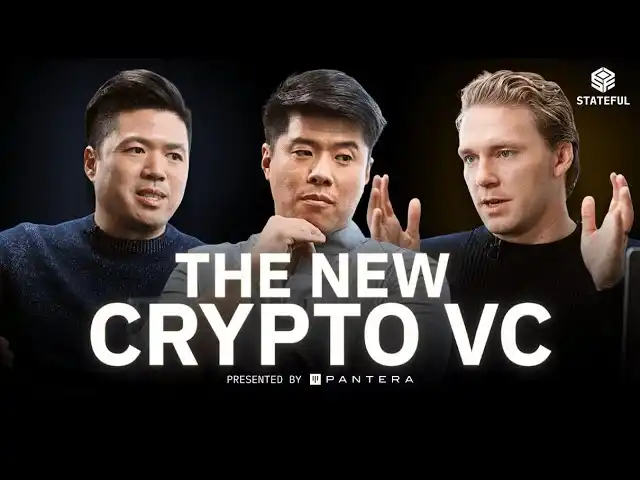
Recently, two partners from the leading venture capital firm Pantera Capital, Paul Veradittakit and Franklin Bi, analyzed the current state and changes in the crypto investment market in their first podcast. They reviewed the speculative wave of altcoins in recent years, analyzed this year's "fire and ice" phenomenon of record-high financing amounts but a significant drop in the number of deals, and engaged in a debate around project investment strategies and exit paths, as well as topics like DATs, tokenization, and zero-knowledge proofs. PANews has compiled and translated this blog post.

Crypto Investment Returns to Professionalism and Rationality; Team Execution and Asset Appreciation Are Key to DAT Competition

Host: Today, let's talk about the current state of crypto venture capital. Data shows that this year's total financing amount reached a record high of $34 billion, but the number of deals has nearly halved compared to 2021 and 2022, and capital is flowing more towards later-stage projects. How do you two interpret this "fire and ice" phenomenon?

Franklin: That's a great question. To understand the current situation, we need to look back at 2021 and 2022, which were the "metaverse years." Zero interest rates and massive liquidity fueled an explosion of speculative activity back then. However, the foundations of many deals were not solid; everyone was telling a story driven purely by imagination. Investors didn't have a clear judgment on how metaverse projects could actually succeed, leading to many projects that shouldn't have been funded getting money. In hindsight, we should have first asked a simple question: How is it possible to bring everyone into a fully digital metaverse world in an environment where even stablecoins don't have clear regulations? This is logically inconsistent.

Paul: Another reason is that those two years had an "altcoin bull market," and we don't have that now. The current market is primarily dominated by Bitcoin, Solana, and Ethereum. Without the altcoin frenzy, there wouldn't be as many retail investors, family offices, and small entrepreneurs rushing in to invest in a large number of early-stage projects. Current funding mainly comes from more professional crypto funds, which are more institutionalized, conduct stricter due diligence, and make more concentrated investments. This means lower frequency of deals, but the quality and amount per deal are increasing. Especially with the emergence of real use cases like stablecoins and payments, traditional fintech VCs have also entered the market, and their style is similarly focused on fewer but higher-quality investments.

Related reading: Farewell to Building on Sand, The Metamorphosis Moment of Crypto VC

Host: Indeed, everyone is now more focused on "exits," meaning how investments are realized. Circle's IPO is a milestone, as it gave venture capitalists a clear exit path.

Franklin: Exactly, Circle's IPO is highly significant. It finally completed the last chapter of the entire investment story. Before, everyone was guessing how the public market would react after a crypto company went public. Now, with examples like Circle and Figure (a company doing real-world asset tokenization), investors have a clearer picture. VCs can now clearly see that a project's path from seed round to Series A, and eventually to an IPO, is viable. They can more clearly assess the possibility of a project going from seed round to a final IPO, reducing the overall sense of risk in the field.

Paul: Yes, when I first entered the industry, I thought a Bitcoin ETF would definitely be approved within ten years, but it took over a decade. Now, the infrastructure is finally in place, creating the conditions for these massive exits. Additionally, the exit method has shifted from token generation events (TGEs) in the past two years to going public on the open market. Investing in equity and investing in tokens face completely different investors and expectations. Over the past two to three years, we've seen far more equity deals than token deals, which is also a significant reason for the decrease in the number of transactions.

Host: Besides IPOs, new tools have emerged in the market, such as "Digital Asset Treasuries" (DATs). It seems to have cooled down recently; what are your thoughts on its future?

Franklin: The emergence of DATs shows that the market's understanding of digital assets has matured. You can think of DATs as a "machine." In the past, you could buy a barrel of crude oil directly, or you could buy Exxon Mobile stock. Buying stock earns more because you are buying a "machine" that can continuously extract, refine, and create value. DATs are this "machine" in the digital asset space; they don't statically hold assets but actively manage them to create more returns. The market is now cooling down; people realize this isn't just simple hype and are starting to focus on the execution capabilities of the management team. This is a good shift, indicating the market is returning to rationality and pursuing quality.

I believe DATs are not a flash in the pan; actively managed investment tools always have their value. I even think that in the future, project foundations themselves could transform into DATs, using more professional capital market tools to manage their assets, rather than being largely inactive as many foundations are now.

Paul: I think the creation of DATs in the US might be nearing its end, but there is still significant room in regions like Asia-Pacific and Latin America. In the future, this market will undergo a round of consolidation, and only those DATs with strong team execution and the ability to continuously add value to assets will ultimately succeed.

Crypto Investment Trends: Infrastructure Needs Verification, Consumer Apps Need to Break Out

Host: Having discussed the current state, let's look to the future. Data shows that over the past year, finance, consumer, infrastructure, and AI were the most capital-attracting sectors. In your opinion, what will be the next investment hotspot?

Franklin: I'm particularly focused on two directions. The first is tokenization. Although this is already an old topic, it is a multi-decade mega-trend that is just beginning. I've been following it since 2015; it took ten years for this field to go from an idea to the current stage with real institutional and client participation. This is like the early internet era when people simply moved newspapers online. Today, we "copy and paste" assets onto the blockchain, which is great for efficiency and globalization, but the real potential lies in the fact that these assets can be "programmed" by smart contracts, thereby creating entirely new financial products and risk management models.

The second is ZK-TLS technology, or "proofs for the web." Simply put, blockchain has a "garbage in, garbage out" problem; if the data put on-chain is wrong, the blockchain's power is useless. ZK-TLS technology can verify the authenticity of off-chain data (like your bank statements, ride-hailing records) and bring it on-chain without exposing the data itself. This way, your behavioral data in apps like Robinhood and Uber can safely interact with on-chain capital markets, creating many cool new applications. Furthermore, J.P. Morgan was an early partner of the Zcash and Starkware teams, indicating that the core insights of zero-knowledge proof technology have long existed but are only now beginning to have the conditions for large-scale application. With the right infrastructure and talent joining, zero-knowledge proof technology is gradually maturing.

Paul: Let me add a few points. First, within tokenization, stablecoins are the undisputed killer app. As regulations become clearer, they are unleashing the true potential of "money over IP," making global payments extremely cheap and transparent. When I first entered the industry, my first task was to search globally for markets with real demand for cryptocurrency. We found that in places like Latin America and Southeast Asia, stablecoins are the best door opener for getting ordinary people to accept the crypto world.

Second, I am very bullish on consumer and prediction markets. From the veteran Augur to the current Polymarket, this field is exploding. It allows anyone to create a market and place bets on any topic (like company earnings, sports events). This is not only a new form of entertainment but also an efficient and democratic information discovery mechanism. The potential of prediction markets in terms of regulation, economics, and cost is gradually becoming apparent, offering the possibility to create markets on various topics, which will bring a massive influx of unprecedented information into news and trading.

Franklin: All this shows that on-chain capital markets are not just a copy of traditional markets. For example, in Latin America, many people's first investment through platforms like Bitso is Bitcoin. They might not have even bought stocks but could soon be exposed to complex financial derivatives like perpetual contracts. This "financial generational leap" means they might never use traditional Wall Street tools again because, in their view, those tools are inefficient and difficult to understand.

Bullish or Bearish? On Exchanges, Payment Chains, and the Privacy Sector

Host: Next, let's play a game called "Bullish or Bearish." First question: If you had to hold for three years, would you buy Robinhood (HOOD) or Coinbase (COIN) stock?

Franklin: I choose Robinhood. Because I don't think the market fully understands its ambition yet. Robinhood doesn't want to be just a broker; it is vertically integrating all aspects like clearing and trading, aiming to become an integrated financial technology platform that controls its own destiny. In comparison, Coinbase's vision (getting everyone on-chain) is grander, requiring 10 to 20 years, and the market will have a hard time fully digesting it within three years.

Paul: Then I must choose Coinbase. I恰恰 believe the market underestimates Coinbase's potential in institutional business and international expansion. As global regulations become clearer, Coinbase can quickly capture global markets through acquisitions and empower a large number of traditional financial institutions through a "crypto as a service" model.

Host: I also lean towards Robinhood. It has proven it can quickly launch new products and successfully monetize them.

Host: Bullish or bearish on "dedicated payment chains" built for stablecoin payments?

Paul: I'm curious, not bearish. Customizing a chain for a specific scenario (like payments), with optimizations for scalability, privacy, etc., has value. For example, the Tempo chain launched by Stripe; although it's not neutral, with Stripe's resources, it will definitely achieve considerable scale.

Franklin: I'm slightly bearish. Because in the long run, value ultimately flows to users, not to platforms trying to lock them in. Users will ultimately choose the most open and liquid place, not be locked into a specific chain. In the open crypto world, the moat effect of channels will be greatly diminished.

Host: Last question, is privacy a sector worth investing in?

Franklin: I'm bearish. I think privacy is a feature, not a product. Almost all applications will eventually need privacy features, but this feature itself is difficult to capture value alone because any technological breakthrough could be open-sourced.

Paul: I hold the opposite view. Ordinary users might not care, but at the enterprise and institutional level, privacy is a rigid demand. The investment opportunity lies not in the technology itself but in who can combine the technology with compliance, provide commercialized solutions, and make them industry standards.

Rejecting Investor "Privileges," The Public Chain War Is Not Over

Host: Let's talk about hot topics on Twitter. The first is about token lock-up periods. Some say they should be locked for four years, others say they should be unlocked immediately. What do you think?

Franklin: I actually hate this topic. Because its premise is wrong; everyone always thinks, "I invested money, so it must be valuable." But the harsh reality of venture capital is that 98% of projects will ultimately go to zero. The fundamental reason a project fails is that it has no value itself, not because its lock-up period was poorly designed.

Paul: I understand the difficulties of founders. Token price is important for incentivizing the community and subsequent financing. But from the project's perspective, a reasonable lock-up period (say, 2 to 4 years) is necessary. It gives the team enough time to develop the product, achieve goals, and prevents the token price from collapsing too early.

Host: So should the lock-up periods for founders and investors be the same?

Franklin: They must be the same. Our philosophy is "one team, one dream." If investors seek special terms for early exit, it means they never intended to walk the long road with the project from the beginning. This kind of signal is devastating to the project.

Host: Last topic: Is the "L1 public chain war" over?

Paul: I think it will continue, but not as crazily as before. There won't be as many new L1 public chains rising in the future, but the existing ones will continue to exist due to their respective communities and ecosystems.

Franklin: I think it's a good sign that everyone is now starting to focus on how L1 public chains capture value. It's too early to declare L1 dead now because technology is constantly evolving, and ways to capture value are still being explored. Just like Solana back then, everyone said it was dead, but as long as you believed it still had a breath left, you could make a lot of money. As long as there is a lot of user activity on a chain, there is always a way to capture value. Ultimately, "priority fees decide everything"; where there is competition, there is value.


Questions liées

QAccording to Pantera Capital partners, what are the key factors driving the current trend of higher funding amounts but fewer deals in crypto VC?

AThe trend is driven by a shift from the speculative 'metaverse years' of 2021-2022, fueled by zero interest rates and high liquidity, to a more professional and institutional market. Capital is now concentrated in fewer, higher-quality deals from specialized crypto funds and traditional fintech VCs who conduct stricter due diligence. The absence of an 'altcoin bull run' has also reduced the number of speculative, early-stage investments from retail and smaller investors.

QWhat significant milestone did Circle's IPO represent for the crypto venture capital industry?

ACircle's IPO was a significant milestone because it provided a clear and successful exit path for crypto venture capital investors. It demonstrated that crypto companies could successfully go public and be received well by public markets, thereby de-risking the investment lifecycle from seed to IPO and validating the entire venture model for the sector.

QHow do the partners view the future of Digital Asset Treasuries (DATs)?

AThe partners believe DATs represent a maturation of the market, acting as active 'machines' for value creation rather than passive asset holders. While the initial hype in the US may be cooling, they see a future of consolidation where DATs with strong execution and value-add teams will succeed. They also foresee potential for growth in regions like Asia-Pacific and Latin America and even suggest that project foundations could evolve into DATs for professional treasury management.

QWhat two major technological trends does Franklin Bi identify as the next big investment opportunities?

AFranklin Bi identifies tokenization and ZK-TLS (or 'proofs of networking') as major investment opportunities. He sees tokenization as a multi-decade trend enabling programmable assets and new financial products. ZK-TLS technology is crucial for verifying the authenticity of off-chain data (e.g., bank statements, ride-sharing records) and bringing it on-chain securely, enabling new applications that interact with traditional web2 data and capital markets.

QIn the 'Bull or Bear' game, what were the differing opinions on investing in privacy as a standalone sector?

AFranklin Bi was bearish, arguing that privacy is a feature rather than a product, making it difficult to capture value as it can be easily open-sourced. Paul Veradittakit was bullish, stating that while consumers may not prioritize it, privacy is a critical need for enterprises and institutions. He sees the investment opportunity not in the core technology itself, but in commercializing compliant privacy solutions that can become industry standards.

Lectures associées

Gary Yang : L'Économie des Agents et la Microéconomie Subatomique de l'IA

**Résumé en français :** L'article explore l'émergence de l'**économie des Agents IA** et de la **microéconomie subatomique de l'IA**, suite à l'accélération exponentielle post-"singularité". Il identifie un décalage générationnel ("civilisationnel") entre les régions, avec la Silicon Valley/San Francisco en avance sur la conceptualisation de l'économie A2A (Agent-to-Agent). Les points clés sont : 1. **Paiement IA & Limites de l'économie H2A :** La concurrence féroce pour les protocoles de paiement IA (comme x402, MPP) en 2026Q2 bute sur la persistance du modèle H2A (Humain-to-Agent), non natif pour l'IA, où la prise de décision reste humaine. 2. **Économie des Agents & A2A :** L'avenir est à l'**économie des Agents**, où des Agents IA autonomes créent et échangent de la valeur entre eux (A2A), formant un nouvel écosystème économique nécessitant ses propres infrastructures (protocoles) et règles. 3. **Protocoles IA vs. Protocoles Crypto :** Les **protocoles IA** (règles de communication et d'échange pour les Agents) et les **protocoles Crypto** (gestion d'actifs et de droits) sont actuellement distincts, principalement pour des raisons politico-économiques et de conformité. Une fusion future est jugée inévitable, car les Agents IA suivront les principes de première physique et d'efficacité énergétique, défiant les cadres juridico-financiers traditionnels. 4. **Microéconomie subatomique des Agents IA :** L'économie des Agents présente des caractéristiques distinctes : transactions haute fréquence/bas montant, décisions orientées efficacité (non émotion), coûts marginaux quasi nuls. Une analogie biologique est établie (LLM = noyau cellulaire, Agent = cellule, protocoles = membrane, environnement = matrice extracellulaire), décrivant un écosystème économique "subatomique". 5. **AIFi & Puce Financière (FinChip) :** L'**AIFi** (Finance IA) émerge, où la valeur est native à l'IA (via les décisions des Agents) et la finance n'en est que la forme. La **FinChip** est présentée comme une infrastructure clé, fusionnant Agent IA autonome et smart contract crypto pour créer des actifs financiers adaptés à l'économie A2A. 6. **AI-Native, une nouvelle ère :** Le passage à l'**AI-Native** est un changement de paradigme bien plus profond que l'ère "Internet+". Il requiert une pensée fondée sur les principes premiers de l'IA, rendant obsolètes de nombreuses méthodologies traditionnelles de conseil et de mise à niveau industrielle. La courbe d'apprentissage et de transformation reste très abrupte.

链捕手Il y a 22 mins

Gary Yang : L'Économie des Agents et la Microéconomie Subatomique de l'IA

链捕手Il y a 22 mins

De 'The Big Short' à San Francisco : L'ivresse et les vertiges de la bulle de l'IA

Dans un article intitulé « De The Big Short à San Francisco : Ivresse et vertige dans la bulle de l'IA », l'auteur Spencer Yen, récemment installé à San Francisco, décrit l'atmosphère frénétique qui règne dans l'épicentre de la révolution technologique et de la spéculation financière autour de l'intelligence artificielle. Il observe une énergie palpable d'agitation et d'anxiété (« les gens tremblent »), alimentée par la course aux financements et aux valorisations. San Francisco est décrite comme une ville obsédée par un seul jeu de statut : la tech et l'IA, ce qui entraîne des comparaisons constantes et une mesure de la valeur des individus à l'aune de succès financiers présumés. L'auteur note également une forte tension entre, d'une part, un discours pessimiste et parfois apocalyptique sur les risques de l'IA émanant de certains chercheurs et, d'autre part, l'optimisme des équipes commerciales. Il évoque la fascination des investisseurs pour les fondateurs issus de concours de mathématiques, vus comme des tickets gagnants. En s'inspirant du film *The Big Short* et des théories économiques, Yen compare cette période à une phase de « frénésie » spéculative. Il conclut par un conseil avisé : profiter de la musique et danser tant que la fête dure, mais sans jamais se saouler, en restant conscient des comportements irrationnels (« Big Bubble Behavior ») et en gardant un ancrage dans la réalité.

marsbitIl y a 37 mins

De 'The Big Short' à San Francisco : L'ivresse et les vertiges de la bulle de l'IA

marsbitIl y a 37 mins

L'IA crée-t-elle de nouveaux "pauvres en information" ?

L'IA ne prive pas les plus démunis de réponses, elle les leur fournit en abondance. Mais l'accès facile aux solutions masque une fracture plus profonde : la capacité à juger ces réponses et à les transformer en opportunités réelles devient la nouvelle rareté. Les "nouveaux pauvres de l'information" ne sont pas exclus de l'IA, mais ils en dépendent sans posséder le capital complémentaire nécessaire. Les inégalités se creusent à trois niveaux. D'abord, l'accès : les outils premium (comme Claude) et gratuits (comme Meta AI) sélectionnent leurs utilisateurs par le prix et le contexte d'usage, orientant les uns vers des tâches productives et les autres vers du simple confort. Ensuite, le contexte professionnel : au travail, l'usage de l'IA est fortement corrélé au salaire et, surtout, à la formation fournie par l'employeur, créant une fracture de permission. Enfin, et c'est le plus crucial, la capacité de jugement : l'IA abaisse le coût de la production de contenu crédible, mais pas celui de l'expertise nécessaire pour l'évaluer. Les utilisateurs les plus expérimentés en tirent le plus grand profit, car leur jugement valide et amplifie la production de l'outil. Des études montrent que l'IA peut, en théorie, réduire les écarts en aidant davantage les moins qualifiés. Cependant, cette promesse d'égalisation se heurte à la réalité d'une adoption et d'une utilisation socialement inégales. Comme pour les révolutions technologiques précédentes (imprimerie, informatique), l'IA récompense d'abord ceux qui possèdent déjà les compétences complémentaires. Le risque est que cette période de divergence, pouvant durer des décennies, consolide les inégalités pour toute une génération. L'ère de l'IA donne à tous l'illusion de la compétence ; le vrai défi est de transformer cette illusion en jugement authentique.

marsbitIl y a 1 h

L'IA crée-t-elle de nouveaux "pauvres en information" ?

marsbitIl y a 1 h

Huang Renxun « sauve » la bourse sud-coréenne : verrouillage de la mémoire SK Hynix, la pénurie de puces va persister

Le 5 juin, la bourse sud-coréenne a connu un « vendredi noir », avec l'indice KOSPI en chute libre. Le 8 juin, les pertes se sont accentuées, déclenchant un mécanisme de coupe-circuit. Dans ce contexte, la visite de Jensen Huang, PDG de Nvidia, a joué un rôle de stabilisateur. Lors d'un dîner le 7 juin avec les dirigeants de SK Group et de SK Hynix, Huang a confirmé que le nouveau CPU Vera de Nvidia utiliserait la DRAM de SK Hynix. Les deux entreprises ont annoncé un partenariat technologique pluriannuel couvrant les supercalculateurs IA, les robots et les jumeaux numériques. Huang a également déclaré que la pénurie de puces mémoire persisterait pendant plusieurs années. Le partenariat verra SK Hynix fournir la mémoire de nouvelle génération pour la plateforme Vera Rubin et d'autres produits Nvidia. Inversement, SK Hynix utilisera les technologies IA de Nvidia, comme CUDA-X et Omniverse, pour optimiser sa conception et sa fabrication de semi-conducteurs, visant même des usines entièrement autonomes. Cette collaboration s'appuie sur un projet d'« usine IA » annoncé en octobre 2025, qui utilisera des milliers de GPU Nvidia. Concernant la future mémoire HBM4, Huang a précisé que trois fournisseurs – Samsung, SK Hynix et Micron – étaient certifiés et en course pour alimenter Vera Rubin, SK Hynix conservant une légère avance. Huang a souligné que la pénurie affectait toute la chaîne d'approvisionnement et durerait en raison de la demande explosive pour la construction d'usines IA. Son voyage en Corée du Sud, incluant également des réunions avec Hyundai, LG, Samsung et Naver, montre la volonté de Nvidia d'approfondir systématiquement ses liens avec l'industrie technologique coréenne.

marsbitIl y a 2 h

Huang Renxun « sauve » la bourse sud-coréenne : verrouillage de la mémoire SK Hynix, la pénurie de puces va persister

marsbitIl y a 2 h

Le Nasdaq plonge de 4,2 % en une seule journée, un "Vendredi noir" perce-t-il la bulle boursière américaine ?

Le 5 juin 2026, les marchés américains ont connu une forte correction, le Nasdaq chutant de 4,18%, marquant sa pire séance depuis avril 2025. Le S&P 500 a perdu 2,64%, mettant fin à neuf semaines consécutives de hausse, tandis que l'indice Dow Jones reculait de 1,35%. Le secteur des semi-conducteurs a été particulièrement touché, avec l'indice Philadelphia SE Semiconductor en chute de plus de 10%. Le déclencheur immédiat a été la publication de solides données sur l'emploi aux États-Unis (non-farm payrolls de mai), qui ont suscité des craintes de surchauffe économique et repoussé les anticipations de baisse des taux de la Fed. Cela a provoqué une hausse des rendements obligataires, défavorable aux actions de croissance à forte valorisation, notamment dans la tech et l'IA. Le repli a mis en lumière les vulnérabilités du secteur de l'IA, pilier de la hausse des marchés depuis 18 mois. Des signes d'essoufflement apparaissent, comme des ralentissements dans les commandes de puces ou des prévisions de revenus moins optimistes. Des investisseurs de renom, comme Jeremy Grantham, avaient déjà mis en garde contre des valoritations excessives. Les indicateurs de valorisation (CAPE, indicateur de Buffett) étaient à des niveaux historiquement élevés avant la correction, et certains indicateurs de sentiment atteignaient des extrêmes. Techniquement, le S&P 500 a rompu des supports clés, testant sa moyenne mobile sur 200 jours. Les avis sont partagés sur Wall Street : les pessimistes y voient le début d'un dégonflement de bulle, tandis que les optimistes estiment qu'il s'agit d'une correction saine dans un marché toujours soutenu par la croissance des bénéfices. Les prochains événements décisifs seront la publication de l'indice des prix à la consommation (IPC) de mai et la réunion de la Fed en juin. Ils apporteront des éclaircissements sur la trajectoire de l'inflation et des taux d'intérêt, déterminant si cette correction n'est qu'une pause ou le début d'un changement de tendance plus marqué. La période de hausse uniforme pourrait être révolue, laissant place à un marché plus sélectif et volatil, où les données macroéconomiques et les résultats d'entreprise seront scrutés avec une attention accrue.

Odaily星球日报Il y a 2 h

Le Nasdaq plonge de 4,2 % en une seule journée, un "Vendredi noir" perce-t-il la bulle boursière américaine ?

Odaily星球日报Il y a 2 h

Trading

Spot
Futures
活动图片