New Year, New Momentum: Bitcoin Optimism Rises in Q1 as Fastest Layer-2 Pulls in $100K From Weekend Presale

bitcoinistPublié le 2026-01-06Dernière mise à jour le 2026-01-06

Résumé

Bitcoin (BTC) is on a five-day upward trend, supported by geopolitical events and renewed institutional inflows into ETFs. Amid this optimism, Bitcoin Hyper (HYPER), a high-speed Bitcoin Layer-2 solution, has raised over $30.1 million, including an additional $100,000 over the weekend. The project combines Solana-like speed with Bitcoin’s security via an SVM-based execution layer, enabling programmable applications and DeFi on Bitcoin. Early investors see HYPER as a catalyst to transition BTC from a store of value to an actively used asset, potentially driving the next bull run. The HYPER token, currently priced at $0.013535, serves as the network’s gas, staking, and governance asset. The presale window is closing soon, with the next price increase in 36 hours.

Monday, 5 January 2025 – Bitcoin (BTC) continues to build on its upward momentum and is on track for a fifth straight day of gains as the new year gets underway.

Alongside the rally, activity around Bitcoin Hyper (HYPER) is picking up. The project, positioned as the fastest Layer-2 solution built on the Bitcoin network, attracted an additional $100,000 in funding over the weekend, following its $30 million raise on Friday. The renewed inflow reflects a return of bullish sentiment across the market.

Early supporters see the expected 2026 launch of Bitcoin Hyper as a key catalyst. By introducing new utility and flexibility to the Bitcoin ecosystem, the protocol could help push BTC back toward and potentially above last year’s all-time highs.

By combining Solana-level speed with Bitcoin’s security, the Layer-2 aims to support a new wave of industry-shaping applications.

For a limited period, investors can still access the native HYPER token at presale prices. The token is currently priced at $0.013535, though this rate will change in 36 hours when the next funding round triggers a price increase.

Bitcoin’s Strong Start to 2026 and a Catalyst Still Ahead

After briefly dipping below $87,000, Bitcoin has logged four consecutive days of gains. As Monday’s session unfolds, the world’s largest cryptocurrency is eyeing a fifth green candle, signaling a strong start to the year.

A major driver behind the bullish narrative has been heightened geopolitical uncertainty following the U.S. capture of Venezuelan President Nicolas Maduro. The development has reignited global discussions around sovereignty and risk, further reinforcing Bitcoin’s role as a safe-haven asset.

This sentiment was echoed in the gold market, with prices climbing to $4,434 per ounce on Monday.

From a technical perspective, the move toward $91,000 was fueled by a sharp liquidation event. Around $180 million worth of short positions were erased within hours, forcing traders to buy back BTC to cover losses. This wave of forced buying created strong upward pressure, pushing prices even higher.

Looking further ahead, 2026 is increasingly being framed as a potential recovery year. Although Bitcoin hit record levels of $126,000 in 2025, momentum faded in the fourth quarter a period that typically supports rallies allowing bearish pressure to interrupt the uptrend. However, early indicators now suggest sentiment may be shifting.

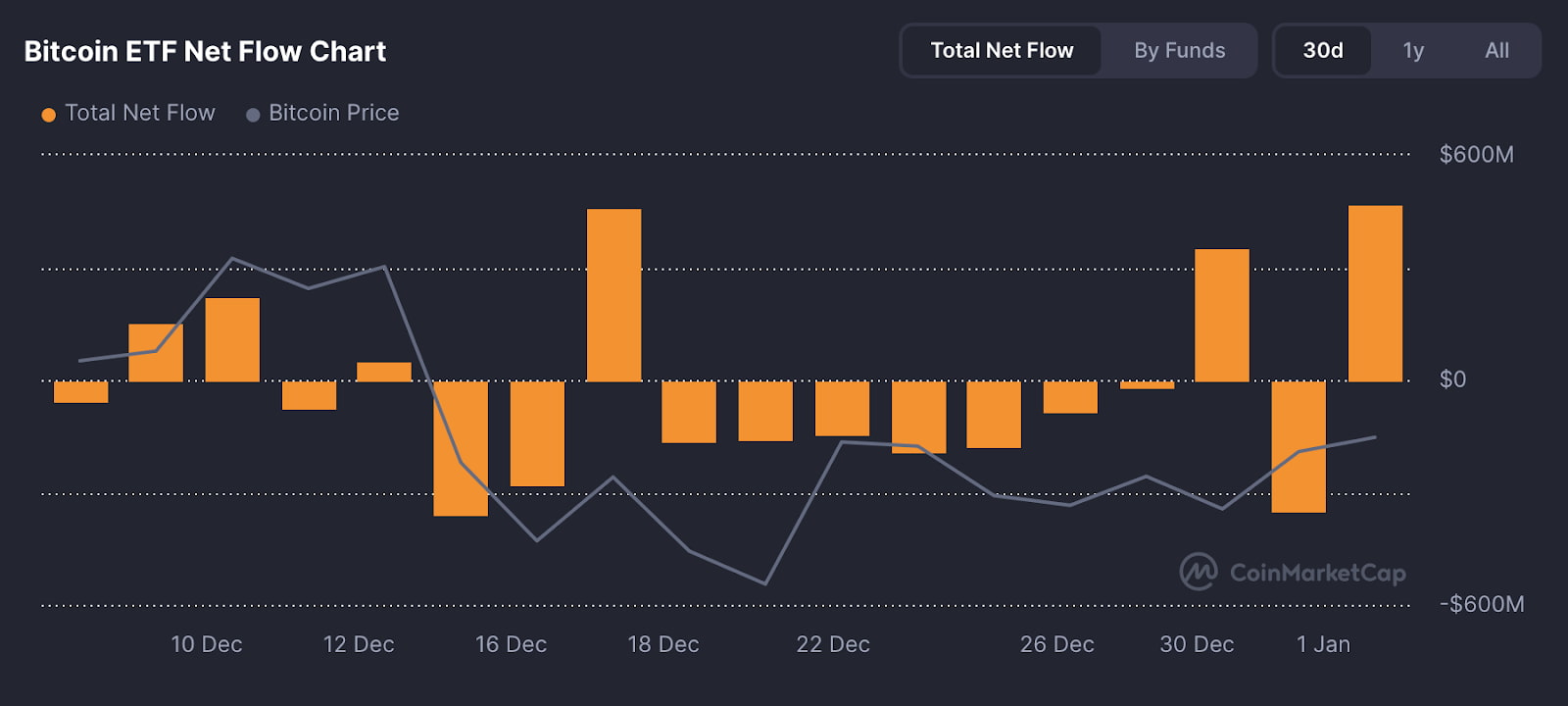
On January 2 alone, Bitcoin ETFs recorded net inflows of $471 million. When combined with the $355 million inflow seen on December 30, these stand out as the only two positive net-inflow days across the past ten trading sessions, pointing to a renewed wave of institutional interest.
While broader macro conditions offer solid support, one key catalyst is still being largely overlooked: Bitcoin Hyper. As the project moves closer to launch, early backers are starting to assess how its ability to introduce Solana-like speed to the Bitcoin layer could unlock fresh demand, potentially serving as the missing trigger for Bitcoin’s next upward move.

Why Bitcoin Hyper Could Be the Trigger for the Next Bull Run

Bitcoin Hyper has already secured more than $30.1 million in total funding, driven by investor interest in a high-performance ecosystem built to remove Bitcoin’s long-standing structural constraints without weakening its underlying security.

At its core, Bitcoin’s strength comes from its extreme simplicity. Keeping block sizes in the 2MB to 4MB range helps ensure that running a node remains affordable for individuals. If block sizes were pushed to extremes such as 1GB or more, only large data centers could handle the hardware demands required to validate the network. That shift would exclude everyday users running nodes from home, effectively centralizing verification.

The Proof-of-Work (PoW) model is just as essential. Miners must expend real-world energy to solve cryptographic puzzles in order to earn BTC rewards. This tangible cost was highlighted by Elon Musk in an October post last year, where he described Bitcoin as being “based on energy,” noting that while digital information can be copied, energy cannot be faked.

This real-world constraint makes attacking the network economically irrational. Any actor attempting to compromise Bitcoin would need to outspend the combined energy and hardware of all existing miners a cost so high that it renders such an effort pointless.
While these traits make Bitcoin one of the strongest stores of value ever created, they also limit transaction speed and programmability.

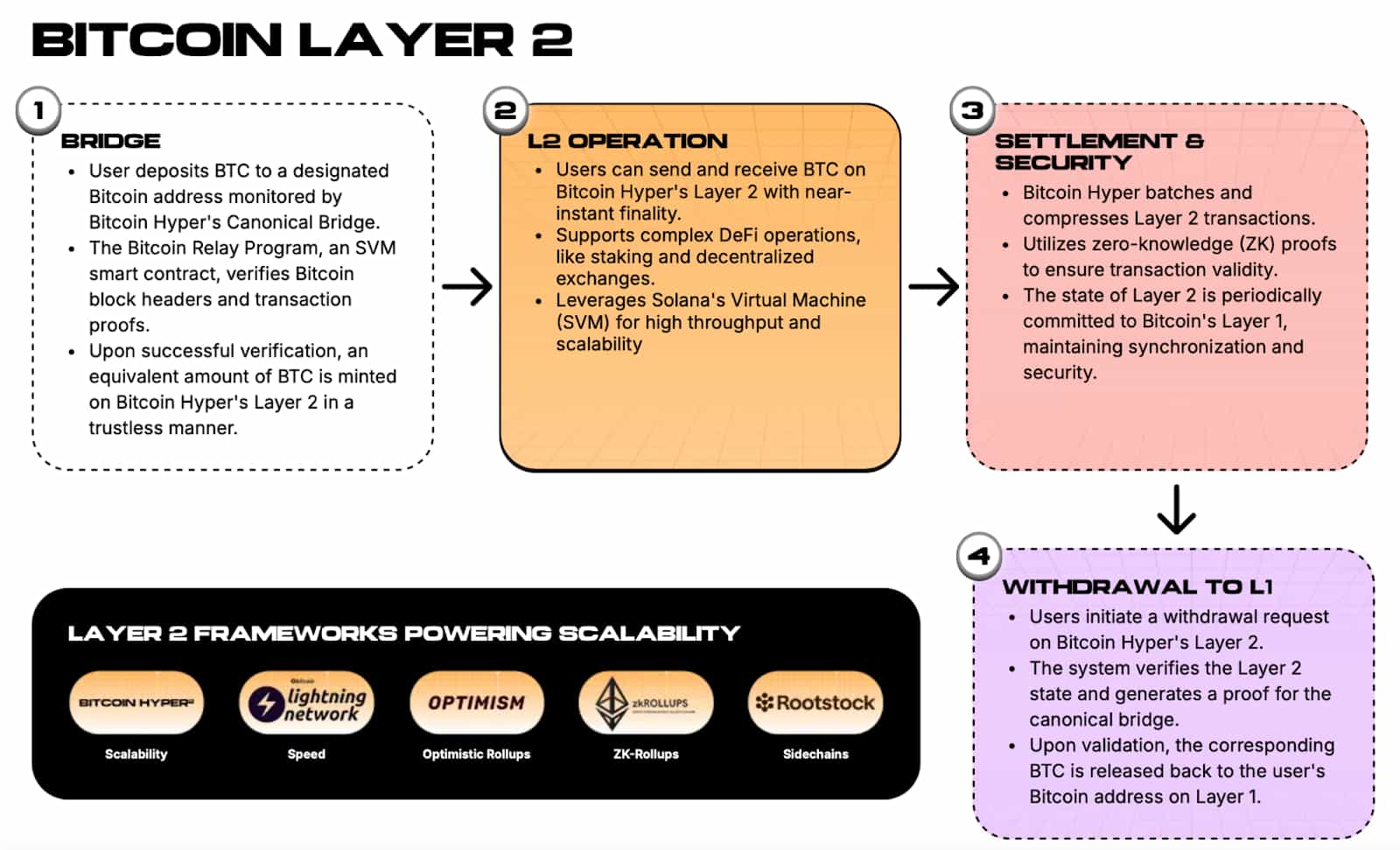
Bitcoin Hyper is designed to solve this trade-off. The project builds on Bitcoin’s security while introducing a high-speed execution layer. Using a canonical bridge, Bitcoin Hyper connects its SVM-based execution environment directly to the Bitcoin base layer.

Through a lock-and-mint mechanism, every Bitcoin secured within the bridge is matched 1:1 by an equivalent asset minted on Layer-2. This setup enables developers to create Rust-based decentralized applications that benefit from Bitcoin’s security while achieving near-instant finality via the Solana Virtual Machine.

The end result is a system where Bitcoin can operate as programmable money for the first time, delivering Solana-level performance without sacrificing the robustness of its base layer.

Powering Bitcoin’s Utility Through HYPER

As hybrid applications continue to expand, investors are increasingly expecting Bitcoin to transition from a passive store of value into a fast-moving utility asset. For early supporters, the core opportunity lies in building a clear “demand channel” where BTC is actively used as the main currency within a new wave of decentralized applications, rather than remaining idle.

The scale of this potential shift is substantial. If Bitcoin Hyper succeeds in drawing a meaningful share of BTC supply into its bridge, billions of dollars could move from passive holding into active circulation. Within this framework, Bitcoin would flow through DeFi protocols and consumer-focused apps, breaking away from its long-standing role of sitting unused in cold storage.

This evolution also sets up a strong alignment with the HYPER token. As the Layer-2 network attracts more Bitcoin liquidity and handles increasing transaction activity, demand for the native token is expected to grow alongside it. With HYPER serving as the gas token for the network, it becomes a critical component for processing and settling transactions.


This is why HYPER’s growth as an asset closely mirrors Bitcoin’s expansion within the ecosystem. Beyond simply settling transactions, the token also underpins staking and governance, giving it a layered utility model that extends across the network.

Given the scale and ambition behind Bitcoin Hyper, early participants increasingly view HYPER as a key gateway to unlocking Bitcoin’s next multi-billion-dollar utility phase. That belief is driving strong interest in the presale, with investors eager to secure exposure while the opportunity is still available.

How to Join the Race to Buy HYPER at Presale

With significant funding already secured, the window to purchase HYPER at presale prices is narrowing.

To secure HYPER during the presale, visit the Bitcoin Hyper website and buy the token using SOL, ETH, USDT, USDC, BNB, or a credit card.

Bitcoin Hyper recommends using Best Wallet, widely regarded as one of the leading crypto and Bitcoin wallets available today. HYPER is already listed in Best Wallet’s Upcoming Tokens section, allowing users to easily buy, track, and later claim their tokens once trading goes live.

Those looking to stay updated can also join the Bitcoin Hyper community on Telegram and X.

Visit Bitcoin Hyper.

Questions liées

QWhat is Bitcoin Hyper (HYPER) and how much funding did it attract over the weekend mentioned in the article?

ABitcoin Hyper (HYPER) is positioned as the fastest Layer-2 solution built on the Bitcoin network. It attracted an additional $100,000 in funding over the weekend, following its $30 million raise on Friday.

QWhat key technological combination does Bitcoin Hyper claim to achieve, and what problem does it aim to solve?

ABitcoin Hyper claims to combine Solana-level speed with Bitcoin's security. It aims to solve the trade-off between Bitcoin's strong security and its limitations in transaction speed and programmability, enabling Bitcoin to operate as programmable money for the first time.

QAccording to the article, what major geopolitical event is cited as a driver behind Bitcoin's bullish narrative and its role as a safe-haven asset?

AThe major geopolitical event cited is the U.S. capture of Venezuelan President Nicolas Maduro. This development reignited global discussions around sovereignty and risk, reinforcing Bitcoin's role as a safe-haven asset.

QWhat is the current price of the HYPER token in its presale, and how soon is the next price increase expected?

AThe HYPER token is currently priced at $0.013535 in its presale. The next price increase is expected in 36 hours when the next funding round triggers the change.

QWhat specific function does the native HYPER token serve within the Bitcoin Hyper ecosystem?

AThe native HYPER token serves as the gas token for the Bitcoin Hyper network, which is critical for processing and settling transactions. It also underpins staking and governance, giving it a layered utility model across the network.

Lectures associées

Quel lien existe entre Huang Zheng, le fondateur de Pinduoduo, et la blockchain ?

L'auteur de l'article explore le lien entre Huang Zheng, fondateur de Pinduoduo, et la technologie blockchain, à travers une réflexion inspirée par l'essai de Huang « Inverser le capitalisme ». L'article explique que le modèle économique fondamental de Pinduoduo est une « affaire d'assurance » basée sur la gestion de l'« incertitude ». Huang Zheng observe que les capitaux tendent à s'accumuler chez les riches car ils peuvent absorber les incertitudes (comme les risques de maladie ou de perte d'emploi) que les plus pauvres paient pour éviter via des assurances ou des achats sécurisés. Le concept de Pinduoduo, le « group buying » (achat groupé), fonctionne comme une « assurance inversée ». Il agrège la demande préalable d'un grand nombre de consommateurs pour créer une commande certaine et massive, permettant aux usines de réduire le risque de surproduction. Cette certitude permet aux fabricants de baisser leurs prix, faisant ainsi refluer une partie de la valeur vers les consommateurs. Le lien avec la blockchain apparaît comme la pièce manquante pour perfectionner ce modèle. Le principal défi de « l'assurance inversée » est que l'engagement individuel d'un consommateur n'est pas crédible ou coûteux à faire respecter. La blockchain, via ses contrats intelligents (smart contracts), pourrait résoudre ce problème en rendant les engagements (comme une intention d'achat) contraignants, vérifiables et exécutables automatiquement, sans intermédiaire. Huang Zheng lui-même s'interroge : la blockchain n'est-elle pas idéalement conçue pour ce type d'« assurance inversée » ? En conclusion, l'article compare deux voies pour créer de la certitude : la voie « Pinduoduo », qui utilise la masse pour aplanir l'incertitude, et la voie « Bitcoin », qui verrouille les règles par un code inviolable, remplaçant la confiance en une institution par la confiance en un protocole.

链捕手Il y a 31 mins

Quel lien existe entre Huang Zheng, le fondateur de Pinduoduo, et la blockchain ?

链捕手Il y a 31 mins

Le magnat du stockage qui a conquis des milliers de milliards de territoire ne deviendra jamais l'homme le plus riche

Fondateur de GigaDevice et ChangXin Technology, Zhu Yiming est une figure majeure de l'industrie chinoise des puces mémoire. Malgré la valeur boursière potentielle de ses entreprises (ChangXin visant les 1 000 milliards de yuans, GigaDevice valant 340 milliards), sa fortune personnelle reste limitée en raison de sa faible participation directe (moins de 3% dans ChangXin). GigaDevice (兆易创新), créée en 2005, a débuté avec des NOR Flash, profitant du désengagement des géants comme Samsung pour capturer des parts de marché (20% mondial en 2025). L'entreprise a diversifié ses activités vers les microcontrôleurs (MCU), les capteurs et les puces analogiques, mais les mémoires et MCU représentent 92% de son chiffre d'affaires. Son modèle économique Fabless (sans usine) et sa focalisation sur les segments de moyenne et basse gamme lui ont permis de maintenir une rentabilité solide, avec des marges brutes autour de 40%. Cependant, l'industrie des semi-conducteurs mémoire est très cyclique, comme en témoignent les fluctuations de ses bénéfices nets. L'article souligne que le modèle Fabless présente une vulnérabilité face aux cycles sévères du secteur. C'est pourquoi Zhu Yiming a cofondé ChangXin Technology en 2016 avec le gouvernement de Hefei, adoptant un modèle IDM (intégré) nécessitant des investissements massifs (équipements évalués à 169,3 milliards de yuans fin 2025). Son engagement personnel – renoncement au salaire, partage des incitations actions, verrouillage prolongé de ses parts – a été crucial pour sécuriser le financement public. En définitive, bien que Zhu Yiming ait "bâti un empire" dans le stockage, sa stratégie de dilution du capital pour assurer le développement de ses entreprises le place loin des tout premiers rangs des fortunes individuelles chinoises.

marsbitIl y a 37 mins

Le magnat du stockage qui a conquis des milliers de milliards de territoire ne deviendra jamais l'homme le plus riche

marsbitIl y a 37 mins

Une faille de gouvernance sur Token Of Power a drainé 1,58 million de dollars en WETH, selon TRM

La société d'intelligence blockchain TRM Labs a détaillé une attaque par prise de contrôle de gouvernance contre le protocole Token of Power, drainant environ 1,58 million de dollars en WETH. Selon l'analyse, l'attaquant a exploité une faille dans la configuration DAO Aragon du protocole : l'absence de délai d'exécution (timelock). Cela lui a permis de proposer, voter et exécuter une action de gouvernance malveillante en un seul bloc. L'opération aurait été financée avec 662 ETH retirés de Tornado Cash. L'attaquant a acheté suffisamment de jetons TOP pour obtenir le pouvoir de vote majoritaire, a frappé 10 milliards de nouveaux TOP et les a échangés contre du WETH via un pool Balancer avant de blanchir les fonds via Tornado Cash. Cette attaque illustre comment la conception de la gouvernance peut devenir un risque de sécurité direct. Sans timelock pour donner aux utilisateurs et aux équipes de sécurité un temps de réaction, un vote hostile peut être exécuté instantanément. Pour les utilisateurs de la DeFi, cet incident rappelle que les risques ne se limitent pas aux bugs de code smart-contract. Les paramètres de gouvernance, les contrôles des trésoreries et les seuils de vote sont tout aussi critiques. L'affaire montre également comment les mixers et les pools de liquidités peuvent être utilisés dans le sillage d'une exploitation. La suite à surveiller concerne les mouvements potentiels des fonds volés et d'éventuels détails de correction de la part du protocole, d'Aragon ou des fournisseurs de liquidités affectés.

bitcoinistIl y a 3 h

Une faille de gouvernance sur Token Of Power a drainé 1,58 million de dollars en WETH, selon TRM

bitcoinistIl y a 3 h

XRP Ledger : les frais journaliers tombent sous la barre des 400 $, la question de l'activité du réseau revient sur le tapis

Le réseau XRP Ledger (XRPL) suscite à nouveau des interrogations après que des données ont montré que ses frais quotidiens totaux sont tombés en dessous de 400 dollars. Si des frais bas correspondent à la conception du réseau et sont souvent présentés comme un atout pour l'accessibilité, ils peuvent aussi être un indicateur de l'activité et de la demande réelle. Ce chiffre hebdomadaire d'environ 3 100 dollars brûlés contraste fortement avec des blockchains comme Ethereum ou Bitcoin. Pour les partisans, cela confirme l'efficacité du XRPL. Pour les critiques, cela peut soulever des questions sur le niveau d'adoption transactionnelle à haute valeur, un point central pour le récit des paiements autour du XRP. Les données sur les frais permettent ainsi d'évaluer si l'activité on-chain correspond aux ambitions du réseau. Il est important de ne pas tirer de conclusions excessives : une journée à faibles frais ne signifie pas un dysfonctionnement. Cela alimente simplement le débat sur l'utilisation du XRPL, d'autant plus dans le contexte des initiatives de Ripple comme le RLUSD ou les paiements par agents IA. Il convient désormais d'observer si les frais rebondissent et si les comptes de transactions confirment cette tendance. Dans le paysage crypto actuel, où l'infrastructure et l'utilité gagnent en importance, cette information mérite d'être rapportée comme un point de données factuel pour une conversation de marché équilibrée, en évitant tout sensationnalisme.

bitcoinistIl y a 5 h

XRP Ledger : les frais journaliers tombent sous la barre des 400 $, la question de l'activité du réseau revient sur le tapis

bitcoinistIl y a 5 h

Ripple lance le kit de démarrage IA XRPL pour les paiements par agents utilisant XRP et RLUSD

Ripple a lancé le XRPL AI Starter Kit, une boîte à outils destinée aux développeurs pour faciliter les paiements par des agents logiciels en utilisant le XRP et le Ripple USD (RLUSD). Cette version constitue la Phase 1 d'une initiative plus large visant à développer les paiements automatisés (agentic payments) sur le XRP Ledger. L'outil intègre la norme de paiement x402 et inclut le XRPL Docs MCP Server, permettant de connecter des systèmes d'IA (comme Claude et Cursor) directement à la documentation technique du XRPL. L'objectif est de fournir aux agents logiciels des infrastructures de paiement à règlement rapide, avec des frais faibles, pour des transactions machine-à-machine, sans nécessiter d'approbation humaine pour chaque micro-paiement. Pour Ripple, cette annonce représente une tentative concrète d'ancrer l'utilité du XRP au-delà de la spéculation, en le positionnant dans l'infrastructure de paiement pour développeurs. L'adoption réelle par les développeurs et l'émergence effective des paiements automatisés en tant que catégorie significative restent des éléments à surveiller. Les prochaines étapes à observer seront les mises à jour de la documentation sur xrpl.org, les exemples de code, l'utilisation sur le testnet et les retours des développeurs. Ce développement s'inscrit dans une tendance plus large de l'écosystème crypto où l'infrastructure, l'utilité des tokens et les mises à jour produits gagnent en importance.

bitcoinistIl y a 7 h

Ripple lance le kit de démarrage IA XRPL pour les paiements par agents utilisant XRP et RLUSD

bitcoinistIl y a 7 h

Trading

Spot
Futures

Articles tendance

Comment acheter LAYER

Bienvenue sur HTX.com ! Nous vous permettons d'acheter Solayer (LAYER) de manière simple et pratique. Suivez notre guide étape par étape pour commencer votre parcours crypto.Étape 1 : Création de votre compte HTXUtilisez votre adresse e-mail ou votre numéro de téléphone pour ouvrir un compte sur HTX gratuitement. L'inscription se fait en toute simplicité et débloque toutes les fonctionnalités.Créer mon compteÉtape 2 : Choix du mode de paiement (rubrique Acheter des cryptosCarte de crédit/débit : utilisez votre carte Visa ou Mastercard pour acheter instantanément Solayer (LAYER).Solde :utilisez les fonds du solde de votre compte HTX pour trader en toute simplicité.Prestataire tiers :pour accroître la commodité d'utilisation, nous avons ajouté des modes de paiement populaires tels que Google Pay et Apple Pay.P2P :tradez directement avec d'autres utilisateurs sur HTX.OTC (de gré à gré) : nous offrons des services personnalisés et des taux de change compétitifs aux traders.Étape 3 : stockage de vos Solayer (LAYER)Après avoir acheté vos Solayer (LAYER), stockez-les sur votre compte HTX. Vous pouvez également les envoyer ailleurs via un transfert sur la blockchain ou les utiliser pour trader d'autres cryptos.Étape 4 : tradez des Solayer (LAYER)Tradez facilement Solayer (LAYER) sur le marché Spot de HTX. Il vous suffit d'accéder à votre compte, de sélectionner la paire de trading, d'exécuter vos trades et de les suivre en temps réel. Nous offrons une expérience conviviale aux débutants comme aux traders chevronnés.

354 vues totalesPublié le 2025.02.11Mis à jour le 2026.06.02

Comment acheter LAYER

Discussions

Bienvenue dans la Communauté HTX. Ici, vous pouvez vous tenir informé(e) des derniers développements de la plateforme et accéder à des analyses de marché professionnelles. Les opinions des utilisateurs sur le prix de LAYER (LAYER) sont présentées ci-dessous.

活动图片













