Don't Lose Heart in Crypto, Be a Pragmatic Optimist

marsbitPublié le 2025-12-11Dernière mise à jour le 2025-12-11

Résumé

Nic Carter, co-founder of Castle Island Ventures, responds to Ken Chan’s pessimistic essay “I Wasted 8 Years of My Life in Crypto” by arguing for a pragmatic and optimistic outlook on the crypto industry. While acknowledging that Chan’s critique—that crypto has devolved into a massive speculative casino rather than a decentralized financial system—contains truth, Carter contends that the industry still holds meaningful purpose. Carter identifies five core visions driving crypto: restoring sound money (e.g., Bitcoin as a global monetary asset), encoding business logic via smart contracts, making digital property real (e.g., NFTs and Web3), improving capital market efficiency, and expanding global financial inclusion. He admits that many early idealistic expectations—such as hyperbitcoinization or revolutionary digital ownership—have not materialized, and that much of the current activity involves speculation, memecoins, and gambling. However, Carter advocates for “pragmatic optimism.” He argues that speculative excess and financial nihilism are unfortunate but inevitable byproducts of building permissionless, open financial infrastructure. The key is to focus on the real, albeit gradual, progress: Bitcoin’s adoption, functional stablecoins, decentralized exchanges, and improved financial access in developing regions—without succumbing to either utopian fantasies or cynical despair.

Author: Nic Carter, Co-founder of Castle Island Ventures

Compiled by: Felix, PANews

Ken Chan, co-founder of Aevo, recently published an article stating that he wasted 8 years of his life in the crypto industry. Ken Chan believes that the crypto industry has deviated from its original intention of "decentralized finance" and has evolved into the largest and most widely participated speculative and gambling system in human history. This pessimistic view has sparked heated discussions in the crypto community. Nic Carter, co-founder of Castle Island Ventures, also published an article to participate in the discussion. The full text is as follows.

No one can serve two masters: for either he will hate the one and love the other, or he will be devoted to the one and despise the other. You cannot serve God and mammon (Note: the personification of wealth in religious legends). —Matthew

Ken Chang recently published an article titled "I Wasted 8 Years of My Life in Cryptocurrency," lamenting that the industry seems inherently characterized by capital consumption and financial nihilism.

People in the crypto circle love to mock such "rage quit" articles, gleefully recalling how historical figures like Mike Hearn and Jeff Garzik made grand exits back in the day, and then smugly pointing out how much Bitcoin has risen since they left.

But Ken's article is mostly correct. He said:

"Cryptocurrency claimed to decentralize the financial system, and I fully believed it at first, but the reality is, it's just a super speculative and gambling system, essentially just a mirror of the current economy. The truth hit me like a damn truck: I wasn't building a new financial system at all, I built a casino. A casino that refuses to admit it's a casino, yet it's the largest, 24/7, multi-player casino ever created by our generation."

Ken points out that VCs burned tens of billions of dollars supporting countless new L1s, and we clearly don't need that many. This is indeed correct, although he slightly distorts the incentive model (VCs are just conduits for capital). He also decries the proliferation of perpetual contracts, spot DEXs, prediction markets, and meme coin launch platforms. Admittedly, while you can defend these concepts on an abstract level (except for meme coin launch platforms, which are utterly indefensible), it's undeniable that they proliferate simply because the market has incentives and VCs are willing to invest.

Ken says he entered the crypto space full of idealism. Everyone should be very familiar with this: he had Randian libertarian leanings. But instead of practicing libertarianism, he built a casino. Specifically, he is best known for his involvement in developing Ribbon Finance, a protocol that allows users to deposit assets into vaults and earn yield by systematically selling options.

I don't want to be too harsh personally, but that's the fact. If it were me, I would also engage in some deep reflection. As the conflict between principle and practice became increasingly unbearable, Ken ultimately pessimistically realized: cryptocurrency is a casino, not a revolution.

When reading Ken's article, what struck me most was how it reminded me of Mike Hearn's famous exit宣言 almost 10 years ago. Hearn wrote:

Why did Bitcoin fail? It's because the community failed. What was supposed to be a new decentralized currency, without 'systemically important institutions' and 'too big to fail' entities, has become something worse: a system entirely controlled by a handful of people. Worse still, the network is on the verge of technical collapse. The mechanisms that were supposed to prevent this outcome have failed, so there's little reason left to believe Bitcoin can be any better than the existing financial system.

The details differ, but the argument is the same. Bitcoin/cryptocurrency was supposed to be one thing (decentralized, cypherpunk practice), but it turned into another (casino, centralized). Both Hearn and Chang believe: it ultimately isn't any better than the existing financial system.

Their arguments boil down to one sentence: cryptocurrency started out meaning one thing, but then it became something else. So we are stuck in a debate about the "teleology" of cryptocurrency—what is its purpose?

The Five Purposes of Cryptocurrency

In my personal view, there are roughly five camps, and they are not entirely mutually exclusive. For example, I most identify with the first and fifth, but I also have some sympathy for the others. However, I am not a die-hard adherent to any single one, not even the most hardcore Bitcoin camp.

1. Restoring Sound Money

This was the shared dream of the early majority of Bitcoin supporters, though not all agree. The idea is that over time, Bitcoin will pose a competitive threat to the monetary privileges of many countries, potentially even replacing their currencies, returning to an arrangement similar to a new gold standard. People in this group often believe everything else happening in crypto is a distracting scam riding Bitcoin's coattails. Bitcoin has made limited progress at the sovereign level, but it's quite an achievement to become a significant monetary asset in just 15 years. Bitcoiners holding this view are always in a state of intertwined disillusionment and hope, anticipating Bitcoin's full adoption is just around the corner.

2. Encoding Business Logic into Smart Contracts

This is the view most promoted by Vitalik Buterin and Ethereum supporters: since money can be digitized, so can various transactions and contracts be written as code, making the world more efficient and fair. This was initially heresy to Bitcoin proponents. But it has succeeded in some narrow areas, especially contracts easily expressed mathematically, like derivatives.

3. Making Digital Property "Real"

I think this is the best summary of the "Web3" or "Read Write Own" idea: digital property should be as real as physical property. The idea itself has value, but its implementation (NFTs, Web3 social) has either gone completely astray or is too ahead of its time. Despite billions poured into it, few defend it today. But I still think the idea has merit. Most problems on the internet today stem from not truly owning your own web space and not having real control over who you interact with or who sees your content. I believe we will eventually reclaim control over our online assets, and this will likely involve blockchains. It's just that the time for this idea hasn't matured yet.

4. Making Capital Markets More Efficient

This is the least ideological of the five. You'd be hard-pressed to find many people truly particularly interested in securities settlement, COBOL, SWIFT, or bank wire windows. But this实实在在 supports a large part of the crypto industry's value. The core idea is: the Western financial system is built on outdated technology that is extremely difficult to update due to path dependency (you can't just tear down and rebuild core infrastructure handling trillions in daily settlements). This update must come from outside the system and adopt a completely new architecture. The value here is mainly体现在 in efficiency gains and possible consumer surplus, so it's not particularly exciting.

5. Expanding Financial Accessibility Globally

Finally, there are the compassionate ones who see cryptocurrency as an inclusive technology, enabling people in less developed countries to use low-cost financial infrastructure for the first time: allowing them to self-custody crypto assets or stablecoins, buy tokenized stocks or money market funds, get a card based on a crypto wallet or exchange account, and be treated as equals on the financial internet. This is a very real phenomenon and provides motivation for many idealists whose enthusiasm is waning to keep going.

Pragmatic Optimism

So who is right? The idealists, or the cynics? Or some unknown third answer?

I could go on at length about how bubbles always accompany major technological changes, how bubbles actually facilitate useful infrastructure construction, and why cryptocurrency is especially filled with speculation because it is inherently a financial technology, but this is mostly just self-consolation.

The real answer is: maintaining pragmatic optimism is the correct attitude. Whenever you feel extremely pessimistic about the "crypto casino," hold firmly to this attitude. Speculation, mania, and predation should be understood as inevitable, unpleasant externalities in the process of building useful infrastructure. It does bring very real negative effects, which I don't want to downplay. The normalization of meme coins, mindless gambling, and financial nihilism among young people is depressing and socially harmful. But this is an inevitable side effect of building permissionless capital markets. This situation wouldn't happen without blockchains. You just have to accept this as a negative consequence of how blockchains operate. You don't have to participate in it.

To summarize here, cryptocurrency has its purposes, and it's completely fine to be idealistic about it. There is a force激励着成千上万的人 to dedicate their careers to this industry.

It's just that this purpose might not be as exciting as you imagined.

The world will most likely not experience "hyperbitcoinization." NFTs haven't revolutionized digital ownership. Capital markets are moving on-chain, but progress is slow. Not much has been truly tokenized besides the dollar. No authoritarian regime has been overthrown by ordinary people carrying crypto wallets. Smart contracts mostly only involve derivatives, nothing else. The applications that currently have true product-market fit are limited to Bitcoin, stablecoins, decentralized exchanges, and prediction markets. And, most of the value created will likely be captured by large companies or returned to consumers in the form of efficiency gains and cost savings.

So the real challenge is: maintaining a down-to-earth, reality-based optimism, rather than indulging in blind fantasy. If you believe in a Randian libertarian utopia, the gap between expectation and reality will eventually break you. As for the casino-like mechanisms, unrestrained token issuance, and疯狂投机行为, they should be seen as unpleasant flaws of the industry, yet difficult to eradicate. If you believe that the costs brought by introducing blockchains to the world outweigh the benefits, you have every reason to be disappointed. But in my personal view, the situation is actually better than ever. We have more evidence than ever that we are on the right path. Just don't forget the original intention.

Related reading: Nihilism and Vicious Cycles, Why Should We Oppose Over-Financialization?

Cryptos en tendance

Questions liées

QWhat are the five main purposes of cryptocurrency as outlined by Nic Carter in the article?

AThe five main purposes are: 1. Restoring sound money, 2. Encoding business logic into smart contracts, 3. Making digital property 'real', 4. Making capital markets more efficient, and 5. Expanding financial accessibility globally.

QAccording to the author, what is the 'pragmatic optimism' one should adopt towards the crypto industry?

APragmatic optimism is the attitude of acknowledging that speculation, manias, and predation are inevitable and unpleasant externalities in the process of building useful infrastructure. One should remain grounded in realistic possibilities rather than blind fantasies, accepting the negative side effects as part of how blockchains operate without necessarily participating in them.

QWhat was the core complaint in Ken Chan's article 'I Wasted 8 Years of My Life in Cryptocurrency'?

AKen Chan's core complaint was that the crypto industry has deviated from its original purpose of 'decentralized finance' and has become the largest, most widely participated speculative and gambling system in human history, essentially building a casino that refuses to admit it is one.

QHow does the author, Nic Carter, respond to the criticism that crypto is just a casino?

ANic Carter acknowledges that much of the criticism is valid and that the industry is indeed filled with speculation. However, he argues that this is an inevitable byproduct of building permissionless capital markets and that one should focus on the useful infrastructure being built, adopting a stance of pragmatic optimism.

QWhat historical example does the author use to parallel Ken Chan's disillusionment with crypto?

AThe author draws a parallel to Mike Hearn's famous exit declaration from roughly 10 years ago, where Hearn similarly argued that Bitcoin had failed because the community failed, and it had become a system controlled by a few people rather than a new decentralized currency.

Lectures associées

La secrétaire au Trésor américain tente de contenir les rendements des bons du Trésor et alimente les « transactions de dépréciation monétaire » ! L'or atteint un plus haut de trois mois, le Bitcoin bondit de plus de 25 % en une semaine

La déclaration de la secrétaire américaine au Trésor, Janet Yellen, visant à contenir les rendements des obligations d'État à long terme n'a eu qu'un effet éphémère sur le marché obligataire. Cependant, elle a accentué un mouvement de marché baptisé « trade de la dépréciation monétaire », alimenté par des craintes concernant le déficit budgétaire américain et l'orientation de la politique économique. Ce scénario s'est traduit par un affaiblissement du dollar, tandis que l'or a atteint un sommet de trois mois et le bitcoin a bondi de plus de 25% en une semaine, leur corrélation étant à son niveau le plus élevé depuis la pandémie, renforçant le récit des cryptomonnaies comme couverture. Les analystes soulignent les limites de l'action du Trésor face aux pressions structurelles sur les taux : un déficit public élevé, une inflation persistante et une concurrence mondiale intense pour les capitaux, notamment en raison des emprunts publics massifs et des besoins de financement colossal du secteur de l'intelligence artificielle. Malgré la résilience des marchés actions, portés par des anticipations de bénéfices solides, le rendement des obligations américaines approchant les 5% constitue une pression concurrentielle croissante. Ray Dalio a conseillé de réduire l'exposition aux obligations et de détenir de l'or et du bitcoin pour se prémunir contre un risque de crise de la dette américaine. Si la logique du « trade de la dépréciation » reste séduisante, certains doutent de sa pérennité en l'absence de nouveau catalyseur immédiat, notant la modeste ampleur des rachats annoncés par rapport au marché obligataire global. La tension entre le souhait du Trésor de maîtriser les coûts d'emprunt et l'objectif de la Fed de réduire son intervention sur les marchés reste un point d'attention majeur pour les investisseurs.

华尔街日报Il y a 2 h

La secrétaire au Trésor américain tente de contenir les rendements des bons du Trésor et alimente les « transactions de dépréciation monétaire » ! L'or atteint un plus haut de trois mois, le Bitcoin bondit de plus de 25 % en une semaine

华尔街日报Il y a 2 h

Aleksandr Chokhine : le monde des affaires a besoin d'un taux directeur inférieur à 10 % et d'un dollar entre 90 et 95 roubles

Alexandre Chokhine, président du syndicat russe des industriels et des entrepreneurs (RSPP), évoque l'utilisation possible d'outils « non marchands » pour maintenir le rouble dans un corridor de change prédéfini. Selon lui, cette approche réduirait la volatilité excessive de la monnaie nationale et apporterait la stabilité nécessaire aux entreprises. L'idée d'un corridor de change pour le rouble n'est pas nouvelle. Chokhine l'a déjà mentionnée, soulignant que le taux de change actuel n'est pas entièrement déterminé par le marché en raison du volume limité des transactions et d'une faible demande en devises étrangères. De nombreux acteurs économiques préconisent de fixer un corridor, même par des moyens non conventionnels, pour garantir la prévisibilité. L'objectif du monde des affaires pour fin 2026 est une combinaison de taux directeur de la Banque centrale à 12%, une inflation entre 4 et 5%, et un taux de change du dollar autour de 90-95 roubles. Chokhine précise qu'une baisse du taux directeur en dessous de 10% serait idéale pour les entreprises, et souligne l'importance cruciale d'une monnaie stable pour les décisions d'investissement. Enfin, une analyse rappelle que la Russie a déjà expérimenté un corridor de change entre 1995 et 1998, un système qui a finalement cédé lors du défaut d'août 1998, illustrant la vulnérabilité de tels mécanismes en période de chocs externes. La question centrale reste la capacité à défendre un tel corridor, ce qui nécessiterait des réserves substantielles, surtout dans un marché des changes aux liquidités limitées. L'évolution de ce débat vers des propositions concrètes sera à observer dans les prochains mois.

cryptonews.ruIl y a 4 h

Aleksandr Chokhine : le monde des affaires a besoin d'un taux directeur inférieur à 10 % et d'un dollar entre 90 et 95 roubles

cryptonews.ruIl y a 4 h

Le train vers le Bitcoin a-t-il déjà quitté la gare ? L'indicateur personnalisé a cessé d'émettre des signaux !

La hausse du prix du Bitcoin a fait sortir l'indicateur AHR999, suivi par les investisseurs à long terme, de la zone d'"achat au creux". L'indicateur est revenu à sa plage d'achat normale d'environ 0,45 à 1,20 après environ 82 jours. Selon des sources, l'indicateur Ahr999 a atteint 0,5073 après la récente augmentation du Bitcoin, le faisant passer de la zone de "creux d'achat" (inférieure à 0,45) à la zone de coût moyen en dollar (DCA). Dans le cycle actuel, la période où l'indicateur est resté sous 0,45 a duré du 29 mai au 19 août, soit environ 82 jours, indiquant la fenêtre pour acheter le Bitcoin à son niveau le plus bas. L'indicateur AHR999 évalue à la fois le rendement à court terme des achats de Bitcoin et l'écart entre le prix actuel et une valorisation estimée. Il est particulièrement utile pour les investisseurs utilisant des stratégies d'achat progressif à long terme, permettant d'identifier les périodes où le marché est relativement bon marché ou cher. Historiquement, un indice inférieur à 0,45 est interprété comme un "achat au creux", entre 0,45 et 1,20 comme un achat régulier, et au-dessus de 1,20 comme une zone où le prix peut être relativement élevé. Cependant, cet indicateur seul n'est pas considéré comme un signal d'achat ou de vente définitif. *Ceci n'est pas un conseil en investissement.

cryptonews.ruIl y a 4 h

Le train vers le Bitcoin a-t-il déjà quitté la gare ? L'indicateur personnalisé a cessé d'émettre des signaux !

cryptonews.ruIl y a 4 h

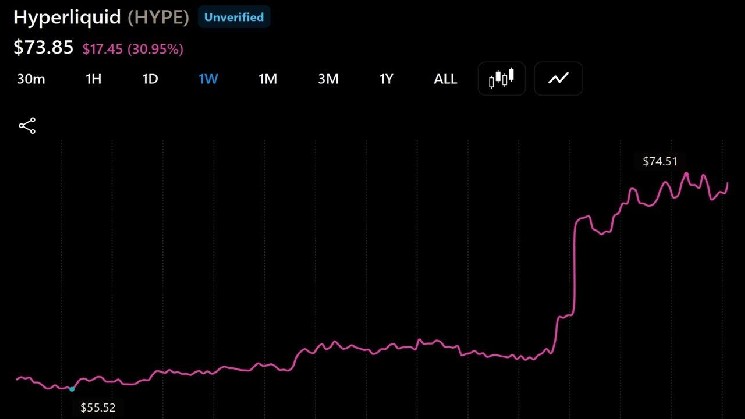
HYPE de Hyperliquid affiche des performances supérieures à celles du marché en période de tendance baissière, à l'approche du lancement d'AQAv2

Le token natif $HYPE de l'échange de dérivés Hyperliquid a été désigné comme "l'actif le plus performant en marché baissier". Cette dynamique s'explique par un mécanisme de rachat et de destruction ("burn") qui réinjecte près de 99% des commissions commerciales générées sur les marchés à terme perpétuels et au spot pour acheter et brûler des $HYPE. Depuis novembre 2024, 462 millions de tokens, d'une valeur d'environ 1,27 milliard de dollars, ont ainsi été retirés de la circulation. Le succès de ce mécanisme est lié au volume d'échanges substantiel d'Hyperliquid, qui traiterait 40% à 70% du volume des contrats perpétuels décentralisés. Le protocole génère actuellement entre 600 millions et 950 millions de dollars de revenus annuels. Un nouveau catalyseur, le mécanisme AQAv2 (Aligned Quote Asset v2), doit être activé prochainement. Il acheminera environ 90% des revenus provenant des réserves de plus de 5 milliards de dollars en USDC vers le Fonds d'aide Hyperliquid, ajoutant potentiellement entre 135 et 160 millions de dollars par an au volume des rachats. Récemment, le cours du $HYPE a également bénéficié de commentaires du président américain Donald Trump évoquant un travail réglementaire pour faciliter l'accès d'Hyperliquid aux États-Unis, entraînant une hausse de prix significative.

cryptonews.ruIl y a 6 h

HYPE de Hyperliquid affiche des performances supérieures à celles du marché en période de tendance baissière, à l'approche du lancement d'AQAv2

cryptonews.ruIl y a 6 h

Trading

Spot

Articles tendance

Qu'est ce que SKDD

Conçu pour fournir des rendements inversés à effet de levier de -2x des mouvements quotidiens du prix de l'action SK Hynix, il s'agit d'un ETF à effet de levier court d'une seule journée sous GraniteShares. Il convient aux investisseurs ayant une perspective baissière à court terme sur SK Hynix pour une allocation tactique.

125 vues totalesPublié le 2026.08.19Mis à jour le 2026.08.19

Qu'est ce que SKDD

Comment acheter SKDD

Bienvenue sur HTX.com ! Nous vous permettons d'acheter GraniteShares 2x Short SK Hynix Daily ETF (SKDD) de manière simple et pratique. Suivez notre guide étape par étape pour commencer votre parcours crypto.Étape 1 : Création de votre compte HTXUtilisez votre adresse e-mail ou votre numéro de téléphone pour ouvrir un compte sur HTX gratuitement. L'inscription se fait en toute simplicité et débloque toutes les fonctionnalités.Créer mon compteÉtape 2 : Choix du mode de paiement (rubrique Acheter des cryptosCarte de crédit/débit : utilisez votre carte Visa ou Mastercard pour acheter instantanément GraniteShares 2x Short SK Hynix Daily ETF (SKDD).Solde :utilisez les fonds du solde de votre compte HTX pour trader en toute simplicité.Prestataire tiers :pour accroître la commodité d'utilisation, nous avons ajouté des modes de paiement populaires tels que Google Pay et Apple Pay.P2P :tradez directement avec d'autres utilisateurs sur HTX.OTC (de gré à gré) : nous offrons des services personnalisés et des taux de change compétitifs aux traders.Étape 3 : stockage de vos GraniteShares 2x Short SK Hynix Daily ETF (SKDD)Après avoir acheté vos GraniteShares 2x Short SK Hynix Daily ETF (SKDD), stockez-les sur votre compte HTX. Vous pouvez également les envoyer ailleurs via un transfert sur la blockchain ou les utiliser pour trader d'autres cryptos.Étape 4 : tradez des GraniteShares 2x Short SK Hynix Daily ETF (SKDD)Tradez facilement GraniteShares 2x Short SK Hynix Daily ETF (SKDD) sur le marché Spot de HTX. Il vous suffit d'accéder à votre compte, de sélectionner la paire de trading, d'exécuter vos trades et de les suivre en temps réel. Nous offrons une expérience conviviale aux débutants comme aux traders chevronnés.

92 vues totalesPublié le 2026.08.19Mis à jour le 2026.08.19

Comment acheter SKDD

Qu'est ce que SKUU

Conçu pour fournir deux fois les rendements quotidiens à effet de levier de l'action SK Hynix, il s'agit d'un ETF à effet de levier long d'une journée sous GraniteShares. Il convient aux investisseurs ayant une perspective haussière à court terme sur SK Hynix pour une allocation tactique.

97 vues totalesPublié le 2026.08.19Mis à jour le 2026.08.19

Qu'est ce que SKUU

Discussions

Bienvenue dans la Communauté HTX. Ici, vous pouvez vous tenir informé(e) des derniers développements de la plateforme et accéder à des analyses de marché professionnelles. Les opinions des utilisateurs sur le prix de A (A) sont présentées ci-dessous.

活动图片