Cross-Chain Bridges Actively Adapt, LI.FI Leverages Intent Architecture to Become the Liquidity Hub for TradFi Institutions

Odaily星球日报Publié le 2026-06-03Dernière mise à jour le 2026-06-03

Résumé

Cross-Chain Bridge LI.FI Transforms with Intents Architecture to Serve as Liquidity Hub for TradFi Institutions Facing declining cross-chain transaction volumes and overall crypto market liquidity, cross-chain bridge protocol LI.FI is proactively shifting its strategy. Moving beyond its role as a "liquidity transfer protocol," LI.FI is targeting new assets, clients, and operational systems. Key to this transformation is the launch of LI.FI Intents, an intent-based execution architecture. This product positions itself as a foundational layer for stablecoin payments, Real World Assets (RWA), and compliant on-chain liquidity, catering specifically to fintech companies, neobanks, wallets, and regulated financial institutions. LI.FI Intents simplifies user experience by offering a turnkey solution. It leverages a solver network for market-maker level execution, enabling precise cross-chain swaps (e.g., between USDC and USDT) without users managing gas tokens or complex blockchain steps. It lowers barriers to entry by integrating with applications like Jumper and Rabby, allowing enterprise users to bypass direct wallet interactions for transactions like payments and asset transfers. The architecture emphasizes compliance. Its network consists of verified legal entities, and enterprises can review and approve orders within their compliance frameworks before processing. All interacting wallets undergo OFAC screening. For ecosystem coverage, LI.FI Intents supports major networks i...

Original|Odaily Planet Daily (@OdailyChina)

Author|Wenser(@wenser2010)
When TradFi becomes a must-have for the crypto industry, no project can stand apart. However, some choose to start with asset types, while others set their sights on the various companies and institutions behind the assets.

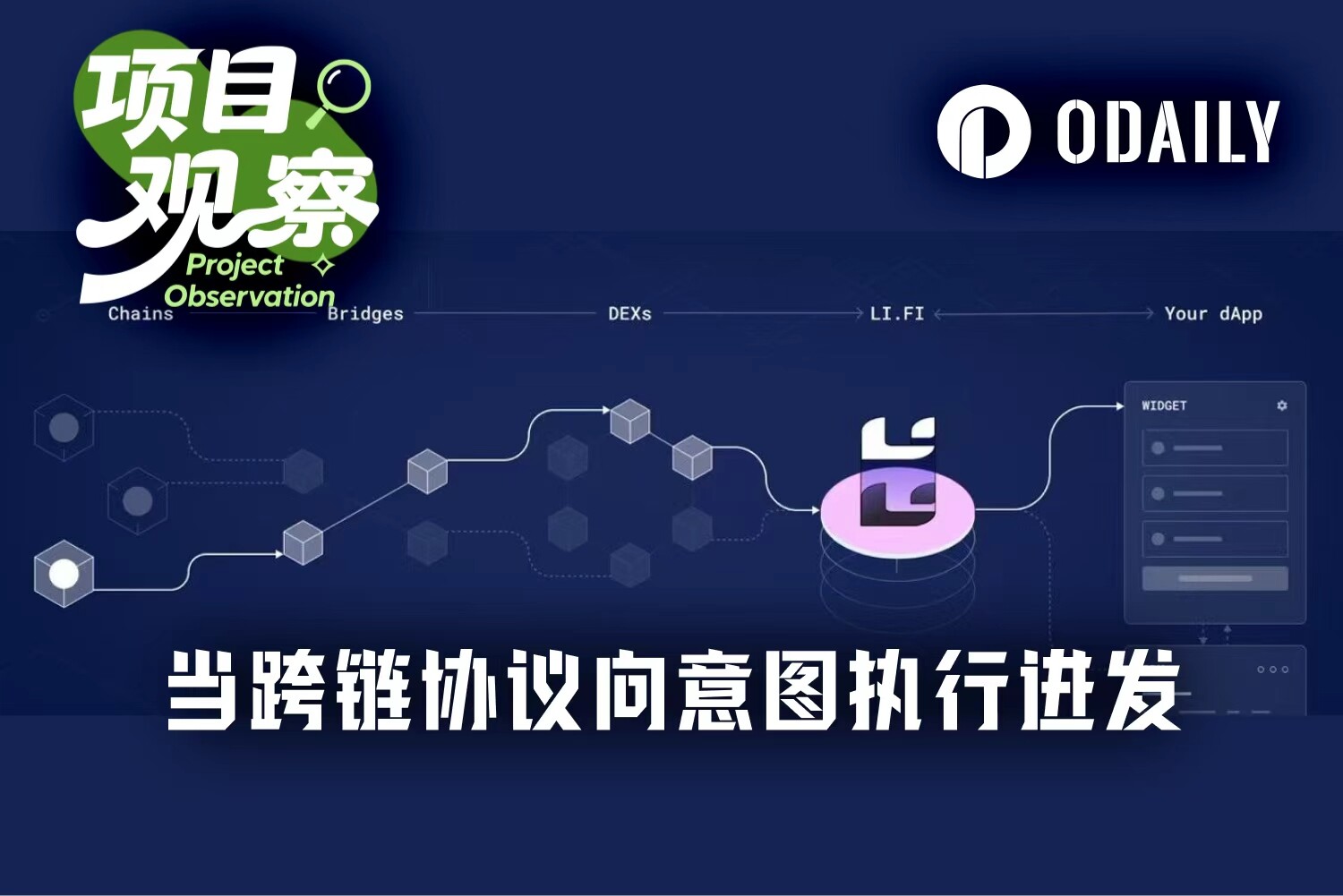
Last month, the cross-chain bridging protocol LI.FI officially and prominently announced the launch of its intent-based execution architecture, LI.FI Intents. This product will serve as the underlying execution layer providing stablecoin payments, RWA, and compliant on-chain liquidity, targeting services for fintech companies, neobanks, wallets, and regulated financial institutions.

Amidst the current trend of stablecoin payments, RWA assets, and compliant assets converging with the on-chain ecosystem, Li.Fi is no longer content with being just a "liquidity transfer protocol." Instead, it is proactively seeking breakthroughs and role upgrades in areas such as new assets, new customers, and new operating systems.

When Industry Liquidity Tightens, Cross-Chain Bridge Protocols Actively Adapt

According to DefiLlama data, cross-chain bridge aggregated trading volume over the past 30 days was approximately $1.92 billion, with a weekly decline of about 1.81%. Since reaching a high of $2.974 billion in October last year, the monthly trading volume of cross-chain bridges has shown a slow downward trend. The trading volume in May dropped to around $1.9 billion, representing a decline of nearly 34% compared to the peak.
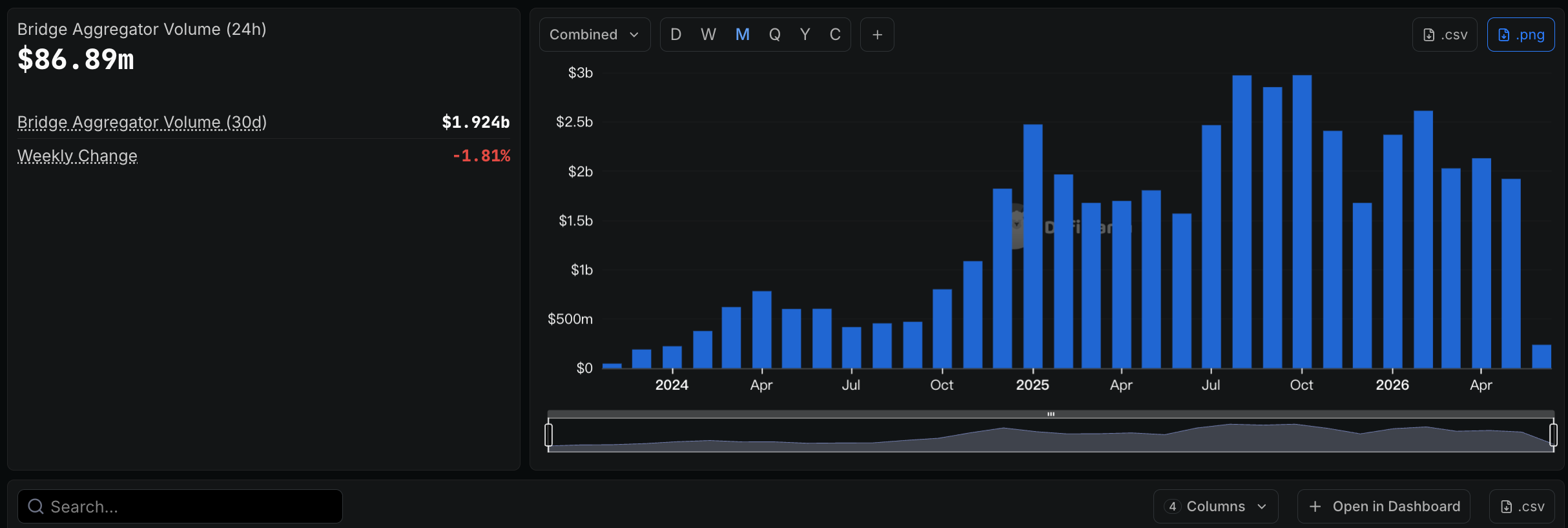
On the other hand, the overall crypto market is in a fluctuating downward trend, with BTC spot trading volume having fallen by as much as 81% from last year's highs; on-chain liquidity has further tightened as a result.

Faced with this situation, Li.Fi, as a cross-chain bridge protocol, did not wait passively like most crypto projects. Instead, it actively explored new business areas, seeking new application scenarios and service targets to ensure its long-term development.

In December last year, LI.FI announced the completion of a $29 million funding round led by Multicoin and CoinFund, bringing its total funding raised to $52 million. At that time, the project stated it planned to use this latest funding to expand its business into different trading domains, including perpetual futures, yield opportunities, prediction markets, and lending markets.

Ample funding gave Li.Fi the confidence to explore and build new products while maintaining its core business.

In April this year, LI.FI announced the launch of a new product, LI.FI Earn, providing on-chain yield functionality for enterprises with digital asset strategies. It supports accessing strategies from over 20 vault protocols through a single integration and features built-in cross-chain execution capabilities across more than 60 chains.

In May, the intent execution architecture LI.FI Intents was released, marking Li.Fi's official entry into the enterprise services sector. It empowers a range of B2B clients with the underlying operational capabilities for stablecoin payments, RWA assets, and compliant liquidity.

In the current convergence of TradFi assets and crypto assets, Li.Fi's new direction for upgrades is to lower user barriers, improve liquidity operation efficiency, and open channels for tokenized asset exchange from the operational execution layer. Compared to cross-chain protocols limited to the crypto market, providing financial services to global fintech companies, neobanks, wallets, and regulated financial institutions is undoubtedly a cash cow business with a much higher ceiling.

In terms of user experience, Li.Fi Intents provides users with a more streamlined execution solution, ready to use. It is reported that it primarily offers market-maker-level execution through a solver network, supporting precise output cross-chain swaps between stablecoins like USDC and USDT without requiring users to manage Gas tokens or handle complex underlying blockchain steps. Simultaneously, the architecture allows applications to integrate multiple tokenized asset issuers through a unified interface.

Regarding entry barriers, LI.FI Intents is already live on applications and wallets like Jumper and Rabby. Moreover, with LI.FI Intents, enterprise users do not need to interact with any wallet, which will significantly lower the cognitive barrier for enterprises in areas like transfer payments and asset movements, reducing many cumbersome operational steps.
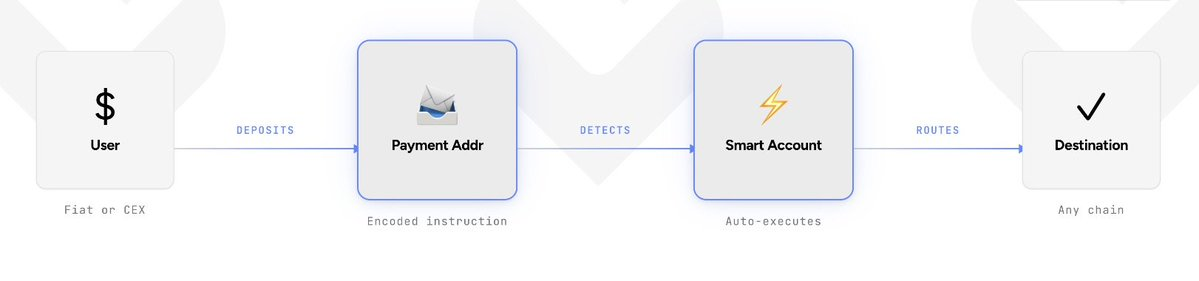
In terms of compliance, the network built by LI.FI Intents consists of verified legitimate entities. Enterprises can review and approve corresponding orders one by one before the trading processing system handles them, precisely choosing the trading processing systems they trust. This ensures orders flow within a compliant approval system. All wallets interacting with this system are subject to OFAC (U.S. Department of the Treasury's Office of Foreign Assets Control) screening, which can be considered the final layer of "compliance insurance."

Regarding ecosystem coverage, LI.FI Intents covers mainstream blockchain networks, including the EVM ecosystem, Solana network, and Tron network. It achieves a certain level of adaptation in ecosystem usability and broad coverage, avoiding potential security risks or single points of failure caused by high dependence on a single blockchain network.

Conclusion: Efficient Automated Services Behind Intent Execution

If tokenized U.S. stocks and RWA assets solve the problems of asset type updates and traditional finance entry barriers, then what Li.FI Intents targets is how to introduce stablecoin payments, RWA assets, and compliant on-chain liquidity into the ecosystems of enterprise users in a better and faster way, improving their operational efficiency and capital utilization.

More importantly, the Li.FI Intents system serves intent execution. Like destination navigation in autonomous driving, enterprise users only need to set the goal; all intermediate execution steps are outsourced and handled by the system.

In today's world of extremely rich asset types, the value of efficient operations will be further amplified, and Li.Fi has already taken the most crucial step.

Lectures associées

BTC Market Pulse : Semaine 19

L'élan du marché du Bitcoin semble rencontrer une résistance à court terme, avec une offre plafonnant les hausses. Les indicateurs montrent un fléchissement : recul de 3,5% de la dynamique des prix, baisse de 28,6% de la pression d'achat nette et activité de trading en baisse de 13,3%. Cette dominance des ventes et le volume réduit suggèrent un engagement limité des investisseurs, potentiellement signe d'une phase de consolidation. Sur le marché des futures, l'intérêt spéculatif et l'effet de levier augmentent (open interest en hausse de 3,0%), et la demande de positions courtes se modère, indiquant une possible stabilisation du sentiment. Cependant, une chute marquée du CVD perpétuel, passant de 120,5 M$ à -101,4 M$, souligne une forte pression vendeuse et un élan haussier qui pourrait faiblir. Dans les options, la hausse de 6,75% du skew (25-delta) reflète une prudence face aux risques de baisse. La baisse de 9,98% de l'open interest des options et une forte augmentation de l'écart de volatilité pointent vers une prise de bénéfices et un risque perçu élevé. Du côté de la finance traditionnelle, les signaux sont mitigés. Les ETF spot américains indiquent des prises de bénéfices potentielles, avec des sorties nettes de 783,4 M$ et un volume en baisse de 13,45%, suggérant une demande institutionnelle plus faible. L'activité on-chain est plus équilibrée : les adresses actives quotidiennes progressent de 6,4%, mais le volume des transactions ajusté baisse de 7,4%, signalant moins d'activité à grande échelle. Les mesures de liquidité et de positionnement montrent une structure relativement stable. L'amélioration modeste des indicateurs de profitabilité et la baisse de l'offre des détenteurs à court terme suggèrent une pression baissière qui s'atténue. Dans l'ensemble, le marché semble être dans une phase de consolidation. Les flux institutionnels plus faibles et l'activité de trading réduite sont compensés par un engagement utilisateur stable et un sentiment qui s'améliore graduellement.

insights.glassnodeIl y a 49 mins

BTC Market Pulse : Semaine 19

insights.glassnodeIl y a 49 mins

Pulsation du marché du BTC : Semaine 22

Le Bitcoin a affiché une baisse cette semaine, passant d'environ 79 000 $ à un creux local proche de 74 000 $ avant de remonter vers 77 000 $, avec un élan de prix en déclin de 21,7%. Malgré une pression de vente apparente, les indicateurs CVD Spot et Perpétuel ont significativement augmenté, suggérant un allégement de cette pression et un sentiment de marché qui se rééquilibre. L'activité globale a diminué, avec des baisses du volume spot et de l'intérêt ouvert sur les futures, indiquant un appétit spéculatif réduit. Cependant, certains signes montrent un regain d'appétit pour le risque, avec une forte hausse des paiements de financement côté long et une demande soutenue pour une exposition haussière. Sur les marchés d'options, le skew 25-Delta a légèrement augmenté, signalant une demande accrue pour une protection contre les baisses. Dans le secteur TradFi, les ETF spot américains ont vu leurs flux nets s'améliorer et leurs gains non réalisés (MVRV) augmenter légèrement, bien que le volume des échanges ait chuté. L'activité du réseau (adresses actives, volume des transferts) a connu des réductions mineures, pointant vers une phase de consolidation. Les mesures de liquidité indiquent un profil plus stable et une conviction accrue des investisseurs à long terme. Toutefois, les ratios de profit réalisé et non réalisé suggèrent une augmentation des réalisations de pertes et un sentiment potentiellement prudent, voire baissier. En résumé, le marché montre des signes de modération et de consolidation, avec une activité réduite, un sentiment mitigé et une combinaison d'indicateurs qui soulignent la nécessité d'une surveillance attentive des dynamiques de marché.

insights.glassnodeIl y a 51 mins

Pulsation du marché du BTC : Semaine 22

insights.glassnodeIl y a 51 mins

BTC Pulsations du Marché : Semaine 20

Le Bitcoin a progressé la semaine dernière, passant des environs de 77 000 $ aux bas niveaux de 82 000 $. Les acheteurs ont continué d'absorber les replis, soutenus par un sentiment haussier fort, comme en témoigne la hausse du Spot CVD et du volume spot. Cependant, la modération de l'élan des prix suggère une pression d'achat et de vente plus équilibrée, indiquant une phase de stabilisation potentielle. Sur le marché des contrats à terme, l'Open Interest et le Perpetual CVD sont en hausse, signalant une activité spéculative accrue et un momentum haussier persistant. Néanmoins, le déclin du financement des positions longues pointe vers un intérêt grandissant pour les positions courtes et un possible affaiblissement du sentiment haussier. Dans le marché des options, la demande de protection contre les baisses a diminué et l'open interest a augmenté, reflétant des attentes neutres à légèrement haussières. Cependant, l'élargissement de l'écart de volatilité indique que le marché anticipe une incertitude élevée. L'activité on-chain s'est nettement renforcée, avec une augmentation des adresses actives quotidiennes, du volume des transferts ajusté par entité et du volume total des frais, signe d'une base d'utilisateurs plus engagée. Les conditions de liquidité se stabilisent, avec une pression de vente immédiate réduite et des entrées de capital nettes modestes. La rentabilité du marché s'est améliorée, mais le pourcentage de l'offre en profit reste inférieur aux niveaux généralement associés à une forte prise de bénéfices, suggérant un optimisme mesuré. En résumé, la structure du marché du Bitcoin continue de s'améliorer, soutenue par une activité on-chain plus robuste, une meilleure rentabilité et un positionnement des détenteurs plus stable. Bien que les tendances haussières se construisent, des entrées de capital plus modestes et un sentiment prudent indiquent que le marché reste sensible aux changements d'appétit pour le risque.

insights.glassnodeIl y a 52 mins

BTC Pulsations du Marché : Semaine 20

insights.glassnodeIl y a 52 mins

Trading

Spot
Futures
活动图片