‘Clarity once and for all’ – White House reviews SEC’s new crypto framework

ambcryptoPublié le 2026-03-24Dernière mise à jour le 2026-03-24

Résumé

The U.S. SEC is shifting its approach to crypto regulation by moving away from enforcement actions toward creating clear rules. On March 20, it submitted two proposals to the White House, one aimed at classifying digital assets to determine which should be considered securities. If approved, many cryptocurrencies may no longer be classified as securities, reducing regulatory confusion. An "innovation exemption" may ease compliance for crypto firms, encouraging innovation in the U.S. The CFTC chair emphasized the need for clarity. The SEC-CFTC collaboration suggests most digital assets should not be automatically treated as securities. Despite recent market gains, investor sentiment remains fearful. The new framework seeks to balance oversight and growth while awaiting potential congressional legislation.

The U.S. Securities and Exchange Commission (SEC) is starting to change how it handles crypto regulation. Instead of relying mainly on lawsuits and enforcement actions, it is now working toward creating clear and structured rules.

On the 20th of March, the SEC quietly sent two important proposals to the White House. One focuses on making hedge funds and private equity firms more transparent.

Meanwhile, the second proposal was a more significant one for crypto. The latter aims to create a clear system to classify digital assets.

White House reviews crypto interpretation

If approved, many cryptocurrencies may no longer be classified as securities, reducing confusion and giving the industry clearer rules to follow. Instead of relying on lawsuits, the SEC is shifting toward setting clear guidelines, as reported by Bloomberg.

The proposed “innovation exemption” highlights this change. Rather than strict enforcement, the SEC is offering a more supportive environment where crypto firms can operate with fewer restrictions. This means new companies may not need to immediately meet complex registration requirements, making it easier for them to build and grow in the U.S.

Remarking on the same, Michael S. Selig, Chair of the Commodity Futures Trading Commission (CFTC), said,

Chairman Atkins and I now have developed a new interpretation that will provide clarity once and for all as to what’s a security and what’s not

Citing the reason behind this shift, Selig explains that earlier, the SEC, under Chair Gary Gensler, companies were often left guessing what was allowed and what wasn’t. This confusion pushed many crypto businesses to move outside the U.S.

In fact, because of this unclear environment, many developers became hesitant and stopped taking risks. Now, the new SEC proposals are trying to fix that by bringing more clarity and encouraging innovation to return to the U.S.

Private fund space also gets a breather

A similar shift is happening in the private fund space. The SEC has delayed some reporting rules (Form PF) until the 1st of October and is rethinking the strict data requirements introduced under Gary Gensler.

This revives an important debate. Following the Archegos collapse, regulators pushed for greater transparency to mitigate risk. Now, however, the SEC is shifting focus toward easing compliance burdens for firms, aiming to strike a balance between market safety and regulatory simplicity.

Notably, this change comes at a time when there is a significant disconnect between price movements and investor sentiment.

Market scenes are full of question marks

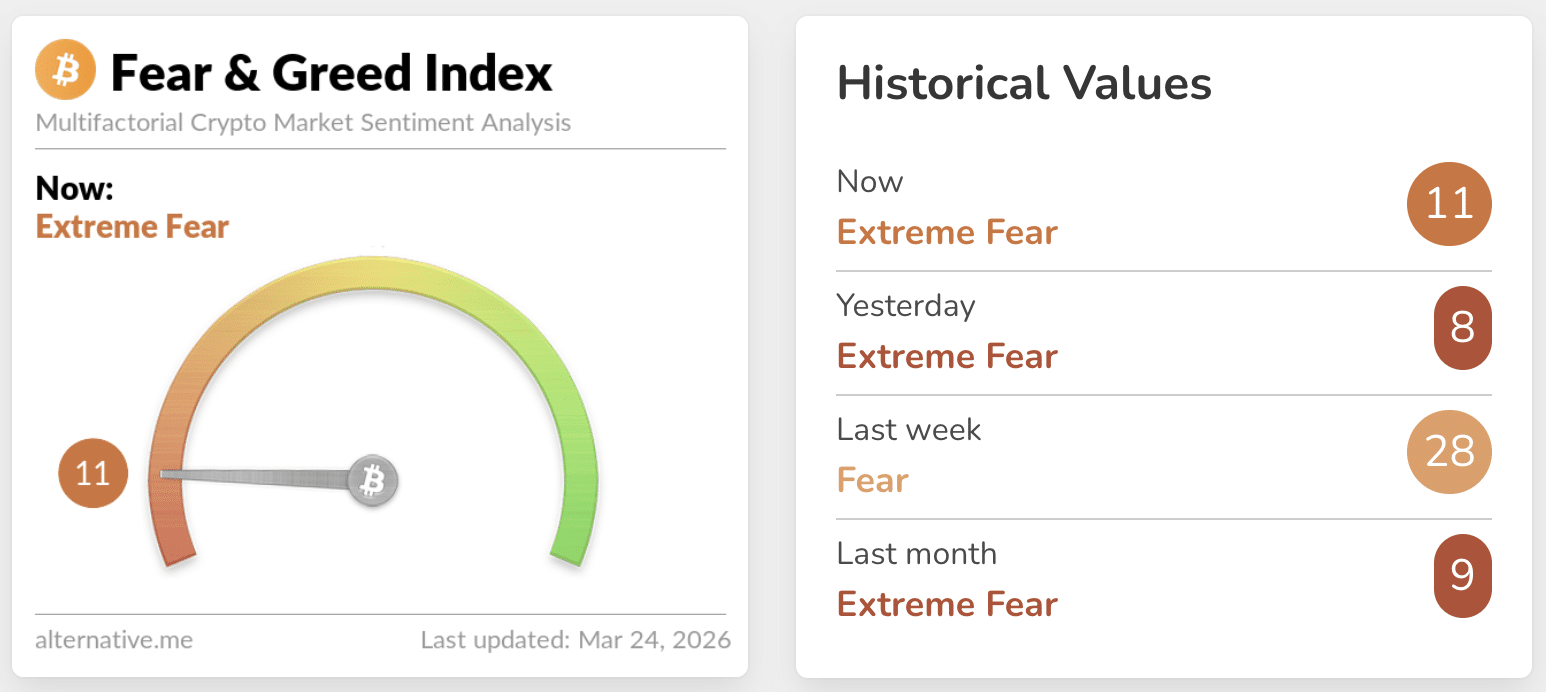
In the last 24 hours, the total crypto market value has gone up by about 3.26% at press time. But even with this rise, investor confidence is still very low.

The Crypto Fear & Greed Index is stuck in the “Extreme Fear” zone, showing that people are still uncertain and cautious.
Source: Alternative

However, with all these developments, the SEC is trying to build a bridge between its old approach and future laws like the CLARITY Act, which aim to provide clearer legal clarity.

Needless to say, the SEC is also working closely with the CFTC. In a recent interpretation on the 17th of March, they suggested that most digital assets should not be treated as securities automatically. This helps reduce risk and uncertainty for crypto companies in the U.S.

It’s still unclear whether these new rules will be temporary until Congress passes full legislation or if they will become a long-term framework. But one thing is clear: under Chairman Paul Atkins, the SEC is trying to end the confusion.


Final Summary

  • Collaboration between the SEC and CFTC is a key step toward unified oversight, reducing regulatory overlap and uncertainty.
  • Clear classification of digital assets could finally remove the grey zone that has stalled crypto innovation.


Cryptos en tendance

Questions liées

QWhat is the main shift in the SEC's approach to crypto regulation as described in the article?

AThe SEC is shifting from relying mainly on lawsuits and enforcement actions to creating clear and structured rules for the crypto industry.

QWhat is the purpose of the proposed 'innovation exemption' mentioned in the article?

AThe 'innovation exemption' aims to create a more supportive environment where crypto firms can operate with fewer restrictions, allowing new companies to build and grow without immediately meeting complex registration requirements.

QAccording to the article, what problem did the previous regulatory environment cause for crypto businesses?

AThe previous unclear regulatory environment, under Chair Gary Gensler, caused confusion that pushed many crypto businesses to move outside the U.S. and made developers hesitant to take risks.

QWhat does the current 'Crypto Fear & Greed Index' indicate about investor sentiment, despite recent market gains?

ADespite a recent rise in the total crypto market value, the Crypto Fear & Greed Index is stuck in the 'Extreme Fear' zone, indicating that investor confidence is still very low and people remain uncertain and cautious.

QHow are the SEC and CFTC collaborating to provide clarity, according to the recent interpretation on March 17th?

AIn their recent interpretation, the SEC and CFTC suggested that most digital assets should not be automatically treated as securities, which helps reduce risk and uncertainty for crypto companies in the U.S.

Lectures associées

Pourquoi le Bitcoin maintient 64 000 $ après la pause restrictive de la Fed

Le Bitcoin se stabilise autour de 64 000 $ après la décision de la Fed de maintenir ses taux d'intérêt dans la fourchette 3,50-3,75 %. Bien que perçu comme une pause, le vote a révélé des divisions internes, trois membres plaidant pour une hausse, signalant une attitude globalement restrictive. Cette position limite l'appétit pour les actifs risqués comme les cryptomonnaies. Le marché a réagi avec une volatilité modérée. Les FNB spot sur Bitcoin ont enregistré un afflux net de 32,1 millions de dollars, mettant fin à une série de sorties, tandis que les FNB Ethereum ont subi des sorties. Cela indique une rotation des capitaux vers l'actif principal. Les niveaux clés à surveiller pour le Bitcoin sont le support à 63 000-63 500 $ et la résistance autour de 66 000 $. Malgré la pression macroéconomique, le marché ne montre pas de signes de capitulation. Les fondamentaux du réseau Ethereum restent solides avec une file d'attente importante pour le staking. Le report du vote sur le CLARITY Act au Sénat américain a tempéré les attentes réglementaires immédiates. Pour la fin du mois, les données macro américaines (inflation, dépenses) guideront les senteurs. Le scénario de base prévoit une consolidation du Bitcoin entre 63 000 et 66 000 $. La résilience au-dessus de 63 000 $, le maintien de l'Ethereum au-dessus de 1 860 $ et la poursuite des entrées institutionnelles seront des facteurs déterminants pour une éventuelle reprise au second semestre.

cryptonews.ruIl y a 3 h

Pourquoi le Bitcoin maintient 64 000 $ après la pause restrictive de la Fed

cryptonews.ruIl y a 3 h

Parker Lewis explique pourquoi le bitcoin reste la meilleure monnaie

Parker Lewis, un analyste bitcoin renommé, a critiqué les stratégies marketing des entreprises qui se présentent comme des trésoreries crypto. Il estime que la vente d'actions privilégiées perpétuelles, présentées comme un "crédit numérique", déforme fondamentalement la nature du bitcoin. Il souligne que le bitcoin n'a pas de rendement fiduciaire intégré et que les promesses de dividendes reposent sur un modèle risqué nécessitant un afflux constant de nouveaux investisseurs. Lewis met en garde contre les risques de ces dérivés, notant que le marché des actions privilégiées perpétuelles (1 000 milliards de dollars) est minuscule comparé au marché du crédit mondial (300 000 milliards de dollars), car les institutions évitent ces risques qu'elles transfèrent aux particuliers. Il rejette également l'idée que la volatilité du bitcoin le rende impropre à la plupart des gens. Pour lui, cette volatilité est une conséquence naturelle de l'adoption massive d'un actif à offre fixe et inélastique. Il conseille d'acheter des bitcoins directement plutôt que des actions d'entreprises comme MicroStrategy. Détourner l'attention vers ces dérivés corporatifs fait oublier la vraie menace : la dépréciation rapide des monnaies fiduciaires. Lewis illustre cela avec son "indice du ribeye", montrant une inflation annuelle de 12 à 13% sur le prix d'un steak, bien supérieure aux chiffres officiels. La stratégie la plus sûre, selon lui, reste la possession directe de bitcoin et le contrôle de ses clés privées, pour se protéger des turbulences macroéconomiques, plutôt que de courir après des rendements corporatifs douteux qui amplifient les risques systémiques.

cryptonews.ruIl y a 3 h

Parker Lewis explique pourquoi le bitcoin reste la meilleure monnaie

cryptonews.ruIl y a 3 h

Trading

Spot

Articles tendance

Comment acheter HOUSE

Bienvenue sur HTX.com ! Nous vous permettons d'acheter Housecoin (HOUSE) de manière simple et pratique. Suivez notre guide étape par étape pour commencer votre parcours crypto.Étape 1 : Création de votre compte HTXUtilisez votre adresse e-mail ou votre numéro de téléphone pour ouvrir un compte sur HTX gratuitement. L'inscription se fait en toute simplicité et débloque toutes les fonctionnalités.Créer mon compteÉtape 2 : Choix du mode de paiement (rubrique Acheter des cryptosCarte de crédit/débit : utilisez votre carte Visa ou Mastercard pour acheter instantanément Housecoin (HOUSE).Solde :utilisez les fonds du solde de votre compte HTX pour trader en toute simplicité.Prestataire tiers :pour accroître la commodité d'utilisation, nous avons ajouté des modes de paiement populaires tels que Google Pay et Apple Pay.P2P :tradez directement avec d'autres utilisateurs sur HTX.OTC (de gré à gré) : nous offrons des services personnalisés et des taux de change compétitifs aux traders.Étape 3 : stockage de vos Housecoin (HOUSE)Après avoir acheté vos Housecoin (HOUSE), stockez-les sur votre compte HTX. Vous pouvez également les envoyer ailleurs via un transfert sur la blockchain ou les utiliser pour trader d'autres cryptos.Étape 4 : tradez des Housecoin (HOUSE)Tradez facilement Housecoin (HOUSE) sur le marché Spot de HTX. Il vous suffit d'accéder à votre compte, de sélectionner la paire de trading, d'exécuter vos trades et de les suivre en temps réel. Nous offrons une expérience conviviale aux débutants comme aux traders chevronnés.

650 vues totalesPublié le 2025.04.27Mis à jour le 2026.06.02

Comment acheter HOUSE

Discussions

Bienvenue dans la Communauté HTX. Ici, vous pouvez vous tenir informé(e) des derniers développements de la plateforme et accéder à des analyses de marché professionnelles. Les opinions des utilisateurs sur le prix de HOUSE (HOUSE) sont présentées ci-dessous.

活动图片












