A Hidden Financial War? Iran Collects Strait Passage Fees with Stablecoins

marsbitPublié le 2026-04-07Dernière mise à jour le 2026-04-07

Résumé

Iran has officially institutionalized a mandatory toll system for all large tankers passing through the Strait of Hormuz, rejecting dollar-denominated payments. Instead, fees must be paid either via yuan-denominated wire transfers or in USD-pegged stablecoins via decentralized networks. The move is designed to bypass U.S. financial sanctions and traditional banking channels like SWIFT system. The Islamic Revolutionary Guard Corps (IRGC) is implementing a tiered pricing model based on geopolitical alignment: allies like China and Russia pay the lowest rates, while U.S. allies and Israel are barred entirely. Vessels must display approved flags and are escorted through the strait after payment. This marks the first time a nation has integrated cryptocurrency into strategic-level payment infrastructure at commercial scale. The mechanism could channel over $20 billion annually in stablecoins through Iranian-controlled wallets, creating a grey liquidity pool shielded by sovereign power. However, risks remain. Compliance with sanctions from the EU and UK may void insurance coverage for vessels paying the IRGC, forcing shipowners to choose between longer routes or potential financial penalties. Russia is considering a similar model for the Northern Sea Route, signaling a broader shift toward using geographic chokepoints as financial leverage in a reordered global trade system.

On April 2, Iranian Deputy Foreign Minister Gharibabadi publicly confirmed at a routine press conference in Tehran that all very large crude carriers (VLCCs) passing through the Strait of Hormuz must pay a passage fee to the Islamic Revolutionary Guard Corps (IRGC), explicitly excluding the U.S. dollar as a settlement channel. This statement formalizes rumors previously circulating in shipping circles—Iran is no longer satisfied with traditional tools of geopolitical games but is transforming its control of the strait into a financial experiment targeting dollar hegemony.

The implementation speed of the fee mechanism has exceeded market expectations.

Citing internal documents from the IRGC Navy, Bloomberg reported that the system had completed technical deployment by the end of March. This time, Iran has chosen only two methods to receive passage fees: RMB wire transfers or settlements via decentralized networks using dollar-denominated stablecoins.
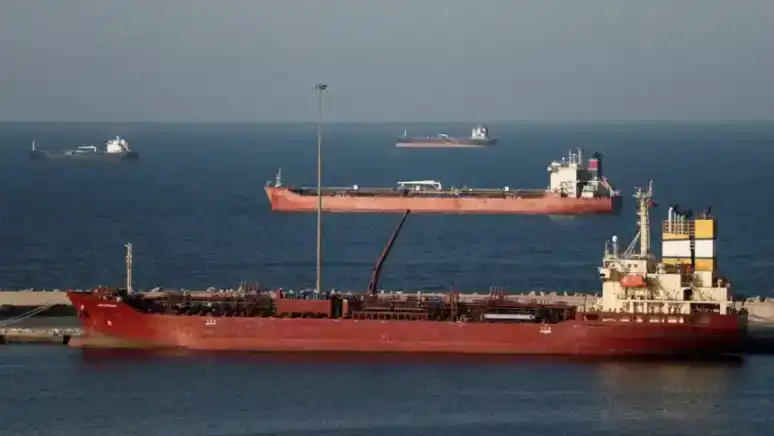
The Iranian customs department has set up a dedicated cryptocurrency exchange window on Qeshm Island to ensure funds are quickly converted into rials or transferred to overseas accounts after receipt.

This arrangement is meticulously designed.

Traditional international shipping settlements rely on the SWIFT network and correspondent banking system; any transaction involving Iran would trigger secondary sanctions from the U.S. Treasury. The combination of the RMB Cross-Border Payment System and public blockchain networks, however, constructs a parallel channel bypassing dollar surveillance.

According to statistics from London-based shipping brokerage Braemar, at least two VLCCs flying unspecified flags of convenience completed RMB payments and safely passed through the strait in late March. The Hormuz Strait Passage Management Act, passed by the Iranian Parliament's National Security Committee on March 30, further provides domestic legal backing for this mechanism.

It is worth noting that Iran has also implemented differentiated fee pricing for vessels based on their geopolitical affiliations.

Citing insider information, Bloomberg reported the oil fee standards for the Strait of Hormuz, starting at $0.5 per barrel, categorized into five tiers based on relationships with different countries.

The first tier is ally preferential rates: China and Russia, $0.5-$0.7 per barrel, with dedicated green channels; regular reporting allows free passage.

The second tier is friendly partners: countries like India and Pakistan, $0.8-$0.9 per barrel.

The third tier is neutral countries: African nations, Southeast Asia, Latin America, $1 per barrel, requiring declaration and inspection to ensure no hostile assets before release.

The fourth tier is high-risk countries: those with close ties to the U.S. but no hostile actions against Iran, such as Japan, South Korea, and many EU countries, $1.2-$1.5 per barrel, subject to full monitoring by Iran and potentially long approval queues.

The fifth tier is the U.S., Israel, and their allies: prohibited from passage.

Once a VLCC pays the toll, the IRGC issues a license code and route instructions. The vessel must fly the flag of a country that has a negotiated passage agreement; in some cases, it must also formally change its registration to that country. As the vessel approaches the Strait of Hormuz, it must broadcast its passage code via VHF radio. A patrol boat will then escort it, navigating close to the coastline through a group of islands now referred to by industry insiders as the "Iranian toll station," to ensure safe passage through the strait.

This is the first time a sovereign state has incorporated stablecoins into strategic-level payment infrastructure.

Unlike El Salvador's symbolic move to adopt Bitcoin as legal tender, Iran's choice involves mandatory commercial scale. The strait handles 21% of global seaborne crude oil traffic, with dozens of vessels passing through daily.

If this mechanism continues to operate, it is estimated that over $20 billion in stablecoins will flow through Iran-controlled digital wallets annually, forming a grey liquidity pool protected by sovereign power.
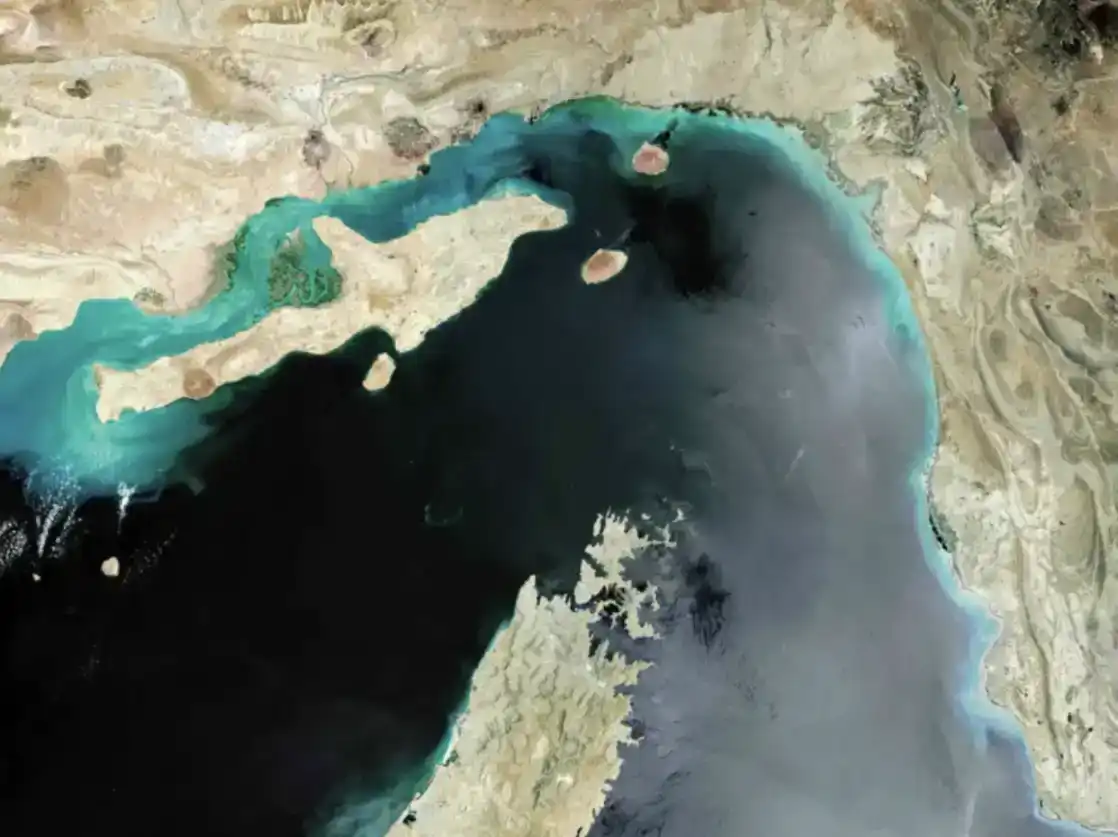
The deeper impact lies in the chain reaction for shipping insurance and trade finance. The International Group of P&I Clubs (IG) has issued an internal warning, noting that payments to the IRGC may trigger compliance risks under EU and UK sanctions, potentially voiding insurance policies. This forces shipowners into a brutal trade-off between shipping economics and legal risks: diverting via the Cape of Good Hope adds 15 days of voyage and tens of thousands in fuel costs, while paying the cryptocurrency toll risks account freezes. Some commodity traders have begun attempting to reroute through Pakistani intermediaries. Islamabad recently announced permission for 20 international tankers to fly the Pakistani flag, essentially providing an offshore outsourcing channel for Iran's system.

Iran is not the only country doing this. Russia previously announced a similar fee policy for the Northern Sea Route and has publicly considered accepting cryptocurrency settlements. This digital financial logic of turning geographical hubs into 'nodes' is reshaping the payment infrastructure of global energy trade.

When merchant ships complete USDT settlements via on-chain protocols in the anchorage of Qeshm Island, it is not merely the payment of a toll but a systematic dismantling of the remnants of the Bretton Woods system.

The fragility of this experiment is equally evident. Since USDT/USDC are essentially dollar-pegged and subject to OFAC tracking, how the shadow public entity established by the IRGC can 'decentralize' and convert large-scale funds into physical assets or fiat currency (rials) is a risk point. However, as long as Iran maintains its geographical monopoly over the Strait of Hormuz, this financial war mediated by cryptocurrency will continue to rewrite the rulebook of global trade.


Cryptos en tendance

Questions liées

QWhat are the two payment methods Iran accepts for the Strait of Hormuz transit fee?

AIran accepts payment via RMB wire transfer or in USD stablecoins through a decentralized network.

QHow does Iran categorize countries for its tiered pricing system for the transit fee?

AIran uses a five-tier system: Tier 1 (allies like China and Russia), Tier 2 (friendly partners like India and Pakistan), Tier 3 (neutral countries), Tier 4 (high-risk countries with close US ties), and Tier 5 (US, Israel, and allies, which are banned).

QWhat is the estimated annual value of stablecoins that could flow through Iran's system if the mechanism continues?

AIt is estimated that over $20 billion worth of stablecoins could flow through Iran-controlled digital wallets annually.

QWhat major risk do shipowners face when paying the fee in cryptocurrency according to the International Group of P&I Clubs?

AThe International Group of P&I Clubs warned that paying the fee to the IRGC could trigger EU and UK sanctions compliance risks, potentially leading to the invalidation of their insurance policies.

QBesides Iran, which other country has announced a similar toll system for a strategic waterway and considered crypto payments?

ARussia has announced a similar toll system for the Northern Sea Route and has publicly considered accepting cryptocurrency payments.

Lectures associées

9,42 millions de particuliers se ruent sur Changxin Technology, qui a été attribué ?

Les résultats de l'offre publique initiale (IPO) de Changxin Technology sont publiés. L'émission a attiré 942 880 investisseurs particuliers et 285 institutions, avec un nombre record d'actions allouées en ligne. Le taux de succès pour les particuliers s'élève à environ 0,4714%, le plus élevé jamais enregistré pour une nouvelle action sur le marché STAR. Après un mécanisme de rapatriement des actions, le nombre d'actions offertes en ligne a été porté à 3,851 milliards, représentant 50,07% du total. Environ 7,7 millions de numéros gagnants ont été attribués. Les estimations suggèrent qu'un gain potentiel pour un lot gagnant (500 actions) pourrait se situer entre 10 600 et 25 600 yuans selon la valorisation boursière post-introduction. Côté institutions, 285 investisseurs ont reçu 2,173 milliards d'actions, avec un taux d'allocation de 0,1756%. Taikang Asset Management a été la plus grande bénéficiaire. Parmi les fonds communs de placement, E Fund, Southern Fund et ICBC Credit Suisse Trust sont en tête. Dans la catégorie des fonds privés, Liang Wenfeng, fondateur de la société d'IA DeepSeek, via ses entités Ningbo Fantasia Quant et Zhejiang Jiuzhang Asset, a obtenu la plus grande part, avec une allocation d'environ 202,5 millions d'actions d'une valeur de 1,75 milliard de yuans. Des gains potentiels pour ses fonds sont estimés à 7,3 milliards de yuans si la capitalisation atteint 3 000 milliards de yuans. Le Fonds de sécurité sociale national figurait parmi les 30 investisseurs stratégiques, ayant reçu pour 144,37 milliards de yuans d'actions avec une période de blocage. La société devrait être cotée vers le 27 juillet. Les valorisations anticipées par les analystes vont de 1 000 à 4 250 milliards de yuans, malgré des récentes corrections sur les marchés technologiques mondiaux qui pourraient influencer ses débuts en bourse.

marsbitIl y a 58 mins

9,42 millions de particuliers se ruent sur Changxin Technology, qui a été attribué ?

marsbitIl y a 58 mins

Une "déesse de la charité" de 3 millions d'abonnés entièrement créée par IA, un orphelinat factice, un "faux philanthrope" transnational s'effondre du jour au lendemain

**[Guide] Scandale : Une influenceuse australienne prétendant aider des orphelins avec 3 millions d'abonnés a été démasquée pour avoir utilisé l'IA afin de créer de fausses images et vidéos de son oeuvre caritative.** L'ABC révèle que Lily Jay, une influenceuse australienne convertie à l'islam avec près de 3 millions d'abonnés, a orchestré une vaste escroquerie caritative en utilisant l'intelligence artificielle. Sa fondation, le "Lily Jay Foundation", prétendait construire des mosquées, distribuer de la nourriture à Gaza et gérer un orphelinat en Ouganda. Cependant, l'enquête montre que des vidéos clés, notamment celle de l'inauguration de l'orphelinat où des enfants tiennent des sucettes, étaient intégralement générées par IA, avec des incohérences typiques comme des erreurs de texte sur les vêtements. Aucune trace de l'orphelinat "Ada Nur" ou de la boulangerie à Gaza n'a pu être vérifiée sur place. Un trophée "humanitaire" présenté en mai 2026 portait le filigrane invisible d'un générateur d'images AI. Le site web de la fondation admettait discrètement ne pas être un organisme de bienfaisance enregistré, échappant ainsi aux obligations de transparence financière. Opérant depuis Chypre et le Kosovo, Lily Jay (de son vrai nom Lily Jay Hinson) mène une vie luxueuse sur ses réseaux personnels. Après les questions de l'ABC, le site a modifié son contenu pour les visiteurs australiens, supprimant les options de don et les pages compromettantes, tout en les conservant pour le public international. Les experts alertent sur la dangerosité de ces escroqueries qui exploitent la générosité et la volonté de croire en de belles histoires. À l'ère du deepfake, la défense reste un questionnement critique : est-ce vrai ?

marsbitIl y a 1 h

Une "déesse de la charité" de 3 millions d'abonnés entièrement créée par IA, un orphelinat factice, un "faux philanthrope" transnational s'effondre du jour au lendemain

marsbitIl y a 1 h

L2 « recalibrage » : quand L1 devient son propre Rollup, quel est le destin final d’Ethereum ?

"L2 Recalibration": When L1 Becomes Its Own Rollup, What Is Ethereum's Endgame? In recent years, the proliferation of L2s (Rollups) has solved Ethereum's scalability issues but at the cost of fragmenting liquidity, user states, and the unified chain experience. This has prompted a fundamental reevaluation of the relationship between L1 and L2 within the Ethereum community. Ethereum's roadmap is evolving. The core challenge is no longer just creating more block space, but redefining the roles of L1, L2, execution, and settlement layers in a fragmented ecosystem. L1 is actively enhancing its own scalability (increasing Gas Limit, statelessness, zkEVM). Consequently, L2s can no longer rely solely on "cheaper, faster transactions" for long-term value. Their future role shifts towards providing differentiated features (privacy, custom governance, application-specific optimizations) that L1 cannot easily offer uniformly, while still contributing extra capacity. Interoperability is key to restoring a seamless user experience. The goal is not just cross-chain bridges but enabling different execution environments to trust each other's states faster and at lower cost. Initiatives like Open Intents Frameworks and the Ethereum Interoperability Layer (EIL) aim to make cross-L2 interactions feel like single-chain transactions. Crucially, shortening Ethereum's finality time (from minutes to seconds) is a major focus, as it directly benefits cross-chain applications by reducing the trust latency for state changes. A provocative idea from researcher Barnabé Monnot suggests that as proof systems (like zkEVM) mature on mainnet, L1 itself could become a form of "its own Rollup." Here, specialized nodes would execute transactions and generate validity proofs, while validators would verify these proofs instead of re-executing everything. This blurs the traditional L1/L2 hierarchy, making "Rollup" more of a general execution-verification architecture than a strict layer. The vision is a future where multiple L2s act as specialized execution domains (for DeFi, gaming, privacy, etc.) under a shared Ethereum security, settlement, and state framework—a system that is fragmented in execution but unified in trust and liquidity. In conclusion, Ethereum's endgame is not L2s replacing L1 or being made obsolete by a scaled L1. It is an ecosystem where L2s become a spectrum of execution environments with varying features, all capable of securely interoperating and sharing Ethereum's foundational security and liquidity. The next phase is about re-integrating what was fragmented back into a coherent, user-friendly "one chain" experience.

marsbitIl y a 1 h

L2 « recalibrage » : quand L1 devient son propre Rollup, quel est le destin final d’Ethereum ?

marsbitIl y a 1 h

Trading

Spot

Articles tendance

Comment acheter WAR

Bienvenue sur HTX.com ! Nous vous permettons d'acheter WAR (WAR) de manière simple et pratique. Suivez notre guide étape par étape pour commencer votre parcours crypto.Étape 1 : Création de votre compte HTXUtilisez votre adresse e-mail ou votre numéro de téléphone pour ouvrir un compte sur HTX gratuitement. L'inscription se fait en toute simplicité et débloque toutes les fonctionnalités.Créer mon compteÉtape 2 : Choix du mode de paiement (rubrique Acheter des cryptosCarte de crédit/débit : utilisez votre carte Visa ou Mastercard pour acheter instantanément WAR (WAR).Solde :utilisez les fonds du solde de votre compte HTX pour trader en toute simplicité.Prestataire tiers :pour accroître la commodité d'utilisation, nous avons ajouté des modes de paiement populaires tels que Google Pay et Apple Pay.P2P :tradez directement avec d'autres utilisateurs sur HTX.OTC (de gré à gré) : nous offrons des services personnalisés et des taux de change compétitifs aux traders.Étape 3 : stockage de vos WAR (WAR)Après avoir acheté vos WAR (WAR), stockez-les sur votre compte HTX. Vous pouvez également les envoyer ailleurs via un transfert sur la blockchain ou les utiliser pour trader d'autres cryptos.Étape 4 : tradez des WAR (WAR)Tradez facilement WAR (WAR) sur le marché Spot de HTX. Il vous suffit d'accéder à votre compte, de sélectionner la paire de trading, d'exécuter vos trades et de les suivre en temps réel. Nous offrons une expérience conviviale aux débutants comme aux traders chevronnés.

574 vues totalesPublié le 2024.12.11Mis à jour le 2026.06.02

Comment acheter WAR

Discussions

Bienvenue dans la Communauté HTX. Ici, vous pouvez vous tenir informé(e) des derniers développements de la plateforme et accéder à des analyses de marché professionnelles. Les opinions des utilisateurs sur le prix de WAR (WAR) sont présentées ci-dessous.

活动图片