The Founder of Coinbase Is Going to Research Immortality

marsbitPublié le 2026-06-03Dernière mise à jour le 2026-06-03

Résumé

Coinbase founder Brian Armstrong has co-founded NewLimit, a longevity biotech startup, which just raised $435 million in a Series C funding round led by Peter Thiel’s Founders Fund. The round values the company at $3.1 billion, more than triple its valuation from a year ago. NewLimit is developing drugs aimed at reversing cellular aging to extend human healthspan. Its approach builds on Nobel Prize-winning research on cellular reprogramming (Yamanaka factors), with a focus on identifying specific gene combinations that can restore younger cell function. The company plans to begin human clinical trials next year, initially targeting alcohol-related liver disease as a form of accelerated aging. Founded in 2021 by Armstrong alongside biotech investor Blake Byers and scientist Jacob Kimmel, NewLimit has now raised over $700 million across multiple rounds. It joins a growing field of well-funded longevity ventures backed by tech billionaires, including Sam Altman’s Retro Biosciences and Jeff Bezos-backed Altos Labs, reflecting a surge of interest in using science to combat aging and extend healthy lifespan.

Author | Azuma(@azuma_eth)
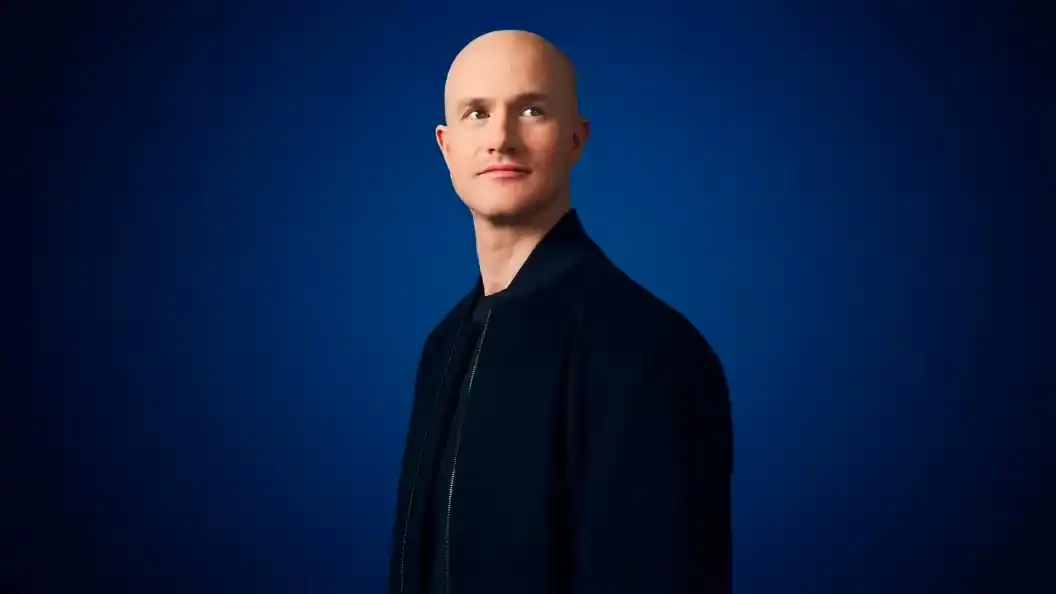
At 3:00 AM Beijing time on June 3, longevity technology startup NewLimit announced the completion of a $435 million Series C funding round. This round was led by Peter Thiel's fund Founders Fund, with continued participation from Abstract Ventures, Kleiner Perkins, NFDG, Eli Lilly Ventures, Valor Equity Partners, among others, while also introducing new investors such as Thrive Capital, Greenoaks, and Quiet Capital.

A WSJ report indicated that NewLimit's valuation in this round reached $3.1 billion, more than triple its valuation from a year ago.
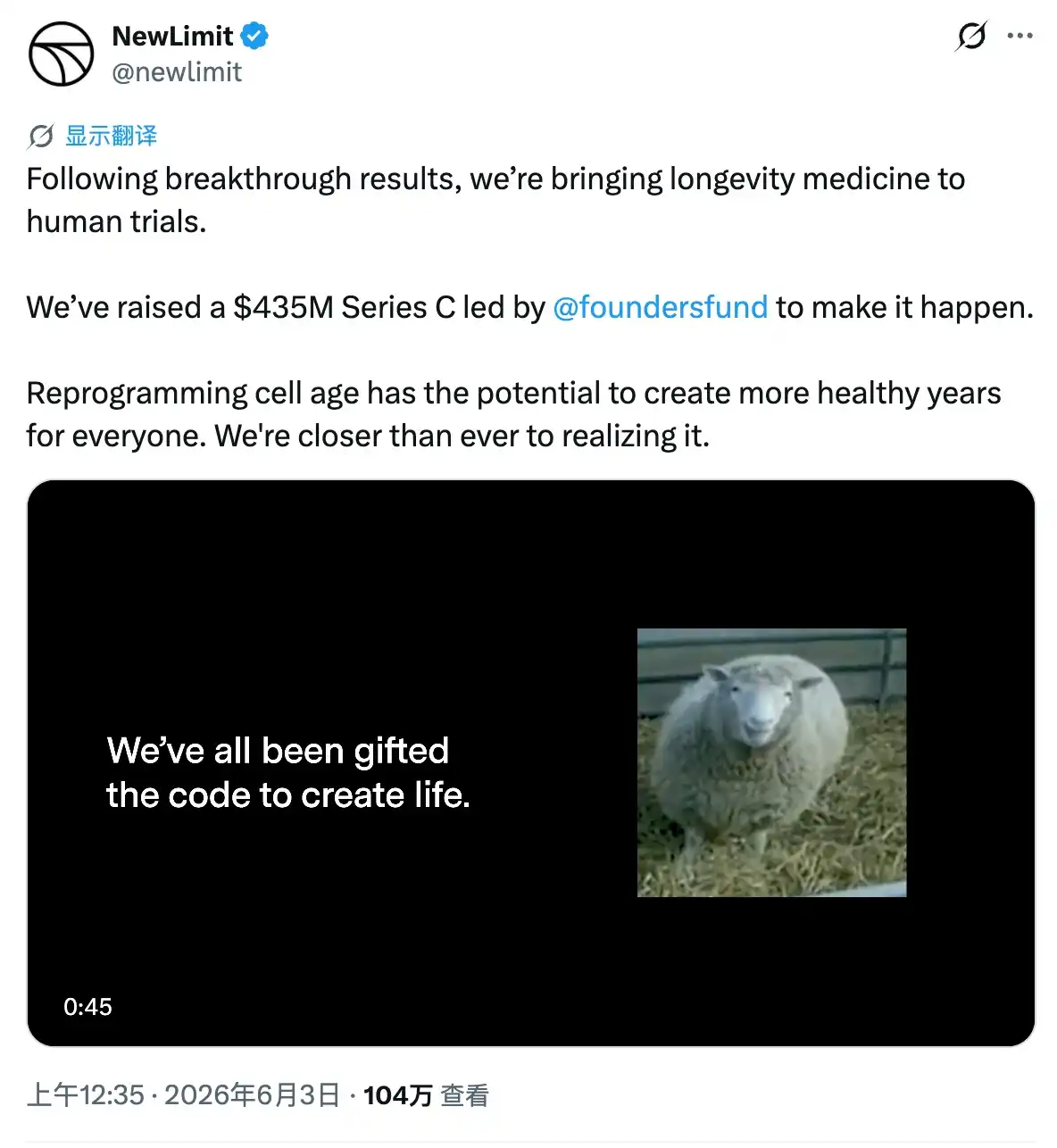
In its funding announcement, NewLimit revealed that following breakthrough research achievements, the company is advancing longevity medicine into the human clinical trial stage. Its first drug targeting alcohol-related liver disease is expected to commence clinical trials next year.

NewLimit also emphasized: "By reprogramming cell age, humans may achieve longer health spans, and now, we are closer than ever to the goal of delaying or even reversing aging."

The Founder Turns Out to Be an Old Acquaintance

It is worth mentioning that one of NewLimit's co-founders is none other than our old acquaintance — Coinbase founder and CEO Brian Armstrong.

In 2021, Brian Armstrong, together with former GV partner and bioengineer Blake Byers and stem cell biologist Jacob Kimmel, invested $110 million to establish NewLimit in South San Francisco.

Picture: The NewLimit founding team

Prior to this funding round, NewLimit had already completed three rounds of financing, as detailed below.

  • May 2023: Completed a $40 million Series A round, with investors including Dimension, Founders Fund, and Kleiner Perkins;
  • May 2025: Completed a $130 million Series B round, reaching a valuation of $810 million, led by Kleiner Perkins, with participation from Founders Fund, Khosla Ventures, and Human Capital, among others;
  • October 2025: Received an additional $45 million investment, bringing the post-money valuation to $1.62 billion, with investors including Lilly Ventures, Duke University, Section 32, etc.;

According to NewLimit's official introduction, the company is dedicated to developing drugs that can extend human health span — "As humans age, cellular function gradually declines, making people more susceptible to diseases. It was once believed that aging was inevitable, but emerging science shows that the aging process can be reversed at the cellular level. We are developing the first drugs based on these discoveries to restore the youthful function of aging cells."

In simpler terms, NewLimit is using scientific methods to research immortality!

Reversing Aging is Not a Fantasy

Over the past few decades, while the scientific community has long recognized the link between aging and cellular functional decline, it could not precisely find a way to make cells "rejuvenate." The turning point came in 2006 when Japanese scientist Shinya Yamanaka discovered that activating just a few specific transcription factors could reprogram adult cells into a youthful state resembling embryonic stem cells. This discovery was later named "Yamanaka Factors" and helped him win the 2012 Nobel Prize in Physiology or Medicine.

Odaily Note: Picture shows Shinya Yamanaka speaking in Tokyo

Yamanaka's research first proved something previously considered impossible — that cellular age is not irreversible. And the story told by NewLimit is built precisely upon this discovery.

NewLimit writes on its website: "Our drugs can reprogram a cell's epigenome to a younger state by activating specific transcription factor genes. We already know this reversal is possible. However, for different cell types, exactly which combinations of transcription factors are needed to restore their youthful function remains unknown. Finding and discovering these effective payloads is the core challenge of our work."

NewLimit's strategy is to first target a specific disease to obtain drug approval, and then explore broader applications. As mentioned earlier, NewLimit is advancing a drug for alcohol-related liver disease into clinical trials.

NewLimit Co-founder and CEO Jacob Kimmel further explained, "Liver disease can actually be viewed as an 'accelerated version of aging,' it just presents the aging process that everyone experiences in a faster and more intense manner."

The Biggest Investors in This Sector Are All Billionaires

NewLimit is not the only tech company currently targeting "immortality."

In 2022, Sam Altman invested $180 million in Retro Biosciences, which is developing drugs to rejuvenate aging cells. Last month, Retro Biosciences disclosed its valuation had reached $1.8 billion.

Furthermore, Altos Labs, reportedly backed by Jeff Bezos's funding, also launched in 2022 with $3 billion and has since raised nearly twice that amount in total funding.

It's easy to see that from Peter Thiel to Sam Altman to Jeff Bezos, the biggest investors in this sector are without exception super-rich individuals at the pinnacle of technology and wealth. Peter Thiel has publicly expressed extreme aversion to death, advocating similar views on multiple occasions: "Death is humanity's greatest enemy, yet we treat it as a natural law..."

The logic behind these tech titans' willingness to invest hundreds of millions is not hard to understand — when wealth and power reach their peak, time becomes the only enemy, the only luxury that cannot be bought directly with money.

Having earned enough money, "how to live longer" becomes the greatest challenge.

Questions liées

QWhat is NewLimit, and what is its primary goal?

ANewLimit is a longevity biotechnology startup. Its primary goal is to develop drugs to extend human healthspan by reversing the aging process at the cellular level.

QWho is the notable co-founder of NewLimit mentioned in the article?

AThe notable co-founder is Brian Armstrong, who is also the founder and CEO of the cryptocurrency exchange Coinbase.

QWhat scientific breakthrough is NewLimit's research based on?

ANewLimit's research is based on the discovery of the 'Yamanaka Factors' by Japanese scientist Shinya Yamanaka in 2006, which showed that adult cells can be reprogrammed into a younger, pluripotent state.

QHow much funding did NewLimit recently raise and at what valuation?

ANewLimit recently raised $435 million in a Series C funding round, which valued the company at $3.1 billion.

QWhy are super-wealthy tech figures like Peter Thiel and Sam Altman investing in longevity companies?

AFor super-wealthy individuals, time is seen as the ultimate luxury that money cannot directly buy. After achieving immense wealth and power, extending their healthspan and potentially reversing aging becomes a primary focus.

Lectures associées

Le CPU, retour discret au centre de la scène du calcul IA

Ces trois dernières années, l'histoire du calcul IA a été presque entièrement centrée sur les GPU, les CPU étant relégués au rôle de soutien. Cependant, à partir de 2026, ce récit évolue. Alors que l'IA passe de l'entraînement massif de modèles au déploiement à grande échelle d'agents et d'inférences, la coordination, la concurrence et la circulation des données deviennent des goulots d'étranglement critiques. Ces tâches d'orchestration, où les GPU sont moins performants, remettent le CPU au centre en tant que « plan de contrôle » de l'infrastructure IA. Intel illustre cette tendance avec son processeur Xeon 6+, lancé en juin 2026. Fabriqué en procédé 18A, il mise sur une densité extrême avec jusqu'à 288 cœurs éco-efficaces (E-cores), optimisés pour le traitement simultané de milliers de tâches légères typiques des charges de travail des agents IA et de l'inférence. Cette approche « haute densité, haut débit » contraste avec la quête traditionnelle de performances mono-cœur. Cependant, la trajectoire d'Intel n'est pas assurée. Le récit du « retour du CPU » est confronté à plusieurs défis : les solutions intégrées CPU-GPU de NVIDIA, la montée des CPU ARM à haute densité développés en interne par les grands clouds (AWS Graviton, Google Axion, etc.), et la nécessité pour le procédé 18A de rivaliser avec les technologies N2 de TSMC et 2 nm de Samsung. En résumé, le CPU retrouve une place essentielle dans l'écosystème du calcul IA, non pas en rivalisant avec le GPU sur le pic de performance, mais en adressant les nouveaux besoins systémiques d'orchestration. La bataille pour savoir quelle architecture (x86 d'Intel/AMD, ARM des clouds ou solutions intégrées de NVIDIA) dominera cette nouvelle ère reste toutefois ouverte.

marsbitIl y a 2 mins

Le CPU, retour discret au centre de la scène du calcul IA

marsbitIl y a 2 mins

Après avoir collaboré avec plus de 35 projets DeFi, Pink Brains découvre les nouvelles règles du marketing KOL pour 2026

Après trois ans de collaboration avec plus de 35 projets DeFi leaders, Pink Brains, un studio spécialisé, révèle une nouvelle approche de marketing par influenceurs (KOL) pour 2026. L'analyse montre que les campagnes les plus efficaces partent non de la perspective du projet, mais de celle de l'utilisateur : comment il découvre un produit, établit la confiance et s'engage. Le parcours de découverte est social (souvent via X), mais la décision est guidée par les données (DefiLlama, DeBank, documents officiels). Un simple post ne suffit pas ; il doit mener à des données vérifiables et une documentation solide pour convertir des utilisateurs sérieux. En 2026, les utilisateurs DeFi sont attirés par des thèmes concrets et vérifiables : nouvelles tendances (perpétuels, RWA, IA x crypto), airdrops exigeant une contribution réelle, revenus réels ("Real Yield"), tokens capturant la valeur de l'adoption (comme HYPE d'Hyperliquid avec ses rachats massifs), et nouvelles plateformes d'échange (marchés prédictifs, cartes à collectionner, iGaming). La fidélisation repose sur quatre piliers : un produit utile au quotidien, un support client réactif, une tokenomie alignée sur les intérêts à long terme (comme VVV de Venice lié à l'usage réel), et une communauté stratégique. Pour les KOL, il est crucial de les choisir selon leur rôle (éducateur, créateur de contenu, expert...) et d'éviter les erreurs courantes : utiliser des créateurs ne comprenant pas le produit, un contenu générique, un mauvais ciblage, ou une dépendance excessive à quelques grandes figures. En résumé, le marketing DeFi performant en 2026 doit refléter le comportement utilisateur : la découverte vient de sources crédibles, l'intérêt de mécanismes vérifiables, et la fidélisation d'une tokenomie solide et d'un design produit robuste, bien au-delà du simple discours marketing.

marsbitIl y a 20 mins

Après avoir collaboré avec plus de 35 projets DeFi, Pink Brains découvre les nouvelles règles du marketing KOL pour 2026

marsbitIl y a 20 mins

a16z : L’avenir de l’IA visuelle n’est pas dans les images, mais dans le code

Au cours des dernières années, l'IA visuelle a été largement évaluée sur sa capacité à générer des pixels réalistes, comme avec les modèles de diffusion produisant des images et vidéos. Cependant, selon a16z, l'avenir ne réside pas seulement dans des rendus visuels, mais dans la génération d'artefacts de code sous-jacents—des fichiers structurés (HTML/CSS, SVG, scripts 3D, etc.) qui peuvent être édités, itérés et intégrés dans des workflows de production. L'article distingue deux approches : la génération native pixel (adaptée au réalisme et à l'exploration) et la génération native code (qui produit des représentations symboliques). Cette dernière permet un cycle "code → rendu → vérification → modification", où le modèle affine un programme visuel plutôt que de simplement échantillonner de nouvelles images. Cela est crucial pour des domaines comme la conception UI, l'animation et la 3D, où les acteurs ont besoin d'actifs modifiables et réutilisables, et non de simples rendus statiques. La pile technologique repose sur un modèle de codage, une représentation symbolique et un moteur de rendu. Cette approche est particulièrement prometteuse pour la 3D, où la cohérence structurelle et les contraintes fonctionnelles (ex. : articulations, mouvements) sont essentielles. Des outils comme OmniLottie, VIGA ou Articraft3D illustrent cette tendance. Si cette vision se concrétise, les futurs outils d'IA visuelle maîtriseront l'ensemble du cycle de production, utilisant les moteurs de rendu comme environnements de feedback. L'objectif n'est plus seulement de créer de belles images, mais de produire des artefacts visuels véritablement exploitables, ouvrant ainsi la voie à une intégration plus profonde de l'IA dans les chaînes de création.

marsbitIl y a 1 h

a16z : L’avenir de l’IA visuelle n’est pas dans les images, mais dans le code

marsbitIl y a 1 h

Trading

Spot
Futures
活动图片