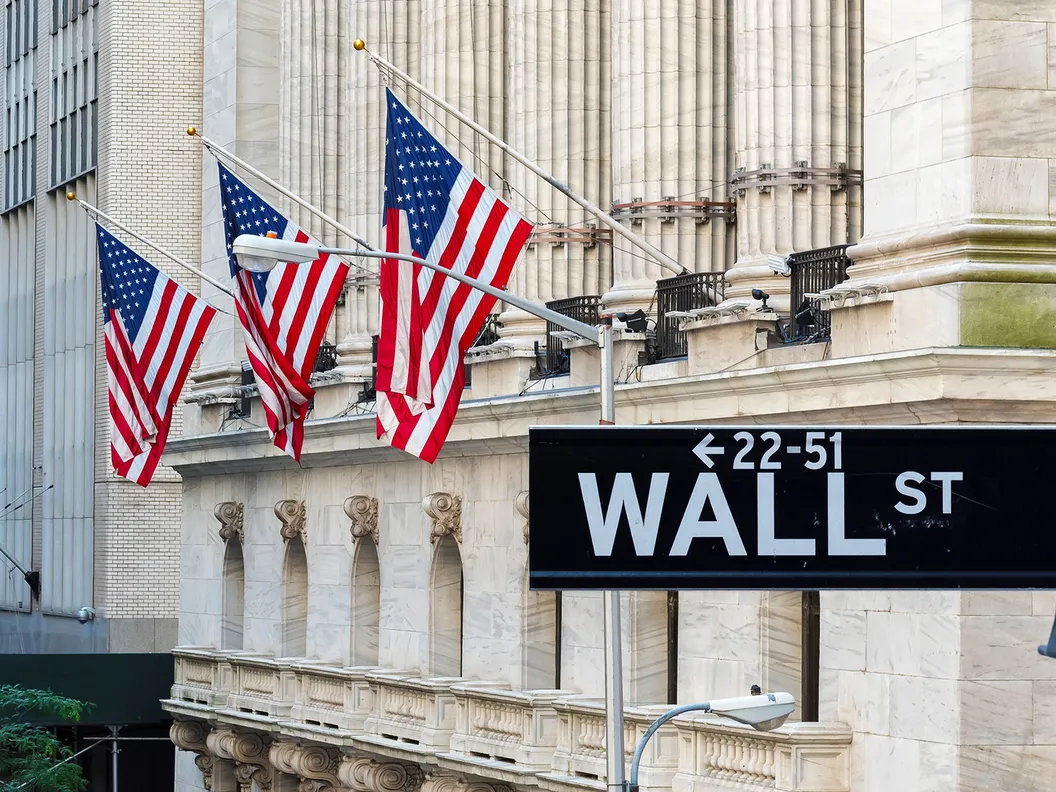
Wall Street Banks Seen as Unlikely Saviors as Crypto Firms Struggle

CoinDeskPublié le 2022-11-21Dernière mise à jour le 2022-11-21

Résumé

Blockchain true believers say the nascent industry represents an existential threat to traditional finance. But now's probably not the time for Wall Street to gobble up ailing crypto firms, analysts say.

It took years for the crypto industry to gain trust – and capital – from the major institutional players on Wall Street. And just as more big traditional players seemed on the cusp of making a move into fast-growing blockchain markets, the messy collapse of Sam Bankman-Fried’s crypto empire has renewed comparisons of the digital-asset industry to the Wild West.

As the Welsh poet Robert Williams said, “Trust is the easiest thing in the world to lose, and the hardest thing in the world to get back.”

But one question now is whether big banks might see the crypto industry’s latest troubles as an attractive opportunity to nose into blockchain-based markets.

In May this year, U.S. banking giant JPMorgan Chase signed two popular crypto exchanges as clients, as sign that Wall Street is starting to accept cryptocurrencies to the extent that it sees value in them for their own future.

Might some major banks be looking to step in as savior in times when the industry is struggling, just as John Pierpont Morgan himself once rescued the banking industry in the early 20th century, prior to the creation of the Federal Reserve? (The Fed, which famously saved Wall Street from collapsing during the financial crisis of 2008, does not stand behind the less-regulated crypto industry.)

Experts say it’s unlikely.

“Banks are the natural enemy of the crypto industry because they both sell purportedly the same product line, so it’s unlikely that they would be willing to step in to assist the industry,” Odeon Capital Group chief financial strategist Dick Bove said.

In a press statement following the collapse of crypto exchange FTX, the Bank Policy Institute, which represents big banks, said in a statement that “as FTX files for bankruptcy after failing to secure a bailout, policymakers should ensure they do not embed crypto firms in the heart of the financial system by giving them Fed accounts."

If they did, "the next crisis in the cryptoverse could threaten financial stability,” according to the statement.

Not a problem

Banks, however, have gotten increasingly interested and tried to get a foothold in the industry. Besides JPMorgan, crypto-friendly banking institution Silvergate Bank signed over 850 digital currency customers, including 61 exchanges, 541 institutional investors and 248 other customers.

“The banks that are in this business are going to say, ‘It’s not going to cause a problem for us,’ and the ones who aren’t in it will say, ‘We told you so,’ but they’re not going to be of any help,” Bove said.

Silvergate’s stock is down 10% in November, after it announced that it had exposure to failed crypto exchange FTX. As of Sept. 30, the bank had a total of $11.9 billion in deposits from all digital asset customers, of which FTX's was less than 10%.

U.S. exchanges also might be out of the game.

“For heavily U.S.-regulated exchanges, I doubt that Wall Street would be interested,” said Jim Bianco, president and macro strategist at Bianco Research. “For off-shore exchanges, their regulator would probably force them to resign if they touched any of them.”

He says traditional banks don’t understand the crypto business well enough to take the risk of jumping in.

It goes without saying that regulators might be reluctant to even let big Wall Street firms swallow a big crypto firm, with so many officials quite vocal about the risks from the digital-asset industry. They’ve been slow to create a broad regulatory framework that would embrace crypto as part of the existing financial system.

Wall Street banks probably don't mind too much watching the crypto industry flounder, Bove said.

“Banks aren’t worried about the crypto industry breaking away” right now, he said. “Just about every major bank knows how to create its own tokens. If it wants into the industry it is not hard to get there. What the banks want is to avoid their core business from being cannibalized.”

Lectures associées

Seconde mi-temps de la politique cryptographique américaine : La loi CLARITY tente d'obtenir 60 voix, le CFTC "comité d'une seule personne" est la plus grande inconnue

L'industrie de la cryptographie aux États-Unis attend un moment décisif avec l'avancée du projet de loi CLARITY au Sénat, qui nécessite 60 voix pour être adopté. Les républicains doivent négocier avec la Maison Blanche et rallier des sénateurs indécis. Dans un calendrier législatif chargé (seulement 40 jours de travail restants), d'autres propositions fiscales et réglementaires liées aux crypto-monnaies cherchent également à être intégrées dans des textes législatifs plus larges cette année. Un obstacle majeur est la composition incomplète de la CFTC, avec quatre postes de commissaires vacants, ce qui crée de l'incertitude. La question de la juridiction sur les marchés prédictifs (États, CFTC, SEC ou Cour suprême) reste également en suspens. Le secteur subira par ailleurs la perte de deux figures clés : la commissaire de la SEC, Hester M. Peirce, et la sénatrice Cynthia Lummis, qui ont joué un rôle central dans l'élaboration des politiques. Des experts soulignent que l'adoption de CLARITY durant cette session du Congrès est peu probable en raison des contraintes de temps et des élections. Ils estiment que des mesures fiscales ciblées sur les cryptos pourraient passer en étant intégrées à des projets de loi plus vastes. La CFTC travaille à un cadre pour les marchés prédictifs, dont le statut (infrastructure financière ou jeu) est crucial pour leur avenir. La fenêtre d'opportunité pour des progrès législatifs concrets en 2025 est étroite, exigeant une collaboration bipartite soutenue.

marsbitIl y a 16 mins

Seconde mi-temps de la politique cryptographique américaine : La loi CLARITY tente d'obtenir 60 voix, le CFTC "comité d'une seule personne" est la plus grande inconnue

marsbitIl y a 16 mins

Une amélioration triplée des performances ! NEAR atteint la limite physique de 200 ms de temps de génération de bloc grâce à SPICE

NEAR, par le biais de son équipe de développement centrale Near One, annonce une avancée majeure avec SPICE (Séparation du Consensus et de l'Exécution), une mise à niveau fondamentale du protocole. Actuellement en développement, SPICE est une étape clé vers Nightshade 3.0. Son principe central est de découpler le processus de consensus (ordonnancement des transactions) de l'exécution de ces transactions. Les validateurs se concentrent ainsi sur un consensus rapide concernant l'ordre des transactions, sans attendre que leur exécution complète soit terminée. Cette architecture permet de réduire le temps de création d'un bloc de 600 ms à seulement 200 ms, une vitesse considérée comme la limite physique théorique. Les principaux avantages sont une confirmation des transactions plus rapide, une latence réduite pour les utilisateurs, et la capacité à traiter des transactions plus longues et complexes. SPICE optimise également l'utilisation des ressources réseau et jette les bases techniques pour des futures fonctionnalités comme les transactions atomiques inter-fragments, simplifiant considérablement le développement d'applications décentralisées. Cette amélioration de performance est essentielle pour des cas d'usage comme les paiements instantanés et l'économie des agents autonomes.

Foresight NewsIl y a 2 h

Une amélioration triplée des performances ! NEAR atteint la limite physique de 200 ms de temps de génération de bloc grâce à SPICE

Foresight NewsIl y a 2 h

Trading

Spot
Futures
活动图片