The rumor mill is accusing the now bankrupt crypto exchange FTX of selling bitcoin to buy other cryptos related to FTX.
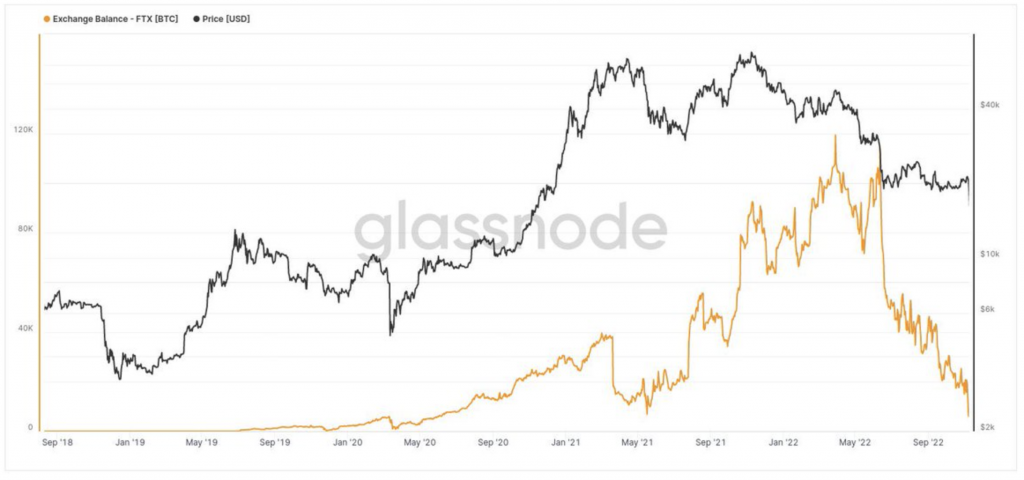
Their bitcoin holdings show a significant plunge in BTC assets during May last year when bitcoin’s price fell from circa $60,000 to $30,000.
The exchange then began accumulating bitcoin once more, up to 120,000 until June when they began plunging again down to now near zero.
This in itself does not necessarily show FTX sold bitcoin, but they did give Alameda a circa $10 billion loan, some of which was used to invest in startup equity in fiat, for which they may have converted crypto.
Alameda is also accused of trading against FTX clients with an open order book, effectively cheating as they could see all the trades.
There are suggestions there was no firewalling between Alameda and FTX, with Alameda trading on FTX while they were sat within visible distance of FTX’s order book.
In effect they knew at which price point anyone at FTX would be liquidated and how much collateral they have.
That is, they played poker while being able to see everyone’s cards, knowing exactly when to bet or fold, and they still went bankrupt.
“Clement at FTX HK leaked our positions and account details to many people throughout the year,” Zhu Su of Three Arrows Capital publicly said.
Rumors have long circulated, since at least 2019, that Alameda had a preferential data agreement with Bitmex where it acted as a market maker, and some say even at Deribit.
No concrete evidence was ever provided, but traders turned on Bitmex starting in 2019 due to what some perceived as convenient liquidations.
The allegations FTX sold bitcoin are newer, but Andrew Kang of Mechanism Capital, who was the first to publicly reveal there was a $6 billion hole at FTX, said:
“No wonder why the BTC pumps have been so pathetic. Whenever anyone bought spot on FTX, Alameda would just dump it after.”
Traders have noted that the 2022 bull has been more tempered in that there was no blow off top, with FTX now taking the blame.
“FTX and Alameda sold down the crypto markets with our assets to fund their unprofitable gambling. Markets would otherwise be much higher,” Kang said.
Zhu Su also revealed private conversations where he notes Alameda promised 15% in “high returns with no risk.” He is the deleted account:
After this convo at the time, @tackettzane, @rsalame7926 others proceeded to bash me nonstop for 2months, making it difficult to even do business. I turned to The Block, sending them all the evidence I had https://t.co/5bEmv9oXFC
— Zhu Su 🔺 (@zhusu) November 15, 2022
Little of this was publicly corroborated during the rise of FTX and Alameda. Alameda in particular was more a background faceless market maker that somehow dominated Bitmex with plenty of rumors surrounding that relationship, but no concrete evidence.
Now there’s more corroboration, but just how much they really affected bitcoin’s price remains unclear.
In ethereum however rumors that the Bahamas regulator turned some eth from FTX’s holdings into wBTC is blamed for the fall of eth’s ratio today.
This alleged hacked account has opened a very peculiar episode with the ‘hack’ announced by FTX’s Telegram channel.
It was never publicly confirmed by FTX’s Twitter account, which until that point was and still remains the one that makes the announcements.
Bizarre reports then came out the Bahamas regulator had ordered Sam Bankman-Fried to hack his own exchange to place the eth holdings under the Bahamas regulator.
That this ‘hack’ was FTX itself however became clear when Kraken announced they had frozen some accounts belonging to FTX official/s following reports some of the ‘hacked’ eth had been sent there.
Currently this ‘hacked’ FTX account has about 200,000 eth, with circa 50,000 eth moved recently.
FTX’s CEO Bankman-Fried remains still free, with it anyone’s guess now whether the downfall of this exchange may actually relieve pressure on bitcoin.