Robinhood Chain Mainnet Launch Ignites Industry Shockwaves: Rally of Top Protocols, but Leaves dYdX in a Deep Pit

链捕手Publié le 2026-07-02Dernière mise à jour le 2026-07-02

Résumé

Robinhood's launch of its Layer 2 blockchain, Robinhood Chain, and a suite of new crypto products has significantly impacted the market. The announcement, made ahead of its Q2 earnings, caused the company's stock to rise 8.35%. The chain, built on Arbitrum Orbit, aims to be an institutional-grade, AI-native infrastructure optimized for Real World Assets (RWA). Key product launches include tokenized stocks available globally via various DEXs, perpetual contracts with fee incentives, and a decentralized lending product called Robinhood Earn offering yields on USDG stablecoin. The company is also expanding its AI trading tools to crypto. The move has attracted major protocols like Uniswap and Chainlink to its ecosystem. However, a partnership with dYdX to launch a new DEX called Arcus on Robinhood Chain sparked controversy. The dYdX community expressed concerns that the core team's focus on this new, independent platform could divert resources and liquidity away from the existing dYdX Chain, potentially diluting the value of the DYDX token. Despite assurances from dYdX's founder about shared interests and potential future token allocations for the dYdX community, the DYDX token price dropped roughly 40.7% following the news. Amidst slowing crypto revenue growth, Robinhood is leveraging its large user base and financial expertise to expand globally and transform from an internet broker into a broader financial gateway through its new blockchain initiative.

Author: Nancy, PANews

On the eve of its Q2 earnings release, Robinhood made a bombshell announcement: the mainnet launch of its Layer-2 chain, Robinhood Chain, alongside a slew of crypto products like tokenized stocks, on-chain lending, and AI trading, while accelerating its global expansion. Following the news, the market reacted positively, with Robinhood's stock price rising 8.35% to $108.6, hitting a nearly six-month high.

In the highly monopolistic L2 landscape, backed by Robinhood's massive user base and mature financial services, Robinhood Chain has quickly rallied a group of leading crypto protocols, sparking unexpected community controversy.

Self-built L2 Goes Mainnet, Multi-product Suite Builds On-Chain Financial Gateway

After several teaser tweets, Robinhood held a "The World is Flat" launch event in London in the early hours of July 2nd, unveiling its latest strategic layout centered on on-chain finance, AI trading, and global expansion, further demonstrating its ambition to build global financial infrastructure.
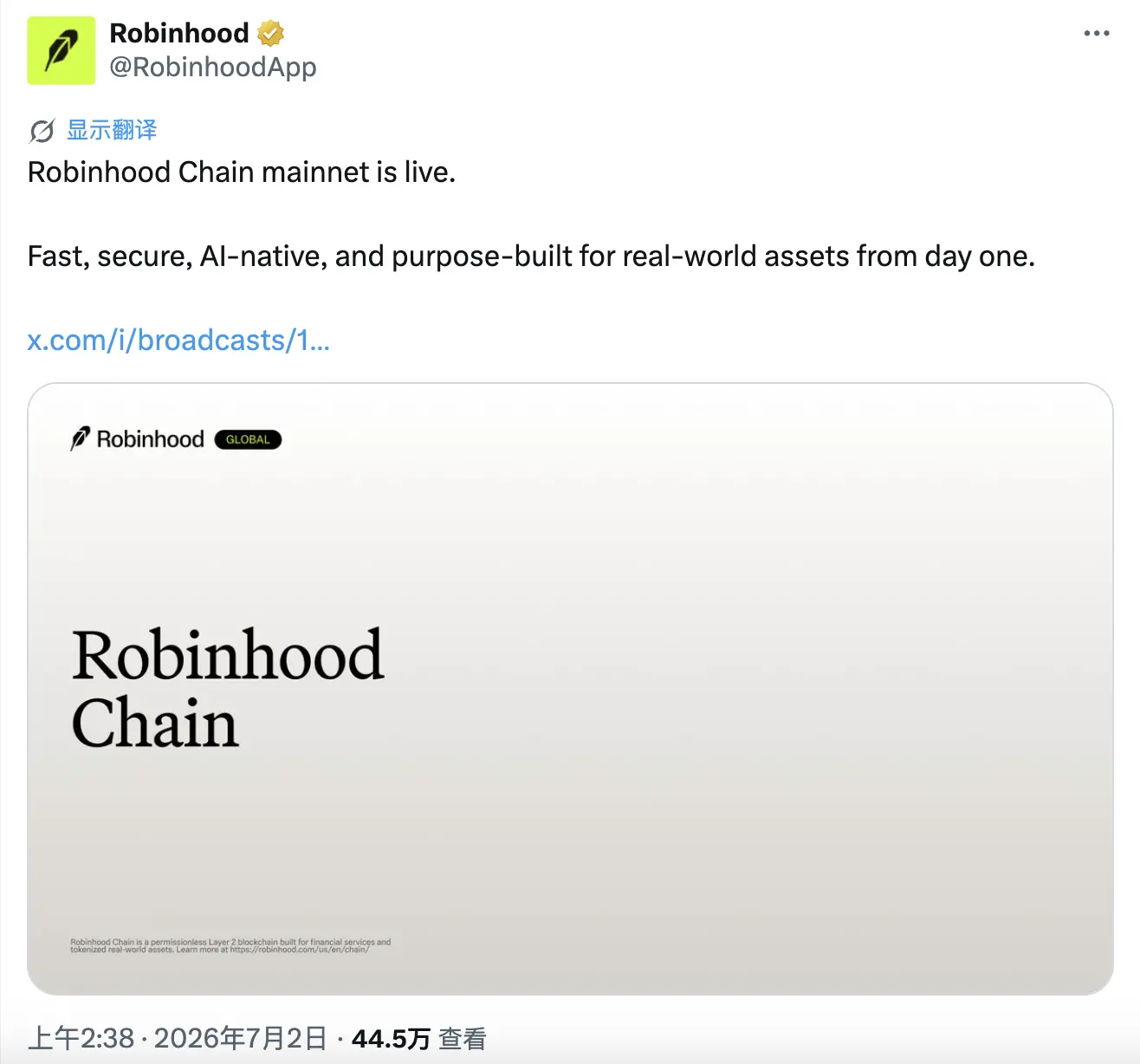
The most anticipated part of the event was its Layer-2 chain, Robinhood Chain. Built on Arbitrum Orbit, the chain officially launched its public mainnet after months of testing. It will directly connect Robinhood's on-chain users and provide developers with a plug-and-play DeFi development environment. According to the official description, Robinhood Chain is positioned as blockchain infrastructure for institutional-grade applications, AI-native architecture, and specifically optimized for real-world assets (RWA).

Around this chain, Robinhood simultaneously expanded its on-chain product matrix, covering trading and yield scenarios.

Regarding tokenized stocks, Robinhood Wallet added related features, available in over 120 countries and regions worldwide. Users can trade via DEXs like Uniswap, Rialto, Lighter, 1inch, and Arcus on Robinhood Chain, and further use the assets as collateral in DeFi lending or provide liquidity to earn yields. This feature was previously only available in Europe. Its expansion globally reflects rapidly growing demand for tokenized assets and ongoing competition between traditional and crypto trading platforms.

In the on-chain perpetuals space, Robinhood Wallet also launched related features, providing investors a new channel to trade stocks, commodities, and other assets outside traditional market hours. To boost user participation, Robinhood initially offers 90 days of zero fees, gas subsidies, and reward points.

Regarding yield products, Robinhood Earn, targeting US users, is being rolled out gradually. This is the first decentralized lending product within its main app. Users can deposit the USD stablecoin USDG into a self-custody wallet and expect to earn around 7% annual yield. The product is built on Morpho's underlying lending infrastructure, supported by multiple DeFi protocols like Steakhouse, Ethena, Spark, Maple, and includes insurance mechanisms to mitigate risk exposure.

Meanwhile, Robinhood is extending its AI trading capabilities to on-chain trading with the crypto version of Agentic Accounts. Eligible US users can connect to AI models, set risk parameters and capital boundaries, letting the AI autonomously execute market scans and trading strategies. Previously, Robinhood had introduced similar tools in its stock and options business.

This series of expansion moves comes against the backdrop of continued pressure on Robinhood's crypto business. In Q1, its crypto revenue fell 47% year-over-year to $134 million, and crypto notional trading volume dropped 48% YoY to $24 billion. Facing slowing crypto growth, Robinhood urgently needs new growth engines.

Regarding globalization, the company already serves about 28 million users and continues to advance its overseas market layout, including officially launching in Canada, its Singapore subsidiary obtaining a MAS Capital Markets Services license, plans to launch commodity, ETF, and FX perpetuals in Europe, and imminent availability of crypto trading services in the UK.

Rallying Crypto Protocols, dYdX's "Starting Anew" Sparks Doubts

Leveraging its massive user base, leading crypto protocols like Uniswap, 1inch, Lighter, Morpho, Chainlink, BitGo, Ethena, and EtherFi announced their integration with Robinhood Chain, covering core areas like trading, liquidity, lending, oracles, custody, and cross-chain.
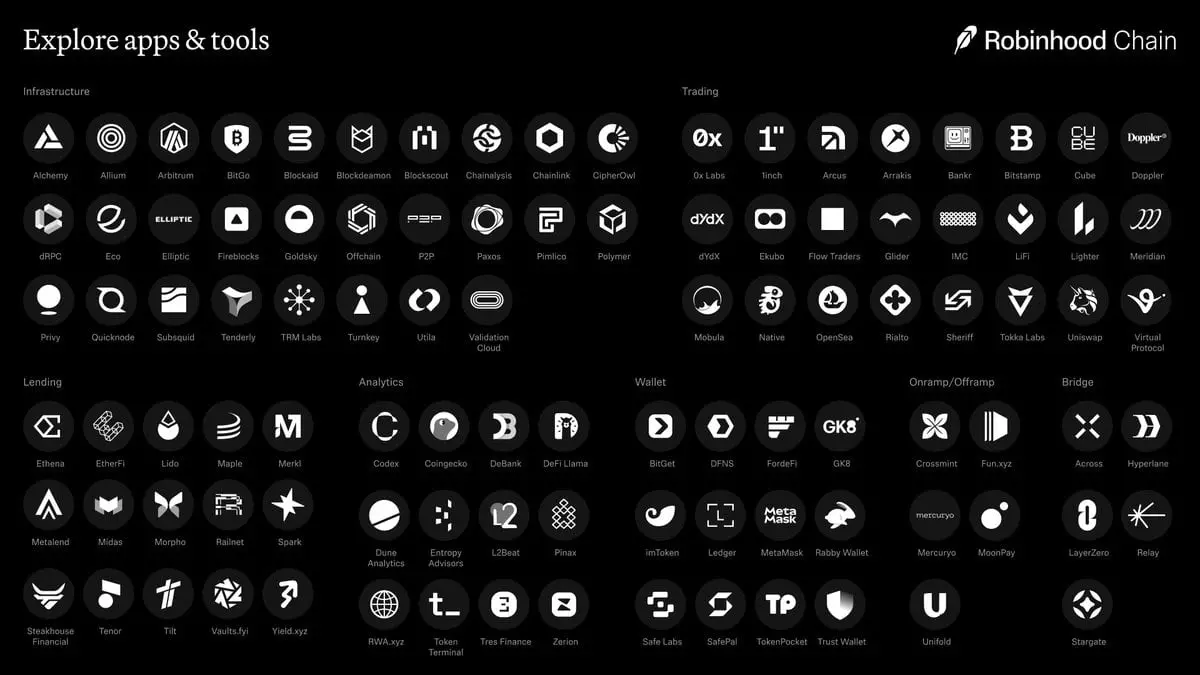
However, within this ecosystem integration, the new DEX Arcus launched by dYdX has stirred controversy.

On July 2nd, the dYdX Foundation announced a partnership with Robinhood to launch the decentralized trading platform Arcus on Robinhood Chain. The platform will support 95 tokenized stocks, perpetual contracts, and major crypto asset trading, with plans to further support using tokenized stocks and crypto assets as collateral for perpetuals, and open Pre-IPO equity trading for popular private companies like OpenAI. Currently, Arcus has launched a Bea test version and is expected to officially go live later in 2026.
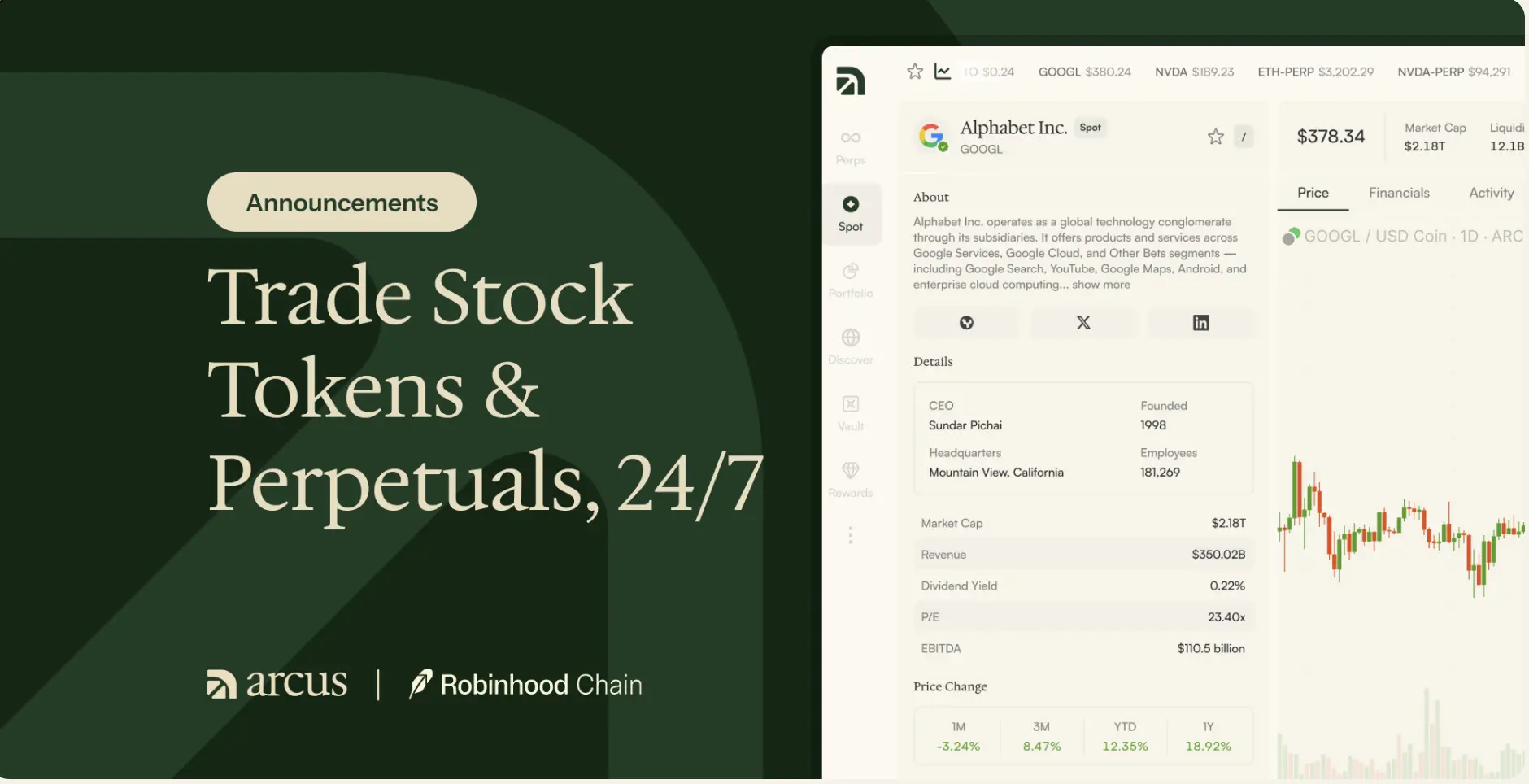
What sparked community discussion is that, as a new product launched by the dYdX team, Arcus is not built on dYdX Chain, but instead chose to deploy on Robinhood Chain, operating as an independent product and infrastructure suite.

In response, dYdX founder Antonio explained in an open letter that while running dYdX Chain, the team gradually realized that building a decentralized public chain from scratch meant constantly trading off between performance, user experience, and decentralization, while competitors kept capturing market share with faster execution, simpler product experiences, and more abundant liquidity. Combining lessons from past generations of dYdX products, months of user feedback, and current DEX pain points, the team ultimately decided to launch Arcus.

Antonio disclosed that choosing Robinhood Chain was largely due to considerations of users and liquidity, as Robinhood has approximately 27.7 million funded accounts, providing Arcus with a ready-made user base and liquidity. Furthermore, Arcus also received strategic investment from Robinhood Crypto, deepening the partnership.

However, this news quickly drew dissatisfaction from the dYdX community. Many community members believe that the core dYdX team starting a new brand from scratch implies development resources, product focus, and market attention might shift towards Arcus, even posing a risk of cannibalizing or replacing the dYdX brand value. Moreover, given dYdX's history of conducting one of the industry's largest airdrops and the potential token launch expectation for Arcus, this could attract traders and liquidity to migrate to the new platform, leading to a decline in dYdX Chain trading volume and activity, further diluting the value of the DYDX token.

In response, the dYdX Foundation emphasized that its duty to support the dYdX protocol and community governance remains unchanged. dYdX Chain is unaffected; trading, deposits, withdrawals, staking, and governance functions all operate normally. The governance and staking mechanisms of the DYDX token remain the same, with staking rewards continuing to be distributed in USDC. Community treasury, reward treasury, and other assets remain fully controlled by DYDX holders through governance.

Antonio also stated that, as the founder of dYdX and the largest holder of DYDX tokens, his interests are deeply aligned with the dYdX community. "My interests are more deeply tied to dYdX than anyone else's." He promised that if Arcus issues a token in the future, a portion of the tokens will be pre-allocated to the dYdX community; additionally, Arcus will also prioritize granting access to dYdX traders.
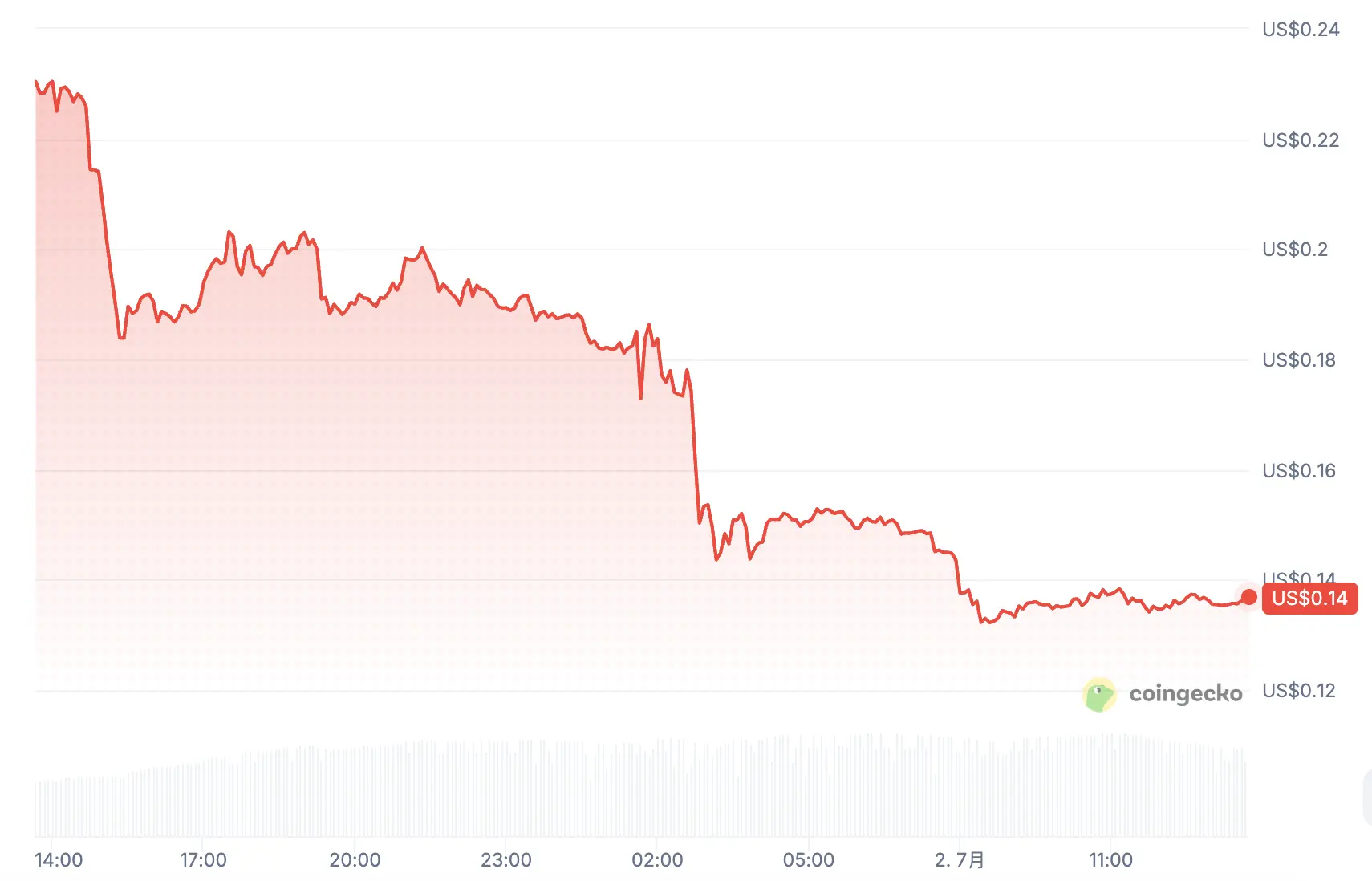
However, these responses do not seem to have fully alleviated market concerns. Following the new product announcement, the DYDX token fell approximately 40.7% intraday.

Overall, Robinhood's ambition extends far beyond providing on-chain infrastructure. Leveraging its massive user traffic, mature brokerage business, and global compliance layout, Robinhood is attempting to use Robinhood Chain to expand its business boundaries, accelerating its transformation from an internet brokerage to the next-generation global financial gateway. Whether this ambition becomes reality remains to be tested by the market.


Cryptos en tendance

Questions liées

QWhat are the key products and features announced as part of Robinhood Chain's mainnet launch?

ARobinhood announced the mainnet launch of its Layer-2 chain, Robinhood Chain (built on Arbitrum Orbit), along with a suite of new crypto products. These include tokenized stock trading (expanded globally), on-chain perpetual contracts (with 90 days of zero fees and gas subsidies), a decentralized lending product called Robinhood Earn (for US users, offering ~7% APY on USDG), and AI-powered agentic accounts for crypto trading.

QWhy has the dYdX community reacted negatively to the announcement of the Arcus DEX?

AThe dYdX community is concerned because Arcus, a new DEX announced by the dYdX team, is built on Robinhood Chain instead of the dYdX Chain. This has raised fears that the core team's focus, development resources, and market attention might shift to the new product, potentially undermining the dYdX brand and ecosystem. Furthermore, expectations of an Arcus token airdrop could draw liquidity and users away from the dYdX Chain, potentially diluting the value of the existing DYDX token.

QAccording to dYdX founder Antonio, what were the primary reasons for choosing Robinhood Chain as the foundation for Arcus?

AAntonio stated that the decision to build Arcus on Robinhood Chain was driven by considerations of user base and liquidity. Robinhood's approximately 27.7 million funded accounts provide a ready-made source of users and liquidity for Arcus. He also cited the challenges of balancing performance, user experience, and decentralization when running a self-built chain (like dYdX Chain), noting that competitors gain market share with faster execution and simpler products.

QWhat was the immediate market reaction to Robinhood's announcements and the dYdX Arcus news?

AThe market reacted positively to Robinhood's overall announcements, with its stock price rising 8.35% to $108.6. However, the news of the Arcus DEX built by the dYdX team on a competing chain had a severe negative impact on the DYDX token, which dropped approximately 40.7% on the day of the announcement.

QWhat is Robinhood's broader strategic goal behind launching Robinhood Chain and expanding its crypto product suite?

ARobinhood's broader strategy is to transform itself from an internet brokerage into a next-generation global financial gateway. By leveraging its large user base, mature brokerage business, and global compliance efforts, Robinhood aims to use Robinhood Chain as infrastructure to expand its business boundaries, integrating traditional and crypto finance to build a comprehensive on-chain financial ecosystem.

Lectures associées

Pourquoi le Trésor américain intensifie ses rachats de dette à long terme, et pourquoi l'or et le Bitcoin montent-ils ?

Le Trésor américain a annoncé un doublement du programme de rachat de ses obligations à long terme à partir du 9 septembre, une mesure visant à soutenir la liquidité du marché. Cette décision, intervenue dans un contexte de hausse continue des rendements obligataires et d'affaiblissement du dollar, a ravivé les craintes d'une dépréciation de la devise américaine, servant de catalyseur principal à une forte hausse du bitcoin et de l'or. Le bitcoin a connu une progression particulièrement marquée, avec des gains quotidiens d'environ 6% pendant trois séances consécutives. L'or a également bénéficié de la faiblesse du dollar, franchissant sa moyenne mobile sur 200 jours. Les analystes expliquent que l'annonce du Trésor a relancé le "trade de dépréciation monétaire", poussant les investisseurs vers des actifs considérés comme des valeurs refuges face à l'érosion anticipée du pouvoir d'achat du dollar. Cependant, le marché obligataire est resté sceptique, les rendements des obligations à 10 et 30 ans étant rapidement revenus à leurs niveaux d'avant l'annonce. Cette réaction met en doute l'efficacité réelle de l'opération pour soulager la pression sur les taux à long terme. Des facteurs supplémentaires, comme une réunion à la Maison Blanche sur la régulation des cryptomonnaies et des rachats forcés de positions vendeuses sur le bitcoin, ont aussi contribué à la hausse. En définitive, bien que l'intervention du Trésor ait provoqué un mouvement de fuite vers les actifs tangibles, elle ne semble pas avoir modifié les dynamiques fondamentales du marché obligataire, où persistent les inquiétudes concernant le déficit budgétaire, l'inflation et le fardeau de la dette publique américaine.

华尔街日报Il y a 14 mins

Pourquoi le Trésor américain intensifie ses rachats de dette à long terme, et pourquoi l'or et le Bitcoin montent-ils ?

华尔街日报Il y a 14 mins

Le mystérieux grand modèle « Ox Alpha » fait le buzz, gratuit pour un temps limité

Le monde des grands modèles de langage (LLM) est en effervescence avec l'apparition d'Ox Alpha, un modèle anonyme surnommé « Niu Lai » par les internautes chinois. Proposé gratuitement et temporairement sur OpenRouter, il dispose d'un contexte de 1 million de tokens et prend en charge texte, images et vidéos. Son évaluation sur des tâches d'ingénierie logicielle réelles (benchmark DeepSWE) montre des performances impressionnantes, avec un taux de réussite initial de 80% sur un sous-ensemble de tests, rivalisant ainsi avec les meilleurs modèles de codage actuels. Bien que d'autres tests aient rapporté un score d'environ 63%, son fort potentiel est établi. Son origine fait l'objet de vives spéculations. Plusieurs indices techniques pointent vers une version non publiée de GLM-5.3 (probablement GLM-5.3 Flash ou sa variante multimodale) développée par Zhipu AI : alignement parfait du comptage de tokens visuels et textuels avec GLM-5V-Turbo/GLM-5.3, comportements de refus et style de réponse similaires. L'entreprise n'a cependant pas confirmé. Parallèlement, un autre modèle anonyme nommé « korrine » apparaît sur Code Arena, suscitant des hypothèses le liant à Kimi, Qwen ou MiMo. Cette tendance au test anonyme (« sous couverture ») permet aux développeurs d'évaluer objectivement les capacités des modèles, sans biais de marque, et de les soumettre à des tests de stress en conditions réelles avant un lancement officiel, tout en générant du buzz marketing. La performance d'Ox Alpha, s'il s'agit bien d'un modèle « Flash » (version allégée), laisse entrevoir un potentiel encore plus élevé pour les versions complètes à venir.

marsbitIl y a 1 h

Le mystérieux grand modèle « Ox Alpha » fait le buzz, gratuit pour un temps limité

marsbitIl y a 1 h

Bitwise CIO Matt : Si vous avez actuellement une configuration crypto de 0 %, cela équivaut à être activement baissier sur le marché

Matt Hougan, CIO de Bitwise, analyse la dynamique actuelle du marché cryptographique malgré une baisse de 50% depuis les sommets. Il souligne l'engagement persistant de Wall Street, citant le lancement de fonds tokenisés par BlackRock malgré les retards réglementaires comme le CLARITY Act. Hougan estime que ce projet de loi restera dans un état d'incertitude, mais que l'industrie avancera sans lui, soutenue par les grandes institutions financières. Il observe un changement de comportement du Bitcoin, désormais résistant aux mauvaises nouvelles, signe pour lui de la fin d'un marché baissier. Concernant l'investissement, il explique que le DCA (moyenne par coût) est une assurance comportementale, mais qu'une entrée immédiate est justifiée pour les rendements absolus, anticipant une reprise. Hougan note que les grandes plateformes de gestion de patrimoine (Wells Fargo, UBS) considèrent désormais la crypto comme une classe d'actifs à part entière, se focalisant sur le long terme. Il met en avant les opportunités de la gestion d'actifs on-chain et du thème de la tokenisation d'actifs réels (RWA), bénéfiques pour Ethereum, Solana et Chainlink. Son conseil principal : une allocation de 5% en crypto est un "repas gratuit", améliorant significativement les rendements sans augmenter la volatilité globale du portefeuille. À l'inverse, une allocation de 0% n'est pas une position neutre, mais un pari actif très baissier sur l'avenir de cette classe d'actifs.

marsbitIl y a 1 h

Bitwise CIO Matt : Si vous avez actuellement une configuration crypto de 0 %, cela équivaut à être activement baissier sur le marché

marsbitIl y a 1 h

À l'instant, le premier match de tennis humain-machine au monde s'est déroulé, un robot a effectué un sauvetage limite, laissant Zheng Jie stupéfaite

Le premier match de tennis humain-robot au monde a eu lieu lors des deuxièmes Jeux mondiaux des robots humanoïdes, diffusé en direct par la télévision centrale de Chine. Le robot humanoïde "Galaxy Star仔" de Galaxy General Robotics a affronté la championne de tennis Zheng Jie en simple, après avoir participé à un double mixte. Le robot a démontré des capacités remarquables : déplacement agile, échanges fluides, service à plus de 100 km/h, et récupération de balles difficiles. Il a même réussi à se relever rapidement après une chute. Cette performance représente un point de rupture dans l'intelligence incarnée, testant en temps réel les limites de la perception, de la prise de décision, du contrôle moteur et de l'adaptation dans un environnement physique dynamique et imprévisible, bien plus complexe que les jeux de stratégie comme les échecs ou le Go. Cette réussite s'appuie sur le modèle d'intelligence incarnée "Galaxy AstraBrain", qui intègre dans une même architecture les fonctions de décision de haut niveau ("cerveau") et de contrôle moteur fin ("cervelet"), éliminant ainsi les délais de communication. Le robot a été entraîné en deux étapes : d'abord par apprentissage à partir de données imparfaites de joueurs humains, puis par un entraînement intensif en simulation où plusieurs agents s'affrontaient, permettant l'émergence autonome de compétences comme le sauvetage extrême ou la technique pour se relever. Cet événement "AstraTennis" marque le passage de l'IA d'un monde numérique à la maîtrise du monde physique, symbolisant les avancées de la Chine dans l'ère de la symbiose carbone-silicium.

marsbitIl y a 2 h

À l'instant, le premier match de tennis humain-machine au monde s'est déroulé, un robot a effectué un sauvetage limite, laissant Zheng Jie stupéfaite

marsbitIl y a 2 h

Soudain, DeepSeek annonce des tarifs creux le week-end, travailler le samedi et dimanche deviendrait plus avantageux ?

DeepSeek a annoncé une modification de sa tarification par période de pointe et creuse pour ses API, effective à partir du 23 août. Désormais, les week-ends (samedi et dimanche) seront entièrement facturés au tarif creux, sans distinction d'heure. Cette décision, généralement bien accueillie par les développeurs qui peuvent ainsi réduire leurs coûts en exécutant des tâches batch le week-end, suscite également des inquiétudes parmi les salariés. En effet, certaines industries, comme celle des mini-séries, ont déjà commencé à ajuster les horaires de travail pour profiter des périodes de calcul AI moins chères. Des cas sont rapportés où des entreprises modifient les plannings, voire imposent du travail le week-end, pour optimiser les dépenses en tokens. Les raisons de ce changement tarifaire font débat. Une hypothèse avance que les prix de pointe correspondent aux périodes d'entraînement des modèles par DeepSeek, libérant la capacité de calcul le week-end. D'autres remettent en cause cette logique, arguant que l'entraînement des modèles est hautement automatisé. Alors que la nouvelle grille tarifaire est en vigueur, la question des impacts à long terme sur l'organisation du travail et des potentielles économies réelles, compte tenu des coûts de coordination supplémentaires, reste ouverte.

marsbitIl y a 2 h

Soudain, DeepSeek annonce des tarifs creux le week-end, travailler le samedi et dimanche deviendrait plus avantageux ?

marsbitIl y a 2 h

Trading

Spot

Articles tendance

Comment acheter DYDX

Bienvenue sur HTX.com ! Nous vous permettons d'acheter dYdX (DYDX) de manière simple et pratique. Suivez notre guide étape par étape pour commencer votre parcours crypto.Étape 1 : Création de votre compte HTXUtilisez votre adresse e-mail ou votre numéro de téléphone pour ouvrir un compte sur HTX gratuitement. L'inscription se fait en toute simplicité et débloque toutes les fonctionnalités.Créer mon compteÉtape 2 : Choix du mode de paiement (rubrique Acheter des cryptosCarte de crédit/débit : utilisez votre carte Visa ou Mastercard pour acheter instantanément dYdX (DYDX).Solde :utilisez les fonds du solde de votre compte HTX pour trader en toute simplicité.Prestataire tiers :pour accroître la commodité d'utilisation, nous avons ajouté des modes de paiement populaires tels que Google Pay et Apple Pay.P2P :tradez directement avec d'autres utilisateurs sur HTX.OTC (de gré à gré) : nous offrons des services personnalisés et des taux de change compétitifs aux traders.Étape 3 : stockage de vos dYdX (DYDX)Après avoir acheté vos dYdX (DYDX), stockez-les sur votre compte HTX. Vous pouvez également les envoyer ailleurs via un transfert sur la blockchain ou les utiliser pour trader d'autres cryptos.Étape 4 : tradez des dYdX (DYDX)Tradez facilement dYdX (DYDX) sur le marché Spot de HTX. Il vous suffit d'accéder à votre compte, de sélectionner la paire de trading, d'exécuter vos trades et de les suivre en temps réel. Nous offrons une expérience conviviale aux débutants comme aux traders chevronnés.

357 vues totalesPublié le 2024.12.13Mis à jour le 2026.06.02

Comment acheter DYDX

Discussions

Bienvenue dans la Communauté HTX. Ici, vous pouvez vous tenir informé(e) des derniers développements de la plateforme et accéder à des analyses de marché professionnelles. Les opinions des utilisateurs sur le prix de DYDX (DYDX) sont présentées ci-dessous.

活动图片