JST Embarks on Its Second Buyback and Burn: Cumulative 10.96% of Total Supply Destroyed, Accelerating Entry into a New Era of Value Growth

marsbitPublié le 2026-01-16Dernière mise à jour le 2026-01-16

Résumé

JST, the token of the JUST ecosystem, has completed its second major buyback and burn event on January 15, 2026, permanently removing 525 million JST (5.3% of total supply) worth over $21 million. Combined with the first burn, a total of 10.96% of JST's supply has been destroyed, accelerating its deflationary trajectory and reinforcing its value proposition. The buyback was funded by $10.19 million from JustLend DAO's Q4 2025 net profits and $10.34 million from accumulated reserve earnings, demonstrating the ecosystem's strong profitability and financial health. Key drivers include JustLend DAO's robust performance, with Total Value Locked (TVL) exceeding $7.08 billion, innovative products like sTRX (with over 9.3 billion TRX staked), and the widely adopted GasFree smart wallet, which has facilitated over $46 billion in transactions and saved users $36.25 million in fees. Additionally, growth from the USDD decentralized stablecoin ecosystem, which recently surpassed $1 billion in TVL, contributed significant incremental revenue. This burn signifies a fundamental shift for JST from a utility governance token to a yield-backed asset, directly tethering its value to the ecosystem's cash flow. The reduced supply increases scarcity, enhances per-token governance power for holders, and establishes a sustainable, transparent deflation model for DeFi. With a market cap surpassing $400 million and growing trading volume, JST is positioned for continued value appreciation driven by r...

On January 15, 2026, the JST token officially completed its second large-scale buyback and burn. This burn action not only demonstrates the project's firm commitment to its deflationary mechanism but also showcases the robust profitability and financial health of the JUST ecosystem to the entire cryptocurrency market with the destruction of 525,000,000 JST (5.3% of the total supply).

According to the JustLend DAO official announcement, the estimated value corresponding to this burn exceeds 21 million US dollars. Combined with the amount burned in the first round, the cumulative number of JST tokens burned has reached 1,084,890,753, accounting for 10.96% of the total supply. This means that in less than three months, JST has permanently removed over one-tenth of its total supply, a remarkable pace of deflation.

From a broader perspective, this burn marks a fundamental evolution in JST's value narrative. It is transitioning from a governance token to an equity asset anchored to the growth of the ecosystem's cash flow. This process not only enhances the scarcity and value foundation of the JST token but also provides a clear, practical path for the decentralized finance (DeFi) sector—one driven by real yield to fuel token value—demonstrating a transparent and sustainable new paradigm of deflation.

Strong Performance of JustLend DAO Ecosystem Forges the Financial Cornerstone for Large-Scale Buyback

Such a large-scale buyback and burn necessarily requires a solid financial foundation. The announcement clearly reveals the dual pillars of the funding source: $10,192,875 came from JustLend DAO's net profit in the fourth quarter of 2025, while another $10,340,249 originated from the project's accumulated stock of reserve earnings. These figures themselves are the most powerful proof of performance; they collectively point to a core fact: the JustLend DAO ecosystem not only possesses strong immediate profitability but also boasts a robust financial structure and sustainable cash flow, which form the solid foundation supporting its commitment to buybacks and its deflation strategy.

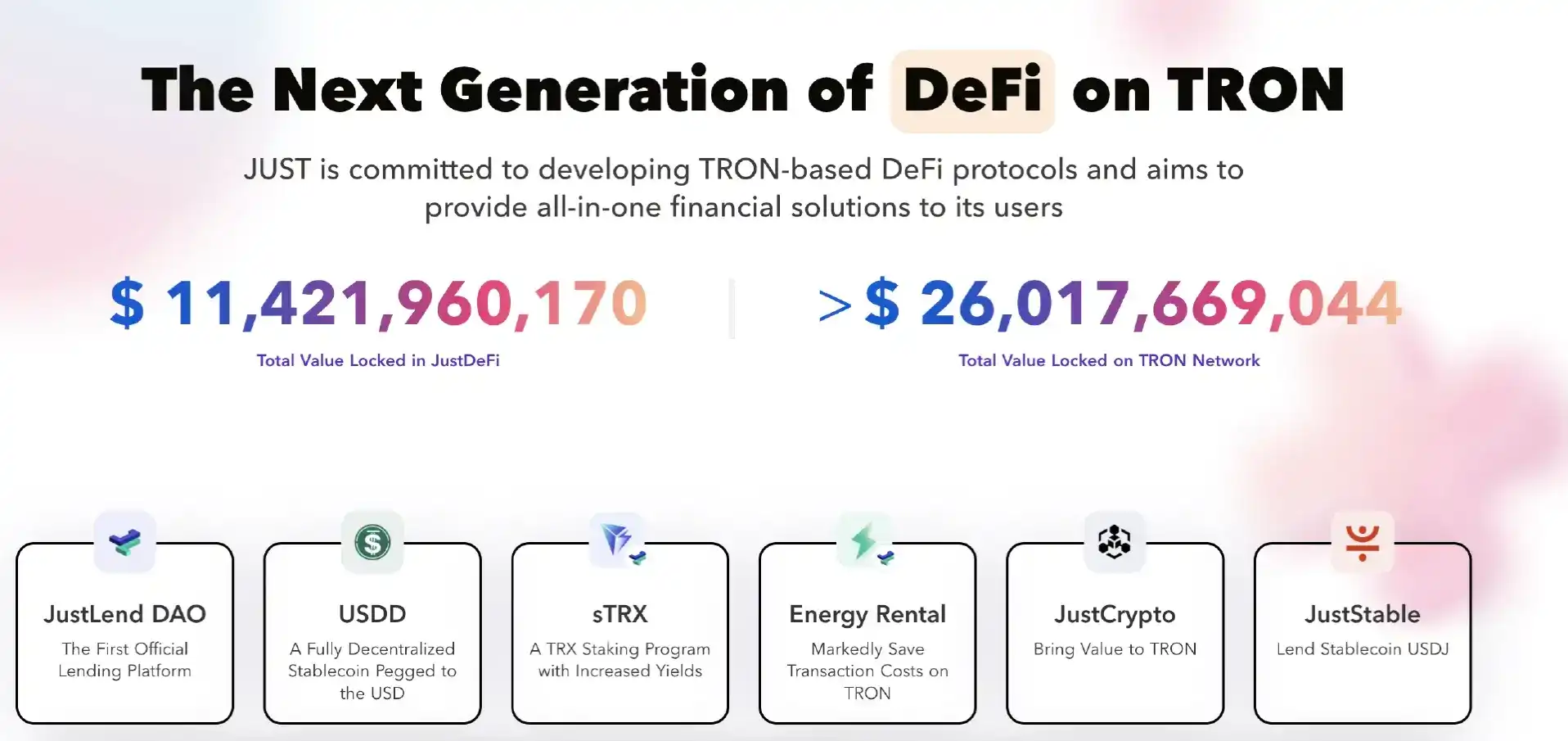
A deeper analysis of JustLend DAO's performance in Q4 2025 reveals clear growth trajectories. Firstly, as the flagship lending protocol of the JUST ecosystem, JustLend DAO benefits from the continuous improvement of the TRON infrastructure. Its Total Value Locked (TVL) broke through the $7.08 billion mark in the fourth quarter and has long been ranked among the top three in the lending market, with lending activity in its SBM market also climbing to a new cycle high.

It is worth noting that the $10,340,249 in stock earnings, which formed an important part of this buyback fund, can be traced back to the earnings from the reserve capital deposited in the SBM USDT market during the first JST buyback. The appreciation process of this capital is itself the most direct proof of the SBM market's strong profitability. It showcases JustLend DAO's sophisticated financial operation model: strategically reinvesting ecosystem profits for "self-regeneration" within the protocol, thereby providing an endogenous and sustainable source of funding for subsequent value returns.

On this basis, JustLend DAO's revenue structure is also showing a trend of diversification. While the traditional lending market, its core business, maintains steady growth, JustLend DAO has innovatively built a product matrix including sTRX (Staked TRX) and Energy Rental, greatly expanding the boundaries and depth of its value capture.

Among these, the sTRX service allows users to stake TRX to earn rewards while still flexibly participating in other DeFi activities. This innovative design significantly improves capital efficiency and user stickiness. As of January 15, the amount of TRX staked on the platform has surpassed 9.3 billion tokens. This staggering figure not only reflects the community's high recognition of the sTRX product but also generates considerable and sustainable service revenue.
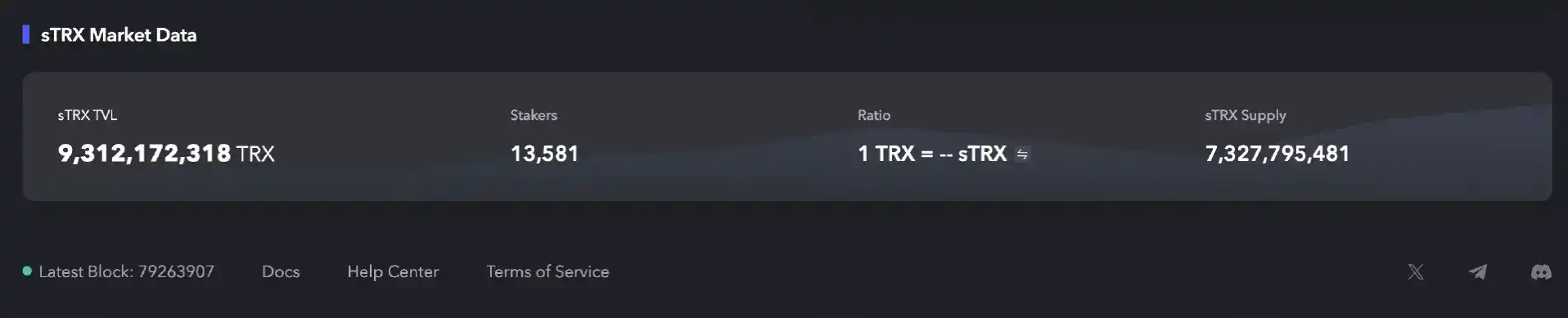
Meanwhile, the "Energy Rental" service, designed to reduce users' on-chain operation costs, has also demonstrated strong market appeal through active rate optimization. Since September 2025, the base rate for this service was significantly reduced from 15% to a more competitive 8%. The rate optimization directly stimulated market demand and transaction frequency, thereby creating steady incremental revenue for the protocol through more active leasing business.

While the core product matrix continues to perform strongly, JustLend DAO, focusing on lowering the participation threshold for the general user, innovatively launched the GasFree smart wallet in March 2025. This feature彻底打破了用户必须预先持有原生代币(TRX)以支付手续费这一长期困扰新手用户的壁垒 (completely breaks down the long-standing barrier for new users of having to hold the native token (TRX) in advance to pay transaction fees), allowing users to directly deduct and pay the required network fees from the token assets they are transferring (e.g., USDT). This design not only achieves ultimate operational convenience but also fundamentally broadens the accessibility of blockchain finance.

To accelerate the adoption of this innovative feature, JustLend DAO simultaneously launched a highly attractive 90% transfer fee subsidy campaign. With this support, users only need to pay an extremely low fee of approximately 1 USDT when using the GasFree function for USDT transfers. This combined strategy quickly ignited market demand. As of January 15, the total transaction volume driven by the GasFree smart wallet has exceeded $46 billion. This astonishing scale not only validates the market's strong desire for a frictionless transaction experience but has also directly saved users a cumulative total of over $36.25 million in network fee costs. This innovation, by significantly reducing actual usage costs and cognitive barriers, has introduced massive incremental users and capital flow into the ecosystem, constituting another powerful growth pole for the platform's network effects and revenue potential.

Meanwhile, another funding channel in the buyback and burn plan, namely the incremental revenue from the USDD multi-chain ecosystem (the portion exceeding $10 million), also constitutes a significant source of value. USDD, as the core decentralized stablecoin of the TRON ecosystem, has seen remarkable results from its multi-chain expansion strategy. It has been successfully deployed on mainstream public chains like Ethereum and BNB Chain, broadening its application scenarios and user base.

Its ecosystem value recently achieved a milestone breakthrough. On January 14, USDD's TVL historically surpassed the $1 billion mark. This means that in less than two months, USDD's TVL规模实现了惊人的100%增长 (achieved an astonishing 100% growth), its expansion speed and market acceptance fully confirming the strong momentum and deep asset appeal of this stablecoin within the multi-chain ecosystem. The rapid growth of its TVL and the continuous prosperity of its ecosystem significantly enhance the potential scale of this funding channel, providing an anticipated source of value for JST's subsequent quarterly buyback and burn plans.

Through deep integration with various DeFi protocols, USDD not only consolidates its peg stability but also creates continuous value inflow for the entire ecosystem. The inclusion of USDD ecosystem's excess income in the JST buyback and burn plan builds a value闭环 (closed loop) of "stablecoin + lending protocol + governance token". In this model, the expansion and prosperity of USDD and JustLend DAO directly power the deflation of JST, while the increase in JST's value in turn enhances the attractiveness and cohesion of the entire TRON DeFi ecosystem, creating a powerful internal synergy and value feedback effect.

Deepening Deflation Mechanism: Revolutionary Reshaping of JST's Value Foundation

In summary, the significance of this buyback and burn早已超越了单纯的价格支撑范畴 (has long surpassed the scope of mere price support); it is triggering a series of profound structural changes. Most fundamentally, it has completed the reshaping of JST's value support logic. JST is no longer merely a "utility token" for paying network fees or participating in governance votes; it has evolved into an "equity asset" directly anchored to the cash flow performance of JustLend DAO, USDD, and associated ecosystems.
Through the buyback and burn mechanism, the profit growth of the ecosystem is continuously injected into the value foundation of the JST token, making holding JST equivalent to holding an equity certificate that shares in the future profit growth of the ecosystem. On January 8, CoinMarketCap data showed that JST's market cap historically broke through the $400 million mark. This is not just a numerical leap but substantial market recognition of its new positioning. Accompanying the rising market cap was increased activity of funds. On January 8, its 24-hour trading volume significantly increased by 21.92%, reaching $31.49 million, and its price had also risen 10.82% steadily over the past month, with a daily increase of 3.1%.

The synchronous expansion of trading volume and market cap at key junctures is not偶然的市场波动 (an accidental market fluctuation) but a clear "vote of confidence" from the capital markets in response to the improving fundamentals of the JUST ecosystem, particularly the profitability and value return mechanism demonstrated by the buyback and burn.

Secondly, the JST buyback and burn also带来治理权力的实质性增值 (brings substantial增值 to governance power). As the total token supply is irreversibly reduced, the governance weight in the protocol represented by each remaining JST in the market will increase accordingly. This means that long-term holders not only enjoy the economic benefits of value appreciation but also see their voice in key community decisions (such as parameter adjustments, new product launches, treasury fund usage, etc.) amplified simultaneously. This design deeply binds the interests of core community members to the long-term success of the protocol,极大地增强了社区的稳定性和参与感 (greatly enhancing community stability and sense of participation).

From a broader industry perspective, JST's buyback and burn practice provides a clear and借鉴的新范式 (new paradigm to emulate) for token economics in the DeFi field. Removing 10.96% of the total supply through two rounds of burns in an extremely short time not only demonstrates efficient execution but, more profoundly, deeply binds the protocol's financial success to the interests of token holders, thereby establishing a良性循环典范 (exemplary virtuous cycle) of "value creation - value return".

This model fundamentally reverses the old logic where token value relied on speculative narratives,转向由协议基本面现金流驱动的可持续路径 (turning towards a sustainable path driven by the protocol's fundamental cash flow), providing a solid and credible case study for the industry on how to build economic models with substantial value support.

Looking ahead, with JST buyback and burn becoming a quarterly routine, a clear, predictable deflation path has been laid out. The scarcity of JST will be a certain narrative that strengthens over time. Each quarterly report disclosure and the subsequent burn will serve as a catalyst for reassessing its intrinsic value. This burn is not an endpoint but the beginning of a more恢弘的价值累积篇章 grand chapter of value accumulation). A value revolution, supported by ecosystem profitability and driven by product synergy, has already pressed the accelerator.


Questions liées

QWhat was the total amount of JST tokens burned in the second buyback and what percentage of the total supply did it represent?

A525,000,000 JST tokens were burned, representing 5.3% of the total supply.

QWhat is the cumulative amount and percentage of JST tokens burned so far through the two buyback events?

AThe cumulative amount burned is 1,084,890,753 JST tokens, which is 10.96% of the total supply.

QWhat were the two main financial pillars that funded the buyback and burn initiative?

AThe funding came from JustLend DAO's Q4 2025 net revenue of $10,192,875 and a reserve of accumulated earnings of $10,340,249.

QWhat innovative product significantly lowered the barrier to entry for new users by eliminating the need to hold TRX for gas fees?

AThe GasFree Smart Wallet, which allows users to pay network fees directly from the tokens being transferred (like USDT).

QWhat major milestone did the USDD ecosystem achieve recently, and what does it signify for the JST buyback mechanism?

AThe USDD ecosystem's Total Value Locked (TVL) historically surpassed $1 billion, signifying rapid growth and providing a substantial, predictable value source for future JST buyback and burn plans.

Lectures associées

HIP-3 à un tournant : après que Trade.XYZ ait avalé 90 % du marché, plusieurs acteurs quittent la scène

Hyperliquid connaît une transformation majeure avec l’écosystème HIP-3, qui permet la création de marchés décentralisés. Depuis son lancement, HIP-3 a généré plus de 3000 milliards de dollars de volume d'échanges, mais le marché est dominé par Trade.XYZ, captant plus de 90% des parts. Ce quasi-monopole a conduit à la fermeture de plusieurs projets comme Felix et Ventuals, qui ne parvenaient pas à rivaliser face à la liquidité et aux effets de réseau de Trade.XYZ. Les nouveaux entrants font face à des obstacles financiers élevés, notamment un dépôt de garantie de 50 millions de HYPE (environ 35,89 millions de dollars), et des périodes de retour sur investissement pouvant atteindre quatre ans. En revanche, Trade.XYZ bénéficie d'une rentabilité bien supérieure, avec un délai de récupération de seulement cinq mois. Cette concentration pose des risques pour la diversité et l'innovation au sein de l'écosystème HIP-3. Des propositions ont été avancées pour assouplir les conditions d'entrée, comme un mécanisme d'échanges hiérarchisés ou une révision du modèle économique des enchères de marché, afin de favoriser un environnement plus ouvert et compétitif. Hyperliquid explore également de nouvelles pistes, comme les marchés de prédiction via HIP-4, pour diversifier ses activités au-delà des contrats perpétuels et construire un écosystème plus résilient.

marsbitIl y a 6 mins

HIP-3 à un tournant : après que Trade.XYZ ait avalé 90 % du marché, plusieurs acteurs quittent la scène

marsbitIl y a 6 mins

Le marché de la cryptographie a-t-il touché le fond ? Voici ce que pensent les institutions

Le marché de la cryptomonnaie a-t-il touché le fond ? Trois grandes institutions financières - Galaxy Digital, NYDIG et Standard Chartered - publient des analyses contradictoires. Galaxy Digital, examinant 13 indicateurs historiques, conclut que le fond n'est pas encore atteint et estime un plancher potentiel entre 30 000 et 54 000 dollars, avec un scénario neutre autour de 40 000-46 000 dollars. NYDIG adopte une position nuancée : les indicateurs sont proches des creux historiques, mais une panique de vente généralisée manque. L'institution note que l'entrée des investisseurs institutionnels pourrait modifier le cycle, permettant un creux moins prononcé. À l'inverse, Standard Chartered affirme que le creux est déjà atteint à 59 000 dollars, citant un possible accord diplomatique américano-iranien et l'introduction en bourse anticipée de SpaceX comme facteurs qui réduiront les pressions de vente. La banque prévoit même un retour à 100 000 dollars d'ici la fin d'année. Malgré leurs divergences sur le niveau exact du plancher, les trois rapports s'accordent sur des points essentiels pour les investisseurs à long terme : le fond du marché devrait être atteint au cours de l'année 2024, les prix actuels sont plus proches du bas que des sommets précédents, et un nouveau cycle haussier pour le Bitcoin reste anticipé. L'auteur, Matt Hougan de Bitwise, souligne que la question centrale n'est pas le creux exact, mais le potentiel de hausse futur. Les fondamentaux soutenant la valeur à long terme du Bitcoin - dette publique croissante, défiance envers les institutions traditionnelles, numérisation mondiale - restent solides, voire se renforcent, rendant le contexte actuel plus favorable que lors des précédents "hivers" cryptographiques.

Foresight NewsIl y a 13 mins

Le marché de la cryptographie a-t-il touché le fond ? Voici ce que pensent les institutions

Foresight NewsIl y a 13 mins

Projection 2029 : Lorsque la cryptomonnaie deviendra « invisible », qui survivra à cette transformation financière ?

**Résumé de l'article : "Prévisions pour 2029 : Quand la cryptomonnaie devient 'invisible', qui reste dans ce changement financier ?"** L'article propose un scénario pour l'industrie cryptographique jusqu'en 2029. Il identifie trois problèmes clés : la valeur des tokens, l'intégration de nouvelles technologies et la transformation en infrastructure financière traditionnelle. Sa thèse centrale est que la principale contrainte du secteur est juridique, et non technique. **Évolution principale :** * **2026 :** La valeur migre vers les actifs réels. Les contrats perpétuels synthétiques sur actions non cotées (ex: SpaceX, OpenAI) sur des plateformes comme Hyperliquid deviennent des références de prix cruciales, démontrant une demande pour des actifs de qualité, contrairement à la plupart des crypto-actifs. * **2026-2027 :** Le secteur se scinde en deux. D'un côté, un marché spéculatif bruyant (paris sur l'IA). De l'autre, un marché institutionnel silencieux où la tokenisation d'actifs (fonds monétaires, crédit privé) se développe dans un cadre réglementaire. Les blockchains généralistes s'orientent majoritairement vers les services institutionnels. * **2028 :** Un événement déclencheur. Une cascade de liquidations sur le marché des contrats perpétuels synthétiques, sans ancrage tangible, révèle ses failles. La réponse réglementaire serait d'autoriser la **publicité et la négociation légales de parts secondaires d'entreprises privées** pour les investisseurs accrédités, fournissant ainsi l'ancrage de prix manquant. * **2029 :** L'industrie atteint sa "fin". Le marché spéculatif se réduit. Une nouvelle forme de "bull market" émerge, alimentée par le trading direct et légal d'actions privées de sociétés technologiques (biotech, robotique, IA) par des investisseurs particuliers accrédités. La valeur des tokens dépendra désormais exclusivement des droits qu'ils confèrent sur des actifs réels. Les fonctions d'infrastructure de règlement (stablecoins, blockchains) deviennent "invisibles", intégrées et banales, comme tout autre service financier de base. L'auteur conclut que l'industrie ne sera plus définie par la spéculation sur des tokens, mais par le **marché qu'elle a construit pour échanger des actifs réels**. Le test décisif de sa prédiction sera l'émergence, ou non, d'un canal légal d'accès pour les investisseurs particuliers aux actifs privés d'ici fin 2028.

marsbitIl y a 50 mins

Projection 2029 : Lorsque la cryptomonnaie deviendra « invisible », qui survivra à cette transformation financière ?

marsbitIl y a 50 mins

Les actions de Zhipu ont bondi de 47 % après l'interdiction américaine de Fable 5

Le 15 juin, l'action de Zhipu AI a grimpé de 47,6% à la Bourse de Hong Kong, clôturant en hausse de 32,82%. Cette forte réaction suit deux annonces récentes. Le 12 juin, Anthropic a suspendu l'accès mondial à ses modèles phares Claude Fable 5 et Claude Mythos 5 suite à une injonction du gouvernement américain sur les contrôles à l'exportation. Le lendemain, Zhipu a annoncé l'ouverture de son dernier modèle open-source, GLM-5.2, à tous les utilisateurs de son Coding Plan, avec une sortie prévue de l'API et des poids du modèle sous licence MIT la semaine suivante. Cet événement met en lumière un changement dans l'industrie de l'IA : au-delà des performances pures, la stabilité, l'accessibilité durable et le contrôle des modèles deviennent des critères essentiels, surtout lorsque l'IA s'intègre dans les flux de travail critiques. La suspension soudaine de Claude a perturbé de nombreux développeurs et entreprises qui en dépendaient, soulignant les risques liés à l'accès à des modèles propriétaires soumis à des juridictions uniques. La réponse du marché valorise ce nouveau paradigme. GLM-5.2, présenté comme un modèle « véritablement utilisable » avec un contexte de 1M de tokens optimisé pour les tâches de codage longues et complexes, représente une alternative ouverte et contrôlable. Les analystes estiment que cet incident pourrait accélérer l'adoption de modèles de base locaux et open-source par les entreprises cherchant à sécuriser leurs capacités d'IA. La concurrence évolue ainsi de « qui est le plus performant » vers « qui est le plus accessible et fiable sur le long terme ».

marsbitIl y a 57 mins

Les actions de Zhipu ont bondi de 47 % après l'interdiction américaine de Fable 5

marsbitIl y a 57 mins

Trading

Spot
Futures

Articles tendance

Comment acheter JST

Bienvenue sur HTX.com ! Nous vous permettons d'acheter JUST (JST) de manière simple et pratique. Suivez notre guide étape par étape pour commencer votre parcours crypto.Étape 1 : Création de votre compte HTXUtilisez votre adresse e-mail ou votre numéro de téléphone pour ouvrir un compte sur HTX gratuitement. L'inscription se fait en toute simplicité et débloque toutes les fonctionnalités.Créer mon compteÉtape 2 : Choix du mode de paiement (rubrique Acheter des cryptosCarte de crédit/débit : utilisez votre carte Visa ou Mastercard pour acheter instantanément JUST (JST).Solde :utilisez les fonds du solde de votre compte HTX pour trader en toute simplicité.Prestataire tiers :pour accroître la commodité d'utilisation, nous avons ajouté des modes de paiement populaires tels que Google Pay et Apple Pay.P2P :tradez directement avec d'autres utilisateurs sur HTX.OTC (de gré à gré) : nous offrons des services personnalisés et des taux de change compétitifs aux traders.Étape 3 : stockage de vos JUST (JST)Après avoir acheté vos JUST (JST), stockez-les sur votre compte HTX. Vous pouvez également les envoyer ailleurs via un transfert sur la blockchain ou les utiliser pour trader d'autres cryptos.Étape 4 : tradez des JUST (JST)Tradez facilement JUST (JST) sur le marché Spot de HTX. Il vous suffit d'accéder à votre compte, de sélectionner la paire de trading, d'exécuter vos trades et de les suivre en temps réel. Nous offrons une expérience conviviale aux débutants comme aux traders chevronnés.

428 vues totalesPublié le 2024.12.11Mis à jour le 2025.03.21

Comment acheter JST

Discussions

Bienvenue dans la Communauté HTX. Ici, vous pouvez vous tenir informé(e) des derniers développements de la plateforme et accéder à des analyses de marché professionnelles. Les opinions des utilisateurs sur le prix de JST (JST) sont présentées ci-dessous.

活动图片