The Fall of the $70 Million Myth: How NFTs Went from Auction House to Walmart Shelves

比推Publié le 2026-01-06Dernière mise à jour le 2026-01-06

Résumé

The NFT market has experienced a dramatic decline from its peak, marked by the cancellation of NFT Paris 2025 and a significant drop in market value. Total NFT supply surged by 35% in 2025, while sales fell 37% to $5.63 billion, and the market capitalization plummeted 86% from its 2022 high. Average sale prices dropped to $96, down 75% from the bull market. Even blue-chip NFTs like CryptoPunks and Bored Ape Yacht Club saw floor prices fall by 78% and 83%, respectively. Major platforms like OpenSea are pivoting away from pure NFT trading, with some shutting down entirely. Amid the downturn, Pudgy Penguins emerged as a success story by leveraging its IP for physical consumer products, generating an estimated $50 million annually through retail partnerships with Walmart and others. Its brand-focused strategy, including high-profile advertising, boosted secondary market activity. Meanwhile, NFTs are finding utility in real-world applications, such as tokenized physical assets (e.g., Courtyard’s Pokémon cards) and functional use cases like FIFA’s anti-scalping tickets for the 2026 World Cup. The speculative frenzy around NFTs as standalone financial assets has ended, but the technology persists as a practical tool for verification, ownership, and integration into broader ecosystems—signaling a shift from hype to utility.

Author: Sanqing, Foresight News

Original Title: From the $70 Million Myth to $9 Dolls, Are NFTs Really "Dead"?


On January 5, the NFT Paris developer conference, originally scheduled for February, was suddenly canceled. The banks of the Seine, once alive with all-night parties, are now left with only a cold official tweet: "The market crash has hit us hard. Even with aggressive cost-cutting measures, we are still unable to sustain it."

Five years ago, digital artist Beeple's work "Everydays: The First 5000 Days" sold for a staggering $69.3 million at Christie's auction house. This was followed by CryptoPunks fetching tens of millions and countless digital collectibles backed by mainstream institutions—it was the golden age of NFTs.

From a record-breaking auction sale to a forced industry conference cancellation, NFTs have completed a full cycle from frenzy to reckoning in just five years.
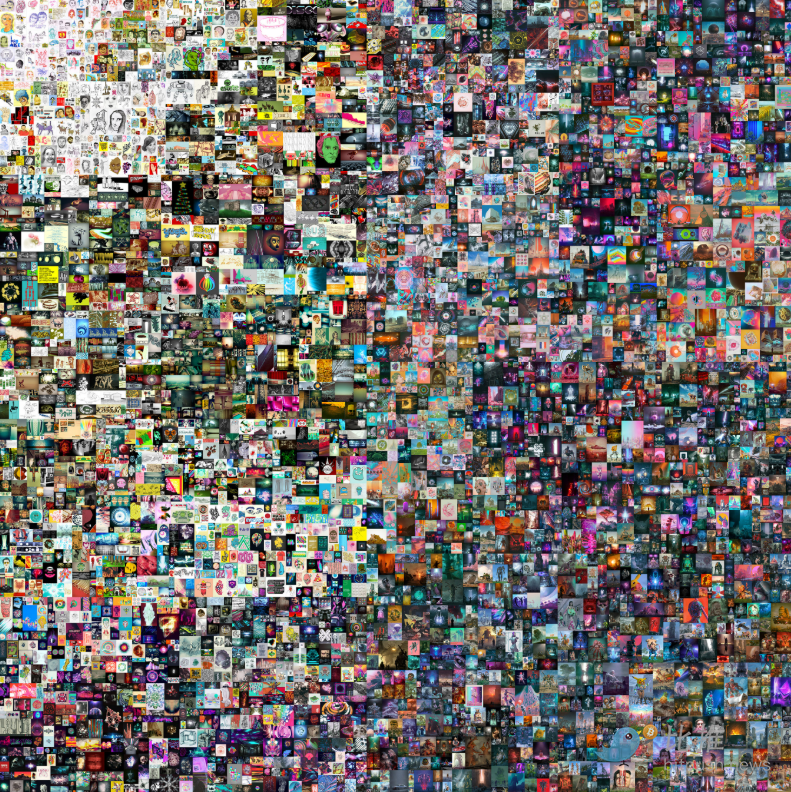
Image – Everydays: The First 5000 Days NFT

Imbalance in NFT Market Supply and Demand

Supply Explosion. According to CryptoSlam data, the supply in 2025 increased by 35% compared to 1 billion in 2024. Over the past four years, the total number of NFTs has skyrocketed from 38 million to 1.34 billion, a growth of approximately 3,400%.

Sales Shrinkage. According to CryptoSlam data, the total NFT sales in 2025 were approximately $5.63 billion, a 37% decrease from $8.9 billion in 2024. According to CoinGecko data, the total NFT market capitalization fell from a peak of about $17 billion in April 2022 to about $2.4 billion by the end of 2025, a drop of about 86%. In 2025 alone, the total NFT market capitalization shrank from about $9.2 billion in January to its year-end size, a staggering 68% drop for the year.

Liquidity Dilution. As the barrier to minting lowered, the market entered a "high-frequency, low-price" mode. According to CryptoSlam data, the average transaction price has fallen from $124 in 2024 to $96 by the end of 2025. Compared to the average transaction price of over $400 during the peak of the 2021-2022 bubble, it has lost three-quarters of its value.
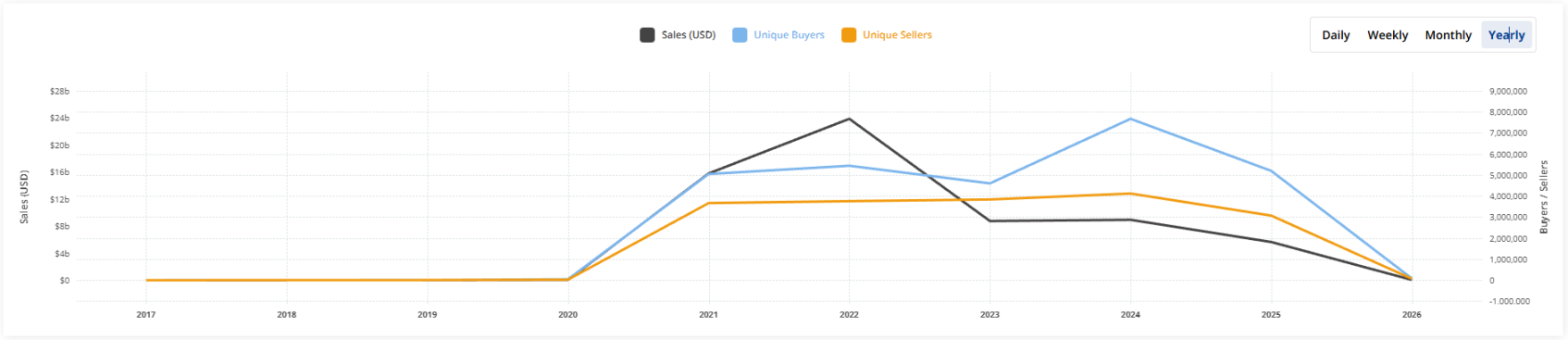
Image Source: CryptoSlam

Even former top-tier NFT projects and blue-chip NFTs couldn't escape the downturn. Taking CryptoPunks as an example, the floor price has fallen to about 30 ETH, down 78% from its peak of 125 ETH in 2021; Bored Ape Yacht Club (BAYC) fell 83% from about 30 ETH to about 5 ETH; Azuki dropped 93% from about 12 ETH to 0.8 ETH.

Collective "Flight" and Evolution of Platforms

The moves of industry leaders signal the end of this cycle.

OpenSea, once the undisputed leader in the NFT marketplace, saw its platform revenue drop from $50-120 million per month during the NFT golden age to less than one million.

Consequently, OpenSea announced a pivot, transforming from a pure "NFT marketplace" to a universal on-chain trading center for "Trade Everything," encompassing physical collectibles and digital assets like tokens, and confirmed it will issue a token.

Blur, which debuted at its peak, has seen its TVL continuously hit new lows, and its token price is down 99% from its high.

Then there's Magic Eden, which rose to prominence on the Solana chain. After a year of operation, it issued a token. Affected by the NFT market sentiment and the realization of airdrop expectations, platform trading volume began to shrink, and its token price also fell over 98% from its high.

Even projects that couldn't keep up with the changing times, like the older NFT marketplace X2Y2, have been eliminated, ceasing operations entirely, with the team shifting to the AI field.

From "Token" to "Brand"

Amid the widespread gloom, Pudgy Penguins has successfully bucked the trend, becoming an outlier in the industry. Its success does not rely on complex innovations in token technology or short-term speculative hype, but rather on transforming digital IP into physical consumer goods, gradually building a sustainable brand ecosystem that bridges Web3 and traditional retail.

Through the dual revenue model implemented by CEO Luca Netz, Pudgy Penguins deeply integrates IP licensing with physical goods. Its physical toys are now available in over 10,000 retail channels globally, including Walmart, Target, and Walgreens. According to an AInvest report, this transformation has brought the project approximately $50 million in annual revenue, effectively offsetting the impact of the overall crypto market contraction.
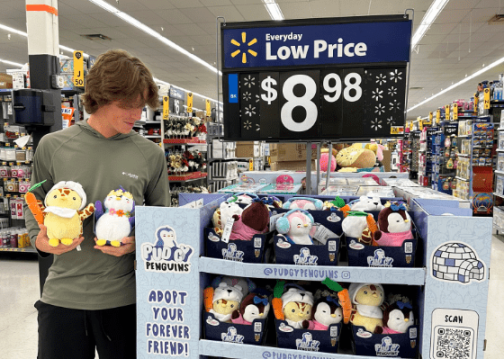
Image – Pudgy Penguins toy shelf in a US Walmart

During the 2025 Christmas season, Pudgy Penguins spent approximately $500,000 to project a giant animation on the Las Vegas landmark Sphere.
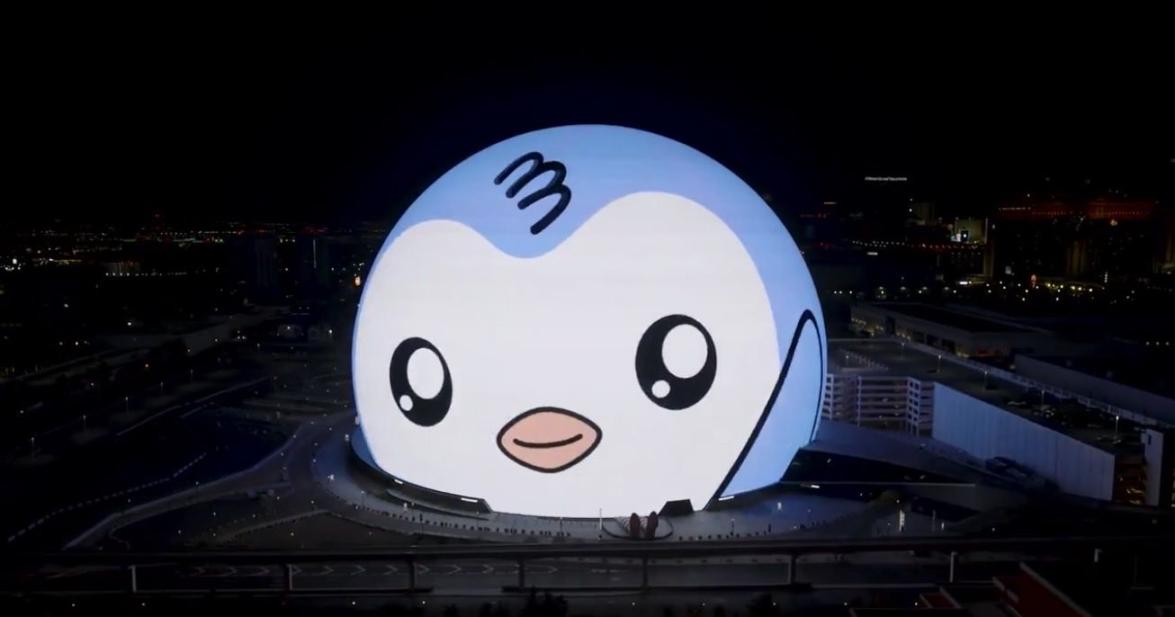
Image – Pudgy Penguins形象 on the Sphere

This advertisement, seen by millions of tourists, avoided crypto jargon and the term NFT, presenting only a family-friendly IP image. This brand exposure, in turn, stimulated liquidity in the secondary market. Over the past 14 days, the floor price of this NFT has risen 25%, and trading volume has increased by about 33%.

This shift from speculation to cultural operation seems to be becoming a consensus among industry survivors. Last May, Yuga Labs, the publisher of Bored Ape Yacht Club (BAYC), transferred the IP rights of the top NFT project CryptoPunks to the non-profit Infinite Node Foundation, aiming to strip it of its speculative, price-volatile nature and seek longer-term artistic preservation and cultural operation.

Physical Backing and Functional Return

Beyond IP branding, NFTs are becoming the underlying tool for connecting real-world assets (RWA).

Physical Card Trading. The platform Courtyard.io is changing the game. They deposit real Pokémon cards into certified vaults and tokenize them as NFTs. In the 30 days leading up to the end of 2025, the platform processed over 230,000 transactions, generating approximately $12.7 million in sales, demonstrating strong market appetite for this type of highly liquid, physically-backed asset.

Functional Tickets. FIFA (Fédération Internationale de Football Association) has also joined this trend, introducing "Priority Purchase Right" NFTs for ticket sales for the 2026 World Cup. These NFTs are not for speculation but serve as a verification tool to prevent scalper premiums and price gouging in the secondary market.

What Died in NFTs, and What Remains

NFTs are not "completely dead," but they have indeed died once.

What died is the fantasy of viewing NFTs as a financial asset that could be endlessly minted and traded based solely on narrative, detached from real-world value. In the face of infinite supply and limited demand, this path was destined to be unsustainable.

What remains is NFT's role as a "credential layer." It is no longer expected to create value alone but is embedded within IP brands, physical assets, and functional scenarios,承担ing the basic functions of rights confirmation, transfer, participation, and verification.

From Pudgy Penguins' toy shelves, to the on-chain flow of physical cards, to the anti-scalping mechanisms for World Cup tickets, NFTs are stepping down from the speculative stage and returning to the toolbox.

For the NFT speculative market, this is undoubtedly a winter. But for NFTs themselves, this is more like a rebirth after disenchantment.


Twitter:https://twitter.com/BitpushNewsCN

Bitpush TG Discussion Group:https://t.me/BitPushCommunity

Bitpush TG Subscription: https://t.me/bitpush

Original link:https://www.bitpush.news/articles/7600451

Questions liées

QWhat was the peak auction price of Beeple's NFT 'Everydays: The First 5000 Days' and what does its current market state symbolize?

ABeeple's NFT 'Everydays: The First 5000 Days' was sold for $69.3 million at Christie's auction house. The current state of the NFT market, including the cancellation of events like NFT Paris, symbolizes the complete cycle from狂热 (frenzy) to清算 (liquidation) over a five-year period.

QAccording to data from CryptoSlam, how did the supply and sales volume of NFTs change in 2025 compared to previous years?

AIn 2025, the supply of NFTs increased by 35% compared to 2024's 1 billion, while the total sales volume dropped by 37% from $8.9 billion to approximately $5.63 billion. The total market capitalization also fell by about 86% from its peak in April 2022.

QHow did major NFT platforms like OpenSea and Blur perform in the declining market, and what changes did they make?

AOpenSea's monthly revenue dropped from $50-120 million during the NFT golden age to less than $1 million, leading it to转型 (transform) into a general on-chain trading center for all types of assets. Blur's TVL hit new lows, and its token price fell by 99% from its peak.

QWhat strategy did Pudgy Penguins use to achieve success despite the overall market downturn?

APudgy Penguins succeeded by transforming its digital IP into physical consumer goods, adopting a dual revenue model that combines IP licensing with physical products. Its toys are now sold in over 10,000 retail stores globally, generating an estimated $50 million in annual revenue.

QWhat new practical applications for NFT technology are emerging, as mentioned in the article?

ANew practical applications include platforms like Courtyard.io, which tokenizes physical assets like Pokémon cards as NFTs for high-liquidity trading, and FIFA's use of NFTs as 'priority purchase right' tickets for the 2026 World Cup to prevent scalping and price fraud in the secondary market.

Lectures associées

Début de Warsh : le président de la Fed le plus au fait du Crypto de l'histoire apportera-t-il des surprises ou des chocs au marché ?

**Résumé :** Kevin Warsh, nouveau président de la Réserve fédérale américaine, s'apprête à tenir sa première conférence de presse monétaire. Sa nomination est historique : il est le premier président de la Fed à détenir personnellement des actifs numériques (investissements indirects dans Solana, dYdX, etc.), montrant une compréhension unique du secteur. Son dilemme est majeur : il doit faire face à une résurgence de l'inflation, qui exige une politique monétaire stricte (position "de faucon"), tout en répondant aux pressions politiques pour des baisses de taux. Parallèlement, son attitude envers les crypto-actifs diffère fondamentalement de celle de son prédécesseur. Il ne les considère pas comme de simples actifs spéculatifs, mais plutôt comme un "bon policier" pour la politique économique et une composante de la compétitivité américaine. Son impact potentiel sur le marché crypto s'articule autour de trois axes : 1. Un changement de paradigme réglementaire, passant de la prévention à l'intégration et à l'innovation. 2. Une reprixation des actifs liée aux taux d'intérêt, où sa clarté de communication pourrait réduire la prime d'incertitude. 3. Une légitimation accrue pouvant attirer les capitaux institutionnels traditionnels. Deux scénarios principaux sont envisagés pour sa première intervention : * **Scénario "Surprise"** : Un ton modéré ("de colombe") sur les taux combiné à des signaux favorables à l'innovation numérique pourrait booster le marché. * **Scénario "Choc"** : Un message excessivement restrictif sur les taux pourrait entraîner une vente généralisée des actifs risqués, y compris les cryptos. Bien qu'il ait dû vendre ses actifs crypto pour des raisons d'éthique, la compréhension intrinsèque de Warsh pour la technologie blockchain pourrait, à long terme, poser les bases d'une intégration plus structurelle des actifs numériques dans le système financier.

marsbitIl y a 7 h

Début de Warsh : le président de la Fed le plus au fait du Crypto de l'histoire apportera-t-il des surprises ou des chocs au marché ?

marsbitIl y a 7 h

XRP Ledger Lance le Rebranding XRPld Avec la Mise à Niveau Version 3.2.0

La version 3.2.0 du XRP Ledger (XRPL) est désormais disponible, introduisant une refonte majeure incluant le changement de nom du logiciel principal de « rippled » à « xrpld ». Cette mise à niveau se concentre principalement sur les améliorations des performances, de la sécurité et de l'évolutivité de l'infrastructure sous-jacente, plutôt que sur de nouvelles fonctionnalités utilisateur. Les principales avancées incluent des optimisations de mémoire pouvant réduire jusqu'à 40% l'utilisation de la mémoire serveur. Sur le plan de la sécurité, la modification `fixCleanup3_2_0` renforce plusieurs modules, notamment les coffres-forts à actif unique, le protocole de prêt, les échanges décentralisés et les jetons multi-usages. De nouveaux contrôles d'invariance garantissent la cohérence du registre après la suppression de comptes. Pour les développeurs, la mise à jour permet désormais de récupérer des informations sur les définitions du protocole et du serveur XRPL sans nécessiter de connexion active, facilitant ainsi la création de portefeuilles, d'explorateurs de blockchain et d'APIs. En termes d'évolutivité et de stabilité, les améliorations comprennent des tailles de bloc configurables, un stockage de base de données optimisé via nuDB, et le support optionnel de TLS/mutual TLS pour le serveur gRPC. Le port de peering par défaut est également passé du 51235 au 2459. Divers correctifs ont été apportés aux fonctions liées aux Market Makers Automatisés, aux paiements, aux séquestres de jetons et aux carnets d'ordres. Une note importante : les invariants de transaction ont été temporairement désactivés dans la v3.2.0 en raison d'un impact sur les performances, mais cela ne présente pas de risque pour la sécurité.

TheNewsCryptoIl y a 8 h

XRP Ledger Lance le Rebranding XRPld Avec la Mise à Niveau Version 3.2.0

TheNewsCryptoIl y a 8 h

L'AGI n'est pas l'arrivée, nouveau document de DeepMind : Vers l'ASI, le véritable progrès de l'IA ne fait que commencer

Si l'intelligence artificielle générale (IAG) était atteinte demain, quelle serait la prochaine étape ? Une étude de Google DeepMind suggère que l'IAG n'est pas un point final, mais une étape vers une superintelligence artificielle (ISA) dépassant les collectifs d'experts humains. L'étude distingue trois concepts : l'IAG (niveau médian humain), l'ISA (supérieure aux meilleurs collectifs humains dans presque tous les domaines) et l'IA universelle (limite théorique). Elle propose quatre voies potentielles vers l'ISA : 1. **Extension des ressources** : augmentation de la puissance de calcul, des données et des modèles. 2. **Évolution algorithmique** : améliorations incrémentales ou nouveaux paradigmes (apprentissage continu, utilisation d'outils, modèles du monde). 3. **Auto-amélioration récursive** : des IA plus performantes conçoivent la génération suivante, créant une boucle de rétroaction positive. 4. **Coordination multi-agents** : des systèmes IAG collaborant atteignent une intelligence collective supérieure. L'étude identifie six principaux goulets d'étranglement : 1. **Le mur des données** : les données humaines de haute qualité pourraient s'épuiser. 2. **Pressions économiques et ressources naturelles** : coûts énergétiques et matériels. 3. **Limites des paradigmes neuronaux actuels** : problèmes d'apprentissage continu, de raisonnement robuste, d'hallucinations. 4. **Difficulté croissante de la recherche**. 5. **Barrières à l'abstraction** : difficulté à former de nouveaux concepts fondamentaux. 6. **Régulation, gouvernance et réaction sociale**. Un défi crucial est l'évaluation des capacités de l'IA au-delà du niveau humain, nécessitant de nouveaux benchmarks. L'étude conclut que la progression vers l'ISA reste incertaine, soumise à des contraintes physiques et de ressources, et appelle à un effort de recherche interdisciplinaire pour mieux anticiper cette évolution.

marsbitIl y a 9 h

L'AGI n'est pas l'arrivée, nouveau document de DeepMind : Vers l'ASI, le véritable progrès de l'IA ne fait que commencer

marsbitIl y a 9 h

Trading

Spot
Futures

Articles tendance

Comment acheter HOUSE

Bienvenue sur HTX.com ! Nous vous permettons d'acheter Housecoin (HOUSE) de manière simple et pratique. Suivez notre guide étape par étape pour commencer votre parcours crypto.Étape 1 : Création de votre compte HTXUtilisez votre adresse e-mail ou votre numéro de téléphone pour ouvrir un compte sur HTX gratuitement. L'inscription se fait en toute simplicité et débloque toutes les fonctionnalités.Créer mon compteÉtape 2 : Choix du mode de paiement (rubrique Acheter des cryptosCarte de crédit/débit : utilisez votre carte Visa ou Mastercard pour acheter instantanément Housecoin (HOUSE).Solde :utilisez les fonds du solde de votre compte HTX pour trader en toute simplicité.Prestataire tiers :pour accroître la commodité d'utilisation, nous avons ajouté des modes de paiement populaires tels que Google Pay et Apple Pay.P2P :tradez directement avec d'autres utilisateurs sur HTX.OTC (de gré à gré) : nous offrons des services personnalisés et des taux de change compétitifs aux traders.Étape 3 : stockage de vos Housecoin (HOUSE)Après avoir acheté vos Housecoin (HOUSE), stockez-les sur votre compte HTX. Vous pouvez également les envoyer ailleurs via un transfert sur la blockchain ou les utiliser pour trader d'autres cryptos.Étape 4 : tradez des Housecoin (HOUSE)Tradez facilement Housecoin (HOUSE) sur le marché Spot de HTX. Il vous suffit d'accéder à votre compte, de sélectionner la paire de trading, d'exécuter vos trades et de les suivre en temps réel. Nous offrons une expérience conviviale aux débutants comme aux traders chevronnés.

492 vues totalesPublié le 2025.04.27Mis à jour le 2026.06.02

Comment acheter HOUSE

Discussions

Bienvenue dans la Communauté HTX. Ici, vous pouvez vous tenir informé(e) des derniers développements de la plateforme et accéder à des analyses de marché professionnelles. Les opinions des utilisateurs sur le prix de HOUSE (HOUSE) sont présentées ci-dessous.

活动图片













