UK and US Move to Align Crypto Regulations as the Best Crypto Presales Heat Up

bitcoinistPublié le 2025-09-17Dernière mise à jour le 2025-09-17

Résumé

With Donald Trump in the United Kingdom for a state visit, the UK and the US are poised to forge...

Trusted Editorial content, reviewed by leading industry experts and seasoned editors. Ad Disclosure

With Donald Trump in the United Kingdom for a state visit, the UK and the US are poised to forge closer regulatory ties on key issues.

One of those issues is crypto regulations – in particular, stablecoins. The move could reshape the landscape for stablecoins, investor protection, and cross-border financial innovation. Along the way, it could also send a handful of the best crypto to buy into the stratosphere as markets heat up.

A Shift Towards Cooperation

High-level talks between UK Chancellor Rachel Reeves and US Treasury Secretary Scott Bessent formed the starting point for the whole discussion. Trump himself may get involved later in the week.

Major crypto firms like Coinbase, Circle, and Ripple, as well as leading banks, were part of discussions aimed at synchronizing oversight of the digital-asset sector.

What’s driving the sudden shared interest?
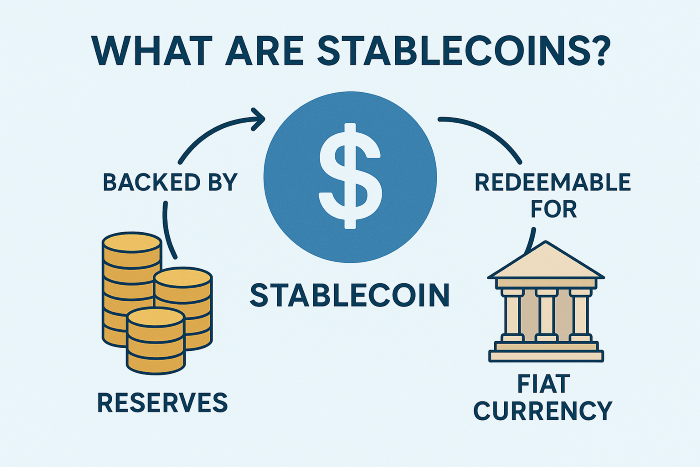
In a word, stablecoins.

Stablecoin illustration

Stablecoins, pegged to traditional currencies, have emerged as popular payment instruments and stores of value. For now, they currently exist under varying regulatory regimes in different countries– and that’s why the UK is keen to align more closely with US regulation.

What Alignment Might Look Like

Several areas are expected to be part of the UK-US regulatory alignment:

  • Stablecoin regulation: Clearer rules governing issuance, backing, and oversight.
  • Combatting financial crime: Unifying anti-money laundering (AML) and know-your-customer (KYC) standards.
  • Market conduct: Strengthened supervision of digital asset markets to ensure fair practices and consumer protection.
  • Joint innovation sandboxes: Regulatory test environments where firms can trial blockchain-based solutions or new financial products in both jurisdictions under regulatory oversight.

Why It Matters

The UK has publicly acknowledged a risk of being left behind in global crypto regulatory advance. Former Conservative Chancellor George Osborne warned in an op-ed that on stablecoins and broader digital asset policy, other countries are passing the UK by.

And there’s a strong desire on the part of both countries to use regulatory clarity to attract business investment, maintain competitiveness, and support innovation in the financial sector.

Additionally, the timing of these moves is significant. Talks coincide with heightened diplomatic and trade conversations, including the US-UK relationship under President Trump’s pro-crypto bent and the UK’s efforts to position itself as a global hub in digital finance.

With alignment on the horizon, the crypto presales could be among the best projects to buy.

Bitcoin Hyper ($HYPER) – Fastest and Cheapest Bitcoin Layer 2 Enables Everyday Bitcoin Transactions

Bitcoin Hyper ($HYPER) aims to solve a couple of long-standing Bitcoin problems. Sure, Bitcoin has a $2.2T market cap, and may not look like it has many weaknesses at all. But the Bitcoin Layer 1 blockchain emphasizes simple smart contracts for security and reliability, rather than speed or scalability.
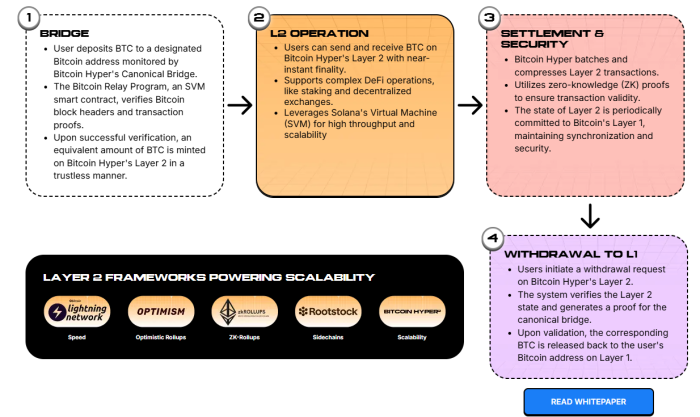
Bitcoin hyper architecture

To achieve the latter, Bitcoin Hyper integrates the Solana Virtual Machine (SVM) through the use of a Canonical Bridge. Deposit $BTC on the canonical bridge, mint wrapped $BTC on the Hyper Layer 2.

On Hyper, investors can leverage the SVM’s speed to transact $BTC at Solana’s speeds – several thousand transactions per second. That utility explains why our $HYPER price prediction shows the token price reaching $0.32 by the end of this year.

Learn more about what Bitcoin Hyper is and jump into the presale at the official website.

PepeNode ($PEPENODE) – Mine-to-Earn Gamifies Meme Coin Yield

What if you could meme and game at the same time?

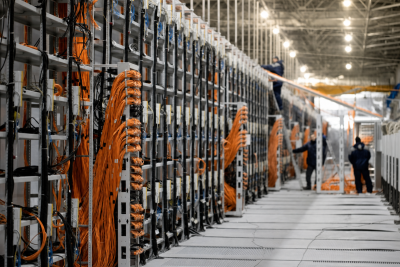
PepeNode ($PEPENODE) makes it possible with an innovative Mine-to-Earn mechanic. Buy $PEPENODE and use the token to upgrade your virtual mining server room. The more nodes you purchase and the more you upgrade your rig, the more $PEPENODE you’ll earn.

PepeNode presale

You can earn rewards in other tokens, including $PEPE, $FARTCOIN, and more. There’s also a leaderboard where miners can see whose rig is performing the best.

The $PEPENODE presale has passed $1.2M, with tokens priced at $0.0010617 — but our price prediction sees the token climbing to $0.0023 by the end of the year.

Check out the presale page for the latest info.

BlockDag ($BDAG) – Massive Crypto Presale Offers Endless Blockchain Interconnectivity

BlockDag has an incredibly ambitious vision – a proof-of-work consensus with Directed Acrylic Graph (DAG) technology.
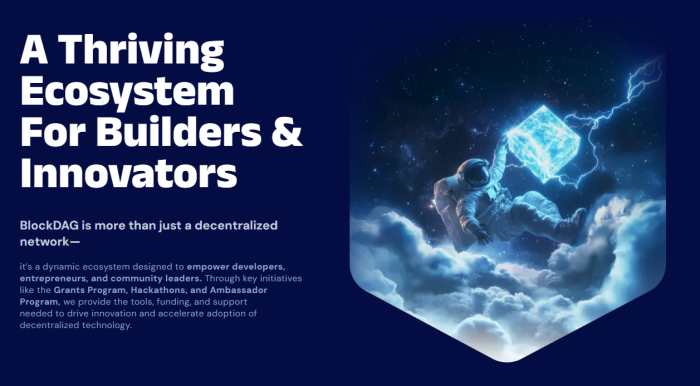
Blockdag presale

If BlockDag finds the success it hopes for, it could be the foundation for an entirely new standard for blockchain networks. BlockDag wants to build a more transparent blockchain with full DeFi capabilities, including:

  • Stablecoins
  • Staking
  • Lending & borrowing
  • Swaps
  • Cross-chain bridging

The solidity and reliability of a proof-of-work blockchain would back all of those features. And with over $400M raised in a massive presale so far, BlockDag is well-positioned to succeed.

While US-UK regulatory alignment promises benefits, there are obstacles to overcome. Regulatory systems differ in structure, legal tradition, and risk tolerance. The UK and US may diverge in consumer protection standards, enforcement priorities, or industry oversight.

Ensuring alignment without stifling innovation will be a delicate balancing act.

But if negotiators can pull it off, look for hot crypto presales like $HYPER, $PEPENODE, and $BDAG to explode into the newly defined space.

Authored by Bogdan Patru for Bitcoinist — https://bitcoinist.com/best-crypto-presales-to-buy-as-uk-and-us-start-crypto-cooperation

Editorial Process for bitcoinist is centered on delivering thoroughly researched, accurate, and unbiased content. We uphold strict sourcing standards, and each page undergoes diligent review by our team of top technology experts and seasoned editors. This process ensures the integrity, relevance, and value of our content for our readers.

As a crypto writer, Bogdan’s responsibilities are split between researching and writing articles and entertaining the team with his humor bordering on the politically incorrect, an aspiring Bill Burr, if you will. Thanks to his 12+ years of writing experience in just as many fields, including tech, cybersecurity, modelling, fitness, crypto, and other topics-that-shall-not-be-named, he's become a genuine asset to the team. While his position as a senior writer at PrivacyAffairs thought him valuable lessons about the power of self-management, his entire writing career was and is an exercise in self-improvement. Now, he's ready to sink his teeth into crypto and teach people how to take control of their own money on the blockchain. With fiat as an eternally devaluing currency, Bitcoin and altcoins seem like the best-fitting alternative for Bogdan. Bogdan’s biggest professional accomplishment, aside from securing a position as a main writer for Bitcoinist, was his 5-year run as a writing manager at Blackwood Productions, where he coordinated a team of four writers. During that time, he learned the value of teamwork and that of creating a working environment that breeds efficiency, positivity, and friendship.

Lectures associées

Aave grimpe face au Bitcoin alors que le récit institutionnel de la DeFi se renforce

AAVE affiche une performance remarquable face à un marché crypto affaibli, résistant à la pression générale exercée par la faiblesse du Bitcoin. Ce mouvement est attribué au renforcement du récit de la finance décentralisée (DeFi) institutionnelle et des actifs du monde réel (RWA), relancé par l'attention récente de Standard Chartered sur le protocole. La banque a mis en avant le rôle d'AAVE en tant que marché de prêt décentralisé majeur et mature, traduisant son potentiel en termes de revenus, de demande de crédit et de marché adressable pour un public institutionnel. Cette résistance suggère que les traders pourraient commencer à différencier les infrastructures DeFi solides, dotées de cas d'utilisation crédibles, du reste du marché des altcoins. La persistance de cette force relative sera un test clé. Si elle se maintient malgré la volatilité, cela pourrait indiquer une rotation du capital vers des protocoles aux fondamentaux robustes, même dans un contexte de pression sur le Bitcoin. Cette évolution s'inscrit dans des tendances de fond du marché : une régulation plus précise, un rapprochement des produits institutionnels avec les rails financiers traditionnels et une réaction rapide des traders à la liquidité réduite. Ainsi, l'épisode Aave est moins un catalyseur de prix isolé qu'un indicateur de l'évolution des infrastructures, des flux de capitaux et de la prochaine étape d'adoption de la cryptomonnaie.

bitcoinistIl y a 15 mins

Aave grimpe face au Bitcoin alors que le récit institutionnel de la DeFi se renforce

bitcoinistIl y a 15 mins

Huang Renxun : Les prompts sont en train de devenir obsolètes, les loops sont le nouveau paradigme

Prompt passe, place aux loops. Tel est le nouveau paradigme souligné par des figures comme Jensen Huang. Le concept de "loop" (boucle) désigne la conception de systèmes où l'IA exécute des tâches de manière autonome : elle définit ses propres instructions, vérifie les résultats, et réitère jusqu'à réussite ou épuisement du budget, sans intervention humaine constante. Contrairement à un agent simple qui nécessite une instruction à chaque étape, un système avec loop fonctionne en continu. Des produits comme Claude Code et OpenAI Codex l'ont déjà implémenté via des fonctionnalités comme `/goal` ou des automations, où un modèle écrit le code et un autre, indépendant, le valide. Pour construire une loop efficace, il faut : 1) s'assurer que la tâche est répétitive, automatisable et dans les limites budgétaires ; 2) commencer par une loop simple avec un déclencheur, une compétence, un fichier d'état et un contrôle ; 3) séparer clairement l'écriture et la validation du code ; 4) éviter les pièges comme l'absence de conditions d'arrêt ou la gestion de tâches nécessitant un jugement humain. Cette évolution s'inscrit dans une progression : après l'ingénierie des prompts (2023-2024), puis du contexte (2024-2025) et du "harnais" (environnement d'exécution, 2025-2026), l'ingénierie des loops représente la dernière étape, où le contrôle humain passe de la micro-gestion à la conception de systèmes autonomes. Des travaux académiques comme ReAct (2022) ont jeté les bases de ce principe de boucle réflexive. Bien que prometteuse, cette approche nécessite prudence quant aux coûts et à la préservation d'une compréhension humaine des systèmes automatisés.

marsbitIl y a 1 h

Huang Renxun : Les prompts sont en train de devenir obsolètes, les loops sont le nouveau paradigme

marsbitIl y a 1 h

GPT conçoit GPT

OpenAI a dévoilé son premier puce, Jalapeño, destinée à l'inférence des grands modèles linguistiques. Ce mouvement ne vise pas principalement à concurrencer Nvidia, mais marque une étape stratégique où OpenAI cherche à maîtriser l'ensemble du processus de production de l'intelligence artificielle, des modèles aux puces, en passant par les centres de données et l'énergie. Alors que l'écart entre les modèles se réduit, le vrai fossé se creuse au niveau de la puissance de calcul, des coûts d'inférence et de l'efficacité système. Chaque jeton (Token) généré représente un coût, et OpenAI, avec ses produits à forte demande comme ChatGPT, supporte une « taxe de calcul » importante sur le matériel externe. Jalapeño est conçu pour réduire cette « taxe d'inférence » en optimisant les coûts opérationnels quotidiens. Un détail crucial est le cycle de conception de seulement neuf mois, accéléré par l'utilisation par OpenAI de ses propres modèles d'IA pour aider à concevoir et optimiser la puce. Cela crée un cycle vertueux : de meilleurs modèles conçoivent de meilleures puces, qui réduisent le coût d'exécution des modèles futurs, permettant plus d'utilisateurs et de données pour affiner les prochaines générations de puces. OpenAI ne cherche pas à devenir un fournisseur de matériel comme Nvidia. Son approche s'apparente plutôt à celle d'Apple : construire un écosystème fermé et intégré où les modèles, les produits (ChatGPT, API), les puces et les infrastructures sont optimisés conjointement pour contrôler l'ensemble de la chaîne de valeur de l'IA. À long terme, cela pourrait repositionner les entreprises de modèles en tant que joueurs majeurs de l'infrastructure IA, aux côtés des fournisseurs de matériel traditionnels.

marsbitIl y a 1 h

GPT conçoit GPT

marsbitIl y a 1 h

Trading

Spot
Futures
活动图片