SEC Committed 'Gross Abuse of Power' in Suit Against Crypto Company, Federal Judge Rules

CoinDeskPolicyPublié le 2024-03-17Dernière mise à jour le 2024-03-18

Résumé

The regulator will be required to pay attorneys' fees for the defendants.

A federal judge ruled that the U.S. Securities and Exchange Commission must pay legal costs for DEBT Box, a Utah-based crypto company the SEC brought a suit against, finding that the regulator had committed a "gross abuse of power" in its efforts to secure a temporary restraining order.

The SEC sued the crypto project last year alleging fraud, securing a temporary asset freeze and restraining order against the company. According to the SEC, DEBT Box was telling customers it was selling licenses to mine cryptocurrency, but was in reality just creating tokens with code. DEBT Box filed to dissolve the temporary restraining order, claiming the SEC had misled the court about the company moving its funds and closing its bank accounts.

In an order Monday, Chief Judge Robert Shelby, from the District of Utah, wrote that the SEC's attorneys misled the court both in applying for a temporary restraining order as well as afterward, when DEBT Box filed to dissolve the order, noting at the end that the order is focused on the TRO question, and not the underlying case.

Advertisement
Advertisement

The SEC will be required to pay defendants' and receivers' fees as part of the court's sanctions, the judge wrote.

"Each piece of support the Commission offered in seeking the TRO – and then later reiterated in defending the TRO – proved to be some combination of false, mischaracterized, and misleading," the order said. "Further, the Commission not only repeated and affirmed its misrepresentations in the face of contrary evidence, it presented new falsehoods to the court in an effort to subtly shift from its previous misrepresentations without acknowledging its previous errors."

An SEC spokesperson said the agency was "reviewing the decision."

Edited by Kevin Reynolds.


Lectures associées

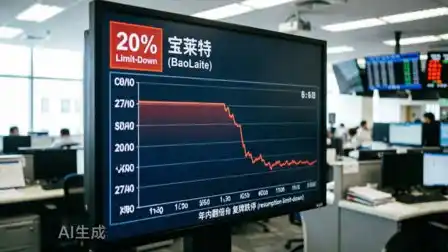
Le cours de l'action double sur l'année, chute limitée de 20% à la reprise, le scénario de "refuge pour la puce" de Baolai se termine

Le 10 août 2026, après près d'une semaine de suspension, l'annonce de l'arrêt du projet de changement de contrôle de Boleite (300246.SZ) a déclenché une forte vente sur le marché secondaire, le titre clôturant en baisse de 20% à 15,41 yuans. Cet échec met fin aux spéculations sur une éventuelle introduction en bourse indirecte de Weigu Information, une entreprise spécialisée dans les puces de stockage, via Boleite. L'espoir d'un changement de contrôle avait fait monter le titre de plus de 137% depuis janvier 2026, porté par l'entrée au capital de Quwei Zhihe, lié à Weigu Information. Cependant, les négociations ont été rompues le 7 août. Derrière cette chute se cache une situation financière précaire. Boleite, spécialisé dans les dispositifs de dialyse et de monitoring médical, accumule les pertes depuis 2023, avec un déficit total dépassant 200 millions de yuans sur trois ans. La baisse des prix due à la politique nationale de centralisation des achats de matériel médical a fortement compressé ses marges. La société fait également face à une pression de trésorerie immédiate, avec des dettes à court terme importantes et le remboursement imminent d'environ 218 millions de yuans d'obligations convertibles "Bole Convertible Bonds" en septembre 2026, les actionnaires étant peu incités à les convertir au prix actuel. Pour faire face, Boleite a dû affecter les fonds restants d'un projet antérieur à son fonds de roulement. La fin des spéculations sur le contrôle met en lumière les défis fondamentaux de Boleite : retrouver la rentabilité dans ses activités principales et résoudre sa crise de liquidité.

marsbitIl y a 2 h

Le cours de l'action double sur l'année, chute limitée de 20% à la reprise, le scénario de "refuge pour la puce" de Baolai se termine

marsbitIl y a 2 h

Trading

Spot
活动图片