Huobi Strategy Weekly Report How will the May FOMC meeting affect Bitcoin (Part 1)

Huobi ResearchPublié le 2022-05-05Dernière mise à jour le 2022-05-05

Résumé

Fed expected to raise interest rates aggressively; global capital market in turmoil Since April, the performance of the global capital market has not been satisfactory.

I. Fed expected to raise interest rates aggressively; global capital market in turmoil

Since April, the performance of the global capital market has not been satisfactory. Be it the S&P 500, Nasdaq 100 or Bitcoin, there has been a certain degree of decline observed. Bitcoin fell from a high of US$48,000 to a low of US$38,000, with a drop of more than 17%. On the other hand, the U.S. dollar continues to show strength, and has now risen above 103.00, hittinga five-year high.
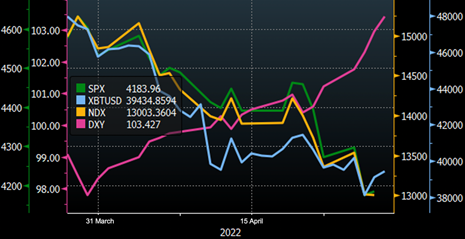
(Figure 1. S&P 500,NDX、BTC, and US Dollar Index trend in 1 month, Source: Bloomberg)

In addition, compared with the decline of the capital market, a more dangerous sign is the emergence of the Inverted Yield Curve, wherethe two-year/ten-year yield curve spread inverted in the last week of March. The Inverted Yield Curve refers to the condition when the two-year treasury yield tops the ten-year rate. In general, the longer the bond's maturity, the higher its yield. When the yield inversion occurs, it often signals that the market is pessimistic about long-term economic development.

In the past 30 years, the two-year and ten-year U.S. treasury yield curves have inverted five times, which occurred in 1989, 1998, 2000, 2006, and 2019 respectively. These five inversions correspond to five famous crises-the 1990 Savings and Loan Crisis, the 1998 Asian financial crisis , the 2000 Nasdaq Dot-com bubble crisis, the 2008 global financial crisis, and the 2020 COVID-19 economic recession.

While the yield curve inversion remains a controversial measurement , it is still one of the most popular economic recession predictors in the market. The yield curve inversion at the end of March raises concern about whether the global economy will go into recession in the future.
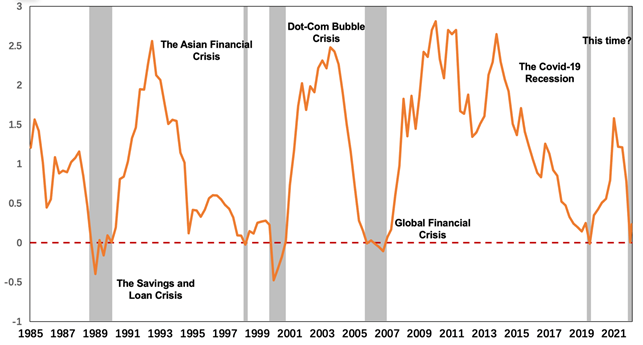
(Figure 2. US Treasury yield curve inversion and recession, Source: Bloomberg)

In a volatile capital market,, the reason of a recession intensifying is that the market is expecting the Fed to raise interest rates more aggressively. Before reviewing the reasons for the changes in the Fed's monetary policy, we need to understand the Fed's monetary policy decision-making framework — the Taylor Rule. Taylor's rule is expressed as follows:

where 〖FFR〗_t is the nominal fed funds rate, 〖r_t〗^* is the real federal funds rate, 〖π_t〗^* is the target inflation rate, 〖〖(π-π〗_t〗^*) is the inflation gap, y is the unemployment rate, 〖y_t〗^* is the natural unemployment rate, 〖〖(y-y〗_t〗^*) is the unemployment gap. The coefficients, a (positive value) and b (negative value), refers to the responsiveness of the nominal fed funds rate in respect to the two types of gaps. This formula demonstrates that when the inflation rate is above the target value, the central bank should implement a tight monetary policy. If the unemployment rate is above the natural rate of unemployment, it should implement a loose monetary policy.

Since 2012, the Federal Reserve has maintained a relatively stable long-term goal for eight years. It consistently holds the inflation rate target of 2% in the long run and reduces its forecast for the long-term natural unemployment rate annually according to the structure and changes of the labor market. In August 2020, the Federal Reserve initially proposed the concept of an average inflation rate. While emphasizing the long-term inflation expectation of 2%, it allowed an inflation rate moderately higher than 2% during a period of time. Therefore, Fed’s tolerance for short-term high inflation has increased. Even so, , the U.S. CPI has repeatedly hit record highs since the second half of 2021. The CPI in March increased by 8.5% year-on-year, which can no longer be explained by "transitory inflation". On the other hand, the employment market in the U.Scontinues to improve, and the unemployment rate is also gradually declining. The current unemployment rate is 3.8%, returning to pre-pandemic levels.
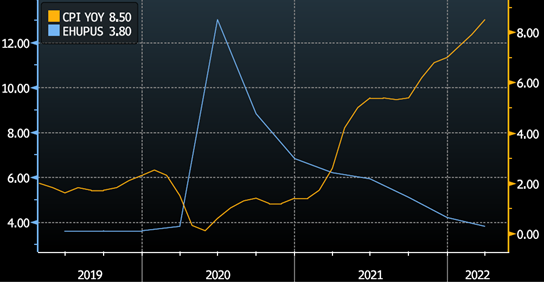
(Figure 3. Changes of the U.S. CPI and unemployment rate, Source: Bloomberg)

In this case, the Fed's monetary policy trend has been determined. The clues can also be found from the Fed's meeting statements in January and March. The Fed has not yet clearly raised interest rates in January, and the measures are relatively modest when it comes to two key indicators of "employment" and "inflation." However, the wording on "employment" and "inflation" in March statement was more intense, with an explicit increase of interest rate by 25bps and a hint to start a balance sheet reduction.

Table 1. Comparison between FOMC meeting statement in January and March
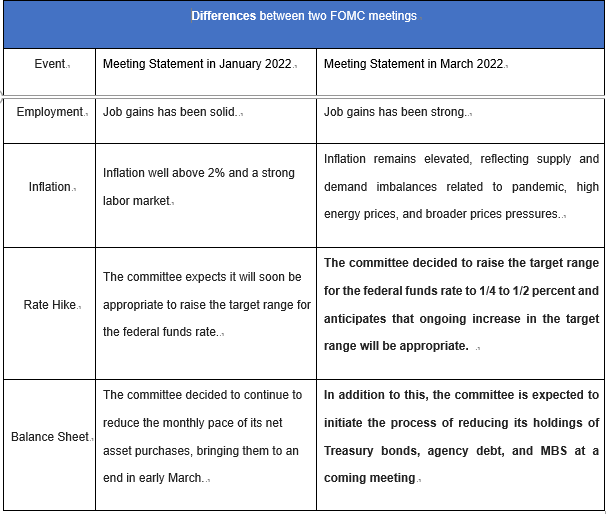
Source:Huobi Research, Bloomberg

II. Highlights of the FOMC meeting in May

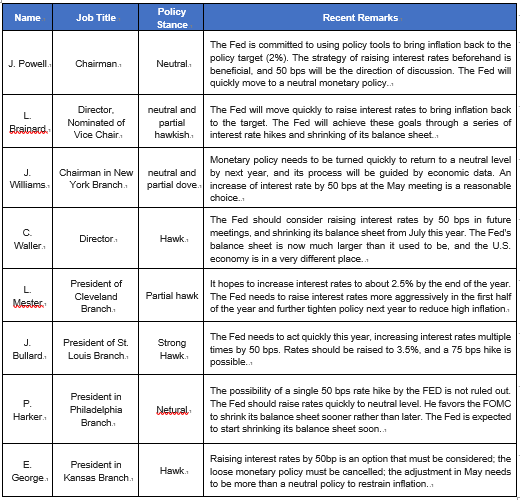
From the decision-making framework of the Taylor Rule, we know that further rate hikes in the May FOMC meeting are being determined. So, is the May FOMC meeting still worth paying attention to? We look at the recent public statements of Fed executives. According to the arrangement of the table below, we can see that the keywords frequently mentioned by Fed officials are "50BP" and "shrinking balance sheet". These two keywords are also the main highlights of the May FOMC:

 Will the Fed increase interest rate by more than 50 bps?

 Will the Fed start to shrink its balance sheet? What is the path and scale of the reduced balance sheet?

Table 2. The Fed’s senior officials' policy stance and recent remarks
Source: Huobi Research

Guided by the intensive speeches of Fed officials, a 50bp rate hike in May seems to be a certainty, and there are many views that the Fed will hit a combination of "50bp rate hike + balance sheet reduction" in May. In this paper, , we will analyze the impact of a 50BP hike.

Looking back at history, it is not common for the Federal Reserve to raise interest rates by 50bp in a single meeting. In the past 20 years, there have been five interest rate hikes equal to or more than 50, mainly in the two rounds of interest rate hike cycles from February 1994 to February 1995 and June 1999 to May 2000. May 1994 (3.75% to 4.25%), August 1994 (4.25% to 4.75%), November 1994 (4.75% to 5.5%), January 1995 (5.5% to 6%) and May 2000 (6% to 6.5%).

Interestingly, the two 50BP hikes in 1994 and 2000 produced different policy effects. The rate hike in 1994 was exceptionally successful and achieved a "soft landing" of the U.S. economy. The economy continued to grow strongly, and to a certain extent created the economic glory of the 1990s in the U.S. This rate hike was also praised as the "Greenspan Moment." ". However, the rate hike in 2000 was an unsuccessful one —I t directly punctured the tech bubble in the U.Ss and triggered the 2001 recession. At this critical moment of the impending FOMC interest rate hike in May, we review the two interest rate hikes in 1994 and 2000, and make a forecast analysis of this round of interest rate hike.
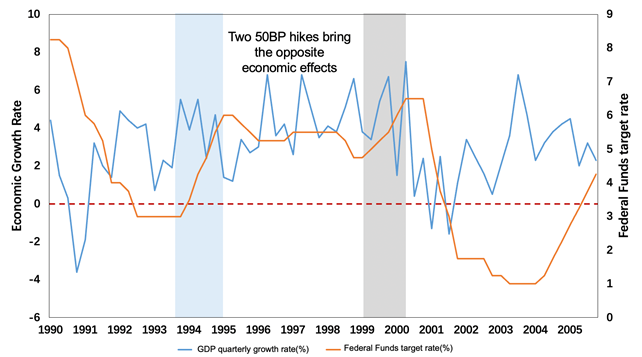
(Figure 5. Economic effects of two 50BP hikes in 1994 and 2000, source: Bloomberg)

(1)Interest rate hike cycle in 1994 (1994.2-1995.2)

After the recession in the early 1990s, the U.S. economy began to recover in 1993, and the quarterly growth rate of the U.S. GDP in Q1 1994 reached 3.4%. It is worth noting that although the U.S economy as a whole is in the process of recovery, ithas not yet shown the characteristics of overheating in 1994.

From the perspective of inflation data, the CPI rose by 2.5% year-on-year in the first quarter of 1994, which was better than the data during the recession in 1991. However, it was still lower than the level before the recession. In addition, the year-on-year CPI growth rate fluctuated in the range of 2.5%-3.2% as a whole, and there was no obvious upward trend. From the unemployment rate data, the unemployment rate reached 6.6% in the first quarter of 1994. It was still at a high level, but the labor market has recovered significantly compared to 1991.

From the above data, it can be seen that when the Federal Reserve started raising interest rates in 1994, the economy had not yet overheated, so in essence, this interest rate hike was a "pre-emptive" precautionary interest rate hike. The Federal Reserve raised interest rates by 25bp in April 1994, and raised interest rates by 50bp in the subsequent interest rate meeting. In November, it raised interest rates by 75bp, and stopped in February 1995. On hindsight, the rate hike was very successful. Themonetary policy smoothed the economic cycle and the economy achieved a "soft landing". The U.S economy maintained a growth rate of 4%-6%, which was very rare in developed countries. On the other hand, the U.S. stock market remained buoyant during the rate hike, with the S&P 500 rising..
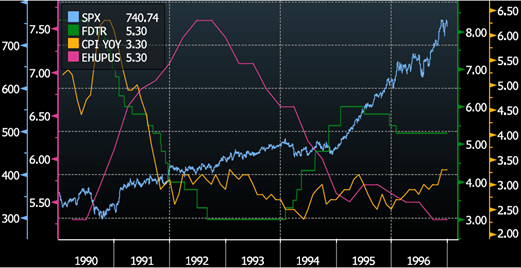
(Figure 6. The 1994 rate hike cycle, Source: Bloomberg)

Of course, the success of raising interest rates in 1994, in addition to Greenspan's "flexible and precise" manipulation, was also inseparable from the stability of the external environment. At that time, the Cold War had just ended. Following the wave of globalization in the 1910s, major countries reached multilateral trade agreements. The countries of the former socialist camp have started economic market-oriented reforms one after another. Internet technology began to develop rapidly, high-tech companies were established one after another, and the global economy was thriving. It is precisely with the stability of the external environment that the U.S economy showed huge potential for growth, which supported the adjustment of monetary policy.

(2)Interest rate hike cycle in 1999 (1999.6-2000.5)

In 1998, the Federal Reserve cut interest rates by 75BP in response to the Asian financial crisis. With low interest rates and the Internet boom at the time, the U.S. economy remained prosperous. Although the U.S. CPI in the second quarter of 1999 only increased by 2% year-on-year, which was at a normal level, the stock market was overheated, especially where technology stocks were wildly sought after by the market,. In view of the above situation, the Federal Reserve raised interest rates by 25BP five times between June 1999 and March 2000, but the CPI and the stock market remained high, and the economy did not cool down. To this end, the Federal Reserve decided to raise interest rates by 50BP to 6.5% in May 2000.

However, this move bursted the Internet bubble. Nearly half a month after raising interest rates by 50BP, U.S. stocks fell by 5% and entered a bear market. Then the U.S. economy entered a recession and unemployment was high. In order to save the economy, the Federal Reserve began an emergency rate cut six months after announcing a 50BP hike. By 2003, the federal funds target rate had fallen to 1%. Although it saved the U.S economy to a certain extent, it also paved the way for the crisis. Low interest rates led to an increase in the scale of housing loans, which became one of the triggers for the subprime mortgage crisis in 2008.
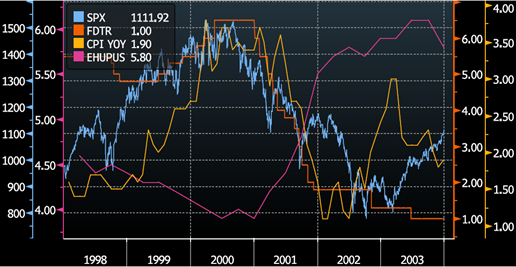
(Figure 7. The 1999 rate hike cycle, Source: Bloomberg)

(3)What is the impact of this 50BP hike?

As mentioned earlier, the 50BP interest rate hike in 1994 was successful for two main reasons: one was a precautionary advance rate hike, and the other was a stable external environment. The failure of the 50BP interest rate hike in 2000 was mainly due to the fact that the U.S. stock market was already volatile at that time, and the 9/11 incident in 2001 shook the security and market confidence of the U.S.

Compared to 1994 and 2000, the macroeconomic backdrop in 2022 is volatile and highly uncertain.

Since the outbreak of COVID-19 in 2020, the Omicron virus has spread significantly.. Although many countries have eased community and mobility restrictions, China is still imposing large-scale lockdowns as part of its Zero-Covid strategy. This weakened consumer confidence.

In addition, the Russian-Ukrainian war directly affected the supply of oil and natural gas to a large extent, resulting in rising energy costs. Global energy demand has increased and energy prices have risen. At the same time, commodity prices continued to climb. Among the 22 major commodities, nine have seen their prices rise by more than 50% — coffee rose by 91%, cotton rose by 58%, and aluminium rose by 53%. In November 2021, the U.S. inflation rate reached 6.8%,=. At this time, the rate hike is no longer a precautionary rate hike, which happened in 1994. The impact of the COVID-19 and the Russian-Ukrainian war has amplified the uncertainties of the stock market. will The expected effect of this hike will not reach the heights similar to the one in 1994.
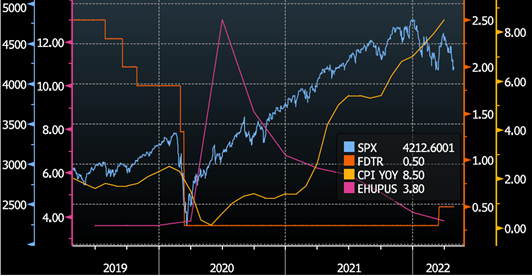
(Figure 8. The 2022 rate hike cycle, Source: Bloomberg)

III. The impact of interest rate hikes on the cryptocurrency market

Generally speaking, monetary policy has a certain external time lag, that is, there is a certain time interval from when the monetary authority takes action until it has an impact on the policy objective.

According to the statistics of some scholars, it takes an average of nine to 10 months from the change of money supply to the change of economic growth rate or price. For example, the central bank implemented an accommodative monetary policy in March 2020, but the CPI did not start to rise until February 2021.
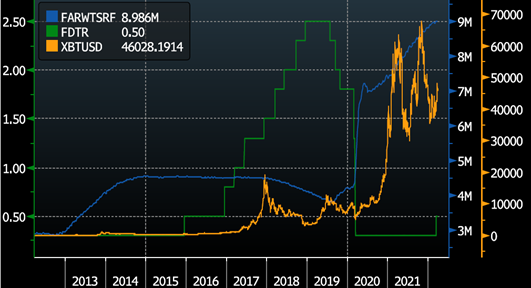
(Figure 9. Bitcoin price trend in the last rate hike cycle, source: Bloomberg)

Judging from the actual situation of the cryptocurrency market, , cryptocurrencies were not affected after the Federal Reserve started raising interest rates in December 2015. Instead, they ushered in a big bull market in 2017. It did not plummet and entered a bear market until nearly a year after the rate hike began (November 2017). Therefore, it is expected that in the six months to one year after the rate hike in March, the effect of the implementation of monetary policy will begin to showin the market.

About Huobi Research Institute

Huobi Blockchain Application Research Institute (referred to as "Huobi Research Institute") was established in April 2016. Since March 2018, it has been committed to comprehensively expanding the research and exploration of various fields of blockchain. As the research object, the research goal is to accelerate the research and development of blockchain technology, promote the application of blockchain industry, and promote the ecological optimization of the blockchain industry. The main research content includes industry trends, technology paths, application innovations in the blockchain field, Model exploration, etc. Based on the principles of public welfare, rigor and innovation, Huobi Research Institute will carry out extensive and in-depth cooperation with governments, enterprises, universities and other institutions through various forms to build a research platform covering the complete industrial chain of the blockchain. Industry professionals provide a solid theoretical basis and trend judgments to promote the healthy and sustainable development of the entire blockchain industry.

Official website:

https://research.huobi.com/

Consulting email:

research@huobi.com

Twitter: @Huobi_Research

https://twitter.com/Huobi_Research

Medium: Huobi Research

https://medium.com/huobi-research

Disclaimer

1. The author of this report and his organization do not have any relationship that affects the objectivity, independence, and fairness of the report with other third parties involved in this report.

2. The information and data cited in this report are from compliance channels. The sources of the information and data are considered reliable by the author, and necessary verifications have been made for their authenticity, accuracy and completeness, but the author makes no guarantee for their authenticity, accuracy or completeness.

3. The content of the report is for reference only, and the facts and opinions in the report do not constitute business, investment and other related recommendations. The author does not assume any responsibility for the losses caused by the use of the contents of this report, unless clearly stipulated by laws and regulations. Readers should not only make business and investment decisions based on this report, nor should they lose their ability to make independent judgments based on this report.

4. The information, opinions and inferences contained in this report only reflect the judgments of the researchers on the date of finalizing this report. In the future, based on industry changes and data and information updates, there is the possibility of updates of opinions and judgments.

5. The copyright of this report is only owned by Huobi Blockchain Research Institute. If you need to quote the content of this report, please indicate the source. If you need a large amount of reference, please inform in advance (see "About Huobi Blockchain Research Institute" for contact information), and use it within the allowed scope. Under no circumstances shall this report be quoted, deleted or modified contrary to the original intent.


Lectures associées

La répartition de la valeur des stablecoins

L'article analyse la répartition de valeur dans l'écosystème des stablecoins, en le divisant en quatre couches : 1. **Couche d'émission** : (ex. : Tether, Circle) - Émettent les stablecoins, détiennent les actifs de réserve et capturent la marge d'intérêt. 2. **Couche d'infrastructure** : (ex. : Bridge, BVNK) - Relient les stablecoins au système financier traditionnel (connexions bancaires, conformité, gestion des entrées/sorties en fiat). C'est le travail le plus complexe et essentiel pour une adoption large. 3. **Couche d'acquisition/distribution** : (ex. : Stripe, Coinbase) - Intègrent les stablecoins dans les systèmes marchands et logiciels d'entreprise. 4. **Couche applicative** : Les utilisateurs finaux. Actuellement, la couche d'émission génère les profits les plus importants. L'auteur souligne que la **couche d'infrastructure**, bien que cruciale, est souvent sous-estimée. Son rôle de "trait d'union" entre la blockchain et le monde réel (règlement, conformité, intégration aux flux de trésorerie des entreprises) est difficile mais constitue un avantage concurrentiel durable. Des acquisitions comme celle de Bridge par Stripe ou de BVNK par Mastercard montrent l'importance stratégique de ce segment. Bien que cette couche nécessite d'importants investissements initiaux et fasse face à une pression de la part des autres couches, elle pourrait acquérir un fort pouvoir de négociation une fois que les stablecoins deviendront un canal de paiement par défaut pour les entreprises.

marsbitIl y a 14 mins

La répartition de la valeur des stablecoins

marsbitIl y a 14 mins

Pourquoi Nvidia emprunte-t-elle 200 milliards de dollars si elle n'a pas besoin d'argent ?

Résumé de l'article : Nvidia, qui dispose d'une trésorerie abondante (flux de trésorerie libre d'environ 48,6 milliards de dollars pour son dernier trimestre), prévoit d'émettre des obligations (notes senior) pour au moins 20 milliards de dollars. Contrairement à une lecture simpliste sur un besoin de liquidités, cette opération s'analyse plutôt comme une optimisation active de la structure financière. L'entreprise profite de sa solide notation de crédit (AA) et de conditions de marché favorables pour lever des fonds à long terme (jusqu'à 30 ans) à un coût faible. Cette dette servira à financer des investissements à long cycle comme les infrastructures de datacenters IA, la R&D, les paiements anticipés à la chaîne d'approvisionnement et les investissements stratégiques. Cette approche permet à Nvidia de poursuivre son expansion dans l'écosystème IA sans diluer les actionnaires (alternative à une augmentation de capital), tout en maintenant parallèlement un retour aux actionnaires via un important programme de rachats d'actions et une augmentation du dividende. Elle reflète une évolution vers une gestion du capital plus mature, typique des grandes plateformes technologiques, et s'inscrit dans une tendance où les géants de la tech utilisent la dette pour financer le cycle d'investissements lourds de l'IA. La réussite de cette stratégie dépendra de la capacité future de Nvidia à générer des rendements supérieurs au coût de sa dette et à maintenir sa forte génération de flux de trésorerie.

marsbitIl y a 52 mins

Pourquoi Nvidia emprunte-t-elle 200 milliards de dollars si elle n'a pas besoin d'argent ?

marsbitIl y a 52 mins

Liberland révoque son secrétaire à la technologie après une tentative présumée de prise de contrôle de la blockchain et du site web

Le congrès de Liberland a voté le renvoi du secrétaire à la Technologie, Dorian Stern Vukotić, selon une résolution officielle de ce projet de micronation. Il est accusé d'avoir supprimé les protections multisignatures sur le compte administrateur Sudo, tenté de détourner le domaine Liberland.org, bloqué le président Vít Jedlička du vote et lancé des jetons non autorisés. Cette affaire sert d'étude de cas sur les risques de gouvernance dans la blockchain, qui dépassent les simples contrats intelligents. Elle implique le contrôle des permissions, des noms de domaine, des droits de vote et des comptes administrateurs. Ceci rappelle que pour de nombreux projets crypto, la décentralisation réelle doit être vérifiée au-delà des déclarations, car un petit nombre d'acteurs peut contrôler des fonctions clés. L'article précise que Liberland est un projet de micronation et non un État souverain largement reconnu. Pour les observateurs, il est conseillé de suivre les enregistrements sur l'explorateur blockchain, les votes ultérieurs et les éventuelles mises à jour juridiques ou liées au registre des domaines. Dans le contexte plus large, cette histoire s'inscrit dans une tendance où l'infrastructure, la sécurité et la gouvernance deviennent aussi importantes que l'évolution des prix. Elle illustre la nécessité pour les traders de comprendre les systèmes et les risques sous-jacents. Le traitement éditorial doit se baser sur les sources vérifiées, expliquer les risques pratiques et éviter les conclusions prématurées, en présentant cela comme un signal d'information à suivre.

bitcoinistIl y a 1 h

Liberland révoque son secrétaire à la technologie après une tentative présumée de prise de contrôle de la blockchain et du site web

bitcoinistIl y a 1 h

Comment bien mener une recherche : cultiver les compétences qui peuvent être réellement « pratiquées délibérément »

Personne ne vous a jamais vraiment appris à faire de la recherche. On vous donne un bureau, un problème choisi par d'autres, et des instructions vagues pour "produire quelque chose de nouveau". Ainsi, la plupart des gens rétroconçoient le métier à partir de ce qu'ils voient (articles, posts), apprenant à *sembler* chercheurs plutôt qu'à en *devenir*. Les véritables compétences en recherche sont un empilement de micro-compétences, presque toutes cultivables par la pratique délibérée. **Choisir ses propres problèmes.** Nous absorbons souvent des problèmes (du superviseur, des tendances) sans en comprendre le raisonnement sous-jacent, nous plaçant en retard face à des concurrents nombreux. John Schulman recommande de choisir un résultat que l'on souhaite réellement atteindre et de raisonner à rebours pour concevoir les expériences. Cette approche mène à l'originalité. Le "bon goût" est un muscle : prédire les résultats d'expériences, deviner les conclusions d'articles à partir des méthodes, noter quelles avancées resteront pertinentes, puis vérifier. **Améliorer ses sources.** S'alimenter aux mêmes sources (arXiv, discussions) génère les mêmes idées que tout le monde. Les archives anciennes sont sous-estimées : les idées clés (MoE, LSTM) sont souvent des réinventions. Lire des textes fondateurs comme "The Bitter Lesson" de Sutton ou le discours de Shannon sur la pensée créative est crucial. La **largeur** (neurosciences, conception de mécanismes, statistiques, architecture matérielle) est aussi importante que la profondeur. Lisez les **articles eux-mêmes**, surtout les annexes et les sections sur les limites. **Tout noter.** L'écriture révèle les failles des idées qui semblaient matures. C'est le mécanisme de défense le moins cher contre l'auto-tromperie, un point souligné par Feynman. Darwin notait systématiquement les faits contredisant sa théorie, craignant que sa mémoire ne les efface. Tenez un journal : hypothèses, paramètres, attentes, résultats, connaissances révisées. Relire ses notes d'il y a un mois est une leçon d'humilité sans égale.

marsbitIl y a 2 h

Comment bien mener une recherche : cultiver les compétences qui peuvent être réellement « pratiquées délibérément »

marsbitIl y a 2 h

Trading

Spot
Futures

Articles tendance

Qu'est ce que BITCOIN

Comprendre HarryPotterObamaSonic10Inu (ERC-20) et sa position dans l'espace crypto Ces dernières années, le marché des cryptomonnaies a connu une augmentation de la popularité des monnaies mèmes, suscitant l'intérêt non seulement des traders, mais aussi de ceux qui recherchent un engagement communautaire et une valeur divertissante. Parmi ces jetons uniques, HarryPotterObamaSonic10Inu (ERC-20) est un projet intrigant qui mêle des références culturelles à l'univers des cryptomonnaies. Cet article explore les aspects clés de HarryPotterObamaSonic10Inu, en examinant ses mécanismes, son ethos axé sur la communauté, et son engagement avec le paysage crypto plus large. Qu'est-ce que HarryPotterObamaSonic10Inu (ERC-20) ? Comme son nom l'indique, HarryPotterObamaSonic10Inu est une monnaie mème construite sur la blockchain Ethereum, classée selon la norme ERC-20. Contrairement aux cryptomonnaies traditionnelles qui peuvent mettre l'accent sur l'utilité pratique ou le potentiel d'investissement, ce jeton prospère grâce à sa valeur divertissante et à la force de sa communauté. Le projet vise à favoriser un environnement où des utilisateurs engagés peuvent se rassembler, partager des idées et participer à des activités inspirées par divers phénomènes culturels. Une caractéristique notable de HarryPotterObamaSonic10Inu est son absence de taxe sur les transactions. Cet élément attrayant vise à encourager le trading et l'implication de la communauté, sans frais supplémentaires pouvant décourager les petits traders. L'offre totale de la monnaie est fixée à un milliard de jetons, un chiffre qui marque son intention de maintenir une circulation substantielle au sein de la communauté. Créateur de HarryPotterObamaSonic10Inu (ERC-20) Les origines de HarryPotterObamaSonic10Inu sont quelque peu obscures ; les détails concernant le créateur restent inconnus. Le développement de ce jeton ne comporte pas d'équipe identifiable ou de plan explicite, ce qui n'est pas rare dans le secteur des monnaies mèmes. Au lieu de cela, le projet a émergé de manière organique, son progrès s'appuyant fortement sur l'enthousiasme et la participation de sa communauté. Investisseurs de HarryPotterObamaSonic10Inu (ERC-20) En ce qui concerne les investissements externes et le soutien, HarryPotterObamaSonic10Inu reste également ambigu. Le jeton ne mentionne aucune fondation d'investissement connue ou un soutien organisationnel significatif. Au lieu de cela, le cœur battant du projet est sa communauté de base, qui informe sa croissance et sa durabilité par des actions collectives et un engagement dans l'espace crypto. Comment fonctionne HarryPotterObamaSonic10Inu (ERC-20) ? En tant que monnaie mème, HarryPotterObamaSonic10Inu opère principalement en dehors des cadres traditionnels qui régissent souvent la valeur des actifs. Plusieurs aspects distinctifs définissent comment le projet fonctionne : Transactions sans taxe : Sans frais de taxe sur les transactions, les utilisateurs peuvent acheter et vendre librement le jeton sans se préoccuper de frais cachés. Engagement communautaire : Le projet prospère grâce à l'interaction communautaire, exploitant les plateformes de médias sociaux pour créer du bruit et faciliter l'implication. Les discussions, le partage de contenu et l'engagement sont des éléments cruciaux qui aident à étendre sa portée et à favoriser la loyauté parmi les supporters. Pas d'utilité pratique : Il est important de noter que HarryPotterObamaSonic10Inu n'offre pas d'utilité concrète au sein de l'écosystème financier. Au contraire, il est classé comme un jeton principalement pour des activités de divertissement et communautaires. Référence culturelle : Le jeton intègre habilement des éléments de la culture populaire pour susciter l'intérêt, s'adressant à la fois aux amateurs de mèmes et aux suiveurs de crypto. HarryPotterObamaSonic10Inu illustre comment les monnaies mèmes fonctionnent différemment des projets de cryptomonnaies plus traditionnels, entrant sur le marché en tant que constructions sociales innovantes plutôt qu'actifs utilitaires. Chronologie de HarryPotterObamaSonic10Inu (ERC-20) L'histoire de HarryPotterObamaSonic10Inu est jalonnée de plusieurs étapes notables : Création : Le jeton est né d'un mème viral, captivant l'imagination de nombreux passionnés de crypto. Les dates de création spécifiques ne sont pas disponibles, soulignant son ascension organique. Listing sur les échanges : HarryPotterObamaSonic10Inu a fait son apparition sur divers échanges, permettant un accès et un trading plus faciles par la communauté. Initiatives d'engagement communautaire : Activités en cours visant à améliorer l'interaction communautaire, y compris des concours, des campagnes sur les réseaux sociaux, et la génération de contenu par des fans et des défenseurs. Plans d'expansion futurs : La feuille de route du projet comprend le lancement d'une collection NFT, de marchandises, et d'un site eCommerce lié à ses thèmes culturels, engageant davantage la communauté et tentant d'ajouter plus de dimensions à son écosystème. Points clés concernant HarryPotterObamaSonic10Inu (ERC-20) Nature axée sur la communauté : Le projet privilégie l'apport collectif et la créativité, garantissant que l'implication des utilisateurs est au cœur de son développement. Classification de monnaie mème : Il représente l'apogée de la cryptomonnaie basée sur le divertissement, se distinguant des véhicules d'investissement traditionnels. Pas d'affiliation directe avec Bitcoin : Malgré la similitude dans le nom du ticker, HarryPotterObamaSonic10Inu est distinct et n'a aucun lien avec Bitcoin ou d'autres cryptomonnaies établies. Focus sur la collaboration : HarryPotterObamaSonic10Inu est conçu pour créer un espace de collaboration et de partage d'histoires parmi ses détenteurs, offrant une voie pour la créativité et le lien communautaire. Perspectives d'avenir : L'ambition de s'étendre au-delà de son concept initial vers des NFT et des marchandises dessine un chemin pour le projet afin de potentiellement entrer dans des avenues plus grand public au sein de la culture numérique. Alors que les monnaies mèmes continuent de captiver l'imagination de la communauté des cryptomonnaies, HarryPotterObamaSonic10Inu (ERC-20) se distingue par ses liens culturels et son approche centrée sur la communauté. Bien qu'il ne corresponde pas au modèle typique d'un jeton axé sur l'utilité, son essence réside dans la joie et la camaraderie cultivées parmi ses supporters, soulignant la nature en évolution des cryptomonnaies dans un âge de plus en plus numérique. À mesure que le projet continue de se développer, il sera important de surveiller comment les dynamiques communautaires influencent sa trajectoire dans le paysage toujours changeant de la technologie blockchain.

1.7k vues totalesPublié le 2024.04.01Mis à jour le 2024.12.03

Qu'est ce que BITCOIN

Comment acheter BTC

Bienvenue sur HTX.com ! Nous vous permettons d'acheter Bitcoin (BTC) de manière simple et pratique. Suivez notre guide étape par étape pour commencer votre parcours crypto.Étape 1 : Création de votre compte HTXUtilisez votre adresse e-mail ou votre numéro de téléphone pour ouvrir un compte sur HTX gratuitement. L'inscription se fait en toute simplicité et débloque toutes les fonctionnalités.Créer mon compteÉtape 2 : Choix du mode de paiement (rubrique Acheter des cryptosCarte de crédit/débit : utilisez votre carte Visa ou Mastercard pour acheter instantanément Bitcoin (BTC).Solde :utilisez les fonds du solde de votre compte HTX pour trader en toute simplicité.Prestataire tiers :pour accroître la commodité d'utilisation, nous avons ajouté des modes de paiement populaires tels que Google Pay et Apple Pay.P2P :tradez directement avec d'autres utilisateurs sur HTX.OTC (de gré à gré) : nous offrons des services personnalisés et des taux de change compétitifs aux traders.Étape 3 : stockage de vos Bitcoin (BTC)Après avoir acheté vos Bitcoin (BTC), stockez-les sur votre compte HTX. Vous pouvez également les envoyer ailleurs via un transfert sur la blockchain ou les utiliser pour trader d'autres cryptos.Étape 4 : tradez des Bitcoin (BTC)Tradez facilement Bitcoin (BTC) sur le marché Spot de HTX. Il vous suffit d'accéder à votre compte, de sélectionner la paire de trading, d'exécuter vos trades et de les suivre en temps réel. Nous offrons une expérience conviviale aux débutants comme aux traders chevronnés.

5.4k vues totalesPublié le 2024.12.12Mis à jour le 2026.06.02

Comment acheter BTC

Qu'est ce que $BITCOIN

OR DÉMATÉRIEL ($BITCOIN) : Une Analyse Complète Introduction à OR DÉMATÉRIEL ($BITCOIN) OR DÉMATÉRIEL ($BITCOIN) est un projet basé sur la blockchain opérant sur le réseau Solana, qui vise à combiner les caractéristiques des métaux précieux traditionnels avec l'innovation des technologies décentralisées. Bien qu'il partage un nom avec Bitcoin, souvent appelé “or numérique” en raison de sa perception en tant que réserve de valeur, OR DÉMATÉRIEL est un jeton distinct conçu pour créer un écosystème unique au sein du paysage Web3. Son objectif est de se positionner comme un actif numérique alternatif viable, bien que les spécificités concernant ses applications et fonctionnalités soient encore en développement. Qu'est-ce qu'OR DÉMATÉRIEL ($BITCOIN) ? OR DÉMATÉRIEL ($BITCOIN) est un jeton de cryptomonnaie explicitement conçu pour une utilisation sur la blockchain Solana. Contrairement à Bitcoin, qui joue un rôle de stockage de valeur largement reconnu, ce jeton semble se concentrer sur des applications et caractéristiques plus larges. Les aspects notables incluent : Infrastructure Blockchain : Le jeton est construit sur la blockchain Solana, connue pour sa capacité à gérer des transactions rapides et peu coûteuses. Dynamique de l'Offre : OR DÉMATÉRIEL a une offre maximale plafonnée à 100 quadrillions de jetons (100P $BITCOIN), bien que les détails concernant son offre en circulation soient actuellement non divulgués. Utilité : Bien que les fonctionnalités précises ne soient pas explicitement décrites, il y a des indications que le jeton pourrait être utilisé pour diverses applications, impliquant potentiellement des applications décentralisées (dApps) ou des stratégies de tokenisation d'actifs. Qui est le Créateur d'OR DÉMATÉRIEL ($BITCOIN) ? À l'heure actuelle, l'identité des créateurs et de l'équipe de développement derrière OR DÉMATÉRIEL ($BITCOIN) reste inconnue. Cette situation est typique parmi de nombreux projets innovants dans l'espace blockchain, en particulier ceux alignés avec la finance décentralisée et les phénomènes de meme coin. Bien qu'une telle anonymité puisse favoriser une culture axée sur la communauté, elle intensifie les préoccupations concernant la gouvernance et la responsabilité. Qui sont les Investisseurs d'OR DÉMATÉRIEL ($BITCOIN) ? Les informations disponibles indiquent qu'OR DÉMATÉRIEL ($BITCOIN) n'a pas de bailleurs de fonds institutionnels connus ou d'investissements en capital-risque notables. Le projet semble fonctionner sur un modèle peer-to-peer axé sur le soutien et l'adoption de la communauté plutôt que sur des voies de financement traditionnelles. Son activité et sa liquidité se situent principalement sur des échanges décentralisés (DEX), tels que PumpSwap, plutôt que sur des plateformes de trading centralisées établies, soulignant davantage son approche de base. Comment fonctionne OR DÉMATÉRIEL ($BITCOIN) Les mécanismes opérationnels d'OR DÉMATÉRIEL ($BITCOIN) peuvent être élaborés en fonction de sa conception blockchain et des attributs du réseau : Mécanisme de Consensus : En s'appuyant sur le mécanisme de preuve d'historique (PoH) unique de Solana combiné à un modèle de preuve d'enjeu (PoS), le projet assure une validation efficace des transactions contribuant à la haute performance du réseau. Tokenomics : Bien que des mécanismes déflationnistes spécifiques n'aient pas été largement détaillés, l'immense offre maximale de jetons implique qu'elle pourrait répondre à des microtransactions ou à des cas d'utilisation de niche qui restent à définir. Interopérabilité : Il existe un potentiel d'intégration avec l'écosystème plus large de Solana, y compris diverses plateformes de finance décentralisée (DeFi). Cependant, les détails concernant des intégrations spécifiques restent non spécifiés. Chronologie des Événements Clés Voici une chronologie qui met en évidence des jalons significatifs concernant OR DÉMATÉRIEL ($BITCOIN) : 2023 : Le déploiement initial du jeton a lieu sur la blockchain Solana, marqué par son adresse de contrat. 2024 : OR DÉMATÉRIEL gagne en visibilité en devenant disponible à la négociation sur des échanges décentralisés comme PumpSwap, permettant aux utilisateurs de l'échanger contre SOL. 2025 : Le projet connaît une activité de trading sporadique et un intérêt potentiel pour des engagements dirigés par la communauté, bien qu'aucun partenariat notable ou avancée technique n'ait été documenté jusqu'à présent. Analyse Critique Forces Scalabilité : L'infrastructure sous-jacente de Solana prend en charge des volumes de transactions élevés, ce qui pourrait améliorer l'utilité de $BITCOIN dans divers scénarios de transaction. Accessibilité : Le potentiel faible prix de négociation par jeton pourrait attirer les investisseurs de détail, facilitant une participation plus large grâce aux opportunités de propriété fractionnée. Risques Manque de Transparence : L'absence de bailleurs de fonds, de développeurs ou de processus d'audit connus publiquement peut susciter du scepticisme quant à la durabilité et à la fiabilité du projet. Volatilité du Marché : L'activité de trading dépend fortement du comportement spéculatif, ce qui peut entraîner une volatilité des prix significative et une incertitude pour les investisseurs. Conclusion OR DÉMATÉRIEL ($BITCOIN) émerge comme un projet intrigant mais ambigu au sein de l'écosystème Solana en rapide évolution. Bien qu'il tente de tirer parti du récit de “l'or numérique”, son éloignement du rôle établi de Bitcoin en tant que réserve de valeur souligne la nécessité d'une différenciation plus claire de son utilité prévue et de sa structure de gouvernance. L'acceptation et l'adoption futures dépendront probablement de la résolution de l'opacité actuelle et de la définition plus explicite de ses stratégies opérationnelles et économiques. Remarque : Ce rapport englobe des informations synthétisées disponibles jusqu'en octobre 2023, et des développements peuvent avoir eu lieu au-delà de la période de recherche.

83 vues totalesPublié le 2025.05.13Mis à jour le 2025.05.13

Qu'est ce que $BITCOIN

Discussions

Bienvenue dans la Communauté HTX. Ici, vous pouvez vous tenir informé(e) des derniers développements de la plateforme et accéder à des analyses de marché professionnelles. Les opinions des utilisateurs sur le prix de BTC (BTC) sont présentées ci-dessous.

活动图片