Why an Interest Rate Hike Is Still on the Table for June

WSJPublié le 2023-05-22Dernière mise à jour le 2023-05-24

Résumé

The fire hose of commentary from the Federal Reserve this past week made one thing clear: Central-bank officials are fiercely split on how to navigate the policy path forward and whether to raise interest rates or hold them steady when the Fed’s policy-making committee next meets in June.

The fire hose of commentary from the Federal Reserve this past week made one thing clear: Central-bank officials are fiercely split on how to navigate the policy path forward and whether to raise interest rates or hold them steady when the Fed’s policy-making committee next meets in June.

Officials laid the groundwork at their May meeting for the Fed to pause next month, although they stopped short of committing to specific next steps. But since then, a series of economic surveys and data releases have appeared to show an economy that looks increasingly stable.

That has emboldened the central bank’s hawks to publicly endorse the idea of at least one more rate boost in June, given that the pace of inflation remains more than double the Fed’s target. Dallas Fed President Lorie Logan, a voting member of the Federal Open Market Committee, was perhaps the most explicit, saying Thursday that while the data “could yet show” it is appropriate to skip a rate hike, the current environment suggests that “we aren’t there yet.”

The economic case for further policy tightening centers on fresh optimism that the U.S. will be able to stave off a recession, at least until sometime next year. A new working paper from economists at the San Francisco Fed shows that, despite years of strong demand and high inflation, U.S. households across the income spectrum still hold an estimated half-trillion dollars in excess savings—enough to fuel consumer spending at least into the fourth quarter of 2023.

At the same time, some of the more interest-rate-sensitive sectors of the economy that had been impacted by monetary-policy tightening—namely, housing and manufacturing—could be reaccelerating.

Skanda Amarnath, executive director at Employ America and a former research analyst with the New York Fed, notes that growth in multifamily residential units under construction and resilience in mortgage demand both are helping to paint an “encouraging picture” for the housing market. Manufacturing data out this past week from the Philadelphia Fed, he added, suggest that the most contractionary months for that sector could be behind us.

Buoyancy in housing and manufacturing isn’t “a typical thing you see right before a recession,” Amarnath said.

There is also the question of whether the regional-banking turmoil of the past few months caused financial conditions to tighten beyond what the Federal Reserve had intended.

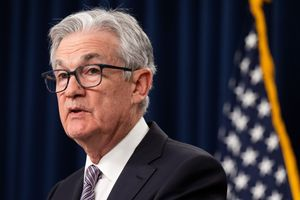
Fed Chairman Jerome Powell noted on Friday that rates might not need to rise as high as the central bank had anticipated because of bank stress. But so far, the impact has been less dramatic than anticipated.

The central bank’s own survey of senior loan officers showed bank lending practices tightening only mildly between the fourth quarter of 2022 and the first quarter of 2023. “Honestly, I expected that the turbulence...was going to cause a lot more panic,” Atlanta Fed President Raphael Bostic said at an economic conference in Florida this past week.

Chicago Fed President Austan Goolsbee, also on stage for the keynote discussion, agreed.

Fed officials still have nearly a month before they must make a decision, and Powell on Friday signaled the need for the central bank to tread carefully.

Even so, the recent signs of economic strength suggest that monetary policy could have more room to run. If any outstanding data come in hotter than expected, brace for the possibility of at least one more increase in the federal-funds rate.

Lectures associées

En Pologne, le président du Comité olympique arrêté dans le cadre d'une affaire de crypto-arnaque

Le président du Comité olympique polonais, Radosław Piesiewicz, a été arrêté à Varsovie dans le cadre d'une enquête liée à la plateforme d'échange de cryptomonnaies Zondacrypto. Les autorités, agissant sur mandat du Parquet national de Katowice et du Bureau central de lutte contre la cybercriminalité, le soupçonnent d'être impliqué dans des faits de fraude et de blanchiment d'argent d'une valeur d'environ 350 millions de złotys (environ 80 millions d'euros). Piesiewicz, qui dirige le comité depuis 2023 et est député du parti Droit et Justice (PiS), nie toutes les accusations. Il affirme n'avoir jamais eu de compte sur cette plateforme et dénonce des motivations politiques derrière son interpellation. L'enquête, ouverte en avril 2026, porte sur 13 personnes, dont le fondateur de Zondacrypto. Elle a révélé que la plateforme était utilisée pour transférer des fonds à l'étranger et blanchir des produits criminels, certains clients ne pouvant plus retirer leurs actifs. Il a également été établi que Piesiewicz avait reçu des cadeaux de grande valeur (notamment une montre de 40 000 euros) et des voyages payés par des représentants de la société. Le cas est d'autant plus sensible que Zondacrypto était devenu le sponsor principal du Comité olympique polonais et de son équipe nationale en octobre 2025, avec un contrat courant jusqu'en 2028. En avril 2026, Piesiewicz avait déclaré que le comité ne pouvait pas résilier cet accord en raison de pénalités financières inaccessibles.

cryptonews.ruIl y a 30 mins

En Pologne, le président du Comité olympique arrêté dans le cadre d'une affaire de crypto-arnaque

cryptonews.ruIl y a 30 mins

Le Bitcoin s'est pratiquement envolé à 80 000 $. Que va-t-il se passer avec son cours cet automne ?

L'article analyse la récente hausse du Bitcoin, qui a frôlé les 80 000 dollars fin août, et explore les perspectives pour l'automne. Les experts cités par "RBC-Crypto" présentent plusieurs scénarios, soulignant l'influence des facteurs macroéconomiques américains, de la réglementation et de la demande institutionnelle. La croissance d'août, d'environ 26%, est attribuée à l'affaiblissement du dollar, à la reprise des entrées dans les ETF spot sur Bitcoin et à des liquidations. Pour l'automne, les principaux catalyseurs seront la politique monétaire de la Fed et l'évolution réglementaire aux États-Unis, notamment le vote sur le projet de loi CLARITY Act. Les prévisions des experts divergent selon les scénarios : * **Scénario positif** : Si le contexte macroéconomique et réglementaire reste favorable, le Bitcoin pourrait consolider ses gains et viser les 85 000 à 100 000 dollars, à condition de se maintenir au-dessus de 75 000 à 80 000 dollars. * **Scénario négatif** : Un durcissement de la Fed ou un rejet du CLARITY Act pourrait provoquer une correction vers 70 000-72 000 dollars, voire 62 000-67 000 dollars. La demande institutionnelle, via les ETF, est vue comme un facteur stabilisateur clé. Cependant, les experts sont prudents, estimant que la rapidité de la hausse d'août rend l'élan fragile. Ils ne prévoient pas de hausse généralisée des altcoins, les capitaux se concentrant sur les actifs les plus liquides. L'automne dépendra de la capacité du marché à transformer cette poussée en une tendance durable.

cryptonews.ruIl y a 33 mins

Le Bitcoin s'est pratiquement envolé à 80 000 $. Que va-t-il se passer avec son cours cet automne ?

cryptonews.ruIl y a 33 mins

Trading

Spot
活动图片