Tether's 'Gold Standard' Ambition: Deconstructing XAUt, How the Stablecoin Giant is Hoarding Gold?

marsbitPublicado a 2026-02-02Actualizado a 2026-02-02

Resumen

Tether, the company behind the dominant stablecoin USDT, is rapidly becoming a major global buyer of physical gold, with holdings of approximately 140 metric tons valued at around $23 billion. A significant portion of this, over 70 tons, was acquired last year alone to back its gold-backed stablecoin, XAUt. Each XAUt token represents ownership of one troy ounce of LBMA-standard gold, stored in a high-security Swiss vault. The on-chain token facilitates the transfer of ownership of the underlying physical asset. The operation is run by TG Commodities, a Salvadoran entity fully owned by Tether, which is authorized by El Salvador's national digital asset regulator. Tether's CEO has stated the company aims to allocate 10-15% of its portfolio to gold, purchasing an estimated one to two tons per week. With robust profits, this could potentially double its current XAUt reserves. This scale of purchasing has positioned Tether as a significant "marginal buyer" in the gold market, comparable to central banks. While other gold-backed tokens like PAXG and DGX exist, Tether's massive accumulation introduces a new dynamic. The product aims to make gold more divisible and transferable, but it also intertwines the stability of physical gold with the volatility of the crypto market, raising questions about the long-term implications of this new asset class.

Author: imToken

Can you imagine a company that started with a Crypto background is now buying gold at a scale approaching that of central banks?

According to Bloomberg, USDT issuer Tether has become one of the world's largest holders of gold reserves—currently holding approximately 140 tons of gold, valued at about $23 billion, with over 70 tons purchased last year alone, used to supplement its reserves and issue its gold-backed stablecoin, almost surpassing the declared purchases of most national central banks.

Behind such massive gold purchases, Tether is not betting on the price of gold but is building a long-term, scalable physical gold supply system for its tokenized gold product, XAUt.

I. What is XAUt?

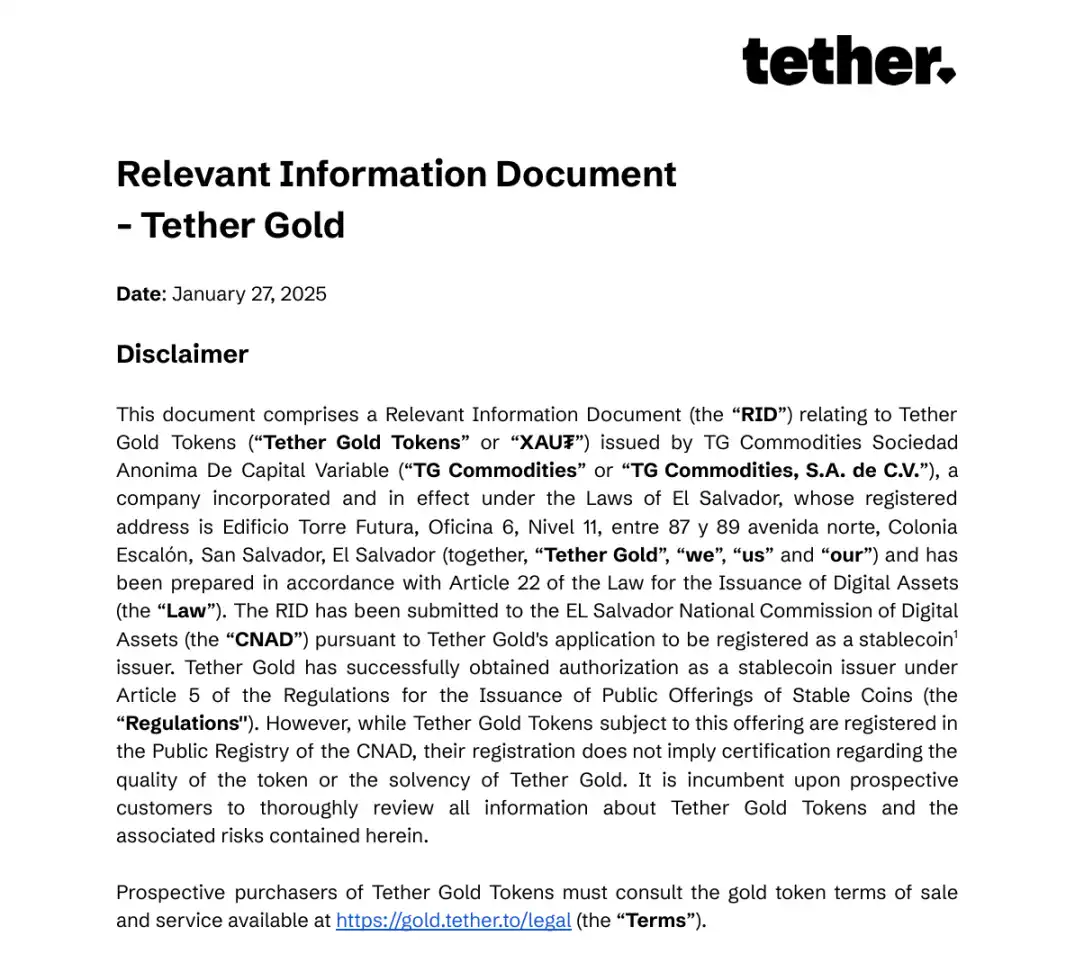
According to the latest whitepaper, "Relevant Information Document – Tether Gold(XAU₮)" released on January 27, 2025, Tether Gold (XAUt) is a gold-backed stablecoin issued by the Salvadoran company TG Commodities, S.A. de C.V.

Each XAUt token represents ownership of one troy ounce (approximately 31.1035 grams) of gold stored in a Swiss vault, meeting the London Bullion Market Association (LBMA) gold bar delivery standards. When an on-chain transaction occurs, the system automatically reallocates the gold shares in the vault to ensure that users' tokens always correspond to specific physical assets.

The physical gold is stored in a high-security vault in Switzerland. The custodian, although an affiliate, operates independently with separate financial accounts and customer records. Users can also access the official "Look-up Website" by entering their on-chain address to directly query the serial number, weight, and purity of the gold bars associated with their assets.

However, delivery must be made in whole gold bars. As described in the whitepaper, since each gold bar varies in weight (typically between 385 and 415 ounces), the official recommends users deposit at least 430 XAUt to ensure coverage. Any excess tokens will be refunded to the user.

Delivery must also occur within Switzerland, or users can request Tether to liquidate the gold into USD in the Swiss gold market, with the proceeds returned after deducting fees.
Source: Tether

It is worth noting that the issuer, TG Commodities, has been authorized by El Salvador's National Digital Asset Commission (CNAD) as a regulated stablecoin issuer and approved digital asset service provider (DASP). A look into the parent company reveals it is wholly owned by Tether Holdings and Tether Operations.

In fact, the early萌芽 of XAUt can be traced back to late 2019 when Paolo Ardoino, then CTO of Bitfinex and Tether, revealed that Tether was planning to launch a gold-backed stablecoin product, Tether Gold. The first version of the XAUT whitepaper was also released on January 28, 2022.

Little did anyone expect that in just four years, Tether would become a super gold buyer comparable to sovereign national central banks.

II. Tether: A New Force in the Gold Market That Cannot Be Ignored

As mentioned above, the whitepaper clearly states that each XAUt token represents ownership of one ounce of physical gold. Tether承诺 that every XAU₮ issued is backed by an equivalent amount of physical gold reserves, all stored in a "Swiss vault with first-class security."

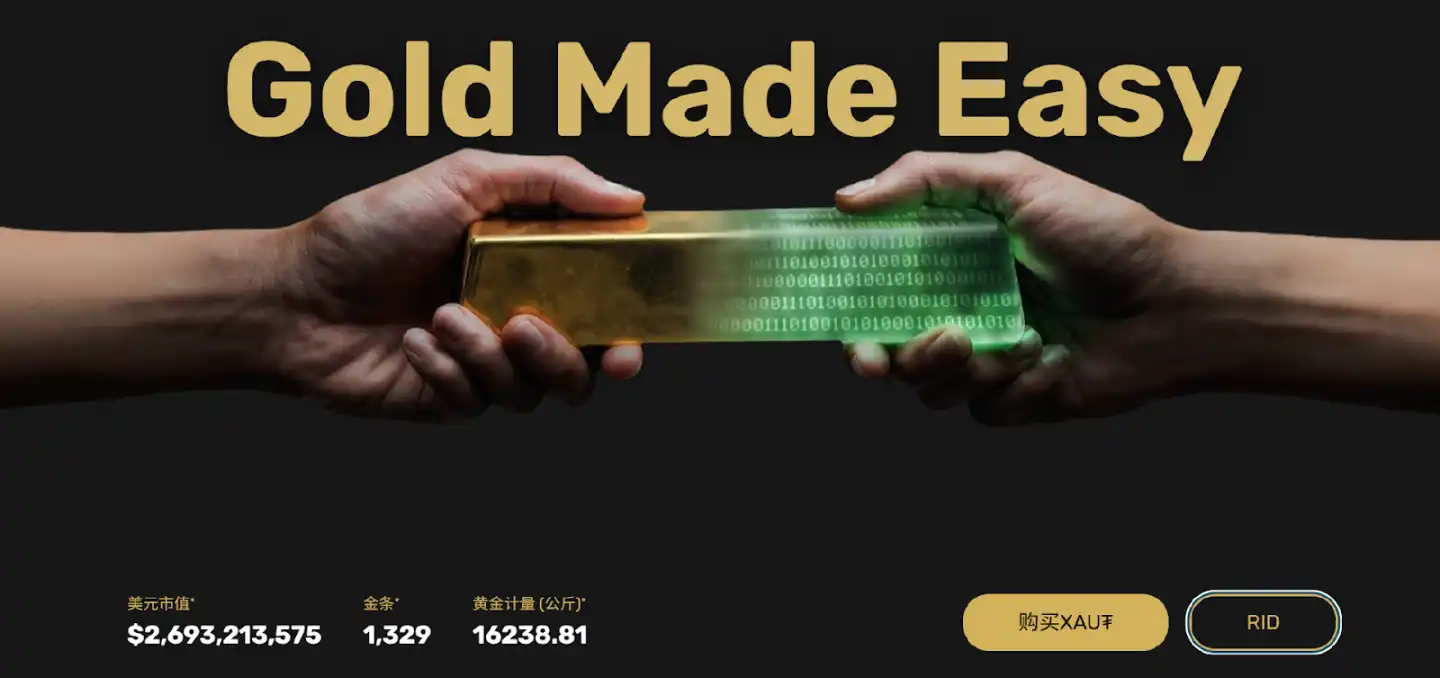
As of the time of writing, the total issuance of XAUt is approximately $2.7 billion, representing the physical reserve of about 1,329 gold bars (totaling 16,238.4 kilograms).
Source: Tether

Interestingly, Tether CEO Paolo Ardoino publicly stated that Tether plans to allocate 10% to 15% of its investment portfolio to physical gold in the future, currently purchasing about one to two tons of gold per week, and intends to continue doing so, aiming for long-term, stable access to gold supply.

According to Bloomberg's calculations, in the last year alone, Tether purchased over 70 tons of new gold to supplement its reserves and support its gold stablecoin issuance. Combining this with Tether's disclosed financial data for the first three quarters of 2025:

Its annual profit is estimated to be nearly $15 billion, with current gold and Bitcoin reserve sizes of approximately $12.9 billion and $9.9 billion, respectively, accounting for about 13% of its total reserves. To reach the 10%-15% target, Tether would need to purchase at least an additional $2-3 billion, effectively doubling the current XAUt规模!

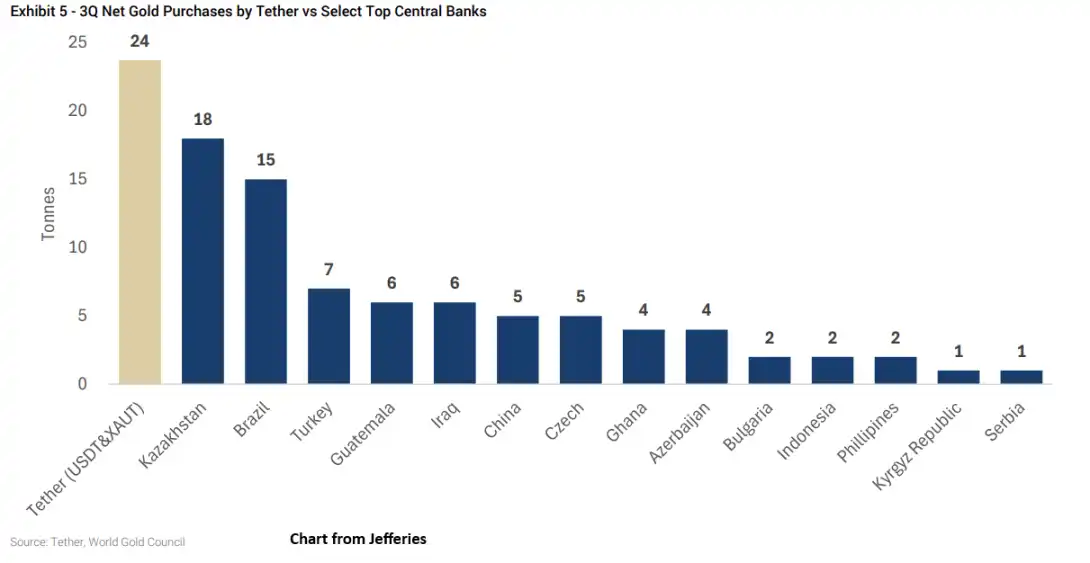
This is why some institutions have begun to view Tether as an unignorable "marginal super buyer" in the gold market. Research from Jefferies shows that in the second quarter, Tether's gold purchases accounted for about 14% of central banks'同期 purchases, and this proportion remained around 12% in the third quarter. It can be said that the timing of the second round of gold price increases高度 coincided with the acceleration of Tether's gold purchasing节奏.

Considering Tether's current strong profitability and the resilience shown by its stablecoin business amid recent crypto market volatility, this gold purchasing target is not激进 from a financial perspective.
Source: Wall Street News

III. How to View Gold-Backed Stablecoins?

Of course, the multi-trillion-dollar market for investment-grade tokenization of gold is far from being a pie that only Tether wants a piece of.

Over the years, several companies have尝试 to provide on-chain representations of gold ownership, including Digix's率先 launched DGX, a stablecoin collateralized by physical gold. Each DGX is backed by 1 gram of LBMA-certified gold bars with 99.99% purity, minted by authoritative companies and stored in The Safe House vault in Singapore.

In addition, there is another more well-known product, PAXG. In 2019, Paxos Trust Company launched PAXG, a gold token approved by the New York Department of Financial Services (NYDFS), also built on the Ethereum ERC-20 protocol. Each PAXG represents one troy ounce of a standard delivery gold bar stored in a professional vault in London.

Paxos users can redeem PAXG for fiat currency, non-bearer gold, or directly redeem physical gold bars, and can随时 query the serial number, brand, weight, and purity of the corresponding gold bar through their on-chain address.

From a product design perspective, the common goal of these gold-backed stablecoins is clear: to make gold more divisible, more liquid, and more aligned with the usage habits of the digital asset era.

However, unlike dollar stablecoins, the value logic of gold stablecoins is more complex. Because the core proposition of stablecoins is built on the demand for fully collateralized, instantly redeemable digital dollars; whereas gold stablecoins inevitably联动 with the cyclical fluctuations of the crypto market itself.

Therefore, when stablecoin demand changes急剧 due to market sentiment or liquidity conditions, this pressure could theoretically传导 to its underlying asset-liability structure—and now, part of that is a real and sizable gold reserve.

Especially as players like Tether hold more and more reserves, is this new narrative a digital rebirth for gold, or is it introducing additional volatility factors to gold?

Perhaps this is one of the issues worth pondering for every holder.

Criptos en tendencia

Preguntas relacionadas

QWhat is XAUt and how does it relate to physical gold?

AXAUt is a gold-backed stablecoin issued by TG Commodities, S.A. de C.V. Each XAUt token represents ownership of one troy ounce of physical gold that meets the London Bullion Market Association (LBMA) good delivery specifications. The gold is stored in a high-security vault in Switzerland. When on-chain transactions occur, the system automatically reallocates the gold holdings in the vault to ensure each user's tokens are always backed by specific, identifiable physical assets.

QHow much gold does Tether currently hold to back its XAUt stablecoin, and what are its future purchasing plans?

ATether currently holds approximately 140 metric tons of gold, valued at around $23 billion, to back its XAUt stablecoin. The company plans to allocate 10% to 15% of its portfolio to physical gold and is buying about one to two tons of gold per week to achieve this long-term, stable supply goal.

QHow does a user redeem XAUt tokens for physical gold, and what are the requirements?

ARedemption for physical gold must be done in whole gold bars, which typically weigh between 385 to 415 ounces. Therefore, the official white paper recommends users hold at least 430 XAUt to cover the minimum bar weight. The physical delivery must occur within Switzerland. Alternatively, users can request Tether to sell the gold on the Swiss market for U.S. dollars, minus any applicable charges.

QBesides Tether's XAUt, what are some other prominent gold-backed stablecoins in the market?

AOther prominent gold-backed stablecoins include Digix's DGX, where each token is backed by 1 gram of LBMA-certified gold stored in a vault in Singapore, and Paxos Trust Company's PAXG, which is approved by the NYDFS and represents one troy ounce of a London Good Delivery gold bar stored in professional vaults.

QWhat potential risk does the article highlight regarding gold-backed stablecoins like XAUt?

AThe article highlights that the value proposition of gold-backed stablecoins is more complex than that of dollar stablecoins. Their value is inherently linked to the cyclical volatility of the crypto market. If demand for the stablecoin changes drastically due to market sentiment or liquidity conditions, that pressure could theoretically be transmitted to its underlying balance sheet structure, which now consists of a large, real-world gold reserve, potentially introducing additional volatility to the gold market itself.

Lecturas Relacionadas

STAR 50 Soars 10.73%, Why Did A-Shares Stage a "V-Shaped Reversal"?

After a prolonged decline, the Chinese A-share market staged a strong rally on July 21. The STAR 50 index surged 10.73%, its largest single-day gain in nearly a year, leading a broad-based "V-shaped" reversal. The Shanghai Composite Index rose 1.79%, the Shenzhen Component Index gained 4.81%, and the ChiNext Index jumped 7.05%. Total market turnover reached 2.97 trillion yuan, an increase of 256.1 billion yuan from the previous session, with over 3,100 stocks advancing. The semiconductor sector spearheaded the rebound, with related ETFs posting significant gains. Analysts attribute the surge to three converging factors. First, coordinated capital inflows from "national team" institutions, insurance funds, listed company buybacks, and fund house self-purchases have bolstered market liquidity and confidence. Second, supportive policy signals, including commitments from regulators to ensure stable market operations, provided a favorable backdrop. Third, a stabilization and recovery in overseas markets, notably South Korea, created a positive external environment. Institutions suggest the most severe panic selling phase for the tech sector has likely passed, following a significant digestion of crowded positions and leveraged funds. While short-term volatility may persist, the medium to long-term outlook remains underpinned by enduring trends like AI computing demand expansion and semiconductor localization. The market's focus now shifts to the sustainability of supportive fund flows, earnings reports, and upcoming catalysts from the global AI industry chain.

marsbitHace 22 min(s)

STAR 50 Soars 10.73%, Why Did A-Shares Stage a "V-Shaped Reversal"?

marsbitHace 22 min(s)

U.S. Tech Momentum Stocks Post Largest Single-Day Gain Ever, But Is the Plunge Over?

US tech momentum stocks staged a sharp rebound on Tuesday (July 21st). Morgan Stanley's TMT Momentum Factor surged over 12%, marking its largest single-day gain on record, exceeding even peaks from the 2000 dot-com bubble. Key momentum indices from Goldman Sachs also posted their strongest daily performances in years. The rally was led by semiconductors, with the Philadelphia Semiconductor Index jumping 4.6%. This rebound followed three consecutive down days and a cumulative 33% plunge in momentum stocks, one of the steepest drawdowns since the dot-com era. Analysts attribute the surge largely to a short squeeze. Heavy selling had pushed high-beta momentum stocks into deeply oversold territory, forcing many short sellers, particularly in Asia, to cover their positions, creating a self-reinforcing buying spiral. However, the rebound's internals appear weak. Trading volume was notably low, and advancing stocks still lagged decliners on the S&P 500, indicating a narrow, concentrated rally rather than broad market participation. Diverging views emerge on the outlook. BTIG warns the bounce has hit key resistance and recommends selling into strength, citing extreme volatility and historical parallels to past market tops. Conversely, Goldman Sachs and UBS believe the momentum unwind is nearing its end, suggesting it may be time to gradually add exposure, as positioning has been significantly reduced. They caution, however, that high volatility warrants a measured approach, potentially using defined-risk strategies. The upcoming earnings season, particularly reports from major tech firms like Alphabet, is seen as a critical test for the rally's sustainability. Simultaneously, bond markets flashed a warning, with yields rising partly due to spiking oil prices. Analysts note that if long-term Treasury yields break decisively higher, it could pose a significant headwind for equities, especially growth stocks.

marsbitHace 30 min(s)

U.S. Tech Momentum Stocks Post Largest Single-Day Gain Ever, But Is the Plunge Over?

marsbitHace 30 min(s)

U.S. Tech Momentum Stocks Record Largest Single-Day Gain Ever, but Has the Rout Ended?

U.S. tech momentum stocks staged a dramatic rebound on Tuesday, July 21st. Key momentum indices like the Morgan Stanley TMT Momentum Factor and Goldman Sachs' High Beta Momentum Long Index posted historic or near-historic single-day gains, fueled largely by semiconductor stocks. This sharp rally followed a severe three-day sell-off that saw momentum stocks plunge 33%, marking one of the steepest pullbacks since the dot-com bubble. Analysts attribute the bounce primarily to a short squeeze, as forced covering from over-leveraged traders, particularly in Asia, created a buying spiral. However, the rally's health is questioned due to weak market breadth—overall trading volume was low, and decliners outnumbered advancers in the S&P 500 despite the index's gain—suggesting a narrow, concentrated surge rather than broad recovery. Opinions on the sustainability diverge. BTIG strategists warn the rebound has hit key resistance levels, citing extreme volatility and historic stock dispersion as signs of an ongoing broader correction, and recommend selling into strength. Conversely, Goldman Sachs and UBS view the aggressive momentum unwinding as nearing its end, noting reduced positioning and a lack of new fundamental catalysts. They suggest the sell-off presents a selective opportunity to add exposure, albeit cautiously and gradually using defined-risk strategies. The immediate trajectory hinges on the ongoing earnings season, with market focus on Alphabet's capital expenditure guidance for AI investment clarity. Meanwhile, bond markets present a risk, with rising Treasury yields—potentially heading toward 5.5%—and widening credit spreads for mega-cap tech companies posing a threat to equity valuations. The combination of technical factors, earnings results, and macro conditions leaves the durability of the rebound in doubt.

链捕手Hace 32 min(s)

U.S. Tech Momentum Stocks Record Largest Single-Day Gain Ever, but Has the Rout Ended?

链捕手Hace 32 min(s)

Long-Divided Must Unite, Long-United Must Divide: When L1 Becomes Its Own Rollup, What Is Ethereum's Endgame?

"The Inevitable Cycle: When L1 Becomes Its Own Rollup – What is Ethereum's Endgame?" For years, the Ethereum community grappled with concerns that L2s were fragmenting the ecosystem and eroding L1's value. While L2s provided cheaper execution, they also splintered liquidity and the unified user experience of a single chain. This has prompted a fundamental reassessment of the relationship between L1 and L2. Ethereum's roadmap is evolving. The "Scale" initiative merges L1 and L2 expansion into a holistic framework. L1 itself is advancing with higher gas limits, statelessness, and zkEVM verification, no longer content to be just a low-throughput settlement layer. Consequently, the primary value proposition of L2s is shifting from merely providing cheap blockspace to offering L1 cannot easily provide: application-specific optimizations, privacy features, and flexible governance models. L2s are becoming a spectrum of execution environments with varying degrees of security inheritance from Ethereum. A critical challenge in this multi-chain future is interoperability. The vision is to make Ethereum "feel like one chain again." This relies on advancements in native account abstraction (like EIP-7702) and intent-based architectures (Open Intents Framework), where users declare desired outcomes, and solvers handle the complex cross-chain execution. Furthermore, shortening Ethereum's finality time from minutes to seconds is crucial, as it underpins trust between chains for bridges, stablecoins, and cross-chain applications. Perhaps the most provocative idea is that Ethereum L1 itself could become a form of "its own Rollup." As zkEVM and proof systems mature, high-performance nodes could execute transactions and generate validity proofs. Regular validators would then verify these proofs instead of re-executing all transactions. This blurs the traditional L1/L2 hierarchy, making "Rollup" more of a general execution-verification architecture. Native Rollup aims to integrate L2 validation more directly into the Ethereum protocol, allowing L2s to inherit L1's security more fully and move away from reliance on security councils. In the end, L2s are not destined to replace L1 or be made obsolete by it. The likely future is a unified system where diverse execution environments—each optimized for specific use cases like DeFi, gaming, or privacy—coexist. They will share a common foundation of security, liquidity, and verifiable state, seamlessly connected to restore a cohesive user experience. The next phase for Ethereum is not just about scaling through separation, but about intelligently reintegrating what was separated back into a coherent whole.

链捕手Hace 48 min(s)

Long-Divided Must Unite, Long-United Must Divide: When L1 Becomes Its Own Rollup, What Is Ethereum's Endgame?

链捕手Hace 48 min(s)

Trading

Spot

Artículos destacados

Cómo comprar XAUT

¡Bienvenido a HTX.com! Hemos hecho que comprar Tether Gold (XAUT) sea simple y conveniente. Sigue nuestra guía paso a paso para iniciar tu viaje de criptos.Paso 1: crea tu cuenta HTXUtiliza tu correo electrónico o número de teléfono para registrarte y obtener una cuenta gratuita en HTX. Experimenta un proceso de registro sin complicaciones y desbloquea todas las funciones.Obtener mi cuentaPaso 2: ve a Comprar cripto y elige tu método de pagoTarjeta de crédito/débito: usa tu Visa o Mastercard para comprar Tether Gold (XAUT) al instante.Saldo: utiliza fondos del saldo de tu cuenta HTX para tradear sin problemas.Terceros: hemos agregado métodos de pago populares como Google Pay y Apple Pay para mejorar la comodidad.P2P: tradear directamente con otros usuarios en HTX.Over-the-Counter (OTC): ofrecemos servicios personalizados y tipos de cambio competitivos para los traders.Paso 3: guarda tu Tether Gold (XAUT)Después de comprar tu Tether Gold (XAUT), guárdalo en tu cuenta HTX. Alternativamente, puedes enviarlo a otro lugar mediante transferencia blockchain o utilizarlo para tradear otras criptomonedas.Paso 4: tradear Tether Gold (XAUT)Tradear fácilmente con Tether Gold (XAUT) en HTX's mercado spot. Simplemente accede a tu cuenta, selecciona tu par de trading, ejecuta tus trades y monitorea en tiempo real. Ofrecemos una experiencia fácil de usar tanto para principiantes como para traders experimentados.

947 Vistas totalesPublicado en 2024.12.13Actualizado en 2026.06.02

Cómo comprar XAUT

Discusiones

Bienvenido a la comunidad de HTX. Aquí puedes mantenerte informado sobre los últimos desarrollos de la plataforma y acceder a análisis profesionales del mercado. A continuación se presentan las opiniones de los usuarios sobre el precio de XAUT (XAUT).

活动图片













