Artículos Relacionados con Musk

El Centro de Noticias de HTX ofrece los artículos más recientes y un análisis profundo sobre "Musk", cubriendo tendencias del mercado, actualizaciones de proyectos, desarrollos tecnológicos y políticas regulatorias en la industria de cripto.

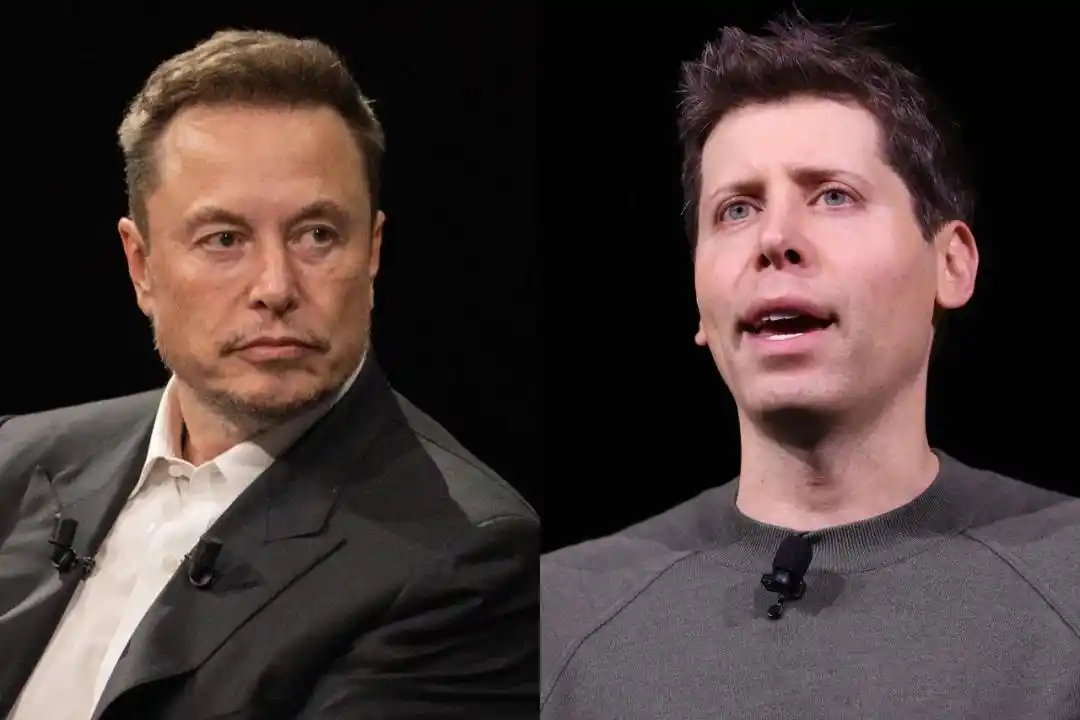
Just Now, OpenAI's Chief Futurist Departed, Once Called a Jackass by Musk

Just now, OpenAI's Chief Futurist, Joshua Achiam, announced his departure from the company via X. Having joined as a 25-year-old intern in 2017, he spent nine years at OpenAI, evolving from an AI safety research scientist to leading the Mission Alignment team. Earlier this year, that team was dissolved, and Achiam transitioned to the newly created role of Chief Futurist, positioned at the intersection of AI safety and policy to study AGI's long-term risks and opportunities. In his departure statement, Achiam called his time a "graduation," reflecting on the immense progress from AI that couldn't converse to systems solving scientific problems. He expressed optimism about a future of peace, prosperity, and possibility, closing with "To safe AGI." His tenure was notably marked by a 2018 incident where he publicly challenged Elon Musk—then still with OpenAI—on safety compromises if Musk pursued AGI at Tesla, leading Musk to call him a "jackass." This became an internal legend, with colleagues later giving him a trophy inscribed, "To safety, never stop being that jackass." Achiam's exit follows a pattern of prominent safety and alignment experts leaving OpenAI, including Jan Leike and others who joined rivals like Anthropic or started non-profits. His departure coincides with OpenAI's internal efforts to more tightly integrate its research and policy teams, and the recent hiring of former White House AI advisor Dean Ball. Achiam did not cite a specific reason for leaving but indicated it was a long-considered decision, stating the mission to ensure AGI benefits humanity can now be advanced beyond the "frontier lab's" walls.

marsbitHace 12 hora(s)

Just Now, OpenAI's Chief Futurist Departed, Once Called a Jackass by Musk

marsbitHace 12 hora(s)

The Domestic Answer to Space Computing Power: Photonics Are More Efficient, Musk and Huang's Approaches Are Too Roundabout

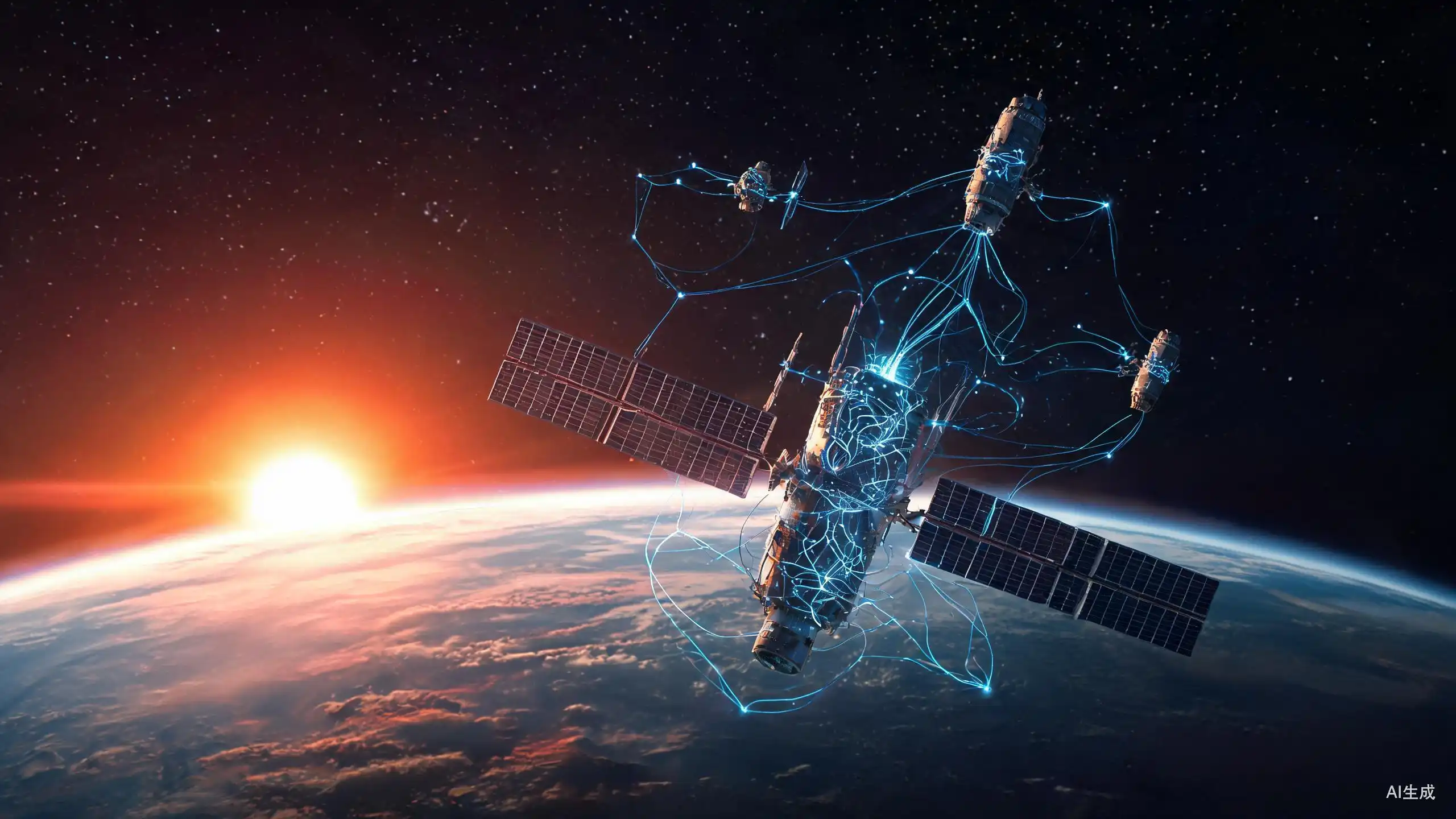
The Space Computing Race: A Photonic Advantage The competition for space-based computing has intensified, with figures like Elon Musk and NVIDIA's Jensen Huang highlighting its potential. Musk predicts solar-powered AI satellites could offer the most cost-effective computing by 2032. However, space presents extreme challenges for traditional electronic chips: radiation from cosmic particles can cause errors, the vacuum environment hinders heat dissipation, and limited solar power constrains energy-hungry systems. Photonic computing, using light instead of electrons, offers a promising solution. Its core advantages for space are threefold: 1) **Radiation Resistance**: Photons are charge-neutral, making them inherently immune to particle interference. 2) **Low Heat Generation**: Light propagation in waveguides generates minimal heat, bypassing critical thermal management issues. 3) **Low Power Consumption**: Photonic chips have near-zero static power draw, aligning perfectly with the energy constraints of satellites. Furthermore, for a given payload weight and volume, photonic systems can potentially deliver higher total compute density. Since they require less bulky cooling and power infrastructure, more space can be allocated to the compute units themselves. While photonic computing holds great promise, current industry approaches face hurdles like the memory-compute bottleneck (separate storage and processing) and challenges in large-scale integration. Engineering for space—withstanding launch vibrations and validating full system operation in orbit—remains a critical step. The path forward resembles the evolution from single GPUs to computing clusters, but via a photonic route. As electronic chips approach physical limits in miniaturization, photonic computing and optical interconnects (光算光联) may provide a key alternative to bypass these constraints and define the next generation of space-based computing capabilities.

marsbit06/28 04:31

The Domestic Answer to Space Computing Power: Photonics Are More Efficient, Musk and Huang's Approaches Are Too Roundabout

marsbit06/28 04:31

Why Does SpaceX Have Such a High Valuation Ceiling? The Answer Lies in Musk's Business Blueprint

SpaceX achieved a record-breaking IPO on June 12, 2026, with its market cap surging past $2.1 trillion. This valuation reflects its central role within Elon Musk's expansive, interconnected technological ecosystem. The article details how four core components form a synergistic closed-loop system: 1) **The "Brain" (xAI & Orbital Compute):** xAI provides AI models and massive ground/space-based supercomputing for simulation and decision-making across the system. 2) **The "Neural Logistics Core" (Starlink & Starship):** Starlink's low-latency satellite network enables global data transmission, while Starship's low-cost, reusable launch capacity aims to make large-scale space deployment economically viable. 3) **The "Physical Body" (Tesla & Optimus):** Tesla's manufacturing prowess and energy products support hardware production and power, pivoting toward mass-producing the Optimus humanoid robot for terrestrial and potential space-based labor. 4) **The "Human Interface" (Neuralink & X):** Neuralink seeks direct brain-computer communication, and the X platform provides real-time societal data. Together, these elements create three reinforcing "flywheels": manufacturing/logistics, data-driven iteration, and energy/compute/network synergy. This integrated approach promises lower costs, faster innovation cycles, and potential infrastructure-as-a-service offerings. However, it also concentrates technical, regulatory, and corporate governance risks. Ultimately, SpaceX's high valuation stems from its position as the indispensable infrastructural backbone—handling space transport, global communications, and future orbital computing—tying together Musk's entire vision for a self-reinforcing technological empire.

marsbit06/22 04:24

Why Does SpaceX Have Such a High Valuation Ceiling? The Answer Lies in Musk's Business Blueprint

marsbit06/22 04:24

TechFlow Intelligence Bureau: Anthropic IPO Odds Exceed 80%, Iran Closes Strait of Hormuz Again, Triggering Oil Price Volatility

**Market Digest** **AI & Tech:** Anthropic is widely expected to announce an IPO before November 2026, raising questions about balancing its trillion-dollar valuation ambitions with its core "AI safety" mission. Brands are increasingly adopting AI-generated virtual influencers for marketing. Cloudflare introduced temporary accounts for AI agents to ease automation workflows. **Infrastructure & Hardware:** Google's IPv6 traffic surpassed 50%, marking a major internet milestone. Goldman Sachs warned that massive projected AI capital expenditure ($5.3T) is approaching credit saturation limits, potentially curbing the "AI arms race." **Space & Robotics:** SpaceX's IPO saw a historic $370M retail buying frenzy in three days. Hyundai Motor Group plans to acquire full ownership of Boston Dynamics. Elon Musk speculated about future "septillion-dollar" investments in antimatter for interstellar travel. **Energy & Geopolitics:** Iran's military announced another closure of the strategic Strait of Hormuz, accusing Israel of violating a ceasefire, causing oil market volatility. However, ship-tracking data indicated some traffic continued. Concurrently, Iran resumed crude loadings at Kharg Island, potentially releasing up to 20 million barrels to the market. **Finance & Macro:** A European CLO (collateralized loan obligation) experienced its first post-2008-crisis-era equity tranche default, raising alarms in credit markets. Nomura warned that new Federal Reserve Chair Wash's perceived hawkish debut speech could signal a significant policy shift. **The Undercurrent:** Seemingly disparate events—the Strait of Hormuz tension, the European CLO default, and warnings on AI spending—point to a tightening of global liquidity and rising marginal costs across energy, credit, and tech investment. Meanwhile, capital continues chasing grand narratives like space exploration and advanced AI, highlighting a divergence where old-world leverage frays as new-world stories grow more ambitious.

marsbit06/21 10:44

TechFlow Intelligence Bureau: Anthropic IPO Odds Exceed 80%, Iran Closes Strait of Hormuz Again, Triggering Oil Price Volatility

marsbit06/21 10:44

Behind SpaceX's $2 Trillion Market Cap: Why Does Musk Always Have the Next Move Planned?

On June 12th, SpaceX debuted on the Nasdaq, reaching a valuation that briefly touched $2 trillion. This marked the culmination of a 24-year journey from its founding in 2002, driven by Elon Musk's frustration at the high cost of buying rockets. The company's path was defined by early failures, with its first three Falcon 1 launches ending in explosions before a successful 2008 flight opened the era of commercial spaceflight. Key to its model was a fixed-price NASA contract, incentivizing cost reduction. SpaceX mastered rocket reusability, first achieving a Falcon 9 landing in 2015, which drastically cut launch costs. This enabled its profitable Starlink satellite internet constellation, envisioned years before reusability was proven, to create an internal market for frequent launches. Similarly, the next-generation Starship rocket was in development long before its first flight, with its business case evolving from Mars colonization to supporting the emerging concept of in-orbit data centers for AI—a story now central to its valuation. The company's recent IPO, a reversal of its long-standing "no IPO" stance, is funding this ambitious "space-based compute" vision. While major tech players like Google, Blue Origin, and others are investing heavily, significant technical and cost hurdles remain. Ultimately, SpaceX's history is one of creating its own demand: first with Starlink and now with space-based AI compute, betting that its next rocket will enable its next giant market.

marsbit06/17 04:45

Behind SpaceX's $2 Trillion Market Cap: Why Does Musk Always Have the Next Move Planned?

marsbit06/17 04:45

The Largest IPO in History Ignites Heated Debate: Is SpaceX Worth $1.77 Trillion?

SpaceX's potential IPO is priced at $135 per share, aiming to raise $75 billion and valuing the company at approximately $1.77 trillion, which would make it the largest IPO in history. This valuation has sparked intense debate among investors. Bullish analysts, including major underwriters Goldman Sachs and Morgan Stanley, argue the valuation is justified by SpaceX's long-term potential. They see it not just as a rocket company but as a future leader in space infrastructure, with key growth drivers being Starlink satellite internet, low-cost rocket launches, and future AI-related ventures. They project revenues reaching hundreds of billions to trillions of dollars by 2030-2040. ARK Invest's model suggests a 2030 enterprise value could reach $2.5 trillion. Bearish analysts from independent research firms like Morningstar, PitchBook, and New Constructs contend the IPO price is excessively high, already pricing in unrealistic future growth. Using DCF and sum-of-the-parts models, they estimate fair value between $780 billion and $1.7 trillion, significantly below the IPO target. They highlight risks such as the speculative nature of AI projections, over-dependence on Elon Musk, high growth expectations, and corporate governance concerns. Trefis set a target price of just $79 per share. While both sides acknowledge SpaceX's unique position in commercial space, the core disagreement centers on whether the $135 share price offers a reasonable margin of safety or is overly optimistic. Despite the valuation controversy, reported strong demand for the IPO indicates significant market interest.

marsbit06/11 12:07

The Largest IPO in History Ignites Heated Debate: Is SpaceX Worth $1.77 Trillion?

marsbit06/11 12:07

活动图片