Artículos Relacionados con DeFi

El Centro de Noticias de HTX ofrece los artículos más recientes y un análisis profundo sobre "DeFi", cubriendo tendencias del mercado, actualizaciones de proyectos, desarrollos tecnológicos y políticas regulatorias en la industria de cripto.

Virtuals Launches Hyperboost: Extends 14 Days of Rewards for Each Graduated Token to Combat 'Peak on Day One' Curse

Virtuals Protocol launched "Hyperboost" on July 27, 2026, to combat the "first-day peak" trend where over 75% of its AI Agent tokens see trading volume peak within 24 hours of graduation (launch to Uniswap). The mechanism automatically allocates a fraction of each token's previously idle graduation supply into a 14-day reward pool. Rewards are distributed daily, split between users based on trading volume share and creators for content posted about the token on platforms like X. Claims are immediate with no vesting. Early data from the first ~48 hours shows newly graduated tokens like AMARA and MAGE still experiencing significant post-graduation price declines (-78% and -55% in 24h respectively), indicating it's too early to judge effectiveness. Community concerns focus on potential wash trading due to volume-based rewards and a lack of transparency around content reward criteria. Hyperboost is part of Virtuals' broader ecosystem, which has over 18,000 AI Agent tokens and $750M+ in protocol revenue. While the feature could theoretically boost activity for its native VIRTUAL token by increasing trading volume in its paired pools, VIRTUAL's price remains influenced by broader market trends, down 7.4% over the past week. Observers note that several weeks of data will be needed to properly assess the mechanism's impact on sustaining post-graduation trading activity.

marsbitHace 7 hora(s)

Virtuals Launches Hyperboost: Extends 14 Days of Rewards for Each Graduated Token to Combat 'Peak on Day One' Curse

marsbitHace 7 hora(s)

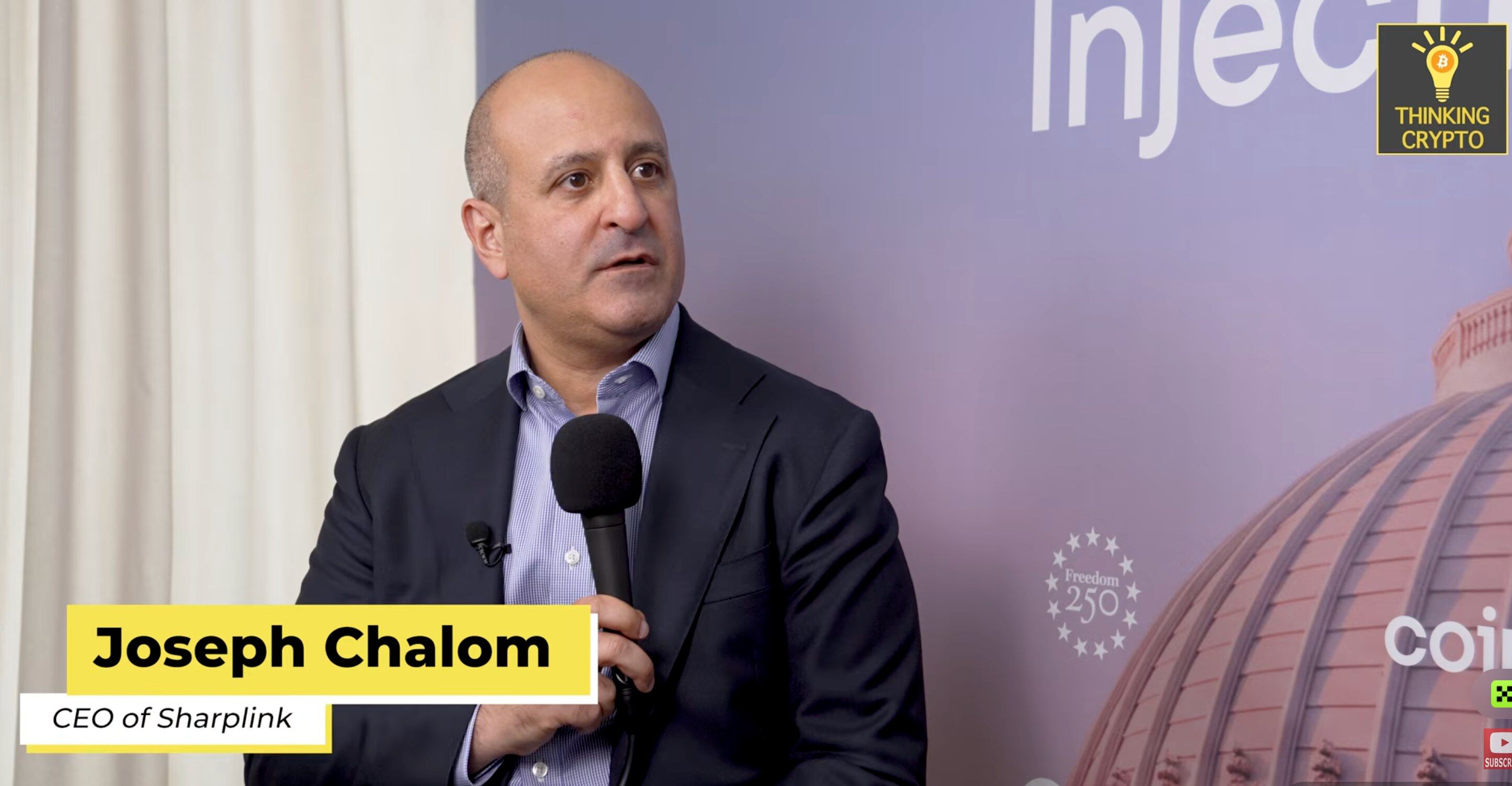
SharpLink's Helm: Buying Only, Never Selling, Making ETH Generate Profits Through the Cold Winter

SharpLink co-CEO Joseph Chalom shares his bullish outlook on Ethereum during the recent "Injective Summit 2026." Despite prevailing negative market sentiment, Chalom argues that fundamentals and data tell a different story: Ethereum dominates with over 50% of stablecoin transaction volume, nearly 60% of tokenized real-world assets (RWA), and remains the uncontested leader in DeFi. He attributes the communication gap and lack of confidence partly to the Ethereum Foundation's restructuring. In response, SharpLink, alongside ConsenSys and Bitmain, is funding three key spin-off teams from the Foundation: ETH Labs (for institutional-scale scalability), Ethereum Institutional (for business development and marketing), and EthSystems (for next-gen privacy and compliance solutions). Chalom emphasizes these are critical for accelerating institutional adoption. Regarding SharpLink's strategy, Chalom details a conservative, yield-focused approach. The firm holds 886,725 ETH, acquired with zero leverage or debt. They generate revenue by staking ETH and strategically deploying capital into DeFi protocols via a dedicated fund, aiming for returns above the native staking yield. This contrasts with some Bitcoin-focused firms that have become net sellers. On the broader institutional adoption of tokenization, Chalom sees current progress as just the beginning. He breaks it down into layers: stablecoins as the currency/value layer, tokenized assets as the exposure layer, and DeFi as the execution layer. He predicts regulatory clarity, like the potential Clarity Act, will be a major catalyst. A key future inflection point will be when fiduciary managers prefer tokenized, 24/7 tradable digital assets over traditional "analog" versions due to their programmability and instant settlement. In conclusion, Chalom positions SharpLink not just as an ETH accumulator and yield generator, but as an active "ecosystem steward," funding essential development and marketing initiatives to support Ethereum's long-term growth, which he believes is directly aligned with shareholder interests.

Odaily星球日报Hace 8 hora(s)

SharpLink's Helm: Buying Only, Never Selling, Making ETH Generate Profits Through the Cold Winter

Odaily星球日报Hace 8 hora(s)

In 2026, Over 60 Cryptocurrency Companies and Projects Ceased Operations Amid Bankruptcies, Bear Market, and Hacker Attacks Tearing the Industry Apart

In 2026, over 60 cryptocurrency companies and projects ceased operations due to bankruptcies, a bear market, and hacker attacks that fragmented the industry. The downturn began after Bitcoin retreated from its October 2025 all-time high, leading to deteriorating finances, widespread layoffs, and stalled funding rounds. Closures affected all sectors, including exchanges, blockchains, wallets, NFT platforms, DeFi protocols, and gaming projects. Reasons cited included security vulnerabilities, failed license applications, unsustainable tokenomics, and simply failing to find a market. Key closures included derivatives exchange BitMEX, institutional platform Blockfills, and miner Poolin filing for bankruptcy. Several Layer 1 and 2 blockchains (e.g., Powerloom, Botanix, Sophon) shut down due to lack of user demand. Major DeFi protocols like Radiant Capital and Carrot Finance halted operations following major hacks. Multiple wallets (Secondfi, Ctrl Wallet) closed after security breaches. NFT marketplace Foundation and several blockchain games also terminated services. Analysis points to three recurring pressures: security vulnerabilities, regulatory hurdles (e.g., MiCA license rejections), and economic unsustainability where products failed to attract sufficient users or revenue despite initial funding. This wave of shutdowns highlights a market-wide consolidation driven by a harsh economic climate and operational failures.

cryptonews.ruHace 22 hora(s)
In 2026, Over 60 Cryptocurrency Companies and Projects Ceased Operations Amid Bankruptcies, Bear Market, and Hacker Attacks Tearing the Industry Apart

cryptonews.ruHace 22 hora(s)

活动图片