SharpLink's Helm: Buying Only, Never Selling, Making ETH Generate Profits Through the Cold Winter

Odaily星球日报Publicado a 2026-07-29Actualizado a 2026-07-29

Resumen

SharpLink co-CEO Joseph Chalom shares his bullish outlook on Ethereum during the recent "Injective Summit 2026." Despite prevailing negative market sentiment, Chalom argues that fundamentals and data tell a different story: Ethereum dominates with over 50% of stablecoin transaction volume, nearly 60% of tokenized real-world assets (RWA), and remains the uncontested leader in DeFi. He attributes the communication gap and lack of confidence partly to the Ethereum Foundation's restructuring. In response, SharpLink, alongside ConsenSys and Bitmain, is funding three key spin-off teams from the Foundation: ETH Labs (for institutional-scale scalability), Ethereum Institutional (for business development and marketing), and EthSystems (for next-gen privacy and compliance solutions). Chalom emphasizes these are critical for accelerating institutional adoption. Regarding SharpLink's strategy, Chalom details a conservative, yield-focused approach. The firm holds 886,725 ETH, acquired with zero leverage or debt. They generate revenue by staking ETH and strategically deploying capital into DeFi protocols via a dedicated fund, aiming for returns above the native staking yield. This contrasts with some Bitcoin-focused firms that have become net sellers. On the broader institutional adoption of tokenization, Chalom sees current progress as just the beginning. He breaks it down into layers: stablecoins as the currency/value layer, tokenized assets as the exposure layer, and DeFi as the exec...

Original article byTony Edward

Compiled by|Odaily Planet Daily Qin Xiaofeng(@QinXiaofeng 888 )
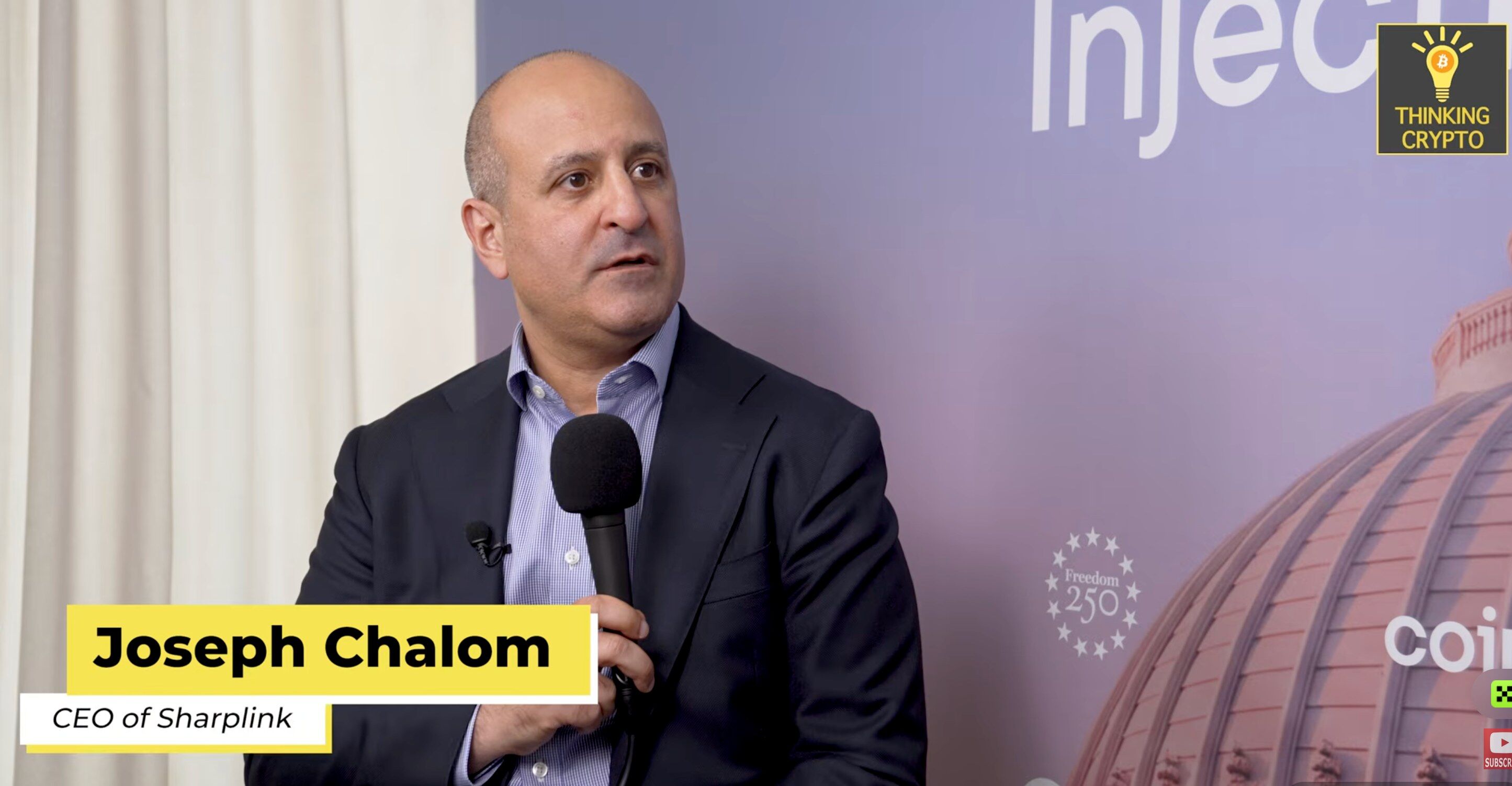
Editor's Note: At the recent "Injective Summit 2026" in Washington, D.C., SharpLink Co-CEO Joseph Chalom gave an exclusive interview.

He stated that while current market sentiment towards Ethereum is pessimistic, there is a divergence between reality and market sentiment. In reality, multiple data points from the Ethereum ecosystem indicate a bright future: stablecoin transaction volume accounts for over 50%, tokenized RWAs nearly 60%, and its DeFi dominance remains unchallenged. He said, "Ethereum is winning, but there's a communication problem." SharpLink has already joined forces with giants like ConsenSys, investing heavily to support three core teams spun off from the Ethereum Foundation, focusing on institutional-grade scaling, privacy/compliance, and market promotion. More crucially, they adopt zero leverage and no borrowing during the bear market, insisting on making ETH "productive" to generate revenue, and predict that tokenization and 24/7 trading will ignite the next wave of institutional adoption.

This week, ETH once surged close to $2000, and the ETH/BTC exchange rate also reached 0.03, hitting a nearly 3-month high, seemingly indicating that things are improving. Additionally, after roughly 8 months without large-scale new purchases, SharpLink bought another 10,000 ETH in June this year at an average cost of about $1611; after this purchase, their total ETH holdings reached 886,725 ETH.

The following is the original interview dialogue, Enjoy~

————————

Host (Tony Edward/Thinking Crypto): Everyone, we are recording at the Injective Policy Summit in Washington, D.C., and with me today is Joseph Chalom, CEO of SharpLink. Joseph, great to see you.

Joseph Chalom: Great to be back with you. First, a quick introduction: we are a digital asset capital management firm. We've raised billions of dollars to buy Ethereum (ETH) and make it highly efficient. The two most interesting things in the last month: first, we returned to the public markets for an equity raise and actually bought back ETH at a very good price and repurchased some stock. Second, together with Joe Lubin from ConsenSys and Tom Lee from Bitmine, we've started to support and invest in spin-out projects from the Ethereum ecosystem, which will be very positive for Ethereum's new narrative and new era.

Host: There's been a lot of negative sentiment around ETH lately, including some skepticism towards the Ethereum Foundation. Do you think this negativity is just a symptom of the bear market?

Joseph Chalom: Actually, I think for about the last year and a half, there's been a divergence between reality and market sentiment.

The reality is, let's start with the very positive side. The Ethereum ecosystem accounts for over 50% of all stablecoin transaction volume and nearly 60% of tokenized real-world assets, and the vast majority of DeFi is built on Ethereum. So if you look at the report card, they are winning. The sentiment is quite negative largely because of the industry malaise and because the Ethereum Foundation—though it has done a great job for the last decade or so—made the decision to streamline and have more ecosystem participants support the roadmap. And the way that communication happened led to a lack of clarity and confidence in the ecosystem, even though it is actually winning.

So some of us as ecosystem stewards and large holders of ETH have stood up, and we're putting our money where our mouth is, and I'm happy to share some of the things we are doing as an industry collective.

Host: Dive a little deeper into that. What are some specific actions?

Joseph Chalom: Start with the positive. Ethereum is the longest-running blockchain other than Bitcoin, never gone down, most secure, most trusted, most liquid. It also has a multi-year, very aggressive scaling roadmap.

Now, their ethos and approach now is to get back to its roots. The Ethereum Foundation will focus on privacy and censorship resistance and some core tenets to ensure Ethereum stays credibly neutral for decades to come. But what that means is that some of the most critical talent and functions inside the Foundation have been spun out. In the last three weeks or so, three teams have spun out of the Ethereum Foundation and have gotten the backing of Joe Lubin, myself, and Tom Lee from Bitmine. These are actually super critical for institutional adoption.

I'll tell you who they are. The first is ETH Labs, some of the most powerful developers in the Ethereum ecosystem, building the scaling capability that institutions need. The second is Ethereum Institutional, which is the go-to-market front-end, the business development activities, spun out of the Foundation with our support. And just earlier this week, the three of us also backed EthSystems, who are building next-gen privacy and compliance capabilities on Ethereum, an absolute necessity for the largest institutions to transact and ensure their data privacy. It might sound like three disparate nodes in the ecosystem, but these are the three most important things that will drive institutional adoption over the next year and beyond.

Host: That's interesting. I see a lot of institutions, when they're preparing to do tokenization and dive into DeFi and other areas, they start with Ethereum, and then they eventually expand to other chains.

Joseph Chalom: Exactly. As I said before, Ethereum has the characteristics that institutions need. I worked at BlackRock for 20 years, I know that before you want to move financial rails that have been around for 40, 50, 60 years, you want to move to a system that is trusted, never goes down, secure, and most liquid. Most importantly, people don't talk about decentralization enough.

Truly decentralized blockchain means that once you make a decision, the rules cannot be changed. So, having a fully distributed decentralized chain, not controlled by a single individual or a single treasury, is super important for institutions because they are doing a generational infrastructure migration.

Host: Absolutely agree. So during the bear market, how is SharpLink creating value for shareholders? Is it through staking, DeFi protocols to generate passive income?

Joseph Chalom: Of course. During the digital asset capital management craze last summer, about six or seven Ethereum digital asset capital management firms, and maybe five Solana capital management firms launched. Only a few of us were able to raise billions of dollars and achieve scale-out speed. You need scale when you compete in this industry.

What we do is, first, use all that capital to buy ETH, and then from day one make it productive, because ETH itself is a productive asset. You can stake it, get 2.5% to 3% yield. We've been doing that and making it more efficient than that benchmark. We also participate in DeFi. We announced a $125 million fund with another public company Galaxy, deploying our ETH into new protocols, helping them launch and get so-called TVL (Total Value Locked) or initial capital. So, we make ETH produce more than the native staking yield.

Finally, I'll say that when you start a business and 3 months later hit consolidation, winter, cycle, you really see who is running a public company in an institutional way. We didn't take on debt, didn't issue preferred stock, didn't borrow against our ETH. We decided to be conservative during the winter. A few of us survived, holding billions of dollars worth of ETH. That's how we protect our investors.

Honestly, going through winter is not fun, but treating investors with respect has always been what motivates us. You know, after winter comes spring and summer. When the market recovers, we are positioned very well. And we are starting to see the recovery in ETH. Just since these recent announcements, ETH is up about 20% from the lows. Short term is indeed challenging, but the long-term adoption story has never been more optimistic.

Host: That's really great to hear. I love that you didn't take on debt because I think that's risky and goes somewhat against the spirit of crypto.

Joseph Chalom: Yes. You know, I have respect for Michael Saylor; he basically invented a new asset exposure vehicle. You can own a public company and get exposure to Bitcoin.

The challenge in the Bitcoin space is that it's not inherently productive. The only way to have your Bitcoin compound and generate yield is to financialize your stock, issue convertible bonds, preferred stock. And then you might get into a pickle where you ultimately have to sell your reserve asset. That's been a challenge for the Bitcoin community because the digital asset capital management firms, including Michael Saylor's, have gone from being large net buyers of Bitcoin to now being sellers, which is very detrimental to short-term price action.

Host: Absolutely correct. Joseph, with your background at BlackRock and in TradFi, you have a wealth of experience. What's your outlook on institutional adoption of this technology? It seems everyone on Wall Street is looking into tokenization, getting involved with stablecoins, DeFi.

Joseph Chalom: Yes, I think the tokenization space, whether it's tokenizing the dollar into stablecoins or tokenizing treasuries or real-world assets, has been a phenomenon for about 8 or 9 years now.

Progress has actually been fairly slow so far, largely due to a lack of regulatory clarity. I want to describe to people in very simple terms how these things work together and how they layer on top of each other.

You can think of stablecoins as the dollar or value layer of future finance, you can think of tokenized assets as the asset exposure layer, and DeFi is the execution layer. If you have the money layer, exposure layer, and execution layer, you are off to the races. What you're starting to see is not just the tokenization of new funds but also the tokenization of existing multi-billion dollar funds and the tokenization of stocks. Getting one step more complicated, there's another layer, which is you have cash, assets, execution layer. Agentic will be the automation layer.

I think we are still in the bottom of the first inning. We are waiting for more regulatory clarity, but institutions have gone from a learning phase to an experimentation phase to now moving into production, and now it's a race not to be left behind.

Host: Do you feel that once something like the Clarity Act passes, it would serve as a catalyst or give confidence to institutions to innovate and invest more?

Joseph Chalom: 100%. I think the Clarity Act is super important in two ways. One, it clarifies that if you are a DeFi developer, you are a software provider, you are not responsible for the actions that happen on your software, but if you as a DeFi protocol hold client assets, then you are regulated and responsible for everything that happens. So the future of DeFi becomes brighter with the Clarity Act.

The second point, I think it also affects market sentiment and momentum. In crypto, even a little tailwind can lead to an outsized move.

The third point is, if you are at a large institution and your leadership is interested in digital assets, then with the "good housekeeping" seal of approval from the government, you have more room to do things faster that you might have done slowly. I think we'll see a lot of momentum this summer. And I think we'll get to a point where tokenization will be the norm, not the exception.

Host: Do you think there will be major challenges when some companies tokenize while traditional markets still exist? For example, you could have a tokenized version of Tesla stock, but there's still the traditional stock on the stock market. What differences or issues do you see arising?

Joseph Chalom: I think the biggest challenge is having disparate liquidity pools. For tokenization to succeed, we need to ensure the digital version of the stock or fund has similar trading volume and liquidity as the traditional version. But any time there is technological progress, there is analog and digital side-by-side. Like slow trains and fast trains running on parallel tracks, eventually they all become fast.

But I think the more important inflection point is this: Imagine a world where your government announces a war in the Middle East on a Friday night, and suppose you hold the analog version of a stock in your portfolio and you want to sell it. If you hold the digital version, you can trade 24/7 and express your view. You want to go long oil companies, you can. You want to sell consumer cyclical stocks, you can.

At some point, the fiduciaries deciding whether to buy the analog version or the digital on-chain version will almost certainly choose to buy and hold the on-chain version because it's 24/7 tradable, programmable, and instantly settles. So fiduciaries will get to a point and say to themselves: I can't hold the slow analog version because I can't express my view over the weekend. So at some point, there will be a tipping point, and I think that's still a few years away.

Host: That's a great point. As the market moves towards 24/7 trading, if you're still using the analog version, you're almost at a disadvantage. You have to move to the tokenized digital version.

Joseph Chalom: Yes. But you need the liquidity to tip in favor of the more liquid version because that's important too.

Host: I guess that's why stock exchanges, large institutions, banks are all moving towards 24/7 markets. That makes a lot of sense.

Joseph Chalom: Yes. Nasdaq, NYSE are transitioning to 23-hour-a-day, 7-day-a-week or 24/7 trading. Just this week, DTCC (Depository Trust & Clearing Corporation) – the clearing and settlement house that processes about 400 trillion transactions a year – just launched on-chain collateral tokenization. So, I find that super exciting. When you see announcements that have become so commonplace every day, whereas three or four years ago they would have rocked the market. That's when you know momentum is here.

Host: Exactly. It feels like the asset class is maturing. We are entering a new phase of adoption. It's pretty remarkable. Last item, could you share your roadmap?

Joseph Chalom: I think the most important thing SharpLink is doing right now, besides accumulating ETH and making it productive (we've consistently been the highest yield producer on our ETH among digital asset capital management firms), is stepping up to do something we never anticipated we'd need to do, which is become ecosystem stewards. Not just with words, but putting capital to work into new capabilities, into the spin-outs from the Ethereum Foundation, and basically helping Ethereum go to market.

I'm often asked: Whose interest does this serve? The answer is, it serves our shareholders' interest, it's completely aligned. So, helping Ethereum win, whether it's Layer 1 or Layer 2, and telling the story of why the ETH token will be the demanded settlement and trust commodity, actually serves our investors' interest. So, we're going to lean in with our ecosystem partners and try to be very good stewards. What we won't do is participate in core protocol, that's fully decentralized. We won't participate in Ethereum governance, but we will participate in funding talent and funding go-to-market capabilities, which serves the long-term interest of our investors.

(End)

Criptos en tendencia

Preguntas relacionadas

QAccording to Joseph Chalom, what is the main reason for the negative sentiment surrounding Ethereum despite its strong fundamentals?

AJoseph Chalom attributes the negative sentiment to a communication problem from the Ethereum Foundation, specifically its decision to downsize and let more ecosystem participants support the roadmap. This approach led to a lack of clarity and confidence in the ecosystem, even though Ethereum is performing well.

QWhat are the three key teams spun out from the Ethereum Foundation that SharpLink, ConsenSys, and Bitmine are supporting, and what do they focus on?

AThe three teams are: 1) ETH Labs, focusing on building scaling capabilities for institutions. 2) Ethereum Institutional, focusing on market-facing and business development activities. 3) EthSystems, focusing on building next-generation privacy and compliance capabilities on Ethereum.

QHow does SharpLink generate yield for its shareholders using its ETH holdings in a bear market?

ASharpLink generates yield by first staking its ETH to earn a base return of 2.5% to 3%. They further enhance this yield by deploying ETH into new DeFi protocols through partnerships, such as a $125 million fund with Galaxy, to help bootstrap these protocols and earn higher returns than native staking.

QWhat is the primary difference Joseph Chalom highlights between Bitcoin-focused asset management firms (like MicroStrategy) and his approach with ETH at SharpLink?

AThe key difference is that Bitcoin is not a productive asset, so firms focused on it often have to financialize their stock (issue debt, convertible notes) to generate yield or accumulate more, which can lead to them becoming net sellers of Bitcoin. In contrast, SharpLink treats ETH as a productive asset from day one, generates yield from it without leverage or debt, and therefore does not need to sell its core holdings.

QWhat future development does Joseph Chalom believe will be a major catalyst for the institutional adoption of tokenized assets?

AJoseph Chalom believes that the ability for 24/7 trading of tokenized digital versions of assets (like stocks or funds) will be a major catalyst. As traditional markets move towards 24/7 trading, fiduciaries will prefer the digital, on-chain versions because they allow for expressing investment views and trading at any time, unlike their slower 'analog' counterparts.

Lecturas Relacionadas

Stocks of Companies in Bitcoin Mining and AI Infrastructure Soar, Short Sellers Face Losses

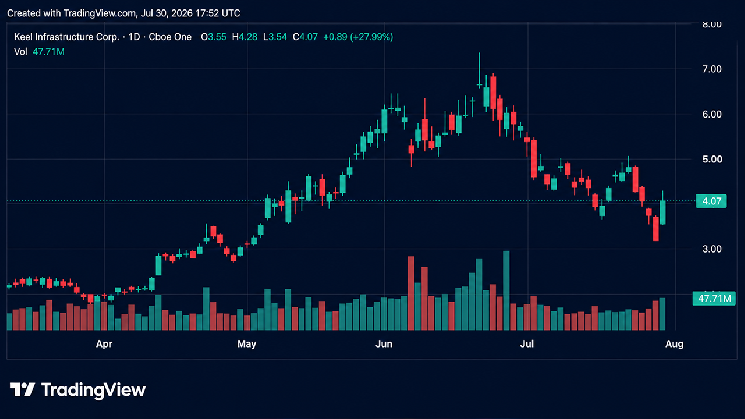
Shares of companies involved in Bitcoin mining and AI infrastructure surged, causing losses for short sellers. On Thursday, July 30, 2026, Keel Infrastructure (formerly Bitfarms) led the gains, rising 29.13%, followed by Nebius Group, Cipher Digital, and IREN Limited with jumps over 27%. Other notable gainers included Riot Platforms, Bitdeer, Core Scientific, Hut 8, and Cleanspark, with increases mostly ranging from 17% to 24%. The rally was attributed to a short squeeze triggered by a hedge fund's forced liquidation of its holdings, which were largely bought by Citadel. Additionally, Bitcoin trading above $64,000 and strong Microsoft earnings, highlighting AI's profitability, boosted market sentiment. Coreweave also announced a deal to provide AI cloud services for U.S. defense and intelligence agencies. This surge reflects a broader, longer-term trend of Bitcoin miners pivoting to AI data centers, leveraging their existing energy infrastructure and land. Recent multi-billion dollar deals by companies like Hut 8, IREN, and Terawulf for AI cloud services underscore this strategic shift. Other gainers, including Sandisk, Micron, Bloom Energy, and Cerebras, are suppliers critical to the AI infrastructure build-out. While the rally provided relief after July's losses, questions remain about capital expenditures, power availability, and long-term AI demand. The sustainability of these gains depends on these companies successfully converting their energy contracts and AI service deals into stable revenue streams.

cryptonews.ruHace 31 min(s)

Stocks of Companies in Bitcoin Mining and AI Infrastructure Soar, Short Sellers Face Losses

cryptonews.ruHace 31 min(s)

Trading

Spot

Artículos destacados

Qué es $S$

Entendiendo SPERO: Una Visión General Completa Introducción a SPERO A medida que el panorama de la innovación continúa evolucionando, la aparición de tecnologías web3 y proyectos de criptomonedas juega un papel fundamental en la configuración del futuro digital. Un proyecto que ha atraído la atención en este campo dinámico es SPERO, denotado como SPERO,$$s$. Este artículo tiene como objetivo reunir y presentar información detallada sobre SPERO, para ayudar a entusiastas e inversores a comprender sus fundamentos, objetivos e innovaciones dentro de los dominios web3 y cripto. ¿Qué es SPERO,$$s$? SPERO,$$s$ es un proyecto único dentro del espacio cripto que busca aprovechar los principios de descentralización y tecnología blockchain para crear un ecosistema que promueva la participación, la utilidad y la inclusión financiera. El proyecto está diseñado para facilitar interacciones de igual a igual de nuevas maneras, proporcionando a los usuarios soluciones y servicios financieros innovadores. En su esencia, SPERO,$$s$ tiene como objetivo empoderar a los individuos al proporcionar herramientas y plataformas que mejoren la experiencia del usuario en el espacio de las criptomonedas. Esto incluye habilitar métodos de transacción más flexibles, fomentar iniciativas impulsadas por la comunidad y crear caminos para oportunidades financieras a través de aplicaciones descentralizadas (dApps). La visión subyacente de SPERO,$$s$ gira en torno a la inclusividad, buscando cerrar brechas dentro de las finanzas tradicionales mientras aprovecha los beneficios de la tecnología blockchain. ¿Quién es el Creador de SPERO,$$s$? La identidad del creador de SPERO,$$s$ sigue siendo algo oscura, ya que hay recursos públicos limitados que proporcionan información de fondo detallada sobre su(s) fundador(es). Esta falta de transparencia puede derivarse del compromiso del proyecto con la descentralización, una ética que muchos proyectos web3 comparten, priorizando las contribuciones colectivas sobre el reconocimiento individual. Al centrar las discusiones en torno a la comunidad y sus objetivos colectivos, SPERO,$$s$ encarna la esencia del empoderamiento sin señalar a individuos específicos. Como tal, comprender la ética y la misión de SPERO sigue siendo más importante que identificar a un creador singular. ¿Quiénes son los Inversores de SPERO,$$s$? SPERO,$$s$ cuenta con el apoyo de una diversa gama de inversores que van desde capitalistas de riesgo hasta inversores ángeles dedicados a fomentar la innovación en el sector cripto. El enfoque de estos inversores generalmente se alinea con la misión de SPERO, priorizando proyectos que prometen avances tecnológicos sociales, inclusión financiera y gobernanza descentralizada. Estas fundaciones de inversores suelen estar interesadas en proyectos que no solo ofrecen productos innovadores, sino que también contribuyen positivamente a la comunidad blockchain y sus ecosistemas. El respaldo de estos inversores refuerza a SPERO,$$s$ como un contendiente notable en el dominio de proyectos cripto que evoluciona rápidamente. ¿Cómo Funciona SPERO,$$s$? SPERO,$$s$ emplea un marco multifacético que lo distingue de los proyectos de criptomonedas convencionales. Aquí hay algunas de las características clave que subrayan su singularidad e innovación: Gobernanza Descentralizada: SPERO,$$s$ integra modelos de gobernanza descentralizada, empoderando a los usuarios para participar activamente en los procesos de toma de decisiones sobre el futuro del proyecto. Este enfoque fomenta un sentido de propiedad y responsabilidad entre los miembros de la comunidad. Utilidad del Token: SPERO,$$s$ utiliza su propio token de criptomoneda, diseñado para servir diversas funciones dentro del ecosistema. Estos tokens permiten transacciones, recompensas y la facilitación de servicios ofrecidos en la plataforma, mejorando la participación y la utilidad general. Arquitectura en Capas: La arquitectura técnica de SPERO,$$s$ apoya la modularidad y escalabilidad, permitiendo la integración fluida de características y aplicaciones adicionales a medida que el proyecto evoluciona. Esta adaptabilidad es fundamental para mantener la relevancia en el cambiante paisaje cripto. Participación de la Comunidad: El proyecto enfatiza iniciativas impulsadas por la comunidad, empleando mecanismos que incentivan la colaboración y la retroalimentación. Al nutrir una comunidad sólida, SPERO,$$s$ puede abordar mejor las necesidades de los usuarios y adaptarse a las tendencias del mercado. Enfoque en la Inclusión: Al ofrecer tarifas de transacción bajas e interfaces amigables para el usuario, SPERO,$$s$ busca atraer a una base de usuarios diversa, incluyendo a individuos que anteriormente pueden no haber participado en el espacio cripto. Este compromiso con la inclusión se alinea con su misión general de empoderamiento a través de la accesibilidad. Cronología de SPERO,$$s$ Entender la historia de un proyecto proporciona información crucial sobre su trayectoria de desarrollo y hitos. A continuación se presenta una cronología sugerida que mapea eventos significativos en la evolución de SPERO,$$s$: Fase de Conceptualización e Ideación: Las ideas iniciales que forman la base de SPERO,$$s$ fueron concebidas, alineándose estrechamente con los principios de descentralización y enfoque comunitario dentro de la industria blockchain. Lanzamiento del Whitepaper del Proyecto: Tras la fase conceptual, se lanzó un whitepaper completo que detalla la visión, los objetivos y la infraestructura tecnológica de SPERO,$$s$ para generar interés y retroalimentación de la comunidad. Construcción de Comunidad y Primeras Interacciones: Se realizaron esfuerzos de divulgación activa para construir una comunidad de primeros adoptantes y posibles inversores, facilitando discusiones en torno a los objetivos del proyecto y obteniendo apoyo. Evento de Generación de Tokens: SPERO,$$s$ llevó a cabo un evento de generación de tokens (TGE) para distribuir sus tokens nativos a los primeros seguidores y establecer liquidez inicial dentro del ecosistema. Lanzamiento de la dApp Inicial: La primera aplicación descentralizada (dApp) asociada con SPERO,$$s$ se puso en marcha, permitiendo a los usuarios interactuar con las funcionalidades centrales de la plataforma. Desarrollo Continuo y Alianzas: Actualizaciones y mejoras continuas a las ofertas del proyecto, incluyendo alianzas estratégicas con otros actores en el espacio blockchain, han moldeado a SPERO,$$s$ en un jugador competitivo y en evolución en el mercado cripto. Conclusión SPERO,$$s$ se erige como un testimonio del potencial de web3 y las criptomonedas para revolucionar los sistemas financieros y empoderar a los individuos. Con un compromiso con la gobernanza descentralizada, la participación comunitaria y funcionalidades diseñadas de manera innovadora, allana el camino hacia un paisaje financiero más inclusivo. Como con cualquier inversión en el espacio cripto que evoluciona rápidamente, se anima a los posibles inversores y usuarios a investigar a fondo y participar de manera reflexiva con los desarrollos en curso dentro de SPERO,$$s$. El proyecto muestra el espíritu innovador de la industria cripto, invitando a una mayor exploración de sus innumerables posibilidades. Mientras el viaje de SPERO,$$s$ aún se desarrolla, sus principios fundamentales pueden, de hecho, influir en el futuro de cómo interactuamos con la tecnología, las finanzas y entre nosotros en ecosistemas digitales interconectados.

185 Vistas totalesPublicado en 2024.12.17Actualizado en 2024.12.17

Qué es $S$

Qué es AGENT S

Agent S: El Futuro de la Interacción Autónoma en Web3 Introducción En el paisaje en constante evolución de Web3 y las criptomonedas, las innovaciones están redefiniendo constantemente cómo los individuos interactúan con las plataformas digitales. Uno de estos proyectos pioneros, Agent S, promete revolucionar la interacción humano-computadora a través de su marco agente abierto. Al allanar el camino para interacciones autónomas, Agent S busca simplificar tareas complejas, ofreciendo aplicaciones transformadoras en inteligencia artificial (IA). Esta exploración detallada profundizará en las complejidades del proyecto, sus características únicas y las implicaciones para el dominio de las criptomonedas. ¿Qué es Agent S? Agent S se presenta como un marco agente abierto innovador, diseñado específicamente para abordar tres desafíos fundamentales en la automatización de tareas informáticas: Adquisición de Conocimiento Específico del Dominio: El marco aprende inteligentemente de diversas fuentes de conocimiento externas y experiencias internas. Este enfoque dual le permite construir un rico repositorio de conocimiento específico del dominio, mejorando su rendimiento en la ejecución de tareas. Planificación a Largo Plazo de Tareas: Agent S emplea planificación jerárquica aumentada por la experiencia, un enfoque estratégico que facilita la descomposición y ejecución eficiente de tareas complejas. Esta característica mejora significativamente su capacidad para gestionar múltiples subtareas de manera eficiente y efectiva. Manejo de Interfaces Dinámicas y No Uniformes: El proyecto introduce la Interfaz Agente-Computadora (ACI), una solución innovadora que mejora la interacción entre agentes y usuarios. Utilizando Modelos de Lenguaje Multimodal de Gran Escala (MLLMs), Agent S puede navegar y manipular diversas interfaces gráficas de usuario sin problemas. A través de estas características pioneras, Agent S proporciona un marco robusto que aborda las complejidades involucradas en la automatización de la interacción humana con las máquinas, preparando el terreno para una multitud de aplicaciones en IA y más allá. ¿Quién es el Creador de Agent S? Si bien el concepto de Agent S es fundamentalmente innovador, la información específica sobre su creador sigue siendo elusiva. El creador es actualmente desconocido, lo que resalta ya sea la etapa incipiente del proyecto o la elección estratégica de mantener a los miembros fundadores en el anonimato. Independientemente de la anonimidad, el enfoque sigue siendo en las capacidades y el potencial del marco. ¿Quiénes son los Inversores de Agent S? Dado que Agent S es relativamente nuevo en el ecosistema criptográfico, la información detallada sobre sus inversores y patrocinadores financieros no está documentada explícitamente. La falta de información disponible públicamente sobre las bases de inversión u organizaciones que apoyan el proyecto plantea preguntas sobre su estructura de financiamiento y hoja de ruta de desarrollo. Comprender el respaldo es crucial para evaluar la sostenibilidad del proyecto y su posible impacto en el mercado. ¿Cómo Funciona Agent S? En el núcleo de Agent S se encuentra una tecnología de vanguardia que le permite funcionar de manera efectiva en diversos entornos. Su modelo operativo se basa en varias características clave: Interacción Humano-Computadora Similar a la Humana: El marco ofrece planificación avanzada de IA, esforzándose por hacer que las interacciones con las computadoras sean más intuitivas. Al imitar el comportamiento humano en la ejecución de tareas, promete elevar las experiencias de los usuarios. Memoria Narrativa: Empleada para aprovechar experiencias de alto nivel, Agent S utiliza memoria narrativa para hacer un seguimiento de las historias de tareas, mejorando así sus procesos de toma de decisiones. Memoria Episódica: Esta característica proporciona a los usuarios una guía paso a paso, permitiendo que el marco ofrezca apoyo contextual a medida que se desarrollan las tareas. Soporte para OpenACI: Con la capacidad de ejecutarse localmente, Agent S permite a los usuarios mantener el control sobre sus interacciones y flujos de trabajo, alineándose con la ética descentralizada de Web3. Fácil Integración con APIs Externas: Su versatilidad y compatibilidad con varias plataformas de IA aseguran que Agent S pueda encajar sin problemas en ecosistemas tecnológicos existentes, convirtiéndolo en una opción atractiva para desarrolladores y organizaciones. Estas funcionalidades contribuyen colectivamente a la posición única de Agent S dentro del espacio cripto, ya que automatiza tareas complejas y de múltiples pasos con una intervención humana mínima. A medida que el proyecto evoluciona, sus posibles aplicaciones en Web3 podrían redefinir cómo se desarrollan las interacciones digitales. Cronología de Agent S El desarrollo y los hitos de Agent S pueden encapsularse en una cronología que resalta sus eventos significativos: 27 de septiembre de 2024: El concepto de Agent S fue lanzado en un documento de investigación integral titulado “Un Marco Agente Abierto que Usa Computadoras Como un Humano”, mostrando las bases del proyecto. 10 de octubre de 2024: El documento de investigación fue puesto a disposición del público en arXiv, ofreciendo una exploración profunda del marco y su evaluación de rendimiento basada en el benchmark OSWorld. 12 de octubre de 2024: Se lanzó una presentación en video, proporcionando una visión visual de las capacidades y características de Agent S, involucrando aún más a posibles usuarios e inversores. Estos marcadores en la cronología no solo ilustran el progreso de Agent S, sino que también indican su compromiso con la transparencia y la participación comunitaria. Puntos Clave Sobre Agent S A medida que el marco Agent S continúa evolucionando, varios atributos clave destacan, subrayando su naturaleza innovadora y potencial: Marco Innovador: Diseñado para proporcionar un uso intuitivo de las computadoras similar a la interacción humana, Agent S aporta un enfoque novedoso a la automatización de tareas. Interacción Autónoma: La capacidad de interactuar de manera autónoma con las computadoras a través de GUI significa un salto hacia soluciones informáticas más inteligentes y eficientes. Automatización de Tareas Complejas: Con su metodología robusta, puede automatizar tareas complejas y de múltiples pasos, haciendo que los procesos sean más rápidos y menos propensos a errores. Mejora Continua: Los mecanismos de aprendizaje permiten a Agent S mejorar a partir de experiencias pasadas, mejorando continuamente su rendimiento y eficacia. Versatilidad: Su adaptabilidad en diferentes entornos operativos como OSWorld y WindowsAgentArena asegura que pueda servir a una amplia gama de aplicaciones. A medida que Agent S se posiciona en el paisaje de Web3 y criptomonedas, su potencial para mejorar las capacidades de interacción y automatizar procesos significa un avance significativo en las tecnologías de IA. A través de su marco innovador, Agent S ejemplifica el futuro de las interacciones digitales, prometiendo una experiencia más fluida y eficiente para los usuarios en diversas industrias. Conclusión Agent S representa un audaz avance en la unión de la IA y Web3, con la capacidad de redefinir cómo interactuamos con la tecnología. Aunque aún se encuentra en sus primeras etapas, las posibilidades para su aplicación son vastas y atractivas. A través de su marco integral que aborda desafíos críticos, Agent S busca llevar las interacciones autónomas al primer plano de la experiencia digital. A medida que nos adentramos más en los reinos de las criptomonedas y la descentralización, proyectos como Agent S sin duda desempeñarán un papel crucial en la configuración del futuro de la tecnología y la colaboración humano-computadora.

593 Vistas totalesPublicado en 2025.01.14Actualizado en 2025.01.14

Qué es AGENT S

Cómo comprar S

¡Bienvenido a HTX.com! Hemos hecho que comprar Sonic (S) sea simple y conveniente. Sigue nuestra guía paso a paso para iniciar tu viaje de criptos.Paso 1: crea tu cuenta HTXUtiliza tu correo electrónico o número de teléfono para registrarte y obtener una cuenta gratuita en HTX. Experimenta un proceso de registro sin complicaciones y desbloquea todas las funciones.Obtener mi cuentaPaso 2: ve a Comprar cripto y elige tu método de pagoTarjeta de crédito/débito: usa tu Visa o Mastercard para comprar Sonic (S) al instante.Saldo: utiliza fondos del saldo de tu cuenta HTX para tradear sin problemas.Terceros: hemos agregado métodos de pago populares como Google Pay y Apple Pay para mejorar la comodidad.P2P: tradear directamente con otros usuarios en HTX.Over-the-Counter (OTC): ofrecemos servicios personalizados y tipos de cambio competitivos para los traders.Paso 3: guarda tu Sonic (S)Después de comprar tu Sonic (S), guárdalo en tu cuenta HTX. Alternativamente, puedes enviarlo a otro lugar mediante transferencia blockchain o utilizarlo para tradear otras criptomonedas.Paso 4: tradear Sonic (S)Tradear fácilmente con Sonic (S) en HTX's mercado spot. Simplemente accede a tu cuenta, selecciona tu par de trading, ejecuta tus trades y monitorea en tiempo real. Ofrecemos una experiencia fácil de usar tanto para principiantes como para traders experimentados.

1.1k Vistas totalesPublicado en 2025.01.15Actualizado en 2026.06.02

Cómo comprar S

Discusiones

Bienvenido a la comunidad de HTX. Aquí puedes mantenerte informado sobre los últimos desarrollos de la plataforma y acceder a análisis profesionales del mercado. A continuación se presentan las opiniones de los usuarios sobre el precio de S (S).

活动图片