Artículos Relacionados con Consumer

El Centro de Noticias de HTX ofrece los artículos más recientes y un análisis profundo sobre "Consumer", cubriendo tendencias del mercado, actualizaciones de proyectos, desarrollos tecnológicos y políticas regulatorias en la industria de cripto.

E Fund "Quits Drinking"

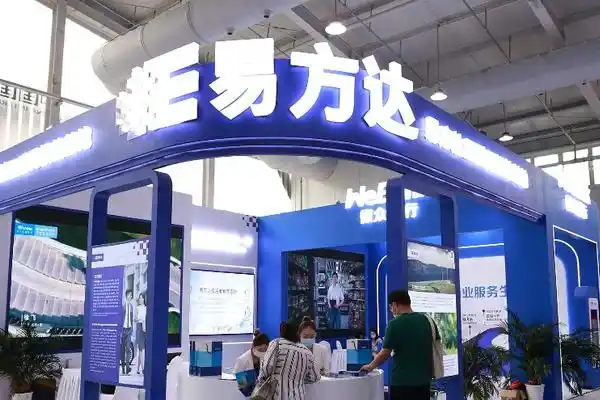
"Yi Fang Da 'Gives Up Alcohol'" - Summary The article analyzes the recent portfolio adjustments of star fund manager Zhang Kun, focusing on his flagship funds, the Yi Fang Da Blue Chip Select and Yi Fang Da Quality Select. The key trend highlighted is a significant and ongoing reduction in exposure to the consumer sector, particularly liquor (baijiu) stocks like Kweichow Moutai and Wuliangye, which were once core holdings. This shift is driven by several factors: a downturn in the consumer sector's business cycle post-pandemic, with slowing earnings growth for major players; a change in consumer behavior towards value over premium brands; and high channel inventory pressures, especially in the liquor industry. These fundamentals have led to a prolonged phase of valuation contraction for consumer stocks. Concurrently, market capital has rotated aggressively towards the high-growth technology sector, especially AI-related chains, which have dominated fund inflows. This style shift has further diminished the attractiveness of traditional consumer "core assets" for many funds. As a result, Zhang Kun's funds have drastically cut their consumer stock allocations. For example, the Blue Chip Select's baijiu holding proportion has fallen from over 40% to around 20%, and its overall top 10 holdings concentration dropped sharply. This mirrors a broader trend in the active equity fund industry, where allocations to consumer staples have plummeted to multi-year lows while technology holdings have surged. The article concludes that while the consumer sector's valuations are now at historical lows, offering some margin of safety, the fundamental outlook remains challenging due to weak macro consumption recovery and intense internal competition. Therefore, the sector is likely to see only sporadic rebounds rather than a sustained recovery, continuing to weigh on the performance of funds still heavily invested in it. Zhang Kun's timely reduction of Korean semiconductor holdings in his Asia Select fund amid a market crash is also noted as a contrast to his domestic strategy.

marsbitAyer 03:06

E Fund "Quits Drinking"

marsbitAyer 03:06

Investors Are Now Hunting for AI Projects on Bilibili and Xiaohongshu

Investors Turn to Bilibili and Xiaohongshu to Source AI Projects The AI hardware boom is in full swing in 2025, with a surge in smart wearables like AI glasses, rings, toys, and companion robots. This frenzy has investors scrambling, not just sifting through business plans, but actively hunting for promising "under-the-radar" projects on youth and tech-enthusiast content platforms like Bilibili and Xiaohongshu. The logic is straightforward: for consumer-facing AI hardware, genuine user demand and potential pitfalls are often revealed earlier in public discussions, comments, and critiques on these communities than in formal pitches. As one industry insider notes, these products must ultimately be tested and understood by real people. This shift highlights a crucial challenge in the sector: user education. The success of AI hardware depends on moving beyond mere efficiency gains to fulfilling higher-order needs like "unleashing personal creativity." Products must convince users they are natural, unobtrusive additions to daily life. Early hype, as seen with devices like the Rabbit R1, often fades if the product fails to clearly solve real-world problems, leading to high return rates and market rejection. The market is now entering a shakeout phase. 2026 is seen as a year of commercial validation. Some projects have already stalled or been canceled due to market resistance, lack of differentiation, or financial woes. However, the long-term opportunity remains vast, with forecasts predicting a multi-trillion dollar global AI hardware market by 2030. The competition is intensifying. With giants like OpenAI and Meta preparing their own hardware, and Chinese companies launching diverse AI-powered products, the battle for user attention, product excellence, and market understanding is just beginning. The core principle endures: in the AI era, it remains a user-sovereign market.

marsbit06/12 05:07

Investors Are Now Hunting for AI Projects on Bilibili and Xiaohongshu

marsbit06/12 05:07

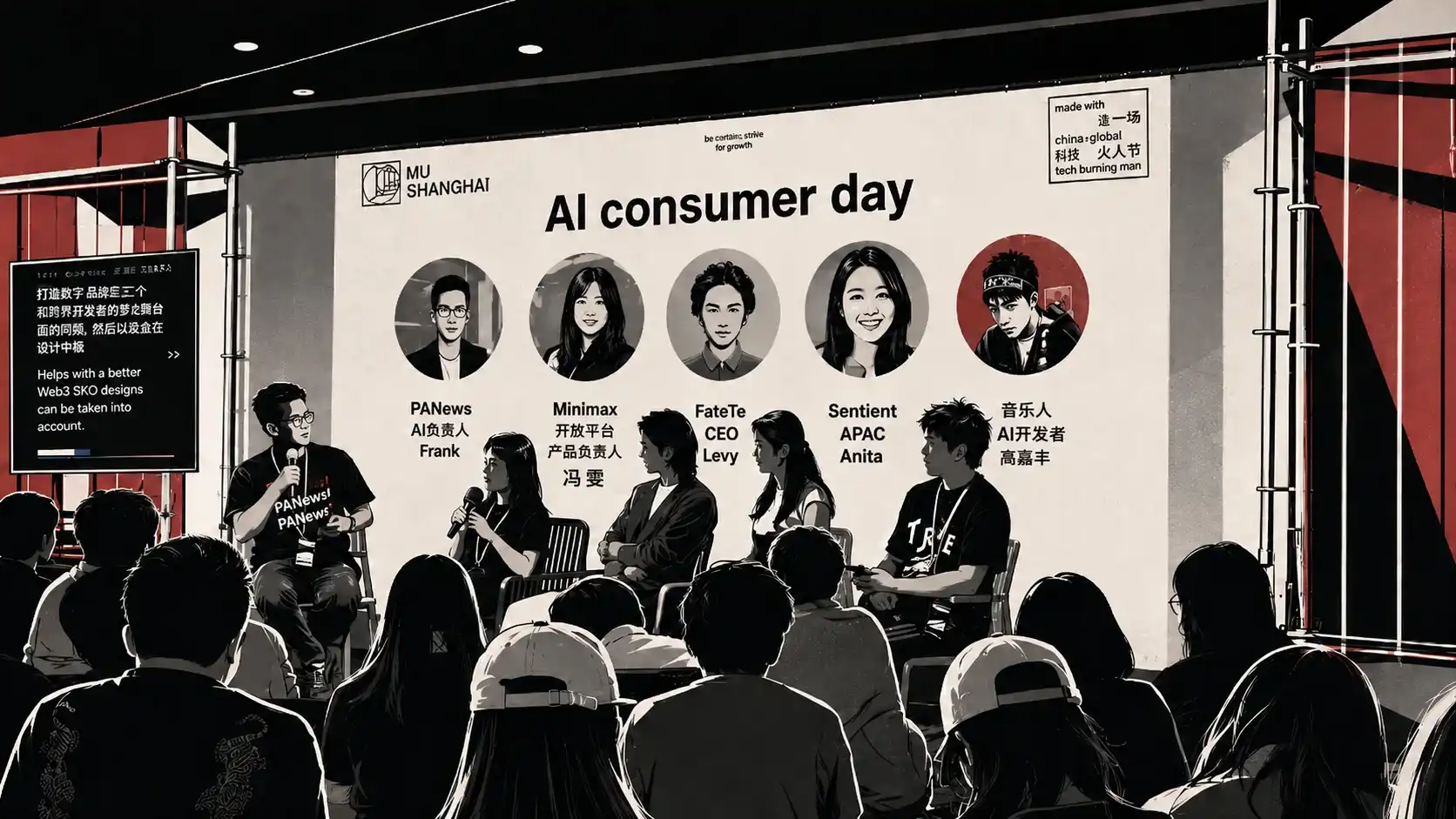
muShanghai Discusses Consumer AI: After Continuous Iteration of Large Models, Product Competition Moves Towards Scenarios and Experience

The roundtable discussion "Innovative Practices and Path Exploration of the AI Consumption Ecosystem" at muShanghai AI Week, featuring experts from model platforms, cultural apps, the open-source ecosystem, and music creation, delved into the practical paths for consumer AI products. A key consensus emerged: while AI model advancements lower prototyping barriers, the real challenge for enduring products lies beyond raw technology. True differentiation comes from deep scene understanding, data organization, user education, delivering emotional value, and building open ecosystems. The competition is shifting from "who has the stronger model" to "who best understands the specific user and scenario." Participants highlighted that application-layer barriers, such as accumulated contextual data and cultural localization (e.g., FateTell's translation of Eastern metaphysics for global users), are not easily erased by model updates. They cautioned that AI simplifies prototyping but not the core entrepreneurial hurdles: user acquisition, community building, and commercialization. The discussion emphasized that value must return to human needs—like emotional comfort (FateTell) or preserving the creative *process* in music-making, as highlighted by musician-developer Gao Jiafeng, rather than just outputting a final product. With the rise of AI Agents, user education is evolving from manual documentation reading to more guided, interactive learning within the product experience itself. Looking ahead 3-5 years, panelists foresee AI moving into the physical world via hardware and robotics, enabling more personalized services and addressing growing needs for companionship amidst technological anxiety. The future points towards "technology democratization," where AI assists diverse lifestyles, and cultural forms may be recombined, with emotional connection becoming paramount. Ultimately, as models continue to evolve, the products that endure will be those that meet genuine human needs, foster understanding, and build meaningful connections.

marsbit05/16 03:06

muShanghai Discusses Consumer AI: After Continuous Iteration of Large Models, Product Competition Moves Towards Scenarios and Experience

marsbit05/16 03:06

2026 Crypto Funding Reshuffle: Game and DePIN Are Dead, Prediction Market Duo Takes 18% of All Year's Funding with Two Deals

Cryptocurrency Funding in 2026: Gaming & DePIN Falter as Prediction Markets Dominate Data from the first four months of 2026 reveals a stark shift in crypto venture funding. The gaming and DePIN (Decentralized Physical Infrastructure Networks) sectors have seen capital nearly dry up. In contrast, the "Consumer" category, led by two massive deals for prediction market platforms Kalshi ($1B) and Polymarket ($600M), captured a significant share. These two deals alone accounted for 18% of the year's total $8.65 billion raised and exceeded the combined funding of all 47 DeFi projects. Overall, the $8.65B across 305 deals is misleading. A March surge to $4.57B was largely due to two major acquisitions (BVNK at $1.8B and Kalshi). Excluding these, the underlying monthly funding rate is approximately $1B, indicating continued softness. The "Payments" and "Consumer" sectors together consumed 72% of all capital. Another notable trend is the rise of mergers and acquisitions (M&A), with 48 deals nearly matching the 57 seed-round investments. This signals a market pivot from funding new ideas to consolidating around established leaders. The most active investors so far in 2026 are Coinbase Ventures (18 deals), Tether (13 deals), Animoca Brands (11 deals), and GSR (11 deals). Notably, a16z's pace has slowed significantly compared to previous years.

marsbit05/08 04:57

2026 Crypto Funding Reshuffle: Game and DePIN Are Dead, Prediction Market Duo Takes 18% of All Year's Funding with Two Deals

marsbit05/08 04:57

2026 Web3 Consumer Market Outlook: Which Products Have Achieved Long-Term Retention?

By 2026, the Web3 consumer market has shifted significantly, with long-term user retention becoming the key metric for success, rather than short-term incentives or hype. The most successful applications are those where blockchain technology recedes into the background, offering familiar and intuitive user experiences. The top six consumer applications demonstrating sustained user retention are: 1. **Immutable (IMX)**: A full-stack gaming distribution platform focused on enabling mainstream-friendly games where crypto is optional, not central. 2. **Ronin (RON)**: A consumer-proven gaming blockchain that has successfully moved beyond a single hit game to build a diversified ecosystem. 3. **Farcaster**: A durable decentralized social platform that prioritizes genuine interaction over financialization, maintaining stable daily activity. 4. **Magic Eden**: An NFT marketplace that emphasizes accessibility and discovery for retail collectors, adapting to where users are active. 5. **OpenSea**: Retains its position as the default NFT discovery portal for mainstream users due to brand recognition and ease of use. 6. **Sorare**: Effectively integrates NFTs into the proven user behavior of fantasy sports, creating a sustainable engagement loop driven by real-world events. The common thread is that the winning products don't feel like crypto; they feel like good games, social apps, or digital collectible platforms. Retention and execution have become more critical than narrative or speculative metrics.

marsbit01/12 06:58

2026 Web3 Consumer Market Outlook: Which Products Have Achieved Long-Term Retention?

marsbit01/12 06:58

活动图片