
Investors Are Now Hunting for AI Projects on Bilibili and Xiaohongshu

marsbitPublicado a 2026-06-12Actualizado a 2026-06-12

Resumen

Investors Turn to Bilibili and Xiaohongshu to Source AI Projects The AI hardware boom is in full swing in 2025, with a surge in smart wearables like AI glasses, rings, toys, and companion robots. This frenzy has investors scrambling, not just sifting through business plans, but actively hunting for promising "under-the-radar" projects on youth and tech-enthusiast content platforms like Bilibili and Xiaohongshu. The logic is straightforward: for consumer-facing AI hardware, genuine user demand and potential pitfalls are often revealed earlier in public discussions, comments, and critiques on these communities than in formal pitches. As one industry insider notes, these products must ultimately be tested and understood by real people. This shift highlights a crucial challenge in the sector: user education. The success of AI hardware depends on moving beyond mere efficiency gains to fulfilling higher-order needs like "unleashing personal creativity." Products must convince users they are natural, unobtrusive additions to daily life. Early hype, as seen with devices like the Rabbit R1, often fades if the product fails to clearly solve real-world problems, leading to high return rates and market rejection. The market is now entering a shakeout phase. 2026 is seen as a year of commercial validation. Some projects have already stalled or been canceled due to market resistance, lack of differentiation, or financial woes. However, the long-term opportunity remains vast, with forec...

Author: Investment Community

"In the AI era, all hardware is worth remaking from scratch."

This statement might have sounded somewhat radical in 2024, but in 2025, its credibility has surged significantly—as we are witnessing, the wave of AI hardware entrepreneurship is rising, with financings following one after another. Across the ocean, the smart ring Oura Health has seen its latest valuation soar to a staggering 70 billion yuan.

This frenzy is sweeping up FOMO-stricken investors. This time, aside from sifting through thousands of pitch deck emails, they have strikingly turned their deal-sourcing gaze towards content communities densely populated by tech geeks and young people.

The underlying logic is rather simple: compared to spec sheets and roadshows, the real demand for a consumer-grade AI smart hardware product is often first exposed by whether it can be understood, discussed, and questioned in the public sphere.

Ultimately, all tech products aimed at the masses must go through the test of the crowd.

AI Hardware Explosion, Investors Scramble for Under-the-Radar Projects

We are experiencing a banner year for AI hardware.

Since 2025, extending from the wearable device track, more segmented smart hardware products such as AI glasses, AI toys, AI recording cards, AI rings, AI earphones, companion robots, and Agent Boxes have collectively seen an explosion.

Amid the fervor, certain details reveal the excitement in the investment circle: in the latter half of 2025, we frequently saw several top-tier institutions posting job openings to recruit AI/smart hardware investors, with the job descriptions almost invariably requiring the candidates to be based in Shenzhen, the hardware capital.

Good projects almost require 'repeated visits' and intense competition, especially those still under the radar with valuations not yet sky-high. Investors have even started approaching potential founders who haven't yet left their jobs. For instance, cafes near DJI are packed with VCs and FAs trying to 'persuade people to start a business.'
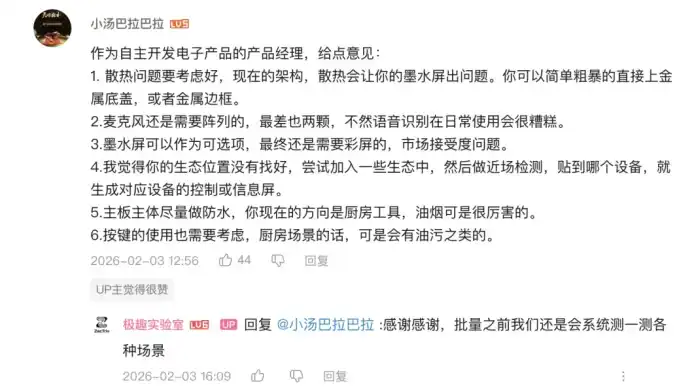
(Comment section of an AI sticky note product pre-sale video)

"After this content was posted, many technical discussion threads appeared in the bullet comments and comment section, and more users began sharing their similar needs: some mentioned frequently attending cross-border exhibitions, others talked about communication barriers when collaborating remotely with overseas teams, and some shared experiences where translation tools were inconvenient when accompanying foreign relatives for medical treatment or handling foreign affairs."

"These feedbacks not only helped us expand the direction for creator content but also directly influenced our thinking about the product line," Wu Zhen said.
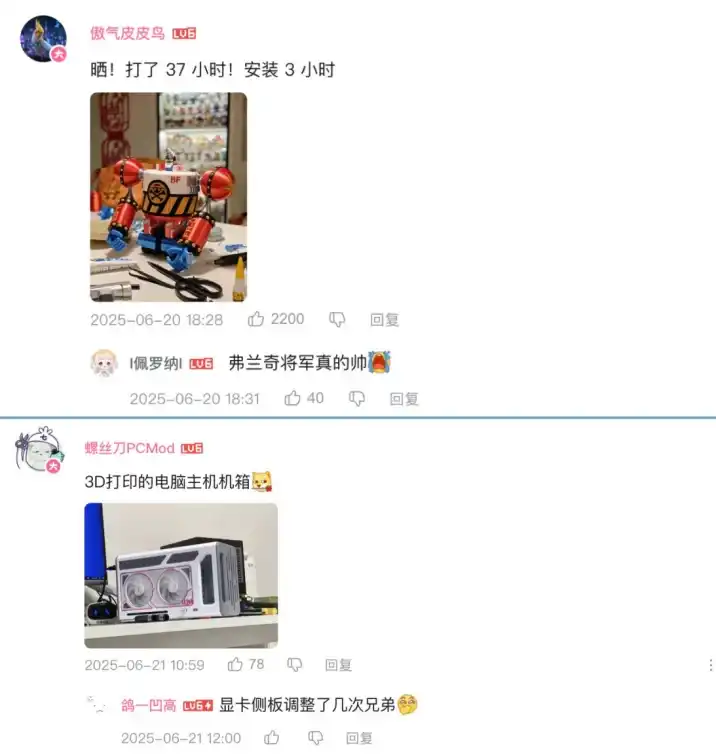
(Comment section of UP主影视飓风's video)

Enthusiasts Gather

Remember January 2024, at CES.

A little orange square box called Rabbit R1, touted as 'the world's first AI hardware device,' stirred a frenzy in the tech world. The market hailed it as the iPhone of the AI era, selling 100,000 units upon launch.

But what followed was not success. On the contrary, skepticism soon arose with comments like 'actually using it is not as good as a phone.' At the time, the high-flying Rabbit R1 failed to adequately explain to users: what exactly can Rabbit R1 do now and in the future? What real user problems does this innovation actually solve?

Even today, user education remains the most critical challenge for AI smart hardware—when AI enters consumer electronics, the product consumption logic is no longer limited to 'improving life efficiency' but also includes higher-dimensional needs like 'unleashing personal creativity' and 'liberating the mind.' In this context, whoever can make users understand, discuss, and pay in real-life scenarios truly crosses the threshold from a tech product to a consumer good.

But this is not easy. Regarding user education for AI glasses, INMO's CMO Wu Zhen told us frankly: This is not simply about conveying product information; it also requires overcoming a psychological barrier. Users must first complete a 'virtual try-on' in their minds, confirming that integrating this device into daily life feels natural and not awkward, before they can proceed to the next step.

In Wu Zhen's view, the process of psychologically preparing users for AI smart hardware might be longer than for most consumer electronics categories. "The day users naturally put on AI glasses to go out without reminding themselves 'I need to use AI glasses today,' this behavioral change might be more convincing than many data points."

Shakeout Begins, Battle for Attention Heats Up

While the frenzy peaks, a shakeout is underway.

There is now market consensus that 2026 will be the year of commercial validation for AI hardware. This also means that trend-chasers and狂热资本 will face rationality and冷静.

A winnowing process is unfolding: At the end of 2025, the AI wearable device Friend AI Necklace stalled after encountering severe market resistance; after its peak appearance in 2024, Rabbit R1, unable to keep up with product expectations amid negative feedback, saw abnormally high return rates, severely damaging its reputation, and ultimately陷入欠薪与现金流枯竭的困境 (fell into困境 of salary arrears and cash flow depletion).

Meanwhile, savvy players are also开始审慎调整和优化决策 (beginning to prudently adjust and optimize decisions). In February 2026, market rumors emerged that the Doubao AI glasses project was suspended; at least within the visible cycle, this product line is no longer considered a direction to pursue. Earlier, in January, smartphone manufacturer vivo halted its AI glasses project, citing the difficulty of achieving differentiation at present.

Such developments are a reflection of industry differentiation.

Nevertheless, it is undeniable that in this trillion-dollar-value赛道 (track), entrepreneurs still possess enormous确定性机会 (deterministic opportunities). According to AICC predictions, by 2030, the global AI-related hardware market will easily surpass several trillion dollars. In China, the industry expects the market size for consumer-grade AI hardware (excluding phones and cars) to突破 (break through) 1.27 trillion yuan in 2026 and reach 2.56 trillion yuan by 2030.

Currently, opportunities for exit and entry coexist. OpenAI just announced it will launch its first AI hardware device in the second half of the year, and Meta plans to double the annual production capacity of its AI smart glasses to 20 million units by the end of 2026. The latest scene domestically: a batch of AI smart terminals from京东 (JD.com), including AI desk lamps, AI cooking machines, AI mattresses, and AI wheelchairs, are酝酿上新售卖 (being酝酿 for launch and sale).

People remain convinced that the battle for入口之争 (portals) behind AI smart hardware will not stop. The AI era is still an era of用户主权 (user sovereignty).

The热浪 (heat wave) will push everyone forward. But when attention, product power, and user perception begin to compete on the same table, the final battle is just beginning.


Criptos en tendencia

Preguntas relacionadas

QWhat new strategy are venture capitalists adopting to find promising AI hardware projects?

AVenture capitalists are increasingly looking for promising AI hardware projects on youth-focused content communities like Bilibili and Xiaohongshu. They analyze user discussions, comments, and product reviews to gauge genuine market demand and real-world product understanding before these ventures become widely known or receive high valuations.

QWhy is user education considered crucial for AI consumer hardware adoption?

AUser education is crucial because the value proposition of AI hardware often involves higher-level needs like 'unleashing personal creativity' or 'liberating the brain,' not just efficiency. Consumers need to understand and visualize how these devices fit into their daily lives without being intrusive. This mental acceptance and natural integration into routines are considered more important than just product specifications for driving adoption.

QWhat are some examples of AI consumer hardware that faced significant market challenges?

AExamples of AI consumer hardware that faced significant market challenges include the Rabbit R1, which suffered from high return rates and negative feedback regarding its practical utility, leading to cash flow problems. The Friend AI Necklace also encountered severe market resistance and stalled development.

QWhat is the predicted market size for consumer AI hardware in China by 2030?

AIndustry predictions estimate that the market size for consumer AI hardware (excluding smartphones and cars) in China will reach 2.56 trillion yuan by 2030. It is projected to first exceed 1.27 trillion yuan by 2026.

QWhy are some companies adjusting their strategies in the AI hardware market in 2026?

ACompanies are adjusting their strategies because 2026 is widely seen as the 'commercial validation year' for AI hardware. The market is entering a phase of rationalization and consolidation. Projects that fail to demonstrate clear product differentiation, genuine user value, or sustainable business models are being paused or canceled, as seen with Doubao's AI glasses and vivo's AI glasses project, indicating an industry-wide shakeout.

Lecturas Relacionadas

Must-Watch Events Next Week|CLARITY Act Could Face Senate Vote; SpaceX, Circle to Report Earnings (8.3-8.9)

**Summary: Key Events and Developments to Watch (August 3-9)** The upcoming week is marked by significant financial disclosures, key legislative deadlines, and notable product updates. **Major Financial Events:** Several companies are scheduled to release their Q2 2026 earnings. American Bitcoin (ABTC) will report on August 3, followed by SpaceX and Hut 8 Mining Corp. on August 4, and Circle on August 5. Notably, a significant portion of SpaceX shares (up to 12% of total shares) will be unlocked on August 6 following their earnings release. **Key Legislative Deadline:** The U.S. Senate faces an August 7 deadline to secure 60 votes for the CLARITY Act, a bipartisan bill aiming to establish a federal regulatory framework for cryptocurrencies. The Senate may hold a full vote on the bill during the week. **Economic Data:** The U.S. July Non-Farm Payrolls report will be released on August 7, providing crucial labor market data. **Technology & Product Updates:** * **Shutdowns:** DeFi portfolio tracker Zapper and wallet app Ctrl Wallet will cease operations on August 3. * **Upgrades:** LayerZero will deprecate its v1 relayers on August 3. XRP Ledger's new version 3.3.0, featuring five new functions, is expected next week. * **AI:** Elon Musk announced that the advanced Grok 4.6 AI model is set for release around August 7. * **Bitcoin:** The BIP-110 forced signaling for a potential Bitcoin network change is scheduled to begin around August 8. **Other Notable Events:** Chinese robotics firm Unitree Tech has set its preliminary price inquiry for its IPO for August 5. South Korean exchange Upbit will delist AQT and AERGO tokens on August 3.

marsbitHace 36 min(s)

Must-Watch Events Next Week|CLARITY Act Could Face Senate Vote; SpaceX, Circle to Report Earnings (8.3-8.9)

marsbitHace 36 min(s)

Stocks Are Plummeting More Sharply Than Cryptocurrencies. Where Has the Money Gone?

Stock Markets Plunge Deeper Than Cryptocurrencies: Where Did the Money Go? In late July, Seoul's Kospi index triggered circuit breakers for two consecutive days, plummeting over 40% from its June high. The collapse was led by heavyweight stocks like SK Hynix, whose record profits still disappointed investors, and devastating leveraged ETFs, with one major product losing over 83% of its value. This signaled a global, forced deleveraging targeting the most crowded trades. Interestingly, while stocks exhibited extreme volatility akin to crypto markets, Bitcoin rose nearly 15% in July after a prior steep drop. Analysis shows the money fleeing equities did not flow into Bitcoin. Instead, Bitcoin had already absorbed its sell-off in May-June, when U.S. spot Bitcoin ETFs saw historic outflows. The true safe-haven beneficiary was gold, whose price rose over 20% year-on-year, highlighting a decoupling between Bitcoin and gold as "digital gold." The sell-off was a targeted unwinding of leveraged positions in tech and semiconductors, accelerated by broker-dealer risk management and shifts in the AI narrative, including new competition from Chinese memory chipmakers. The retreat path was clear: from high-valuation tech stocks to cash and U.S. Treasuries, then to gold. For Bitcoin to attract sustained institutional inflows, conditions like eased global liquidity pressure, a "soft-landing" Fed rate cut, and U.S. regulatory clarity via legislation like the stalled CLARITY Act are needed. Currently, Bitcoin is not a safe haven but an already-cleared asset. Its low correlation with tech stocks, however, makes it a potential diversification play for institutional portfolios once the storm passes. The money isn't here yet, but the positioning is underway.

marsbitHace 36 min(s)

Stocks Are Plummeting More Sharply Than Cryptocurrencies. Where Has the Money Gone?

marsbitHace 36 min(s)

In Conversation with Ray Dalio: We Are Currently in an AI Bubble, with 1% of My Portfolio in Bitcoin

Ray Dalio, founder of Bridgewater Associates, warns in an interview that the current AI boom shows classic bubble characteristics, which could lead to significant economic downturns as seen in past cycles like 1929 or 2000. He explains that speculative enthusiasm, fueled by debt and overvaluation, often precedes a crash when rising rates or taxation force asset sales, causing widespread losses and recession. Dalio also outlines his "Big Cycle" theory, describing an approximate 80-year pattern where widening wealth gaps, massive government deficits, and shifting geopolitical power (like China's rise) create internal conflict and global instability. He emphasizes that we are in a late-cycle, transitional phase where traditional powers like the US and UK face decline. For personal wealth protection, Dalio advises diversification beyond cash into assets like stocks, bonds, real estate, and particularly gold, which he prefers over Bitcoin. While he holds about 1% of his portfolio in Bitcoin as a non-printable hard asset, he views gold as more secure from technological or governmental threats. Regarding AI's impact, Dalio believes it will disproportionately benefit capital owners, worsening inequality by replacing both physical and cognitive labor. He suggests that human intuition and emotional intelligence, combined with AI, will be key for future workers. On taxation, Dalio argues that wealth taxes are impractical and risk triggering asset sell-offs, reducing productive investment. He points to the UK as a cautionary example of debt, low productivity, and political strife. Geopolitically, Dalio foresees a more regionalized world, with the US showing weakness in prolonged conflicts like with Iran, akin to past imperial declines. The ideal outcome, he suggests, is coexisting powerful blocs (e.g., Americas, China-Asia Pacific) without major war.

marsbitHace 4 hora(s)

In Conversation with Ray Dalio: We Are Currently in an AI Bubble, with 1% of My Portfolio in Bitcoin

marsbitHace 4 hora(s)

Daily 7.2 Trillion KRW: Foreign Capital's Record Net Buying on Friday! Wall Street Says Headwinds for Korean Stock Fund Flows Have Subsided

South Korean stock market sees a dramatic shift in fund flows. On July 31, foreign investors made a record net purchase of approximately KRW 7.2 trillion in KOSPI stocks, marking a fundamental reversal from the persistent large-scale net outflows seen in previous months. This contributed to a significant narrowing of foreign net selling in July to KRW 9.8 trillion, down sharply from KRW 48.4 trillion in June and KRW 44.5 trillion in May. Simultaneously, domestic institutional pressure eased. South Korean pension funds and asset managers turned to a net buying position in July, purchasing KRW 1.0 trillion worth of KOSPI shares, contrasting with net sales in May and June. Market volatility is expected to be dampened by new financial regulations. Effective July 31, the Financial Services Commission tightened access for retail investors to single-stock leveraged ETFs by raising the minimum cash deposit requirement. Trading volumes for these products subsequently dropped to about 50% of their monthly average. Citigroup Research maintains its year-end KOSPI target of 10,000 points. The firm cites several supportive factors: the substantial easing of headwinds from capital outflows, a robust fundamental outlook for the semiconductor sector, historically low market valuations, strong economic fundamentals, and the potential for policy support from financial authorities if needed.

marsbitHace 4 hora(s)

Daily 7.2 Trillion KRW: Foreign Capital's Record Net Buying on Friday! Wall Street Says Headwinds for Korean Stock Fund Flows Have Subsided

marsbitHace 4 hora(s)

Trading

Spot

Artículos destacados

Cómo comprar ERA

¡Bienvenido a HTX.com! Hemos hecho que comprar Caldera (ERA) sea simple y conveniente. Sigue nuestra guía paso a paso para iniciar tu viaje de criptos.Paso 1: crea tu cuenta HTXUtiliza tu correo electrónico o número de teléfono para registrarte y obtener una cuenta gratuita en HTX. Experimenta un proceso de registro sin complicaciones y desbloquea todas las funciones.Obtener mi cuentaPaso 2: ve a Comprar cripto y elige tu método de pagoTarjeta de crédito/débito: usa tu Visa o Mastercard para comprar Caldera (ERA) al instante.Saldo: utiliza fondos del saldo de tu cuenta HTX para tradear sin problemas.Terceros: hemos agregado métodos de pago populares como Google Pay y Apple Pay para mejorar la comodidad.P2P: tradear directamente con otros usuarios en HTX.Over-the-Counter (OTC): ofrecemos servicios personalizados y tipos de cambio competitivos para los traders.Paso 3: guarda tu Caldera (ERA)Después de comprar tu Caldera (ERA), guárdalo en tu cuenta HTX. Alternativamente, puedes enviarlo a otro lugar mediante transferencia blockchain o utilizarlo para tradear otras criptomonedas.Paso 4: tradear Caldera (ERA)Tradear fácilmente con Caldera (ERA) en HTX's mercado spot. Simplemente accede a tu cuenta, selecciona tu par de trading, ejecuta tus trades y monitorea en tiempo real. Ofrecemos una experiencia fácil de usar tanto para principiantes como para traders experimentados.

467 Vistas totalesPublicado en 2025.07.17Actualizado en 2026.06.02

Cómo comprar ERA

Discusiones

Bienvenido a la comunidad de HTX. Aquí puedes mantenerte informado sobre los últimos desarrollos de la plataforma y acceder a análisis profesionales del mercado. A continuación se presentan las opiniones de los usuarios sobre el precio de ERA (ERA).

活动图片












