Artículos Relacionados con Ban

El Centro de Noticias de HTX ofrece los artículos más recientes y un análisis profundo sobre "Ban", cubriendo tendencias del mercado, actualizaciones de proyectos, desarrollos tecnológicos y políticas regulatorias en la industria de cripto.


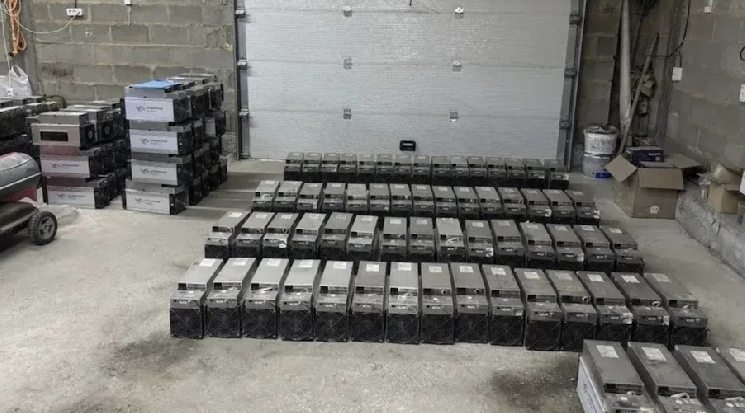
Russian hid 200 Bitcoin mining devices in workshops and private houses

In the Shelekhovsky district of Russia's Irkutsk region, a man has been accused of illegally mining cryptocurrency. According to investigators, from June to December of last year, he installed at least 100 mining devices in unspecified industrial premises in the city, connecting them to the power grid without paying for the electricity consumed, causing an estimated 29 million rubles in damages to the energy company. Additionally, the accused allegedly set up mining operations in private houses and outbuildings in the villages of Chistyye Klyuchi and Baklashi, deploying another 101 devices. While electricity at these locations was paid for, it was under a preferential residential tariff rather than the higher commercial rate required for cryptocurrency mining activities. This resulted in an additional calculated loss of 9 million rubles for the power supplier, bringing the total alleged damages to over 38 million rubles. During searches, law enforcement seized the mining equipment and an expensive car from the individual. The investigative committee reported that the accused has partially compensated for the damages. Notably, cryptocurrency mining has been banned across the entire Shelekhovsky district since 2025. In a separate case in Veliky Novgorod, police recently discovered nine covertly operating mining farms set up by four local residents through illegal grid connections, with damages estimated at over 18.6 million rubles.

cryptonews.ruHace 2 días 15:51

Russian hid 200 Bitcoin mining devices in workshops and private houses

cryptonews.ruHace 2 días 15:51

Citi Research Report Analysis: U.S. Proposed Ban on Chinese Optical Modules Has No Substantial Progress, Short-term Enforcement Faces Supply Constraints

Citi Report Analysis: U.S. Proposed Ban on Chinese Optical Modules Lacks Substantive Progress, Faces Supply Bottlenecks in Short Term. Reuters reported on August 4th that the U.S. government and FCC are considering a ban on Chinese optical modules. Citi's August 9th report clarifies that optical modules are not listed on any effective FCC ban. The FCC's Order 26-50 established two restricted list mechanisms (based on manufacturer and production location), but optical modules were only mentioned once, as an example in a disclosure requirement, not as a restricted product. The reported ban remains at a proposal stage. Citi estimates Chinese suppliers provide 60-70% of high-speed optical modules for U.S. hyperscalers. Non-Chinese suppliers cannot fill this gap in the short term, making the immediate implementation of a genuine ban unlikely. Future regulatory paths could be manufacturer-based (least likely), location-based covering all offshore production (strictest), or location-based covering only China (more feasible but with unresolved definitions). A ban would pressure U.S. AI infrastructure, conflicting with stated policy goals. Citi sees low near-term implementation probability, with the issue potentially becoming a negotiation chip in bilateral talks. U.S. domestic capacity build-out is a key long-term variable. Among Chinese companies, XSENS and Dongshan Precision have the highest U.S. exposure, while Tianfu Communication, as a passive component supplier, is relatively insulated. Citi maintains Buy ratings on all three with respective price targets. The conclusion is that Chinese modules are currently irreplaceable in the U.S. AI supply chain, creating a longer timeline for potential restrictions than the market may expect.

marsbit08/11 06:56

Citi Research Report Analysis: U.S. Proposed Ban on Chinese Optical Modules Has No Substantial Progress, Short-term Enforcement Faces Supply Constraints

marsbit08/11 06:56

活动图片