Will the US AI Bull Market Crash?
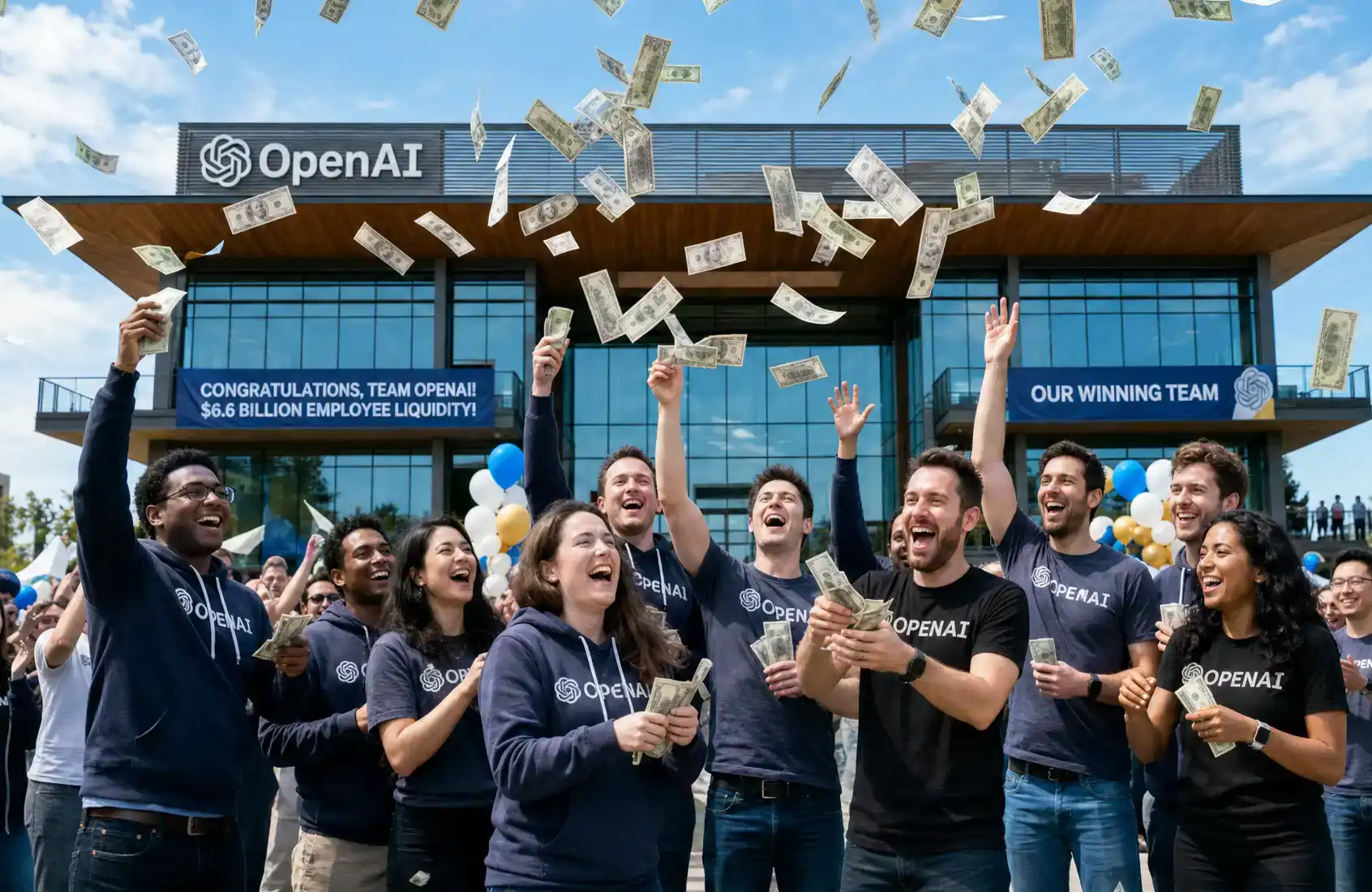
Will the U.S. AI bull market collapse? SoftBank has invested $34.6 billion in OpenAI, with Masayoshi Son selling stakes in Nvidia, Deutsche Telekom, Alibaba, and T-Mobile to fund it. He plans to invest another $30 billion this year, raising his stake to 13%, even taking on debt. This frenzy is driven by OpenAI's valuation surging to $852 billion in February, generating over $45 billion in paper gains for SoftBank. Similarly, Anthropic is reportedly negotiating funding at a $900 billion valuation, up from $61.5 billion a year ago.
The article draws a parallel to the dot-com bubble, comparing OpenAI and Anthropic to Yahoo. Back then, Yahoo's portal model seemed unassailable, but it was disrupted by more targeted services. Today, the core assumption is that all AI applications must rely on foundational models like OpenAI and Anthropic, making them permanent "toll booths" of the AI era. However, as AI becomes a ubiquitous utility, this "model-as-gateway" advantage may erode.
Financially, to justify trillion-dollar valuations with high P/E ratios (30-40x), these companies would need annual net profits of $25-30 billion, implying revenues of $50-80 billion. Current metrics like Annual Recurring Revenue (ARR)—$25 billion for OpenAI and $30 billion for Anthropic—are based on monthly subscription extrapolations and include promotional, less-sticky API usage. Aggressive price cuts on tokens to capture market share further squeeze margins.
A critical risk is that the entire AI industry's profitability depends on downstream applications generating substantial revenue. Currently, besides some coding and content assistance, no "killer app" has emerged to create massive new markets. If enterprises pause AI spending due to performance plateaus, economic downturns, or poor ROI, the foundation for these valuations could crumble.
Two potential outcomes are outlined: 1) A Yahoo-style crash where valuations collapse, companies downsize, and AI becomes a low-margin utility business. 2) A successful reinvention where companies find sustainable monetization, perhaps by replacing SaaS or achieving AGI. However, the market's impatience could trigger a downturn before such a breakthrough.
The article concludes that while AI will undoubtedly transform society as a fundamental infrastructure, the current speculative frenzy mirrors past bubbles. A correction wouldn't mean the end of AI but could remove financial hype, leading to more grounded integration into industries. The rapid rise warrants caution, as a collapse in trillion-dollar valuations could cause significant economic damage, surpassing the fallout from the dot-com bust.
marsbit05/29 09:11