The Biggest Trading Theme of 2026: A Trump Who Can't Afford to Lose, The End of the International Order

marsbitPublicado a 2026-01-12Actualizado a 2026-01-12

Resumen

In 2026, global markets face a paradigm shift driven by President Trump's political survival strategy ahead of the midterm elections. Facing a 20-point polling deficit, his administration is adopting aggressive deflationary measures—particularly by controlling energy resources to slash oil prices to $2.25 per gallon—to win the "affordability debate" and secure voter support. This includes leveraging Venezuela’s oil reserves, potentially crashing crude prices to $40–50, and undermining OPEC’s influence. Concurrently, Trump may deploy fiscal stimulus via "tariff rebates" of $2,000 for lower-income households, boosting consumer staples and reversing K-shaped economic trends. Geopolitically, these actions signal the end of the rules-based international order, elevating gold as a hedge and benefiting defense stocks, while emerging markets face heightened risk. The largest threat remains an AI-driven stock bubble; a 20–30% market correction could trigger recession and fiscal crisis, jeopardizing Trump’s re-election.

By: Xu Chao

Entering 2026, the global macro market is undergoing a profound paradigm shift. Senior analyst David Woo believes that, facing immense pressure from the midterm elections, the Trump administration is demonstrating a determination to reverse the situation at all costs, which will reshape the global asset pricing logic from energy to gold.

David Woo stated that to compensate for a severe polling deficit and avoid losing its majority in Congress, the Trump administration's policy focus has fully shifted to winning the "affordability" debate. This means the ultimate trading theme of 2026 will shift from simple reflation to aggressive deflationary measures—particularly by forcefully controlling energy resources to drastically lower oil prices, aiming to bring gasoline prices below a key psychological threshold before the election. This strategy aims not only to curb inflation but also to secure votes by improving the cost of living for the middle class.

Trump's recent actions regarding Venezuela mark the substantive end of the post-war rules-based international order. This move is not driven by ideological considerations but by the desire to directly control energy resources, hoping to win the domestic "affordability argument" by significantly increasing supply. Trump's goal is to push gasoline prices down to $2.25 per gallon by the fall, which will cause severe shocks to the crude oil market, with prices expected to fall to the $40 to $50 range.

Woo warns that as the U.S. abandons its traditional role as guarantor of the international system, global geopolitical insecurity will rise sharply, providing strong support for gold and benefiting the defense industry. Conversely, emerging market stocks will face valuation reassessment risks, as the safety premium for smaller economies will vanish in an era of returning power politics.

The Midterm Election He Can't Afford to Lose

David Woo's analysis points out that the biggest backdrop for the 2026 macro narrative is the midterm elections. Although Trump dominated market trends in 2025, his approval rating currently hovers around only 40%, representing a massive deficit of about 20 percentage points compared to historical patterns. For Trump, if the Republican Party loses control of Congress in November, his second term will descend into an endless nightmare of subpoenas and impeachment.

Therefore, the political theme for 2026 is "throw the kitchen sink."

White House Chief of Staff Susie Wiles has clearly stated that Trump's campaign intensity in 2026 will be equivalent to that of the 2024 presidential election year. This political survival pressure will directly dominate U.S. economic and foreign policy decisions, forcing the administration to adopt unconventional means to please voters, with the core lever being addressing the cost-of-living crisis.

A new structural bull market. Simultaneously, the market must be wary of the upcoming massive fiscal stimulus. Trump is expected to use tariff revenue to issue cash checks to middle- and low-income groups, which will put new upward pressure on long-end Treasury yields, fundamentally changing the macro liquidity environment of 2026.

New Energy Strategy: The Political Calculus of Lowering Oil Prices

To win the "affordability" debate, the Trump administration's fastest and most direct method is to lower oil prices. David Woo stated that the fundamental motive behind recent U.S. actions targeting Venezuela is not ideological export but to directly control the country's oil resources (accounting for 18% of global proven reserves), thereby increasing supply and suppressing global oil prices.

The goal of this strategy is to reduce U.S. gasoline prices to around $2.25 per gallon by September or October.

For the market, this means one of the core trades for 2026 is shorting crude oil.

David Woo predicts that crude oil prices could fall to the high $40s or even $50 range by year-end. This geopolitical move will make OPEC the biggest loser, significantly weakening its market control, while oil-importing countries like India and Japan will benefit.

Tariff Rebates and the Reversal of the K-Shaped Economy

Beyond lowering oil prices, another potential major move is large-scale fiscal stimulus. David Woo predicts a 65% probability that Trump will launch a new round of stimulus before the midterm elections. The specific path involves using the huge tariff revenue collected last year to issue "tariff rebate" checks of $2,000 each to Americans with annual incomes below $75,000.

To ensure the bill passes Congress, Trump might bundle this rebate plan with an extension of Obamacare subsidies, which Democrats care about, and bypass Senate obstruction using a Reconciliation Bill. This strategy aims to transform the victims of the tariff war (consumers) into beneficiaries, achieving a "win-win" in both geopolitics and the domestic economy.

This targeted stimulus for middle- and low-income groups, combined with increased disposable income from lower oil prices, will benefit retailers serving mass consumption (Consumer Staples) and may reverse the current market consensus on the "K-shaped" economic recovery, potentially changing the situation where only the wealthy have prospered.

The End of the International Order and the Gold Bull Market

The radical geopolitical measures taken by the U.S. to control oil prices send a clear signal to the world: the rules-based international order has ended. David Woo believes that when the world's most powerful nation decides to act solely on might rather than rules, the international system that previously protected the interests of small countries ceases to exist.

This shift has profound implications for asset allocation:

Short Emerging Market Stocks: In the new order lacking rule-based protection, small countries face higher geopolitical risks, invalidating the traditional "convergence trade" logic.

Long Defense Sector: Security anxieties will force countries to significantly increase defense spending.

Long Gold: As the U.S. ceases to act as the benevolent guarantor of the international order, the credibility foundation of the U.S. dollar as a reserve currency is eroded. Against a backdrop of widening deficits and rising geopolitical realism, gold will become a key asset for hedging against a disordered world, with potential upside of over 10% even without a dollar collapse.

The Biggest Risk: Stock Market and AI Bubble

Although Trump is trying to win over voters with livelihood policies, the stock market remains his "Achilles' heel."

David Woo warns that current high U.S. stock valuations are nearing levels seen during the internet bubble, and capital gains tax is a significant source of federal tax revenue. A 20%-30% drop in the stock market would not only trigger an economic recession but also cause the fiscal deficit to deteriorate sharply.

The biggest risk point in the market currently is the bursting of the AI bubble. Wall Street widely expects AI-related capital expenditure to grow another 50% in 2026, but increasingly fierce model competition, hardware bottlenecks, and future return rate issues are making this consensus fragile. If tech giants (like Microsoft) show any signs of slowing growth in their earnings reports, and retail investors stop buying the dip, the market could face a sharp correction, thereby threatening Trump's re-election plans.


Criptos en tendencia

Preguntas relacionadas

QAccording to David Woo, what is the ultimate trading theme for 2026 and what is its primary goal?

AThe ultimate trading theme for 2026 is shifting from reflation to aggressive deflationary measures, primarily by controlling energy resources to drastically lower oil prices. The primary goal is to win the 'affordability' debate by lowering gasoline prices to a key psychological level before the midterm elections, thereby securing votes.

QWhat specific action is cited as a sign of the end of the post-war rules-based international order, and what was its underlying motive?

AThe action cited is the Trump administration's move against Venezuela. Its underlying motive was not ideological but a pragmatic effort to directly control the country's substantial oil resources (18% of global proven reserves) in order to increase supply and lower global oil prices for domestic political gain.

QWhat are the three key asset allocation implications resulting from the end of the US-led international order, as outlined by David Woo?

AThe three key implications are: 1) Short emerging market equities, as small nations face higher geopolitical risk. 2) Long the defense sector, due to rising global security anxieties. 3) Long gold, as the dollar's reserve currency credibility is eroded, with potential for over 10% upside.

QWhat fiscal stimulus measure does David Woo predict has a 65% chance of being implemented before the midterms, and how would it work?

ADavid Woo predicts a 65% probability of a new stimulus package involving 'tariff rebate' checks. This would use revenue from previously imposed tariffs to send $2,000 checks to Americans earning under $75,000, potentially bundled with Obamacare subsidies to ensure passage through Congress.

QWhat does David Woo identify as the biggest risk to Trump's re-election plans and the market in 2026?

AThe biggest risk is a correction in the stock market, particularly the bursting of the AI bubble. High valuations, similar to the dot-com era, and a potential 20-30% drop could trigger a recession and worsen the fiscal deficit, threatening Trump's political survival.

Lecturas Relacionadas

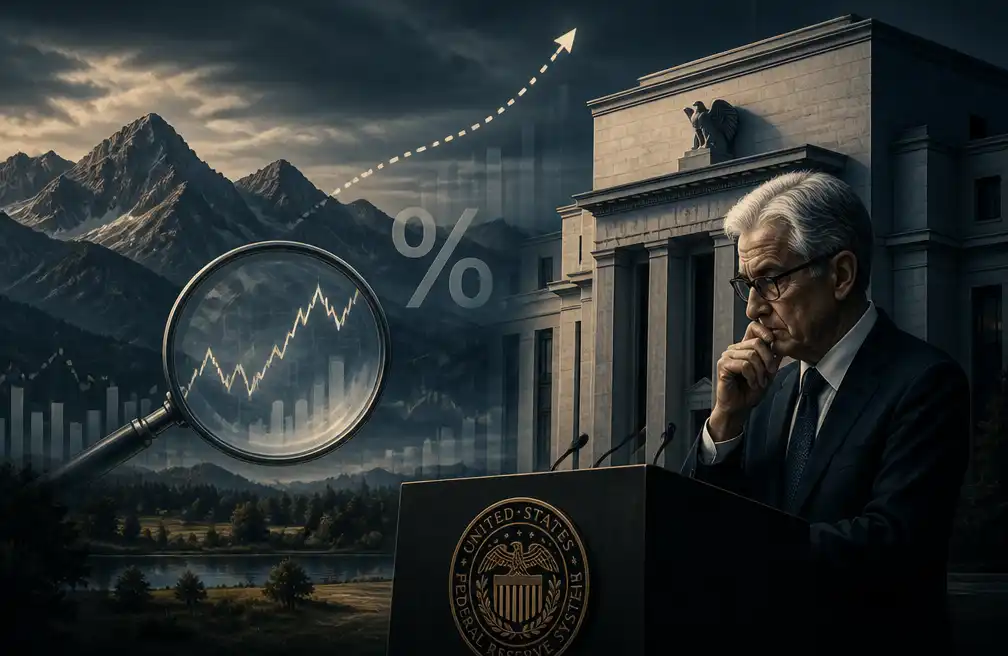
Jackson Hole Speech Preview: Is the Fed Seeking Justification for a Rate Hike?

"Jackson Hole Speech Preview: Is the Fed Looking for Reasons to Raise Rates?" Ahead of the key Jackson Hole symposium, Federal Reserve officials and the IMF are signaling heightened concern over persistent inflation, with some advocating for tighter policy. Boston Fed President Susan Collins, in a recent article, supported holding rates steady only if evidence of falling inflation continues. Otherwise, she argues for prompt tightening, noting inflation has been above target for over five years and warning that prolonged deviation could entrench consumer expectations. Although not a voting member this year, her stance aligns with several officials; three FOMC voters dissented in July, favoring a rate hike. Richmond Fed's Tom Barkin warned of a future "reckoning" regarding the $40 trillion public debt, while IMF Managing Director Kristalina Georgieva urged central banks to maintain a laser focus on price stability. The core dilemma lies in the sources of inflation: Trump-era tariffs, Middle East conflict-driven oil prices, and surging AI investment. Collins believes the first two factors are fading, but identifies AI infrastructure spending as exerting "upward pressure" on core goods inflation. The problem is that interest rate hikes primarily curb demand, not these supply-side shocks. Georgieva framed it as a "tug of war" between negative supply shocks from the Middle East and positive demand shocks from AI. Meanwhile, economic data shows strain. The August Consumer Confidence Index fell to a seven-month low of 89.4. While the present situation index improved, future expectations plummeted. Consumers expect higher inflation (5.8% vs. 5.6% last month), likely influenced by high gas prices. Other data points are weak: July retail sales saw the largest drop in over a year, and job growth stalled. Key upcoming events include the July PCE inflation data (expected to remain well above the 2% target) and new Fed Chair Kevin Warsh's first major speech at Jackson Hole. Market pricing remains conflicted, showing a high probability of a December hike but expecting no move in September. Gold prices, however, have surged over 7% to near three-month highs, signaling market anxiety.

marsbitHace 2 min(s)

Jackson Hole Speech Preview: Is the Fed Seeking Justification for a Rate Hike?

marsbitHace 2 min(s)

Today, HYPE Activates Its Second Buyback Engine

"Hyperliquid Activates Second Buyback Engine with AQAv2 Launch" On August 26th, Hyperliquid officially activated its Aligned Quote Assets v2 (AQAv2) mechanism, introducing a major new source of revenue and buyback power for its native token, HYPE. Unlike the existing revenue stream from trading fees, AQAv2 generates income by sharing approximately 90% of the adjusted reserve earnings from stablecoins (primarily USDC) circulating on the Hyperliquid chain. This income is settled every 30 days and automatically funneled into the Assistance Fund for HYPE buybacks, with the first expected distribution on October 3rd. Through a partnership with Circle (issuer of USDC) and Coinbase (treasury manager), Hyperliquid leverages its user base and financial infrastructure to share in the yield generated by stablecoin reserves. This transforms its liquidity and distribution capabilities into a scalable business model. Initial estimates project AQAv2 could generate $150-200 million in annual buyback funds, based on the current ~$6.43 billion USDC supply on Hyperliquid and an assumed reserve yield. Crucially, this revenue is weakly correlated with trading activity and grows directly with the platform's stablecoin adoption. With HYPE recently reaching an all-time high, AQAv2 provides a new fundamental support layer. It shifts Hyperliquid's value capture beyond just transaction fees, anchoring HYPE's long-term buyback potential to the expanding scale of its stablecoin ecosystem.

marsbitHace 6 min(s)

Today, HYPE Activates Its Second Buyback Engine

marsbitHace 6 min(s)

NVIDIA Earnings Preview: The Market No Longer Expects a Positive Surprise

NVIDIA's upcoming earnings report has seen market expectations shift from anticipating big positive surprises to seeking clarity on capital allocation and future growth sustainability. While analysts forecast Q2 revenue near doubling year-over-year to $92.18 billion, option markets are pricing in a relatively muted post-earnings stock move of around 5.4%—the lowest implied volatility in two years. This reflects a growing sense that the phase of massive AI-driven earnings beats and stock surges may be ending. This year, NVIDIA's stock has slightly underperformed the S&P 500 and significantly lagged the semiconductor index. Analysts now emphasize the need for more than just beating estimates. Key investor focuses include details on how NVIDIA will deploy its capital, maintain its exceptional gross margins amid rising costs, and use its substantial free cash flow for investments and share buybacks. The forward P/E ratio of about 21x suggests the market is already pricing in a growth deceleration. NVIDIA's recent strategic moves—like facilitating massive AI financing, guaranteeing loans for data center projects (including a major one for OpenAI), and investing in power infrastructure—have positioned it beyond a mere chipmaker. However, this raises questions about potential "circular financing," where revenue might be artificially supported by lending to customers. The health of its AI clients, like OpenAI which reported slowing revenue growth, is now crucial. The report arrives amid a challenging backdrop: political pushback against AI data centers, rising borrowing costs, and massive debt-funded spending by cloud giants. Investors are keenly watching for signals on the transition to the new Blackwell and upcoming Vera Rubin architectures and, ultimately, whether the explosive demand for AI is losing momentum.

marsbitHace 16 min(s)

NVIDIA Earnings Preview: The Market No Longer Expects a Positive Surprise

marsbitHace 16 min(s)

Saylor Pauses Bitcoin Purchases: The World's Largest Bitcoin Holder Is Transforming into a 'Digital Asset Bank'

Saylor's Strategy has paused its long-standing practice of buying Bitcoin, marking a significant shift for the world's largest corporate BTC holder. The company is now prioritizing capital structure management over accumulation. Strategy recently raised $2 billion by selling shares but purchased zero Bitcoin, directing funds instead to a new USD cash reserve, repaying preferred stock, and building its dollar liquidity pool. This follows a series of BTC sales in 2026, totaling around 6,916 coins, often at a loss, to meet its substantial annual dollar obligations of approximately $1.76 billion in dividends and interest payments. The core change is the adoption of a new "Digital Credit Capital Framework." Strategy is transforming from a leveraged Bitcoin proxy into a "digital asset bank." Its focus has shifted from simply increasing its BTC holdings to managing a balance sheet where Bitcoin acts as the reserve asset, common stock as equity, and preferred shares as liabilities. The goal is now to optimize the "Bitcoin per share" metric and maintain stability, even if it means selling BTC at a loss during market stress to protect its financial footing. The market appears to be re-evaluating Strategy, pricing it less as a volatile Bitcoin tracker and more as a capital management firm. Despite its recent sales, Bitcoin's price has surged, indicating Strategy's selling pressure is easily absorbed by broader market flows like ETF inflows. If successful, Strategy could emerge as a novel hybrid: a "Bitcoin bank." However, this path carries major risks, as sustained BTC prices below its average cost could steadily erode its financial safety net.

marsbitHace 46 min(s)

Saylor Pauses Bitcoin Purchases: The World's Largest Bitcoin Holder Is Transforming into a 'Digital Asset Bank'

marsbitHace 46 min(s)

U.S. Stock Market Trend (August 26th): NVIDIA Ends 7-Day Losing Streak, Storage and Optical Communications Rebound Across the Board

U.S. Stock Market Trends (August 26th): Nvidia Ends Seven-Day Losing Streak; Memory and Optical Communication Stocks Rebound Across the Board. On Tuesday, the three major U.S. stock indices closed higher. The tech-heavy Nasdaq gained 0.66% as declining long-term Treasury yields (the 10-year yield fell to 4.625%) provided a valuation relief window for growth stocks. The Philadelphia Semiconductor Index rose 1.44%. Nvidia shares gained 2.19%, ending a seven-session decline ahead of its closely-watched earnings report after Wednesday's close. Memory and optical communication stocks saw a broad rebound, with AMD, Marvell, and Micron among the notable gainers. The 'Magnificent Seven' were mixed, with Tesla being the sole decliner. Oil prices fell for a second consecutive day, with WTI crude dropping 2.4% to $85.01 per barrel. This followed a joint statement from Iran and Oman proposing a secure maritime channel in the Strait of Hormuz, signaling a potential de-escalation of regional tensions. Bitcoin briefly touched $80,000, while gold prices hit a three-month high. The simultaneous strength in both assets was driven by expectations of improved liquidity amid lower yields and persistent concerns about dollar credit. Market focus now shifts to Nvidia's earnings, with investors keenly awaiting guidance on Blackwell chip shipments, data center revenue, and signals on AI capital expenditure.

marsbitHace 1 hora(s)

U.S. Stock Market Trend (August 26th): NVIDIA Ends 7-Day Losing Streak, Storage and Optical Communications Rebound Across the Board

marsbitHace 1 hora(s)

Trading

Spot

Artículos destacados

Cómo comprar ORDER

¡Bienvenido a HTX.com! Hemos hecho que comprar Orderly (ORDER) sea simple y conveniente. Sigue nuestra guía paso a paso para iniciar tu viaje de criptos.Paso 1: crea tu cuenta HTXUtiliza tu correo electrónico o número de teléfono para registrarte y obtener una cuenta gratuita en HTX. Experimenta un proceso de registro sin complicaciones y desbloquea todas las funciones.Obtener mi cuentaPaso 2: ve a Comprar cripto y elige tu método de pagoTarjeta de crédito/débito: usa tu Visa o Mastercard para comprar Orderly (ORDER) al instante.Saldo: utiliza fondos del saldo de tu cuenta HTX para tradear sin problemas.Terceros: hemos agregado métodos de pago populares como Google Pay y Apple Pay para mejorar la comodidad.P2P: tradear directamente con otros usuarios en HTX.Over-the-Counter (OTC): ofrecemos servicios personalizados y tipos de cambio competitivos para los traders.Paso 3: guarda tu Orderly (ORDER)Después de comprar tu Orderly (ORDER), guárdalo en tu cuenta HTX. Alternativamente, puedes enviarlo a otro lugar mediante transferencia blockchain o utilizarlo para tradear otras criptomonedas.Paso 4: tradear Orderly (ORDER)Tradear fácilmente con Orderly (ORDER) en HTX's mercado spot. Simplemente accede a tu cuenta, selecciona tu par de trading, ejecuta tus trades y monitorea en tiempo real. Ofrecemos una experiencia fácil de usar tanto para principiantes como para traders experimentados.

330 Vistas totalesPublicado en 2024.12.10Actualizado en 2026.06.02

Cómo comprar ORDER

Discusiones

Bienvenido a la comunidad de HTX. Aquí puedes mantenerte informado sobre los últimos desarrollos de la plataforma y acceder a análisis profesionales del mercado. A continuación se presentan las opiniones de los usuarios sobre el precio de ORDER (ORDER).

活动图片