Hyperliquid to Launch Portfolio Margin: A Game-Changer or a Double-Edged Sword?

marsbitPublicado a 2025-12-16Actualizado a 2025-12-16

Resumen

Hyperliquid, a leading Perp DEX, is introducing portfolio margin on its testnet, a significant upgrade aimed at professional and institutional traders. This system unifies users' spot and perpetual accounts, calculating margin requirements based on net risk exposure rather than summing individual positions. It rewards hedging strategies by freeing up capital, potentially improving efficiency by over 30%, as seen in traditional finance. This move signals Hyperliquid's strategic shift towards courting capital-efficient institutional players, offering benefits like a unified account for seamless trading, automatic yield on idle assets, and a theoretical 3.35x increase in leverage. It aims to support complex strategies like delta-neutral trading and arbitrage, potentially improving liquidity and tightening spreads. However, the system amplifies risks inherent in DeFi's lender-of-last-resort absence. Higher efficiency means losses and liquidations can accelerate more quickly. In extreme market conditions, correlated crashes could cause hedges to fail simultaneously, rapidly expanding risk exposure. Furthermore, the liquidation of a large, leveraged unified account could trigger a multi-asset fire sale, potentially creating a cascading liquidation spiral across connected markets and even impacting integrated lending protocols within Hyperliquid's HyperEVM ecosystem. This innovation is a high-stakes gamble on attracting institutions and a severe test for DeFi's resilience.

Author: Jae, PANews

When Perp DEXs (decentralized perpetual contract exchanges) attempt to replicate Wall Street practices, a more efficient margin system could unleash both profits and risks.

The Perp DEX sector has become the most fiercely contested battlefield. While most players are still competing on fees and UI, leading protocol Hyperliquid has quietly raised its sights, targeting more professional institutional users.

On December 15, Hyperliquid announced the launch of a portfolio margin system, which is already live on the testnet. This is not merely a simple feature update but a fundamental restructuring of the capital efficiency and risk logic of on-chain derivatives trading, aiming to attract market makers and high-frequency trading institutions who have been 'spoiled' by CEXs (centralized exchanges).

However, in the DeFi market, which lacks a lender of last resort, higher efficiency often means greater risk. When a unified account is liquidated with one click during extreme market conditions, it could trigger an on-chain liquidation tsunami sweeping across multiple markets.

Capital Efficiency Can Increase by 30%, Boosting Hyperliquid's Institutional Transformation

Portfolio margin systems have existed on CEXs for years. The portfolio margin system launched by Hyperliquid is fundamentally different from common cross-margin or isolated margin modes. In standard cross-margin mode, the overall margin requirement for a portfolio is typically just the sum of the margin requirements for each independent position, failing to recognize the risk-hedging effects between positions.

In contrast, the portfolio margin system will unify a user's spot and perpetual contract accounts, adopting a settlement mechanism based on net risk exposure, setting margin requirements against the net risk of the entire portfolio.

This essentially rewards risk hedgers, freeing up capital from redundant collateral. For portfolios holding both long and short positions in the same underlying asset, due to the risk offsetting effect between positions, the overall margin requirement for the portfolio will be far lower than the sum calculated based on independent positions. Data from CEXs has long confirmed that portfolio margin systems can improve capital efficiency by over 30%. Industry insiders claim that a certain CEX known for its derivatives saw its trading volume double after introducing a portfolio margin system.
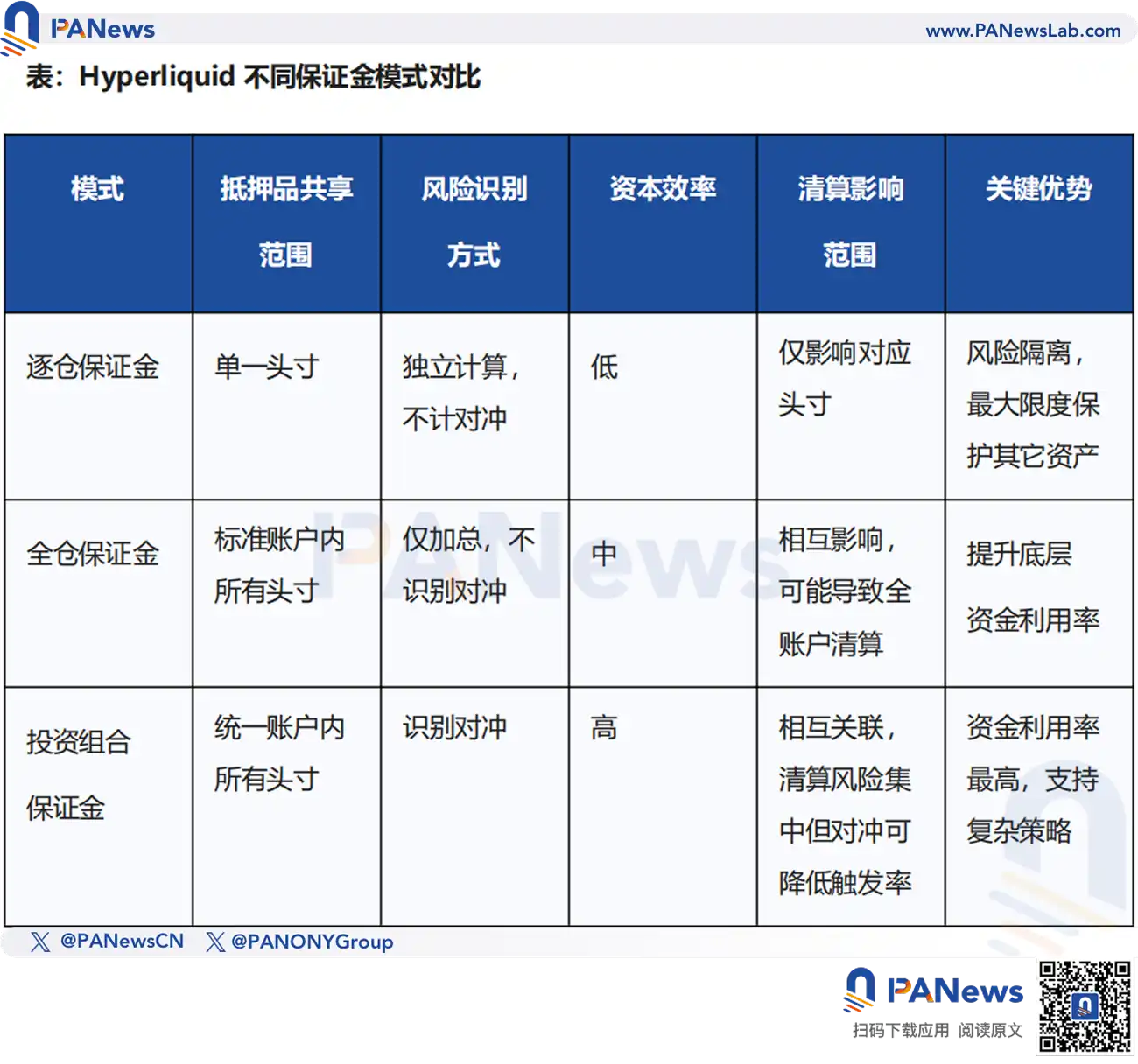
For Hyperliquid, launching this mechanism is a signal of its strategic shift: from competing for retail traffic to targeting the institutionally-focused market, which is extremely sensitive to capital efficiency. The portfolio margin system is also a crucial bargaining chip for Hyperliquid in the intense competition within the Perp DEX sector, aiming to attract market makers and high-frequency trading institutions by improving capital utilization.

However, Hyperliquid has shown a relatively cautious approach to developing the portfolio margin system. It will be launched in the Pre-Alpha phase on the testnet to ensure the robustness of the new feature. Currently, users can only borrow USDC, and the HYPE token is designated as the sole collateral.

This is, in fact, a risk-minimized launch path. The protocol validates the model with a single asset while strategically increasing the utility of the HYPE token, providing early liquidity bootstrapping and economic incentives for its native L1 ecosystem.

Hyperliquid officials stated that as the system matures, it will gradually expand the supported assets, including introducing USDH and BTC as collateral assets.

In the long run, Hyperliquid's portfolio margin system is highly scalable. It can not only extend to new asset classes through HyperCore but also support the creation of on-chain strategies. This suggests that the portfolio margin system may become the cornerstone for complex arbitrage and yield strategies within the HyperEVM ecosystem, injecting more vitality into the on-chain derivatives trading landscape.

Theoretical Leverage Capacity Increases 3.35x, Supporting Institutional-Grade Strategy Execution

The appeal of Hyperliquid's portfolio margin system will manifest in three dimensions, building an institutional-grade product closed-loop model:

  1. Seamless Trading Experience with Unified Account: Institutions will no longer need to manually allocate funds across multiple sub-accounts like spot and perpetual contracts. All assets are managed synchronously within a unified account, significantly simplifying operational processes, eliminating the friction and time loss of fund transfers, thereby reducing operational costs and improving the efficiency of high-frequency trading strategy execution.
  2. Automatic Yield Generation on Idle Assets: The portfolio margin system will also optimize the yield structure. Idle collateral will automatically generate interest within the system and can even be used as collateral to support short positions in perpetual contracts or execute arbitrage trades and other strategies, further optimizing the asset's income potential, achieving a "single asset, multiple utilities" capital stacking effect.
  3. Qualitative Leap in Leverage Capacity: Referring to similar systems in U.S. stock markets, the leverage multiple available to qualified investors can theoretically be increased by up to 3.35 times. This will also provide richer tool choices for institutions seeking larger nominal exposure and higher capital turnover rates.

In short, Hyperliquid can support not just a single strategy, but an institutional-grade strategy matrix. Strategies like long-short hedging, spot-futures arbitrage, and options combinations all require an optimized margin system as their foundation. However, executing similar strategies on-chain currently comes at a significant cost.

By attracting large institutions, Hyperliquid's on-chain order book is also expected to gain considerable trading depth, narrowing bid-ask spreads, further enhancing its competitiveness as an institutional-grade trading venue, creating a positive flywheel effect.

Behind Efficiency: Failed Hedges Can Morph into Liquidation Spirals

However, higher efficiency always resonates with greater risk. Especially in the DeFi market, which lacks a final backstop, portfolio margin could become an amplifier of systemic risk.

The primary risk lies in the potential for amplified losses and accelerated liquidations. While the portfolio margin system reduces requirements, it also means losses can be magnified equally. Although margin requirements decrease due to the offsetting effect of hedging positions, if the market moves adversely against the entire portfolio, user losses could rapidly exceed expectations.

The characteristic of the portfolio margin system is to concentrate all risk into a unified account for net settlement. But once the market experiences an irrational broad sell-off, causing less correlated assets to fall in unison, hedging strategies could fail instantly, leading to a rapid expansion of risk exposure. Compared to standard modes, the margin call mechanism for unified accounts typically requires traders to top up their margin in a much shorter time frame. In the highly volatile crypto market, a significantly compressed top-up window greatly increases the risk that users cannot deposit funds on-chain in time, leading to forced liquidation.

A deeper systemic risk is that the portfolio margin system could weave a web of cascading liquidations. The closing of positions in a unified account typically has a multi-market impact. When a highly leveraged unified account is liquidated, the system needs to simultaneously close all its involved spot and derivative positions. This type of large-scale, multi-asset automated selling can create immense pressure on multiple related markets within a short period, further depressing underlying prices, causing more accounts to fall below their maintenance margin requirements, thereby triggering a cascade of forced liquidations—a algorithm-driven liquidation spiral is thus formed.
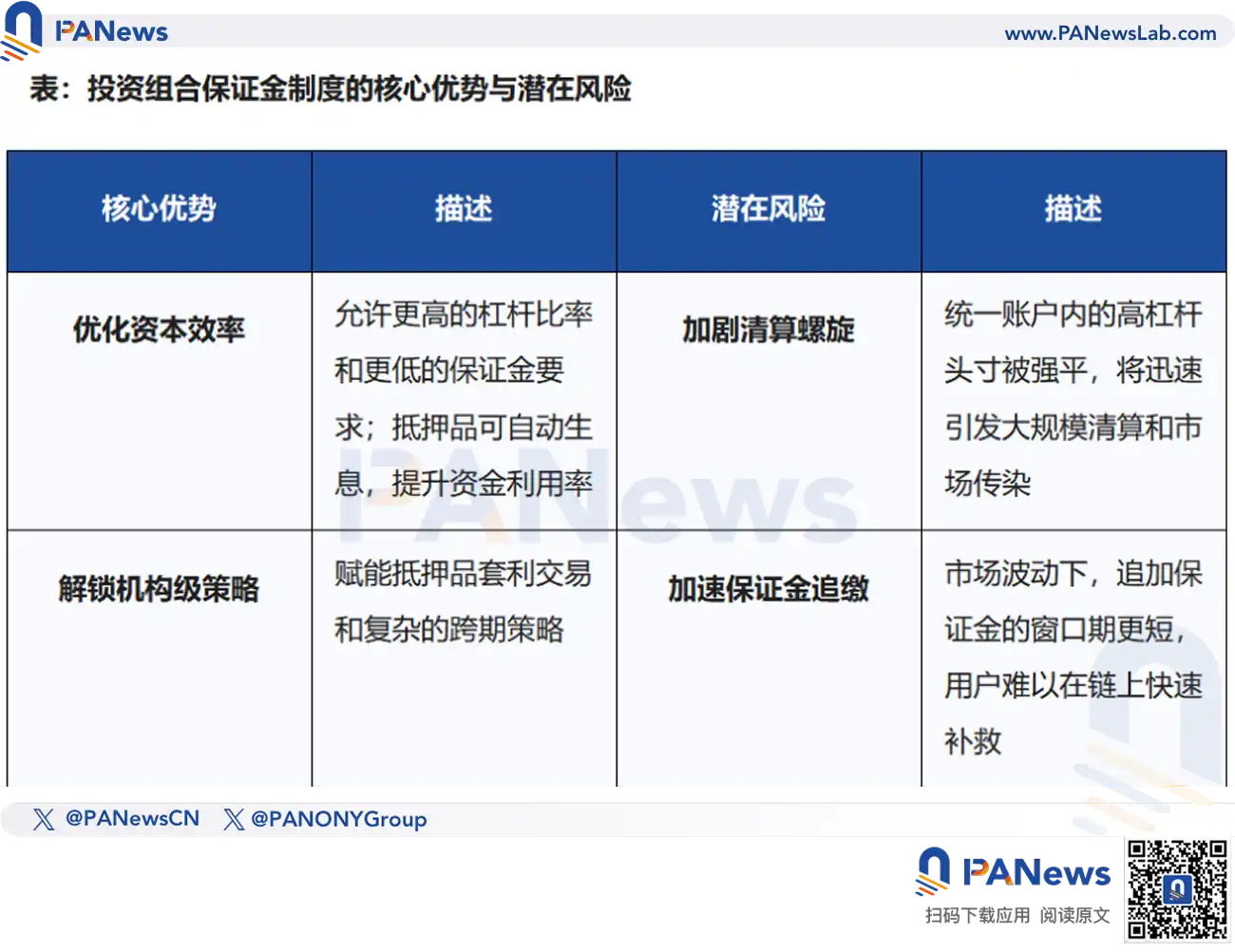
Equally important to note is that Hyperliquid's portfolio margin system will be deeply integrated with lending protocols within its HyperEVM ecosystem. The inherent interconnectedness of DeFi legos often has a strong risk传导 effect. This means that a sharp drop in the price of the underlying collateral could not only trigger liquidations at the trading layer on Hyperliquid but also spread through the collateral chain to the lending market, causing large-scale liquidity dry-ups or credit freezes.

Portfolio margin, this old path Wall Street has walked for decades, Hyperliquid is attempting to retrace it with blockchain code. It is Hyperliquid's bold gamble to advance into the institutional market, and it will also be an ultimate test of the DeFi system's resilience.


Preguntas relacionadas

QWhat is the main feature Hyperliquid is introducing, and what is its primary purpose?

AHyperliquid is introducing a portfolio margin system. Its primary purpose is to increase capital efficiency for users, particularly targeting institutional traders, by allowing risk offset across positions in a unified account, thereby reducing the total margin requirement and freeing up capital.

QHow does Hyperliquid's portfolio margin system differ from traditional cross-margin models?

AUnlike traditional cross-margin models that simply sum the margin requirements of each independent position, Hyperliquid's portfolio margin system uses a net risk exposure-based settlement mechanism. It recognizes the hedging effect between positions (e.g., long and short positions on the same underlying asset), significantly lowering the overall margin requirement for the portfolio.

QWhat are the potential benefits for institutional traders using Hyperliquid's new system?

AThe benefits include: 1) A seamless trading experience with a unified account for spot and perpetual contracts, simplifying operations. 2) Automatic yield generation on idle collateral assets. 3) A theoretical increase in leverage capability by up to 3.35x, supporting complex strategies like hedging, arbitrage, and options strategies.

QWhat are the key risks associated with implementing a portfolio margin system in DeFi?

AThe key risks are: 1) Amplified losses and accelerated liquidation if the market moves against the entire portfolio, especially if correlated assets move together and hedging fails. 2) The potential for a systemic 'liquidation spiral,' where the forced liquidation of a large, leveraged unified account could trigger multi-market sell-offs, impacting prices and causing cascading liquidations across the platform and connected DeFi protocols.

QHow is Hyperliquid mitigating risks during the initial rollout of its portfolio margin feature?

AHyperliquid is taking a cautious approach by launching the feature in a Pre-Alpha phase on its testnet. Initially, it will only support borrowing USDC and using the HYPE token as the sole collateral asset. This minimizes risk by testing the model with a single asset and also helps bootstrap liquidity for its native L1 ecosystem. The plan is to gradually add more assets like USDH and BTC as the system matures.

Lecturas Relacionadas

You Bet on the News, the Pros Read the Rules: The True Cognitive Gap in Losing Money on Polymarket

The article explains that the key to profiting on Polymarket, a prediction market platform, lies not just predicting real-world events correctly, but in meticulously understanding the specific rules that govern how each market will be resolved. It illustrates this with examples, such as a market on Venezuela's 2026 leader, where the official rules defining "officially holds" the office overruled the intuitive answer of who was in practical control. Other examples include debates over the definition of a "token" or what constitutes an "agreement." The core argument is that a "reality vs. rules" gap creates pricing discrepancies that savvy traders ("车头" or "whales") exploit. The platform has a formal dispute resolution process managed by UMA token holders to settle ambiguous outcomes. This process involves proposal submission, a challenge window, a discussion period, and a final vote. However, the article highlights a critical flaw in this system compared to a traditional court: the lack of separation between the arbiters (UMA voters) and the interested parties (traders with financial stakes in the outcome). This conflict of interest undermines the discussion phase, leads to herd mentality, and results in opaque final decisions without explanatory rulings. Consequently, the system lacks a body of precedent, making it difficult for users to learn from past disputes. The ultimate takeaway is that success on Polymarket requires a lawyer-like scrutiny of the rules to identify and capitalize on the cognitive gap between how events appear and how they are contractually defined for settlement.

marsbitHace 20 min(s)

You Bet on the News, the Pros Read the Rules: The True Cognitive Gap in Losing Money on Polymarket

marsbitHace 20 min(s)

Will the Fed Still Cut Interest Rates? Tonight's Data Is Crucial

The core debate surrounding the Federal Reserve's potential interest rate cuts is intensifying amid geopolitical conflict and rebounding inflation. The key question is whether high energy prices will cause persistent inflation or weaken consumer demand enough to force the Fed to cut rates. Citigroup presents a bullish case for cuts, arguing that oil supply disruptions from the Strait of Hormuz are temporary and will not lead to lasting inflationary pressure. They point to receding bond yields and oil prices as evidence the market is pricing in a short-lived shock. Citi's data also shows tightening financial conditions, a stabilizing labor market, and healthy tax returns, supporting their view that the path to lower rates remains open. Conversely, Deutsche Bank offers a starkly contrasting, more hawkish outlook. They argue the Fed's current policy is already neutral and expect rates to remain unchanged indefinitely. Their view is based on stalled disinflation progress and a shift toward more hawkish rhetoric from key Fed officials like Waller, who cited risks from prolonged Middle East conflict and tariffs. Other officials, including Williams and Hammack, signaled rates would likely stay on hold for a "considerable time." The market pricing has shifted dramatically, now forecasting zero cuts in 2026. The imminent release of the March retail sales "control group" data is highlighted as a critical test. This metric, which excludes gas station sales, will reveal if high gasoline prices are eroding consumer spending in other areas. A weak reading could support the case for imminent rate cuts, while a strong one would bolster the argument for the Fed to hold steady. This data is pivotal for determining the near-term policy path.

marsbitHace 41 min(s)

Will the Fed Still Cut Interest Rates? Tonight's Data Is Crucial

marsbitHace 41 min(s)

Trading

Spot
Futuros

Artículos destacados

Cómo comprar MANTRA

¡Bienvenido a HTX.com! Hemos hecho que comprar Mantra (MANTRA) sea simple y conveniente. Sigue nuestra guía paso a paso para iniciar tu viaje de criptos.Paso 1: crea tu cuenta HTXUtiliza tu correo electrónico o número de teléfono para registrarte y obtener una cuenta gratuita en HTX. Experimenta un proceso de registro sin complicaciones y desbloquea todas las funciones.Obtener mi cuentaPaso 2: ve a Comprar cripto y elige tu método de pagoTarjeta de crédito/débito: usa tu Visa o Mastercard para comprar Mantra (MANTRA) al instante.Saldo: utiliza fondos del saldo de tu cuenta HTX para tradear sin problemas.Terceros: hemos agregado métodos de pago populares como Google Pay y Apple Pay para mejorar la comodidad.P2P: tradear directamente con otros usuarios en HTX.Over-the-Counter (OTC): ofrecemos servicios personalizados y tipos de cambio competitivos para los traders.Paso 3: guarda tu Mantra (MANTRA)Después de comprar tu Mantra (MANTRA), guárdalo en tu cuenta HTX. Alternativamente, puedes enviarlo a otro lugar mediante transferencia blockchain o utilizarlo para tradear otras criptomonedas.Paso 4: tradear Mantra (MANTRA)Tradear fácilmente con Mantra (MANTRA) en HTX's mercado spot. Simplemente accede a tu cuenta, selecciona tu par de trading, ejecuta tus trades y monitorea en tiempo real. Ofrecemos una experiencia fácil de usar tanto para principiantes como para traders experimentados.

268 Vistas totalesPublicado en 2026.03.04Actualizado en 2026.03.04

Cómo comprar MANTRA

Cómo comprar OPN

¡Bienvenido a HTX.com! Hemos hecho que comprar Opinion (OPN) sea simple y conveniente. Sigue nuestra guía paso a paso para iniciar tu viaje de criptos.Paso 1: crea tu cuenta HTXUtiliza tu correo electrónico o número de teléfono para registrarte y obtener una cuenta gratuita en HTX. Experimenta un proceso de registro sin complicaciones y desbloquea todas las funciones.Obtener mi cuentaPaso 2: ve a Comprar cripto y elige tu método de pagoTarjeta de crédito/débito: usa tu Visa o Mastercard para comprar Opinion (OPN) al instante.Saldo: utiliza fondos del saldo de tu cuenta HTX para tradear sin problemas.Terceros: hemos agregado métodos de pago populares como Google Pay y Apple Pay para mejorar la comodidad.P2P: tradear directamente con otros usuarios en HTX.Over-the-Counter (OTC): ofrecemos servicios personalizados y tipos de cambio competitivos para los traders.Paso 3: guarda tu Opinion (OPN)Después de comprar tu Opinion (OPN), guárdalo en tu cuenta HTX. Alternativamente, puedes enviarlo a otro lugar mediante transferencia blockchain o utilizarlo para tradear otras criptomonedas.Paso 4: tradear Opinion (OPN)Tradear fácilmente con Opinion (OPN) en HTX's mercado spot. Simplemente accede a tu cuenta, selecciona tu par de trading, ejecuta tus trades y monitorea en tiempo real. Ofrecemos una experiencia fácil de usar tanto para principiantes como para traders experimentados.

251 Vistas totalesPublicado en 2026.03.05Actualizado en 2026.03.05

Cómo comprar OPN

Cómo comprar CFG

¡Bienvenido a HTX.com! Hemos hecho que comprar Centrifuge (CFG) sea simple y conveniente. Sigue nuestra guía paso a paso para iniciar tu viaje de criptos.Paso 1: crea tu cuenta HTXUtiliza tu correo electrónico o número de teléfono para registrarte y obtener una cuenta gratuita en HTX. Experimenta un proceso de registro sin complicaciones y desbloquea todas las funciones.Obtener mi cuentaPaso 2: ve a Comprar cripto y elige tu método de pagoTarjeta de crédito/débito: usa tu Visa o Mastercard para comprar Centrifuge (CFG) al instante.Saldo: utiliza fondos del saldo de tu cuenta HTX para tradear sin problemas.Terceros: hemos agregado métodos de pago populares como Google Pay y Apple Pay para mejorar la comodidad.P2P: tradear directamente con otros usuarios en HTX.Over-the-Counter (OTC): ofrecemos servicios personalizados y tipos de cambio competitivos para los traders.Paso 3: guarda tu Centrifuge (CFG)Después de comprar tu Centrifuge (CFG), guárdalo en tu cuenta HTX. Alternativamente, puedes enviarlo a otro lugar mediante transferencia blockchain o utilizarlo para tradear otras criptomonedas.Paso 4: tradear Centrifuge (CFG)Tradear fácilmente con Centrifuge (CFG) en HTX's mercado spot. Simplemente accede a tu cuenta, selecciona tu par de trading, ejecuta tus trades y monitorea en tiempo real. Ofrecemos una experiencia fácil de usar tanto para principiantes como para traders experimentados.

252 Vistas totalesPublicado en 2026.03.19Actualizado en 2026.03.19

Cómo comprar CFG

Discusiones

Bienvenido a la comunidad de HTX. Aquí puedes mantenerte informado sobre los últimos desarrollos de la plataforma y acceder a análisis profesionales del mercado. A continuación se presentan las opiniones de los usuarios sobre el precio de A (A).

活动图片