Going All-In on Arc: Circle Is Making a High-Stakes Gamble It Can't Afford to Lose

比推Publicado a 2026-01-09Actualizado a 2026-01-09

Resumen

Circle, the issuer of USDC, is launching its own Layer 1 blockchain called Arc to address challenges in the stablecoin industry, particularly as interest rate cuts threaten its revenue model. Arc is designed for enterprise cross-border payments using stablecoins, offering sub-second finality, configurable privacy options, and transaction fees paid in USDC to avoid crypto volatility. It aims to reduce reliance on interest income and expand distribution channels. Despite partnerships with major firms like BlackRock and Visa, Arc faces competition from Tether and Stripe's Tempo, as well as challenges in attracting liquidity and regulatory scrutiny over privacy features. Circle's established reputation and payment network provide a competitive advantage, but the success of Arc is critical amid a shifting economic landscape.

Author: Prathik Desai

Original Title: Circle Draws an Arc, Can it address the rate-cut problem?

Compiled and Edited by: BitpushNews


The year is 2026. When we make video calls with people around the world, the delay is at most a second or two, with marginal costs close to zero. However, when it comes to transferring funds between institutions, countries, or systems, we still face deadlines, exorbitant fees, and reliance on settlement windows that close on weekends.
Cryptocurrency promised to solve this problem with stablecoins, which have been around for over a decade. Yet, despite the significant, quantifiable savings stablecoins can bring, businesses and commercial institutions have not fully embraced them for fund transfers.

We have discussed this issue before, and how the inherent privacy concerns in public blockchains become a barrier here. We also listed privacy infrastructure as the number one cryptocurrency theme to watch in 2026.

Stablecoin issuer Circle has seized this opportunity with its Layer 1 blockchain, Arc, to address the industry's demand for privacy and stablecoin infrastructure.

In this in-depth analysis, I will explain why Circle is building an L1 blockchain now, what its biggest challenges are, and how this move could change the stablecoin ecosystem.

The story begins......

Why Launch an L1 Blockchain Now?

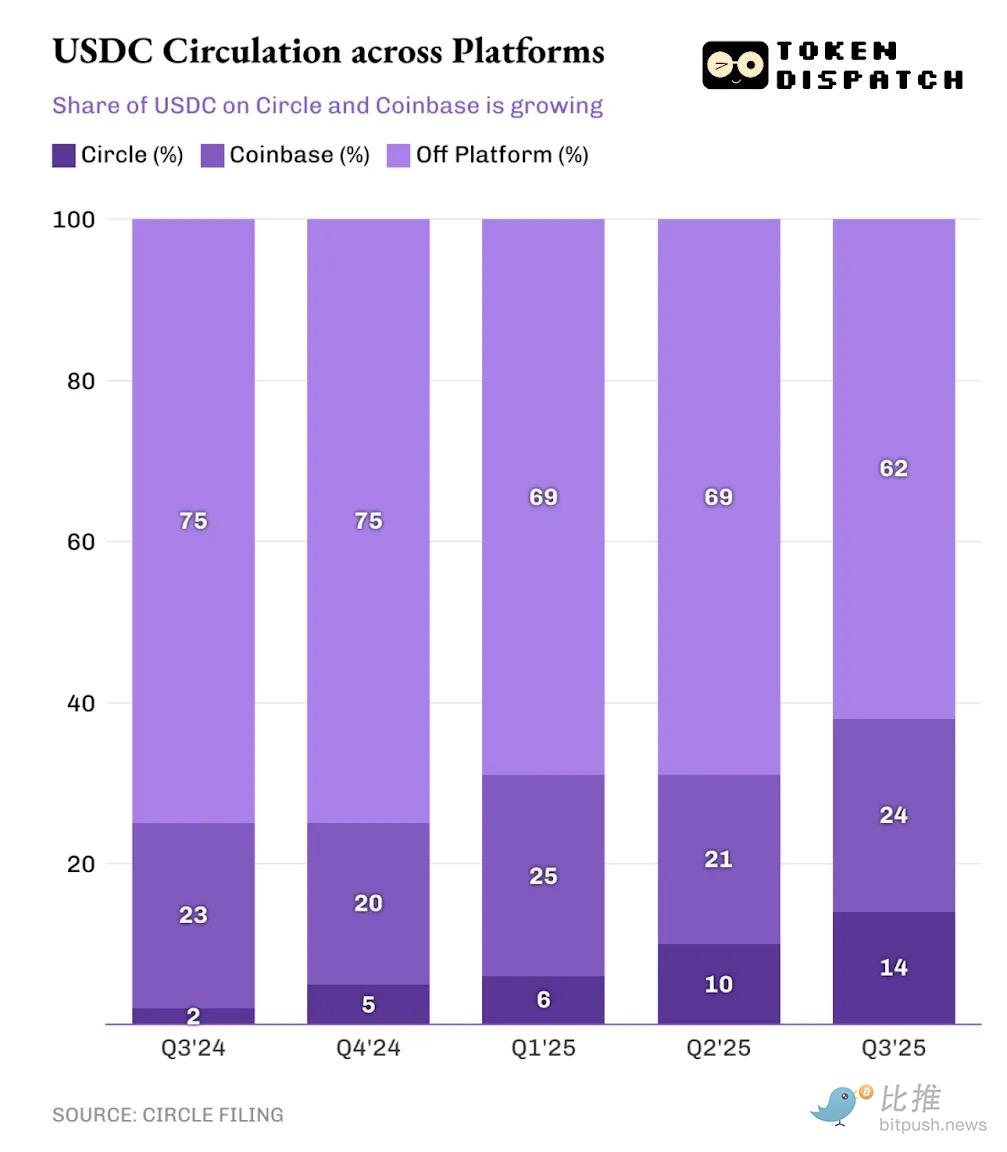
Currently, the stablecoin issuance business is entirely driven by interest income and heavily reliant on distribution channels. This has become clearer since the company went public last June, through the public reports of the USDC issuer.
I mentioned last year:

> In the third quarter, although the circulation of USDC increased by more than 100% year-over-year, reserve income only grew by 66%, reaching $711 million. The rest was offset by the Federal Reserve's interest rate cuts. The average yield dropped by 96 basis points, resulting in a $122 million reduction in Circle's reserve income.

> For every $1 of reserve income Circle earned in Q3, it spent over 60 cents on distribution and transaction costs, including wallet integrations, exchange listings, incentive programs, and revenue sharing.
The U.S. Federal Reserve has begun cutting interest rates. In December 2025, it lowered the effective rate by 25 basis points to 3.50%–3.75%. The central bank also announced the cessation of quantitative tightening effective December 1st.

Recently, the U.S. economy has also been signaling to policymakers that it's time to soften their stance in response to disappointing data.

The U.S. Institute for Supply Management's Manufacturing Purchasing Managers' Index (PMI) for December 2025 was 47.9 (a reading below 50 indicates contraction), marking the 10th consecutive month of contraction. The December employment report will be released later today, but data from the past few months has been lackluster.

When you put all this together, it explains why Circle is desperately pivoting to a new business model.

The issuer wants to reduce its reliance on falling short-to-mid-term interest rates while building a second engine that can rely on broader, more diversified distribution.

The Arc Transformation

Arc is the transformation Circle is betting on.

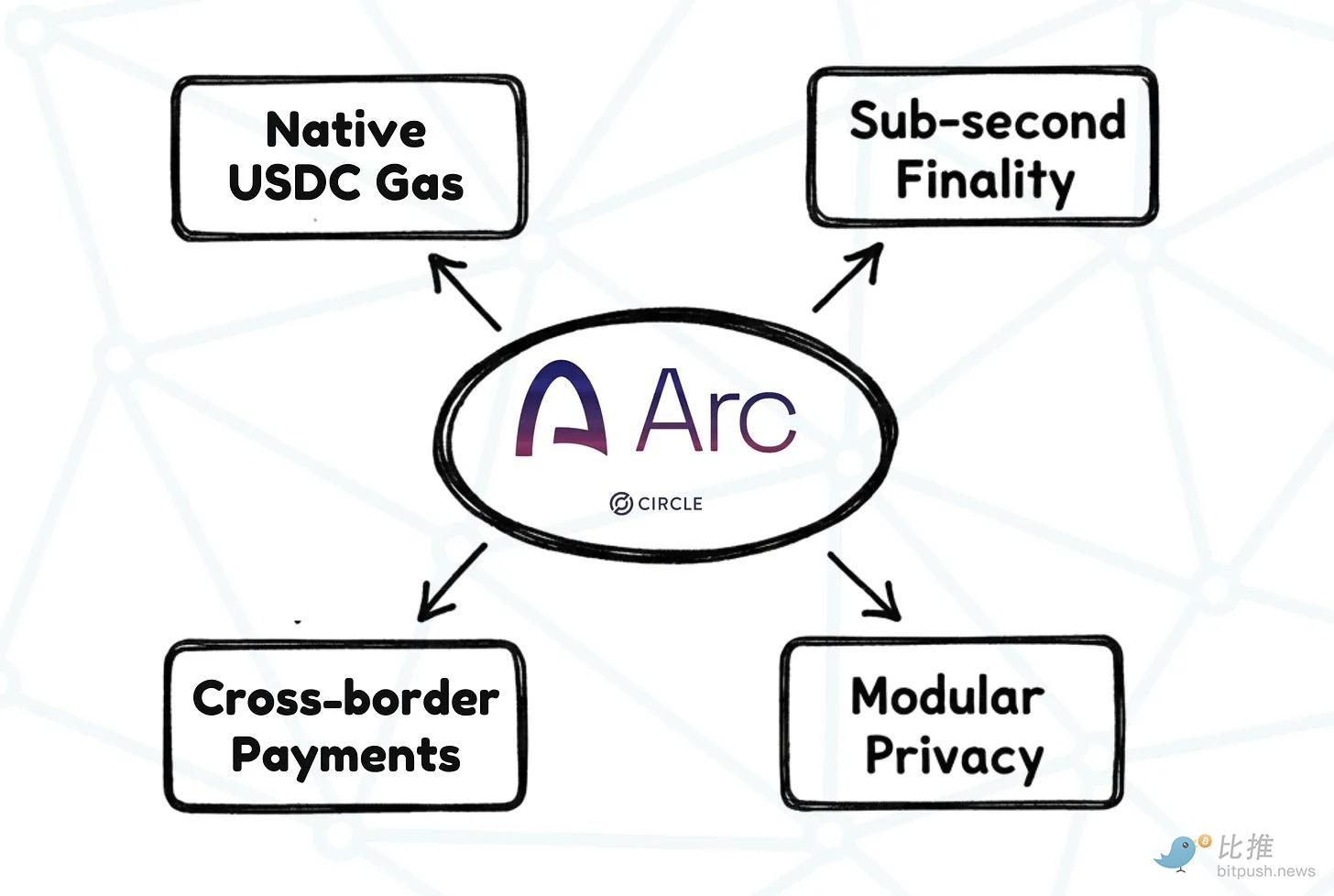
Circle built Arc as an open Layer 1 blockchain designed for cross-border enterprise payments via stablecoins. It also aims to provide sub-second finality (transaction confirmation speed) and configurable privacy options, masking enterprises' confidential payment data through opt-in privacy features.

By transitioning from a stablecoin issuer to a stablecoin settlement stack operator, Circle aims to build its business model around moving money the way enterprises care about.

In its testnet phase, Circle's Arc has already established partnerships with over 100 companies, including traditional finance and tech giants like BlackRock, Amazon Web Services, HSBC, Standard Chartered, and Visa.

Although Arc is still in the testnet phase and will face a series of challenges before it succeeds (which I will discuss later), I find this move interesting given its timing and the problem it aims to solve.

First, it charges Gas fees (network transaction fees) natively in its own token. Arc is designed to charge low, predictable, and USD-denominated transaction fees in USDC. This eliminates the need for corporate treasury departments to hold ETH, SOL, or any other cryptocurrency just to pay transaction fees.

Second, Arc offers sub-second finality and a 24/7 settlement window. CFOs don't care about shaving off milliseconds like traders do, but they will lose sleep if a payment doesn't settle after they hit "send" because it's the weekend or due to a cross-border intermediary chain.

Third, and perhaps most importantly, is the configurable privacy Arc offers. By explicitly providing opt-in privacy features, it bridges the gap between the built-in transparency of public blockchains and enterprises' need to ensure the confidentiality of sensitive information, such as B2B supplier invoices, fund transfers, and payroll settlements.

The most interesting part is that all these features do not require stakeholders to buy into cryptocurrency ideology. Instead, Arc removes the crypto traits enterprises dislike, such as absolute transparency, fee volatility, and uncertain settlement, enabling blockchain usage in mainstream commerce.

But couldn't Circle build these features on an existing chain? Why build its own blockchain?

Circle has always been "renting the venue." On someone else's chain, Circle would be forced to inherit their fee token, compete with other players for network resources and face congestion, follow their governance rules, and be subject to their network downtime risks. It would also lose an entire revenue stream by not being able to collect fees in USDC. Circle already pays distribution costs to expand USDC's reach on other platforms. By launching its own chain, it hopes to "own the venue" and earn "rent" by offering "space" to everyone using its infrastructure.

However, this is not a race that will be easily won. Circle has no shortage of competitors watching closely.

On the issuer side, Tether remains the biggest threat, with the highest liquidity globally. It has also launched the regulation-friendly stablecoin USAT to strengthen its presence in the U.S. market.

Beyond issuers, players like Stripe pose a threat, building something similar to what Circle is doing with Arc.

In September 2025, Stripe and Paradigm announced Tempo, a payment-first blockchain built around stablecoins. Tempo's architecture allows paying Gas fees with any stablecoin and similarly aims for sub-second finality.

Besides external threats, many things could go wrong with Arc itself.

It might face cold-start difficulties in attracting liquidity and developers. Enterprises won't choose Circle's Arc just because it looks best on paper. Many are already using traditional payment platforms like PayPal and would prefer platforms that already have counterparties and integration services.

Arc's "configurable privacy" will be a contentious topic. The opt-in feature gives enterprises what they want, but it will also draw regulatory scrutiny. Arc must prove to the market that privacy here means "commercial confidentiality with auditability," not just a blind spot that could create new vulnerabilities.

Despite these hurdles, I am optimistic about Circle's opportunity for two reasons.

First is its distribution channels and reputation. Circle doesn't need to prove to the market that USDC is a real dollar token. It's already embedded in countless exchanges, wallets, fintech processes, and increasingly in institutional pipelines. Now a public company, Circle's initiatives look different from any other crypto company. Its public reputation lends credibility to its launches. It also forces Circle to build Arc in a way that can be explained clearly to the compliance and finance teams in boardrooms.

Second is the Circle payment network. Combined with Arc, it can build a network of institutions and payment channels executing real-world transactions within a compliance framework.

Arc could still fail. But does it have any other choice? With the rate-cut era officially here and more cuts likely in the new year, this is the only logical move for an issuer facing intense competition.


Twitter:https://twitter.com/BitpushNewsCN

Bitpush TG Discussion Group:https://t.me/BitPushCommunity

Bitpush TG Subscription: https://t.me/bitpush

Original article link:https://www.bitpush.news/articles/7601422

Criptos en tendencia

Preguntas relacionadas

QWhy is Circle launching its own Layer 1 blockchain called Arc?

ACircle is launching Arc to reduce its reliance on interest rate-driven revenue from stablecoin issuance and to create a new business model focused on enterprise-grade cross-border payments with features like sub-second finality, configurable privacy, and USDC-denominated gas fees.

QWhat are the main challenges that Circle's Arc blockchain might face?

AArc may face challenges including attracting liquidity and developers, competing with established players like Tether and Stripe, overcoming enterprise reliance on traditional payment platforms, and addressing regulatory scrutiny over its configurable privacy features.

QHow does Arc aim to address enterprise concerns about using blockchain for payments?

AArc addresses enterprise concerns by offering sub-second finality for 24/7 settlement, USDC-denominated fees to avoid crypto volatility, and configurable privacy options to protect sensitive business data while maintaining auditability.

QWhat competitive threats does Circle face with the launch of Arc?

ACircle faces competition from Tether, which dominates stablecoin liquidity and has launched a regulatory-friendly USDT variant, as well as from Stripe's Tempo blockchain, which also focuses on stablecoin payments with fast finality and flexible gas fees.

QWhy is Circle's shift to a blockchain model considered urgent?

AThe shift is urgent because the Federal Reserve has begun cutting interest rates, which directly reduces Circle's revenue from USDC reserves, forcing the company to diversify its business model and reduce dependency on rate-sensitive income.

Lecturas Relacionadas

STAR 50 Soars 10.73%, Why Did A-Shares Stage a "V-Shaped Reversal"?

After a prolonged decline, the Chinese A-share market staged a strong rally on July 21. The STAR 50 index surged 10.73%, its largest single-day gain in nearly a year, leading a broad-based "V-shaped" reversal. The Shanghai Composite Index rose 1.79%, the Shenzhen Component Index gained 4.81%, and the ChiNext Index jumped 7.05%. Total market turnover reached 2.97 trillion yuan, an increase of 256.1 billion yuan from the previous session, with over 3,100 stocks advancing. The semiconductor sector spearheaded the rebound, with related ETFs posting significant gains. Analysts attribute the surge to three converging factors. First, coordinated capital inflows from "national team" institutions, insurance funds, listed company buybacks, and fund house self-purchases have bolstered market liquidity and confidence. Second, supportive policy signals, including commitments from regulators to ensure stable market operations, provided a favorable backdrop. Third, a stabilization and recovery in overseas markets, notably South Korea, created a positive external environment. Institutions suggest the most severe panic selling phase for the tech sector has likely passed, following a significant digestion of crowded positions and leveraged funds. While short-term volatility may persist, the medium to long-term outlook remains underpinned by enduring trends like AI computing demand expansion and semiconductor localization. The market's focus now shifts to the sustainability of supportive fund flows, earnings reports, and upcoming catalysts from the global AI industry chain.

marsbitHace 6 min(s)

STAR 50 Soars 10.73%, Why Did A-Shares Stage a "V-Shaped Reversal"?

marsbitHace 6 min(s)

U.S. Tech Momentum Stocks Post Largest Single-Day Gain Ever, But Is the Plunge Over?

US tech momentum stocks staged a sharp rebound on Tuesday (July 21st). Morgan Stanley's TMT Momentum Factor surged over 12%, marking its largest single-day gain on record, exceeding even peaks from the 2000 dot-com bubble. Key momentum indices from Goldman Sachs also posted their strongest daily performances in years. The rally was led by semiconductors, with the Philadelphia Semiconductor Index jumping 4.6%. This rebound followed three consecutive down days and a cumulative 33% plunge in momentum stocks, one of the steepest drawdowns since the dot-com era. Analysts attribute the surge largely to a short squeeze. Heavy selling had pushed high-beta momentum stocks into deeply oversold territory, forcing many short sellers, particularly in Asia, to cover their positions, creating a self-reinforcing buying spiral. However, the rebound's internals appear weak. Trading volume was notably low, and advancing stocks still lagged decliners on the S&P 500, indicating a narrow, concentrated rally rather than broad market participation. Diverging views emerge on the outlook. BTIG warns the bounce has hit key resistance and recommends selling into strength, citing extreme volatility and historical parallels to past market tops. Conversely, Goldman Sachs and UBS believe the momentum unwind is nearing its end, suggesting it may be time to gradually add exposure, as positioning has been significantly reduced. They caution, however, that high volatility warrants a measured approach, potentially using defined-risk strategies. The upcoming earnings season, particularly reports from major tech firms like Alphabet, is seen as a critical test for the rally's sustainability. Simultaneously, bond markets flashed a warning, with yields rising partly due to spiking oil prices. Analysts note that if long-term Treasury yields break decisively higher, it could pose a significant headwind for equities, especially growth stocks.

marsbitHace 13 min(s)

U.S. Tech Momentum Stocks Post Largest Single-Day Gain Ever, But Is the Plunge Over?

marsbitHace 13 min(s)

U.S. Tech Momentum Stocks Record Largest Single-Day Gain Ever, but Has the Rout Ended?

U.S. tech momentum stocks staged a dramatic rebound on Tuesday, July 21st. Key momentum indices like the Morgan Stanley TMT Momentum Factor and Goldman Sachs' High Beta Momentum Long Index posted historic or near-historic single-day gains, fueled largely by semiconductor stocks. This sharp rally followed a severe three-day sell-off that saw momentum stocks plunge 33%, marking one of the steepest pullbacks since the dot-com bubble. Analysts attribute the bounce primarily to a short squeeze, as forced covering from over-leveraged traders, particularly in Asia, created a buying spiral. However, the rally's health is questioned due to weak market breadth—overall trading volume was low, and decliners outnumbered advancers in the S&P 500 despite the index's gain—suggesting a narrow, concentrated surge rather than broad recovery. Opinions on the sustainability diverge. BTIG strategists warn the rebound has hit key resistance levels, citing extreme volatility and historic stock dispersion as signs of an ongoing broader correction, and recommend selling into strength. Conversely, Goldman Sachs and UBS view the aggressive momentum unwinding as nearing its end, noting reduced positioning and a lack of new fundamental catalysts. They suggest the sell-off presents a selective opportunity to add exposure, albeit cautiously and gradually using defined-risk strategies. The immediate trajectory hinges on the ongoing earnings season, with market focus on Alphabet's capital expenditure guidance for AI investment clarity. Meanwhile, bond markets present a risk, with rising Treasury yields—potentially heading toward 5.5%—and widening credit spreads for mega-cap tech companies posing a threat to equity valuations. The combination of technical factors, earnings results, and macro conditions leaves the durability of the rebound in doubt.

链捕手Hace 16 min(s)

U.S. Tech Momentum Stocks Record Largest Single-Day Gain Ever, but Has the Rout Ended?

链捕手Hace 16 min(s)

Long-Divided Must Unite, Long-United Must Divide: When L1 Becomes Its Own Rollup, What Is Ethereum's Endgame?

"The Inevitable Cycle: When L1 Becomes Its Own Rollup – What is Ethereum's Endgame?" For years, the Ethereum community grappled with concerns that L2s were fragmenting the ecosystem and eroding L1's value. While L2s provided cheaper execution, they also splintered liquidity and the unified user experience of a single chain. This has prompted a fundamental reassessment of the relationship between L1 and L2. Ethereum's roadmap is evolving. The "Scale" initiative merges L1 and L2 expansion into a holistic framework. L1 itself is advancing with higher gas limits, statelessness, and zkEVM verification, no longer content to be just a low-throughput settlement layer. Consequently, the primary value proposition of L2s is shifting from merely providing cheap blockspace to offering L1 cannot easily provide: application-specific optimizations, privacy features, and flexible governance models. L2s are becoming a spectrum of execution environments with varying degrees of security inheritance from Ethereum. A critical challenge in this multi-chain future is interoperability. The vision is to make Ethereum "feel like one chain again." This relies on advancements in native account abstraction (like EIP-7702) and intent-based architectures (Open Intents Framework), where users declare desired outcomes, and solvers handle the complex cross-chain execution. Furthermore, shortening Ethereum's finality time from minutes to seconds is crucial, as it underpins trust between chains for bridges, stablecoins, and cross-chain applications. Perhaps the most provocative idea is that Ethereum L1 itself could become a form of "its own Rollup." As zkEVM and proof systems mature, high-performance nodes could execute transactions and generate validity proofs. Regular validators would then verify these proofs instead of re-executing all transactions. This blurs the traditional L1/L2 hierarchy, making "Rollup" more of a general execution-verification architecture. Native Rollup aims to integrate L2 validation more directly into the Ethereum protocol, allowing L2s to inherit L1's security more fully and move away from reliance on security councils. In the end, L2s are not destined to replace L1 or be made obsolete by it. The likely future is a unified system where diverse execution environments—each optimized for specific use cases like DeFi, gaming, or privacy—coexist. They will share a common foundation of security, liquidity, and verifiable state, seamlessly connected to restore a cohesive user experience. The next phase for Ethereum is not just about scaling through separation, but about intelligently reintegrating what was separated back into a coherent whole.

链捕手Hace 32 min(s)

Long-Divided Must Unite, Long-United Must Divide: When L1 Becomes Its Own Rollup, What Is Ethereum's Endgame?

链捕手Hace 32 min(s)

Trading

Spot

Artículos destacados

Cómo comprar ARC

¡Bienvenido a HTX.com! Hemos hecho que comprar AI Rig Complex (ARC) sea simple y conveniente. Sigue nuestra guía paso a paso para iniciar tu viaje de criptos.Paso 1: crea tu cuenta HTXUtiliza tu correo electrónico o número de teléfono para registrarte y obtener una cuenta gratuita en HTX. Experimenta un proceso de registro sin complicaciones y desbloquea todas las funciones.Obtener mi cuentaPaso 2: ve a Comprar cripto y elige tu método de pagoTarjeta de crédito/débito: usa tu Visa o Mastercard para comprar AI Rig Complex (ARC) al instante.Saldo: utiliza fondos del saldo de tu cuenta HTX para tradear sin problemas.Terceros: hemos agregado métodos de pago populares como Google Pay y Apple Pay para mejorar la comodidad.P2P: tradear directamente con otros usuarios en HTX.Over-the-Counter (OTC): ofrecemos servicios personalizados y tipos de cambio competitivos para los traders.Paso 3: guarda tu AI Rig Complex (ARC)Después de comprar tu AI Rig Complex (ARC), guárdalo en tu cuenta HTX. Alternativamente, puedes enviarlo a otro lugar mediante transferencia blockchain o utilizarlo para tradear otras criptomonedas.Paso 4: tradear AI Rig Complex (ARC)Tradear fácilmente con AI Rig Complex (ARC) en HTX's mercado spot. Simplemente accede a tu cuenta, selecciona tu par de trading, ejecuta tus trades y monitorea en tiempo real. Ofrecemos una experiencia fácil de usar tanto para principiantes como para traders experimentados.

212 Vistas totalesPublicado en 2025.01.09Actualizado en 2026.06.02

Cómo comprar ARC

Discusiones

Bienvenido a la comunidad de HTX. Aquí puedes mantenerte informado sobre los últimos desarrollos de la plataforma y acceder a análisis profesionales del mercado. A continuación se presentan las opiniones de los usuarios sobre el precio de ARC (ARC).

活动图片













