Bitcoin's Weak Rebound Fails to Mask Adjustment Trend, HYPE's Top Signal Warns of Short-Term Risks | Invited Analysis

marsbitPublicado a 2026-06-01Actualizado a 2026-06-01

Resumen

**Title:** Bitcoin's Weak Rebound Fails to Mask Downtrend; HYPE Top Signal Alerts of Short-Term Risks | Exclusive Analysis **Abstract:** This weekly market analysis examines the current technical structures of Bitcoin and HYPE, outlining key trading strategies. Bitcoin's daily chart shows it has broken below the median line of its primary ascending channel, indicating structural weakness. It is currently experiencing a weak rebound within a short-term descending channel, targeting resistance at $75,000-$76,000. Failure to break above this zone could lead to a resumption of the downtrend, testing support at $69,500-$70,500. Trading strategies include positioning for a rebound rejection (Plan A) or a breakdown below key support (Plan B) with controlled short positions. For HYPE, the 4-hour chart reveals a potential seven-wave advance from the May 14 low, now showing signs of exhaustion. A bearish divergence (momentum weakening) has been observed, coupled with a top signal from the proprietary "Spread Trading Model" at potential endpoint 47. The key this week is to monitor if a confirmed top forms here, especially upon a breach of the $62.5-$64.57 support area. If broken, a larger corrective move towards $54-$56.30 is anticipated. The short-term strategy for HYPE focuses on cautious long entries only upon confirmed stabilization within the support zone. The report also details a successful short BTC trade from the previous week, yielding a ~5.07% profit, executed based on mod...

This Week's Core: Has Bitcoin's daily structure weakened? Can the short-term rebound effectively break through the upper boundary of the descending channel? Has the HYPE's seven-segment rise reached its end? The following sections analyze the current market structure from multiple timeframes, systematically sort out the current market pattern, and formulate this week's medium- and short-term trading strategies for reference.

Summary of This Week's Core Trading Views:

• Analysis of BTC's multi-timeframe trend structure. (Detailed in Part 1)

• BTC's market outlook and medium/short-term trading strategies for this week. (Detailed in Part 2)

• Analysis of HYPE's hourly chart structure. (Detailed in Part 3)

• HYPE's market outlook and short-term trading strategies for this week. (Detailed in Part 4)

Market Validation of Last Week's Trading Strategies and Core Views:

• Effectiveness of BTC short-term trades: Bitcoin completed one short-term short trade last week (1x leverage), achieving a profit of approximately 5.07%. (Detailed in Table 1)

• Market validation of BTC trend forecast: Last week's article pointed out that Bitcoin was continuing its adjustment pattern with a volatile downtrend, with the short-term strategy focusing on "selling on rallies." The current market movement has validated our previous forecast.

一、Analysis of Bitcoin's Multi-Timeframe Trend Structure

1、BTC Daily Chart Structure Analysis

Bitcoin _ Daily Candlestick Chart:
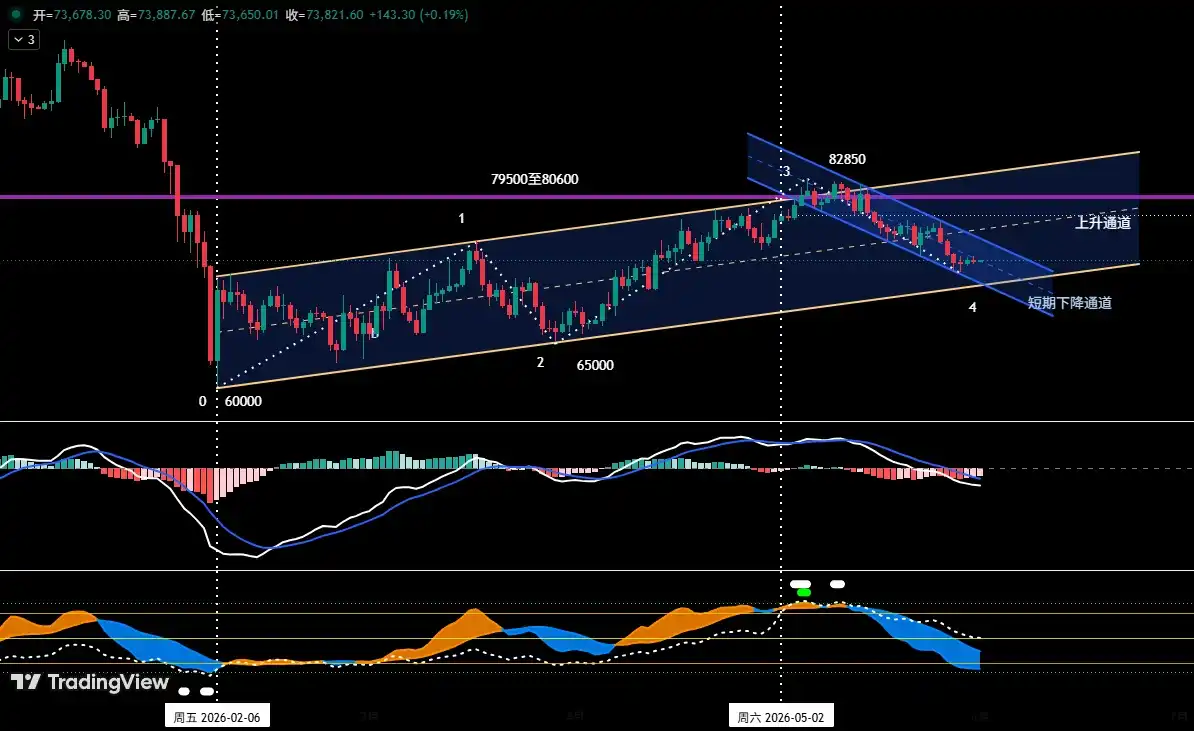
Figure 1

Ascending Channel (Yellow): As shown in (Figure 1), since the low on February 6, 2026, Bitcoin has maintained a volatile uptrend within an ascending channel. (Lower boundary: connecting the lows of Feb 6 and Mar 29; Upper boundary: a line drawn parallel to the lower boundary through the high of Mar 17)

Short-Term Descending Channel (Blue): After touching the high of $82,850 on May 6, Bitcoin has been operating within a short-term descending channel. (Upper boundary: connecting the two rebound highs on May 14 and May 26; Lower boundary: connecting the two adjustment lows on May 7 and May 23)

Based on the Ascending Channel (Yellow), the price has broken below the channel's median line and is seeking stronger support near the lower boundary.

Based on the Short-Term Descending Channel (Blue), the price found brief support after falling to the channel's lower boundary (around $72,500) and is currently in a period of weak rebound towards the channel's upper boundary.

Comprehensive Judgment: Technically, Bitcoin is facing dual influences from both long-term and short-term channels. The current rebound is mainly a correction for short-term oversold conditions, targeting the upper boundary of the short-term descending channel (Blue). However, as the price has broken below the median line of the ascending channel (Yellow), the overall technical structure has weakened. It is expected that after the rebound ends, the price will likely resume the previous downtrend and further test the support strength of the ascending channel's lower boundary.

2、In-Depth Analysis of BTC's Hourly Chart Structure: (Using the 4-hour chart as the analysis period)

Bitcoin _ 4-Hour Candlestick Chart
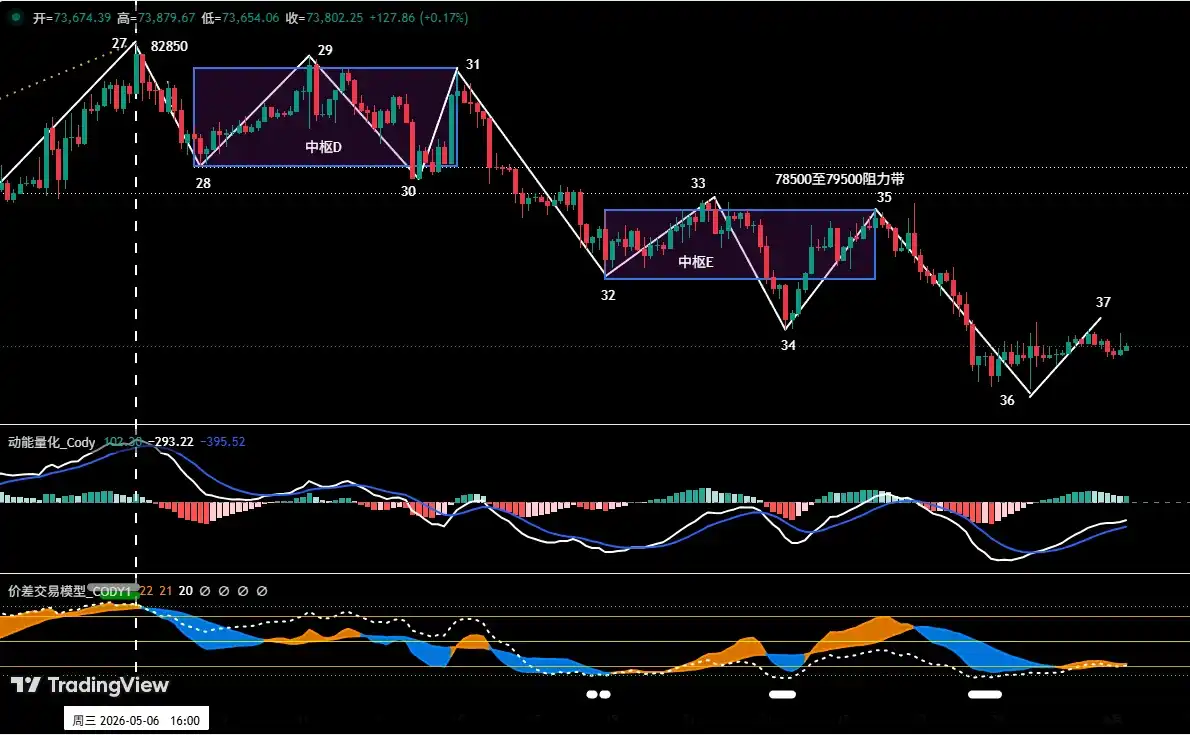
Figure 2

1、As shown in (Figure 2), from the high of $82,850 on May 6 to the present adjustment, the 4-hour chart reveals a detailed structure that can be subdivided into a 10-segment adjustment pattern from "Segment 27-28" to "Segment 36-37." This includes two descending pivot zones:

• Pivot Zone D: Formed by the overlapping of segments 28-29, 29-30, and 30-31.

• Pivot Zone E: Formed by the overlapping of segments 32-33, 33-34, and 34-35.

2、From the 4-hour structure, the current rebound is segment 36-37. If the price rebounds to the $75,000~$76,000 area and faces resistance, unable to form an effective breakout, the market is likely to continue its previous volatile downtrend and test the support level around $69,500~$70,500.

二、Bitcoin Market Outlook and Trading Strategy for This Week

1、BTC Market Outlook for This Week:

Core view for this week: Monitor the results of the test by both bulls and bears on the resistance zone of $75,000~$76,000 and the support zone of $69,500~$70,500.

2、Key Resistance Levels:

• First Resistance Zone: $75,000~$76,000 area (near the lower boundary of Pivot Zone E)

• Second Resistance Zone: $78,500~$79,500 area (near the boundaries of the two pivot zones)

3、Key Support Levels:

• First Support Level: $69,500~$70,500 area (previous important support level)

• Second Support Level: Around $65,000 (previous important support level)

4、This Week's Trading Strategy (Excluding the impact of sudden news)

1、Medium-Term Strategy:

Bitcoin _ Daily Candlestick Chart: (Position Monitoring Model)
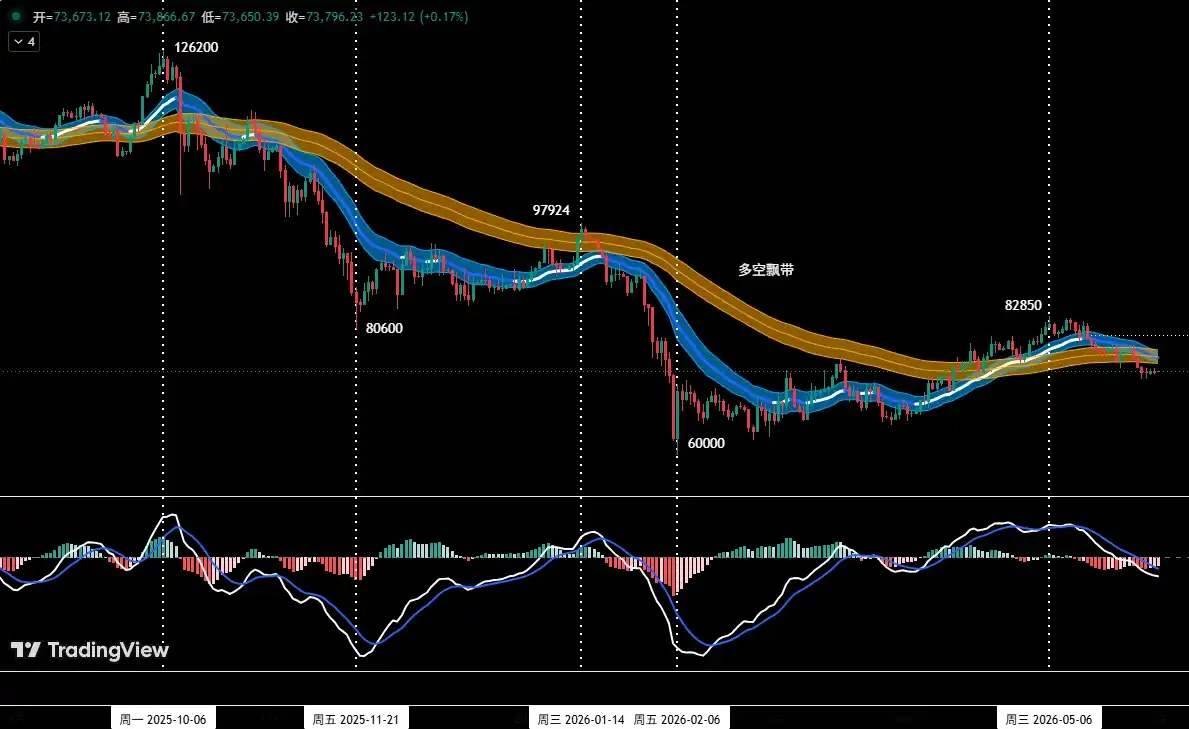
Figure 3

Position Monitoring Model: As shown in (Figure 3), the price has fallen below the "Bull-Bear Channel," entering a technically weak area. This week, monitor its retest result of the Bull-Bear Channel (around $75,000~$76,000). If the price rebounds to this level and shows signs of stagnation, resistance, or a pullback, it will signal the start of medium-term short position allocation. To control risk, the initial position can be kept below 30% of total capital; subsequently, if the price breaks below the lower boundary of the ascending channel (Yellow), increase the medium-term position to around 60%.

2、Short-Term Strategy: Utilize 30% of the position, set stop-loss points, and look for "spread" trading opportunities based on support and resistance levels. (Use the 30-minute/60-minute chart as the operation cycle).

3、To dynamically respond to the complex evolution of the market during short-term operations, we have prepared two specific operational plans in advance: A/B.

Plan A:Rebound Meets Resistance, Sell on Rallies.

• Entry: When the price rebounds and meets resistance in the $75,000~$76,000 area, combined with a top signal from the quantitative model, a short position below 30% can be established.

• Risk Control: Initial stop-loss set above $77,000.

• Exit: Gradually close the position to take profits when the price adjusts near important support levels combined with model signals.

Plan B: Effectively Breaks Support, Follow the Trend Short.

• Entry: When the price effectively breaks below the support zone of $69,500~$70,500 combined with a model top signal, a short position below 30% can be established.

• Risk Control: Initial stop-loss set above $72,000.

• Exit: Gradually close the position to take profits when the price falls to important support levels combined with model signals.

三、Analysis of HYPE's Hourly Chart Structure:

HYPE_4-Hour Candlestick Chart
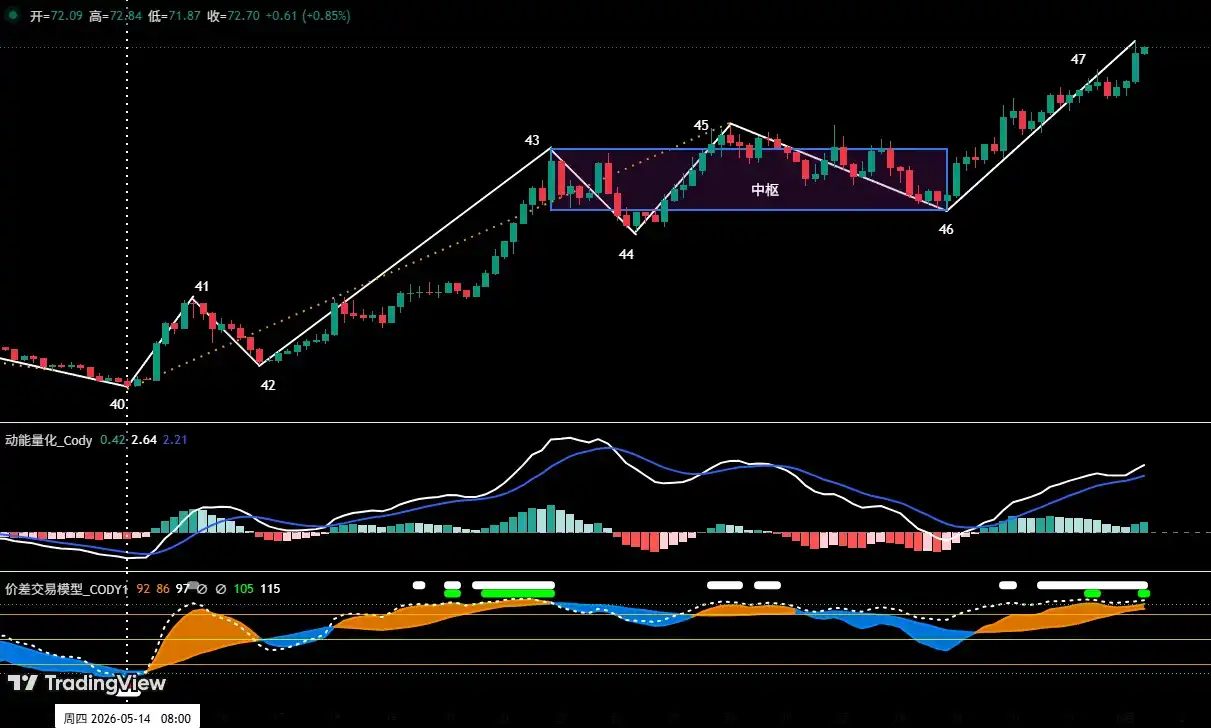
Figure 4

1、As shown in (Figure 4), on the 4-hour chart, since the low of $38.14 on May 14, HYPE has clearly constructed a seven-segment structure (segments 40-41 to 46-47) including a "rising pivot zone." Segments 43-44, 44-45, and 45-46 overlap, forming the "rising pivot zone."

2、The previous weekly review warned: Due to a momentum top divergence state at "Endpoint 45," combined with a top warning signal from the "Spread Trading Model," the two resonated. Therefore, the probability of forming a short-term high here was significant. Market movements confirmed this judgment: the price adjusted from "Endpoint 45" ($64.75) to "Endpoint 46" ($56.30), with a maximum decline of 13.05%.

3、Currently, comparing the pivot exit segment (46-47) with the entry segment (42-43), its upward momentum appears weak, forming a potential "momentum divergence."

4、Analysis from our self-built "Spread Trading Model" shows that "Endpoint 47" has triggered a strong top warning signal (red dot + white dot).

5、In summary, if the price forms a topping signal at "Endpoint 47" and the "momentum divergence" signal remains valid, the probability of this point becoming the terminal point of the rise since "Endpoint 40" will significantly increase. Subsequent price movements require close attention to the test results of the key area between $62.5 and $64.57.

四、HYPE Market Outlook and Short-Term Trading Strategy for This Week

1、HYPE Market Outlook for This Week:

Core view for HYPE this week:

• Observe whether "momentum divergence" is established when "Endpoint 47" issues a clear topping signal.

• If this phenomenon occurs, and the price subsequently effectively breaks below the support zone of $62.5 to $64.57, it can be considered that "Endpoint 47" has become the terminal point of the rally since the May 14 low.

2、HYPE Short-Term Trading Strategy for This Week: (Buy on Support)

This week's HYPE short-term trading should follow the strategy of "buying on dips, avoiding chasing rallies." The core is to observe the test results of the price pullback to the $62.5 to $64.75 area:

Strategy One:Test Long on Support Zone Stabilization

If the price pulls back to this zone, shows signs of stopping the decline and stabilizing, and combines with bottom signals triggered by the two major models, consider a light long position trial. The position must be controlled below 30%, strictly adhering to stop-loss discipline.

Strategy Two: Support Fails, Transitioning to a Larger Correction

If the price effectively breaks below this zone, the short-term correction will escalate into a larger-scale (e.g., daily level) adjustment, prolonging its duration and extending the downside target to the $54 to $56.3 area first.

五、Bitcoin Trade Review

1、Short-Term Trade Review:(See Table 1)

Strictly following the operational plan and based on trading signals issued by our self-built "Spread Trading Model" and "Momentum Quantification Model," we completed one short-term (short) trade last week, achieving a profit of 5.07%.

1、Bitcoin Short-Term Trade Details Summary:(Leverage *1)
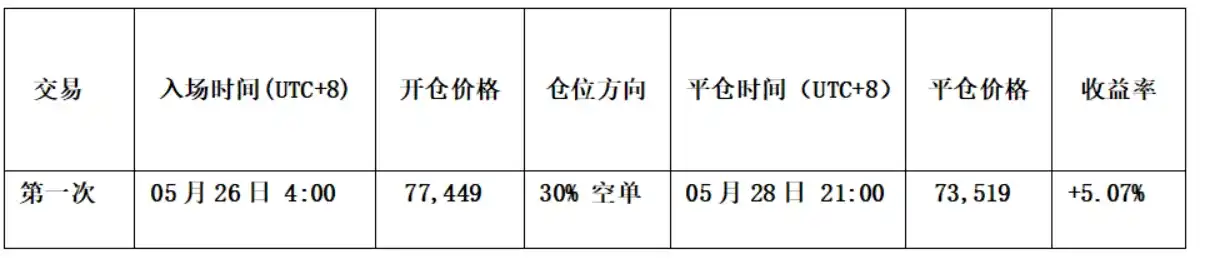
Table 1

2、Short-Term Trade Review:(See Figure 5)

• Entry Strategy:

a、When the price rebounded near $78,000, it showed resistance signals, and the candlestick formed a "top reversal" bearish pattern;

b、The "Spread Trading Model" triggered a top warning signal (white dot);

c、The "Momentum Quantification Model" issued a momentum top divergence signal.

Therefore, we established a 30% short position at $77,449.

• Exit Strategy:

a、When the price fell near $73,000, it showed signs of stopping the decline, and the candlestick formed a "bottom reversal";

b、The "Spread Trading Model" triggered a strong bottom warning signal (red dot + white dot), forming a bottom resonance signal with the "Momentum Quantification Model."

Therefore, we closed all positions near $73,519.

• Summary: This trade successfully achieved a profit of approximately 5.07%.

BTC_60-Minute Candlestick Chart: (Momentum Quantification Model + Spread Trading Model)
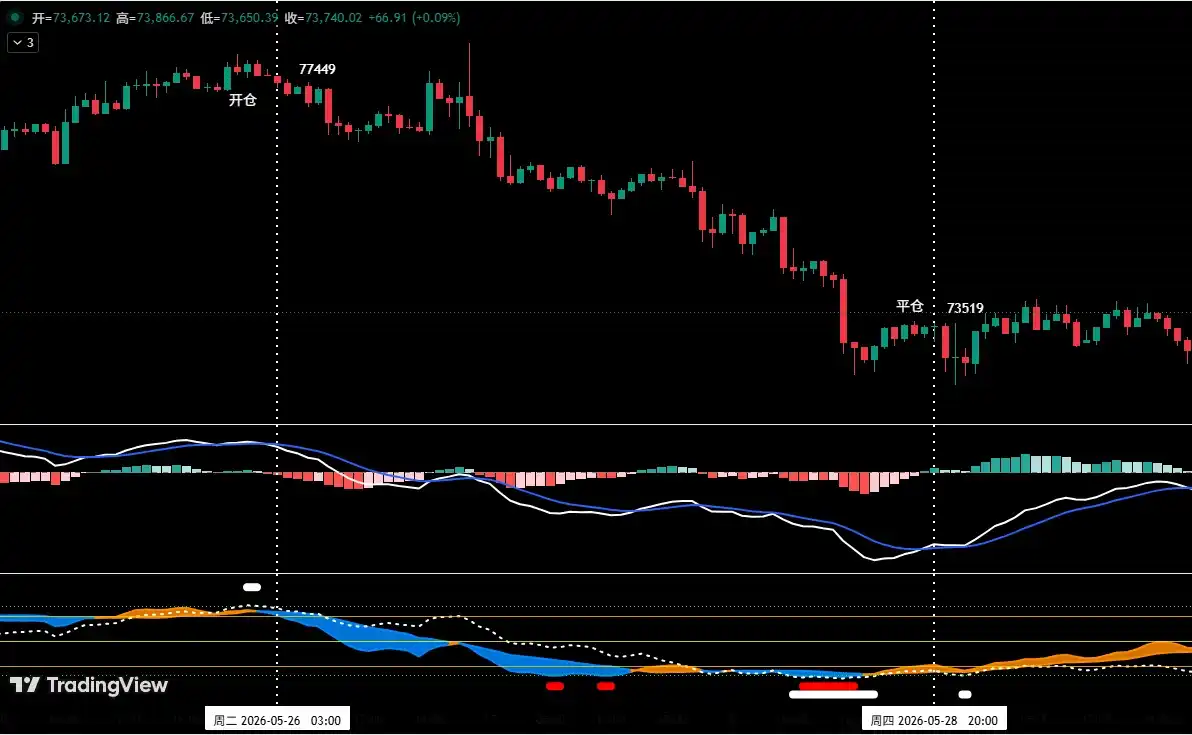
Figure 5 (Short-Term Trade Illustration)

六、Special Reminders:​​

1. Upon Entry: Immediately set the initial stop-loss.

2. When Profit Reaches 1%: Move the stop-loss to the entry price (breakeven point) to ensure capital safety.

3. When Profit Reaches 2%:​​ Move the stop-loss to the 1% profit level.

4. Continuous Tracking: Thereafter, for every additional 1% profit, move the stop-loss up by 1% accordingly to dynamically protect and lock in profits.

Financial markets are constantly changing. All market analysis and trading strategies require dynamic adjustments. All views, analytical models, and operational strategies mentioned in this article are derived from personal technical analysis, intended solely for personal trading log purposes, and do not constitute any investment advice or basis for operation. The market carries risks; investing requires caution. Please do not make decisions based on this.


Preguntas relacionadas

QWhat is the main concern for Bitcoin (BTC) according to the article's analysis?

AThe main concern is that Bitcoin's technical structure has weakened, evidenced by it falling below the median line of its long-term rising channel. The current rebound is seen as weak and likely just a correction from oversold conditions. The article expects the price to resume its downtrend after testing resistance near the $75,000-$76,000 zone, potentially seeking stronger support near the lower boundary of the long-term rising channel.

QBased on the article, what are the two primary scenarios (A and B) proposed for BTC short-term trading strategies this week?

AScenario A (反弹承压,逢高做空): Enter a short position if the price rebounds and faces resistance in the $75,000-$76,000 area, confirmed by top signals from the quantitative model. Stop loss is set above $77,000. Scenario B (有效跌破支撑,顺势做空): Enter a short position if the price effectively breaks below the $69,500-$70,500 support zone, confirmed by model signals. Stop loss is set above $72,000. Both strategies suggest using less than 30% of capital initially.

QWhat key technical phenomenon is highlighted for HYPE that suggests a potential local top?

AThe article highlights that HYPE's current uptrend, structured as a seven-segment pattern on the 4-hour chart, shows signs of a potential 'kinetic divergence' (动能背驰). This means the upward momentum in the segment leaving the central pivot (46-47) appears weaker compared to the segment entering it (42-43). This potential divergence is coupled with strong top warning signals from the author's proprietary 'Price Difference Trading Model' at the 'endpoint 47'.

QWhat is the core condition for HYPE's short-term Strategy 1 (支撑区域企稳试多)?

AStrategy 1 suggests a potential long position if the price retraces to the $62.5-$64.75 support area, shows signs of stabilization and a rebound there, and this is confirmed by bottom signals from the two proprietary trading models (likely the 'Price Difference Trading Model' and the 'Momentum Quantification Model'). The position must be kept under 30% of capital with strict stop-loss discipline.

QHow does the article describe the trade management rules, specifically regarding stop-loss movement?

AThe article outlines a dynamic stop-loss trailing process: 1. Set an initial stop-loss immediately upon opening a position. 2. When profit reaches 1%, move the stop-loss to the entry price (breakeven point). 3. When profit reaches 2%, move the stop-loss to lock in a 1% profit. 4. Thereafter, for every additional 1% of profit gained, move the stop-loss up by 1% to dynamically protect and lock in profits.

Lecturas Relacionadas

Are Rising U.S. Stocks Getting More Dangerous? Goldman Sachs: Downside Protection Mechanisms Have Almost Failed

The US stock market rally is showing signs of becoming increasingly precarious as key downside protection mechanisms fail, according to Goldman Sachs. Derivatives strategist Brian Garrett notes that the S&P 500 options volatility skew has plunged to an 18-month low, indicating the market now prices an 8% probability for both a 10% drop and a 10% rise—a sign of "skew failure." Concurrently, Goldman's Panic Index hit a two-year low, reflecting minimal demand for tail-risk hedging. This complacency emerges amid a relentless market surge, with the S&P 500 setting new records frequently in 2024. Garrett highlights three major concerns: extreme concentration in the top ten stocks (40% of index weight), heavy reliance on AI-themed performance, and a price pattern eerily similar to the 1998-1999 period. Despite pervasive media pessimism, this fear is absent in options pricing. Downside hedge costs are historically low. Goldman suggests tactical trades: buying RSP outperformance options versus the SPX for a broadening rally, purchasing VIX calls for protection, and going long on Bitcoin ETF volatility. Hedge funds have been net buyers for two weeks, with sector rotation into financials and out of industrials. Notably, the global single-stock leveraged/ inverse ETF AUM has doubled to over $60 billion in two months, underscoring growing speculative activity.

marsbitHace 3 min(s)

Are Rising U.S. Stocks Getting More Dangerous? Goldman Sachs: Downside Protection Mechanisms Have Almost Failed

marsbitHace 3 min(s)

DAT Failure? Listed Companies Betting on HYPE Floating Profit of $12.5 Billion

Several public companies that adopted a "HYPE Treasury" strategy—holding significant reserves of the HYPE token from the Hyperliquid ecosystem—have achieved substantial paper gains, collectively exceeding $1.25 billion. This contrasts with the reported struggles of MicroStrategy's flagship BTC treasury strategy. The article profiles three such HYPE-focused treasury companies: 1. **Hyperliquid Strategies Inc. (PURR):** The largest holder, with approximately 22.3 million HYPE tokens valued at ~$1.636 billion, resulting in an unrealized gain of ~$1.22 billion. It has fully transitioned from a biotech firm to a dedicated crypto treasury, adding staking and validator operations to enhance returns. 2. **Hyperion DeFi (HYPD):** Holds around 2 million HYPE tokens (~$147 million value) with a gain of ~$49.4 million. It is deeply integrated into the Hyperliquid ecosystem, running a major validator node and building DeFi products for additional yield. 3. **Lion Group Holding (LGHL):** A smaller holder with ~194,000 HYPE tokens (~$14.14 million value), maintaining a long-term commitment to the token. The success of these HYPE treasuries is attributed not only to the token's significant price appreciation but also to active on-chain participation through staking, validation, and ecosystem integrations, creating a compounding "flywheel" effect. The article posits that while MicroStrategy's BTC strategy faces challenges, HYPE treasuries may offer a more sustainable model through deeper protocol engagement, with potential for further growth if HYPE's price rises as predicted by some analysts.

marsbitHace 23 min(s)

DAT Failure? Listed Companies Betting on HYPE Floating Profit of $12.5 Billion

marsbitHace 23 min(s)

DAT Failing? Listed Companies Betting on HYPE Have Floating Profits of $12.5 Billion

Facing a potential need to sell Bitcoin to pay dividends amid a $12.5B quarterly net loss, the crypto treasury strategy pioneered by Strategy appears strained. In contrast, public companies that adopted a similar strategy by betting on the HYPE token are seeing massive gains, with collective unrealized profits exceeding $1.25 billion. Three key HYPE treasury companies are highlighted: 1. **Hyperliquid Strategies Inc. (PURR):** The largest holder, with approximately 22.3 million HYPE tokens valued at ~$1.636 billion, resulting in ~$1.22 billion in unrealized gains. It has fully transitioned from a biotech firm to a native crypto treasury, focusing on staking and ecosystem participation via validator operations. 2. **Hyperion DeFi (HYPD):** Holds about 2 million HYPE tokens (~$147M value) with ~$49.4M in gains. It is deeply integrated into the Hyperliquid ecosystem, running a top validator node and building DeFi products to generate additional yield. 3. **Lion Group Holding (LGHL):** A smaller player holding ~193,775 HYPE tokens (~$14.14M value), maintaining a long-term holding strategy alongside other crypto assets. The article argues that HYPE treasuries have an advantage over Bitcoin-based ones like Strategy's. Their success stems not just from price appreciation but from active on-chain participation—staking, earning validator rewards, and engaging with ecosystem protocols—creating a compounding "flywheel" effect. With Hyperliquid dominating the on-chain perpetuals market and HYPE's tokenomics encouraging buys and burns, these treasuries are positioned to benefit further if HYPE's price rises as some predict. While the original Bitcoin treasury strategy isn't declared a failure, the current narrative highlights the outsized success of early movers into the HYPE ecosystem.

Odaily星球日报Hace 27 min(s)

DAT Failing? Listed Companies Betting on HYPE Have Floating Profits of $12.5 Billion

Odaily星球日报Hace 27 min(s)

Comics Illustration: Helping You Understand China's New Regulations on Outbound Investment

Summary: Understanding China's New Regulations on Overseas Investment The State Council has announced new regulations on overseas investment, effective July 1, 2026. The core message is not a prohibition on international investment, but a call for both companies and individuals to operate with strong regulatory awareness. Here are the key points: 1. **Scope is Broad:** The rules apply not only to companies but also to other organizations and individual residents. 2. **Definition of Investment is Wide:** It encompasses not just capital transfers but also asset contributions, obtaining equity or rights, financing, providing guarantees, and direct or indirect acquisition of rights related to overseas entities or assets. 3. **Companies Must Plan Comprehensively:** Beyond simple ownership charts, firms need clear plans covering the investing entity, required approvals or filings, fund transfer paths, and compliance with technology, data, and security reviews. 4. **Individuals Should Prioritize Compliance:** Before focusing on returns, individuals must first assess their eligibility, understand legal channels for capital outflow, know what they are acquiring, and identify responsible parties in case of issues. 5. **Penalties are Significant:** Violations can result in fines and potentially restrictions on future overseas investment activities. In essence, overseas investment remains possible, but it must be approached with regulatory compliance as a fundamental priority, not solely based on commercial opportunity. *Note: This is a general informational summary and does not constitute legal advice or investment recommendations.*

marsbitHace 42 min(s)

Comics Illustration: Helping You Understand China's New Regulations on Outbound Investment

marsbitHace 42 min(s)

Nvidia Rack Disassembly Reveals New Growth Opportunity, MLCC Value Surges 182%

Supply bottlenecks in AI infrastructure have expanded to fundamental hardware components like multilayer ceramic capacitors (MLCCs), crucial for stabilizing power and filtering noise in AI servers. Both Goldman Sachs and Morgan Stanley highlight MLCCs as entering a historic "volume-price dual increase" supercycle driven by AI. Goldman forecasts the AI server MLCC market to surge over fourfold from ~$1.4B in FY2025 to ~$5.8B in FY2030, a 34% CAGR. The core driver is a structural supply-demand imbalance. While AI server demand is projected to grow ~4.3x by 2030, industry capacity expands at only ~10% annually, constrained by internal production of equipment and materials. This is compounded by strong demand from electric vehicles. The shortage is evident, with lead times for high-end MLCCs exceeding 20 weeks. The price cycle has officially begun. Japanese leaders Murata and Taiyo Yuden have raised prices by 15-35% for AI server and automotive MLCCs since April, citing material costs. Japan's April export data confirms the trend, with MLCC export value up 28% year-over-year. Profit leverage is significant: Goldman estimates a mere 5% price increase could boost Murata's FY2027 operating profit by ~13% and Taiyo Yuden's by up to 37%. Morgan Stanley's teardown of Nvidia's upcoming Vera Rubin AI rack reveals another catalyst: the MLCC value per rack has skyrocketed 182% from the previous generation to ~$4,320, highlighting the component's growing importance. With demand set to massively outstrip constrained supply, and price increases just starting, analysts position MLCCs at the beginning of a major, prolonged upcycle.

marsbitHace 42 min(s)

Nvidia Rack Disassembly Reveals New Growth Opportunity, MLCC Value Surges 182%

marsbitHace 42 min(s)

Trading

Spot
Futuros

Artículos destacados

Qué es $S$

Entendiendo SPERO: Una Visión General Completa Introducción a SPERO A medida que el panorama de la innovación continúa evolucionando, la aparición de tecnologías web3 y proyectos de criptomonedas juega un papel fundamental en la configuración del futuro digital. Un proyecto que ha atraído la atención en este campo dinámico es SPERO, denotado como SPERO,$$s$. Este artículo tiene como objetivo reunir y presentar información detallada sobre SPERO, para ayudar a entusiastas e inversores a comprender sus fundamentos, objetivos e innovaciones dentro de los dominios web3 y cripto. ¿Qué es SPERO,$$s$? SPERO,$$s$ es un proyecto único dentro del espacio cripto que busca aprovechar los principios de descentralización y tecnología blockchain para crear un ecosistema que promueva la participación, la utilidad y la inclusión financiera. El proyecto está diseñado para facilitar interacciones de igual a igual de nuevas maneras, proporcionando a los usuarios soluciones y servicios financieros innovadores. En su esencia, SPERO,$$s$ tiene como objetivo empoderar a los individuos al proporcionar herramientas y plataformas que mejoren la experiencia del usuario en el espacio de las criptomonedas. Esto incluye habilitar métodos de transacción más flexibles, fomentar iniciativas impulsadas por la comunidad y crear caminos para oportunidades financieras a través de aplicaciones descentralizadas (dApps). La visión subyacente de SPERO,$$s$ gira en torno a la inclusividad, buscando cerrar brechas dentro de las finanzas tradicionales mientras aprovecha los beneficios de la tecnología blockchain. ¿Quién es el Creador de SPERO,$$s$? La identidad del creador de SPERO,$$s$ sigue siendo algo oscura, ya que hay recursos públicos limitados que proporcionan información de fondo detallada sobre su(s) fundador(es). Esta falta de transparencia puede derivarse del compromiso del proyecto con la descentralización, una ética que muchos proyectos web3 comparten, priorizando las contribuciones colectivas sobre el reconocimiento individual. Al centrar las discusiones en torno a la comunidad y sus objetivos colectivos, SPERO,$$s$ encarna la esencia del empoderamiento sin señalar a individuos específicos. Como tal, comprender la ética y la misión de SPERO sigue siendo más importante que identificar a un creador singular. ¿Quiénes son los Inversores de SPERO,$$s$? SPERO,$$s$ cuenta con el apoyo de una diversa gama de inversores que van desde capitalistas de riesgo hasta inversores ángeles dedicados a fomentar la innovación en el sector cripto. El enfoque de estos inversores generalmente se alinea con la misión de SPERO, priorizando proyectos que prometen avances tecnológicos sociales, inclusión financiera y gobernanza descentralizada. Estas fundaciones de inversores suelen estar interesadas en proyectos que no solo ofrecen productos innovadores, sino que también contribuyen positivamente a la comunidad blockchain y sus ecosistemas. El respaldo de estos inversores refuerza a SPERO,$$s$ como un contendiente notable en el dominio de proyectos cripto que evoluciona rápidamente. ¿Cómo Funciona SPERO,$$s$? SPERO,$$s$ emplea un marco multifacético que lo distingue de los proyectos de criptomonedas convencionales. Aquí hay algunas de las características clave que subrayan su singularidad e innovación: Gobernanza Descentralizada: SPERO,$$s$ integra modelos de gobernanza descentralizada, empoderando a los usuarios para participar activamente en los procesos de toma de decisiones sobre el futuro del proyecto. Este enfoque fomenta un sentido de propiedad y responsabilidad entre los miembros de la comunidad. Utilidad del Token: SPERO,$$s$ utiliza su propio token de criptomoneda, diseñado para servir diversas funciones dentro del ecosistema. Estos tokens permiten transacciones, recompensas y la facilitación de servicios ofrecidos en la plataforma, mejorando la participación y la utilidad general. Arquitectura en Capas: La arquitectura técnica de SPERO,$$s$ apoya la modularidad y escalabilidad, permitiendo la integración fluida de características y aplicaciones adicionales a medida que el proyecto evoluciona. Esta adaptabilidad es fundamental para mantener la relevancia en el cambiante paisaje cripto. Participación de la Comunidad: El proyecto enfatiza iniciativas impulsadas por la comunidad, empleando mecanismos que incentivan la colaboración y la retroalimentación. Al nutrir una comunidad sólida, SPERO,$$s$ puede abordar mejor las necesidades de los usuarios y adaptarse a las tendencias del mercado. Enfoque en la Inclusión: Al ofrecer tarifas de transacción bajas e interfaces amigables para el usuario, SPERO,$$s$ busca atraer a una base de usuarios diversa, incluyendo a individuos que anteriormente pueden no haber participado en el espacio cripto. Este compromiso con la inclusión se alinea con su misión general de empoderamiento a través de la accesibilidad. Cronología de SPERO,$$s$ Entender la historia de un proyecto proporciona información crucial sobre su trayectoria de desarrollo y hitos. A continuación se presenta una cronología sugerida que mapea eventos significativos en la evolución de SPERO,$$s$: Fase de Conceptualización e Ideación: Las ideas iniciales que forman la base de SPERO,$$s$ fueron concebidas, alineándose estrechamente con los principios de descentralización y enfoque comunitario dentro de la industria blockchain. Lanzamiento del Whitepaper del Proyecto: Tras la fase conceptual, se lanzó un whitepaper completo que detalla la visión, los objetivos y la infraestructura tecnológica de SPERO,$$s$ para generar interés y retroalimentación de la comunidad. Construcción de Comunidad y Primeras Interacciones: Se realizaron esfuerzos de divulgación activa para construir una comunidad de primeros adoptantes y posibles inversores, facilitando discusiones en torno a los objetivos del proyecto y obteniendo apoyo. Evento de Generación de Tokens: SPERO,$$s$ llevó a cabo un evento de generación de tokens (TGE) para distribuir sus tokens nativos a los primeros seguidores y establecer liquidez inicial dentro del ecosistema. Lanzamiento de la dApp Inicial: La primera aplicación descentralizada (dApp) asociada con SPERO,$$s$ se puso en marcha, permitiendo a los usuarios interactuar con las funcionalidades centrales de la plataforma. Desarrollo Continuo y Alianzas: Actualizaciones y mejoras continuas a las ofertas del proyecto, incluyendo alianzas estratégicas con otros actores en el espacio blockchain, han moldeado a SPERO,$$s$ en un jugador competitivo y en evolución en el mercado cripto. Conclusión SPERO,$$s$ se erige como un testimonio del potencial de web3 y las criptomonedas para revolucionar los sistemas financieros y empoderar a los individuos. Con un compromiso con la gobernanza descentralizada, la participación comunitaria y funcionalidades diseñadas de manera innovadora, allana el camino hacia un paisaje financiero más inclusivo. Como con cualquier inversión en el espacio cripto que evoluciona rápidamente, se anima a los posibles inversores y usuarios a investigar a fondo y participar de manera reflexiva con los desarrollos en curso dentro de SPERO,$$s$. El proyecto muestra el espíritu innovador de la industria cripto, invitando a una mayor exploración de sus innumerables posibilidades. Mientras el viaje de SPERO,$$s$ aún se desarrolla, sus principios fundamentales pueden, de hecho, influir en el futuro de cómo interactuamos con la tecnología, las finanzas y entre nosotros en ecosistemas digitales interconectados.

72 Vistas totalesPublicado en 2024.12.17Actualizado en 2024.12.17

Qué es $S$

Qué es AGENT S

Agent S: El Futuro de la Interacción Autónoma en Web3 Introducción En el paisaje en constante evolución de Web3 y las criptomonedas, las innovaciones están redefiniendo constantemente cómo los individuos interactúan con las plataformas digitales. Uno de estos proyectos pioneros, Agent S, promete revolucionar la interacción humano-computadora a través de su marco agente abierto. Al allanar el camino para interacciones autónomas, Agent S busca simplificar tareas complejas, ofreciendo aplicaciones transformadoras en inteligencia artificial (IA). Esta exploración detallada profundizará en las complejidades del proyecto, sus características únicas y las implicaciones para el dominio de las criptomonedas. ¿Qué es Agent S? Agent S se presenta como un marco agente abierto innovador, diseñado específicamente para abordar tres desafíos fundamentales en la automatización de tareas informáticas: Adquisición de Conocimiento Específico del Dominio: El marco aprende inteligentemente de diversas fuentes de conocimiento externas y experiencias internas. Este enfoque dual le permite construir un rico repositorio de conocimiento específico del dominio, mejorando su rendimiento en la ejecución de tareas. Planificación a Largo Plazo de Tareas: Agent S emplea planificación jerárquica aumentada por la experiencia, un enfoque estratégico que facilita la descomposición y ejecución eficiente de tareas complejas. Esta característica mejora significativamente su capacidad para gestionar múltiples subtareas de manera eficiente y efectiva. Manejo de Interfaces Dinámicas y No Uniformes: El proyecto introduce la Interfaz Agente-Computadora (ACI), una solución innovadora que mejora la interacción entre agentes y usuarios. Utilizando Modelos de Lenguaje Multimodal de Gran Escala (MLLMs), Agent S puede navegar y manipular diversas interfaces gráficas de usuario sin problemas. A través de estas características pioneras, Agent S proporciona un marco robusto que aborda las complejidades involucradas en la automatización de la interacción humana con las máquinas, preparando el terreno para una multitud de aplicaciones en IA y más allá. ¿Quién es el Creador de Agent S? Si bien el concepto de Agent S es fundamentalmente innovador, la información específica sobre su creador sigue siendo elusiva. El creador es actualmente desconocido, lo que resalta ya sea la etapa incipiente del proyecto o la elección estratégica de mantener a los miembros fundadores en el anonimato. Independientemente de la anonimidad, el enfoque sigue siendo en las capacidades y el potencial del marco. ¿Quiénes son los Inversores de Agent S? Dado que Agent S es relativamente nuevo en el ecosistema criptográfico, la información detallada sobre sus inversores y patrocinadores financieros no está documentada explícitamente. La falta de información disponible públicamente sobre las bases de inversión u organizaciones que apoyan el proyecto plantea preguntas sobre su estructura de financiamiento y hoja de ruta de desarrollo. Comprender el respaldo es crucial para evaluar la sostenibilidad del proyecto y su posible impacto en el mercado. ¿Cómo Funciona Agent S? En el núcleo de Agent S se encuentra una tecnología de vanguardia que le permite funcionar de manera efectiva en diversos entornos. Su modelo operativo se basa en varias características clave: Interacción Humano-Computadora Similar a la Humana: El marco ofrece planificación avanzada de IA, esforzándose por hacer que las interacciones con las computadoras sean más intuitivas. Al imitar el comportamiento humano en la ejecución de tareas, promete elevar las experiencias de los usuarios. Memoria Narrativa: Empleada para aprovechar experiencias de alto nivel, Agent S utiliza memoria narrativa para hacer un seguimiento de las historias de tareas, mejorando así sus procesos de toma de decisiones. Memoria Episódica: Esta característica proporciona a los usuarios una guía paso a paso, permitiendo que el marco ofrezca apoyo contextual a medida que se desarrollan las tareas. Soporte para OpenACI: Con la capacidad de ejecutarse localmente, Agent S permite a los usuarios mantener el control sobre sus interacciones y flujos de trabajo, alineándose con la ética descentralizada de Web3. Fácil Integración con APIs Externas: Su versatilidad y compatibilidad con varias plataformas de IA aseguran que Agent S pueda encajar sin problemas en ecosistemas tecnológicos existentes, convirtiéndolo en una opción atractiva para desarrolladores y organizaciones. Estas funcionalidades contribuyen colectivamente a la posición única de Agent S dentro del espacio cripto, ya que automatiza tareas complejas y de múltiples pasos con una intervención humana mínima. A medida que el proyecto evoluciona, sus posibles aplicaciones en Web3 podrían redefinir cómo se desarrollan las interacciones digitales. Cronología de Agent S El desarrollo y los hitos de Agent S pueden encapsularse en una cronología que resalta sus eventos significativos: 27 de septiembre de 2024: El concepto de Agent S fue lanzado en un documento de investigación integral titulado “Un Marco Agente Abierto que Usa Computadoras Como un Humano”, mostrando las bases del proyecto. 10 de octubre de 2024: El documento de investigación fue puesto a disposición del público en arXiv, ofreciendo una exploración profunda del marco y su evaluación de rendimiento basada en el benchmark OSWorld. 12 de octubre de 2024: Se lanzó una presentación en video, proporcionando una visión visual de las capacidades y características de Agent S, involucrando aún más a posibles usuarios e inversores. Estos marcadores en la cronología no solo ilustran el progreso de Agent S, sino que también indican su compromiso con la transparencia y la participación comunitaria. Puntos Clave Sobre Agent S A medida que el marco Agent S continúa evolucionando, varios atributos clave destacan, subrayando su naturaleza innovadora y potencial: Marco Innovador: Diseñado para proporcionar un uso intuitivo de las computadoras similar a la interacción humana, Agent S aporta un enfoque novedoso a la automatización de tareas. Interacción Autónoma: La capacidad de interactuar de manera autónoma con las computadoras a través de GUI significa un salto hacia soluciones informáticas más inteligentes y eficientes. Automatización de Tareas Complejas: Con su metodología robusta, puede automatizar tareas complejas y de múltiples pasos, haciendo que los procesos sean más rápidos y menos propensos a errores. Mejora Continua: Los mecanismos de aprendizaje permiten a Agent S mejorar a partir de experiencias pasadas, mejorando continuamente su rendimiento y eficacia. Versatilidad: Su adaptabilidad en diferentes entornos operativos como OSWorld y WindowsAgentArena asegura que pueda servir a una amplia gama de aplicaciones. A medida que Agent S se posiciona en el paisaje de Web3 y criptomonedas, su potencial para mejorar las capacidades de interacción y automatizar procesos significa un avance significativo en las tecnologías de IA. A través de su marco innovador, Agent S ejemplifica el futuro de las interacciones digitales, prometiendo una experiencia más fluida y eficiente para los usuarios en diversas industrias. Conclusión Agent S representa un audaz avance en la unión de la IA y Web3, con la capacidad de redefinir cómo interactuamos con la tecnología. Aunque aún se encuentra en sus primeras etapas, las posibilidades para su aplicación son vastas y atractivas. A través de su marco integral que aborda desafíos críticos, Agent S busca llevar las interacciones autónomas al primer plano de la experiencia digital. A medida que nos adentramos más en los reinos de las criptomonedas y la descentralización, proyectos como Agent S sin duda desempeñarán un papel crucial en la configuración del futuro de la tecnología y la colaboración humano-computadora.

466 Vistas totalesPublicado en 2025.01.14Actualizado en 2025.01.14

Qué es AGENT S

Cómo comprar S

¡Bienvenido a HTX.com! Hemos hecho que comprar Sonic (S) sea simple y conveniente. Sigue nuestra guía paso a paso para iniciar tu viaje de criptos.Paso 1: crea tu cuenta HTXUtiliza tu correo electrónico o número de teléfono para registrarte y obtener una cuenta gratuita en HTX. Experimenta un proceso de registro sin complicaciones y desbloquea todas las funciones.Obtener mi cuentaPaso 2: ve a Comprar cripto y elige tu método de pagoTarjeta de crédito/débito: usa tu Visa o Mastercard para comprar Sonic (S) al instante.Saldo: utiliza fondos del saldo de tu cuenta HTX para tradear sin problemas.Terceros: hemos agregado métodos de pago populares como Google Pay y Apple Pay para mejorar la comodidad.P2P: tradear directamente con otros usuarios en HTX.Over-the-Counter (OTC): ofrecemos servicios personalizados y tipos de cambio competitivos para los traders.Paso 3: guarda tu Sonic (S)Después de comprar tu Sonic (S), guárdalo en tu cuenta HTX. Alternativamente, puedes enviarlo a otro lugar mediante transferencia blockchain o utilizarlo para tradear otras criptomonedas.Paso 4: tradear Sonic (S)Tradear fácilmente con Sonic (S) en HTX's mercado spot. Simplemente accede a tu cuenta, selecciona tu par de trading, ejecuta tus trades y monitorea en tiempo real. Ofrecemos una experiencia fácil de usar tanto para principiantes como para traders experimentados.

877 Vistas totalesPublicado en 2025.01.15Actualizado en 2025.03.21

Cómo comprar S

Discusiones

Bienvenido a la comunidad de HTX. Aquí puedes mantenerte informado sobre los últimos desarrollos de la plataforma y acceder a análisis profesionales del mercado. A continuación se presentan las opiniones de los usuarios sobre el precio de S (S).

活动图片