US Banking Lobby Considers Lawsuit Over OCC Crypto Charters

TheNewsCryptoPublicado a 2026-03-10Actualizado a 2026-03-10

Resumen

A US banking lobby group, the Bank Policy Institute (BPI), is considering legal action against the Office of the Comptroller of the Currency (OCC) for granting national trust bank charters to cryptocurrency companies like Ripple, BitGo, and Paxos. The BPI argues that these charters, which allow crypto firms to operate as trust banks and provide custody services, could pose risks to Americans and the financial system. They claim this move blurs the definition of a "bank," increases systemic risk, and undermines the credibility of national banking charters. The BPI had previously urged the OCC to reject such applications, and while no final decision on a lawsuit has been made, the group has a history of taking legal action against the agency. Similar concerns were echoed by the Independent Community Bankers of America.

A banking lobby group hailing from the US is looking to take legal action against the Office of the Comptroller of the Currency over the agency permitting national trust bank charters to crypto companies.

An unknown source close to the lobby’s thinking has informed The Guardian that the Bank Policy Institute has plans to sue the OCC for avoiding previous warnings from banking groups and state regulators and proceeding with its revisionism of federal licensing rules to permit national trust bank charters to crypto companies.

As per the group, this could probably put Americans and the financial system at stake. Under Jonathan Gould’s leadership, the OCC permitted the first batch of conditional national trust bank charter approvals to crypto companies comprising Ripple, BitGo and Paxos, among others. Since that time, various companies have demanded similar approvals.

Hanging Sword on OCC

Once permitted, the National Trust Bank charter will grant these firms the ability to function as trust banks and provide custody and asset safekeeping services. In October, the BPI stated it was requesting the OCC to decline applications from crypto companies, comprising Ripple and Circle, as it claimed that permitting such charters could lead to risk to the financial system.

It also mentions that BPI alerts that approving this route and permitting companies to pick a lighter regulatory touch while providing bank-like products could blur the statutory boundary of what it means to be a “bank”, heighten systemic risk and highlight the credibility of the national banking charter itself.

As per The Guardian, the BPI hasn’t decided yet if it plans to pursue legal action against the OCC. Although the report mentioned that the BPI was among a group of banks that had so far taken legal action against the OCC.

The Independent Community Bankers of America issued similar warnings over the OCC’s crypto charter approvals. Lately, the ICBA requested the OCC to pull or change its proposal for issuing licences to crypto companies. ‘

Highlighted Crypto News Today:

Hyperliquid (HYPE) Jumps 9%: Can the $40 Zone Be Reached and Anchor the Bull Run?

TagsLawsuitoccUSA

Preguntas relacionadas

QWhat is the main reason the US banking lobby group is considering legal action against the OCC?

AThe banking lobby group, the Bank Policy Institute (BPI), is considering legal action because the OCC is granting national trust bank charters to crypto companies, which they believe avoids previous warnings and could put Americans and the financial system at risk.

QWhich companies were among the first to receive conditional national trust bank charter approvals from the OCC?

ARipple, BitGo, and Paxos were among the first crypto companies to receive conditional national trust bank charter approvals from the OCC under Jonathan Gould's leadership.

QWhat specific concerns does the Bank Policy Institute (BPI) have about granting these charters to crypto firms?

AThe BPI is concerned that granting these charters could blur the statutory boundary of what it means to be a 'bank', heighten systemic risk, and undermine the credibility of the national banking charter itself by allowing companies to operate with a lighter regulatory touch while providing bank-like services.

QHas the Bank Policy Institute (BPI) definitively decided to sue the OCC at this time?

ANo, as per the article, the BPI hasn't yet decided if it will pursue legal action against the OCC, though it has taken such action against the agency in the past.

QWhich other banking group has issued similar warnings to the OCC regarding crypto charters?

AThe Independent Community Bankers of America (ICBA) has also issued similar warnings and recently requested the OCC to withdraw or change its proposal for issuing licenses to crypto companies.

Lecturas Relacionadas

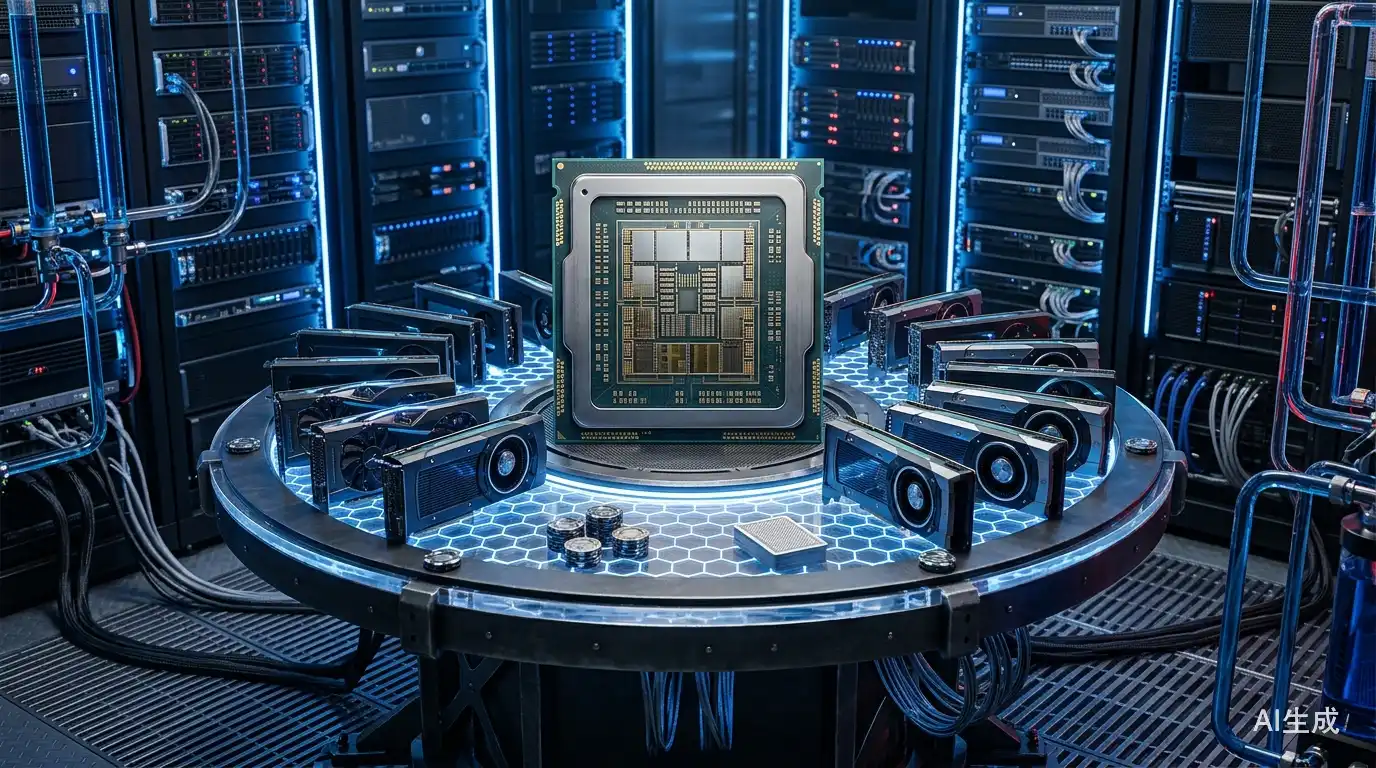
La CPU regresa a la mesa: comienza un 'ascenso' de 170.000 millones de dólares

El 1 de junio, NVIDIA presentó su primera CPU independiente, Vera, en el GTC Taipei 2026, marcando su entrada directa en este mercado. Simultáneamente, AMD ha duplicado su previsión del tamaño del mercado de CPUs para servidores a más de 1,2 billones de dólares, reflejando el crecimiento explosivo impulsado por la IA. Según UBS, se espera que el mercado de CPUs para servidores alcance unos 170.000 millones de dólares en 2030. El motivo principal de este resurgimiento es la transición de la IA hacia la fase de inferencia y los Agentes Inteligentes (Agentic AI). En este contexto, las CPUs asumen un papel crucial, gestionando hasta el 90% de la latencia en tareas complejas que involucran razonamiento múltiple, llamadas a herramientas externas y gestión de datos. A diferencia del entrenamiento, dominado por las GPUs, los Agentes generan grandes volúmenes de datos intermedios (KV Cache) que superan la capacidad de memoria de las GPUs, trasladándose a la memoria masiva de las CPUs. Esto ha alterado la proporción típica entre GPU y CPU, acercándose a 1:1 en escenarios de Agentes, frente a la proporción anterior de 1:8. Esta mayor demanda ha provocado un aumento de precios del 10%-15% en CPUs de servidor, la primera subida significativa en más de una década, y ha generado escasez de suministro. Se prevé que el mercado se divida en CPUs de alto rendimiento para clústeres de IA (~700.000 millones dólares) y CPUs desplegadas de forma independiente para Agentes (~700.000 millones dólares), un segmento nuevo desde 2026. NVIDIA, con su CPU Vera basada en ARM, apunta a un ratio 1:1 con sus GPUs Rubin. AMD superó a Intel en ingresos por centro de datos en el primer trimestre de 2026. En China, fabricantes como Hygon (arquitectura x86) y Huawei (ARM) se benefician de esta tendencia global y de las políticas de sustitución de importaciones, enfrentándose a una ventana de oportunidad crítica antes de 2027. En resumen, la era de los Agentes de IA ha reposicionado a la CPU como un cuello de botella crítico y un motor de crecimiento clave, donde la capacidad de colaboración entre CPU y GPU será más decisiva que el rendimiento individual de cada chip.

marsbitHace 3 hora(s)

La CPU regresa a la mesa: comienza un 'ascenso' de 170.000 millones de dólares

marsbitHace 3 hora(s)

TechFlow Inteligencia: Director de IA de AMD critica públicamente a Claude Code por "volverse más tonto y perezoso"; Trump anuncia alto al fuego en el estrecho de Ormuz, pero quedan 80 minas sin despejar

Resumen de TechFlow Intelligence: **IA y Tecnología:** - El Director de IA de AMD critica que Claude Code se ha vuelto "más torpe y perezoso". - SK Telecom, socio de Anthropic, bajo escrutinio de control de exportaciones de EE.UU. por posible transferencia de tecnología del modelo Mythos. - Z.AI lanza GLM-5.2, modelo chino que rivaliza con Claude Opus sin usar chips de Nvidia. - 0G Labs supera el hito de 1000 mil millones de tokens en inferencia de IA descentralizada. - DeepSeek genera gran debate en Zhihu por sus nuevas capacidades visuales. - Investigadores del MIT crean su propio sistema operativo para estudiar chips. **Cripto/Web3:** - Bithumb lista el par comercial de ReProtocol (RE) en won coreano. - Upbit elimina el par de KernelDAO (KERNEL). **Semiconductores/Hardware:** - Disputa entre EE.UU. y ASML sobre si máquinas litográficas EUV de última generación han llegado a China. - Amazon negocia la venta externa de sus chips de IA Trainium/Inferentia. - El A21 Pro de Apple usará exclusivamente el proceso N2P de TSMC. **Empresas Tecnológicas:** - Se descubren 10,000 repositorios en GitHub distribuyendo malware. - Apple parcha una vulnerabilidad crítica de escucha en Beats Studio Buds. - Ingenieros de Amazon investigados por criticar la expansión de centros de datos de IA. - Microsoft y Amazon Web Services, posibles objetivos de una estricta regulación antimonopolio de la UE. **Mercados/Macroeconomía:** - Trump afirma que se logró un "alto al fuego total" en el estrecho de Ormuz, pero la asociación de petroleros Intertanko advierte que aún hay unas 80 minas sin despejar en la ruta principal. - Cerca de 80 superpetroleros, cargados con 80 millones de barriles de petróleo, esperan una "señal de seguridad" para navegar. - Irán pospone viaje diplomático a Suiza, ensombreciendo las perspectivas de las conversaciones de paz. - Trump califica el acuerdo con Irán como "rendición incondicional" y afirma tener "poder ilimitado" como presidente. - Sector semiconductores en auge en bolsa: Intel sube un 10.6%, SpaceX cae un 3.5%. **Línea Subyacente:** Mientras la "paz" geopolítica en Ormuz es temporal y frágil (minas, viajes cancelados, petroleros a la espera), la guerra por los chips y la redefinición de las cadenas de suministro tecnológico (como los modelos chinos sin Nvidia o Amazon vendiendo sus chips) avanza de forma más permanente.

marsbitHace 3 hora(s)

TechFlow Inteligencia: Director de IA de AMD critica públicamente a Claude Code por "volverse más tonto y perezoso"; Trump anuncia alto al fuego en el estrecho de Ormuz, pero quedan 80 minas sin despejar

marsbitHace 3 hora(s)

Trading

Spot
Futuros
活动图片