THIS is the stablecoin power angle that nobody is talking about

ambcryptoPublicado a 2026-02-02Actualizado a 2026-02-02

Resumen

Dollar-backed stablecoins are increasingly serving as a tool for the U.S. to extend its monetary influence abroad without physically moving dollars overseas, according to a Rabobank report. When foreign entities demand dollar stablecoins, U.S. issuers convert this demand into Treasury bill purchases, helping fund U.S. deficits at lower rates while digital tokens circulate internationally. This mechanism allows dollars to remain within the U.S. financial system while still facilitating global trade. Non-USD stablecoins are also gaining traction, with their supply surging 260% over the past year to a combined market cap of $1.55 billion, though they remain small compared to dollar-pegged alternatives. A key application driving adoption is crypto-backed payment cards, which have grown into an $18 billion market. Monthly transaction volumes have increased from $100 million in early 2023 to over $1.5 billion, growing at an annual rate exceeding 100%. These cards operate on top of traditional networks like Visa and Mastercard, using stablecoins to settle transactions in the background while maintaining a familiar user experience. In summary, dollar-backed stablecoins are expanding U.S. monetary power digitally without exporting physical dollars, while crypto payment infrastructure accelerates their real-world use.

Dollar-backed stablecoins are now more than just a crypto payment tool. Recent reports say that they may also be helping the U.S. extend dollar influence abroad, in a way that keeps real capital at home.

Here’s what you need to know.

Stablecoins – A secret weapon?

A report by Rabobank has stated that dollar-backed stablecoins are spreading dollar influence, without letting real dollars leave the country.
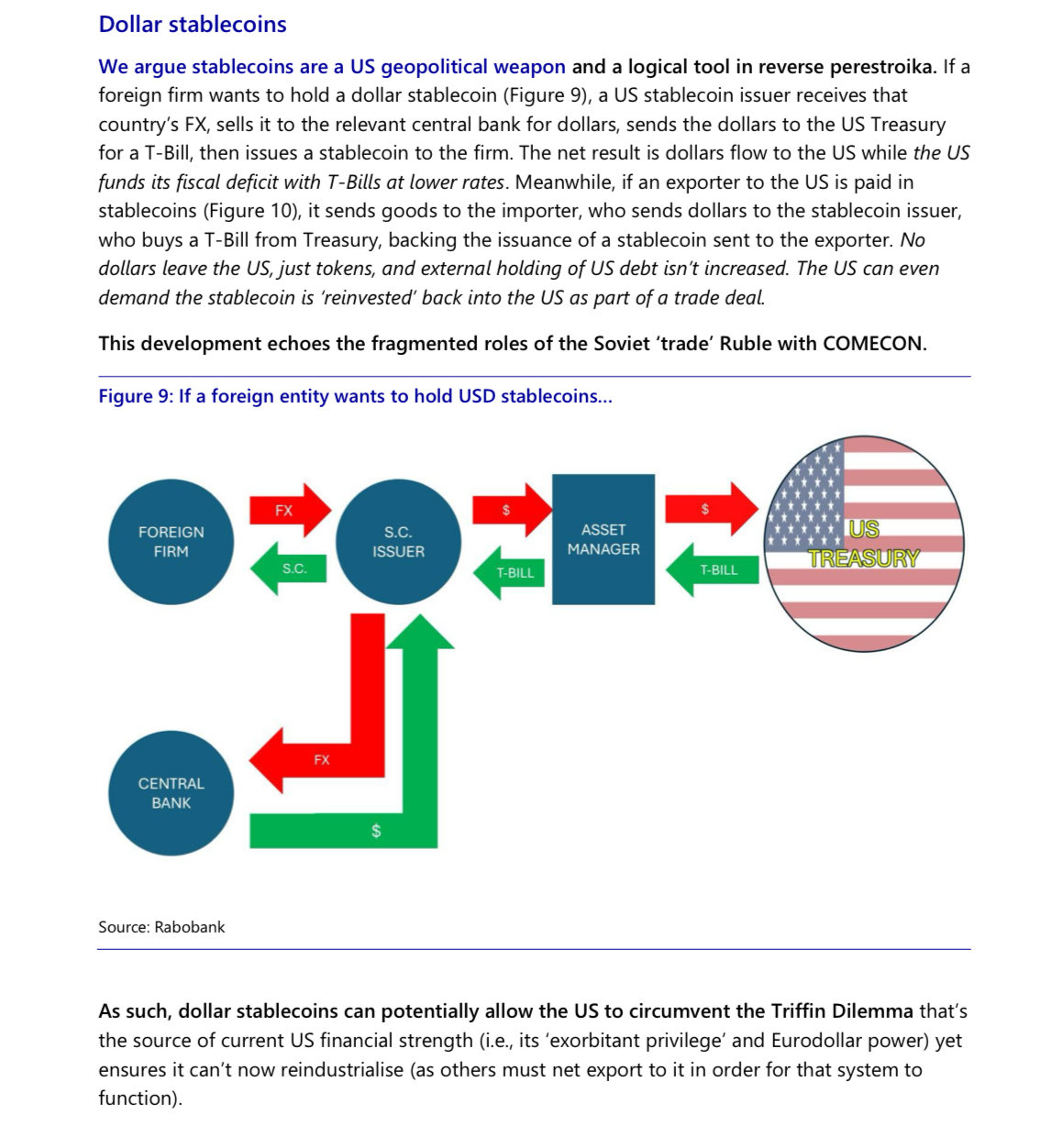
Source: X

The idea is that when a foreign firm wants a dollar stablecoin, a U.S. issuer converts that demand into Treasury bill purchases. Dollars flow back to the U.S. government, helping fund deficits at lower rates, while the firm gets digital dollars instead of cash.

In trade, it goes a step further. U.S. importers can pay exporters in stablecoins, while the underlying dollars stay parked in Treasuries. Only tokens move across borders.

With comparisons to the Soviet-era trade ruble, dollars are exported digitally… all while keeping the power at home.

Non-dollar stablecoins step up
That growing influence hasn’t gone unnoticed, with non-USD-pegged alternatives gaining ground.

For long, more than 99% of stablecoins were pegged to the U.S. dollar. That number is now decreasing at the margins.

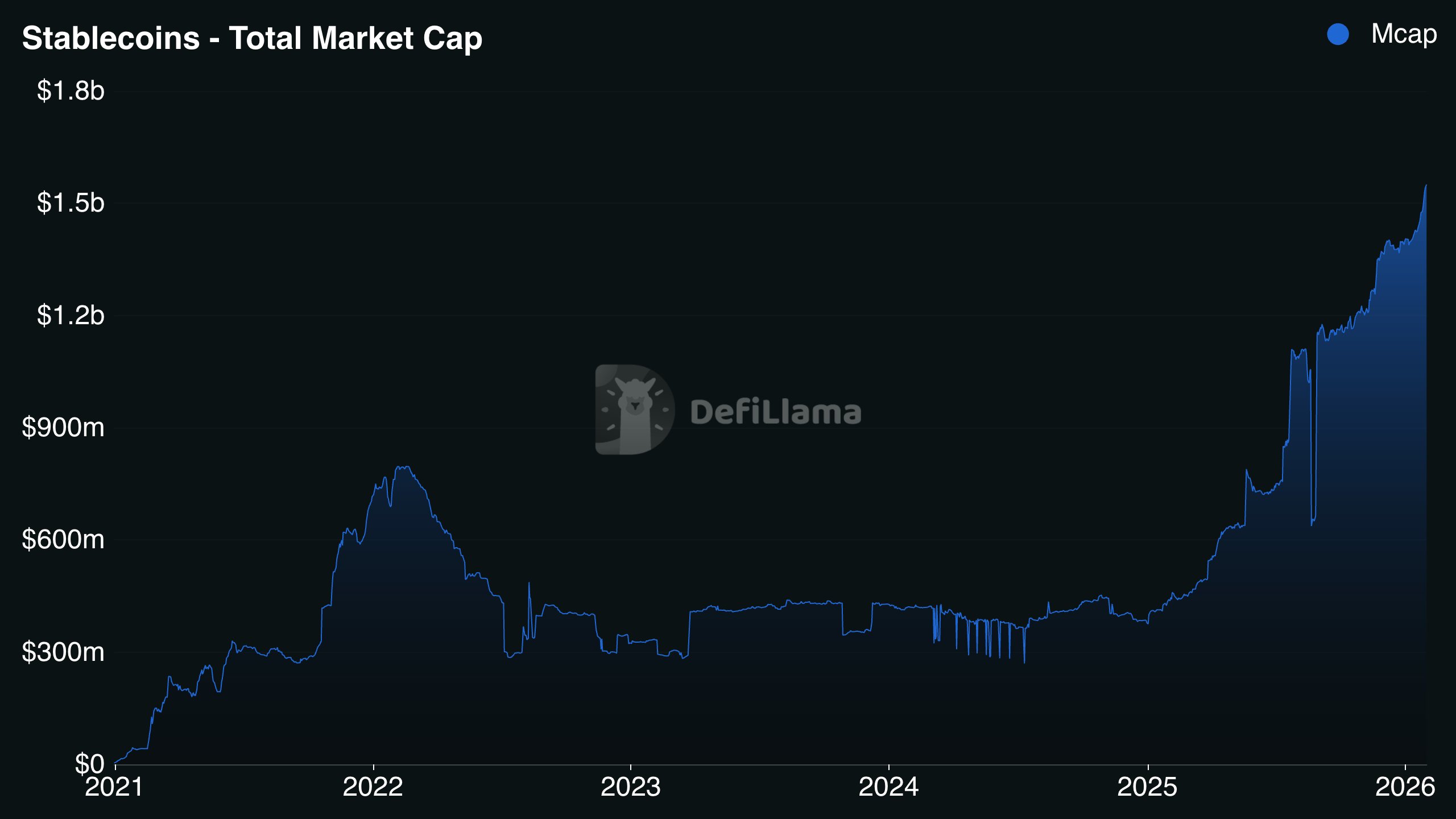
Over the past year, non-USD stablecoins have surged 260% in supply, pushing their combined market cap to about $1.55 billion.

Source: X

It’s still small next to dollar-backed giants, but it certainly matters.

All of this theory matters because…

…it’s already showing up in day-to-day payments. One of the fastest-growing payment modes for stablecoins right now is crypto cards.

Source: X

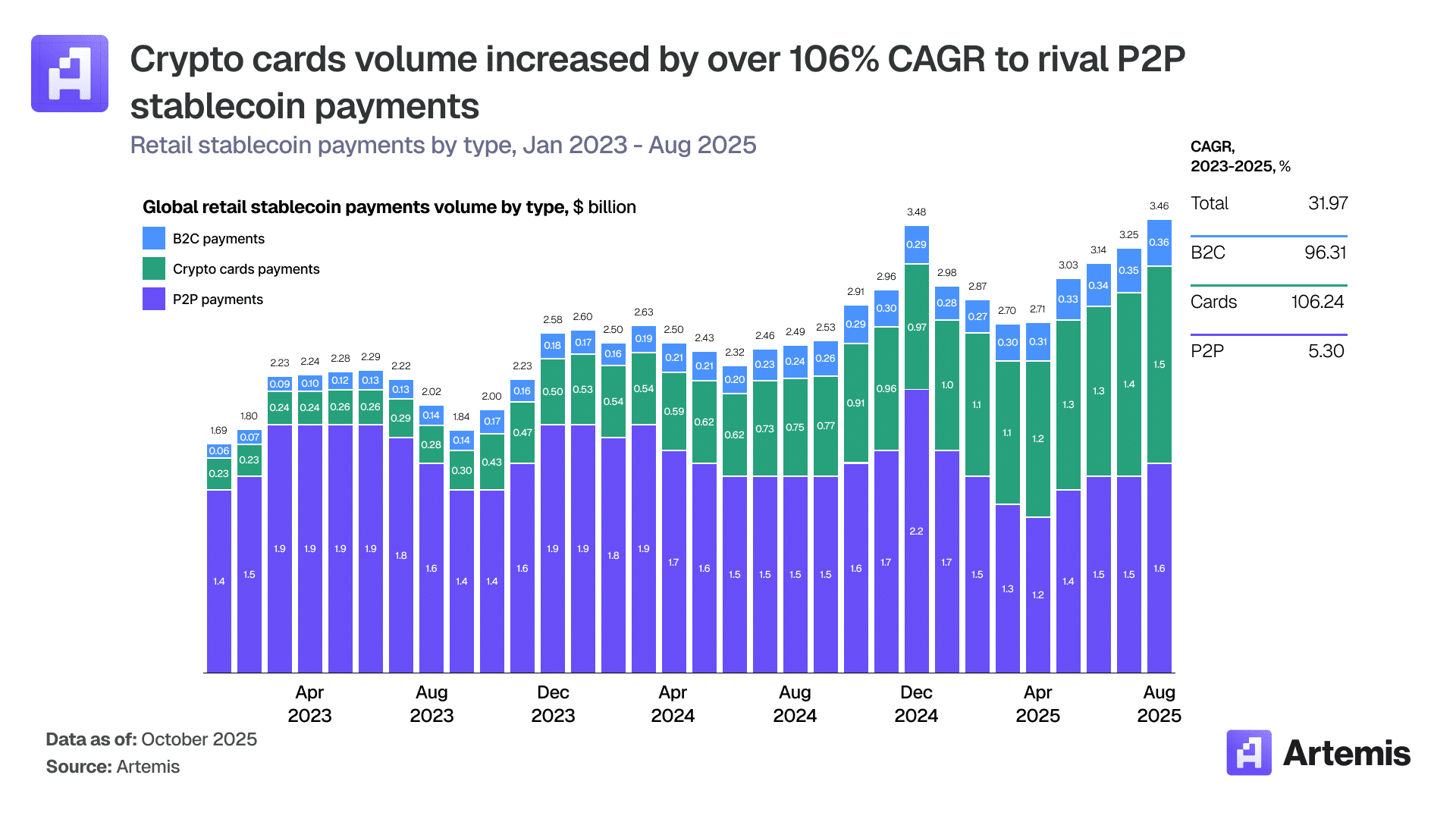
Once a niche product, crypto cards are now an $18 billion market.

Monthly volumes went from about $100 million in early 2023 to over $1.5 billion today, growing at a 100%+ annual rate.

Source: X

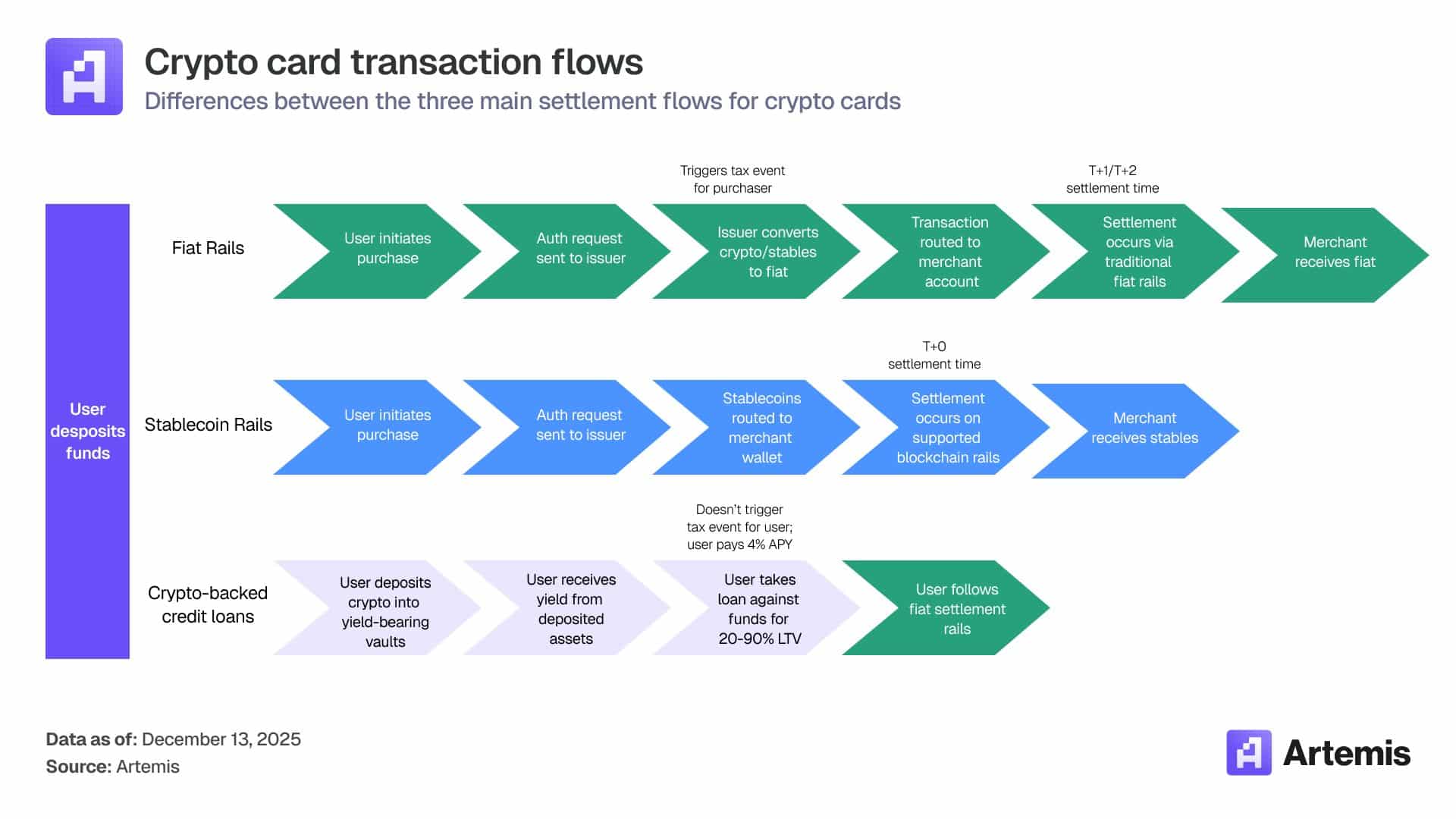
Importantly, these cards don’t replace Visa or Mastercard.

Rather, they sit on top of them. Stablecoins fund the transaction in the background, while card networks handle acceptance. For users and merchants, what looks like normal payments are actually digital dollars doing the work.


Final Thoughts

  • Dollar-backed stablecoins are exporting U.S. monetary power, without exporting actual dollars.
  • As crypto cards grow, digital dollars are moving fast.
Next: BONK drops 18% as memecoins slide – Is another leg down coming?
Share
  • Share
  • Tweet

Preguntas relacionadas

QHow are dollar-backed stablecoins helping the U.S. extend dollar influence abroad without exporting real dollars?

ADollar-backed stablecoins allow foreign firms to obtain digital dollars while U.S. issuers convert that demand into Treasury bill purchases. This keeps actual dollars within the U.S., helping fund deficits at lower rates, while only tokens move across borders.

QWhat is the current market trend for non-USD-pegged stablecoins?

ANon-USD stablecoins have surged 260% in supply over the past year, reaching a combined market cap of approximately $1.55 billion, though they remain small compared to dollar-backed stablecoins.

QHow are crypto cards contributing to the growth of stablecoin payments?

ACrypto cards, now an $18 billion market, use stablecoins to fund transactions in the background while leveraging traditional card networks like Visa or Mastercard for acceptance. Monthly volumes grew from $100 million in early 2023 to over $1.5 billion, with a 100%+ annual growth rate.

QWhat role do U.S. Treasury bills play in the stablecoin ecosystem?

AWhen foreign demand for dollar stablecoins arises, U.S. issuers purchase Treasury bills with the incoming dollars, effectively recycling foreign demand into U.S. government debt and keeping capital domestically parked.

QWhy are non-USD stablecoins gaining traction despite the dominance of dollar-backed options?

ANon-USD stablecoins are growing as alternatives to reduce reliance on U.S. dollar influence, with a 260% supply increase reflecting heightened interest in diversified digital currency pegs.

Lecturas Relacionadas

Los retiros de Bitcoin continúan: 8 años de almacenamiento en una cartera fría Coldcard terminaron en cero

Retirada de bitcoin continúa: 8 años en cartera fría Coldcard terminan en cero La cartera hardware Coldcard ha sido vulnerada, provocando una nueva oleada de retiradas de fondos de dispositivos afectados. Galaxy Research informa que el volumen total robado asciende a 1.367,05 BTC (unos 88,6 millones de dólares) desde 4.585 direcciones, superando ampliamente los 594,5 BTC reportados inicialmente el 30 de julio de 2026. La mayor parte de lo robado permanece inactiva en las direcciones de los atacantes. El problema no reside en el firmware, que ya fue actualizado por Coinkite, sino en las frases semilla (seed phrases) generadas desde marzo de 2021 debido a un error de programación. Estas frases son fácilmente descifrables, y actualizar el firmware no las cambia. Solo transferir los fondos a una nueva dirección con una nueva frase semilla elimina la vulnerabilidad. El fallo se originó al integrar la biblioteca libNgU, lo que hizo que los dispositivos dejaran de usar el generador de números aleatorios por hardware STM32 y pasaran a usar el generador software Yasmarang, inicializado con datos públicamente accesibles como el número de serie del chip. Afecta a frases semilla creadas en dispositivos Mk2/Mk3 (firmware 4.0.1–4.1.9 y hasta 5.0.3), Mk4/Mk5 (hasta v5.6.0) y Q (hasta v1.5.0Q). Se excluyen aquellas creadas con al menos 50 lanzamientos de dados independientes o una passphrase BIP-39 fuerte y única. Los usuarios deben generar una nueva frase semilla en firmware corregido y transferir sus activos. Un caso ilustrativo es el de un inversor de 39 años que perdió 2 BTC (unos 130.000 dólares) en minutos, ahorrados durante ocho años mediante trabajo físico como protección contra la hiperinflación en su país, con el objetivo de una jubilación anticipada a los 50 años. Su estrategia conservadora de "comprar y mantener en frío" se vio truncada, dejándolo devastado y decidido a abandonar las criptomonedas. Este incidente recuerda vulnerabilidades históricas por generadores de números aleatorios débiles, como la de la biblioteca BitcoinJS (2011-2015), que causó grandes pérdidas. Subraya que el almacenamiento offline no garantiza automáticamente seguridad criptográfica, especialmente cuando la entropía se ve comprometida dentro del propio dispositivo "cerrado".

cryptonews.ruHace 4 hora(s)

Los retiros de Bitcoin continúan: 8 años de almacenamiento en una cartera fría Coldcard terminaron en cero

cryptonews.ruHace 4 hora(s)

Trading

Spot
活动图片