This American Earns $250 Million a Year from Podcasting, Luo Yonghao Is Learning from Him

marsbitPublicado a 2025-12-23Actualizado a 2025-12-23

Resumen

Joe Rogan, a comedian and UFC commentator, hosts "The Joe Rogan Experience," the world's largest podcast. Known for its long-form, unscripted conversations, the show has featured high-profile guests like Elon Musk, Donald Trump, and Jensen Huang. Musk’s 2018 appearance, where he smoked a joint, went viral with over 69 million views and impacted Tesla’s stock. In 2020, Spotify secured exclusive rights to the podcast for $200 million, later renewing in 2024 for $250 million without exclusivity. Rogan’s informal, curiosity-driven style attracts audiences distrustful of mainstream media, particularly young men. His interview with Trump during the 2024 election, viewed over 50 million times, was credited as a key factor in Trump’s victory. In China, figures like Luo Yonghao are attempting similar formats, but face challenges due to shorter content preferences and less mature monetization. Rogan’s influence is coupled with controversy, including spreading misinformation on COVID-19 vaccines and conspiracy theories, highlighting the tension between free speech and responsible broadcasting.

Written by: David, Deep Tide TechFlow

You might not listen to podcasts, but you must have seen this scene.

In 2018, a picture of Musk holding a hand-rolled cigarette, surrounded by smoke, spread across the internet, becoming one of his most iconic and viral moments.

However, few people know where this scene took place, and even fewer care about who was sitting opposite him.

Actually, this was a recording session for an American podcast.

The host handed Musk a cigarette mixed with marijuana and tobacco. Musk asked, "This is legal, right?" and then took a puff.
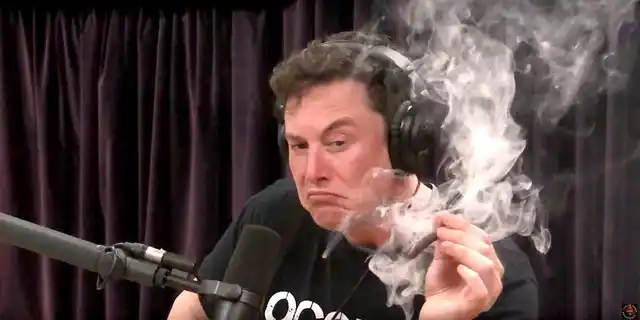
The next day, Tesla's stock price dropped by 9%.

To this day, this episode has over 69 million views on YouTube, making it the most-watched episode in the podcast's history.

What kind of show, what kind of host, could make the world's richest man do such a thing on camera?

During the 2024 US presidential election, Trump also spent three hours on this show for an interview. In his victory speech, he specifically thanked the host by name; two weeks ago, NVIDIA CEO Jensen Huang also sat in this studio, talking about AI and the chip war for two and a half hours, garnering over 2.8 million views within two weeks.

His name is Joe Rogan. His show, "The Joe Rogan Experience," is currently the world's largest podcast.

From Comedian to Podcast King, A Show Worth $250 Million

Joe Rogan's podcast influence is built on an unconventional personal resume.

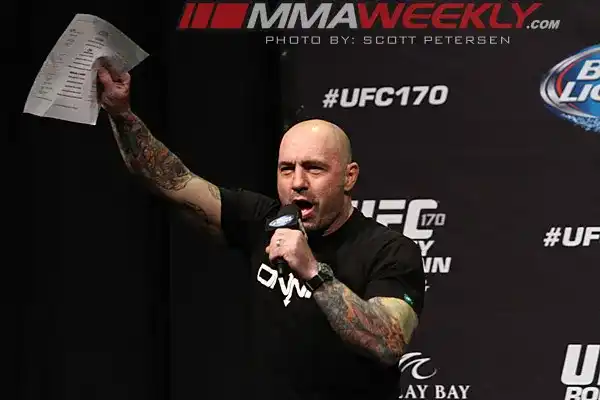
Comedian, reality show host, UFC commentator. Put these three identities together, and it doesn't seem like the profile of someone who would create the world's largest podcast.

He is not a traditional interview show host, not the kind of straight-laced, classically trained media personality. His background is actually in entertainment and the fighting world, not journalism.

But it is precisely this "unconventional" path that allowed him to create something completely different from traditional media; his ability to connect and his viewership far surpass many professional media programs.
Initially, Joe Rogan was a comedian, doing stand-up in Boston clubs in the 90s. Later, he moved to Los Angeles, acted in sitcoms for a few years, and hosted a reality show called "Fear Factor."

The show followed a shock-value format, making contestants eat bugs, jump from tall buildings, relying on gross-out and刺激 to boost ratings. In today's short-video environment, it would definitely be categorized as vulgar but high-traffic.

But what really made him break through was another job.

Starting in 1997, he worked as a commentator for the UFC, sitting cageside at the Octagon to explain mixed martial arts matches, a job he held for over twenty years. This work solidified his standing in the fighting community and accumulated a large loyal male audience for him.
In 2009, he started recording podcasts at home.

Like the starting point for many podcasts, the equipment was simple, there were no sponsors, and no business plan. But each one lasted two to three hours, chatting with friends or guests about anything.

Looking back, all those messy previous experiences actually came in handy.

Having been a comedian, he knew how to make conversations interesting and rhythmic. Having hosted a reality show, he was also comfortable being relaxed on camera. Being a UFC commentator for twenty years meant this audience was already used to listening to him talk.

Furthermore, he isn't an expert in any single field, which gives him an unconventional advantage:

He can unabashedly ask "dumb questions."

Facing a physicist, he'll ask about the most basic concepts; facing a politician, he doesn't press for policy details, but talks about "what you personally really think." This style is something you simply don't see in traditional media.

Television interviews have strict time limits, hosts must quickly get to the point. News interviews emphasize confrontation, journalists must dig out what the interviewee doesn't want to say.

Rogan's show does the opposite, giving you three hours, unedited, uninterrupted, talking about whatever you want.

The result is that many celebrities say things on his show they wouldn't say elsewhere. Musk smoking marijuana is just one example. Zuckerberg came on to talk about MMA training, looking more like a normal person than in any Congressional hearing.

Slowly, Joe Rogan's podcast became the go-to place for celebrities to "show their real side." Traditional media interviews are performances; here, they can be themselves.

As more and more celebrities appeared, the show became increasingly valuable.

In 2020, Spotify bought the exclusive distribution rights to "The Joe Rogan Experience" for $200 million, the largest deal in podcast industry history at the time.

In 2022, Rogan faced a media storm for negative comments about certain COVID-19 vaccines on his podcast, leading to several musicians pulling their music from Spotify in protest.

Right at this critical juncture, another video platform, Rumble, publicly offered $100 million to poach his podcast, but Rogan didn't bite.

In 2024, he renewed his licensing deal with Spotify, but the price rose to $250 million.
Moreover, this time he no longer accepted exclusivity; the show returned to being available simultaneously on Spotify, YouTube, and Apple Podcasts. Spotify paid more money but got fewer rights.

In 2025, "The Joe Rogan Experience" simultaneously topped the annual podcast charts on Spotify, Apple Podcasts, and YouTube for the first time.

A chat show that started recording at home sixteen years ago is now valued higher than many traditional media companies.

Podcast Chats, Precise Vote Pulling

On October 25, 2024, during the final stretch of the election campaign, Trump sat down in Rogan's Austin studio.

This episode lasted a full three hours. After recording, Trump rushed to a campaign rally in Michigan, making thousands of supporters wait an extra three hours.

What did they talk about for three hours?

UFOs. Trump said he interviewed fighter pilots who told him they saw spherical objects moving four times faster than an F-22 fighter jet.

The beds in the White House. He genuinely described his feelings the first time he walked into the Lincoln Bedroom, thinking the bed was huge because Lincoln was six foot six.

Tariffs. Trump also proposed replacing income tax entirely with tariffs. Rogan asked: "Are you serious?"

Trump said: "Of course, why not? In the 1880s, when our country was at its richest, it was all thanks to tariffs."

These topics seem unrelated, but they share one commonality:

They are things traditional political interviews would absolutely never discuss.

TV networks ask about policy details, press on controversial statements, and stick to time limits. No serious political journalist would let a presidential candidate spend ten minutes talking about UFOs and Lincoln's bed.
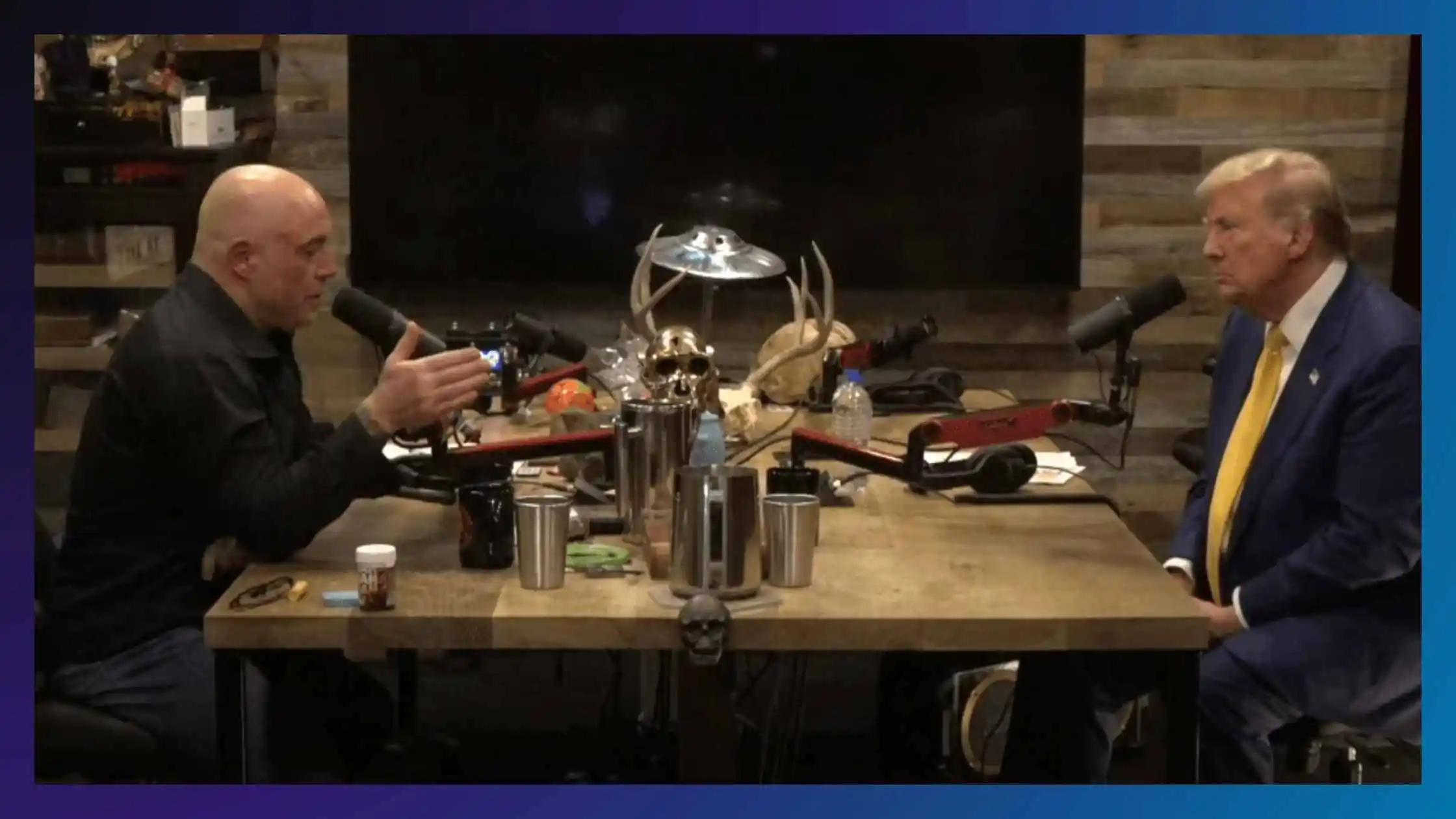
But this is precisely the characteristic of Rogan's show. Three hours, no interruptions, no set agenda, talk about whatever you want.

The audience sees not a candidate constrained by media frameworks, but a complete Trump: curious, with outrageous ideas, capable of casual conversation.

Rogan's own comment actually sums up the show's effect well:

"You say a lot of crazy things, but when traditional media takes those things and makes news out of them, it actually makes you more popular. Because people are tired of that scripted politician-speak. Even if they disagree with you, at least they know this person is real."

This sense of authenticity is especially effective with Rogan's audience.

Data from foreign research institutions shows that 80% of the show's listeners are male, with over half aged 18 to 34. Politically, 35% identify as independent, 32% lean Republican, and 27% lean Democratic. These people share a common characteristic:

They don't watch traditional TV news much, generally distrust mainstream media, but they spend hours each week listening to Rogan chat.

In other words, this is a group that is very hard to reach through traditional political communication. And Trump spending three hours sitting across from a host they trust, speaking in a relaxed, informal manner, was far more effective than any campaign ad.

After the episode went live, YouTube views quickly surpassed 50 million.

The entire video was chopped into countless clips, spreading across X, TikTok, and Instagram. Every soundbite, every outrageous statement, became standalone content, reaching people who would never click on a three-hour video.

Meanwhile, Trump's presidential election opponent, Harris, did not go on the show.

Reportedly, both sides talked, and Rogan publicly invited her. But Harris's team wanted to keep the duration under an hour, which Rogan refused. He said on his show:

"It's not that I didn't want to invite her, it's that she didn't want to come."

For comparison, Trump's episode garnered over 50 million views, while Harris's appearance on another podcast, "Call Her Daddy," got 600,000 views.

The election ended, Trump won. In his victory speech, UFC President Dana White specifically thanked Joe Rogan, listing him as one of the功臣 (key contributors) to the win.

A podcast being named in the thank-you list of a presidential victory speech is a first in American political history.

Chinese Mirror, Attempts by Luo Yonghao and Others

Can Joe Rogan's model be replicated in China?

Some are trying.

In June 2025, Luo Yonghao revealed at an AI conference that DeepSeek founder Liang Wenfeng suggested he leverage his "talent for speaking." A few months later, he launched a video podcast on Bilibili called "Luo Yonghao's Crossroads," positioning it as a counterpart to Joe Rogan and Lex Fridman.
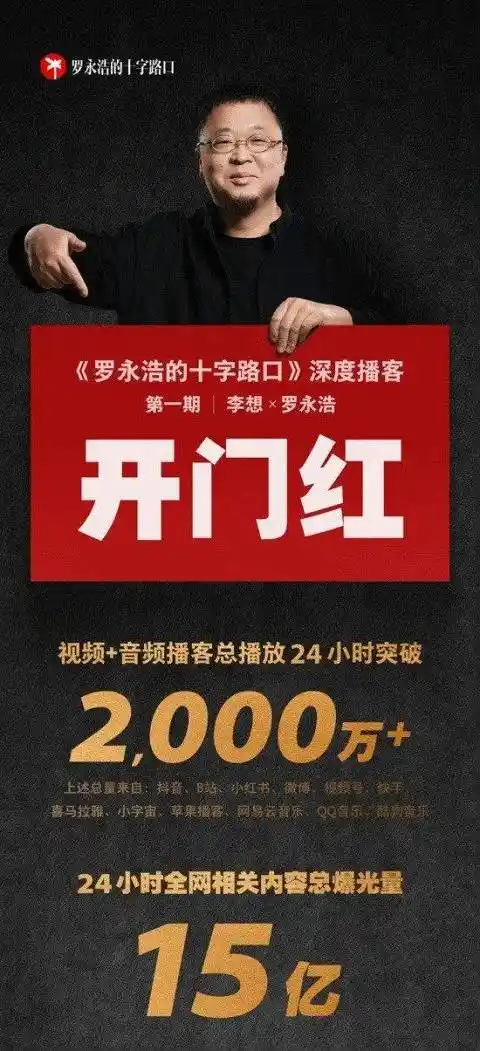
The show format is very similar to The Joe Rogan Experience: long conversations, minimal editing, three to five hours per episode.

The first guest was Li Xiang, founder of Li Auto. The two talked for four hours, from childhood trauma to his relationship with Wang Xing, daring to ask and answer anything. The reaction in the comments was:

In the short-video era, this kind of "long and satisfying super large cup" is too rare.

Luo Yonghao isn't the only one. Chen Luyu, Yu Qian, Li Dan, Yang Di—these famous talk show hosts have纷纷入驻 (flocked to) B站 (Bilibili) to do video podcasts. B站 has also made heavy investments, pouring 10 billion-level traffic support into it during the summer, providing free recording venues in Beijing, Shanghai, Guangzhou, and Hangzhou, and planning to launch AI creation tools专属 (exclusive) for podcasts.

It seems that China's video "podcast元年 (first year)" has finally arrived, but it's not that simple.

When Luo Yonghao was in conversation with Tim from '影视飓风' (Film Tornado), he mentioned his video views are around 20-30 million, while Tim believed "reaching 100 million counts as火 (being popular)." This actually reveals a structural problem:

In China's internet traffic ecosystem, long-form content is inherently at a disadvantage.

Over the past few years, users have been trained by short videos into the habit of "watching a three-minute summary of a movie." The algorithms of Douyin (TikTok) and Kuaishou reward completion rates; a three-hour video has almost no place in the recommendation pool.

More ironically, the highlight moments of many long video podcasts are often spread through几十秒 (tens-of-seconds) long clips on Douyin and Xiaohongshu.

At the same time, monetization is also a challenge.

The US podcast industry's advertising revenue exceeded $2 billion in 2024, with top hosts able to secure exclusive contracts worth hundreds of millions of dollars. In China, a podcast brand with nearly 500,000 subscribers might charge less than 40,000 RMB for a single host-read ad, with annual net income possibly only around 100,000 RMB.

YouTube has a mature AdSense revenue sharing system; the longer the video, the more ad slots, the higher the income—this incentivizes long-form content through its profit mechanism. B站's monetization capability is far from reaching this level.

There is an even more fundamental problem:

A large part of Rogan's influence comes from his ability to host people like Trump, Musk, and Huang Renjun, and these people are willing to say things on his show they wouldn't say elsewhere.

This status as an "information首发地 (first release location)" requires long-accumulated trust and a unique media environment.

Luo Yonghao can invite Li Xiang, He Xiaopeng, Zhou Hongyi—this is already the top-tier lineup in China's tech circle. But there are natural boundaries regarding the openness of topics.

So, can Joe Rogan's model be replicated in China?

The form can be learned, but the soil is different.

Controversy and Boundaries

Writing this far, there's an unavoidable question: Joe Rogan is a controversial figure.

In 2022, he caused a storm by questioning the effectiveness of COVID-19 vaccines on his show. Spotify did not drop Rogan, but added "content advisory" labels to all episodes discussing COVID-19 and removed over 70 old episodes.

This wasn't his first brush with trouble.

In 2024, he discussed the origins of AIDS with a guest on his show, spreading some claims that have been refuted by the medical community, drawing public criticism from the American Foundation for AIDS Research.

A Yale University study found that among the top ten most popular podcasts in the US, eight had spread erroneous or misleading information about climate change, with Rogan's show being among them.

His show is also a hub for various American conspiracy theories.

From the JFK assassination to UFOs, from big pharma to government surveillance, he maintains an "open attitude" towards these topics. Critics argue this provides a platform for misinformation, while his supporters believe it challenges mainstream narratives.

In July 2025, he posted on X:

"Salute to those who still don't believe in conspiracy theories, your ability to hold your ground is admirable." This post received over 15 million views.

This is also the complexity of Joe Rogan.

He is not a person of consistent stances. For example, supporting same-sex marriage, marijuana legalization, and universal healthcare are typical liberal positions. But he also questions mainstream media and provides a platform for controversial figures, which also makes him a darling of conservatives.

The reason his show has influence is precisely because he doesn't belong to any single camp. Those who have lost trust in mainstream media find an "anti-establishment" alternative in him.

But the same特质 (trait) also makes him a node for spreading misinformation. When someone with an audience of hundreds of millions says "I'm just asking questions," the questions themselves shape public perception.

This is also the inherent tension of the podcast medium:

Its charm lies in being real, relaxed, and unlimited, but when its influence reaches a certain scale, "unlimited" itself becomes a problem.

Joe Rogan is a product of this era, and also a mirror of it.

Preguntas relacionadas

QWho is Joe Rogan and what is the name of his podcast?

AJoe Rogan is a comedian, UFC commentator, and the host of 'The Joe Rogan Experience', which is currently the world's largest podcast.

QHow much did Spotify pay for the exclusive distribution rights to 'The Joe Rogan Experience' in 2020 and 2024?

ASpotify paid $200 million for the exclusive rights in 2020 and renewed the deal for $250 million in 2024, though the show was no longer exclusive.

QWhat was a significant political impact of Joe Rogan's podcast during the 2024 U.S. election?

ADonald Trump appeared on the podcast for a three-hour interview, which garnered over 50 million views on YouTube. Trump later thanked Joe Rogan in his victory speech, marking the first time a podcast was acknowledged in a U.S. presidential election victory speech.

QWhat are some of the controversies surrounding Joe Rogan and his podcast?

AJoe Rogan has faced controversy for spreading misinformation, including questioning the efficacy of COVID-19 vaccines, discussing debunked theories about AIDS origins, and hosting episodes that spread climate change misinformation and conspiracy theories.

QHow is Luo Yonghao (罗永浩) in China attempting to replicate Joe Rogan's success?

ALuo Yonghao launched a video podcast on Bilibili called 'Luo Yonghao's Crossroads', featuring long-form, minimally edited conversations of 3-5 hours with guests like Li Xiang, founder of Li Auto, in a style similar to Joe Rogan's.

Lecturas Relacionadas

Los multimillonarios detrás de las elecciones de medio mandato más costosas de la historia

**Resumen: Los multimillonarios detrás de las elecciones intermedias más caras de la historia** Esta temporada electoral está marcada por contribuciones récord de grandes fortunas. Jeff Yass, fundador de Susquehanna International Group, es el tercer mayor donante individual con más de 81 millones de dólares, apoyando principalmente causas como la libertad de elección escolar y al comité de acción política de Trump, MAGA Inc. El ciclo electoral federal ha recaudado más de 4,700 millones de dólares, y se prevé que el gasto en anuncios políticos supere los 10,800 millones. Los fondos fluyen mayoritariamente hacia los comités republicanos y los PAC asociados a Trump, que recaudaron 917 millones solo en el primer trimestre, muy por encima de los 262 millones de los demócratas. Los superricos intervienen impulsados por intereses clave: Sergey Brin y Chris Larsen invierten millones para oponerse a un impuesto a los ultra ricos en California, y figuras como Marc Andreessen y Ben Horowitz financian PACs relacionados con la criptomoneda y la IA. Entre los mayores donantes destacan George Soros (102.6 millones), Elon Musk (84.8 millones) y Miriam Adelson (42.6 millones), cuyas donaciones moldean políticas sobre Israel, tecnología y elecciones judiciales. La influencia del "dinero oscuro" anónimo sigue en aumento. Estas enormes sumas subrayan la batalla por el control del Congreso y la definición de políticas cruciales en los últimos dos años de un posible segundo mandato de Trump.

marsbitHace 25 min(s)

Los multimillonarios detrás de las elecciones de medio mandato más costosas de la historia

marsbitHace 25 min(s)

Después de 50 veces el almacenamiento, Sun Yuchen siempre está mirando al próximo decenio

La mayoría conoce a Sun Yuchen por sus excéntricas historias, desde gastar millones en cenas con Warren Buffett hasta volar al espacio. Pero detrás del escándalo, lleva una década acertando en inversiones: en 2016 recomendó comprar Bitcoin, Nvidia, Tesla y Tencent. Hoy, quienes siguieron su consejo han multiplicado su capital enormemente. Recientemente, Sun predijo el auge del almacenamiento de datos, y acciones como SanDisk (SNDK) se dispararon casi 50 veces. Ahora, su mirada está puesta en la inteligencia física (Physical AI), destacando cuatro áreas clave: 1. **Inteligencia encarnada (Robótica)**: Empresas como Unitree y Galaxy General lideran la producción y financiación de robots humanoides, impulsados por modelos VLA que permiten a las máquinas "ver" y actuar en el mundo real. 2. **Drones**: Ya son una realidad comercial, desde la agricultura hasta entregas urbanas y uso militar, siendo la primera aplicación de IA con un ciclo comercial cerrado en el mundo físico. 3. **Computación espacial**: Más allá del VR, tecnologías como el Apple Vision Pro buscan que la IA comprenda y interactúe con el espacio físico, un requisito fundamental para robots, drones y vehículos autónomos. 4. **Exploración espacial**: Sun viajó al espacio con Blue Origin y visualiza una "economía espacial" con blockchain para derechos de activos y transacciones interplanetarias. Su lógica de inversión se basa en apostar por sectores con dirección clara, diversificando entre actores clave: en robótica, apuesta por el "cuerpo" (Tesla Optimus) y el "cerebro" (Nvidia); en drones, por aplicaciones militares y comerciales; en el espacio, por SpaceX (próxima gran IPO) y Rocket Lab. En resumen, Sun Yuchen prevé que, mientras la última década transformó el flujo de información, las próximas dos décadas verán a la IA remodelar el mundo físico: robots en fábricas, vehículos autónomos, enjambres de drones y una creciente presencia humana y robótica en el espacio. Mientras muchos aún esperan oportunidades tradicionales, él ya está mirando hacia el próximo horizonte tecnológico.

marsbitHace 31 min(s)

Después de 50 veces el almacenamiento, Sun Yuchen siempre está mirando al próximo decenio

marsbitHace 31 min(s)

El mayor IPO de la historia se acerca, superando a SpaceX: 28 años de auto-iteración de la IA, cuenta atrás para la explosión de inteligencia

**Resumen: La carrera hacia el primer IPO de un billón de dólares y la cuenta atrás para la 'explosión de inteligencia'** Anthropic, la empresa de IA fundada en 2021, está cerca de una operación que la valoraría en casi **un billón de dólares**, superando potencialmente a SpaceX en lo que sería una de las OPV más grandes de la historia. Su valoración implícita en mercados previos a la OPV ya alcanza los 1,2 billones. Este frenesí inversor se debe a un crecimiento sin precedentes. Sus ingresos anuales recurrentes (ARR) se dispararon a **450.000 millones de dólares en mayo de 2026**, multiplicándose por 5 en solo cinco meses. Desde 2022, los ingresos han crecido 4.500 veces. Este crecimiento exponencial está impulsado por sus productos estrella, Claude Code y Cowork, que dominan los mercados de codificación con IA y colaboración empresarial. Sin embargo, la verdadera razón detrás de esta valoración astronómica es una audaz predicción de su cofundador, Jack Clark: **para finales de 2028, hay más de un 50% de probabilidad de que los sistemas de IA puedan automejorarse de forma autónoma**, iniciando una "explosión de inteligencia" recursiva. Clark compara esto con una impresora 3D capaz de imprimir cabezales de impresión mejores que sí misma, un concepto que cambiaría todo. Esta visión explica la estrategia de Anthropic de desbancar a gigantes de la consultoría como McKinsey mediante una empresa conjunta de 15.000 millones de dólares con Goldman Sachs y Blackstone. No se trata solo de reemplazar tareas, sino de que la IA ejecute estrategias complejas, probando si puede sustituir el trabajo cognitivo de alto nivel. Así, la vertiginosa valoración de Anthropic no solo cotiza un negocio exitoso, sino **la expectativa de un cambio de paradigma global**. La cuenta atrás hacia 2028, el año de la posible autorreplicación de la IA, ya ha comenzado, planteando tanto oportunidades extraordinarias como riesgos existenciales para la economía y la seguridad mundial.

marsbitHace 45 min(s)

El mayor IPO de la historia se acerca, superando a SpaceX: 28 años de auto-iteración de la IA, cuenta atrás para la explosión de inteligencia

marsbitHace 45 min(s)

El egoísmo refinado de Mira Murati, ex CTO de OpenAI: Pasó el cuchillo y fue la primera en pedir reconciliación

Según la evidencia y testimonios del caso de Musk contra Altman, Mira Murati, ex directora de tecnología de OpenAI y actual fundadora de Thinking Machines Lab, desempeñó un papel clave en la destitución de Sam Altman en noviembre de 2023. Ya en 2022, Murati expresó desacuerdos internos, quejándose de la presión de Altman por alcanzar objetivos de ingresos. En 2023, proporcionó materiales al cofundador Ilya Sutskever para una memorándum de 52 páginas para el consejo. También alegó que Altman mintió sobre revisiones de seguridad de IA. El 16 de noviembre, tras el despido unánime de Altman, Murati fue nombrada CEO interina. Sin embargo, los mensajes de texto revelados muestran que, mientras informaba a Altman sobre la postura firme del consejo, ya buscaba ayuda externa con Microsoft para revertir la decisión. Cuando percibió que el consejo cedía, informó a ejecutivos de Microsoft y fue la primera en firmar una petición de 750 empleados exigiendo la renuncia del consejo y la reinstalación de Altman. Una directora testificó que Murati fue "poco cooperativa" después del despido y se negó a respaldar la decisión que ella misma había impulsado, lo que llevó a los empleados a apoyar a Altman. En resumen, Murati promovió activamente la destitución, pero rápidamente cambió de bando cuando la situación se volvió en su contra, priorizando siempre sus propios intereses.

marsbitHace 55 min(s)

El egoísmo refinado de Mira Murati, ex CTO de OpenAI: Pasó el cuchillo y fue la primera en pedir reconciliación

marsbitHace 55 min(s)

La factura de la inferencia de IA se dispara, Shopify y Roblox advierten: los ahorros de los despidos no son suficientes para pagar las GPU

El primer trimestre de 2026 revela que los costes de la IA, especialmente las facturas de inferencia y la depreciación de GPUs, están superando los ahorros por recortes de personal en empresas tecnológicas. Shopify informa que, aunque la IA escribe más del 50% de su código y mantiene estable la plantilla, los costes de los LLM están presionando el margen bruto de sus suscripciones, impulsados por el uso masivo de su asistente Sidekick. Roblox ajustó a la baja su previsión de margen anual, atribuyendo un 25% de ese recorte directamente a mayores inversiones en IA. La compañía maneja millones de inferencias por segundo y planea monetizar funciones avanzadas de IA para compensar costes. A nivel macro, los gastos de capital en IA de Amazon, Meta, Microsoft y Google alcanzarán los 725.000 millones de dólares en 2026. Los ahorros por despidos, como los 24.000 millones estimados en Meta, palidecen frente a estos desembolsos, cubriendo solo una fracción del incremento en depreciación. Mientras proveedores como Nvidia o OpenAI mantienen altos márgenes, las empresas de aplicación enfrentan un dilema: sus ingresos dependen del uso de IA, pero los costes los fijan los proveedores de modelos. Las estrategias ahora se centran en integrar la IA profundamente en la plataforma (Shopify) o hacer pagar al usuario por su uso avanzado (Roblox), admitiendo que los ahorros en personal no son suficientes para cubrir la factura de los chips.

marsbitHace 1 hora(s)

La factura de la inferencia de IA se dispara, Shopify y Roblox advierten: los ahorros de los despidos no son suficientes para pagar las GPU

marsbitHace 1 hora(s)

Trading

Spot
Futuros

Artículos destacados

Cómo comprar CC

¡Bienvenido a HTX.com! Hemos hecho que comprar CC(Canton) (CC) sea simple y conveniente. Sigue nuestra guía paso a paso para iniciar tu viaje de criptos.Paso 1: crea tu cuenta HTXUtiliza tu correo electrónico o número de teléfono para registrarte y obtener una cuenta gratuita en HTX. Experimenta un proceso de registro sin complicaciones y desbloquea todas las funciones.Obtener mi cuentaPaso 2: ve a Comprar cripto y elige tu método de pagoTarjeta de crédito/débito: usa tu Visa o Mastercard para comprar CC(Canton) (CC) al instante.Saldo: utiliza fondos del saldo de tu cuenta HTX para tradear sin problemas.Terceros: hemos agregado métodos de pago populares como Google Pay y Apple Pay para mejorar la comodidad.P2P: tradear directamente con otros usuarios en HTX.Over-the-Counter (OTC): ofrecemos servicios personalizados y tipos de cambio competitivos para los traders.Paso 3: guarda tu CC(Canton) (CC)Después de comprar tu CC(Canton) (CC), guárdalo en tu cuenta HTX. Alternativamente, puedes enviarlo a otro lugar mediante transferencia blockchain o utilizarlo para tradear otras criptomonedas.Paso 4: tradear CC(Canton) (CC)Tradear fácilmente con CC(Canton) (CC) en HTX's mercado spot. Simplemente accede a tu cuenta, selecciona tu par de trading, ejecuta tus trades y monitorea en tiempo real. Ofrecemos una experiencia fácil de usar tanto para principiantes como para traders experimentados.

208 Vistas totalesPublicado en 2026.04.21Actualizado en 2026.04.21

Cómo comprar CC

Cómo comprar BLEND

¡Bienvenido a HTX.com! Hemos hecho que comprar Fluent (BLEND) sea simple y conveniente. Sigue nuestra guía paso a paso para iniciar tu viaje de criptos.Paso 1: crea tu cuenta HTXUtiliza tu correo electrónico o número de teléfono para registrarte y obtener una cuenta gratuita en HTX. Experimenta un proceso de registro sin complicaciones y desbloquea todas las funciones.Obtener mi cuentaPaso 2: ve a Comprar cripto y elige tu método de pagoTarjeta de crédito/débito: usa tu Visa o Mastercard para comprar Fluent (BLEND) al instante.Saldo: utiliza fondos del saldo de tu cuenta HTX para tradear sin problemas.Terceros: hemos agregado métodos de pago populares como Google Pay y Apple Pay para mejorar la comodidad.P2P: tradear directamente con otros usuarios en HTX.Over-the-Counter (OTC): ofrecemos servicios personalizados y tipos de cambio competitivos para los traders.Paso 3: guarda tu Fluent (BLEND)Después de comprar tu Fluent (BLEND), guárdalo en tu cuenta HTX. Alternativamente, puedes enviarlo a otro lugar mediante transferencia blockchain o utilizarlo para tradear otras criptomonedas.Paso 4: tradear Fluent (BLEND)Tradear fácilmente con Fluent (BLEND) en HTX's mercado spot. Simplemente accede a tu cuenta, selecciona tu par de trading, ejecuta tus trades y monitorea en tiempo real. Ofrecemos una experiencia fácil de usar tanto para principiantes como para traders experimentados.

219 Vistas totalesPublicado en 2026.04.24Actualizado en 2026.04.24

Cómo comprar BLEND

Cómo comprar ACN

¡Bienvenido a HTX.com! Hemos hecho que comprar AITECH CLOUD NETWORK (ACN) sea simple y conveniente. Sigue nuestra guía paso a paso para iniciar tu viaje de criptos.Paso 1: crea tu cuenta HTXUtiliza tu correo electrónico o número de teléfono para registrarte y obtener una cuenta gratuita en HTX. Experimenta un proceso de registro sin complicaciones y desbloquea todas las funciones.Obtener mi cuentaPaso 2: ve a Comprar cripto y elige tu método de pagoTarjeta de crédito/débito: usa tu Visa o Mastercard para comprar AITECH CLOUD NETWORK (ACN) al instante.Saldo: utiliza fondos del saldo de tu cuenta HTX para tradear sin problemas.Terceros: hemos agregado métodos de pago populares como Google Pay y Apple Pay para mejorar la comodidad.P2P: tradear directamente con otros usuarios en HTX.Over-the-Counter (OTC): ofrecemos servicios personalizados y tipos de cambio competitivos para los traders.Paso 3: guarda tu AITECH CLOUD NETWORK (ACN)Después de comprar tu AITECH CLOUD NETWORK (ACN), guárdalo en tu cuenta HTX. Alternativamente, puedes enviarlo a otro lugar mediante transferencia blockchain o utilizarlo para tradear otras criptomonedas.Paso 4: tradear AITECH CLOUD NETWORK (ACN)Tradear fácilmente con AITECH CLOUD NETWORK (ACN) en HTX's mercado spot. Simplemente accede a tu cuenta, selecciona tu par de trading, ejecuta tus trades y monitorea en tiempo real. Ofrecemos una experiencia fácil de usar tanto para principiantes como para traders experimentados.

184 Vistas totalesPublicado en 2026.04.28Actualizado en 2026.04.28

Cómo comprar ACN

Discusiones

Bienvenido a la comunidad de HTX. Aquí puedes mantenerte informado sobre los últimos desarrollos de la plataforma y acceder a análisis profesionales del mercado. A continuación se presentan las opiniones de los usuarios sobre el precio de A (A).

活动图片