The Stock Tokenization Revolution: A Panoramic Report on Market Dynamics, Product Architecture, and Regulatory Moats

marsbitPublicado a 2026-03-10Actualizado a 2026-03-10

Resumen

Tokenized stocks are emerging as a breakthrough sector in the real-world asset (RWA) market, with a total value exceeding $800 million—a 30x increase since the start of the year—and monthly trading volume reaching $1.8 billion. The core value proposition is enabling global, 24/7 access to U.S. equities with near-instant settlement, bypassing geographic restrictions and delays inherent in traditional finance. Three primary architectures are competing for dominance: 1. Instant execution (e.g., Ondo, CyberAlpha): maximizes capital efficiency. 2. Inventory model (e.g., xStocks, Backed): uses Swiss debt structures for superior DeFi composability. 3. Direct ownership (e.g., Securitize): offers full legal rights but limited on-chain flexibility. The market is dominated by two players: Ondo (53% share) leverages liquidity engineering, while Backed/xStocks (23%) uses regulatory arbitrage via Swiss law. Regulatory licensing—not technology—is the key moat, with complex cross-jurisdictional compliance (U.S., EU, offshore) forming the highest barrier to entry. The sector faces a trilemma between liquidity/speed, regulatory safety, and DeFi composability, and is diverging into two paths: incremental integration with traditional systems (e.g., DTCC) and revolutionary on-chain issuance for full disintermediation. The convergence of the $150 trillion global equity market with blockchain infrastructure is already underway.

Authored by: Foresight Ventures

TL;DR

  • Tokenized stocks are the breakthrough sector in the current Real World Asset (RWA) cycle—the market has hit a new all-time high of $800 million, growing 30x year-to-date, with a monthly trading volume of $1.8 billion.
  • Core value proposition: Bypass geographical restrictions and settlement delays of traditional brokers, enabling 24/7 global access to US stocks with near-instant settlement.
  • Three architectures are vying for dominance:
  1. Instant Execution Model (Ondo, CyberAlpha)—leads in capital efficiency.
  2. Inventory Model (xStocks, Backed)—excels in DeFi composability through debt structures under Swiss law.
  3. Direct Ownership Model (Securitize)—offers the most complete legal rights but is constrained by transfer restrictions and has limited on-chain composability.
  • The market has effectively formed a duopoly: Ondo leads with a 53% share, driven by liquidity engineering; Backed/xStocks hold a 23% share, leveraging regulatory arbitrage.
  • Technology is no longer the moat—regulation is. Building a cross-border licensing system across the US, EU, and offshore jurisdictions is currently the most difficult-to-replicate competitive barrier.
  • Platforms face a fundamental trilemma: they can only optimize two of the following three aspects simultaneously—Liquidity/Speed, Regulatory Security/Shareholder Rights, DeFi Composability.
  • The industry is bifurcating into two paths: Incremental (DTCC integration, increasing efficiency) and Revolutionary (direct on-chain issuance, full disintermediation).
  • Conclusion: The fusion of the $150 trillion global stock market with blockchain infrastructure is no longer just a thesis—it is happening.

1. Market Status Analysis: Deciphering the 'Silent Boom'

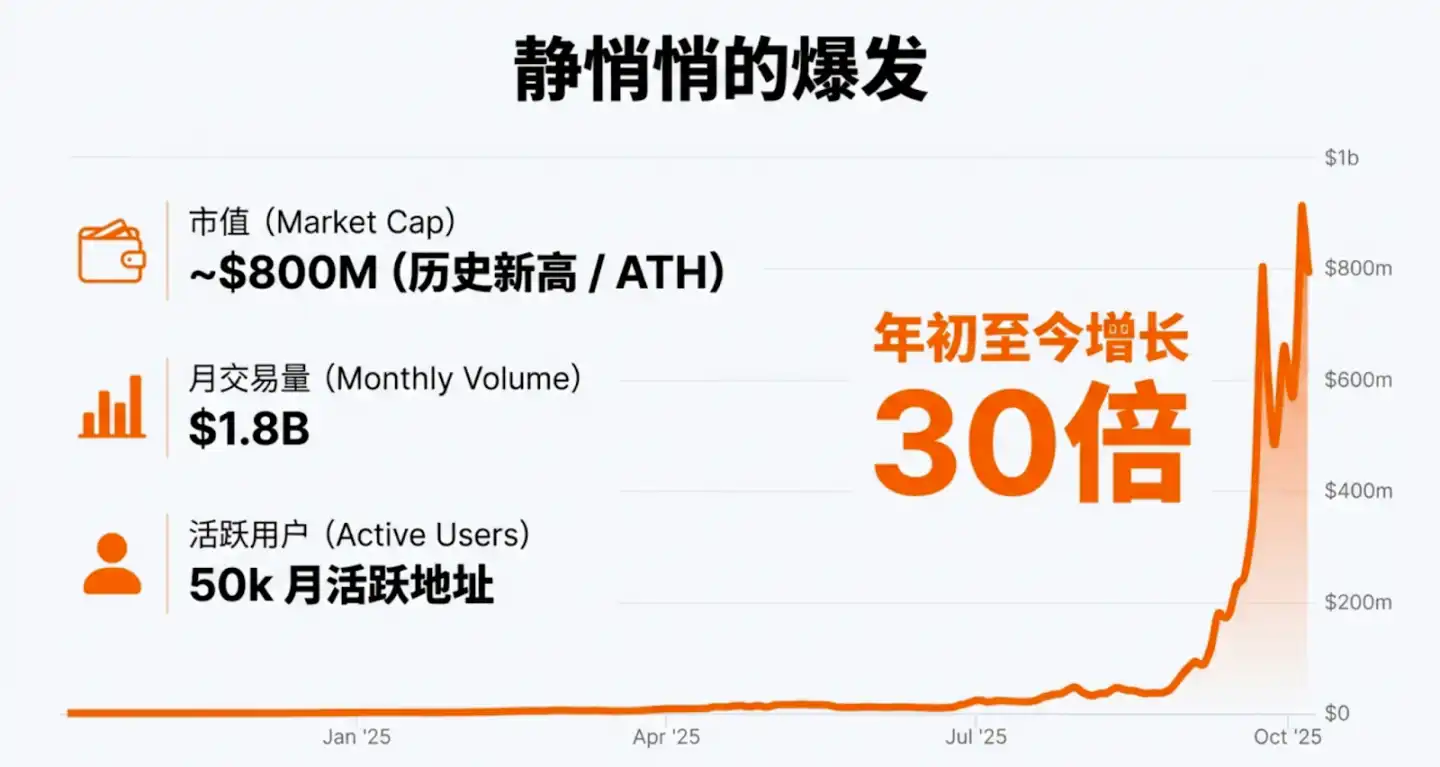
The Real World Asset (RWA) sector is undergoing structural transformation, with tokenized stocks emerging as the breakthrough sector of this cycle. The overall RWA ecosystem market cap has surpassed $800 million, growing 30x year-to-date. The integration of traditional equity assets with blockchain infrastructure signifies a fundamental shift in capital market design. This 'silent boom' is not merely an asset migration but a modernization of global liquidity—replacing fragmented traditional systems with a unified, programmable financial layer.

The following core data confirms this leap from experimental to institutional grade:

  • Market Cap Achievement: As of December 2025, the sector's market cap has reached a historic high of approximately $800 million.
  • Liquidity Velocity: Monthly trading volume has surged to $1.8 billion, indicating an active secondary market.
  • Adoption Density: The network currently supports 50,000 monthly active addresses and 130,000 total holding addresses.

This growth trajectory is fundamentally supported by blockchain eliminating the settlement friction and access barriers that have long plagued traditional finance (TradFi).
As the capital market's need for settlement efficiency becomes increasingly urgent, how tokenization addresses the chronic problems of TradFi through technological means has become the core of strategic competition in the industry.

2. Strategic Value Drivers: Solving TradFi's Friction Points

Traditional equity markets have long been constrained by the physical boundaries of legacy systems: geographical silos, restricted trading hours, and lengthy settlement cycles. The failure of the T+2 settlement system during the 2021 Robinhood/GME event, which forced brokers to restrict trading due to margin shortfalls, is a classic case study of TradFi's 'efficiency短板' (efficiency shortcoming).

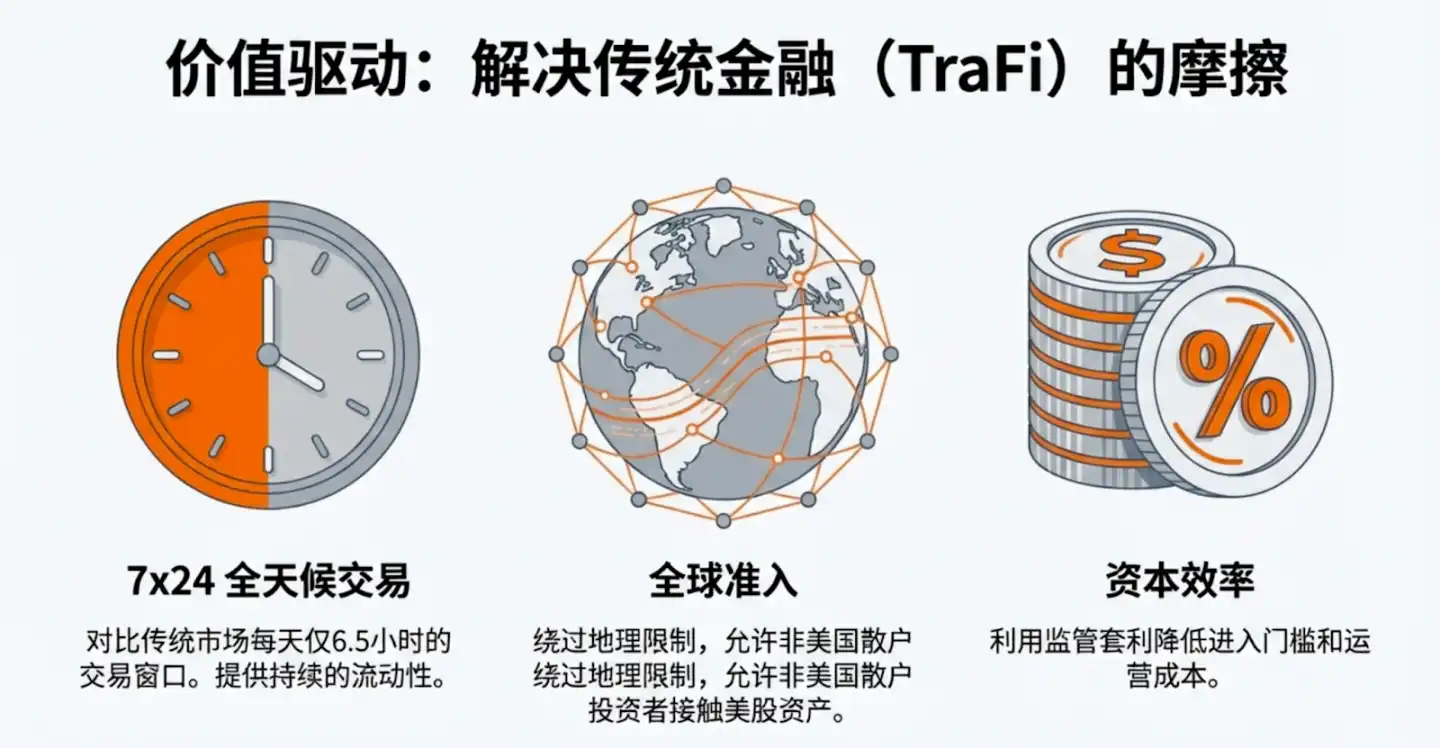
Tokenization offers strategic premium through an 'Efficiency Triple-Threat':

  • 24/7 Trading: Traditional markets operate only 6.5 hours a day. Tokenization eliminates 'opening gap' risk, allowing investors to react in real-time to global macro events.
  • Global Accessibility: Completely breaks down geographical and broker barriers, providing non-US retail investors seamless access to high-demand US stock exposure, achieving 'borderless capital'.
  • Capital Efficiency: Enables T+0 settlement through digital infrastructure, reducing collateral tie-up and operational costs caused by settlement delays.
Tokenization is not just an optimization; it bypasses the administrative bottlenecks of traditional securities businesses by providing a global, 24/7 liquidity layer. In an era of 'capital efficiency scarcity', platforms that enable instant settlement and cross-border distribution will hold pricing power.

However, the path to realizing this value driver is not singular; different product architectures determine a platform's long-term moat and risk exposure.

3. Tokenization Architecture Comparative Analysis: Three Core Models

The choice of product architecture is a strategic pivot determining scalability, DeFi composability, and systemic risk characteristics.

Three-Model Framework

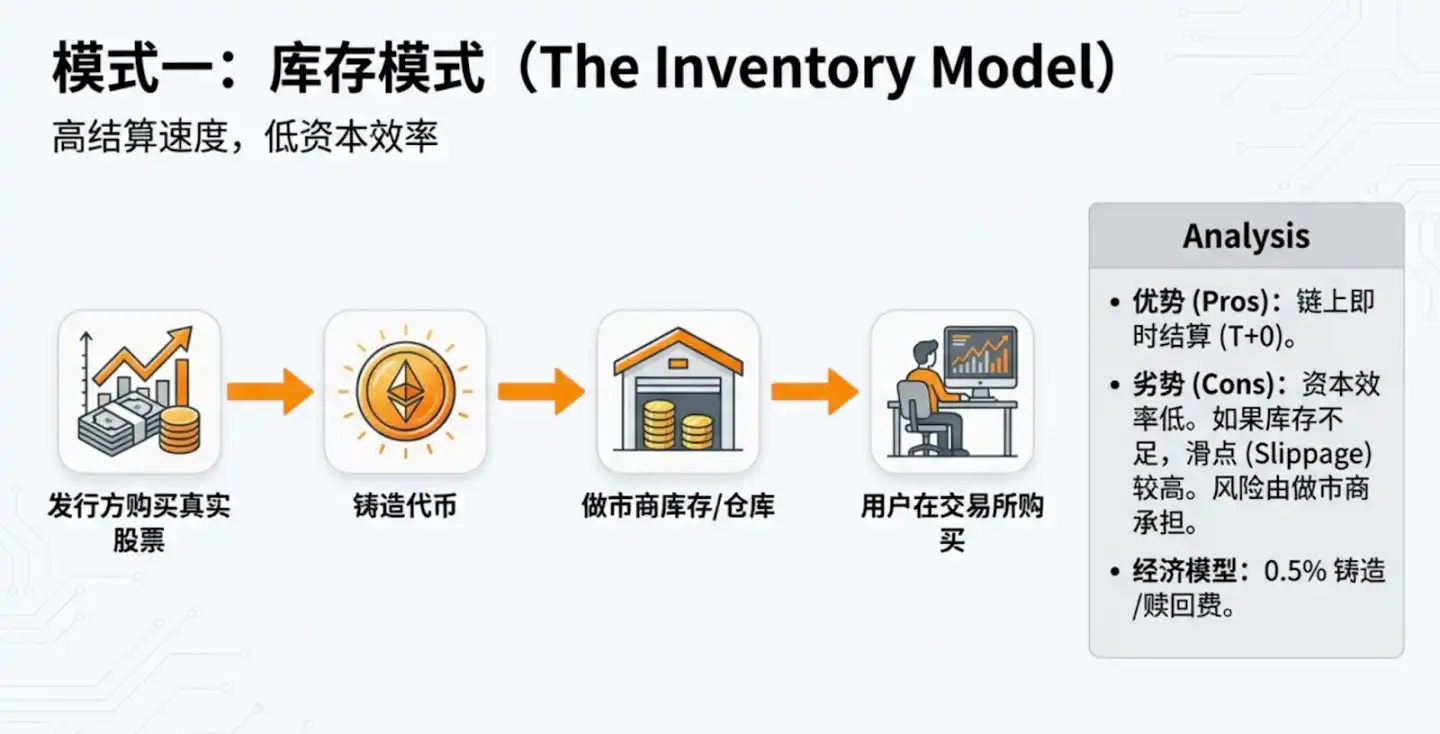
  • Inventory Model (e.g., xStocks, Backed): A 'pre-funded liquidity' solution. The issuer or market maker buys stocks in advance and mints tokens, depositing them in a warehouse ready for sale.
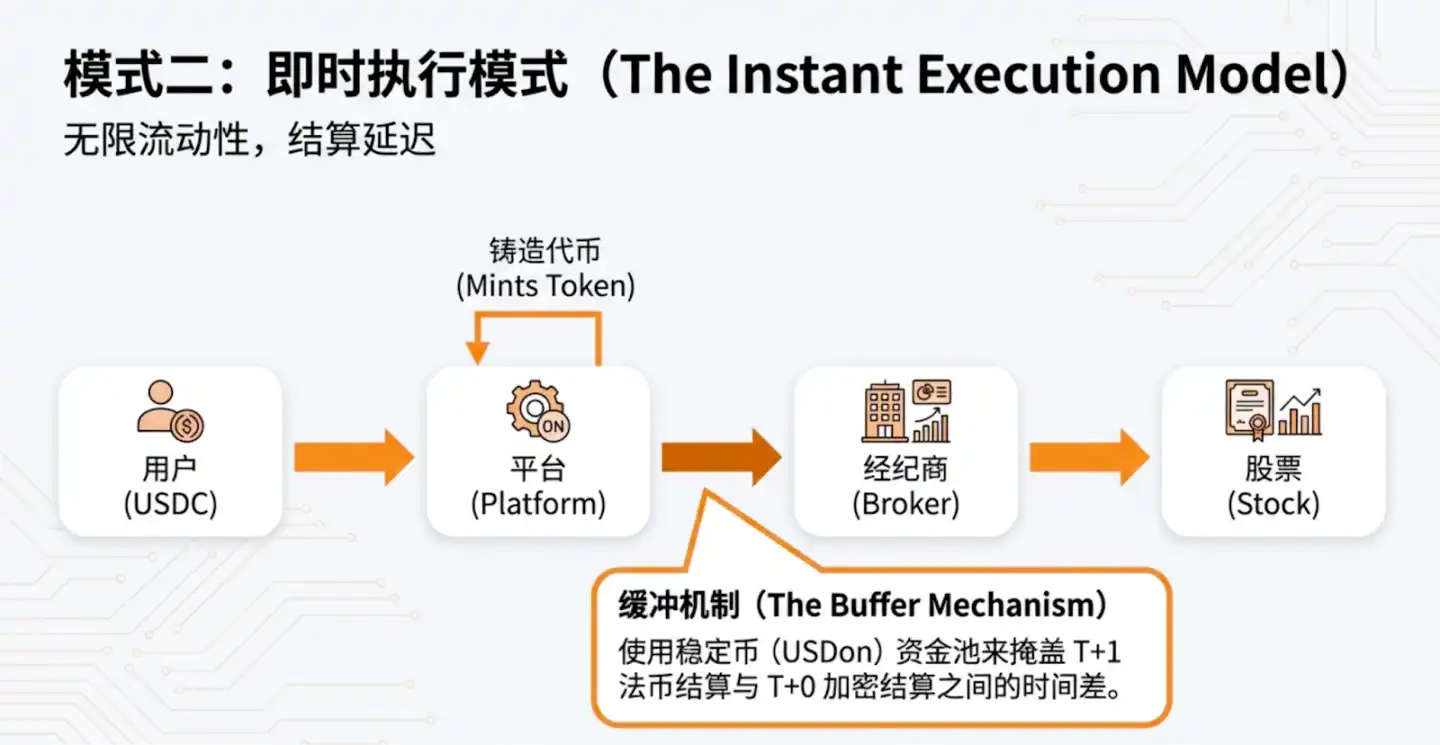
  • Instant Execution Model (e.g., Ondo, CyberAlpha): An 'on-demand liquidity' solution. Stock purchase and token minting are only triggered when a user confirms an order.
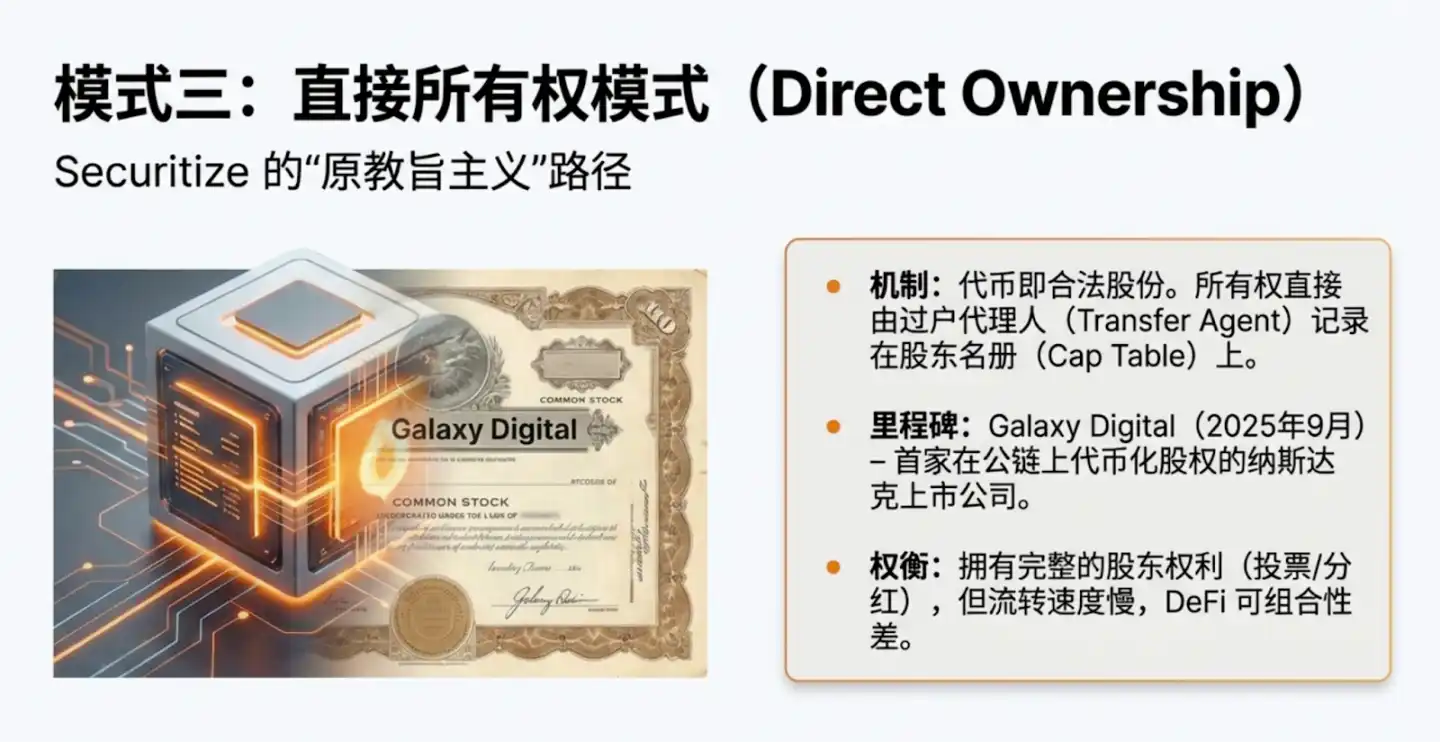
  • Direct Ownership Model (e.g., Securitize, Galaxy Digital): A 'purist' solution where the token *is* the legal share. Ownership is recorded directly on the company's cap table by a transfer agent, granting investors full shareholder rights including voting and dividends, but involves strict transfer restrictions.
Architectural Trade-off Comparison
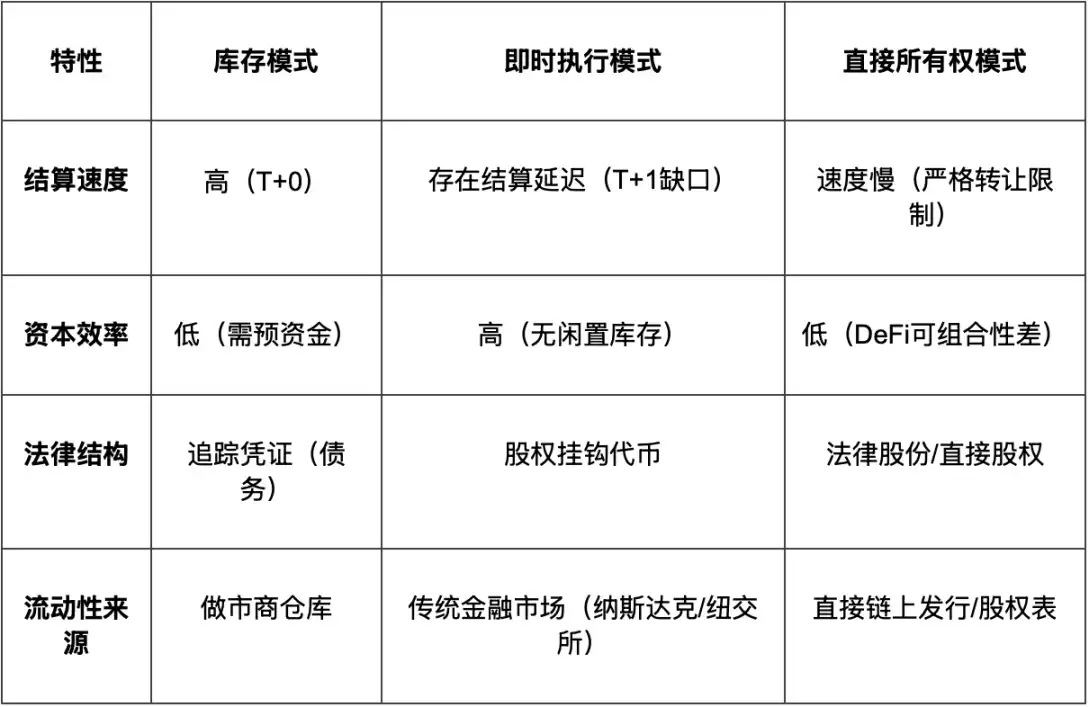
As trading volumes advance to higher levels, the technical challenge shifts to effectively bridging the gap between traditional and digital settlement cycles.

4. Competitive Landscape: Market Leaders and Challengers

The current competitive landscape shows a clear 'duopoly' and 'strategic differentiation'.
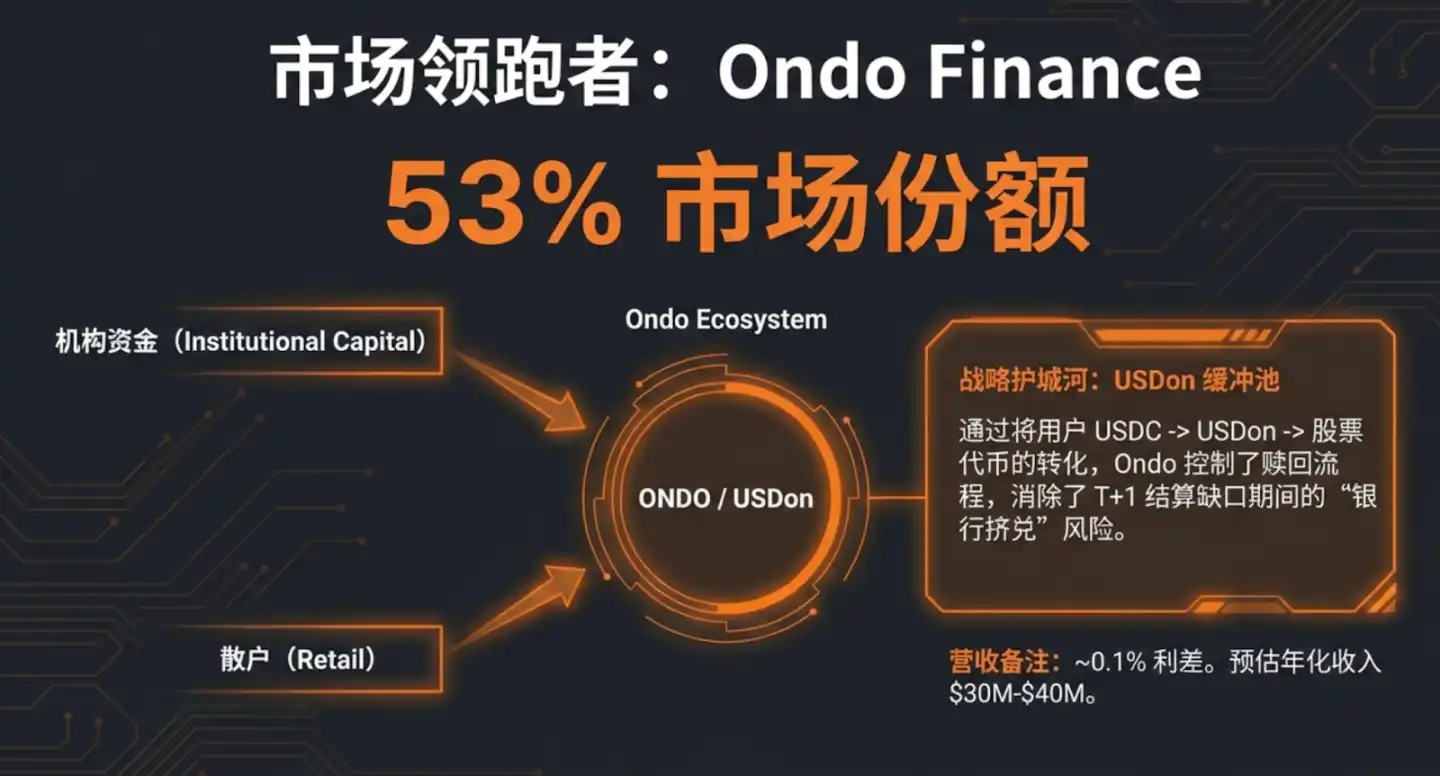
  • Ondo Finance (53% share): The absolute dominator. Its revenue engine relies on a ~0.1% trading fee spread, with estimated annualized revenue of $30M-$40M. Its core moat is a highly sophisticated USDon buffer pool and an extensive network of licensed institutional partners.
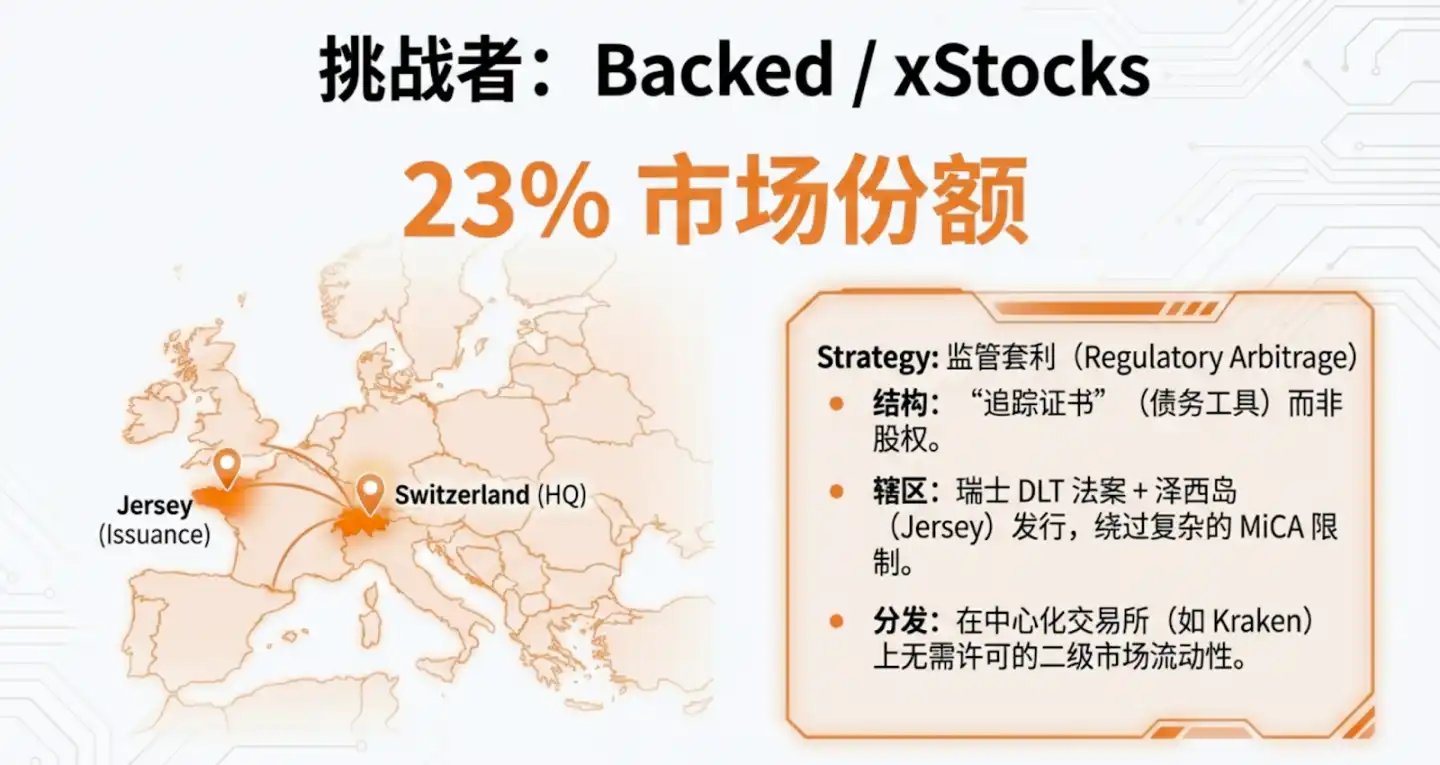
  • Backed / xStocks (23% share): Broke through using 'Legal Alpha'. By structuring products as tracker certificates (debt) under the Swiss DLT Act, they cleverly circumvented MiCA's restrictions on the transfer of direct equity tokens, enabling free flow and composition within the DeFi ecosystem.
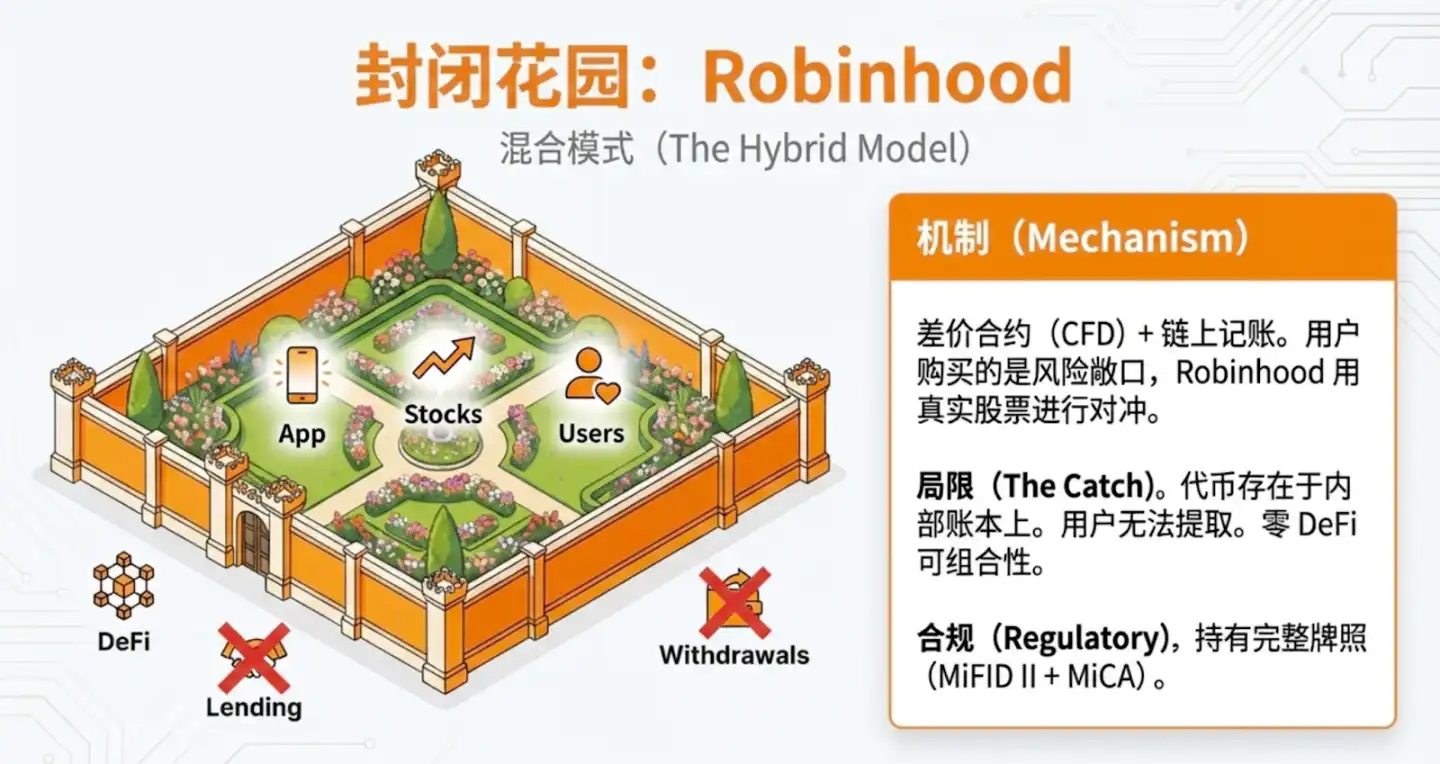
  • Robinhood (Walled Garden): Although it possesses the strongest combination of MiFID II and MiCA licenses, the lack of token extractability creates an isolated ecosystem, missing out on the open premium of DeFi.

'So What?' Level: Competition has shifted from 'user count' to a game of 'regulatory arbitrage' and 'capital efficiency'. Backed sacrificed direct equity rights through its debt structure in exchange for unlimited DeFi interoperability—a precise strategic trade-off.

5. Global Compliance Matrix: Building the Regulatory Moat

In the RWA space, 'license aggregation' is a more formidable moat than technology itself.
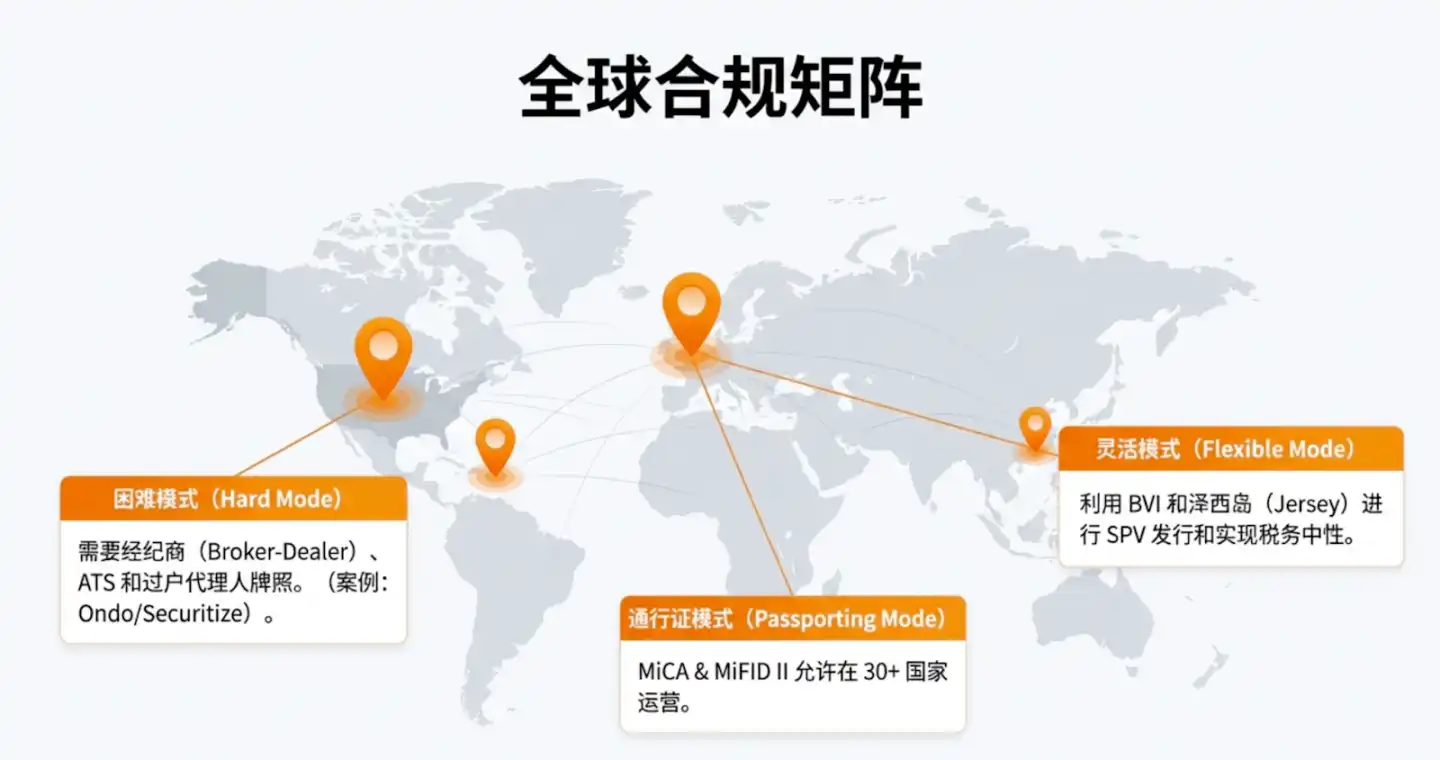
  • US Model (Hard Mode): The cornerstone of success is the 'trident' combination of Broker-Dealer, ATS, and Transfer Agent licenses. Ondo acquired this full suite of capabilities through its acquisition of Oasis Pro, mastering the complete closed loop from onboarding to secondary market matching.
  • EU Model (Passporting Mode): Leveraging the 'passporting' system of MiCA and MiFID II, companies obtaining licenses in Liechtenstein (e.g., Ondo approved by FMA) or Cyprus (e.g., xStocks approved by CySEC) can operate in 30 countries.
  • Specialized Pilots: Securitize, through a DLT pilot license from Spain's CNMV, gained permission to operate as a trading and清算 system, directly challenging the role of traditional CSDs (Central Securities Depositories).

'So What?' Level: Ondo's compliance architecture is a 'masterclass in financial engineering': ensuring tax neutrality through a BVI-based issuing entity, accessing underlying assets through US-licensed entities, achieving bankruptcy remoteness through daily proof of reserves from Ankura Trust, and finally enabling global compliant distribution through **BX Digital (Switzerland)**.

6. Strategic Outlook: Solving the Tokenized Stock 'Impossible Trinity'

The industry must balance the following three elements as it scales:

  • Liquidity / Speed: Exemplified by Ondo, optimized through buffer mechanisms.
  • Regulatory Security / Direct Rights: Exemplified by Securitize, pursuing SEC-compliant underlying direct ownership.
  • DeFi Composability: Exemplified by Backed, achieving on-chain asset flow through debt structures.
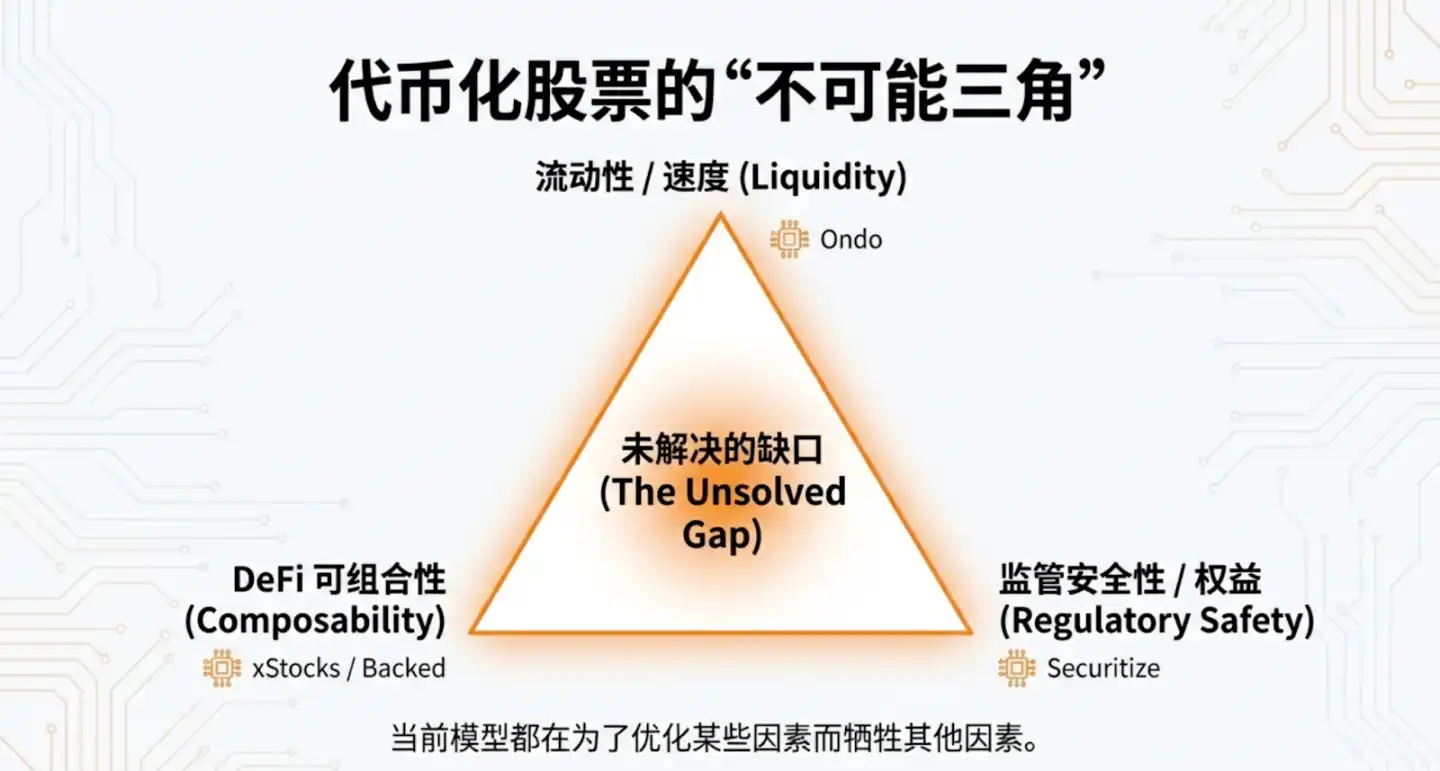
The market is currently bifurcating into two paths:

  • Evolutionary Path: Centered on DTCC integration, providing T+0 efficiency increments for incumbent financial institutions.
  • Revolutionary Path: Native on-chain issuance, exemplified by Securitize/Galaxy Digital, aiming for complete disintermediation.
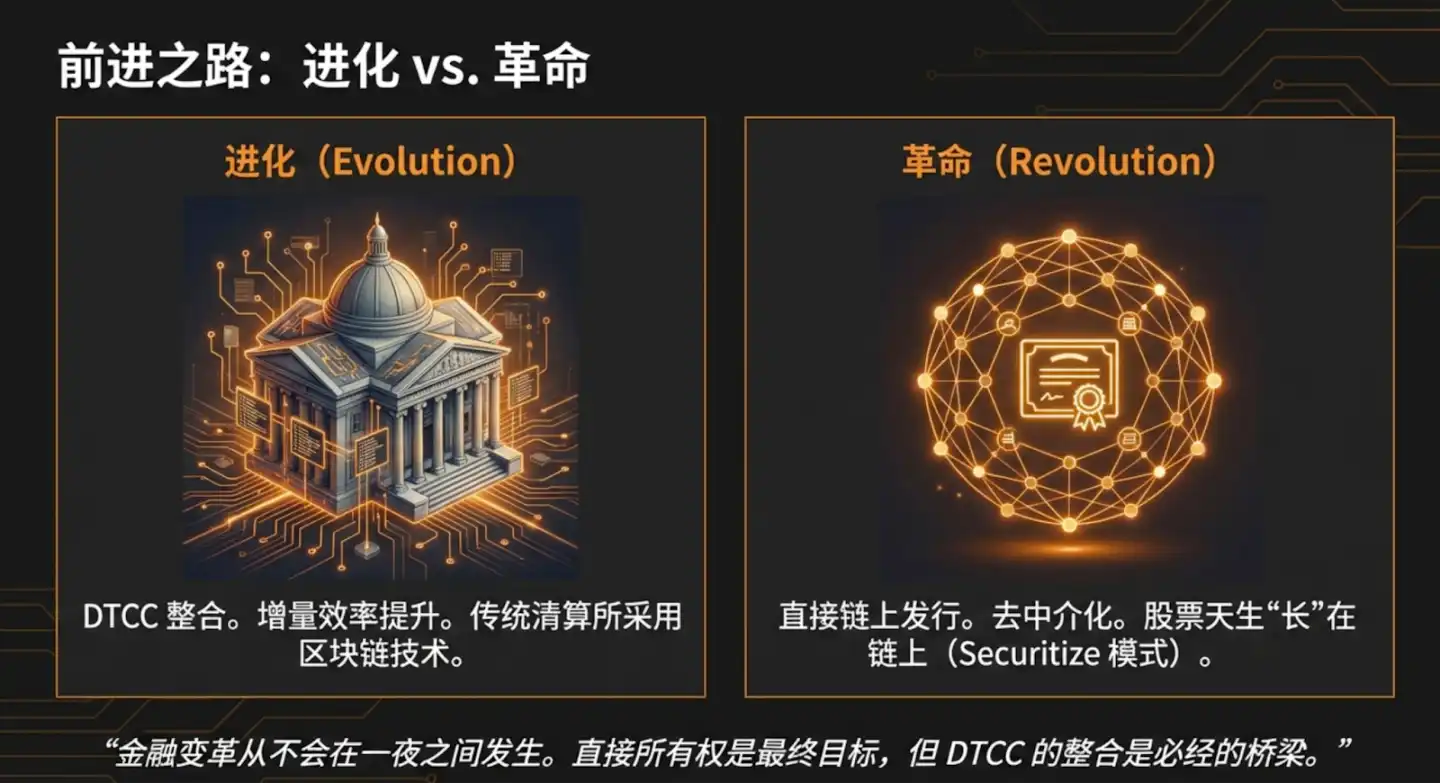
7. Summary and Core Insights

The migration of the global $150 trillion equity market onto the blockchain is now irreversible.

  • Institutional Maturity: The 30x growth and milestones like Galaxy Digital mark the industry's transition from the conceptual phase into the deep waters of licensed competition.
  • Model Superiority: The Instant Execution model, with its极高的 capital efficiency, has gained an early advantage in the current liquidity war.
  • Licenses as Barriers: Platforms capable of navigating both US underlying asset access (ATS/BD licenses) and global (EU MiCA/Offshore BVI) compliant distribution will build an insurmountable long-term moat.

'Financial transformation is never overnight. Direct ownership is the ultimate goal, but integration and optimization with the DTCC is the necessary bridge to the future.'


Preguntas relacionadas

QWhat are the three main product architectures in the tokenized stock market, and which one currently leads in capital efficiency?

AThe three main product architectures are: 1) Inventory Model (e.g., xStocks, Backed), 2) Instant Execution Model (e.g., Ondo, CyberAlpha), and 3) Direct Ownership Model (e.g., Securitize). The Instant Execution Model currently leads in capital efficiency.

QWhat is the core value proposition of tokenized stocks that addresses the pain points of traditional finance (TradFi)?

AThe core value proposition is the 'Efficiency Triple-Threat': enabling 24/7 trading, providing global accessibility to bypass geographical and broker restrictions, and achieving near-instant T+0 settlement to improve capital efficiency and eliminate delays.

QAccording to the report, what has become the most difficult competitive barrier to replicate in the tokenized stock sector, and why?

ARegulatory compliance, specifically building a cross-border licensing system across the US, EU, and offshore jurisdictions, has become the most difficult barrier to replicate. It is harder to obtain the necessary licenses (e.g., US broker-dealer, ATS, transfer agent; EU MiCA/MiFID II passports) than to develop the underlying tech.

QWhat fundamental 'trilemma' do tokenized stock platforms face, and what are the three competing elements?

APlatforms face a trilemma where they can only optimize for two of the following three elements at the same time: 1) Liquidity/Speed, 2) Regulatory Security/Direct Shareholder Rights, and 3) DeFi Composability.

QWhich two platforms currently dominate the market share of tokenized stocks, and what are their respective strategies for maintaining leadership?

AOndo Finance dominates with 53% market share, relying on its sophisticated liquidity engineering (USDon buffer pool) and extensive licensed partner network. Backed/xStocks holds 23% market share, leveraging a 'legal alpha' strategy by structuring products as debt under Swiss law to enable superior DeFi composability and regulatory arbitrage.

Lecturas Relacionadas

$GCOIN de Playnance se lista en KoinBX en medio del rápido crecimiento en India

Playnance, el ecosistema web3 de iGaming basado en blockchain, anunció el 18 de junio que su token nativo, $GCOIN, se ha listado en el intercambio KoinBX. Esta medida busca facilitar el acceso a una de las comunidades de más rápido crecimiento de la plataforma, particularmente en India, donde más de 130 socios del programa "Be the Boss" se han unido, creando comunidades con miles de jugadores activos. A través del modelo "Be the Boss", los participantes pueden crear y gestionar sus propias comunidades de juego, recibiendo incentivos por su actividad. Pini Peter, CEO de Playnance, destacó que India se ha convertido en uno de los mercados más comprometidos. Un ejemplo es el socio Dr. Nicolas, quien ha ganado más de 57.000 dólares en los últimos meses y valora la oportunidad de construir una comunidad propia. El token $GCOIN es el centro de este ecosistema, actuando como token de utilidad para recompensar la participación y alinear incentivos entre jugadores y "Bosses". Su listado en KoinBX forma parte de la estrategia de expansión global de Playnance, que busca aumentar la utilidad y accesibilidad de $GCOIN combinando propiedad comunitaria, participación gamificada e incentivos en blockchain. Fundada en 2020, Playnance procesa alrededor de un millón de transacciones diarias y desarrolla productos en cadena no custodiados con el objetivo de atraer a usuarios convencionales (Web2) hacia entornos blockchain, simplificando la experiencia del usuario sin perder transparencia.

TheNewsCryptoHace 37 min(s)

$GCOIN de Playnance se lista en KoinBX en medio del rápido crecimiento en India

TheNewsCryptoHace 37 min(s)

STRC cae a un mínimo histórico, la máquina de movimiento perpetuo de Saylor se atasca

El año pasado, Michael Saylor presentó STRC a Wall Street como un "motor de crédito digital", un ciclo perpetuo donde los inversores obtenían dividendos, MicroStrategy compraba Bitcoin, y todos ganaban. Hoy, ese motor se ha detenido. El 19 de junio, STRC cayó a un mínimo histórico de 85,32 dólares, muy por debajo de su valor nominal de 100 dólares, con un volumen de negociación inusualmente alto. Esta caída pone en duda la lógica central del producto: mantener un precio estable cerca del valor nominal para financiar continuamente la compra de Bitcoin. La máquina de Saylor funciona así: si STRC cotiza por encima de 100$, MicroStrategy emite nuevas acciones (ATM) para recaudar dinero y comprar más Bitcoin. Si Bitcoin sube, la máquina continúa. Pero ahora, tres factores convergen para una "tormenta perfecta": 1) El precio de Bitcoin se ha reducido a más de la mitad desde sus máximos. 2) Los recursos para pagar el dividendo del 11,5% de STRC se han reducido drásticamente tras pagar deuda, obligando a MicroStrategy a vender, por primera vez desde 2022, 32 BTC para cubrir dividendos, rompiendo el tabú de "nunca vender". 3) Un producto rival, SATA de Strive, ofrece mayor rentabilidad y seguridad, atrayendo a los inversores y ampliando la brecha de precio con STRC. Así, se activa un "volante de inercia inverso": Bitcoin cae, STRC se desploma, se detiene la financiación vía ATM, se vende Bitcoin para pagar dividendos, la confianza se erosiona y STRC cae aún más. Aunque Saylor argumenta que el modelo es matemáticamente sostenible con una apreciación anual del Bitcoin del 2,3%, el mercado no solo opera con lógica matemática. La narrativa ha cambiado de "nunca vender" a "vender para pagar", probando la resistencia del modelo de "empresa del Tesoro de Bitcoin" en un mercado bajista. La supervivencia de MicroStrategy no está en juego, pero la prueba de estrés para su fe en el mecanismo de financiación ha comenzado. En el clima actual de temor del mercado y señales alcistas de la Fed, ese 2,3% necesario parece más pesado que nunca.

marsbitHace 55 min(s)

STRC cae a un mínimo histórico, la máquina de movimiento perpetuo de Saylor se atasca

marsbitHace 55 min(s)

Guía para aprovechar los mínimos del mercado: Cómo evaluar las criptomonedas utilizando el flujo de caja

**Guía de Inversión en Cripto: Evaluación por Flujo de Caja con Aave como Caso de Estudio** Los inversores enfrentan el desafío de valorar activos digitales tras las caídas del mercado. Mientras que activos como Bitcoin son similares a productos básicos, muchos tokens, especialmente en DeFi, se asemejan a derechos financieros y pueden valorarse mediante flujos de caja. Este análisis toma como ejemplo a Aave, un protocolo líder de préstamos descentralizados. El informe clasifica los criptoactivos en un espectro entre "activos tipo mercancía" (ej. Bitcoin) y "activos con flujo de caja" (ej. tokens DeFi). Estos últimos derivan su valor de los ingresos generados por el protocolo subyacente y de los mecanismos que capturan este valor para los tenedores del token. Aave opera como un mercado de préstamos en cadena, generando ingresos a partir de diferenciales de tasas de interés, su stablecoin nativa GHO y su tesorería. Presenta datos financieros transparentes con un fuerte crecimiento de ingresos y márgenes de beneficio neto cercanos al 50%. Aunque ha enfrentado desafíos recientes, su dominio en el sector de préstamos DeFi, su tesorería diversificada y su hoja de ruta de desarrollo (GHO, Horizon, V4) respaldan su fundamento. Utilizando un análisis de flujo de caja descontado (DCF) y comparaciones de múltiplos P/E, Grayscale Research estima un valor razonable para el token AAVE entre 80 y 100 dólares, cercano a su precio actual (~75$). En un escenario base optimista con adopción acelerada de stablecoins y tokenización de activos reales (RWA), el valor podría subir a aproximadamente 175 dólares en un año. El informe destaca la **importancia crítica del mecanismo de captura de valor**: que un protocolo genere ingresos no garantiza que el token se aprecie. Es esencial evaluar cómo las ganancias se transfieren a los tenedores, ya sea mediante recompra y quema, dividendos u otras estructuras. Aave ha evolucionado su gobernanza para alinear más directamente los incentivos económicos del protocolo con los poseedores de AAVE. A pesar de las incertidumbres regulatorias en torno a las DAOs, marcos como la propuesta "Ley CLARITY" podrían ofrecer mayor claridad. La maduración del mercado está premiando a los proyectos con fundamentales sólidos y modelos de negocio sostenibles, marcando un alejamiento de la pura especulación hacia un análisis basado en flujos de caja y métricas tradicionales.

marsbitHace 1 hora(s)

Guía para aprovechar los mínimos del mercado: Cómo evaluar las criptomonedas utilizando el flujo de caja

marsbitHace 1 hora(s)

Tras el liderazgo del sector de semiconductores, ¿está el capital comprando pedidos de IA o una recuperación macroeconómica?

Resumen ejecutivo: Tras la noticia de un posible acuerdo entre EE.UU. e Irán que alivió la tensión en el estrecho de Ormuz, los mercados subieron el 18 de junio, destacando los semiconductores y la cadena de hardware de IA. El artículo argumenta que esta subida no se debe principalmente a una mejora fundamental repentina en la IA, sino a una ventana de reparación de valoraciones abierta por la reducción del riesgo geopolítico (que baja las expectativas de inflación y la presión sobre los tipos). La clave es ver qué áreas atrajeron el capital durante esta ventana. El análisis sugiere que el dinero no fluyó de manera generalizada a toda la tecnología, sino que se centró de forma selectiva en áreas como chips, interconexión óptica, memoria y fabricación local, partes de la infraestructura de IA con narrativas de ingresos más verificables a corto plazo (pedidos, gasto de capital). El fuerte repunte de Intel, impulsado por declaraciones políticas sobre una posible colaboración con Apple, se presenta más como un catalizador de sentimiento dentro de esta ventana, que como un cambio fundamental confirmado. En conclusión, la subida parece una reparación selectiva de la aversión al riesgo. Para que se convierta en una tendencia más sostenida del ciclo de infraestructura de IA, será necesario que los próximos resultados trimestrales confirmen la solidez del gasto en capital de las nubes públicas, los pedidos de servidores de IA y las guías de ingresos de empresas de hardware específicas.

marsbitHace 2 hora(s)

Tras el liderazgo del sector de semiconductores, ¿está el capital comprando pedidos de IA o una recuperación macroeconómica?

marsbitHace 2 hora(s)

Trading

Spot
Futuros
活动图片