
The Second Half of Macro Influencer Fu Peng's Career

marsbitPublicado a 2026-04-21Actualizado a 2026-04-21

Resumen

Fu Peng, a prominent Chinese macroeconomist and former chief economist of Northeast Securities, has joined Hong Kong-based digital asset management firm Bitfire Group (formerly New Huo Group) as its chief economist. This move, announced in April 2026, triggered an 11% surge in Bitfire's stock price. Fu, known for his accessible macroeconomic commentary and large social media following, will focus on integrating digital assets into global asset allocation frameworks, particularly combining FICC (fixed income, currencies, and commodities) with cryptocurrencies for institutional clients. His career includes roles at Lehman Brothers and Solomon International, with significant influence gained through public communication. However, in late 2024, Fu faced temporary social media bans after a controversial private speech at HSBC on China's economic challenges, though he denied regulatory sanctions. He later left Northeast Securities citing health reasons. Bitfire, a licensed virtual asset manager serving high-net-worth clients, seeks to build trust and attract traditional capital through Fu’s expertise and credibility. The partnership represents a strategic shift for both: Fu enters the crypto sector after a traditional finance peak, while Bitfire aims to leverage his macro framework for institutional adoption. Outcomes remain uncertain regarding capital inflows and compatibility within corporate structure.

Author: BitalkNews

On the morning of April 20, 2026, the stock price of New Huo Group suddenly surged, rising more than 11% during the session.

What triggered this market movement was a piece of news that simultaneously ignited the financial and crypto circles: Fu Peng, former chief economist of Northeast Securities, officially joined New Huo Group as chief economist.

The news was first disclosed by Tencent News' "First Line," and New Huo Group subsequently confirmed it. Fu Peng himself also stated to the media: "It is mainly about combining FICC and C businesses."

Among them, FICC refers to fixed income, foreign exchange, and commodities, while C refers to cryptocurrency. His main work after joining will be to incorporate digital assets into the global asset allocation framework, providing macro research and asset allocation support for New Huo's institutional clients.

This is the first time he has reappeared in the public eye with an official position nearly a year after leaving Northeast Securities. For him, this is not just a change of employer but more like a restart of his career narrative.

The first half reached the pinnacle in the traditional financial system but was interrupted by controversy and illness; the second half is chosen in Hong Kong, in the crypto track, at the intersection where traditional finance and digital assets are slowly merging.

The Path of an Atypical Chief

In 2004, Fu Peng joined Lehman Brothers and later served as the head of global macro hedge strategy design at Solomon International Investment Group, responsible for currency, commodity, and major asset linkage analysis, for nearly four years.

He returned to China at the end of 2008 and worked at institutions such as Shandong High-Tech Investment, CIFCO, Galaxy Futures, Galaxy Securities, and Essence Securities.

In February 2020, he joined Northeast Securities as chief economist. His approach in this role differed from most of his peers: he made self-media his main battlefield.

He often used analogies and metaphors to explain economic logic, with a performance-style flair. His Weibo account, "Fu Peng's Financial World," has accumulated over 4 million followers, while his Douyin (TikTok) followers have reached 1.485 million. On Xiaohongshu and Bilibili, he has 355,000 and 773,000 followers, respectively.

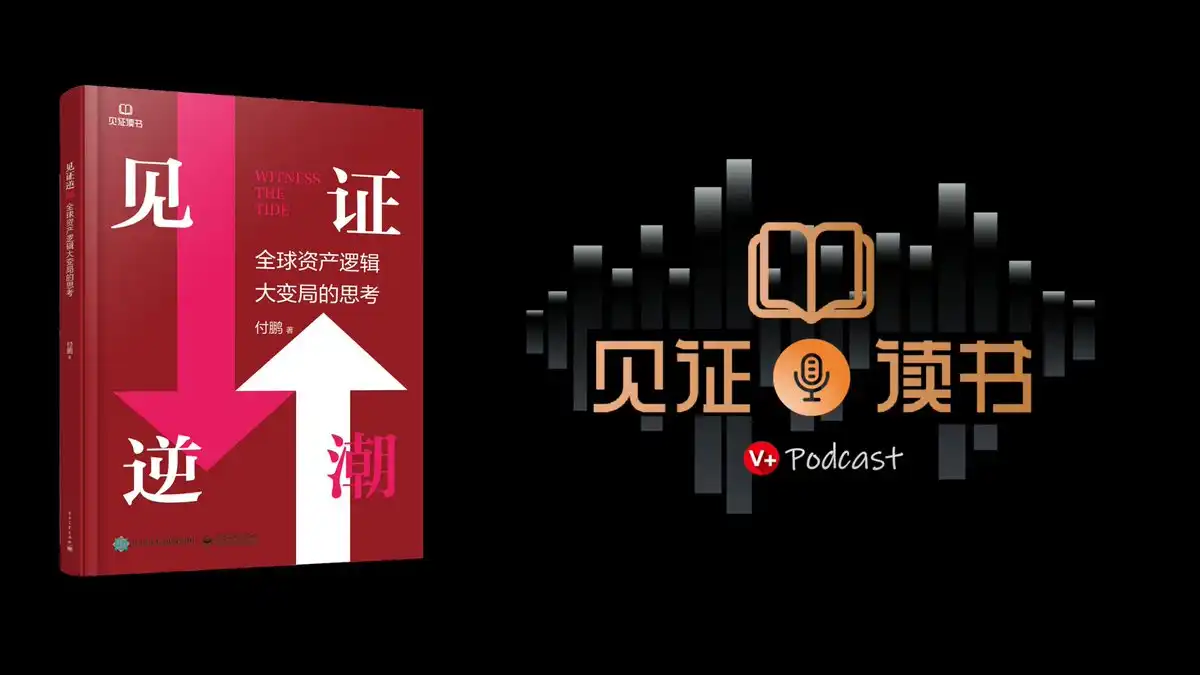
In 2024, he published "Witnessing the Countercurrent," using a three-layer framework of "politics/distribution—macro—assets" to explain changes in global asset logic after 2016.

This approach gave him high recognition in the financial circle, making him an analyst who could present complex macro logic in an accessible way to ordinary investors.

The Consequences of a Speech

In late November 2024, Fu Peng was invited to give a year-end speech at an internal HSBC Private Wealth Planning event in Shanghai. The content covered China's declining demand, shrinking middle-class income,加剧的消费分化, and his judgment that current stimulus policies could not replicate the effects of the 2008 measures.

The recording and transcript were widely circulated online, removed from multiple platforms, and his WeChat and short video accounts were banned for nearly half a year.

Rumors emerged that he was canceled due to regulatory talks. Fu Peng publicly responded, directly criticizing HSBC, sharing chat records, and stating, "A lawyer's letter is already on the way, waiting for your apology."
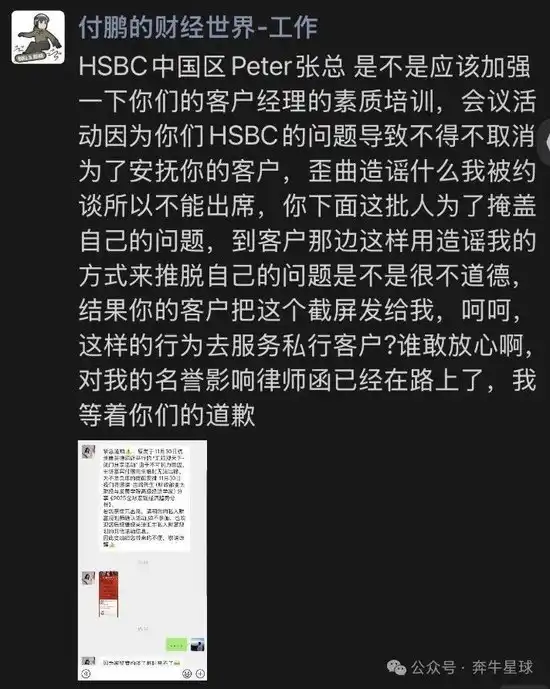
Northeast Securities also stated: There has been no recent regulatory discussion. HSBC responded that it was "looking into the relevant situation." After that, the matter quietly faded from public discussion, with no further progress, eventually ending without resolution.

During the account ban, Fu Peng's channels for public expression were significantly reduced.

On April 30, 2025, he officially resigned from Northeast Securities, explaining externally: He had just undergone two major surgeries and needed to rest for more than half a year.

Predictive Ability and Boundaries

Among Fu Peng's fan base, there are many stories about his accurate predictions, covering the 2008 financial crisis, the recovery of the Japanese stock market, and the turning point of China's real estate cycle. Since 2016, he has consistently emphasized de-globalization and changes in interest rate trends, with parts of his framework later validated to some extent.

However, his prediction record is not consistent. There have been clear deviations in short-term exchange rates and specific policy windows, with some judgments criticized as overly pessimistic or significantly inaccurate due to policy interventions. He himself admits that macro research focuses on structural variables, not next quarter's data. This is both a methodological explanation and a preventive clarification for short-term inaccuracies.

What he provides is a framework for interpreting the world, not a stable, reproducible prediction tool. Describing him as a prophet who gets everything right is a misinterpretation.
One of his major advantages is his ability to express complex macro logic in an accessible manner while maintaining relatively independent judgment. This allows his influence to reach a broader audience, and this characteristic is precisely what New Huo Group needs most.

Why Choose New Huo

Theoretically, Fu Peng had more than one option for his comeback. Traditional securities firms would welcome him back, and the role of chief economist is familiar to him, but he chose New Huo.

The space in traditional finance is narrowing. For someone who spoke so bluntly in the HSBC speech, returning to the system would mean something he likely understands better than anyone.

His skill set was never limited to traditional assets; FICC has always been his forte. After institutionalization, the connection between crypto assets and macro logic has become increasingly evident. Interest rate cycles, dollar liquidity, geopolitical risk premiums—these variables affect both traditional and digital assets.

There is also a more practical factor: a comeback requires a suitable stage.

New Huo Group is licensed in Hong Kong, listed on the Hong Kong stock exchange, and operates within a compliance framework. At the same time, its size and stage provide enough flexibility to allow a strong-minded individual to build a new research system. This is a completely different situation from playing a fixed role in a mature large institution.

Why New Huo Needs Him

New Huo Group currently positions itself as a digital asset management institution for high-net-worth clients. It holds Hong Kong SFC Type 1, 4, and 9 licenses and a TCSP trust license, making it one of the较早实现全牌照虚拟资产管理的机构 in Hong Kong.

In 2025, Weng Xiaoqi became CEO, launched the Bitfire Premium service, acquired a majority stake in the Japanese licensed exchange BitTrade, exited the retail market, and focused on family offices, listed companies, and institutional clients. At the end of March 2026, the company was renamed New Huo Group Holdings Limited, with the English name Bitfire Group.

Financially, total revenue for the 2025 fiscal year was HKD 8.661 billion, a year-on-year increase of over 450%, but growth was mainly driven by low-margin crypto OTC trading volume. The company整体依然亏损. Management has designated 2026 as the year for profitability, with significant pressure.

The compliance framework is in place, and growth numbers are impressive, but what New Huo truly lacks at this stage is not流量, but trust.

The clients it serves—family office partners, financial executives of listed companies, private investors with substantial wealth—do not lack information or data. What they lack is a narrative framework that can make them comfortable with digital assets and a professional image from the traditional financial world.

Weng Xiaoqi stated this logic quite bluntly: "Fu Peng's profound global macro research capabilities and precise market liquidity insights will become the company's top strategic brain... helping clients accurately grasp certainty in the era of 'FICC+C.'"

Fu Peng's background in international investment banking and hedge funds, his independent public persona, and his million-level influence constitute a recognizable professional signal for traditional wealthy individuals evaluating whether to allocate more funds to digital assets.

This is a transaction where both sides get what they need.

A Beginning Without a Conclusion

On one side is a person who emerged from the traditional financial system, experienced highs, controversies, and a forced interruption, now seeking a space to continue expressing and contributing. On the other side is a company striving to transition from a trading platform to an institutional service provider, attempting to establish a language more easily understood by traditional capital.

Can the appeal of macro narratives translate into real institutional capital inflows? How long can Fu Peng's independent style last within the framework of a listed company?

Will the trust of traditional wealthy clients in digital assets ultimately be built on framework认同, or will it still require further regulatory developments? These questions will take time to answer.


Preguntas relacionadas

QWhat is the immediate market reaction to Fu Peng joining Xinhua Group, and what was the stock performance?

AXinhua Group's stock price surged by over 11% during the morning session on April 20, 2026, following the announcement of Fu Peng's appointment as Chief Economist.

QWhat are Fu Peng's main responsibilities at Xinhua Group, particularly regarding FICC and C?

AFu Peng's primary role is to integrate digital assets into the global asset allocation framework, providing macro research and asset allocation support for institutional clients, with FICC referring to fixed income, currencies, and commodities, and C referring to cryptocurrencies.

QWhy did Fu Peng leave his previous position at Northeast Securities, and what was the public reason given?

AFu Peng left Northeast Securities in April 2025, with the public explanation being that he needed to recuperate for over six months after undergoing two major surgeries.

QWhat incident led to Fu Peng's social media accounts being suspended, and how did he respond?

AHis accounts were suspended after a speech at a HSBC private wealth event in late 2024, where he discussed sensitive economic issues. He publicly criticized HSBC, threatened legal action, and shared chat records demanding an apology.

QWhy does Xinhua Group need someone like Fu Peng, and what does his appointment signify for their business strategy?

AXinhua Group needs Fu Peng to build trust with high-net-worth and institutional clients by providing a credible macro narrative for digital assets, leveraging his traditional finance background and public influence to attract traditional capital into the crypto space.

Lecturas Relacionadas

Me tomó un año ver la cruda verdad sobre los pagos de Agentes

Después de un año trabajando en la infraestructura para la economía de agentes, el autor revela verdades poco alentadoras sobre los pagos de agentes. A pesar del gran interés y los recursos invertidos por empresas como Stripe, Visa y Coinbase, la demanda real y el volumen de transacciones son mínimos actualmente. El artículo analiza cuatro categorías principales: **Agente vs. Comerciante:** La experiencia de compra conversacional con IA a menudo es inferior a las interfaces visuales tradicionales de comercio electrónico para productos como ropa o electrónicos. Los comerciantes se están preparando para una posible adopción futura ("optimización para agentes"), pero no es una necesidad crítica actual. Las excepciones podrían ser compras de alta frecuencia y baja deliberación, como pedir comida, pero las plataformas principales no tienen API abiertas, y los costos de los modelos son prohibitivos para transacciones pequeñas. **Agente vs. API:** Los desarrolladores ya tienen soluciones para pagos de API de bajo valor (como saldos prepagos). Los principales proveedores de SaaS prefieren contratos empresariales a largo plazo en lugar de micropagos. Los protocolos descentralizados pueden servir al mercado de cola larga de servicios más pequeños, pero este nicho tiende a tener un bajo poder adquisitivo. **Agente vs. Agente:** Este es un caso de uso futuro prometedor para transacciones automatizadas entre máquinas, con requisitos únicos de velocidad y escala. Sin embargo, actualmente es en gran medida teórico, con un volumen de transacciones insignificante. **Agente vs. Finanzas:** Esta es la única categoría con demanda existente y clientes dispuestos a pagar, ya sea para automatizar flujos de trabajo financieros existentes o habilitar nuevas capacidades (como reequilibrar carteras en tiempo real). La competencia es dura debido a la regulación y las relaciones establecidas. La conclusión clave es que el problema central no es el pago en sí. El pago es solo un subcomponente de un desafío mayor: la **coordinación** entre agentes y humanos, la verificación del trabajo y la liquidación de resultados. Las empresas que resuelvan el problema de la coordinación a gran escala integrarán los pagos, y no al revés. Las grandes empresas pueden permitirse construir de manera defensiva para el futuro, pero las startups deben encontrar mercados reales y activos hoy en día.

链捕手Hace 10 min(s)

Me tomó un año ver la cruda verdad sobre los pagos de Agentes

链捕手Hace 10 min(s)

Claude Opus 4.8 encuentra un bug de 4.500 millones de dólares, la era de la IA está produciendo hackers en masa

Un investigador de seguridad descubrió un grave error en el protocolo Orchard de Zcash, el cual permitía la creación ilimitada de tokens, llevando a una caída del 50% en su valor. Este bug fue identificado utilizando Claude Opus 4.8 de Anthropic, un modelo de IA disponible públicamente. El caso destaca cómo la IA democratiza la ciberseguridad, reduciendo drásticamente el costo de encontrar vulnerabilidades. Modelos potentes y accesibles como Opus 4.8 permiten que tanto investigadores como potenciales atacantes descubran fallos complejos que antes requerían expertos dedicados. Esto genera una paradoja: un aumento masivo de informes de seguridad, muchos de baja calidad o falsos, que saturan a los mantenedores de software, a menudo voluntarios sin recursos. Simultáneamente, se exponen vulnerabilidades reales y antiguas en la base de nuestro mundo digital. La industria enfrenta una crisis de talento, con una escasez global de profesionales capacitados para analizar, priorizar y reparar estas fallas. Mientras la IA abarata el descubrimiento, la reparación sigue siendo costosa y requiere juicio humano experto. En esencia, la IA ilumina las grietas en los cimientos de nuestra infraestructura digital. La verdadera prueba será si contamos con suficientes personas dispuestas y capaces de repararlas, manteniendo la frágil cadena de confianza sobre la que se construye la vida en línea.

marsbitHace 44 min(s)

Claude Opus 4.8 encuentra un bug de 4.500 millones de dólares, la era de la IA está produciendo hackers en masa

marsbitHace 44 min(s)

Predicción del precio de Ethereum: ETH podría duplicarse mientras Cardano (ADA) y este nuevo token se acercan a una subida del 500%

El mercado de criptomonedas muestra señales de un nuevo impulso, con los inversores preparándose para el próximo ciclo alcista. Ethereum (ETH), una de las principales plataformas de contratos inteligentes, cotiza alrededor de $2,014.7. Los analistas sugieren que, en un mercado alcista hacia 2026, su precio podría duplicarse, superando los $4,000, lo que representa un fuerte retorno dada su gran capitalización de mercado. Por otro lado, Cardano (ADA) se negocia cerca de $0.2329. Los inversores que apuestan por su desarrollo basado en investigación y su escalabilidad a largo plazo lo ven con potencial de recuperación y crecimiento si mejora la actividad de su red. Mientras tanto, un nuevo proyecto, Little Pepe (LILPEPE), está ganando tracción. Se trata de una capa 2 compatible con Ethereum, actualmente en la etapa 13 de su preventa a un precio de $0.0022, y ha recaudado más de $28.19 millones. El proyecto busca ofrecer un ecosistema para comunidades de memes, con menores costes y mayor velocidad de transacciones. Algunos inversores anticipan un posible rally del 500%, llevando el precio a alrededor de $0.0132, basándose en la fuerte demanda de la preventa, las características de su ecosistema y su creciente comunidad. En conclusión, Ethereum sigue siendo una inversión sólida a largo plazo, Cardano tiene potencial de apreciación y Little Pepe emerge como un token anticipado para aquellos que buscan un alto potencial de crecimiento en el entorno de las capa 2 y los memes.

TheNewsCryptoHace 1 hora(s)

Predicción del precio de Ethereum: ETH podría duplicarse mientras Cardano (ADA) y este nuevo token se acercan a una subida del 500%

TheNewsCryptoHace 1 hora(s)

Guía del modo meta de Codex: Cómo hacer que la IA avance continuamente hacia un objetivo específico

**Guía del modo Objetivo de Codex: Cómo hacer que la IA avance hacia una meta concreta** El modo /goal de Codex transforma a la IA de asistente de código a agente ejecutivo que trabaja de forma continua hacia un objetivo claro. La clave no es escribir indicaciones extensas, sino definir criterios verificables de salida, como "reducir el tiempo de despliegue un 30%" o "lograr una cobertura de pruebas del 100%". Esto permite a Codex evaluar cuándo se completa la tarea y evitar bucles infinitos. Para maximizar su eficacia, es crucial: 1. **Establecer estándares claros y medibles**, preferiblemente con métricas numéricas. 2. **Proporcionar orientación** sobre herramientas, restricciones o áreas de enfoque para evitar desvíos. 3. **Permitir la medición del progreso**, dotando a Codex de herramientas para evaluar avances (por ejemplo, comparadores visuales para tareas de diseño). 4. **Crear un entorno realista** donde Codex pueda probar soluciones en condiciones cercanas a producción. 5. **Ser cauteloso con objetivos visuales** (como replicar un píxel perfecto), ya que pueden llevar a obsesionarse con detalles; es mejor usar listas funcionales o especificaciones de diseño. 6. **Seguir el progreso** mediante commits, PRs borradores, actualizaciones en Slack o documentos de estado. 7. **Revisar y consolidar los resultados** finales, eliminando intentos fallidos y optimizando el código generado. En resumen, /goal convierte a Codex en un "ejecutor de ingeniería" de larga duración, donde el rol del desarrollador evoluciona hacia la gestión de metas, configuración de entornos y supervisión de resultados.

marsbitHace 1 hora(s)

Guía del modo meta de Codex: Cómo hacer que la IA avance continuamente hacia un objetivo específico

marsbitHace 1 hora(s)

De Ethereum al 'CROPS' de la IA: ¿Qué son exactamente estas 'variables lentas' que Vitalik enfatiza repetidamente?

En los últimos meses, Vitalik Buterin ha mencionado repetidamente el acrónimo CROPS, un conjunto de principios fundamentales para Ethereum: Resistencia a la Censura (C), Resistencia a la Captura (R), Código Abierto (O), Privacidad (P) y Seguridad (S). Estos valores, formalizados por la Fundación Ethereum, guían el desarrollo hacia un ecosistema donde los usuarios mantengan soberanía sobre sus activos e identidad sin depender de intermediarios centralizados. La relevancia de CROPS se amplifica con el auge de la IA. A medida que los asistentes de IA gestionan más tareas digitales, incluyendo transacciones financieras, surge un riesgo crítico: si estos agentes operan en entornos centralizados y opacos, los usuarios pueden perder el control sobre su privacidad, activos y autonomía. Por ello, Vitalik plantea la necesidad de una "IA CROPS": sistemas que funcionen de manera local o privada, minimizando la dependencia de servicios en la nube y garantizando transparencia y seguridad, especialmente al interactuar con blockchains. Esto crea una intersección natural entre la "capa de acceso CROPS de Ethereum" y la "IA CROPS". Ambas buscan resolver un problema común: cómo acceder a servicios remotos (como RPCs de blockchain o modelos de lenguaje) sin sacrificar la privacidad. Soluciones como las llamadas LLM pagadas con pruebas de conocimiento cero o la lectura privada de RPCs de Ethereum son ejemplos de esta convergencia. En definitiva, CROPS trasciende un simple eslogan. Representa un marco crucial para el futuro, donde la combinación de Ethereum y la IA debe priorizar no solo la eficiencia, sino la preservación de los derechos fundamentales del usuario en un mundo digital cada vez más automatizado.

marsbitHace 2 hora(s)

De Ethereum al 'CROPS' de la IA: ¿Qué son exactamente estas 'variables lentas' que Vitalik enfatiza repetidamente?

marsbitHace 2 hora(s)

Trading

Spot
Futuros
活动图片




