Raising $82.5 Million: What is Superstate, Built by Compound Founder?

marsbitPublicado a 2026-01-23Actualizado a 2026-01-23

Resumen

Superstate, founded by Compound's Robert Leshner, has raised $82.5 million in a Series B round led by Bain Capital Crypto and Distributed Global. The real-world asset (RWA) tokenization platform plans to expand from tokenized treasury products to a full on-chain equity issuance layer on Ethereum and Solana. Launched in 2023, Superstate initially focused on tokenized short-term U.S. government bond funds. It has since introduced additional products, including a crypto carry fund, and registered a digital transfer agent with the SEC. Its “Opening Bell” platform enables compliant, native issuance of tokenized stocks on blockchain networks, with companies like Galaxy and Exodus already participating. Superstate’s AUM now exceeds $1.2 billion. The company aims to bridge traditional finance with on-chain infrastructure, improving settlement speed, liquidity, and capital efficiency. While early adoption is largely institutional, tokenized assets are increasingly integrated into DeFi for collateral and lending, signaling broader functional use in digital finance ecosystems.

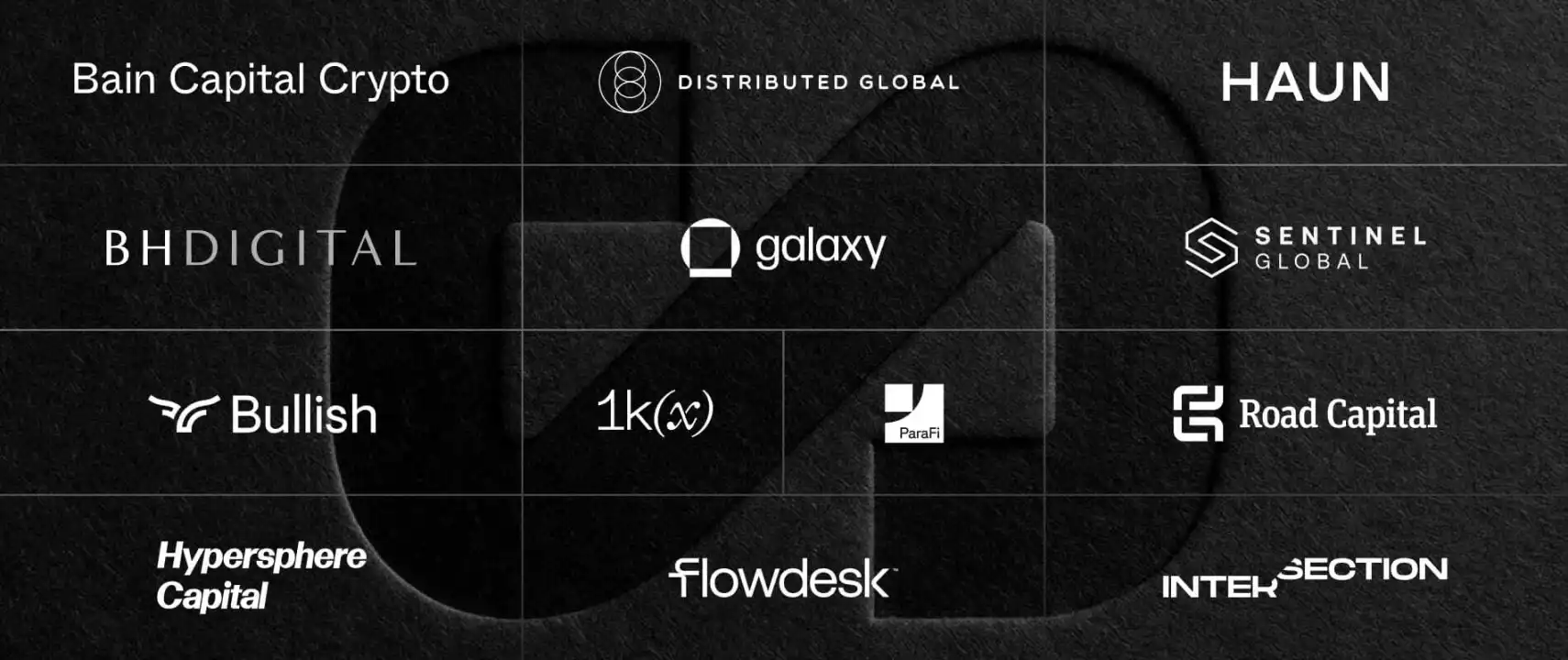
On January 22, Superstate, an RWA tokenized asset management platform founded by Compound creator Robert Leshner, announced the completion of an $82.5 million Series B funding round. The round was led by Bain Capital Crypto and Distributed Global, with participation from Haun Ventures, Brevan Howard Digital, Galaxy Digital, Sentinel Global, Bullish, Hypersphere Capital, Flowdesk, Intersection, and existing investors 1kx, ParaFi, and Road Capital.

Officials stated that this round of funding will be used to expand its business from tokenized treasury products to a fully on-chain stock issuance layer on Ethereum and Solana. Additionally, the company will continue to invest in regulated market infrastructure, including compliant issuance, settlement, and shareholder record-keeping systems, and expand its Opening Bell platform and transfer agent infrastructure to support more issuers and distribution channels.
What is Superstate?

In 2023, Compound founder Robert Leshner filed documents with the U.S. Securities and Exchange Commission (SEC) for his new company "Superstate," which would use Ethereum as an auxiliary record-keeping tool to create a short-term government bond fund. Superstate's fund would invest in "ultra-short-term government securities," including U.S. Treasuries, government agency securities, and other government-backed instruments, and would rely on traditional Wall Street "transfer agents" to maintain ownership records of fund holders.

In June, Superstate announced the completion of a $4 million seed funding round led by ParaFi, Cumberland, and 1kx.

In November of the same year, Superstate completed the first close of its Series A funding round, raising $14 million. The round was co-led by Distributed Global and CoinFund, with participation from Breyer Capital, Galaxy, Arrington Capital, Road Capital, CMT Digital, Folius Ventures, Nascent, Hack VC, Modular Capital, and Department of XYZ.

In February 2024, it launched a tokenized fund holding short-term U.S. Treasuries. In July, Superstate launched a new tokenized fund, the Superstate Crypto Carry Fund (USCC). This fund will use a "cash and carry" investment strategy to generate yield by purchasing spot Bitcoin and Ethereum and holding equivalent short positions or selling BTC and ETH futures to generate returns for holders. The spot assets are held by custody partner Anchorage Digital.

Superstate's Tokenization Development

In March 2025, Superstate announced that its digital transfer agent company, Superstate Services LLC, had registered with the SEC, a move aimed at connecting tokenized assets with the existing financial regulatory framework.

After this, benefiting from the U.S. push for RWA tokenization, Superstate's progress accelerated rapidly. The company first launched the Opening Bell platform, allowing SEC-registered public stocks to be issued and traded directly on blockchain networks, initially supporting Solana. Opening Bell supports the native issuance of compliant, regulated stocks that can interact directly with crypto wallets, DeFi protocols, and on-chain markets.

Subsequently, several companies chose to issue tokenized stocks on Superstate, including Galaxy's tokenized stock GLXY; U.S.-listed self-custody wallet company Exodus also plans to partner with Superstate to create common stock tokens, digitally representing Exodus' Class A shares; Solana treasury company Forward Industries (FORD) intends to tokenize its holdings of Forward Industries common shares. It also plans to partner with Drift, Kamino, and Jupiter Lend (three of the largest lending protocols on Solana) to use the tokenized FORD shares as eligible collateral; Ethereum treasury company SharpLink Gaming partnered with Superstate to issue tokenized stock SBET directly on the Ethereum blockchain.

In late 2025, Superstate launched a new blockchain-based service for conducting issuance programs directly on Ethereum and Solana. This service will enable companies to raise capital by issuing on-chain securities, including tokenized versions of their existing SEC-registered shares or new share classes. The first issuers are expected to go live in 2026. Investors will pay in stablecoins and receive tokenized assets.

The Series B funding round at the beginning of 2026 brings Superstate's total funding to over $100 million. According to its website, its Assets Under Management (AUM) now exceed $1.2 billion.

The Tokenization Process in 2026

The main theme of capital market infrastructure in 2026 is clear: faster settlement, higher liquidity, greater transparency, and lower capital requirements. Tokenization is moving from concept to practice at this time because the on-chain track is pulling issuance, distribution, custody, settlement, and asset reuse into the same set of programmable data and processes, with participants beginning to make decisions based on efficiency and verifiable results.

Incremental on-chain channels will emerge first on the financing side. In the short term, a dual-track model with traditional markets and on-chain markets operating in parallel will be more common. Traditional trading platforms handle deep liquidity, while on-chain markets provide more direct reach, faster distribution and settlement, and more flexible issuance structures. As compliant modules mature, this type of on-chain financing will expand from a few pilot projects to more scenarios like IPOs, additional issuances, and secondary offerings.

The key change on the asset side is the realization of functionality. Truly tokenized stocks and funds will not remain merely holding certificates but will gradually enter the DeFi ecosystem of collateral, lending, and composable strategies, moving traditional assets from isolated account structures to a composable on-chain capital market, thereby improving capital efficiency. However, this will also raise the requirements for compliance, risk control, clearing responsibilities, and technical security.

Stablecoins will become the engine driving demand for tokenized funds. As the scale of stablecoins expands, issuers and holders will have a stronger need for highly liquid, auditable, risk-controlled, and yield-generating on-chain assets. Therefore, tokenized short-duration treasury funds and money market-like products are more likely to become standard components for on-chain cash management and collateral. On the institutional side, custodial DeFi treasuries will become the main entry point, packaging multi-chain, multi-protocol, and 24/7 risk control into usable strategy interfaces, reducing operational and management costs for institutions.

The distribution end will continue to concentrate around super-apps. Wallets and trading platforms integrate payments, trading, yield, investment, and custody into a single product interface, with tokenized assets acting as connectors, helping users manage cash and long-term investments within the same system. For issuers and asset managers, the change in the distribution landscape is more critical. Those who can adapt early to the tokenized form, compliant transfer logic, and on-chain usability will more easily enter the supply pools of these super-apps and capture new growth.

Companies like Superstate may be among the first to reap significant rewards from the U.S. push for RWA tokenization. However, it seems the connection with ordinary investors will remain relatively weak in the short term, as early products are mostly targeted at institutions and accredited investors. Ordinary users primarily access them indirectly through wallets, trading platforms, and other entry points, and what they actually perceive is often not tokenization itself.


Preguntas relacionadas

QWhat is the founder of Superstate and what is his previous notable project?

AThe founder of Superstate is Robert Leshner, who is also the founder of the well-known DeFi lending protocol, Compound.

QWhat was the total amount raised in Superstate's Series B funding round and who were the lead investors?

ASuperstate raised $82.5 million in its Series B funding round, which was co-led by Bain Capital Crypto and Distributed Global.

QWhat is the primary business focus of Superstate as an RWA tokenization platform?

ASuperstate is a real-world asset (RWA) tokenization platform that focuses on creating tokenized funds, initially for short-term government securities like U.S. Treasuries, and has expanded to an on-chain equity issuance layer for stocks on Ethereum and Solana.

QWhat significant regulatory milestone did Superstate achieve in March 2025?

AIn March 2025, Superstate's digital transfer agent company, Superstate Services LLC, successfully registered with the U.S. Securities and Exchange Commission (SEC).

QWhat is the name of the platform Superstate launched for issuing and trading SEC-registered public stocks directly on a blockchain?

ASuperstate launched the 'Opening Bell' platform, which allows for the direct issuance and trading of SEC-registered public stocks on blockchain networks, with initial support for Solana.

Lecturas Relacionadas

Agent se hace cargo del derecho a la distribución del tráfico, ¿qué están disputando Tencent, ByteDance y Alibaba?

Los gigantes tecnológicos chinos Tencent, ByteDance y Alibaba están compitiendo intensamente por dominar el futuro acceso a la IA, específicamente a través de agentes de inteligencia artificial (Agent), buscando controlar la distribución del tráfico en la nueva era de la IA. Alibaba está transformando su aplicación Qianwen en un "superagente" capaz de gestionar múltiples servicios dentro de su ecosistema (como Taobao, Alipay) y, recientemente, ha abierto su plataforma para que marcas externas como Luckin Coffee y KFC creen sus propios Agent, pasando de un enfoque cerrado a uno abierto. Su estrategia se basa en un "dúo" con la app Quark para tareas de información y Qianwen para tareas complejas de la vida diaria. ByteDance, con su aplicación Doubao que supera los 300 millones de usuarios activos mensuales, está adoptando una estrategia integral. Su plataforma Kouzi permite crear agentes personalizados, y está expandiendo su presencia a hardware, como teléfonos AI y gafas inteligentes, buscando que Doubao sea omnipresente. Tencent, por su parte, está preparando su movimiento más estratégico: integrar un Agent directamente en WeChat, la aplicación con 1.400 millones de usuarios. Este agente, accesible deslizando la pantalla, podrá entender órdenes naturales y ejecutarlas automáticamente utilizando los millones de mini-programas del ecosistema de WeChat, transformando la aplicación en un sistema operativo de servicios. La competencia subyacente es por el control del "punto de contacto primario" con la intención del usuario. La lógica comercial está cambiando de una "economía de la atención" (maximizar el tiempo en pantalla) a una "economía de la intención" (satisfacer la necesidad del usuario con la máxima eficiencia). El derecho a distribuir el tráfico ya no lo decide el clic humano, sino la recomendación o ejecución por parte del Agent. Quien controle esta capa de ejecución por defecto para las solicitudes de IA dominará el valor comercial en la nueva era, redefiniendo cómo los usuarios se conectan con los servicios digitales.

marsbitHace 53 min(s)

Agent se hace cargo del derecho a la distribución del tráfico, ¿qué están disputando Tencent, ByteDance y Alibaba?

marsbitHace 53 min(s)

De bloquear Doubao a abrazar Honor: ¿Por qué WeChat cambió repentinamente su postura?

**Resumen: ¿Por qué WeChat cambió su postura, de bloquear a 'Doubao' a colaborar con Honor?** WeChat, la superapp de Tencent, ha dado un giro radical al abrir su ecosistema a los asistentes de IA de los fabricantes de teléfonos mediante el protocolo A2A (Agente a Agente). Anteriormente, en 2025, bloqueó agresivamente intentos de control externo, como el del teléfono 'Doubao' de ByteDance, que usaba la ruta GUI (simulación de clics), por considerarlo una "invasión". Esta colaboración, ya activa en dispositivos Honor (50% de modelos activos) y en proceso con Xiaomi, OPPO y vivo, permite que asistentes como YOYO envíen mensajes o hagan llamadas por WeChat por comando de voz, pero bajo estricto control de WeChat. El cambio se debe a la presión competitiva de Tencent en IA. Su modelo 'Yuanbao' (57 millones de usuarios activos mensuales) está muy por detrás de 'Doubao' (345 millones) o 'Tongyi Qianwen' de Alibaba. WeChat, con 1.400 millones de usuarios y su vasto ecosistema de mini-programas, es su baza clave. La nueva estrategia busca convertir a WeChat en un "sistema operativo de servicios" de IA, utilizando los asistentes del teléfono como puerta de entrada, sin ceder el control. Para los fabricantes, A2A es una opción pragmática. La ruta GUI está bloqueada, mientras que A2A les da acceso controlado y les permite centrarse en otros escenarios de IA propios (recomendaciones, servicios locales), enriqueciendo sus datos y ecología. La seguridad se basa en una autorización doble (usuario + aplicación). En esencia, es una alianza táctica de conveniencia. Tencent gana un canal de distribución crucial para su futuro agente de IA interno. Los fabricantes resuelven un cuello de botella de interoperabilidad. A largo plazo, sus objetivos chocan: Tencent quiere centralizar los servicios en WeChat, los fabricantes quieren que su asistente del sistema sea el centro. La batalla por la entrada a la era de la IA acaba de comenzar.

marsbitHace 2 hora(s)

De bloquear Doubao a abrazar Honor: ¿Por qué WeChat cambió repentinamente su postura?

marsbitHace 2 hora(s)

Cifras en la cadena de bloques en la víspera del inicio: 1.600 millones negociados antes de que comience el Mundial

Antes del inicio del Mundial 2026, los mercados de predicción en cadena ya han acumulado un volumen de operaciones significativo. Solo el contrato "Campeón del Mundial" en Polymarket alcanzó aproximadamente 16 mil millones de dólares en volumen total antes de que comience el torneo. La curva de actividad ha aumentado drásticamente en los meses previos, pasando de unos 368 millones a finales de marzo a superar los 12 mil millones en mayo. El ecosistema es amplio: existen alrededor de 100 mercados en Polymarket que cubren todas las partidas, y junto con plataformas como Kalshi, ofrecen contratos para resultados de partidos, clasificaciones de grupo y hasta eventos no deportivos, como riesgos logísticos. Los precios de estos contratos, que fluctúan entre 0,01 y 0,99 dólares, reflejan probabilidades implícitas en tiempo real según el desarrollo de los eventos. La infraestructura subyacente ha madurado, utilizando stablecoins reguladas como USDC para garantías y oráculos descentralizados como Chainlink para la resolución de resultados. Incluso la FIFA ha reconocido formalmente esta categoría, nombrando a ADI Predictstreet como su primer socio oficial en mercados de predicción. En vísperas del pitido inicial, las criptomonedas relacionadas con el fútbol, como los fan tokens, ya cotizan activamente. A pesar de la variada regulación entre jurisdicciones, queda claro que la tecnología blockchain ya se ha integrado profundamente en las capas de liquidación, predicción y asociaciones oficiales del mayor evento futbolístico, marcando una transformación fundamental en su relación con el deporte.

marsbitHace 3 hora(s)

Cifras en la cadena de bloques en la víspera del inicio: 1.600 millones negociados antes de que comience el Mundial

marsbitHace 3 hora(s)

Trading

Spot
Futuros
活动图片