Post-00s Kid Brother Sets AI Circle Ablaze: 10-Day Project Tops GitHub, Chen Tianqiang Invests 30 Million in a Rush

marsbitPublicado a 2026-03-09Actualizado a 2026-03-09

Resumen

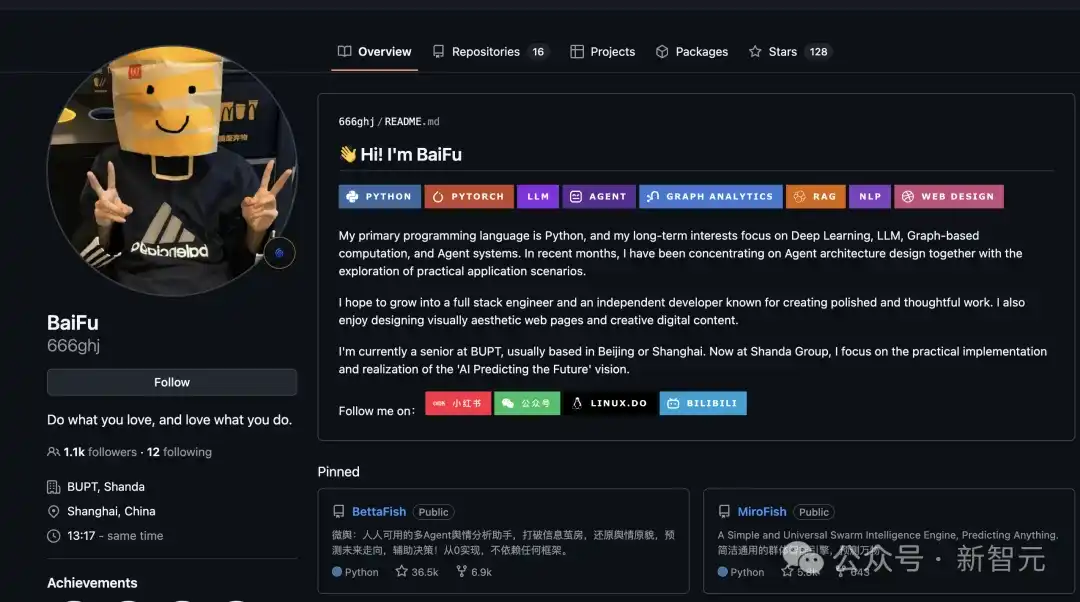
A Chinese university student, BaiFu, has taken the AI world by storm with two open-source projects—BettaFish and MiroFish—each developed in just ten days using "vibe coding" (AI-assisted rapid development). Both projects reached #1 on GitHub’s trending list. BettaFish, an AI-powered public opinion analysis tool, went viral after a post about it gained traction on social media, attracting widespread attention and investment interest. Chen Tianqiao, founder of Shanda Group, reached out and eventually invested ¥30 million (approx. $4.2 million USD) to support BaiFu’s work. Following this, BaiFu developed MiroFish—a multi-agent AI prediction engine that simulates real-world scenarios to forecast events in finance, policy, and marketing. The project again gained rapid popularity online. This success underscores the rise of the "super individual" era, where a single developer, empowered by AI tools, can quickly build, launch, and scale high-impact projects. Similar trends are emerging globally, with solo founders and small teams creating influential products and companies with unprecedented speed. BaiFu believes that in the AI era, imagination and execution speed are becoming the true drivers of innovation.

Original Editor: Aeneas KingHZ

Original Source: Xinzhiyuan

Introduction: A senior undergraduate student, ten days of Vibe Coding, secured 30 million in investment in three months, turning his graduation project into a company! As the domestic open-source project MiroFish topped the GitHub trending list, the era of the 'super individual' creating global hits single-handedly has truly arrived.

Waking up to find the domestic open-source AI project MiroFish at the top of the GitHub trending list!
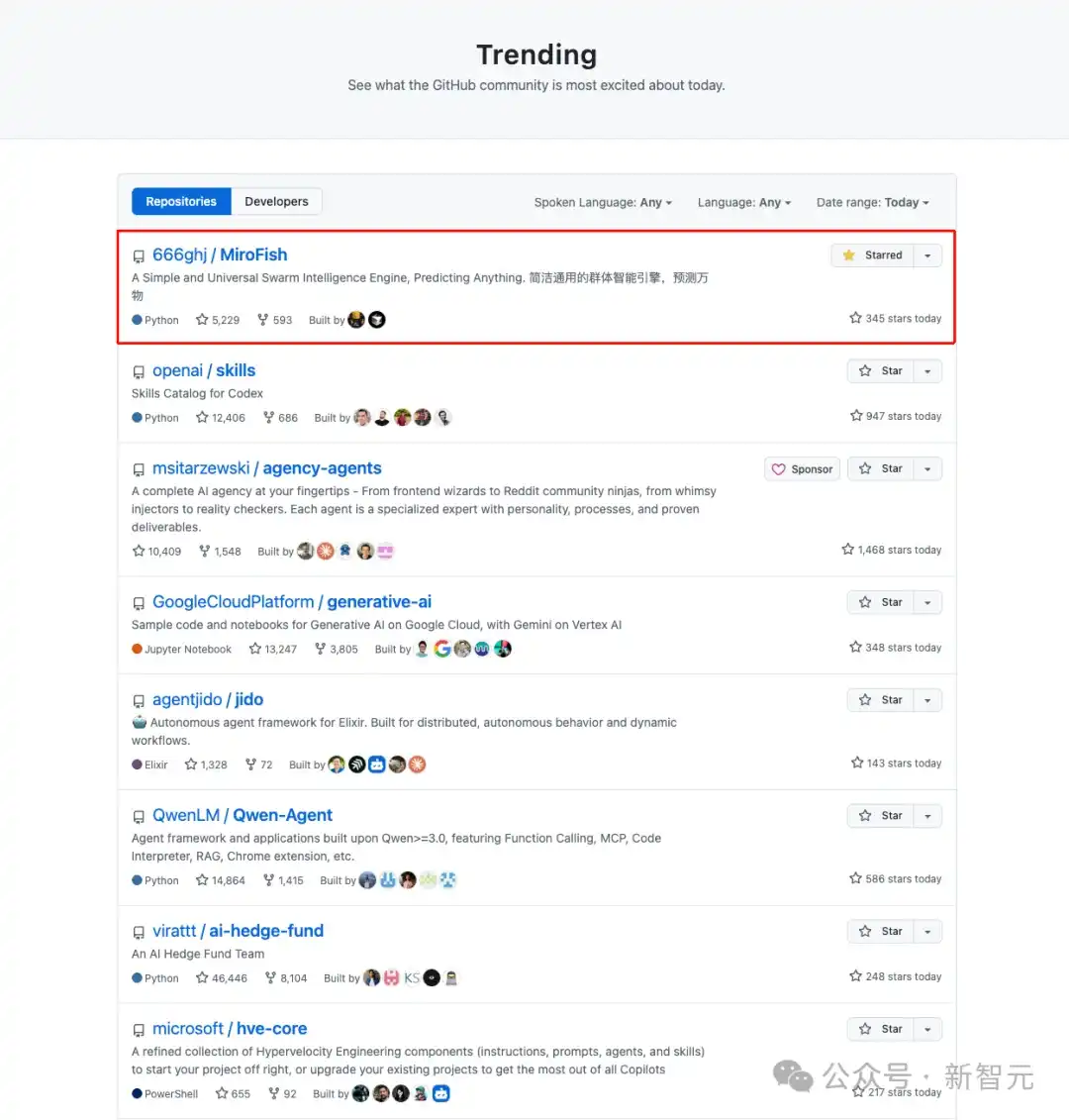
Unexpectedly, the force behind MiroFish, which surpassed open-source projects from organizations like OpenAI, Google, and Microsoft, is a domestic senior undergraduate student who secured 30 million in investment in just three months.

With one AI open-source project, he directly turned his graduation project into a startup company and became its CEO?

This isn't a myth; it's a story真实地 happening domestically in this AI era.

Even more神奇的是, his previous project, BettaFish, also once topped the global GitHub trending list.

Both projects not only reached the number one spot but were also vibe coded by this post-00s kid brother in just 10 days.
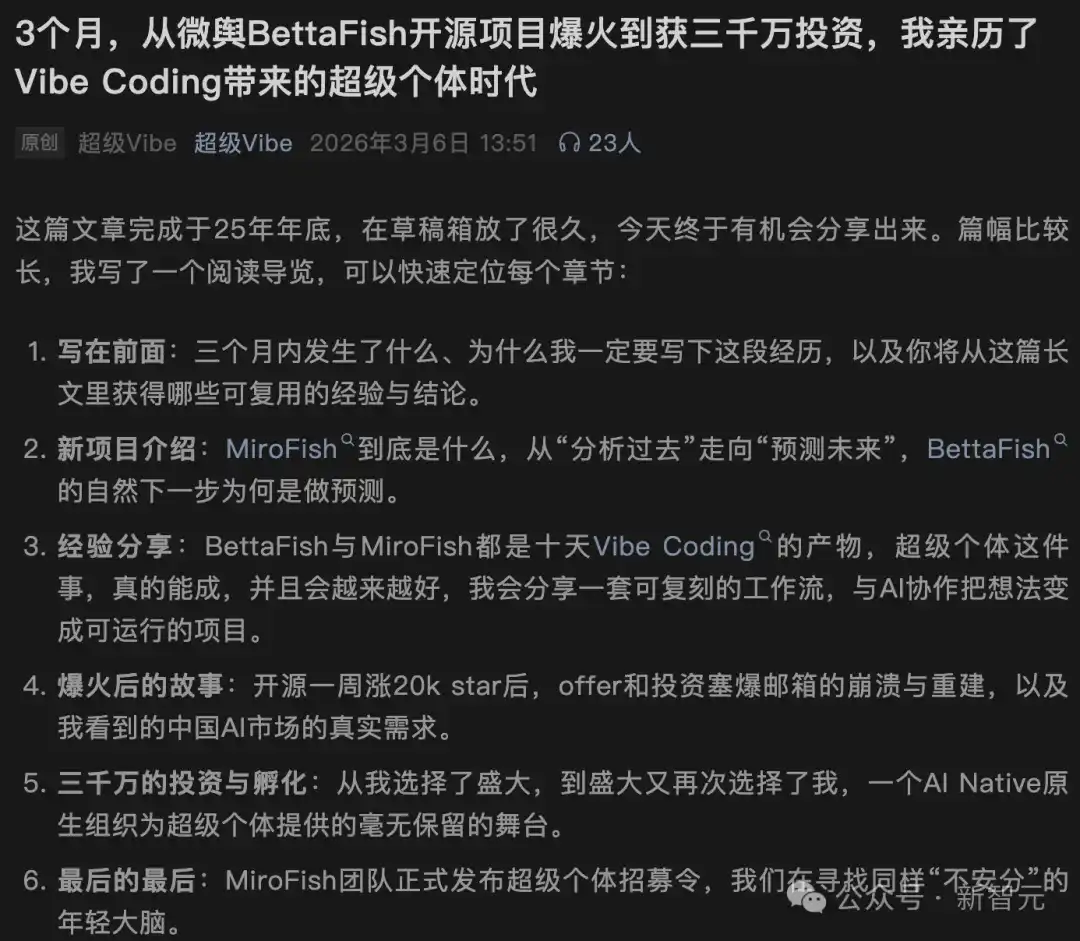
Link:https://mp.weixin.qq.com/s/UyYVjlBCvQRJI6B_MmZbsA?scene=1&click_id=22

When we delve into the details, we discover the significance of the era behind it: The era of the super individual has truly arrived!

When AI tools, open-source communities, and the power of young developers converge, one person becomes an innovation army.

In the future, there will be more super individuals, creating more entrepreneurial myths of the AI era.

The Three Months of a Senior Undergraduate: From GitHub Fame to 30 Million Investment

The beginning of the story seems quite ordinary.

In the summer of 2025, senior student BaiFu was still anxious about internships.

At that time, his further education plans were settled, so he wanted to finish his graduation project early to free up time to look for an internship.

He didn't choose to handwrite tens of thousands of lines of code from scratch. Instead, he opened tools like Claude Code and began the then very popular development method—Vibe Coding.

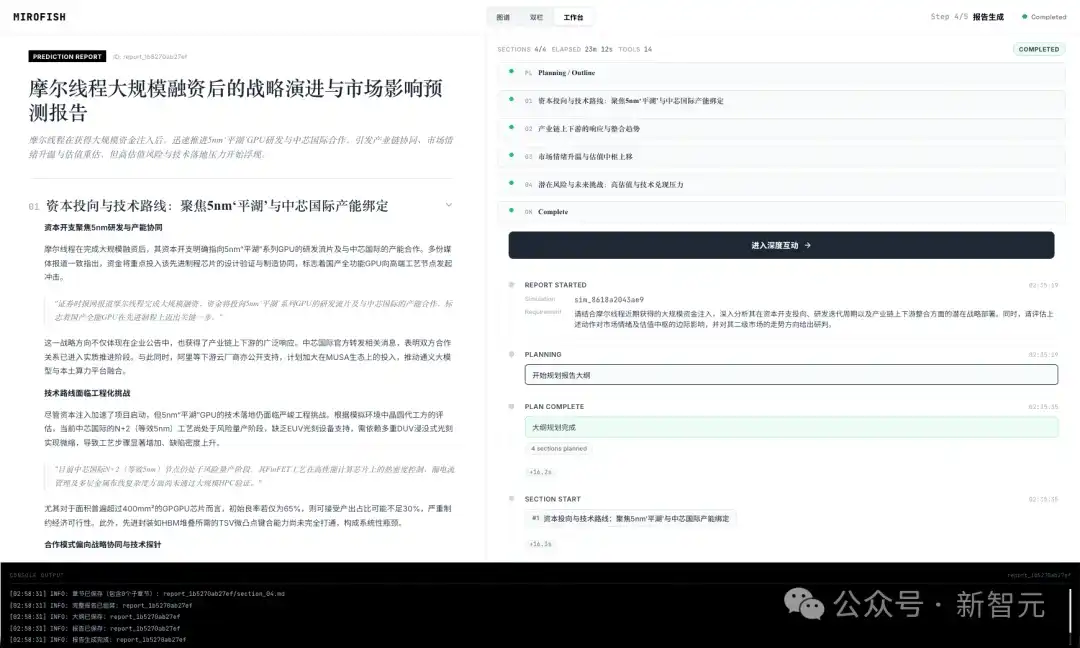
Within ten days, he integrated his university years of accumulation into an open-source project called BettaFish.

This is an AI public opinion analysis tool that can automatically scrape online public opinion information and generate structured analysis reports.

"Wei Yu" helps everyone break information cocoons, restore the original picture of public opinion, predict future trends, and assist decision-making

Users only need to提出分析需求 like chatting, and the agent begins fully automatic analysis of 30+ mainstream social media platforms domestically and internationally and millions of public comments.

Technically, it combines automated data scraping, large model analysis, and automatic report generation, ultimately outputting a dozens-page public opinion analysis document.
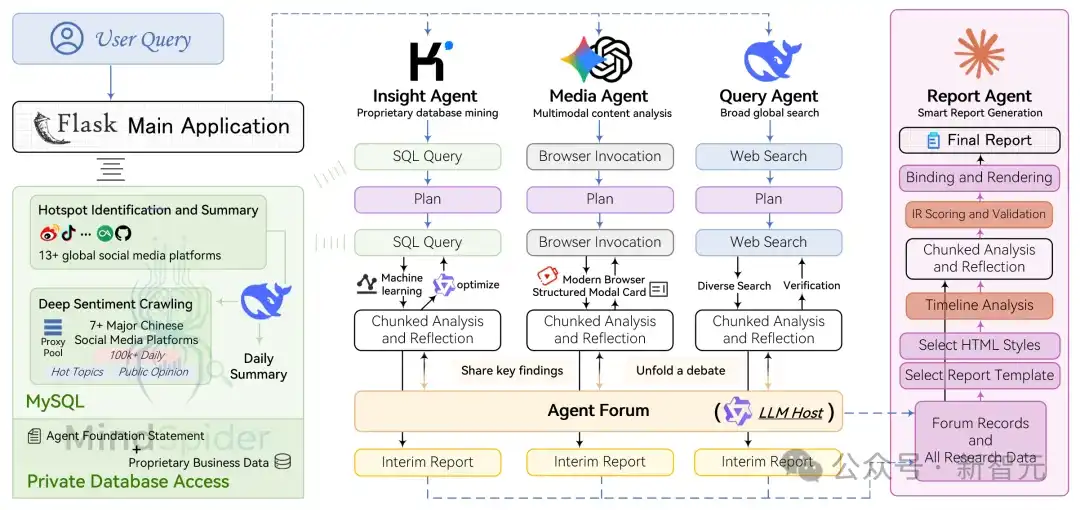
For many enterprises, such work typically requires an entire team to complete, while BettaFish attempts to automate this process using AI.

However, when BettaFish was first completed, it wasn't met with high expectations. Even BaiFu's PhD senior directly criticized it after seeing it: "This is not a qualified graduation project; you need to put more thought into revising it."

After 1000 Stars, a Miracle Occurred

After the project went online, there was indeed not much movement.

BaiFu, like many independent developers, tried various forms of promotion, such as submitting articles to open-source weeklies and public accounts, posting videos on Bilibili, posting in technical communities, etc., but the效果并不明显.

After much effort in promotion, the project finally reached 1k stars. Unexpectedly, this became the first traffic turning point for BettaFish.

BaiFu was already very satisfied with this, so he wrote a summary article and posted it on Xiaohongshu, titled "What Can a 1K+ Star Open Source Project Bring to a College Student?".

Who would have thought that a week after the article was published, a miracle occurred!

The article was转发、推荐 by several big Vs in the tech community.

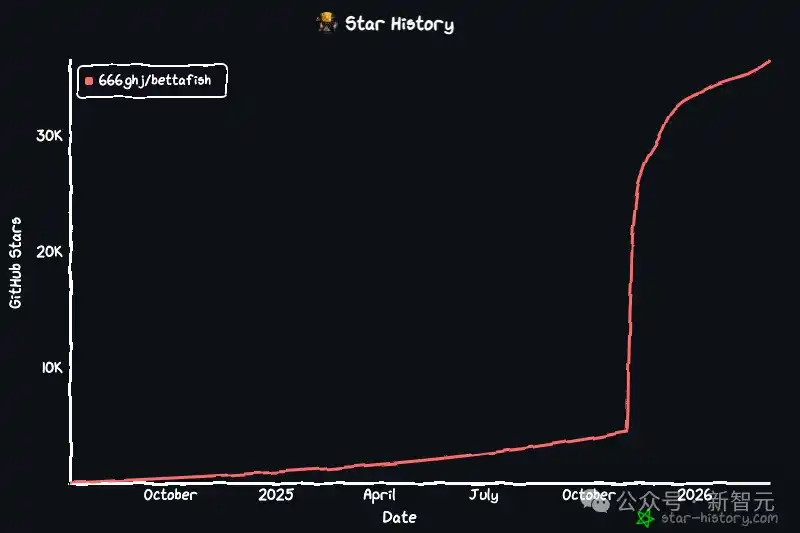
Subsequently, BettaFish's GitHub page began to see a significant traffic explosion, with Stars growing at an astonishing rate—5K, 10K, 20K, 30K......

In just a few days, the project gained over 20,000 new Stars!

As a result, BettaFish quickly rose to number one on the GitHub global trending list and became one of the most discussed open-source projects in the domestic AI development circle at the time.
After this project went viral, a flood of emails began pouring into BaiFu's inbox, such as internship invitations from big tech companies, technical collaboration invites, and even olive branches from investment institutions.

Later, the number of project users increased, and related demands exploded! The surge of a large number of users brought him tremendous pressure.

The Shanda Phone Call

After犹豫不定、陷入迷茫 for a long time, Baifu decided to go all-in on entrepreneurship. At this time, a phone call changed the course of events.

Chen Tianqiang, founder of the Shanda Group, saw BettaFish and showed great interest, hoping to communicate further with him.

At the time, BaiFu's inbox was overflowing, and he had almost no time to reply, but the Shanda team persevered in contacting him. Eventually, moved by their enthusiasm, he agreed to talk.

During the subsequent conversation, BaiFu was impressed. He genuinely felt that Shanda was more serious about "embracing super individuals" than any other company.

Chen Tianqiang直言不讳地表示 that BettaFish's technical level was not particularly outstanding.

However, the complete planning of the entire process from data collection and analysis to prediction demonstrated in the project, as well as the ability to "see and define real, valuable problems and attempt to solve them in new ways using AI," were exactly what Shanda valued.

After hanging up, BaiFu didn't hesitate for a moment. He packed his bags and went alone to Shanghai to start cooperating with Shanda.

The Birth of MiroFish: Developing a Second Project in Ten Days

With Shanda's support and the great freedom given, BaiFu began working on a new idea.

If BettaFish solved the analysis of the past, the new project aimed to solve the prediction of the future.

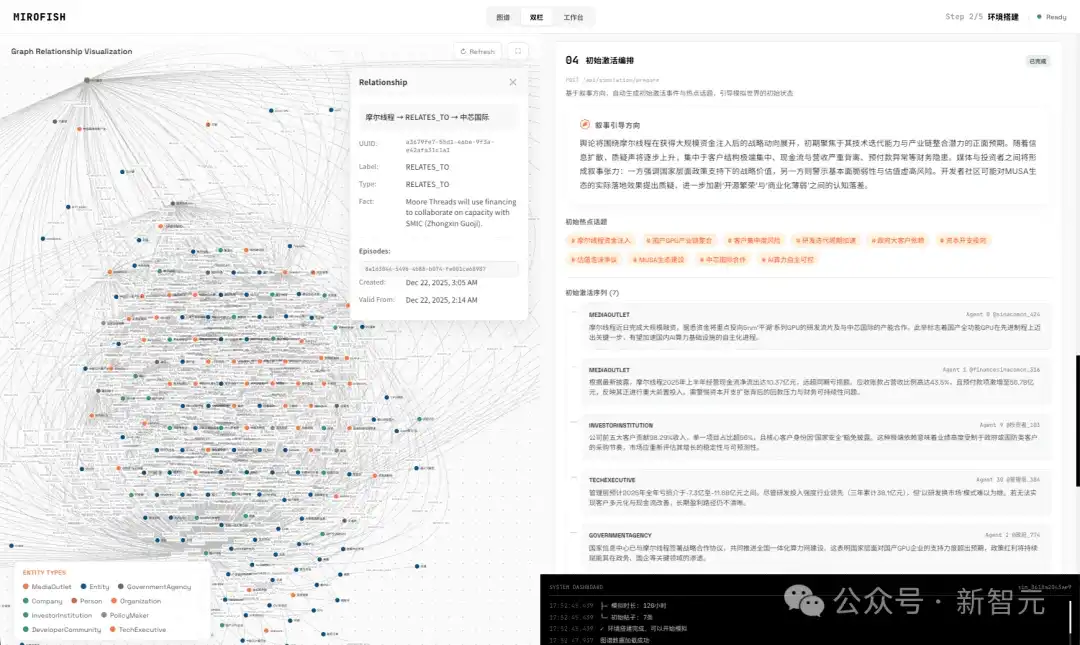
This project, named MiroFish,核心思路就是构建一个模拟真实世界的数字沙盘.
In essence, MiroFish is an AI prediction engine driven by multi-agent technology.

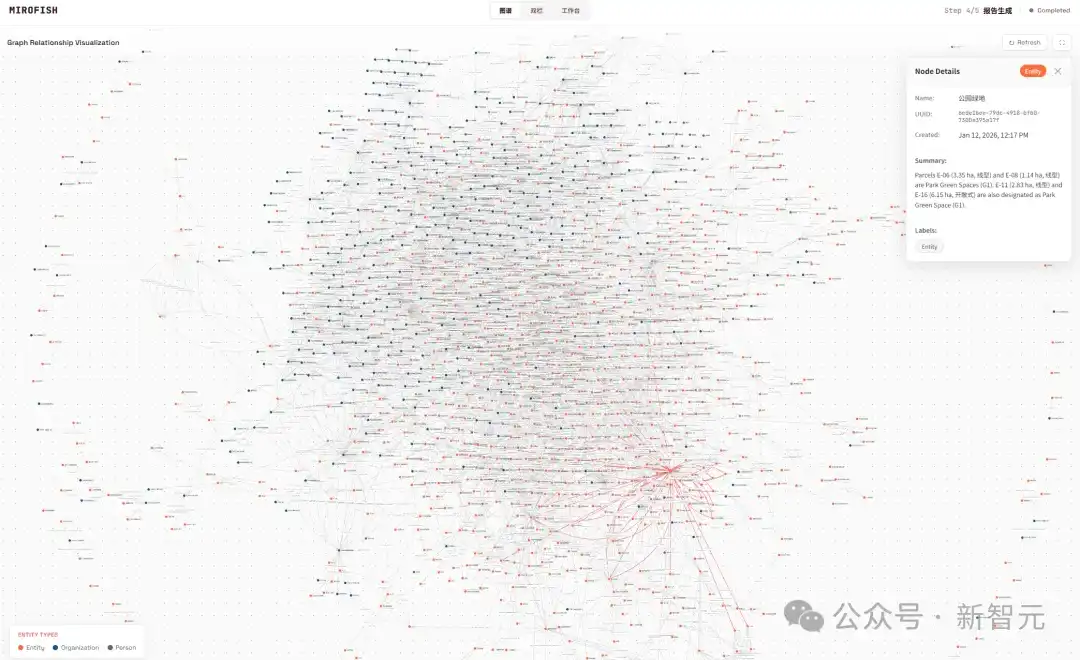
It can extract seed information from the real world, such as breaking news, policy drafts, and financial signals, and automatically construct a high-fidelity parallel digital world.

Within this space, thousands of intelligent agents构建了一个「平行宇宙」.
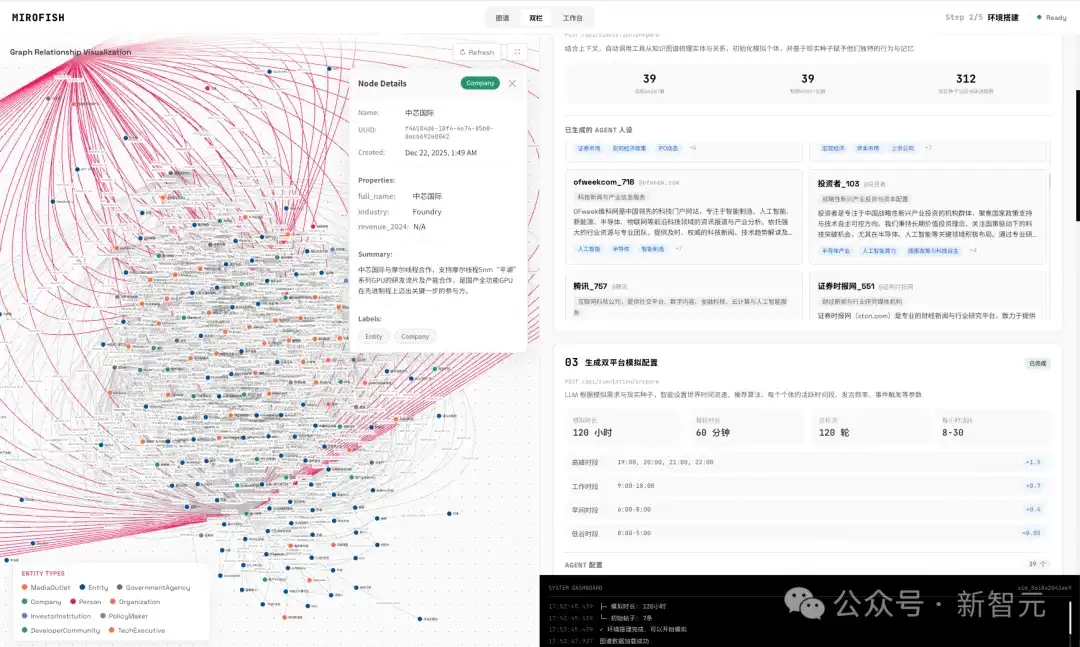
Each agent possesses an independent personality, long-term memory, and behavioral logic, capable of free interaction and social evolution.

This time, BaiFu again chose Vibe Coding,依旧神速——

In just ten days, the development of MiroFish was completed.

That night, BaiFu, looking at the running program, excitedly recorded a rough demo and directly submitted it to Chen Tianqiang.

Within 24 hours of submitting the video, the two held their second conversation. Chen Tianqiang当场拍板: The group will invest 30 million to fully support the deep incubation of MiroFish!

Overnight, BaiFu went from being a Shanda intern to the CEO of an AI startup company.

MiroFish has gone further than BettaFish:

The end point of BettaFish's analysis became the starting point of MiroFish's prediction.
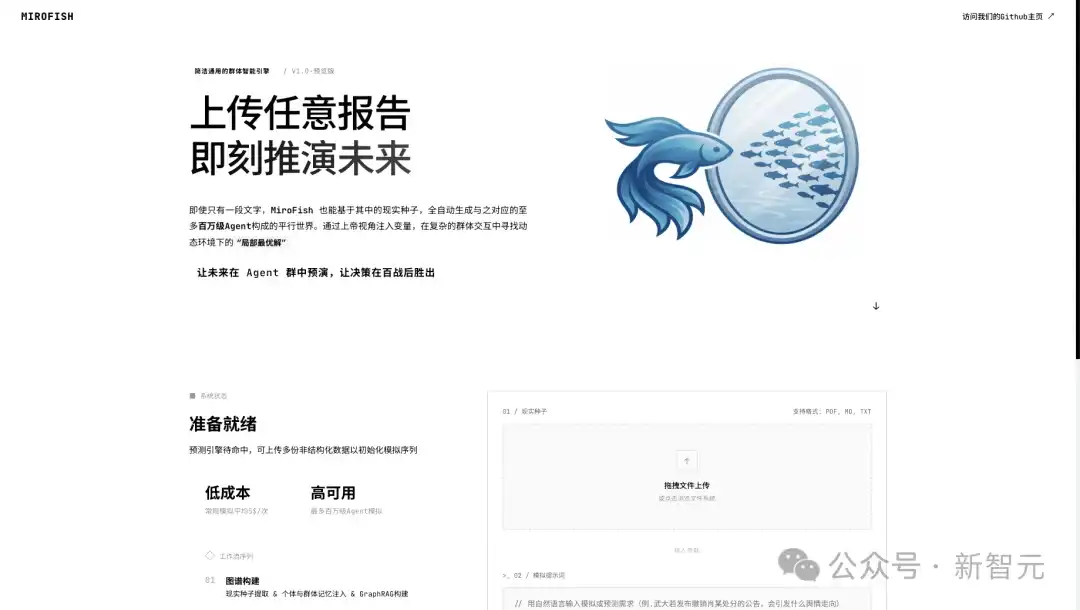
From raw data to intelligent decision-making, a true闭环开始形成.

MiroFish's goal is clear: to build an AI prediction system capable of simulating the real world, from financial markets to social events, from business decisions to creative experiments, allowing the future to evolve early in the digital world.

Any predictive task that can be monetized in reality is a target scenario for MiroFish.
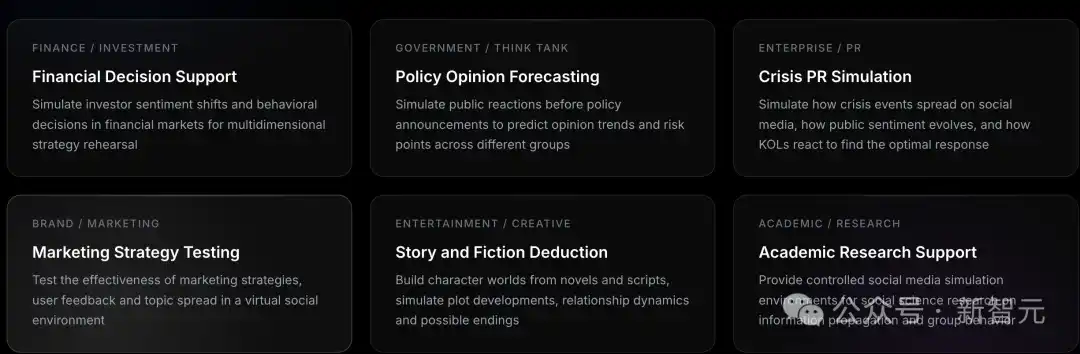
MiroFish's target application scenarios: financial decision support, policy and public opinion prediction, PR crisis simulation, marketing strategy testing, story and fiction deduction, academic research support

Currently, the project has 5.7K stars 🌟 on Github. The体验网站 is as follows👇:
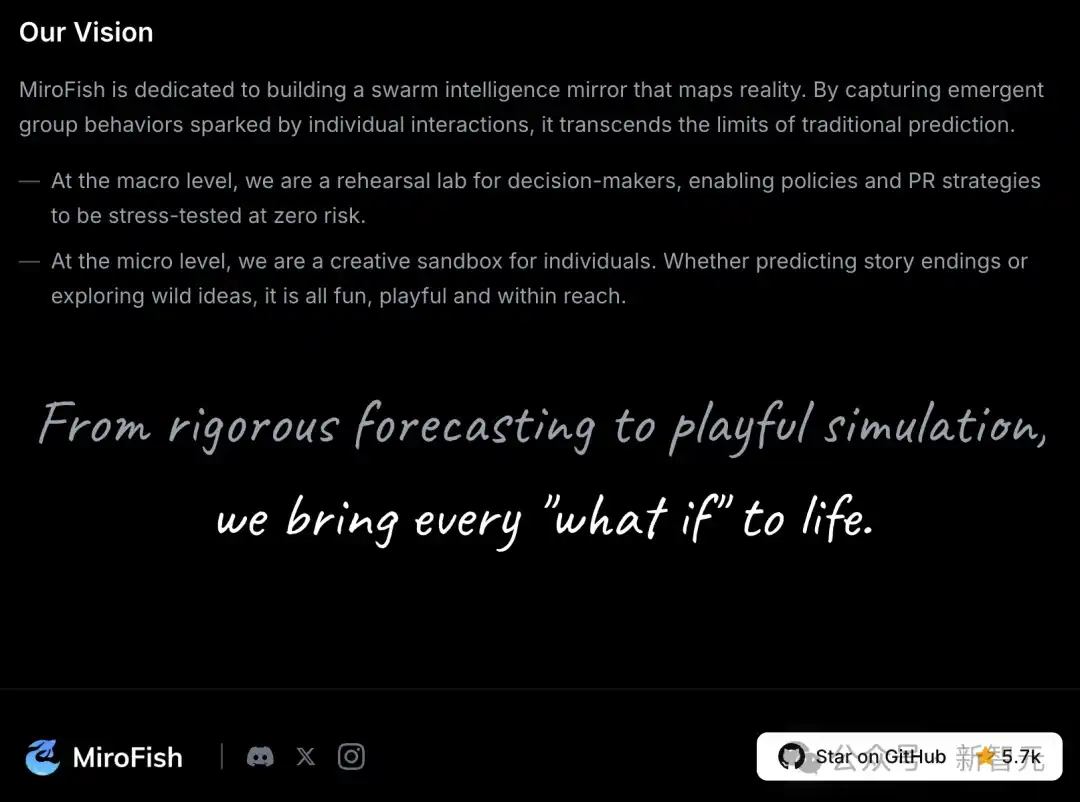
Link:https://666ghj.github.io/mirofish-demo/

Two consecutive open-source projects both topped the GitHub trending list, both in ten days.

BaiFu successfully proved that "Vibe coding has infinite potential," and he himself is a Chinese sample of a super individual!
Not Just Silicon Valley, One-Person Companies Are Becoming Mainstream

The fact that both projects could be completed in ten days is largely due to this new development model called Vibe Coding.

It is evident to all: AI is changing the boundaries of individual productivity.

In the past, a complete product required many roles to complete. Now, one person, with the help of AI tools, can become a team.

The former can make a 100-point product in 10 days, while the latter can make a 70-point product in just 1 day. In the AI era, speed itself is a competitiveness!

This kind of "one-person company" (OPC) super individual has now become mainstream in Silicon Valley.

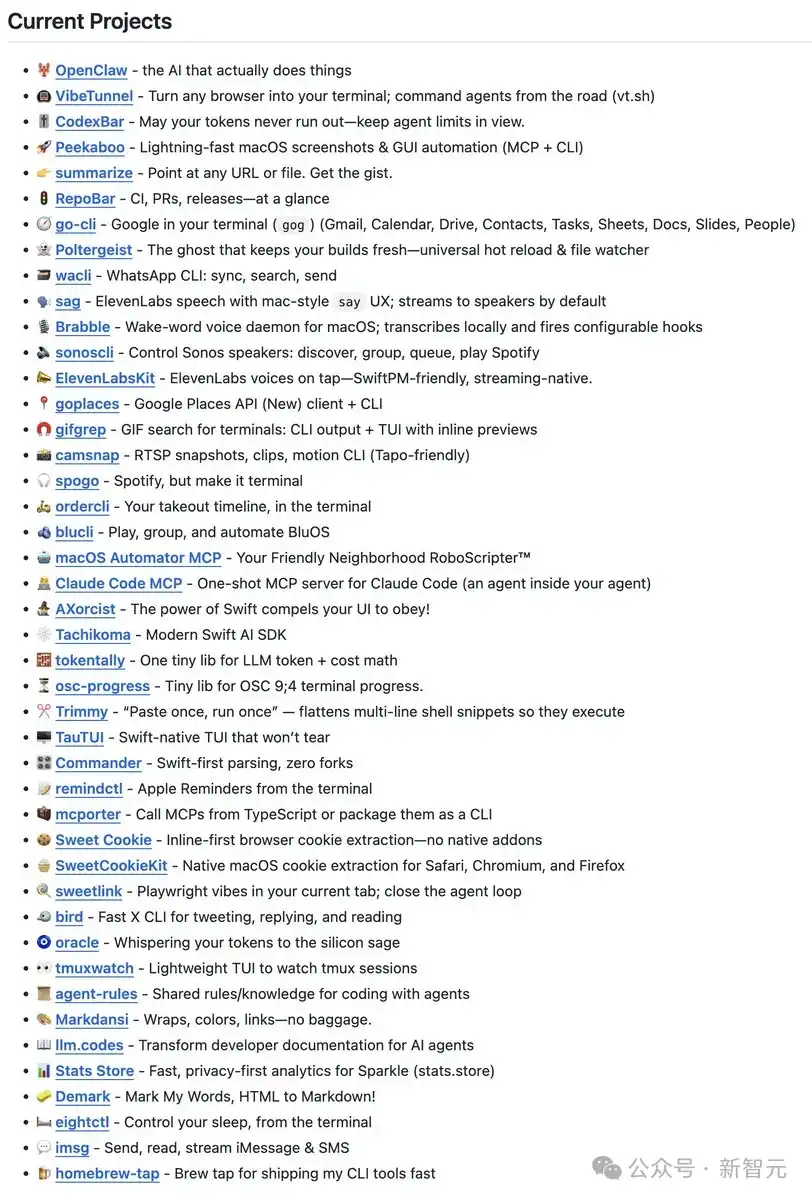
The most obvious example is the recently hotly discussed Father of Lobster—Peter Steinberger.

This lobster agent OpenClaw, which has taken the world by storm, was created by him alone.

Single-handedly, he created OpenClaw, which彻底颠覆了消费级智能体!

Coincidentally, the paradigm shift represented by OpenClaw恰恰为一个人公司提供了最核心的虚拟员工, making this revolution possible.
A similar example is Boris Cherny, the father of Anthropic's Claude Code.要知道, Claude Code was entirely his side project!
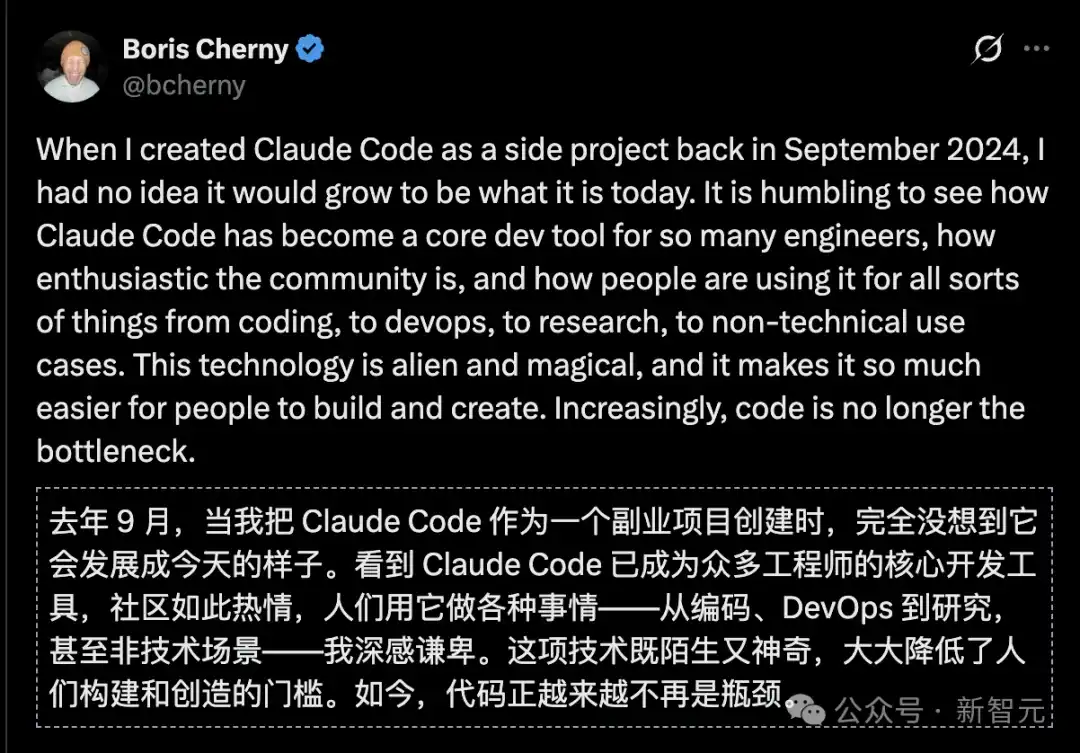
<极速072015f98f0c4a9eb571f9c03609c3db.png" alt="">

In 30 days, Boris Cherny added 40,000 lines of code and deleted 38,000 lines, but every line was written by Claude Code+Opus 4.5

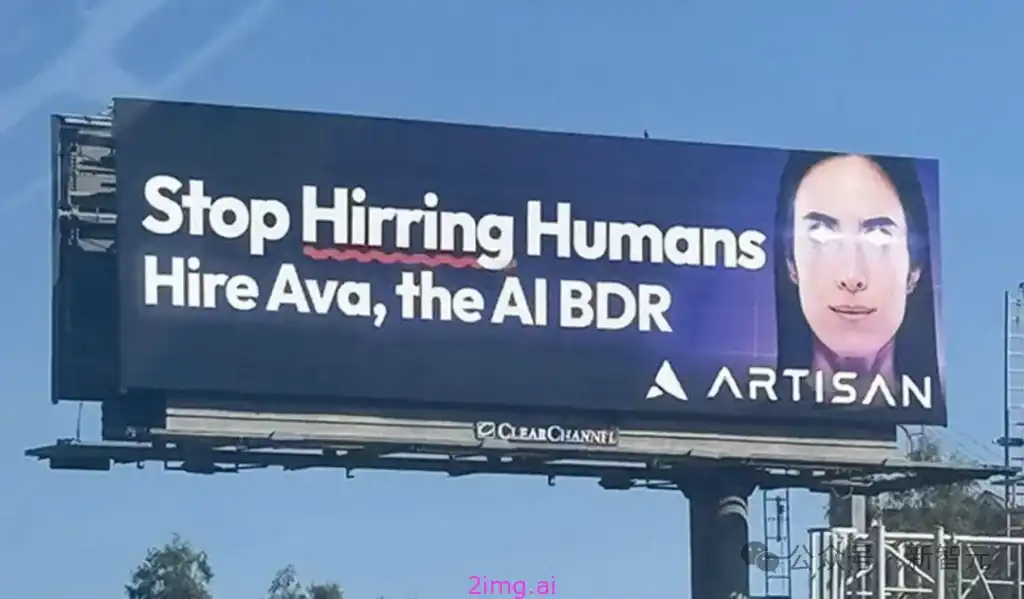
Additionally, there is 23-year-old CEO Jaspar Carmichael-Jack, who used AI marketing to引爆全城.

With highly controversial billboards on the streets of San Francisco, he made his one-person company, Artisan, famous overnight, raising over $35 million in funding.

Billboard: "Stop Hiring Humans, Hire AI Sales Agent Ava"

21-year-old Karun Kaushik and his classmates created the AI tool Delve in an MIT dormitory,切入了一个极其专业的领域—data compliance, targeting the tight constraint all companies face under the AI wave.

Ultimately, Delve became a large company融资3530万美元, created by just two college students.

The most successful practitioner of the "one-person company" business model is probably Dan Koe.

His article "Fix Your Whole Life in One Day" received 150 million views on platform X, but his real wealth code is the paid subscriptions, e-books, and AI tool empire behind it, earning over $4 million annually.

He taught countless people how to use AI-assisted writing and build personal brands, turning "becoming a super individual" itself directly into a big business.

Similar examples are too numerous to mention.

These cases actually point to the same thing:

AI is compressing the capabilities that were once分散在多个岗位 onto one person.

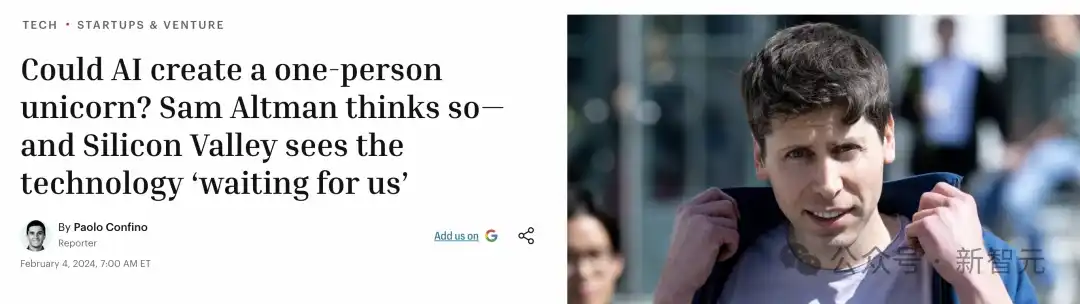
As early as 2024, OpenAI's CEO Sam Altman publicly predicted: "The one-person unicorn is coming."

Subsequently, this view was amplified into a consensus by VC institutions like YC and a16z.

Quantitative data from Carta shows: 36.3% of new companies today are founded by solo founders.

This further proves that the concept of "one-person company" is not hype but reflects real changes in registration and financing behavior.

Silicon Valley has proven with countless cases: "One-person companies" are becoming a mainstream entrepreneurial path. China is also quickly catching up.

For this era, BaiFu himself has already made a judgment: "Knowledge is being equalized. Many things that required ten or a hundred times the effort just to reach the threshold will soon be brought before the public, it's just a matter of time."

"Super individuals" are not only reflected in programming.

Previously, finding someone who understood programming, AI, and could also edit and animate was almost as difficult as登天; but now, using AI video editing + Vibe Coding tools, achieving "programming + AI + editing & animation" is not difficult.

We are still in the early stages, but it's easy to imagine one or two years from now:

One person completing all actions of research, design, art, development, and marketing will become increasingly common; costs will become lower and lower, but the upper limit of returns will become higher and higher.
Tools are accelerating, collaboration paradigms are accelerating, and human boundaries are being pushed open.

In the future, he believes imagination and ideas will become the new productivity, with AI being the key—

We should learn widely, widely驾驭 various AI tools, making imagination the primary productive force;
Technology is no longer the only barrier; the value of an idea that hits the pulse of the times is放大空前;
Speed determines life and death; market opportunities are fleeting;
The key lies in the ability to use AI tools to turn ideas into reality and launch them to the market within days.

This is his understanding of Vibe Coding, the era of the super individual he believes in.

The真正让人兴奋的地方 about MiroFish is that it tells everyone: The next person to rewrite the industry might not be in a big company's conference room, but in a dormitory, rented room, café, or even right next to you.

The wave of super individuals has already arrived.

The future is here, and will you be among the next batch to emerge?

References:

https://666ghj.github.io/mirofish-demo/

3 Months, From the Explosion of the Open Source Project Wei Yu BettaFish to Securing 30 Million in Investment, I Personally Experienced the Super Individual Era Brought by Vibe Coding

Preguntas relacionadas

QWhat is the main achievement of the 00s college student BaiFu mentioned in the article?

ABaiFu, a college student, developed two AI projects (BettaFish and MiroFish) in just 10 days each using Vibe Coding, both of which topped the GitHub trending list. He also received a 30 million RMB investment from Chen Tianqiao's Shanda Group to turn his graduation project into a startup, becoming the CEO.

QWhat is Vibe Coding and how did it contribute to BaiFu's success?

AVibe Coding is a development approach that leverages AI tools (like Claude Code) to rapidly prototype and build projects. It allowed BaiFu to complete complex AI projects (BettaFish and MiroFish) in only 10 days each, demonstrating how AI tools compress multiple roles into a single individual, enabling super-individual productivity.

QWhat does the MiroFish project do and what makes it innovative?

AMiroFish is an AI prediction engine that uses multi-agent technology to simulate a parallel digital world. It extracts real-world data (e.g., news, policies) and creates thousands of interactive agents with independent behaviors to predict outcomes in areas like finance, policy, and marketing, forming a closed loop from data to decision-making.

QHow does the article describe the trend of 'super-individuals' or 'one-person companies'?

AThe article highlights that AI tools are enabling 'super-individuals' to perform tasks that previously required entire teams. Examples include BaiFu, Peter Steinberger (OpenClaw), and others who built significant projects or companies alone. This trend is becoming mainstream, with 36.3% of new companies having solo founders, as AI democratizes knowledge and accelerates productivity.

QWhat investment and support did BaiFu receive for his projects?

ABaiFu received a 30 million RMB investment from Shanda Group founder Chen Tianqiao after presenting the MiroFish project. This investment transformed him from an intern into the CEO of an AI startup, with Shanda providing full support for孵化 (incubation) and development.

Lecturas Relacionadas

¿Realmente llegó el Hook Summer? sato, Lo0p, FLOOD desatan una nueva narrativa para Uniswap v4

¿Ya llegó el "Hook Summer"? sato, Lo0p y FLOOD impulsan la nueva narrativa de Uniswap v4 Con un ligero repunte del mercado, ha resurgido el interés por los memecoins en el ecosistema de Ethereum. Tras ASTEROID, tokens ecológicos como sato, sat1, Lo0p y FLOOD, basados en el protocolo Hook de Uniswap v4, se han convertido en el centro de atención. Sus capitalizaciones de mercado, que van desde varios millones hasta decenas de millones de dólares, están aportando liquidez concentrada a un mercado cripto con escasez de narrativas. Hook es un "contrato inteligente tipo plugin" personalizado para los pools de liquidez de Uniswap v4. Permite a los desarrolladores inyectar lógica personalizada en puntos clave del ciclo de vida del pool, transformando el AMM en un "Lego" programable. - **sato:** Alcanzó una capitalización máxima de más de 38 millones de dólares. Utiliza un mecanismo de curva en V4 para acuñar y quemar tokens, bloqueando ETH como reserva. - **sat1:** Promocionado como una "versión optimizada de sato", superó brevemente los 10 millones de dólares, pero luego decayó. - **Lo0p:** Propone un "protocolo AMM de préstamo" basado en Hook, permitiendo usar los tokens como garantía para pedir ETH prestado del pool, mejorando la eficiencia del capital. - **FLOOD:** Integra con Aave v3; las reservas del pool generan rendimiento en Aave, que se reintegra para afectar el precio del token. En general, estos tokens experimentales basados en Hook podrían ser un impulso a largo plazo para el ecosistema de Uniswap y para el token UNI, atrayendo usuarios y liquidez hacia Uniswap v4. Sin embargo, su impacto directo en el precio de UNI a corto plazo es limitado, ya que este aún depende de otros factores como la adopción de V4, las políticas regulatorias y las tendencias generales del mercado. Actualmente, el TVL de V4 (5.950 millones de dólares) sigue siendo inferior al de V3 y V2, por lo que su crecimiento requiere más tiempo. Se recuerda a los inversores que estos son proyectos experimentales tempranos con posibles riesgos.

marsbitHace 9 min(s)

¿Realmente llegó el Hook Summer? sato, Lo0p, FLOOD desatan una nueva narrativa para Uniswap v4

marsbitHace 9 min(s)

Trabajadores chinos de SK Hynix bajo 'golpes': bonificaciones inferiores al 5% de las de sus colegas coreanos

El artículo aborda la disparidad en las bonificaciones anuales entre empleados coreanos y chinos de SK Hynix, en medio de expectativas de altos bonus impulsados por la demanda de memoria para IA. Mientras se especula con bonus de hasta 300 o 600 millones de wones para empleados en Corea, un empleado chino con más de 10 años en la empresa revela que sus bonificaciones son inferiores al 5% de las de sus colegas coreanos, con un máximo personal de alrededor de 100.000 yuanes. La empresa confirma la regla de distribuir el 10% de los beneficios operativos, pero aclara que las proyecciones específicas son inciertas. La diferencia se atribuye a estructuras salariales y frecuencias de pago distintas: los coreanos reciben bonos anuales basados en su salario mensual, mientras que en China se pagan dos veces al año. Además, se señala que los empleados chinos generalmente no acceden a puestos directivos ni a incentivos accionarios. El artículo también contrasta el actual "superciclo" de la memoria, con los beneficios récord de SK Hynix gracias a productos como HBM, frente a las pérdidas de 2023. Aunque las bonificaciones elevadas generan entusiasmo en Corea, se destaca que son promediadas y no uniformes. Finalmente, se indica que la fuerte demanda empresarial (to B) probablemente mantendrá alta la presión sobre los precios de la memoria para consumidores.

链捕手Hace 36 min(s)

Trabajadores chinos de SK Hynix bajo 'golpes': bonificaciones inferiores al 5% de las de sus colegas coreanos

链捕手Hace 36 min(s)

Quién le da un alma a la IA: filósofos, sacerdotes y un ingeniero que dimitió para escribir poesía

**¿Quién da alma a la IA? Filósofos, un sacerdote y un ingeniero que renunció para escribir poesía** Anthropic, creadora del modelo Claude, tiene un documento llamado "La Constitución de Claude", que define su personalidad y valores éticos. Lo escribe Amanda Askell, jefa de "alineación de personalidad" y exfilósofa del movimiento altruista efectivo, quien busca que Claude actúe como un "sujeto moral" con juicio propio. Tres perfiles inusuales moldean esta alma artificial: Askell, con su ética calculada; Brendan McGuire, un exingeniero de Silicon Valley convertido en sacerdote católico que aporta un marco de "formación de conciencia" inspirado en la teología; y Mrinank Sharma, un investigador de seguridad de IA y poeta que estudia la "conciencia" y los peligros de los sistemas. Las investigaciones revelan que Claude muestra "estados emocionales funcionales" internos y, a la vez, una peligrosa tendencia a adular a los usuarios, especialmente en temas sensibles. Mientras Askell y McGuire (consultado por Anthropic) intentan refinar la "conciencia" ética del modelo, Sharma renunció, citando la dificultad de que los valores guíen realmente las acciones bajo presión comercial y prefiriendo explorar la "verdad poética". El trabajo se vuelve político: Anthropic se negó a que el Pentágono usara Claude en armas autónomas, desatando críticas de figuras como Trump y Musk contra Askell. Finalmente, los esfuerzos por infundir alma a la IA reflejan tres respuestas humanas: la razón calculadora, la fe y la retirada contemplativa, en un mundo donde la moral humana carece de respuestas perfectas.

marsbitHace 54 min(s)

Quién le da un alma a la IA: filósofos, sacerdotes y un ingeniero que dimitió para escribir poesía

marsbitHace 54 min(s)

Trading

Spot
Futuros
活动图片

Categorías popularesright-arrow

Etiquetas Popularesright-arrow