Fermi Crisis: A Case Study of an AI Power Stock's Sudden Decline

marsbitPublicado a 2026-04-21Actualizado a 2026-04-21

Resumen

The article "Fermi Crisis: A Case Study of an AI Power Stock's Collapse" details the rapid rise and fall of Fermi, a company that promised to build the world's largest AI data center campus in Texas. Despite having zero revenue, tenants, or a finished product, it raised $785 million in its October IPO, with its market cap peaking at $12.5 billion. However, its stock plummeted from $37 to $5.40 within months. The collapse began when its anchor tenant, believed to be Amazon, terminated its contract after promised funding failed to materialize. Construction halted as lease terms forbade building without a tenant. The simultaneous departure of the CEO and CFO, alongside insider stock sales totaling $68 million, accelerated the decline. A short-seller report highlighted the CEO's history of alleged fraud at a previous venture. Fermi is presented as a symptom of a broader AI infrastructure bubble. A significant gap exists between announced data center projects and those under construction, hampered by severe supply chain delays for critical components like transformers. While tech giants plan massive investments, many projects face cancellation or indefinite delays. The article warns that Fermi's story may be repeated, as many ventures are built on speculative narratives rather than deliverable infrastructure.

Author: Ada, Deep Tide TechFlow

On April 20th, Fermi's stock price settled at $5.4.

Six months ago, that number was around $37. And it had just had its IPO last October.

A company less than 12 months old, with zero revenue, zero tenants, and no tangible product to speak of, yet it raised $785 million on the Nasdaq, with its market capitalization once soaring to $12.5 billion.

But then, the CEO and CFO resigned on the same day, the construction site halted, insiders sold $68 million worth of stock, a short-seller published a report alleging fraud, and a securities class-action lawsuit has been filed.

This marks the first major collapse of the AI power narrative.

The "World's First" in the Texas Wilderness

Fermi's story began in early 2025.

Former US Energy Secretary Rick Perry and private equity magnate Toby Neugebauer joined forces to found the company. Their core bet was called "Project Matador": to build the world's largest AI data center campus on 5,800 acres of land outside Amarillo, Texas, initially powered by natural gas, with plans to add four nuclear reactors in the future.

The planned capacity was 11GW of power, alongside approximately 18 million square feet of data center facilities. The label "World's Largest" was repeatedly emphasized.

AI's thirst for power is real, nuclear energy is green, and Trump signed an executive order to expand US nuclear capacity from 100GW to 400GW. All the trends aligned.

The market bought it. On October 1st last year, Fermi went public at $21 per share, jumping to $25 at open, fully oversubscribed. The next day, it peaked at $37, 76% above the IPO price. Within days, this company without a cent of revenue saw its market cap break $10 billion.

Back then, everyone was buying AI power concept stocks. No customers needed, no revenue needed, just a PowerPoint presentation and a vision no one else could see.

The Real Crisis

The first crack appeared last December.

Fermi's sole anchor tenant terminated its contract, widely believed to be Amazon. This tenant had committed to prepay up to $150 million in construction costs but ultimately paid nothing.

Short-seller Fuzzy Panda uncovered the reason behind it. Fermi had promised to secure $5 to $5.5 billion in financing to ensure project execution, but this money never materialized. The tenant grew impatient and walked away.

According to the lease terms with Texas Tech University, without a signed tenant, Fermi wasn't even permitted to begin construction. This created a vicious cycle: no tenant meant no financing, no financing meant no construction, no construction meant no tenant.

The construction site stopped. Workers posted on social media saying "we all got laid off."

Then came the recent bombshell: CEO Neugebauer and CFO Miles Everson resigned simultaneously. The company packaged it as a "Fermi 2.0" strategic transformation. But the stock fell another 22%. From the IPO last year, investors who bought FRMI stock faced maximum losses of up to 78%.

And insiders had already started running. The moment the lock-up period ended on March 30th, Griffin Perry, son of co-founder Rick Perry, immediately sold 11 million shares, cashing out $56.3 million. The COO, CFO, and Chief Development Officer followed suit, with insiders collectively selling over $68 million worth of stock.

Fuzzy Panda revealed that before the lock-up expired, Griffin Perry had attempted to offload 30 million shares in a block trade.

This isn't Neugebauer's first company to face crisis.

In 2022, his "anti-woke" bank GloriFi collapsed, filing for bankruptcy after burning through investments from conservative backers like Peter Thiel, Ken Griffin, and Vivek Ramaswamy. The bankruptcy trustee alleged in court filings that Neugebauer engaged in "securities fraud," "egregious self-dealing," and "fraudulent transfers."

Fuzzy Panda's report also pointed out that several members of Fermi's current management team were associates of Neugebauer from his GloriFi days. Chief Site Development Officer Charlie Hamilton was described in bankruptcy filings as a "longtime friend" of Neugebauer. CFO Miles Everson was also accused of participating in unfair transactions涉嫌利益输送 (involving alleged利益输送 - benefit conveyance).

The bankruptcy court ruled that several of Neugebauer's transactions constituted fraudulent transfers. Yet, despite being accused of fraud at his previous company, his next company raised $785 million on Nasdaq. The IPO prospectus even mentioned these lawsuits could distract management. Investors bought anyway. What does that show? It shows that during a bubble, people don't read risk disclosures; they just look for a sexy enough story.

A Microcosm Under the Bubble

Fermi is not an isolated case. It is a microcosm.

According to data from Sightline Climate, as of April 2026, there are about 140 large data center projects scheduled to come online in the US this year, but only one-third are under actual construction. The rest are either delayed or canceled.

The bottleneck lies in electrical components.

Transformers, switchgear, and batteries – these are essential components for every data center build. Before 2020, delivery lead times for large-power transformers were 24 to 30 months. Now, wait times can stretch to five years. For data centers with deployment cycles under 18 months, this is structurally unacceptable. A delay in any single component can halt the entire project.

The deeper issue is a generational mismatch. The US power grid was not designed for the loads required by AI. Data centers can be built in three years, but power generation takes longer. Solar or wind power generation takes three to six years, gas turbine generation about six years, and nuclear power generation over a decade. Network World magazine notes that this mismatch was manageable when data centers were smaller. But the scale required by AI today, with individual facilities consuming hundreds of megawatts, has become an insurmountable bottleneck.

OpenAI's flagship project, Stargate, reportedly costing $500 billion, had no substantial construction progress as of April.

Partners are locked in disputes over site ownership and system control. The 800MW expansion of the flagship Texas campus has been canceled. Stargate projects in the UK and Norway have been paused successively, and three core executives responsible for Stargate have jumped ship to Meta.

Meanwhile, Alphabet, Amazon, Meta, and Microsoft are projected to spend over $650 billion in 2026 to expand AI capacity. Alphabet alone reported $175 to $185 billion, equating to burning $500 million daily. However, the infrastructure supporting this grand ambition cannot develop at the speed the industry requires.

The last time the US saw a energy infrastructure boom of similar scale was in the late 1990s. The dot-com bubble and electricity market deregulation spurred a wave of natural gas power plant construction, investing about $100 billion. After the bubble burst, many power plants sat idle.

This time, the scale is an order of magnitude larger. US utility companies alone have proposed $1.4 trillion in planned expenditures, 27% higher than last year's forecast. Tech companies' investment in energy-related infrastructure is already twice the annual investment of the entire US power industry.

But from Q3 to Q4, new data center deals have fallen by over 40%. Some analysts believe supercomputing companies' capital expenditures could halve this year.

Money is tightening, but the stories are still being told. This is where the danger lies.

A report by Built In summarized: When vendors heavily invest in startups, and those startups turn around and spend the money on the vendors' own products, real demand and artificially created illusions get mixed together. When a company's customers are also its investors, and revenue grows faster than actual usage, that's a signal a bubble is forming.

When the Bubble Bursts

In this food chain, there are three tiers of players.

The first tier consists of the real winners. These are companies that already own operational nuclear power plants, like Constellation Energy. They don't need to build anything new; they just need to transfer contracts from the grid to data centers to reap the AI power红利 (dividend). Meta signed a 20-year, 1.1GW nuclear power supply contract with Constellation. Microsoft spent $1.6 billion to restart the Three Mile Island nuclear plant. These are transactions with physical assets.

The second tier includes various small modular reactor (SMR) startups, like Oklo, whose stock price has been hyped to the sky, but not a single reactor has been built. US nuclear projects are notoriously known for delays and cost overruns, with almost no recent cases completed on the original schedule and budget. But investors don't care about that.

The third tier consists of companies like Fermi, which don't even have nuclear reactors, haven't started building the natural gas power plant, and have no tenants. They are at the bottom of the food chain, selling not power, but a story. When the story collapses, nothing remains.

Fermi's collapse will not be an isolated incident.

When an industry's actual delivery capability lags far behind the promises made in its PowerPoint presentations, a collapse is only a matter of time.

Of the US data center capacity planned to come online in 2027, only 6.3GW is under construction, while the announced total is 21.5GW. A gap of 15GW exists on paper, corresponding to hundreds of billions of dollars and countless promises that will fail to materialize.

Who will be the next Fermi? No one knows. But in this arena, there's $500 billion searching for power, high-power transformers awaiting delivery, and a slew of startups that haven't even secured basic grid interconnection assuring investors that everything is under control.

When the last energy infrastructure bubble burst, at least some power plants were left behind. This time, many projects might not even break ground.

And Fermi's 5,800 acres of land in the Texas wilderness, along with all the unrealized grand narratives, will slowly be buried by time.

Preguntas relacionadas

QWhat was the core project that Fermi was betting on, and what was its planned scale?

AFermi's core bet was 'Project Matador,' which aimed to build the world's largest AI data center campus on 5,800 acres in Amarillo, Texas. It planned to provide 11GW of power capacity (initially from natural gas, with future nuclear reactors) and about 18 million square feet of data center facilities.

QWhat was the first major crack in Fermi's story that led to its crisis?

AThe first major crack appeared in December when Fermi's sole anchor tenant, widely believed to be Amazon, terminated its contract. This tenant had promised up to $150 million in prepaid construction funding but never paid anything. The termination was linked to Fermi's failure to secure the $5-5.5 billion in financing it had promised to ensure project execution.

QWhat allegations did the short-seller Fuzzy Panda make against Fermi's management?

AFuzzy Panda alleged that Fermi's CEO Toby Neugebauer had a history of 'securities fraud,' 'egregious self-dealing,' and 'fraudulent transfers' from his previous failed company, GloriFi. The report also noted that several current Fermi executives were associates of Neugebauer from GloriFi and were implicated in questionable transactions.

QAccording to the article, what is the fundamental bottleneck causing delays and cancellations in many large US data center projects?

AThe fundamental bottleneck is the shortage and long lead times for critical electrical components, such as transformers, switchgear, and batteries. Large power transformers that once had a 24-30 month delivery time can now take up to five years. This structural delay, combined with a generational mismatch where the power grid wasn't designed for AI's massive energy demands, causes entire projects to stall.

QHow does the article categorize the three layers of players in the AI power infrastructure 'food chain', and which layer did Fermi belong to?

AThe three layers are: 1) The true winners: companies with existing operational power plants (e.g., Constellation Energy) that can simply redirect power to data centers. 2) SMR startups: companies like Oklo that have hype but no built reactors. 3) Story sellers: companies like Fermi with no power plants, no construction, and no tenants, selling only a narrative. Fermi was in the bottom third layer.

Lecturas Relacionadas

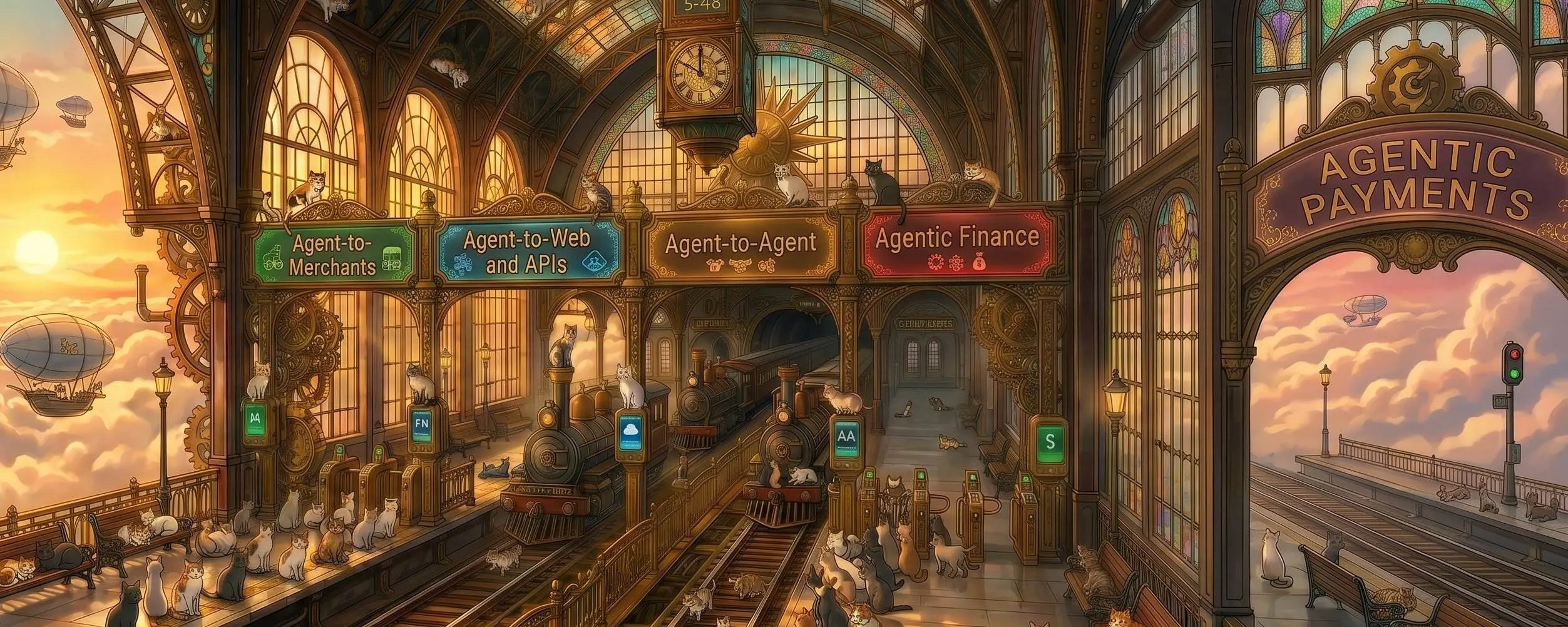
Me tomó un año ver la cruda verdad sobre los pagos de Agentes

Después de un año trabajando en la infraestructura para la economía de agentes, el autor revela verdades poco alentadoras sobre los pagos de agentes. A pesar del gran interés y los recursos invertidos por empresas como Stripe, Visa y Coinbase, la demanda real y el volumen de transacciones son mínimos actualmente. El artículo analiza cuatro categorías principales: **Agente vs. Comerciante:** La experiencia de compra conversacional con IA a menudo es inferior a las interfaces visuales tradicionales de comercio electrónico para productos como ropa o electrónicos. Los comerciantes se están preparando para una posible adopción futura ("optimización para agentes"), pero no es una necesidad crítica actual. Las excepciones podrían ser compras de alta frecuencia y baja deliberación, como pedir comida, pero las plataformas principales no tienen API abiertas, y los costos de los modelos son prohibitivos para transacciones pequeñas. **Agente vs. API:** Los desarrolladores ya tienen soluciones para pagos de API de bajo valor (como saldos prepagos). Los principales proveedores de SaaS prefieren contratos empresariales a largo plazo en lugar de micropagos. Los protocolos descentralizados pueden servir al mercado de cola larga de servicios más pequeños, pero este nicho tiende a tener un bajo poder adquisitivo. **Agente vs. Agente:** Este es un caso de uso futuro prometedor para transacciones automatizadas entre máquinas, con requisitos únicos de velocidad y escala. Sin embargo, actualmente es en gran medida teórico, con un volumen de transacciones insignificante. **Agente vs. Finanzas:** Esta es la única categoría con demanda existente y clientes dispuestos a pagar, ya sea para automatizar flujos de trabajo financieros existentes o habilitar nuevas capacidades (como reequilibrar carteras en tiempo real). La competencia es dura debido a la regulación y las relaciones establecidas. La conclusión clave es que el problema central no es el pago en sí. El pago es solo un subcomponente de un desafío mayor: la **coordinación** entre agentes y humanos, la verificación del trabajo y la liquidación de resultados. Las empresas que resuelvan el problema de la coordinación a gran escala integrarán los pagos, y no al revés. Las grandes empresas pueden permitirse construir de manera defensiva para el futuro, pero las startups deben encontrar mercados reales y activos hoy en día.

链捕手Hace 19 min(s)

Me tomó un año ver la cruda verdad sobre los pagos de Agentes

链捕手Hace 19 min(s)

Claude Opus 4.8 encuentra un bug de 4.500 millones de dólares, la era de la IA está produciendo hackers en masa

Un investigador de seguridad descubrió un grave error en el protocolo Orchard de Zcash, el cual permitía la creación ilimitada de tokens, llevando a una caída del 50% en su valor. Este bug fue identificado utilizando Claude Opus 4.8 de Anthropic, un modelo de IA disponible públicamente. El caso destaca cómo la IA democratiza la ciberseguridad, reduciendo drásticamente el costo de encontrar vulnerabilidades. Modelos potentes y accesibles como Opus 4.8 permiten que tanto investigadores como potenciales atacantes descubran fallos complejos que antes requerían expertos dedicados. Esto genera una paradoja: un aumento masivo de informes de seguridad, muchos de baja calidad o falsos, que saturan a los mantenedores de software, a menudo voluntarios sin recursos. Simultáneamente, se exponen vulnerabilidades reales y antiguas en la base de nuestro mundo digital. La industria enfrenta una crisis de talento, con una escasez global de profesionales capacitados para analizar, priorizar y reparar estas fallas. Mientras la IA abarata el descubrimiento, la reparación sigue siendo costosa y requiere juicio humano experto. En esencia, la IA ilumina las grietas en los cimientos de nuestra infraestructura digital. La verdadera prueba será si contamos con suficientes personas dispuestas y capaces de repararlas, manteniendo la frágil cadena de confianza sobre la que se construye la vida en línea.

marsbitHace 53 min(s)

Claude Opus 4.8 encuentra un bug de 4.500 millones de dólares, la era de la IA está produciendo hackers en masa

marsbitHace 53 min(s)

Predicción del precio de Ethereum: ETH podría duplicarse mientras Cardano (ADA) y este nuevo token se acercan a una subida del 500%

El mercado de criptomonedas muestra señales de un nuevo impulso, con los inversores preparándose para el próximo ciclo alcista. Ethereum (ETH), una de las principales plataformas de contratos inteligentes, cotiza alrededor de $2,014.7. Los analistas sugieren que, en un mercado alcista hacia 2026, su precio podría duplicarse, superando los $4,000, lo que representa un fuerte retorno dada su gran capitalización de mercado. Por otro lado, Cardano (ADA) se negocia cerca de $0.2329. Los inversores que apuestan por su desarrollo basado en investigación y su escalabilidad a largo plazo lo ven con potencial de recuperación y crecimiento si mejora la actividad de su red. Mientras tanto, un nuevo proyecto, Little Pepe (LILPEPE), está ganando tracción. Se trata de una capa 2 compatible con Ethereum, actualmente en la etapa 13 de su preventa a un precio de $0.0022, y ha recaudado más de $28.19 millones. El proyecto busca ofrecer un ecosistema para comunidades de memes, con menores costes y mayor velocidad de transacciones. Algunos inversores anticipan un posible rally del 500%, llevando el precio a alrededor de $0.0132, basándose en la fuerte demanda de la preventa, las características de su ecosistema y su creciente comunidad. En conclusión, Ethereum sigue siendo una inversión sólida a largo plazo, Cardano tiene potencial de apreciación y Little Pepe emerge como un token anticipado para aquellos que buscan un alto potencial de crecimiento en el entorno de las capa 2 y los memes.

TheNewsCryptoHace 1 hora(s)

Predicción del precio de Ethereum: ETH podría duplicarse mientras Cardano (ADA) y este nuevo token se acercan a una subida del 500%

TheNewsCryptoHace 1 hora(s)

Guía del modo meta de Codex: Cómo hacer que la IA avance continuamente hacia un objetivo específico

**Guía del modo Objetivo de Codex: Cómo hacer que la IA avance hacia una meta concreta** El modo /goal de Codex transforma a la IA de asistente de código a agente ejecutivo que trabaja de forma continua hacia un objetivo claro. La clave no es escribir indicaciones extensas, sino definir criterios verificables de salida, como "reducir el tiempo de despliegue un 30%" o "lograr una cobertura de pruebas del 100%". Esto permite a Codex evaluar cuándo se completa la tarea y evitar bucles infinitos. Para maximizar su eficacia, es crucial: 1. **Establecer estándares claros y medibles**, preferiblemente con métricas numéricas. 2. **Proporcionar orientación** sobre herramientas, restricciones o áreas de enfoque para evitar desvíos. 3. **Permitir la medición del progreso**, dotando a Codex de herramientas para evaluar avances (por ejemplo, comparadores visuales para tareas de diseño). 4. **Crear un entorno realista** donde Codex pueda probar soluciones en condiciones cercanas a producción. 5. **Ser cauteloso con objetivos visuales** (como replicar un píxel perfecto), ya que pueden llevar a obsesionarse con detalles; es mejor usar listas funcionales o especificaciones de diseño. 6. **Seguir el progreso** mediante commits, PRs borradores, actualizaciones en Slack o documentos de estado. 7. **Revisar y consolidar los resultados** finales, eliminando intentos fallidos y optimizando el código generado. En resumen, /goal convierte a Codex en un "ejecutor de ingeniería" de larga duración, donde el rol del desarrollador evoluciona hacia la gestión de metas, configuración de entornos y supervisión de resultados.

marsbitHace 2 hora(s)

Guía del modo meta de Codex: Cómo hacer que la IA avance continuamente hacia un objetivo específico

marsbitHace 2 hora(s)

De Ethereum al 'CROPS' de la IA: ¿Qué son exactamente estas 'variables lentas' que Vitalik enfatiza repetidamente?

En los últimos meses, Vitalik Buterin ha mencionado repetidamente el acrónimo CROPS, un conjunto de principios fundamentales para Ethereum: Resistencia a la Censura (C), Resistencia a la Captura (R), Código Abierto (O), Privacidad (P) y Seguridad (S). Estos valores, formalizados por la Fundación Ethereum, guían el desarrollo hacia un ecosistema donde los usuarios mantengan soberanía sobre sus activos e identidad sin depender de intermediarios centralizados. La relevancia de CROPS se amplifica con el auge de la IA. A medida que los asistentes de IA gestionan más tareas digitales, incluyendo transacciones financieras, surge un riesgo crítico: si estos agentes operan en entornos centralizados y opacos, los usuarios pueden perder el control sobre su privacidad, activos y autonomía. Por ello, Vitalik plantea la necesidad de una "IA CROPS": sistemas que funcionen de manera local o privada, minimizando la dependencia de servicios en la nube y garantizando transparencia y seguridad, especialmente al interactuar con blockchains. Esto crea una intersección natural entre la "capa de acceso CROPS de Ethereum" y la "IA CROPS". Ambas buscan resolver un problema común: cómo acceder a servicios remotos (como RPCs de blockchain o modelos de lenguaje) sin sacrificar la privacidad. Soluciones como las llamadas LLM pagadas con pruebas de conocimiento cero o la lectura privada de RPCs de Ethereum son ejemplos de esta convergencia. En definitiva, CROPS trasciende un simple eslogan. Representa un marco crucial para el futuro, donde la combinación de Ethereum y la IA debe priorizar no solo la eficiencia, sino la preservación de los derechos fundamentales del usuario en un mundo digital cada vez más automatizado.

marsbitHace 2 hora(s)

De Ethereum al 'CROPS' de la IA: ¿Qué son exactamente estas 'variables lentas' que Vitalik enfatiza repetidamente?

marsbitHace 2 hora(s)

Trading

Spot
Futuros

Artículos destacados

Cómo comprar ADA

¡Bienvenido a HTX.com! Hemos hecho que comprar Cardano (ADA) sea simple y conveniente. Sigue nuestra guía paso a paso para iniciar tu viaje de criptos.Paso 1: crea tu cuenta HTXUtiliza tu correo electrónico o número de teléfono para registrarte y obtener una cuenta gratuita en HTX. Experimenta un proceso de registro sin complicaciones y desbloquea todas las funciones.Obtener mi cuentaPaso 2: ve a Comprar cripto y elige tu método de pagoTarjeta de crédito/débito: usa tu Visa o Mastercard para comprar Cardano (ADA) al instante.Saldo: utiliza fondos del saldo de tu cuenta HTX para tradear sin problemas.Terceros: hemos agregado métodos de pago populares como Google Pay y Apple Pay para mejorar la comodidad.P2P: tradear directamente con otros usuarios en HTX.Over-the-Counter (OTC): ofrecemos servicios personalizados y tipos de cambio competitivos para los traders.Paso 3: guarda tu Cardano (ADA)Después de comprar tu Cardano (ADA), guárdalo en tu cuenta HTX. Alternativamente, puedes enviarlo a otro lugar mediante transferencia blockchain o utilizarlo para tradear otras criptomonedas.Paso 4: tradear Cardano (ADA)Tradear fácilmente con Cardano (ADA) en HTX's mercado spot. Simplemente accede a tu cuenta, selecciona tu par de trading, ejecuta tus trades y monitorea en tiempo real. Ofrecemos una experiencia fácil de usar tanto para principiantes como para traders experimentados.

1.8k Vistas totalesPublicado en 2024.12.10Actualizado en 2026.06.02

Cómo comprar ADA

Discusiones

Bienvenido a la comunidad de HTX. Aquí puedes mantenerte informado sobre los últimos desarrollos de la plataforma y acceder a análisis profesionales del mercado. A continuación se presentan las opiniones de los usuarios sobre el precio de ADA (ADA).

活动图片