Crypto hack counts fall but supply chain attacks reshape threat landscape

cointelegraphPublicado a 2025-12-23Actualizado a 2025-12-23

Resumen

New data from CertiK reveals that while crypto hackers stole $3.3 billion in 2025, the number of attacks fell sharply. Losses were concentrated in fewer, more damaging supply-chain attacks, which accounted for $1.45 billion across just two incidents, including the $1.4 billion Bybit hack. This shift indicates attackers are moving away from simple code vulnerabilities toward more sophisticated infrastructure-level exploits. The number of security incidents decreased by 162 year-over-year, suggesting improved protocol-level security. The median loss per hack fell 35.75% to $103,966, though the average loss rose to $5.3 million due to high-value outliers. Phishing scams were the second-largest threat, costing $722 million across 248 incidents. A significant subset was "pig butchering" romance scams, which used prolonged emotional manipulation and cost the industry $5.5 billion in 2024.

Crypto hackers stole $3.3 billion in 2025, but the number of attacks fell sharply as losses became concentrated in fewer, more sophisticated supply-chain exploits, according to new data from blockchain security firm CertiK shared with Cointelegraph.

While total losses remained elevated, the decline in incident counts and a drop in median theft sizes suggest that protocol-level security is improving, pushing attackers away from simple code vulnerabilities and toward phishing and infrastructure-level attacks.

CertiK said supply-chain breaches emerged as the most damaging threat, accounting for $1.45 billion in losses across just two incidents, including the $1.4 billion Bybit hack in February.

"The Bybit exploit signals that well-capitalized, well-coordinated threat actors are becoming more active across the ecosystem," the report said, predicting a rise in the “sophistication” of supply chain attacks as attackers target more infrastructure providers.
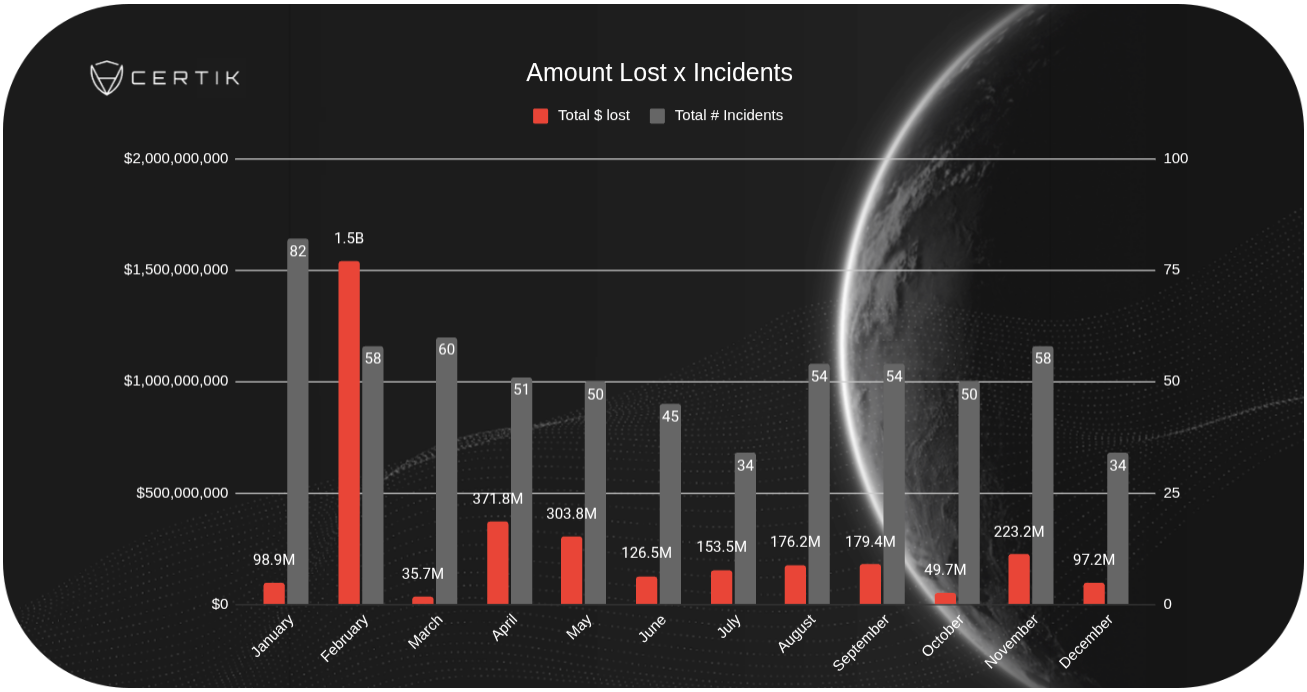
Crypto hacks by amount and incident, yearly chart. Source: CertiK

Related: Soulja Boy token sparks backlash after Base co-founder posts purchase receipt

The number of security incidents decreased by 162 counts year-over-year, indicating that blockchain cybersecurity measures are improving despite hackers aiming for larger targets.

The average amount lost per hack stood at $5.3 million, a 66% increase from the previous year. However, the median loss — a measure less influenced by outlier incidents — fell to $103,966, down 35.75% over the same period.
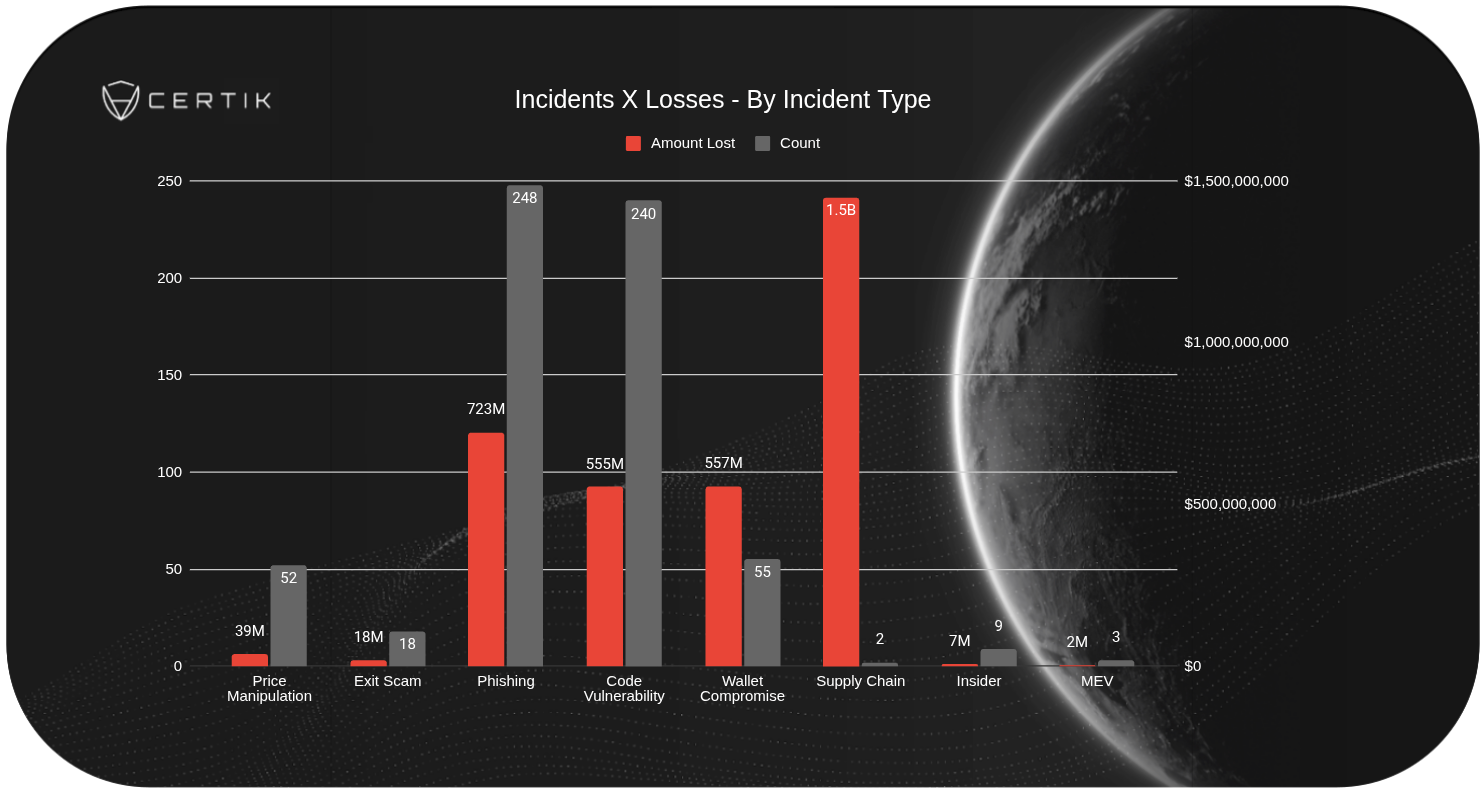
Cryptop hacks by incident type and amount of losses, one-year chart. Source: CertiK

Related: Solana AI token Ava hit by launch sniping tied to deployer: Bubblemaps

Code vulnerabilities fade as “pig butchering” scams threaten crypto savings

Phishing scams became the second-largest threat, costing crypto investors a cumulative $722 million across 248 incidents.

Recently, an investor lost their entire Bitcoin (BTC) retirement fund in an artificial intelligence-fueled romance scam, also known as a "pig butchering" scam, where the con artists used prolonged emotional manipulation to convince the investors to transfer their funds.
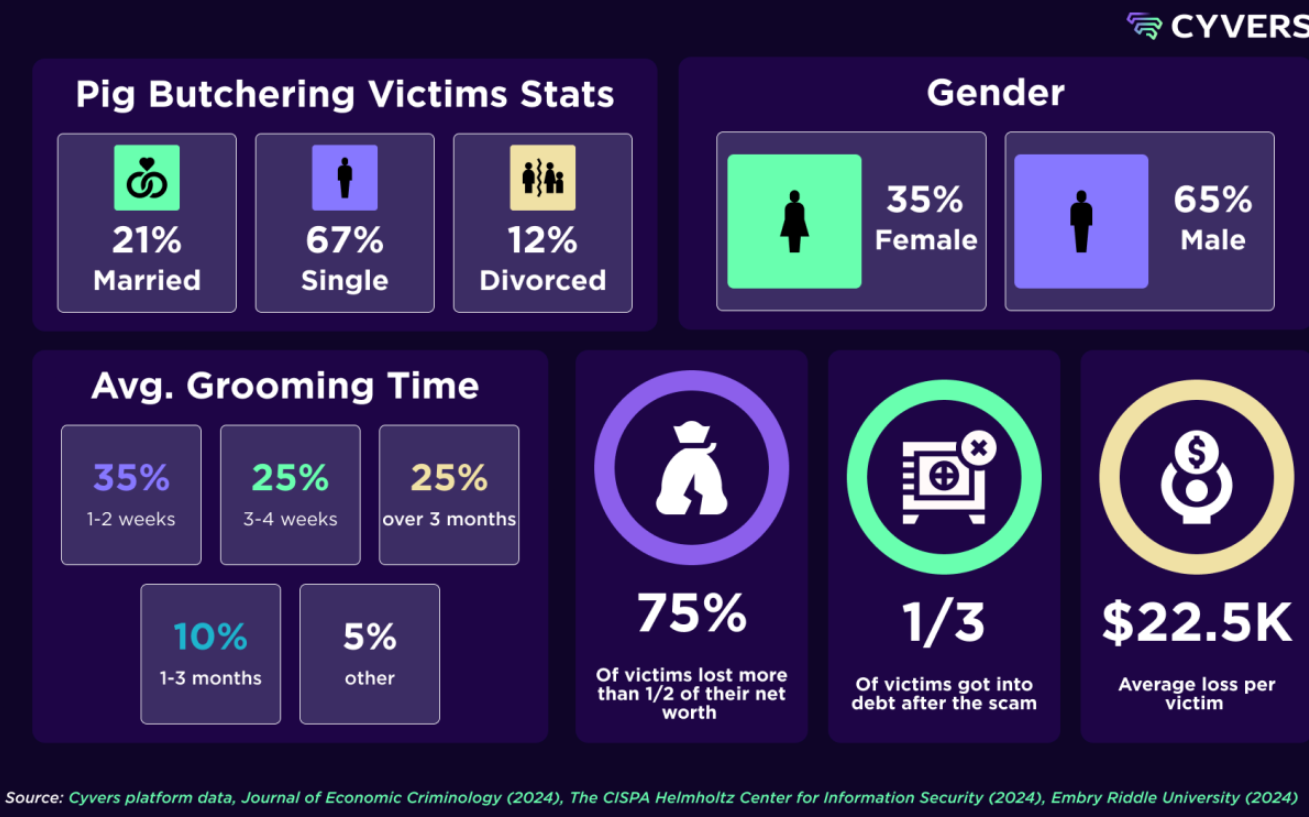
Pig butchering victim stats, grooming time. Source: Cyvers

Pig butchering scams are a subset of phishing scams that cost the industry a collective $5.5 billion in 2024, across 200,000 individual cases.

Notably, the average grooming period for victims is between one and two weeks in 35% of cases, while 10% of scams involve grooming periods of up to three months, according to blockchain security platform Cyvers.

In June, the US Department of Justice announced the seizure of over $225 million in crypto linked to pig butchering scams.

Magazine: Coinbase hack shows the law probably won’t protect you — Here’s why

Preguntas relacionadas

QAccording to CertiK's data, what was the total amount stolen by crypto hackers in 2025 and what was the most damaging type of attack?

ACrypto hackers stole a total of $3.3 billion in 2025. The most damaging type of attack was supply-chain breaches, which accounted for $1.45 billion in losses.

QWhat does the report suggest about the trend in protocol-level security based on the decline in incident counts and median theft sizes?

AThe decline in incident counts and the drop in median theft sizes suggest that protocol-level security is improving. This is pushing attackers away from simple code vulnerabilities and toward more sophisticated methods like phishing and infrastructure-level attacks.

QWhat was the average amount lost per hack and how much did it change from the previous year?

AThe average amount lost per hack stood at $5.3 million, which was a 66% increase from the previous year.

QWhat are 'pig butchering' scams and how much did they cost the industry in 2024?

A'Pig butchering' scams are a subset of phishing scams that involve prolonged emotional manipulation to convince victims to transfer their funds. They cost the industry a collective $5.5 billion in 2024 across 200,000 individual cases.

QWhat significant action did the US Department of Justice take regarding pig butchering scams in June?

AIn June, the US Department of Justice announced the seizure of over $225 million in cryptocurrency that was linked to pig butchering scams.

Lecturas Relacionadas

Punto de tormenta en los mercados globales: La desapalancamiento del mercado bursátil de Corea está prácticamente completado

Tras una fuerte caída del 32% desde junio, el mercado coreano ha sido el epicentro de la volatilidad global, amplificada por la estructura de apalancamiento concentrado. Sin embargo, el proceso de desapalancamiento forzoso está alcanzando su fase final. Las principales fuentes de inestabilidad, los ETF apalancados y los fondos de cobertura, han reducido significativamente su exposición. Se estima que los ETF apalancados han eliminado aproximadamente el 75% del exceso, pasando de 500 mil millones a 260 mil millones de USD, y su tamaño debería converger hacia niveles sostenibles, apoyado por nuevas regulaciones estrictas de las autoridades. Por su parte, los fondos de cobertura han reducido su apalancamiento en más del 50%. El riesgo sistémico de los préstamos al consumo para inversión es limitado, con un balance que representa solo el 0.5% de la capitalización bursátil, muy por debajo de los niveles de EE.UU. o China, y sin un mecanismo de reequilibrio diario que desencadene ventas en cascada. En resumen, las estructuras de alto apalancamiento que provocaron la espiral de ventas se han purgado en gran medida. El mercado está pasando de una caída impulsada por la liquidez a una valoración impulsada por los fundamentos. Si la tendencia subyacente de la IA permanece intacta, esta corrección representa más una limpieza de posiciones congestionadas que el fin del ciclo. La disrupción tecnológica sigue su curso, y la volatilidad actual puede ser el costo de participar en esta transición estructural, no un riesgo terminal para la tesis de inversión.

链捕手Hace 1 hora(s)

Punto de tormenta en los mercados globales: La desapalancamiento del mercado bursátil de Corea está prácticamente completado

链捕手Hace 1 hora(s)

Trading

Spot
活动图片