After the Tide Recedes, How Many Truly Resilient Crypto Projects Remain?

比推Publicado a 2026-02-05Actualizado a 2026-02-05

Resumen

Title: After the Tide Recedes: How Many Truly Resilient Crypto Projects Remain? In a prolonged crypto market downturn, projects demonstrating pragmatic and realistic visions are proving most resilient. This analysis highlights three key examples: 1. **Hyperliquid** addresses immediate trading friction by offering a decentralized exchange (DEX) for perpetual contracts, combining CEX-like features (high leverage, fast execution) with on-chain transparency. Its sustained activity post-airdrop reflects genuine user adoption. 2. **Canton Network** targets institutional finance needs by providing a blockchain infrastructure with "selective privacy" for regulatory compliance and business confidentiality. Backed by partnerships like DTCC (handling ~$3.7 quadrillion annually), it enables seamless integration with traditional finance. 3. **Kite AI** builds infrastructure for a future AI-driven economy, developing tools like "Agent Passport" for identity verification and the x402 protocol for autonomous payments. While not yet widely deployed, its vision aligns with the anticipated rise of AI agents as economic entities. Key evaluation criteria for project viability include: - Solving a real, existing problem (not manufactured demand); - Structurally sound solutions (technically, legally, economically); - Team execution capability (resources, expertise, track record). Projects failing these tests may see short-term gains but likely collapse in downturns. The current market stress...

Source: Tiger Research

Author: Ekko & Ryan Yoon

Original Title: Realism Is the Only Answer in a Crypto Downturn

Compiled and Edited: BitpushNews


The cryptocurrency market continues to be in a prolonged downtrend. In such an environment, the projects that can survive are those that present pragmatic and realistic visions.

Core Points

    The Canton Network was born in response to these needs. Using the smart contract language DAML, Canton can provide customizable data disclosure schemes based on the needs of the participating parties.

    This allows financial institutions to maintain transaction confidentiality while sharing information only to the necessary extent. Instead of强行推行 a technology-provider-led design, Canton has built infrastructure that highly aligns with institutional needs.

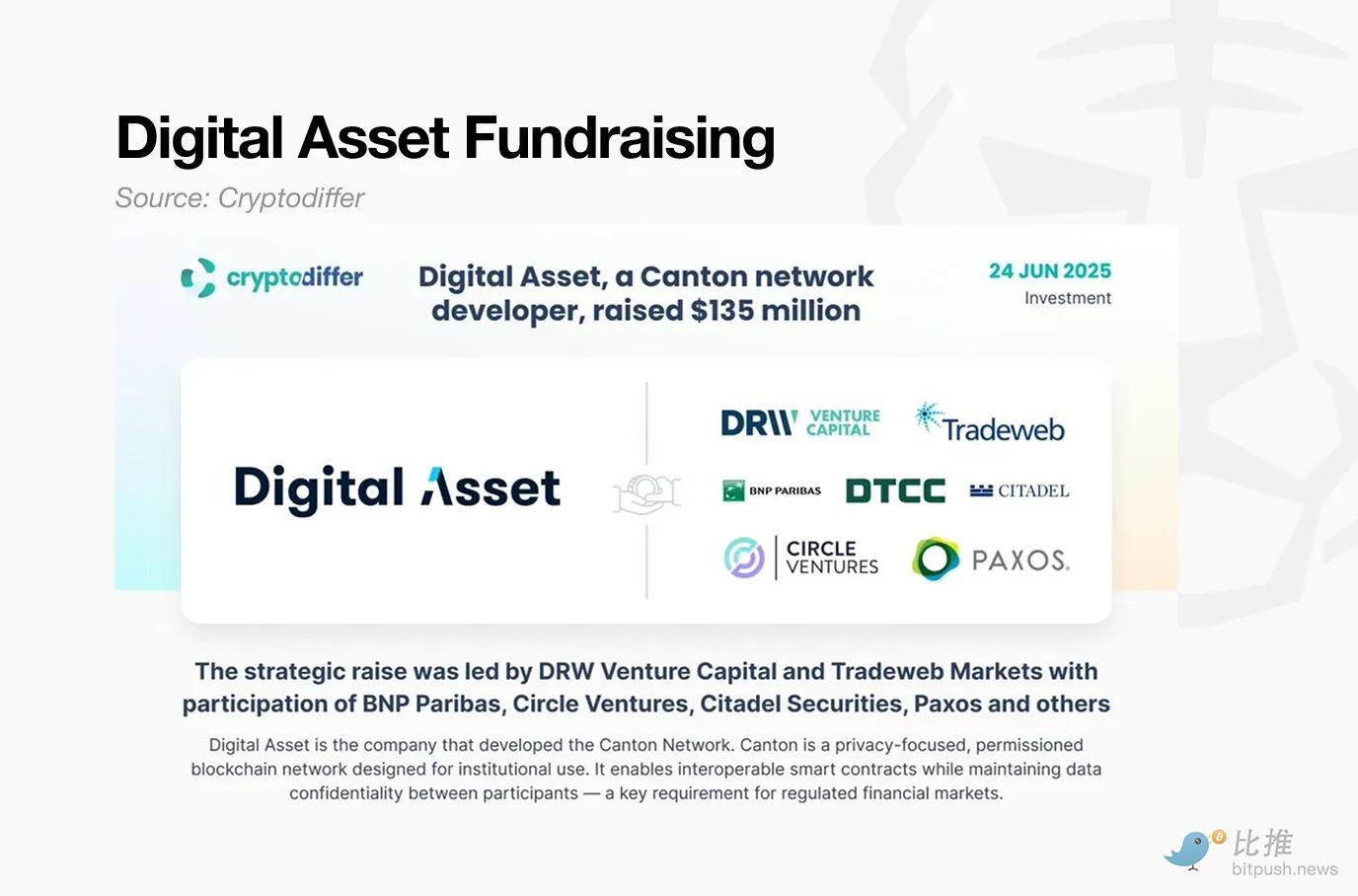
    Another key factor is that Canton has aimed for "real-world deployment" from the start to expand its ecosystem, receiving early collaborative support from financial institutions. Most notably, its partnership with DTCC (The Depository Trust & Clearing Corporation) has established a channel for assets managed in the traditional financial system to enter the Canton environment. DTCC handles approximately $3.7 quadrillion in transactions annually, further validating the practical feasibility of the Canton Network's solution.

    In the end, Canton provides a structured solution that simultaneously meets three major institutional requirements: privacy protection, regulatory compliance, and integration with the existing financial system.

    Kite AI: Building the AI Economy That Has Yet to Arrive

    Unlike the previous two examples, Kite AI currently has relatively limited application in the real world. However, viewed from the future perspective of "AI Agents operating as economic entities," its structural logic remains highly compelling.

    There is broad consensus, both in Web2 and Web3, on an "agent-driven future." Few would dispute that future AI Agents will handle tasks like booking hotels or ordering groceries on behalf of users.

    However, realizing this future requires an infrastructure that allows AI Agents to independently initiate and execute payments. Existing transaction systems are designed around transfers between people and efficiency for human participants.

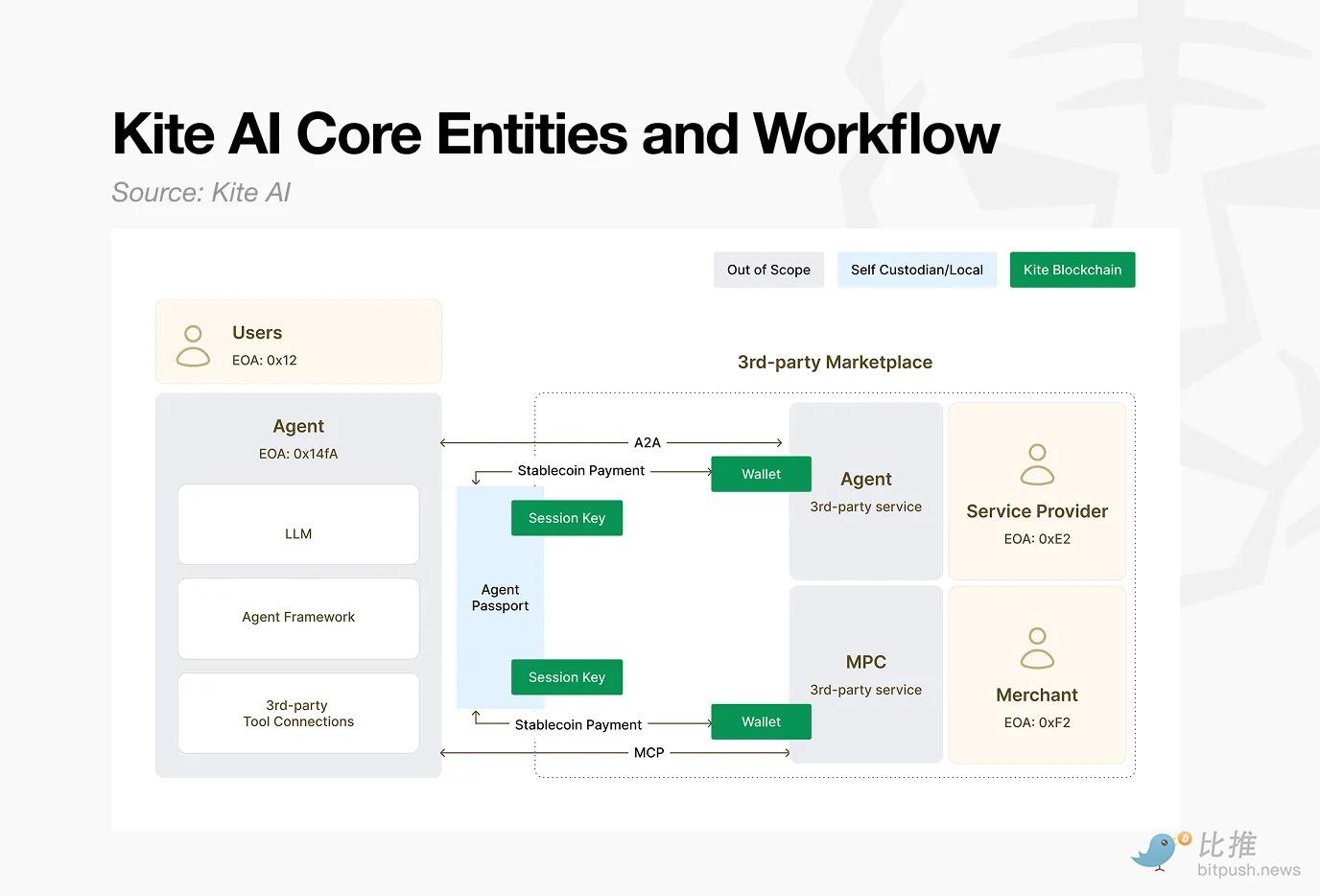
    Therefore, for AI Agents to become autonomous economic entities, new mechanisms are needed, including identity verification and automated payment frameworks. Kite AI is building payment infrastructure specifically designed for this environment, with core components including the "Agent Passport" for identity verification and the x402 protocol for automated payments.

    The vision presented by Kite AI is not yet ready for large-scale deployment, simply because the future it targets has not fully arrived. Nonetheless, the project's practical significance stems from a broader assumption: when this widely anticipated future arrives, the foundational technology it is developing will become a necessity. This alignment with macro trends gives the project structural credibility even with its current limited usage.

    Three Key Questions for Assessing Practical Feasibility

    Although these three projects operate on different timeframes, they share a common characteristic: real-world feasibility.

    Evaluations of the same project often diverge: some believe it solves real problems, while others dismiss it as hype. To bridge this interpretative gap, we must ask at least three core questions:

    1. What specific problem is the project aiming to solve? (Is it a genuine pain point for users, or a need fabricated just to use the technology?)

    2. Is the proposed solution structurally feasible? (Does it hold up technically, in terms of compliance, and in its economic model?)

    3. Does the team have the capability to execute in reality? (Do they have relevant industry resources, technical expertise, and implementation experience?)

    Since most projects promote optimistic future narratives, answering these questions correctly requires time and effort; filtering out misleading or incomplete information is not easy. Projects that cannot confidently answer these three questions might experience short-term price increases, but when the next downturn comes, they will likely perish with it.

    The current state of the crypto market is clearly not optimistic. But this does not mean the industry is over. New experiments will continue, and our task is to assess what these efforts truly represent. Right now, keeping our feet on the ground is the only choice.


    Twitter:https://twitter.com/BitpushNewsCN

    Bitpush TG Discussion Group:https://t.me/BitPushCommunity

    Bitpush TG Subscription: https://t.me/bitpush

    Original link:https://www.bitpush.news/articles/7609260

Preguntas relacionadas

QWhat is the core argument of the article regarding which crypto projects survive a market downturn?

AThe article argues that crypto projects which survive a downturn are those with a pragmatic and realistic vision, focusing on solving concrete, real-world problems rather than relying on abstract narratives or hype.

QAccording to the article, what are the three key questions to evaluate a project's practical viability?

AThe three key questions are: 1. What specific problem is the project trying to solve? (Is it a genuine user pain point or a manufactured need?) 2. Is the proposed solution structurally sound? (Is it technically, regulatorily, and economically viable?) 3. Does the team have the capability to execute in reality? (Do they have relevant industry resources, technical expertise, and implementation experience?)

QHow does Hyperliquid demonstrate resilience in the current market according to the analysis?

AHyperliquid demonstrates resilience by solving a persistent, real-world problem: user dissatisfaction with centralized exchanges. It brought key CEX features like high leverage, fast execution, and stable liquidity (via its HLP mechanism) on-chain with its perp DEX, and maintained high activity even after its token airdrop ended, showing genuine user认可 (recognition).

QWhat specific need of financial institutions does the Canton Network address?

ACanton Network addresses the institutional need for a 'selective privacy model' that supports regulatory compliance while protecting business confidentiality. It provides customizable data disclosure through its DAML smart contract language, allowing institutions to share information only as necessary, and is built with real-world deployment in mind, evidenced by its collaboration with major entities like the DTCC.
QWhat future scenario is Kite AI's infrastructure designed for, and why is it considered pragmatically credible despite limited current use?

AKite AI is designed for a future where AI Agents act as autonomous economic entities, requiring new infrastructure for identity verification (Agent Passport) and automated payments (x402 protocol). It is considered pragmatically credible because its vision aligns with the widely anticipated macro-trend of AI-driven economies, making its underlying technology a potential necessity when that future arrives.

Lecturas Relacionadas

GensynAI : Que la IA no repita los errores de Internet

En los últimos meses, el auge de la IA ha atraído talento del sector cripto. Muchos proyectos exploran cómo la blockchain puede integrarse en la infraestructura de IA, pero pocos logran un modelo de negocio cerrado. Gensyn se distingue al enfocarse en el núcleo más costoso: el entrenamiento de modelos. Su propuesta es organizar recursos de GPU dispersos globalmente en una red abierta para entrenamiento de IA. Los desarrolladores pueden enviar tareas, los nodos aportan capacidad de cálculo, y la red verifica los resultados y distribuye incentivos. Esto aborda un problema crítico: la creciente centralización del poder de cálculo en grandes tecnológicas, donde el acceso a GPUs como la H100 se ha convertido en una barrera clave para la innovación. Gensyn destaca por cuatro razones: 1. Ataca la capa de infraestructura central de la IA (entrenamiento), no solo aplicaciones. 2. Ofrece un modelo de colaboración abierto que puede optimizar costes y eficiencia para equipos más pequeños. 3. Su principal barrera tecnológica y ventaja es la capacidad de verificar resultados y garantizar fiabilidad en un entorno distribuido. 4. Responde a una demanda real y creciente en un mercado ya validado, más allá de la narrativa cripto. En conclusión, la frontera entre cripto e IA se desdibuja. La IA necesita coordinación de recursos e incentivos para la colaboración global, áreas donde la tecnología blockchain puede aportar soluciones. Gensyn representa un paso hacia una infraestructura de IA más abierta y accesible, no solo controlada por unos pocos gigantes.

marsbitHace 8 hora(s)

GensynAI : Que la IA no repita los errores de Internet

marsbitHace 8 hora(s)

¿Por qué el desarrollo de la IA en China es tan rápido? La respuesta está dentro de sus laboratorios

El artículo explora las razones del rápido desarrollo de la IA en China, centrándose en la cultura organizativa de sus laboratorios. A diferencia del ecosistema estadounidense, que prioriza la innovación disruptiva, el capital y las "estrellas" científicas individuales, el enfoque chino se caracteriza por un pragmatismo basado en la ejecución en equipo, la ingeniería eficiente, la rápida iteración y un fuerte deseo de controlar la pila tecnológica clave. Los laboratorios chinos sobresalen como "seguidores rápidos", optimizando direcciones ya establecidas. Una cultura que valora menos el ego individual y más el trabajo en equipo, combinada con una gran afluencia de jóvenes investigadores y estudiantes integrados en proyectos centrales, facilita una adaptación ágil y un enfoque en tareas prácticas de mejora de modelos. Existe un respeto general dentro del ecosistema, que se percibe más como una comunidad que como tribus en competencia. En el ámbito industrial, se observa una mentalidad de "construir, no comprar", con muchas grandes empresas tecnológicas desarrollando sus propios modelos LLM fundamentales para mantener la soberanía tecnológica. El apoyo gubernamental existe pero es descentralizado. La demanda interna de IA está creciendo, potencialmente similar al mercado de la nube, y los desarrolladores muestran una fuerte admiración por herramientas como Claude. Aunque hay una gran necesidad de chips de Nvidia, también se utilizan alternativas locales como Huawei para inferencia. El ecosistema de datos es menos maduro que en Occidente, lo que fomenta soluciones internas. En conclusión, se están formando dos trayectorias distintas: una carrera impulsada por el capital y el prestigio en EE.UU. frente a una competencia industrial impulsada por la capacidad de ejecución, el ecosistema de código abierto y la autonomía tecnológica en China. El autor destaca la calidez y el enfoque pragmático de los investigadores chinos, subrayando que la competencia futura dependerá no solo de los modelos, sino también de las capacidades organizativas y la fuerza del ecosistema.

marsbitHace 9 hora(s)

¿Por qué el desarrollo de la IA en China es tan rápido? La respuesta está dentro de sus laboratorios

marsbitHace 9 hora(s)

3 años, 5 veces: el renacimiento de una fábrica de vidrio centenaria

Según CRU, la demanda de fibra óptica en centros de datos de IA creció un 75,9% anual, ampliando el déficit de oferta del 6% al 15%. Los precios de la fibra se triplicaron en meses. NVIDIA invirtió en Corning, Lumentum y Coherent (total 45 mil millones USD) para asegurar la cadena de suministro óptica. Corning, fundada en 1851, ve su valor subir un 316,81% en el último año, alcanzando 160 mil millones USD. Su crecimiento se debe a dos factores clave: la rigidez de la oferta (el proceso de fabricación de preformas es complejo y lento) y la transición forzada de cobre a fibra en infraestructuras de IA para mayor eficiencia y menor consumo energético. La fibra es crucial para la IA: su uso en bastidores de IA es 5-10 veces mayor que en centros tradicionales. Se espera que la demanda de fibra para IA represente el 35% del mercado total para 2027. Corning lidera en fibra especializada de baja pérdida, alta densidad y resistencia a la curvatura, esencial para transmisiones de 800G a 1,6T. Sus ingresos en comunicación óptica para empresas se duplicaron en dos años, superando los 30 mil millones USD en 2025, respaldados por acuerdos a largo plazo con Meta, NVIDIA y otros grandes clientes. Aunque no es el mayor fabricante global, Corning destaca en I+D (más de 10 mil millones USD anuales) y en su enfoque en el segmento premium de centros de datos de IA. El aumento de precios beneficia a toda la industria, como muestran los resultados de empresas chinas. El despliegue de Óptica de Co-Embalaje (CPO) y la posible adopción de fibra hueca son variables futuras clave. Sin embargo, la rápida apreciación de las acciones de Corning (multiplicando por 3 su relación P/E) ya refleja grandes expectativas, lo que podría aumentar la volatilidad si los pedidos no cumplen con el ritmo esperado.

marsbitHace 10 hora(s)

3 años, 5 veces: el renacimiento de una fábrica de vidrio centenaria

marsbitHace 10 hora(s)

Trading

Spot
Futuros
活动图片