Aave Is Surrendering the Throne of DeFi Lending Due to Its Own Stupidity

marsbitPublicado a 2026-04-24Actualizado a 2026-04-24

Resumen

An article titled "Aave Is Giving Up Its Throne in DeFi Lending Due to Its Own Foolishness" discusses how Aave mishandled a crisis following a $292 million hack of rsETH from Kelp DAO, leading to significant outflows and reputational damage. After the hack, Aave failed to promptly reassure users or commit to covering potential bad debt—estimated between $123.7 million and $230.1 million—despite having sufficient reserves. This hesitation triggered panic, resulting in $17.2 billion in outflows and liquidity crises across multiple pools. The author argues that Aave’s poor crisis management and reluctance to act quickly exacerbated the situation, damaging its reputation as the "safest DeFi" platform. Meanwhile, competitor Spark, a fork of Aave V3, capitalized on the situation by attracting fleeing funds, growing its TVL by nearly $2 billion. Spark had previously delisted rsETH, avoiding any exposure to the hack. Its proactive communication and strategic positioning contrast sharply with Aave’s delayed response. Although Aave’s founder later announced a relief plan (DeFi United) with multiple partners and a personal donation, the damage to user trust and liquidity may be lasting. The article concludes that Aave’s missteps have allowed competitors like Spark, Morpho, and Jupiter Lend to challenge its dominant position in DeFi lending.

Original | Odaily Planet Daily (@OdailyChina)

Author | Azuma (@azuma_eth)

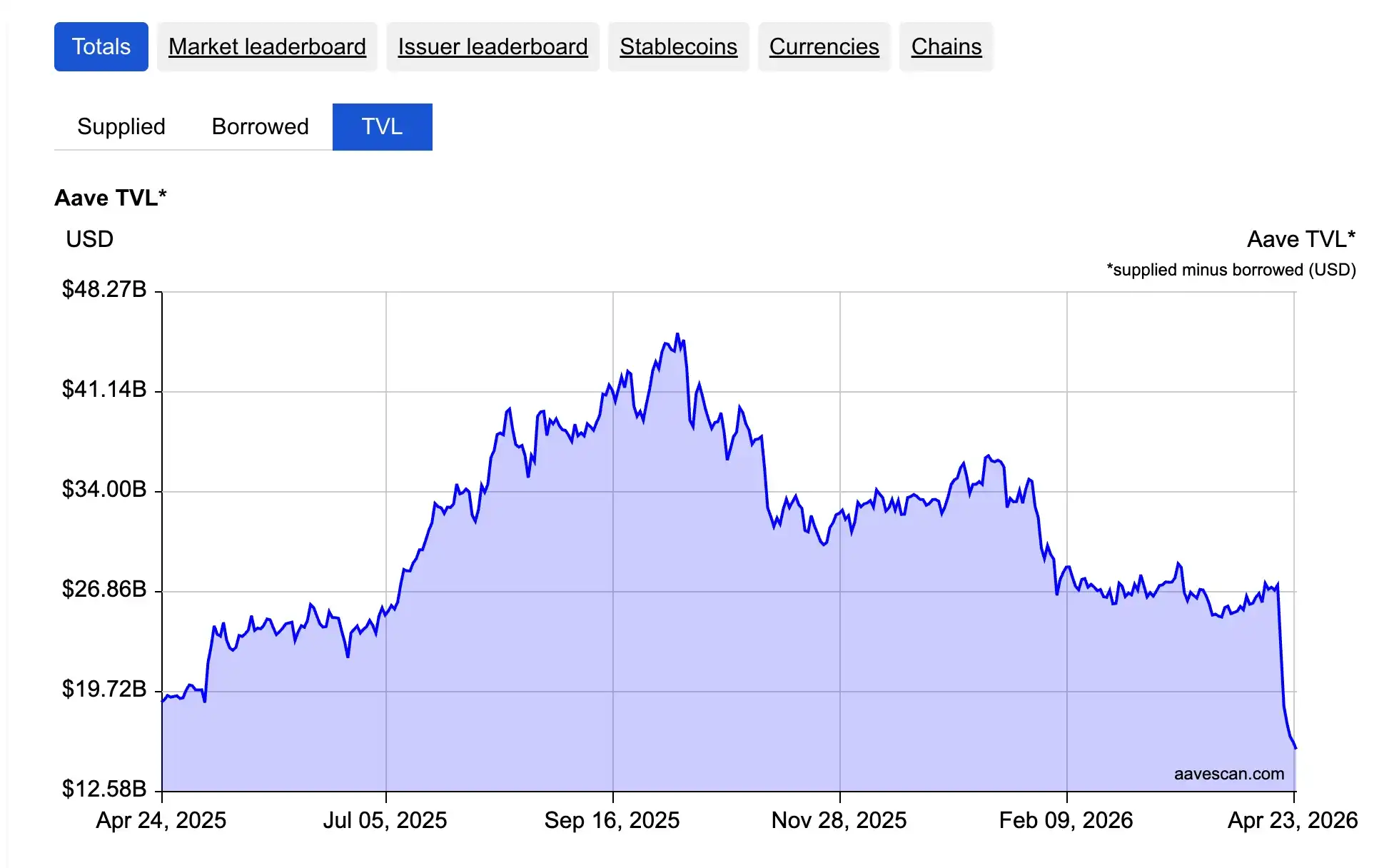
$292 million, this is the total amount of rsETH funds stolen from Kelp DAO; $17.2 billion, this is the scale of funds that have flowed out of Aave since the incident.

Aave is watching the community's panic sentiment ferment for several consecutive days due to its extremely foolish crisis PR strategy, thereby losing its once greatest advantage in the lending track—hundreds of billions of dollars in deposited funds and the user mindset label of "the safest DeFi".
  • Odaily Note: For background, please refer to "DeFi Hacked Again for $292 Million, Is Aave No Longer Safe?" and "The Tripartite Game Under the $290 Million Hole: Who Will Pay the Bill—Aave, L0, or Kelp?".

What Did Aave Do Wrong?

The details of the Kelp DAO hack need not be repeated; blaming Aave for why it granted rsETH such a high LTV is meaningless now. Here, I mainly want to discuss Aave's response strategy after the incident from the perspective of a long-term AAVE user.

First is the bad debt scale issue; Aave itself has done the math. Depending on the different handling of rsETH, there might be two possible bad debt scenarios—if the stolen loss is written off from all rsETH in circulation, it is expected to generate $123.7 million in bad debt; if the value of mainnet rsETH is protected and the loss is fully recorded in the mapped version of rsETH on Layer2, it is expected to generate $230.1 million in bad debt.

In either case, Aave has the capability to cover it with its reserves from Umbrella, the DAO treasury, and the team. I understand that Aave is unwilling to pay this money itself and wants the main responsible party, Kelp DAO, and the secondary responsible party, LayerZero, to contribute as much as possible. But the problem is that the other parties will think the same way—"Aave is so rich, the situation is so awkward, it should bear more." Therefore, in the short term, it is difficult for these three parties to reach a consensus, which implies that a solution that satisfies everyone is temporarily impossible.

But users cannot wait that long—Aave's yield levels have never been very competitive in the industry. Users who choose to deposit with Aave are all attracted by its reputation, security, and liquidity. However, the situation now is that in the most critical days after the incident, Aave consistently failed to give users some kind of bottom-line guarantee promise, but instead kept emphasizing "our code has no problems" and "how rsETH is accounted for is beyond Aave's control" to shift blame.

This is why panic sentiment kept fermenting within the community. Users tried every means to escape and avoid risk: those who could withdraw directly did so, and those who couldn't went to borrow from other pools first, causing the impact to gradually expand. So Aave's current situation is: on one hand, it faces continuous fund outflows; on the other hand, multiple pools are experiencing liquidity drying up due to utilization rates being maxed out.

This awkward situation could have been avoided (or at least not been this bad)... Since Aave can afford the money, why didn't it inject a dose of reassurance into the community from the beginning to prevent a bank run? At most, it's $230 million in bad debt (possibly less), and this money wouldn't necessarily be paid by Aave alone;后续 could continue to dispute with LayerZero and Kelp DAO.

Now, it's done. For the sake of a promised relief of at most $230 million, Aave watched $17.2 billion in deposited funds flow out (the number may continue to grow), and this doesn't even include the decline in AAVE's price these days... No matter how you calculate it, it's a huge loss.

What makes Aave even more uncomfortable is that the worse its situation becomes, the more relaxed opponents like LayerZero and Kelp DAO will be, because they will judge that Aave will be more motivated to solve the problem as soon as possible, which only puts Aave at a disadvantage in the game.

Having reached this point, Aave has brought this upon itself.

Behind Aave, Spark Is Watching Covetously

While Aave is suffering from headaches, the situation of its competitor Spark is booming and extremely positive. What is even more lamentable is that Spark is actually a competitor "personally incubated" by Aave.

Spark was originally a lending protocol forked and developed by Sky (formerly MakerDAO) based on the open-source code of Aave V3; both sides actually use the same underlying code logic. In return, there was once a profit-sharing agreement between Spark and Aave, but later Aave accused Spark of涉嫌 breaching the contract, and coupled with route differences, the two are now purely competitive.

Three months before the Kelp DAO theft, Spark had just removed support for rsETH (for details, please refer to "Same Day, Different Fate: Aave Embraces rsETH and Loses Nearly $200 Million, Spark Exits Unscathed"). You call it strategic conservatism or rigorous risk control, or even attribute it entirely to luck, but the result is that Spark was not affected at all in this incident—on this point alone, Spark can wantonly attack Aave's former "safest DeFi" label.

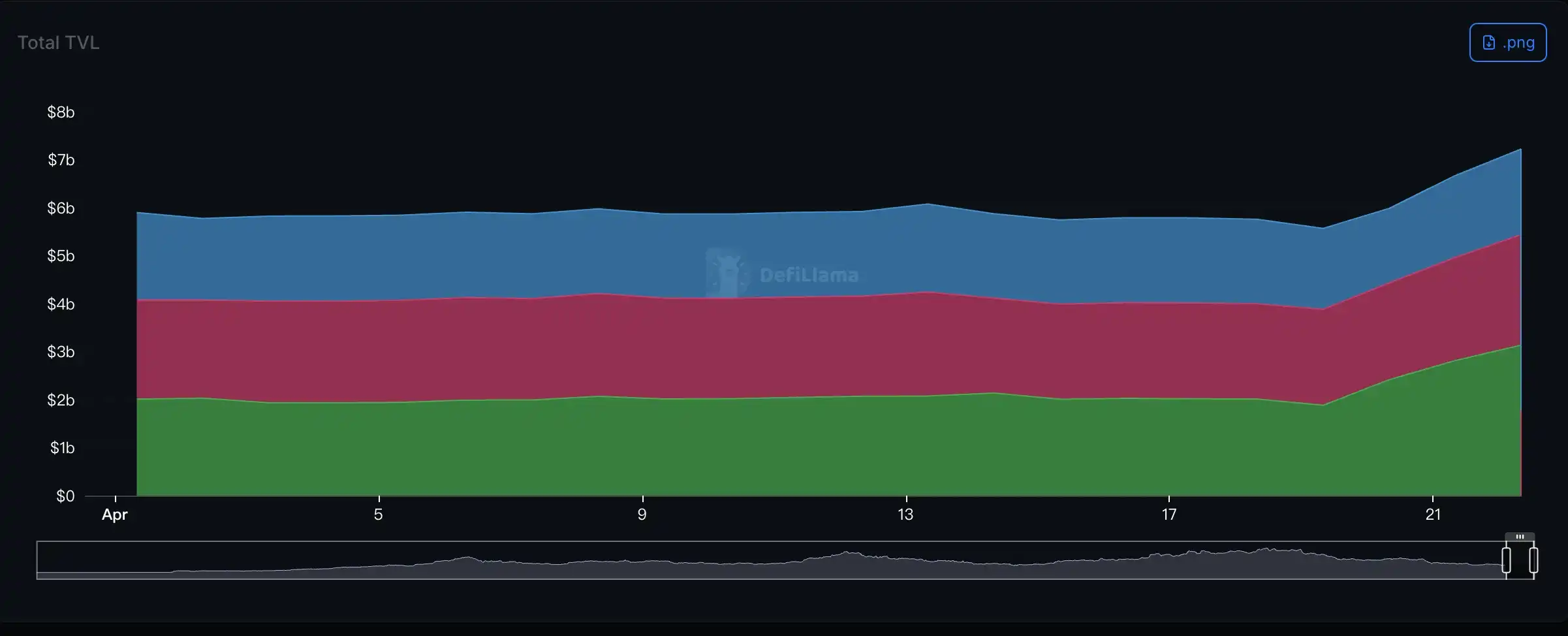
Thus, Spark became one of the safe havens for funds fleeing Aave. Since the incident, Spark's TVL has grown by nearly $2 billion (green part in the chart below). On the day of the incident, Justin Sun withdrew 53,665 ETH (worth $124 million) from Aave and subsequently deposited it into Spark. After continued accumulation in recent days, the total deposit has reached $1.3 billion—in the DeFi world, Brother Sun's operations are really something to learn.
On April 23, Upbit officially announced the launch of the Spark (SPK) Korean Won trading market. SPK, stimulated by this positive news, rose over 80% in a single day, significantly narrowing the market value gap between itself and AAVE.

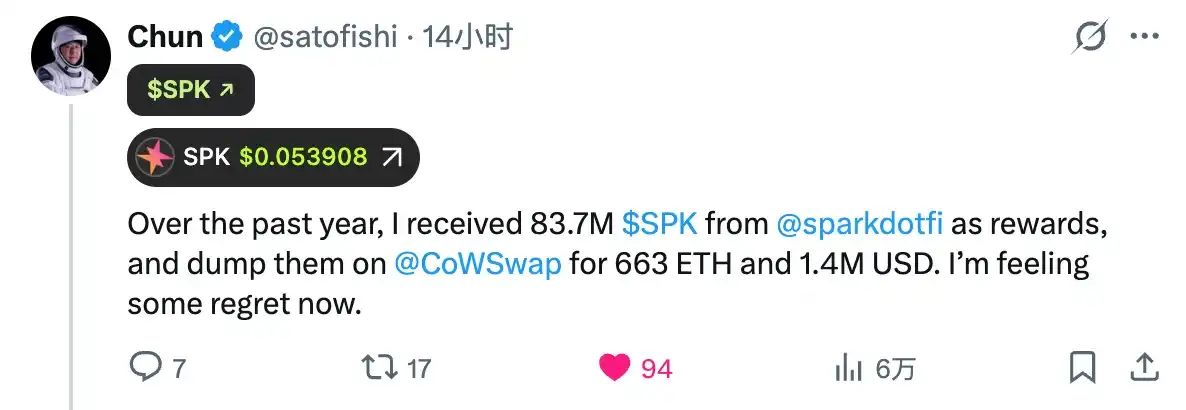
Even Wang Chun, founder of F2Pool, lamented on X: "In the past year, I received 83.7 million SPK rewards from Spark and sold them on CoWSwap for 663 ETH and $1.4 million. Now I kind of regret it."
Spark clearly realizes that this is a perfect opportunity to seize market share from Aave's mouth. Since the incident, Spark's Strategy Lead, MonetSupply, has almost become the most frequent KOL speaking out on this matter, posting dozens of times a day. Although his发言 can indeed help the public understand what happened, it objectively also加剧 the panic sentiment surrounding Aave.

But this is the purest商业 competition; MonetSupply just made the most correct choice.

Aave Is Losing the Throne of DeFi Lending

In the early morning of April 24, perhaps realizing the严峻 situation, Aave founder Stani announced on X the launch of a relief plan called DeFi United. Cooperative participants include LayerZero, Ethena, ether.fi, Ink Foundation, Golem Foundation, Trydo, etc. Stani personally will also donate 5,000 ETH to solve the current problem.

But the funds have already flowed out, and user trust has been severely damaged. Relying solely on this belated statement, Aave will find it difficult to regain deposited funds and user trust in the short term.

The DeFi lending track has long presented a pattern of "one superpower, multiple great powers," with Aave一直以来 having seemingly extremely solid leading advantages. But now, Aave is拱手 surrendering the throne. Behind it, challengers are coming aggressively; besides the booming Spark, other opponents like Morpho and Jupiter Lend also hope to take a bite out of Aave's share.

Last year, Stani bought a five-story luxury house in London for approximately $30 million, one of the most expensive transactions in the UK's sluggish luxury real estate market in the past year. I don't know if there is something like a "jinx," but with precedents like Su Zhu and others, it seems that big shots who consume conspicuously within the circle always run into some倒霉事.

I can't guess what Stani is thinking right now in his five-story luxury house.

Preguntas relacionadas

QWhat was the main reason for the massive outflow of funds from Aave following the Kelp DAO hack?

AAave's extremely poor crisis management strategy, which failed to provide a timely and reassuring commitment to cover the potential bad debt, led to widespread community panic and a user rush to withdraw funds.

QWhat are the two potential bad debt scenarios calculated by Aave after the rsETH exploit?

AIf the stolen loss is written off from all rsETH in circulation, it would result in approximately $123.7 million in bad debt. If the value of mainnet rsETH is protected and the loss is fully attributed to the mapped version of rsETH on Layer 2, it would result in approximately $230.1 million in bad debt.

QWhich competitor protocol directly benefited from the funds flowing out of Aave, and what was a significant factor in its immunity to the hack?

ASpark Protocol directly benefited, with its TVL growing by nearly $2 billion. A significant factor was that Spark had removed support for rsETH three months prior to the hack, avoiding any exposure to the incident.

QWhat was the name of the key initiative announced by Aave founder Stani Kulechov in a belated attempt to address the crisis?

AStani Kulechov announced an initiative called 'DeFi United,' a relief plan involving partners like LayerZero and Ethena, to which he also personally pledged a donation of 5,000 ETH.

QAccording to the author, what is the fundamental reason users traditionally deposited funds into Aave, given its uncompetitive yield rates?

AUsers traditionally deposited into Aave due to its reputation for safety, security, and deep liquidity, not for competitive yield rates.

Lecturas Relacionadas

Me tomó un año ver la cruda verdad sobre los pagos de Agentes

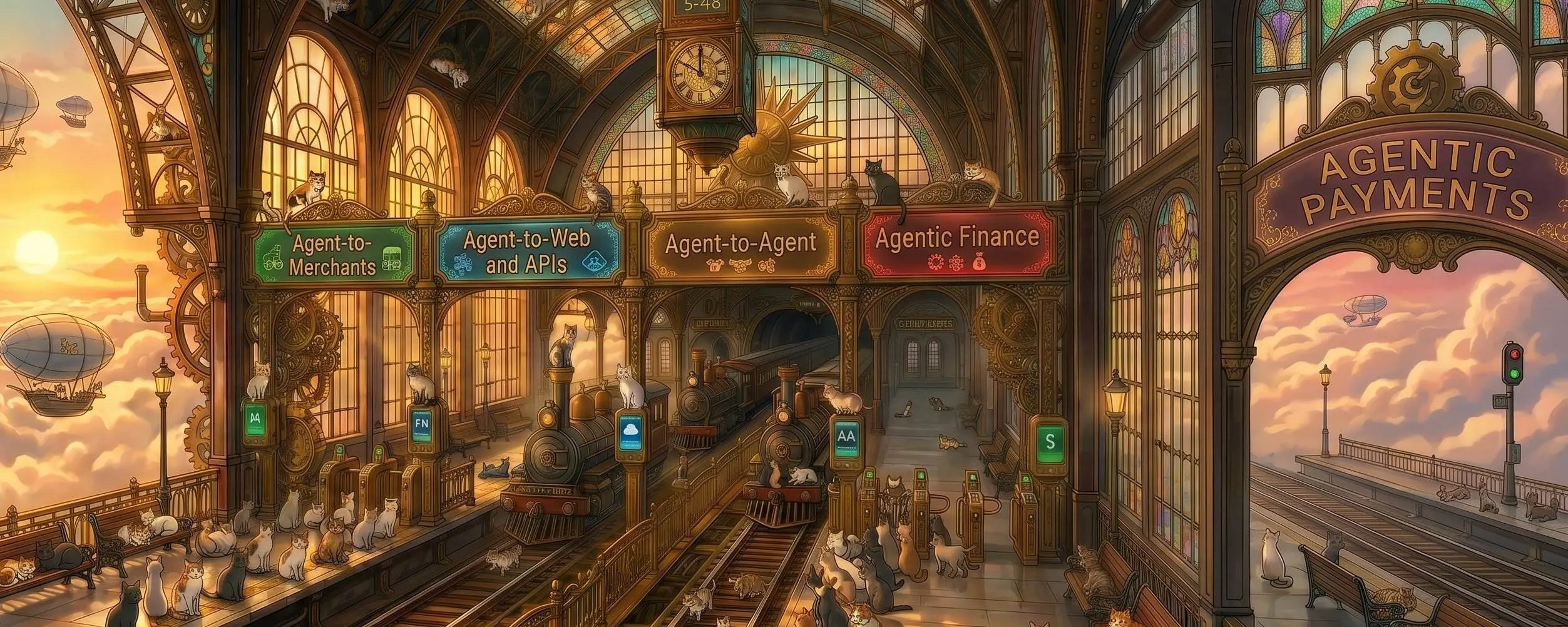
Después de un año trabajando en la infraestructura para la economía de agentes, el autor revela verdades poco alentadoras sobre los pagos de agentes. A pesar del gran interés y los recursos invertidos por empresas como Stripe, Visa y Coinbase, la demanda real y el volumen de transacciones son mínimos actualmente. El artículo analiza cuatro categorías principales: **Agente vs. Comerciante:** La experiencia de compra conversacional con IA a menudo es inferior a las interfaces visuales tradicionales de comercio electrónico para productos como ropa o electrónicos. Los comerciantes se están preparando para una posible adopción futura ("optimización para agentes"), pero no es una necesidad crítica actual. Las excepciones podrían ser compras de alta frecuencia y baja deliberación, como pedir comida, pero las plataformas principales no tienen API abiertas, y los costos de los modelos son prohibitivos para transacciones pequeñas. **Agente vs. API:** Los desarrolladores ya tienen soluciones para pagos de API de bajo valor (como saldos prepagos). Los principales proveedores de SaaS prefieren contratos empresariales a largo plazo en lugar de micropagos. Los protocolos descentralizados pueden servir al mercado de cola larga de servicios más pequeños, pero este nicho tiende a tener un bajo poder adquisitivo. **Agente vs. Agente:** Este es un caso de uso futuro prometedor para transacciones automatizadas entre máquinas, con requisitos únicos de velocidad y escala. Sin embargo, actualmente es en gran medida teórico, con un volumen de transacciones insignificante. **Agente vs. Finanzas:** Esta es la única categoría con demanda existente y clientes dispuestos a pagar, ya sea para automatizar flujos de trabajo financieros existentes o habilitar nuevas capacidades (como reequilibrar carteras en tiempo real). La competencia es dura debido a la regulación y las relaciones establecidas. La conclusión clave es que el problema central no es el pago en sí. El pago es solo un subcomponente de un desafío mayor: la **coordinación** entre agentes y humanos, la verificación del trabajo y la liquidación de resultados. Las empresas que resuelvan el problema de la coordinación a gran escala integrarán los pagos, y no al revés. Las grandes empresas pueden permitirse construir de manera defensiva para el futuro, pero las startups deben encontrar mercados reales y activos hoy en día.

链捕手Hace 11 min(s)

Me tomó un año ver la cruda verdad sobre los pagos de Agentes

链捕手Hace 11 min(s)

Claude Opus 4.8 encuentra un bug de 4.500 millones de dólares, la era de la IA está produciendo hackers en masa

Un investigador de seguridad descubrió un grave error en el protocolo Orchard de Zcash, el cual permitía la creación ilimitada de tokens, llevando a una caída del 50% en su valor. Este bug fue identificado utilizando Claude Opus 4.8 de Anthropic, un modelo de IA disponible públicamente. El caso destaca cómo la IA democratiza la ciberseguridad, reduciendo drásticamente el costo de encontrar vulnerabilidades. Modelos potentes y accesibles como Opus 4.8 permiten que tanto investigadores como potenciales atacantes descubran fallos complejos que antes requerían expertos dedicados. Esto genera una paradoja: un aumento masivo de informes de seguridad, muchos de baja calidad o falsos, que saturan a los mantenedores de software, a menudo voluntarios sin recursos. Simultáneamente, se exponen vulnerabilidades reales y antiguas en la base de nuestro mundo digital. La industria enfrenta una crisis de talento, con una escasez global de profesionales capacitados para analizar, priorizar y reparar estas fallas. Mientras la IA abarata el descubrimiento, la reparación sigue siendo costosa y requiere juicio humano experto. En esencia, la IA ilumina las grietas en los cimientos de nuestra infraestructura digital. La verdadera prueba será si contamos con suficientes personas dispuestas y capaces de repararlas, manteniendo la frágil cadena de confianza sobre la que se construye la vida en línea.

marsbitHace 45 min(s)

Claude Opus 4.8 encuentra un bug de 4.500 millones de dólares, la era de la IA está produciendo hackers en masa

marsbitHace 45 min(s)

Predicción del precio de Ethereum: ETH podría duplicarse mientras Cardano (ADA) y este nuevo token se acercan a una subida del 500%

El mercado de criptomonedas muestra señales de un nuevo impulso, con los inversores preparándose para el próximo ciclo alcista. Ethereum (ETH), una de las principales plataformas de contratos inteligentes, cotiza alrededor de $2,014.7. Los analistas sugieren que, en un mercado alcista hacia 2026, su precio podría duplicarse, superando los $4,000, lo que representa un fuerte retorno dada su gran capitalización de mercado. Por otro lado, Cardano (ADA) se negocia cerca de $0.2329. Los inversores que apuestan por su desarrollo basado en investigación y su escalabilidad a largo plazo lo ven con potencial de recuperación y crecimiento si mejora la actividad de su red. Mientras tanto, un nuevo proyecto, Little Pepe (LILPEPE), está ganando tracción. Se trata de una capa 2 compatible con Ethereum, actualmente en la etapa 13 de su preventa a un precio de $0.0022, y ha recaudado más de $28.19 millones. El proyecto busca ofrecer un ecosistema para comunidades de memes, con menores costes y mayor velocidad de transacciones. Algunos inversores anticipan un posible rally del 500%, llevando el precio a alrededor de $0.0132, basándose en la fuerte demanda de la preventa, las características de su ecosistema y su creciente comunidad. En conclusión, Ethereum sigue siendo una inversión sólida a largo plazo, Cardano tiene potencial de apreciación y Little Pepe emerge como un token anticipado para aquellos que buscan un alto potencial de crecimiento en el entorno de las capa 2 y los memes.

TheNewsCryptoHace 1 hora(s)

Predicción del precio de Ethereum: ETH podría duplicarse mientras Cardano (ADA) y este nuevo token se acercan a una subida del 500%

TheNewsCryptoHace 1 hora(s)

Guía del modo meta de Codex: Cómo hacer que la IA avance continuamente hacia un objetivo específico

**Guía del modo Objetivo de Codex: Cómo hacer que la IA avance hacia una meta concreta** El modo /goal de Codex transforma a la IA de asistente de código a agente ejecutivo que trabaja de forma continua hacia un objetivo claro. La clave no es escribir indicaciones extensas, sino definir criterios verificables de salida, como "reducir el tiempo de despliegue un 30%" o "lograr una cobertura de pruebas del 100%". Esto permite a Codex evaluar cuándo se completa la tarea y evitar bucles infinitos. Para maximizar su eficacia, es crucial: 1. **Establecer estándares claros y medibles**, preferiblemente con métricas numéricas. 2. **Proporcionar orientación** sobre herramientas, restricciones o áreas de enfoque para evitar desvíos. 3. **Permitir la medición del progreso**, dotando a Codex de herramientas para evaluar avances (por ejemplo, comparadores visuales para tareas de diseño). 4. **Crear un entorno realista** donde Codex pueda probar soluciones en condiciones cercanas a producción. 5. **Ser cauteloso con objetivos visuales** (como replicar un píxel perfecto), ya que pueden llevar a obsesionarse con detalles; es mejor usar listas funcionales o especificaciones de diseño. 6. **Seguir el progreso** mediante commits, PRs borradores, actualizaciones en Slack o documentos de estado. 7. **Revisar y consolidar los resultados** finales, eliminando intentos fallidos y optimizando el código generado. En resumen, /goal convierte a Codex en un "ejecutor de ingeniería" de larga duración, donde el rol del desarrollador evoluciona hacia la gestión de metas, configuración de entornos y supervisión de resultados.

marsbitHace 1 hora(s)

Guía del modo meta de Codex: Cómo hacer que la IA avance continuamente hacia un objetivo específico

marsbitHace 1 hora(s)

De Ethereum al 'CROPS' de la IA: ¿Qué son exactamente estas 'variables lentas' que Vitalik enfatiza repetidamente?

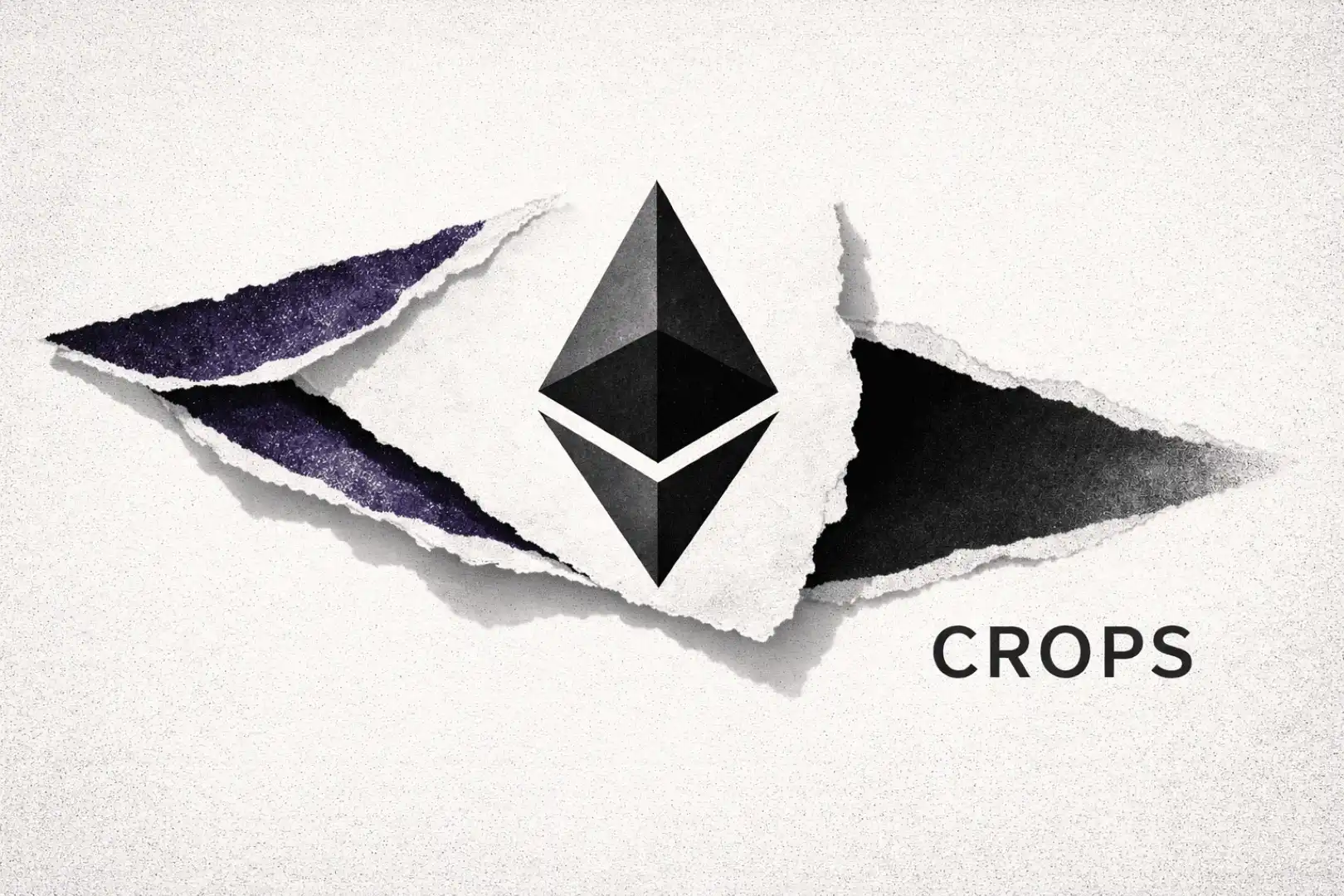
En los últimos meses, Vitalik Buterin ha mencionado repetidamente el acrónimo CROPS, un conjunto de principios fundamentales para Ethereum: Resistencia a la Censura (C), Resistencia a la Captura (R), Código Abierto (O), Privacidad (P) y Seguridad (S). Estos valores, formalizados por la Fundación Ethereum, guían el desarrollo hacia un ecosistema donde los usuarios mantengan soberanía sobre sus activos e identidad sin depender de intermediarios centralizados. La relevancia de CROPS se amplifica con el auge de la IA. A medida que los asistentes de IA gestionan más tareas digitales, incluyendo transacciones financieras, surge un riesgo crítico: si estos agentes operan en entornos centralizados y opacos, los usuarios pueden perder el control sobre su privacidad, activos y autonomía. Por ello, Vitalik plantea la necesidad de una "IA CROPS": sistemas que funcionen de manera local o privada, minimizando la dependencia de servicios en la nube y garantizando transparencia y seguridad, especialmente al interactuar con blockchains. Esto crea una intersección natural entre la "capa de acceso CROPS de Ethereum" y la "IA CROPS". Ambas buscan resolver un problema común: cómo acceder a servicios remotos (como RPCs de blockchain o modelos de lenguaje) sin sacrificar la privacidad. Soluciones como las llamadas LLM pagadas con pruebas de conocimiento cero o la lectura privada de RPCs de Ethereum son ejemplos de esta convergencia. En definitiva, CROPS trasciende un simple eslogan. Representa un marco crucial para el futuro, donde la combinación de Ethereum y la IA debe priorizar no solo la eficiencia, sino la preservación de los derechos fundamentales del usuario en un mundo digital cada vez más automatizado.

marsbitHace 2 hora(s)

De Ethereum al 'CROPS' de la IA: ¿Qué son exactamente estas 'variables lentas' que Vitalik enfatiza repetidamente?

marsbitHace 2 hora(s)

Trading

Spot
Futuros

Artículos destacados

Cómo comprar AAVE

¡Bienvenido a HTX.com! Hemos hecho que comprar Aave Protocol (AAVE) sea simple y conveniente. Sigue nuestra guía paso a paso para iniciar tu viaje de criptos.Paso 1: crea tu cuenta HTXUtiliza tu correo electrónico o número de teléfono para registrarte y obtener una cuenta gratuita en HTX. Experimenta un proceso de registro sin complicaciones y desbloquea todas las funciones.Obtener mi cuentaPaso 2: ve a Comprar cripto y elige tu método de pagoTarjeta de crédito/débito: usa tu Visa o Mastercard para comprar Aave Protocol (AAVE) al instante.Saldo: utiliza fondos del saldo de tu cuenta HTX para tradear sin problemas.Terceros: hemos agregado métodos de pago populares como Google Pay y Apple Pay para mejorar la comodidad.P2P: tradear directamente con otros usuarios en HTX.Over-the-Counter (OTC): ofrecemos servicios personalizados y tipos de cambio competitivos para los traders.Paso 3: guarda tu Aave Protocol (AAVE)Después de comprar tu Aave Protocol (AAVE), guárdalo en tu cuenta HTX. Alternativamente, puedes enviarlo a otro lugar mediante transferencia blockchain o utilizarlo para tradear otras criptomonedas.Paso 4: tradear Aave Protocol (AAVE)Tradear fácilmente con Aave Protocol (AAVE) en HTX's mercado spot. Simplemente accede a tu cuenta, selecciona tu par de trading, ejecuta tus trades y monitorea en tiempo real. Ofrecemos una experiencia fácil de usar tanto para principiantes como para traders experimentados.

518 Vistas totalesPublicado en 2024.12.11Actualizado en 2026.06.02

Cómo comprar AAVE

Discusiones

Bienvenido a la comunidad de HTX. Aquí puedes mantenerte informado sobre los últimos desarrollos de la plataforma y acceder a análisis profesionales del mercado. A continuación se presentan las opiniones de los usuarios sobre el precio de AAVE (AAVE).

活动图片