Justin Sun: HT Is Seriously Undervalued Compared to BNB

HuobiPublicado a 2022-10-21Actualizado a 2022-10-24

Resumen

On the evening of October 20, Justin Sun, the global advisor of Huobi Global, talked about the price of HT in a Twitter Space live broadcast. He believes that the price of HT is seriously undervalued compared to BNB.

On the evening of October 20, Justin Sun, the global advisor of Huobi Global, talked about the price of HT in a Twitter Space live broadcast. He believes that the price of HT is seriously undervalued compared to BNB. Here are several reasons:

● These two tokens have the same circulation

● Huobi Global has more tools to empower HT

● Popular coins such as APT have a higher trading volume on Huobi Global

Is it real?

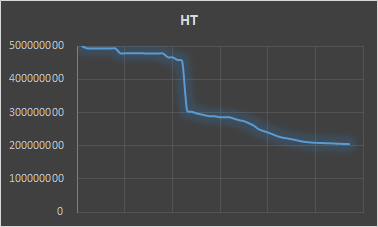
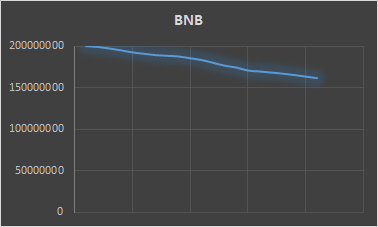
Firstly, look at the circulation. The total supply of BNB is 200 million, while the total supply of HT is 500 million, 300 million more than its compatitor. However, nearly 300 million HTs have already been burnt through the “HT Token Burn Program Community Vote”. From the perspective of circulating supply, the current circulating supply of HT is around 130 million, and the circulating supply of BNB is 160 million. The circulating supply of HT is less than that of BNB. Focusing on non-circulating HT, with 200 million in circulation compared to 160 million, the price of BNB is around 270 US dollars per token, while the price of HT is only 7 US dollars per token, the gap is indeed too wide.

From the burning curve below, by burning 150 million HT in March 2020, the burning speed of HT was significantly accelerated, while BNB was relatively slow.
Second, when HT was initially released, part of it was used to buy point cards as gifts, and HT could be used to purchase VIP members, and also could be used to vote for listing. Since the end of 2020, the empowerment actions will be significantly reduced. In addition, the Chinese users would force to leave in 2021, and the empowerment actions of HT were basically suspended. However, the empowerment of BNB actions was continuous, which lead to a rebound in the price of BNB at the end of 2021, and widens its price gap with HT. The empowerment move of HT is indeed a little weaker, but there is no fundamental difference between them by circulation and brand influence, if HT could follow the BNB in the empowerment perspective, the price gap may see a quick narrowing in the short run.

Lastly, take the trading volume of the popular currency APT as an example to analyze the gap between the giants. According to the data of Coingecko, the trading volume of the APT/USDT trading pair in Binance for the last 1 day is around 120 million US dollars, while in Huobi it is about 40 million US dollars. the gap was just about 3 times. This gap is much narrower than the price gap between HT and BNB.

The following are quoted from Justin in the live broadcast. You can tell for yourself whether it makes sense or not:

“I personally believe that HT is definitely undervalued because the circulation of HT and BNB is exactly the same, about 160 million. Now a BNB coin is a few hundred dollars, while HT is only 7-8 dollars, I think HT is still undervalued. Although Binance has a strong network effect, Huobi Global is still an excellent exchange.

For example, in the past two days, Huobi Global is still the main battlefield for the trading of APT which is a new and top-level project. To a certain extent, the price of HT does not match the users, trading depth, and capital of Huobi global. In another word, HT is still underestimated.

I’m not trying to spread FOMO emotion to you guys. Suppose I’m not a Huobi Global consultant, my judgment of the undervalue of HT will still be firm. So HT now is definitely will be a profitable investment. The reason HT was undervalued is that Huobi Global did not empower HT. Now that I am a Huobi Global consultant, I must ensure that Huobi Global will focus on empowering HT. In meetings for the last few days, I have emphasized more than 50 times to make sure that our organization's top priority is to empower HT and turn the direction of operation back to HT prosperity. "


Lecturas Relacionadas

Breve historia de la máquina litográfica: cómo un rayo de luz ha recorrido sesenta y nueve años

Resumen: Historia de las máquinas de litografía: cómo un haz de luz ha recorrido 69 años El 27 de julio de 2026, la noticia de que una empresa estatal china en Shanghái comenzaba a fabricar máquinas de litografía de inmersión DUV provocó una caída del 6.3% en las acciones de ASML, eliminando unos 44.000 millones de dólares de su valor de mercado. Este evento refleja la fisura en la suposición del "monopolio" de ASML en esta tecnología. La historia de la litografía comenzó en 1957, cuando Jay Lathrop nombró el proceso "photolithography". Desde las primeras máquinas de contacto en los años 60 hasta la invención de la litografía por proyección en 1973 (PerkinElmer) y la máquina de paso (stepper) en 1978 (GCA), la industria evolucionó rápidamente. En la década de 1980, los fabricantes japoneses como Nikon y Canon dominaron el mercado, desplazando a los estadounidenses. El punto de inflexión llegó en 2002 con la idea de inmersión en agua de Burn Lin (TSMC), que ASML adoptó con éxito, superando a Nikon, que había apostado por la tecnología de 157 nm. Para avanzar más, se desarrolló la tecnología EUV (luz ultravioleta extrema), un esfuerzo de 21 años liderado por ASML con inversiones clave de Intel, TSMC y Samsung. La primera máquina EUV de alta producción llegó en 2016. Hoy, ASML posee un casi monopolio en EUV y domina el mercado DUV de inmersión. La reciente entrada china, aunque con una diferencia tecnológica estimada de 18 años, cuestiona esta dinámica. La historia de la litografía no es solo de avances técnicos, sino de qué empresa fue sostenida por sus clientes durante los largos ciclos de desarrollo. Desde PerkinElmer hasta ASML, el éxito siempre ha dependido de clientes dispuestos a invertir, probar y esperar a que la tecnología madure. La luz recorrió 69 años, pero quien completó el camino nunca fue solo la luz, sino la paciencia y la colaboración en la industria.

marsbitHace 24 min(s)

Breve historia de la máquina litográfica: cómo un rayo de luz ha recorrido sesenta y nueve años

marsbitHace 24 min(s)

Analista de CryptoQuant afirma que un 'escenario aterrador y al mismo tiempo una señal prometedora para Bitcoin' revela el punto mínimo final: estos son los detalles

Bitcoin, la principal criptomoneda, entró en un mercado bajista tras alcanzar un máximo histórico de 126.000 dólares en octubre de 2025, cayendo más del 50%. Actualmente, con el precio alrededor de 57.000 dólares, los analistas debaten si el fondo está cerca. Según un último análisis de CryptoQuant, el mercado bajista del Bitcoin podría estar terminando, proyectándose un mínimo final en los 51.336 dólares. El analista señala que, a medida que disminuye la presión de los vendedores tras el máximo histórico, las caídas son más cortas y las recuperaciones más amplias. La relativa estabilidad en torno a los 60.000 dólares en julio, tras una caída menor, confirma este debilitamiento de los vendedores. Además, indicadores técnicos como el MACD y el RSI muestran señales alcistas, divergencias positivas y niveles de sobreventa, sugiriendo la formación de un suelo de mercado. No obstante, el analista no descarta una última venta masiva a corto plazo que lleve al precio hasta el mencionado soporte clave de 51.336 dólares (nivel de Fibonacci del 61,8%). Esta zona alrededor de los 50.000 dólares es un importante soporte histórico, que coincide con el coste medio de los inversores y la media móvil de 200 semanas, condiciones similares a los mínimos de mercados bajistas anteriores.

cryptonews.ruHace 1 hora(s)

Analista de CryptoQuant afirma que un 'escenario aterrador y al mismo tiempo una señal prometedora para Bitcoin' revela el punto mínimo final: estos son los detalles

cryptonews.ruHace 1 hora(s)

Trading

Spot
活动图片