Author: Claude, Shenchao TechFlow
Shenchao Guide: On August 19th, Trump convened crypto executives from Coinbase, Ripple, Kraken, and others at the White House along with the SEC and CFTC chairs, declaring that he had "ended the crypto wars once and for all," hinting at increasing Bitcoin holdings and introducing Hyperliquid. Just one day later, CFTC Chair Selig singled out the "anti-crypto army, doomsayers, and decelerationists" for stifling innovation, stating that if Congress cannot pass the CLARITY Act by September 15th, the CFTC will independently formulate crypto market structure rules, allowing exchanges to offer leveraged and margin trading.
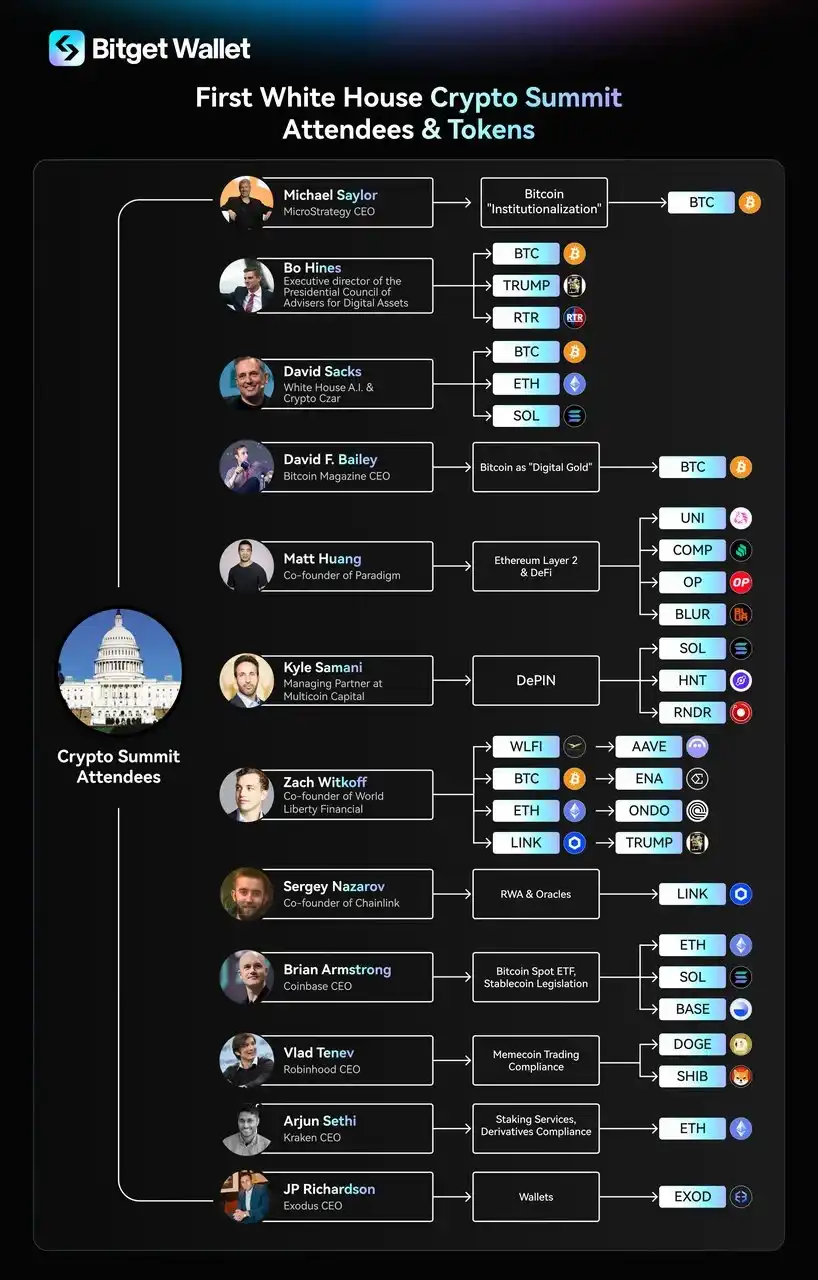
On August 19th, the Roosevelt Room of the White House in Washington was packed with crypto and Wall Street executives. CEOs from Coinbase, Ripple, Kraken, Robinhood, Gemini, Nasdaq, and ICE sat alongside SEC Chair Paul Atkins and CFTC Chair Michael Selig. The SEC had just released new crypto financing regulations the day before, and less than 24 hours after the meeting, the CFTC Chair issued a stern warning. Over two consecutive days, the White House and the two major regulatory agencies pushed crypto policy to the same deadline: September 15th.
Trump Fires Three Shots in One Day: Ending the War, Increasing Bitcoin Holdings, Bringing Hyperliquid to the U.S.
Trump opened by declaring that the previous administration had "pushed innovation offshore," while his administration had "ended the crypto wars once and for all." He then proceeded to fire three arrows.
First, he urged Congress to pass a "fair version of the CLARITY Act." The House passed the bill in July 2025 with a vote of 294 to 134, and the Senate Banking Committee cleared it in May 2026, but a full Senate vote has stalled until September. Trump said this bill would ensure the U.S. "stays ahead of China."
Second, the U.S. may further increase its Bitcoin holdings. When asked if he would purchase "significant" amounts of Bitcoin and other crypto assets, Trump replied, "It's been discussed. It relieves a lot of pressure on the dollar, and it's very good for the dollar." However, he did not provide numbers or a timeline. Currently, the U.S. strategic Bitcoin reserve and digital asset inventory primarily come from law enforcement seizures.
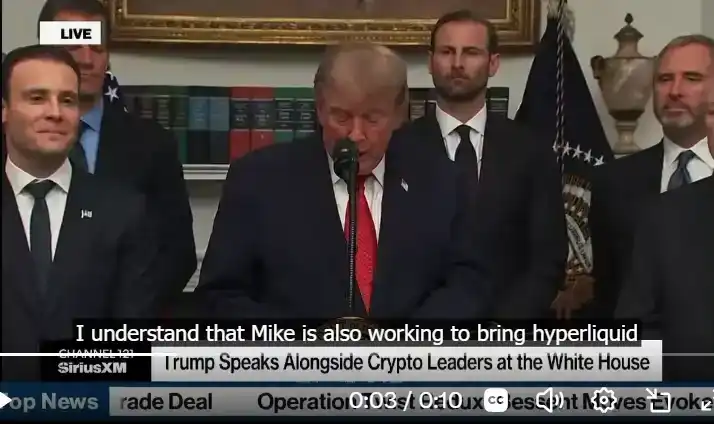
Third, the CFTC is working to bring Hyperliquid into the U.S. in a compliant manner. Trump said, "I know Mike is working hard to bring Hyperliquid into the U.S. in a fully compliant, legal way." Hyperliquid currently blocks U.S. users and is said to hold 60% to 80% of the decentralized perpetual market share.
SEC and CFTC Play Their Hands in Turn: Congressional Legislation is Plan A, Regulators Writing Their Own Rules is Plan B
The policy groundwork for the White House summit was laid a day earlier. On August 18th, the SEC released its "Regulation Crypto Assets" proposal, creating two sets of registration exemptions: startup projects can raise up to $5 million cumulatively over four years with only principal narrative disclosures; larger projects can raise up to $75 million in any 12-month period but must submit financial statements and fulfill ongoing reporting obligations. More crucially, the "investment contract safe harbor" clause allows crypto assets to exit SEC jurisdiction if the issuer proves it has ceased core managerial efforts. Paul Atkins stated, "Our proposal will give crypto entrepreneurs the certainty they need to raise capital in the United States using digital assets."
If the SEC is opening cracks within existing laws, CFTC Chair Selig's remarks at the inaugural meeting of the Innovation Advisory Committee on August 20th were more direct. He opened by targeting the regulatory style of recent years: "For years, the anti-crypto army, doomsayers, and decelerationists have stifled innovation." He said the CFTC is "turning the page and charting the course for the new frontier of finance as innovators."
A more specific signal was: if Congress cannot advance the CLARITY Act by September 15th, the CFTC will independently formulate crypto market structure rules. Selig's exact words were: "We will leave room for CLARITY to be voted on, but if we ultimately cannot get a fair version to the President's desk, I will instruct CFTC staff to quickly propose these new rules." This set of rules might allow registered exchanges and some currently unregistered crypto platforms to offer leveraged or margin trading under CFTC oversight. Additionally, the CFTC will collaborate with on-chain protocol developers to explore compliant operational models for decentralized finance platforms. Selig is currently the only seated Commissioner at the CFTC, giving him highly concentrated decision-making authority on rulemaking.
Hyperliquid Becomes the Biggest Winner, But the Compliance Path is Far from Settled
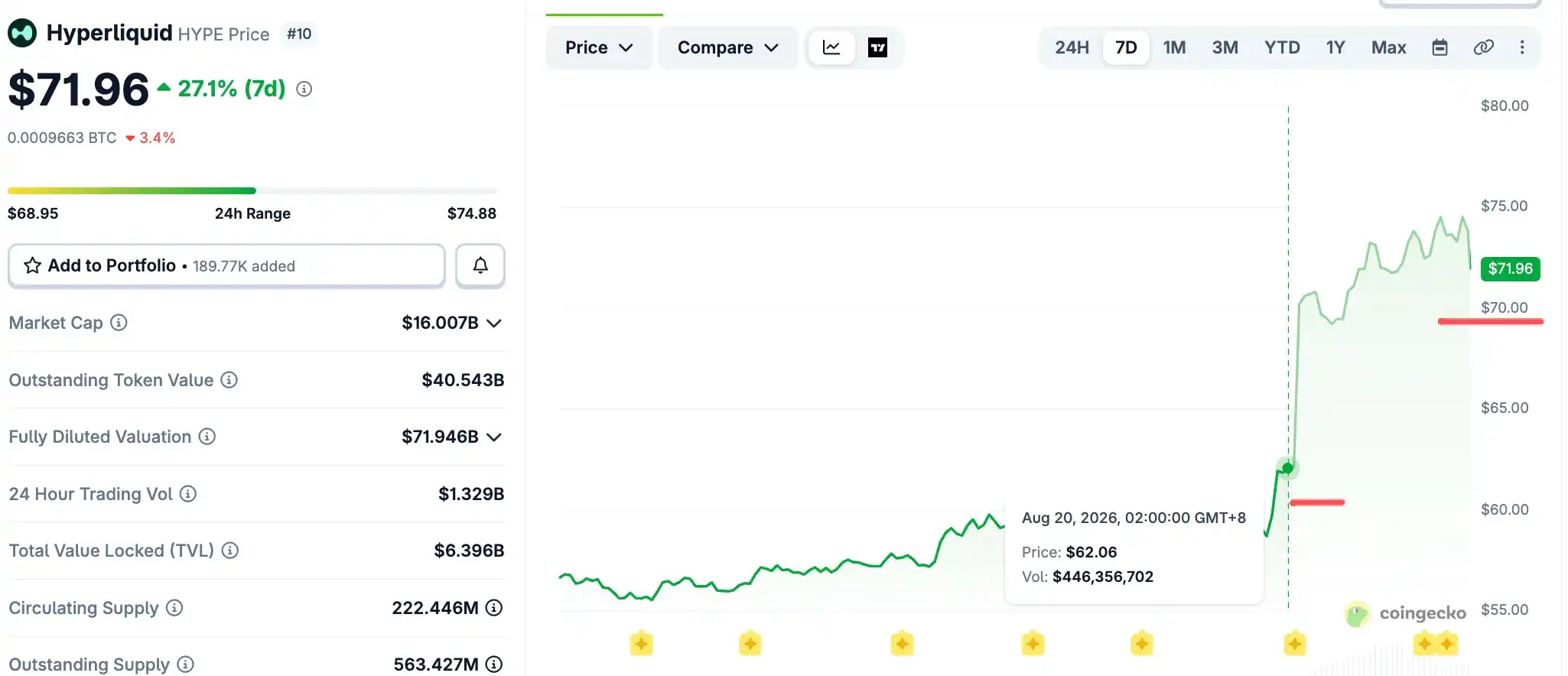
The market reaction was most direct following Trump's mention of Hyperliquid. HYPE rose from around $62 to a high of $72 before settling between $69 and $70, marking a 19% to 20% gain within 24 hours, with trading volume exceeding $13 billion. The stock of Nasdaq-listed company Hyperliquid Strategies (PURR), which holds HYPE as a core strategy, surged 30.42% in a single day. Traditional derivatives exchanges moved in the opposite direction: Cboe fell 3.5%, and CME declined 1.7%.
However, Trump's words do not equal regulatory approval. Hyperliquid still restricts U.S. user access, and its operating company is headquartered in Singapore. Coinbase announced the integration of Hyperliquid perpetual contracts into its Base App on the same day, but this is merely an interface partnership, not Hyperliquid operating compliantly within the U.S. itself. A potential compliance path could involve a licensed U.S. broker-dealer acting as the front-end for KYC and client funds, with Hyperliquid continuing as the underlying trading venue. Whether this hybrid structure of "compliant front-end, decentralized back-end" can pass CFTC scrutiny remains unknown.
Is September 15th a Bluff or the Real Deal? It Hinges on Whether Ethics Provisions Can Pass
All signals point to September 15th. Senate Majority Leader John Thune filed a cloture motion on August 8th, requiring 60 votes on September 15th to begin debate.
But the obstacle for the CLARITY Act is not the crypto provisions themselves, but rather ethics clauses. Democratic senators insist the bill must restrict federal officials, including the President, from profiting from crypto businesses. The background is Trump's 2025 disclosure that his family earned over $1.4 billion from crypto-related ventures, with his family's projects repeatedly raising conflict-of-interest concerns. Bipartisan lawmakers submitted a counter-proposal to the White House in late July, but as of early August, no public response had been given.
Coinbase CEO Brian Armstrong stated at the summit, "The most important thing coming up is the CLARITY Act vote on September 15th." He hopes the bill can secure over 60 votes, making the progress of recent months "set in stone for decades to come." CFTC Chair Selig's threat serves as another layer of insurance. He said congressional legislation is "the most reliable way to prevent future regulatory overreach like that of Gary Gensler." The implication: if Congress fails, the CFTC will act on its own, but the rules could be overturned by a future administration; only legislation can lock the trend in place.