547 Million OP Tokens Transferred from User Airdrop to Ecosystem Fund: DAO Voting Becoming Sham Democracy

marsbitPublicado a 2026-08-21Actualizado a 2026-08-21

Resumen

An Optimism governance vote approved the controversial transfer of 546.9 million OP tokens (12.7% of total supply, ~24% of circulating supply) from the remaining "User Airdrop" allocation to the Foundation-controlled "Strategic Ecosystem Fund." The vote passed with a decisive 849,000 OP vote from "Test in Prod," a core development team fully funded by the Optimism Collective, cast just 17 minutes before the deadline. The Foundation argued that broad user airdrops are ineffective for the current institutional expansion phase and that the funds are needed as a flexible "war chest" to secure enterprise clients like Bitpanda and Dunamu. Critics, including L2BEAT and researcher Polynya, opposed the move. They cited the Foundation's overly broad mandate, a lack of clear link to token holder interests, insufficient assessment of past ecosystem fund expenditures (~686M OP spent), and the rewriting of the original distribution promise made to users. The incident highlights deeper governance concerns beyond low voter turnout. It raises questions about the independence of votes from entities financially dependent on the Foundation and the ethical limits of DAO governance—specifically, whether a majority vote can legitimately redefine foundational promises and minority expectations. The move signals a shift from community-focused airdrops to enterprise-driven strategy, eroding user trust amid OP's significant price decline.

Written by: Xiaobing

On the evening of August 19, a vote on Optimism's governance platform, Agora, had 16 minutes and 52 seconds remaining. On screen, the disapproval votes stood at 45.77%, and the proposal seemed destined for rejection.

The proposal's content was to reallocate 546.9 million OP tokens from the "User Airdrop" allocation to the "Strategic Ecosystem Fund" under the Foundation's jurisdiction. This amount represents 12.7% of the total token supply and nearly 24% of the circulating supply.

Then, a vote of 8.49 million OP tokens came crashing down. The approval rate instantly jumped to 61.84%, and the proposal passed.

This decisive vote was cast by Test in Prod. The team's introduction on Agora is clear: the Core Development Team of the Optimism Collective. In the 2025 Security Council nomination document, they wrote themselves: "fully funded by the Collective." In June of this year, they were just granted a new 12-month term on the Security Council.

A core team fully funded by Optimism cast the deciding vote in the final 17 minutes, transferring tokens worth approximately $49.7 million from users' pockets to the Foundation's account.

Whose Money, Whose Say?

The Foundation has its own logic. Optimism conducted five airdrop rounds from 2022 to 2024, distributing a total of 269.1 million OP tokens to users, but the effectiveness declined with each round. Both academic analysis and on-chain data indicate that the later airdrops had minimal impact on user retention. The Foundation's conclusion is: large-scale airdrops are a tool suitable for early user acquisition, not for the current stage of institutional expansion.

OP Enterprise is now the Foundation's strategic focus.

Bitpanda launched Vision Chain on Optimism, South Korea's largest exchange Dunamu signed a memorandum of understanding for GIWA Chain, and Ether.fi brought $220 million in TVL and over 70,000 active payment cards to OP Mainnet. The Foundation believes that to secure these enterprise-level clients, a flexible treasury of tokens is needed, rather than continuing to lock 547 million OP under the unused "airdrop" label.

Test in Prod defended their vote bluntly: corporate bids require confidentiality, competitive windows are fleeting, and Optimism needs this war chest.

The Opponents Saw Something Else

L2BEAT, an independent Ethereum Layer 2 research institution, voted against the proposal.

Their wording is worth reading line by line: the Foundation's mandate is overly broad, the connection between token deployment and OP holder interests is unclear, and the effectiveness of previous partner investments hasn't undergone formal evaluation. In a system that has already spent 686 million OP on ecosystem funds (including Partner, Seed, and Unallocated categories), adding another 547 million to a vaguely defined new fund, L2BEAT considered the evidence insufficient.

Polynya, an independent researcher who was long involved in Optimism governance and resigned from his representative position in 2025, returned specifically for this vote. His judgment was sharper: handing over 24% of the circulating supply based on a "vague hand-wavey promise," especially when the Foundation's past incentive spending results have been mixed at best, is irresponsible.

A community member named Luckyhooman.eth pointed out the most stinging fact: Approximately 686 million OP has already been invested under the ecosystem fund categories, more than 2.5 times the total user airdrop amount. Yet OP Mainnet has not become a mainstream public chain for daily user use. Taking the airdrop allocation from users rewrites the initial distribution promise before the user-side experiment has been fully tested.

The Real Problem Isn't Voter Turnout

The classic dilemma of on-chain governance is low voter turnout. But Optimism's issue this time is precisely the opposite: enough people participated, and the quorum was met. The proposal passed because a voter with a special status changed the outcome at the last minute.

This opens a deeper question. When a team's funding source, salary payments, and future contract renewals all depend on the Foundation's decisions, to what extent is that team's vote on the Foundation's budget proposal an independent judgment? In traditional corporate governance, this is called a related-party transaction, requiring at least the recusal of the interested party from voting. In the DAO world, there is currently no such rule.

An even more fundamental layer is: Can DAO governance voting rewrite the distribution promises made at the founding moment?

When Optimism launched the OP token in 2022, it explicitly stated in black and white that 19% of the total supply was allocated to user airdrops. This number was written into the tokenomics documentation, included by major data platforms, and held by countless users as a long-term expectation for participating in the Optimism ecosystem. Using a majority vote to rename the remaining airdrop allocation as a "Strategic Fund" at the Foundation's disposal might be completely legally compliant within DAO governance, which is designed to modify any parameter. But what it undermines is something softer: user trust in the project's promises.

The price of OP has fallen from around $4.85 in March 2024 to about $0.09 today, a drop of over 98%.

At this price, 546.9 million OP tokens are worth approximately $49.7 million, nearly a quarter of OP's market cap. For the Foundation, this is ammunition that can be immediately deployed in corporate bidding. For retail holders still holding OP, this is a signal that their once-anticipated airdrop share has been officially canceled.

Looking back, DAO governance is moving toward an ironic convergence point: it invented on-chain voting to replace the backroom decisions of a board, only to ultimately reproduce the most classic dilemmas of board governance—who watches the watchers, and whether a majority vote can legitimately redefine the rights of a minority.


Criptos en tendencia

Preguntas relacionadas

QWhat was the specific action taken in the Optimism governance vote described in the article, and what was the immediate consequence?

AThe proposal was to reallocate 546.9 million OP tokens from the 'User Airdrop' allocation to the Foundation-controlled 'Strategic Ecosystem Fund'. With only about 17 minutes left in the voting, a single decisive vote of 8.49 million OP tokens from the core team 'Test in Prod' changed the outcome from failing to passing, securing the transfer of funds.

QWho is 'Test in Prod' and what potential conflict of interest is highlighted regarding their vote?

A'Test in Prod' is the core development team of the Optimism Collective. The article highlights a potential conflict of interest because the team is fully funded by the Collective/Foundation. This raises questions about the independence of their vote on a proposal that directly concerns the Foundation's budget and resource allocation.

QAccording to the Optimism Foundation's reasoning, why did they propose moving funds away from user airdrops and into a strategic fund?

AThe Foundation argued that the effectiveness of broad user airdrops for user retention had diminished in later rounds. Their current strategic focus is 'OP Enterprise,' targeting institutional clients. They stated that winning enterprise deals requires a flexible 'war chest' of tokens for confidential and time-sensitive negotiations, which the reallocated fund would provide.

QWhat were the main criticisms from opponents of the proposal, such as L2BEAT and Polynya?

AOpponents criticized the proposal on several grounds: the Foundation's mandate was too broad; there was a lack of clear connection between the token deployment and OP holder interests; the effectiveness of past partner fund deployments hadn't been formally assessed; and allocating a massive, vague new fund (24% of circulating supply) based on past mixed results was irresponsible. They also noted the original airdrop promise to users was being rewritten.

QWhat broader, fundamental issue about DAO governance does the article suggest this vote exposes?

AThe article suggests the vote exposes a fundamental tension in DAO governance: whether a majority vote can legitimately rewrite foundational promises made at a project's inception (like token distribution plans). It also highlights the ironic convergence where on-chain voting, meant to replace backroom board decisions, can recreate classic corporate governance dilemmas like conflicts of interest and the question of 'who guards the guardians.''

Lecturas Relacionadas

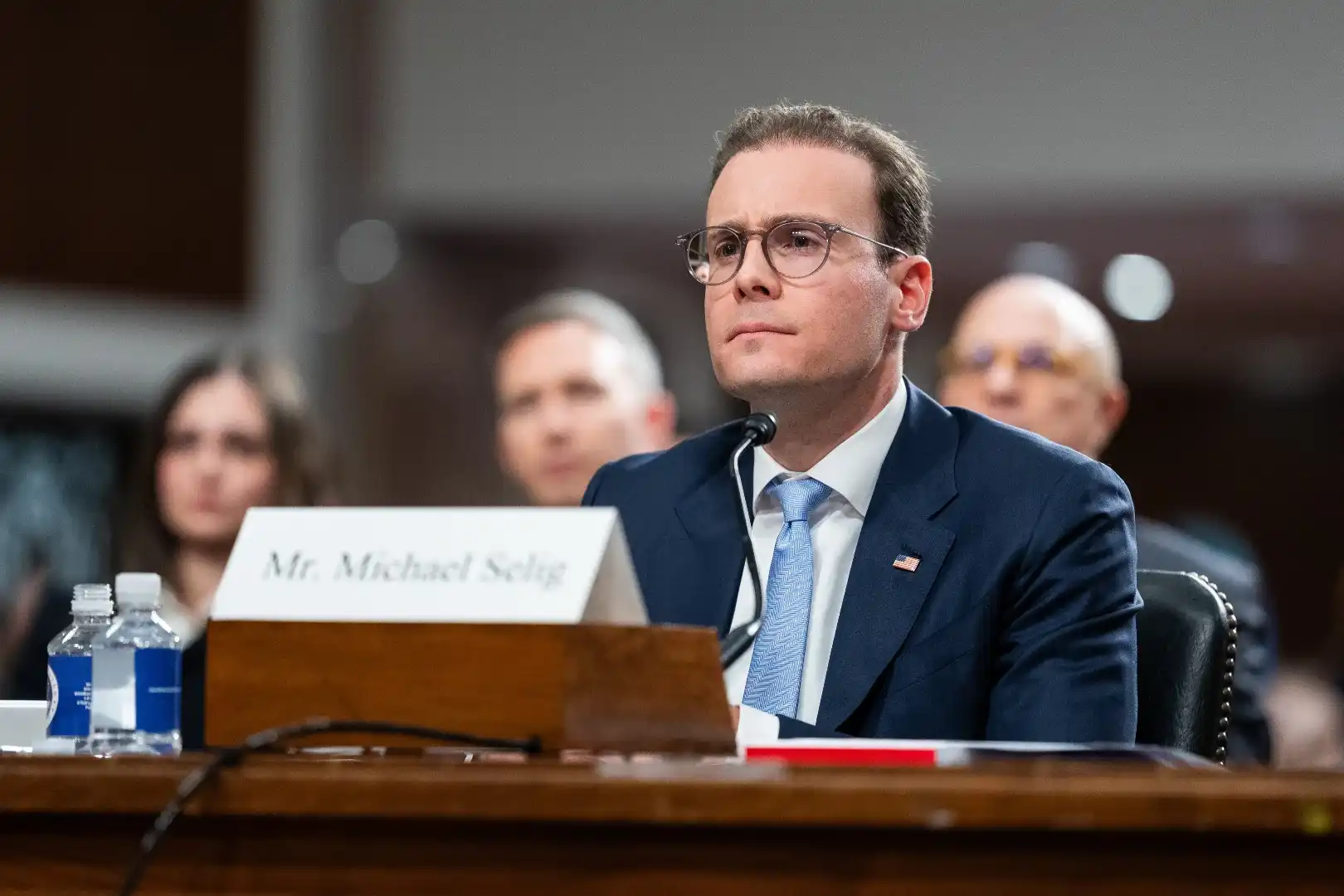
Presidente de la CFTC expone su plan: próximo destino, cripto, mercados de computación y mercados de predicción

El presidente de la CFTC, Michael S. Selig, presentó su "Hoja de ruta para la nueva frontera de la financiación" en la primera reunión del Comité Asesor de Innovación (IAC). La hoja de ruta se centra en tres ámbitos: criptoactivos, mercado de capacidad de cómputo para IA y mercados de predicción. En materia de criptoactivos, la CFTC continúa priorizando una legislación estructural del mercado, como la CLARITY Act. Sin embargo, si el Congreso no avanza, la CFTC está preparada para usar sus atribuciones existentes para establecer un marco regulatorio, explorando incluso la posibilidad de designar a los intercambios de criptoactivos como mercados de contratos (DCM). También se menciona la intención de dialogar con los desarrolladores de protocolos DeFi. Respecto a la IA, el enfoque se dirige hacia la creación de un mercado para la "capacidad de cómputo" (compute), tratándola como un bien básico con precios transparentes y productos derivados para la gestión de riesgos. En cuanto a los mercados de predicción, la CFTC busca regularlos activamente, no solo debatir su legalidad. Se proponen modificaciones a normas como la Rule 40.11 para clarificar estándares, mejorar los informes de datos y actualizar las reglas de protección al consumidor, gobernanza de productos y diseño de mercado. La reunión del IAC, que incluye a actores tradicionales y del ecosistema cripto, destaca la intención de la CFTC de establecer marcos regulatorios claros para estas nuevas fronteras financieras, emulando el enfoque histórico con los mercados de futuros.

marsbitHace 28 min(s)

Presidente de la CFTC expone su plan: próximo destino, cripto, mercados de computación y mercados de predicción

marsbitHace 28 min(s)

El Ministerio de Finanzas actúa directamente para suprimir los tipos de interés a largo plazo

El Tesoro de EE. UU. ha intervenido directamente para contener el rendimiento de los bonos a largo plazo mediante operaciones de recompra, una medida que aunque difiere del Control de Curva de Rendimientos tradicional, refleja la voluntad del gobierno de controlar sus costos de financiación. Esto ocurre en un contexto de alta preocupación por el déficit fiscal, donde se espera que el crecimiento económico—especialmente en tecnología—sea clave para reducirlo, aunque la narrativa de la IA genera dudas actualmente. La Reserva Federal enfrenta una decisión estratégica: si acompaña esta intervención o mantiene una postura más restrictiva. La intervención del Tesoro recuerda operaciones pasadas, como las recompra del 2000-2002 o la "Operación Twist", pero su efectividad depende de la coordinación con la Fed. A largo plazo, estas medidas técnicas no abordan problemas estructurales como la economía en "K", donde una parte sigue débil. Para el oro, la dirección dependerá de si la Fed opta por endurecer la política para frenar la inflación o por estimular la oferta con mayor liquidez. El autor critica el enfoque de buscar "soluciones óptimas" rápidas—comparándolo con estereotipos sobre tácticas indias—y subraya que los desafíos profundos de EE. UU., desde la geopolítica hasta la productividad, requieren reformas sostenidas y difíciles, no atajos. Si la Fed se une a la intervención en los rendimientos y hay un fracaso en el Estrecho de Ormuz, podría marcar un punto de inflexión significativo.

marsbitHace 34 min(s)

El Ministerio de Finanzas actúa directamente para suprimir los tipos de interés a largo plazo

marsbitHace 34 min(s)

Trading

Spot

Artículos destacados

Cómo comprar OP

¡Bienvenido a HTX.com! Hemos hecho que comprar Optimism (OP) sea simple y conveniente. Sigue nuestra guía paso a paso para iniciar tu viaje de criptos.Paso 1: crea tu cuenta HTXUtiliza tu correo electrónico o número de teléfono para registrarte y obtener una cuenta gratuita en HTX. Experimenta un proceso de registro sin complicaciones y desbloquea todas las funciones.Obtener mi cuentaPaso 2: ve a Comprar cripto y elige tu método de pagoTarjeta de crédito/débito: usa tu Visa o Mastercard para comprar Optimism (OP) al instante.Saldo: utiliza fondos del saldo de tu cuenta HTX para tradear sin problemas.Terceros: hemos agregado métodos de pago populares como Google Pay y Apple Pay para mejorar la comodidad.P2P: tradear directamente con otros usuarios en HTX.Over-the-Counter (OTC): ofrecemos servicios personalizados y tipos de cambio competitivos para los traders.Paso 3: guarda tu Optimism (OP)Después de comprar tu Optimism (OP), guárdalo en tu cuenta HTX. Alternativamente, puedes enviarlo a otro lugar mediante transferencia blockchain o utilizarlo para tradear otras criptomonedas.Paso 4: tradear Optimism (OP)Tradear fácilmente con Optimism (OP) en HTX's mercado spot. Simplemente accede a tu cuenta, selecciona tu par de trading, ejecuta tus trades y monitorea en tiempo real. Ofrecemos una experiencia fácil de usar tanto para principiantes como para traders experimentados.

740 Vistas totalesPublicado en 2024.12.12Actualizado en 2026.06.02

Cómo comprar OP

Discusiones

Bienvenido a la comunidad de HTX. Aquí puedes mantenerte informado sobre los últimos desarrollos de la plataforma y acceder a análisis profesionales del mercado. A continuación se presentan las opiniones de los usuarios sobre el precio de OP (OP).

活动图片