No Bull Market for BTC Without STRC Re-pegging

Odaily星球日报Publicado a 2026-06-26Actualizado a 2026-06-26

Resumen

Summary: The sustained de-pegging of MicroStrategy's (MSTR) Strategy Preferred Shares (STRC) poses a severe threat to Bitcoin (BTC) and could prevent a bull market. STRC, designed to trade near a $100 target, has plunged to around $75, effectively shutting down MicroStrategy's cheapest and most efficient funding channel. This channel was critical for its "raise funds, buy BTC" business model. More critically, MicroStrategy now faces a massive cash outflow from these preferred shares. With approximately $10.49 billion of STRC outstanding at an 11.5% dividend yield, the annual cash obligation exceeds $1.2 billion. Combined with other preferred shares, the total annual payout nears $1.7 billion, depleting its current ~$1.4 billion cash reserve within a year. To address this, MicroStrategy is increasingly relying on common stock (MSTR) offerings via its ATM program. However, recent sales show most raised capital is now used to bolster cash reserves rather than buy more Bitcoin. This dilutes the key metric of BTC per share for common stockholders, eroding the foundation of its premium valuation. If STRC cannot re-peg, this costly dilution may continue. Worse, if cash pressure intensifies, selling Bitcoin becomes a real risk. As the largest corporate BTC holder (~847,363 BTC), any significant sales could crash the market. Thus, MicroStrategy is transforming from BTC's most reliable institutional buyer into a major potential seller, casting a significant shadow over Bitcoin's pri...

Original | Odaily Planet Daily(@OdailyChina)

Author|Azuma(@azuma_eth)

The "de-pegging" situation of MicroStrategy's preferred stock STRC continues to intensify.

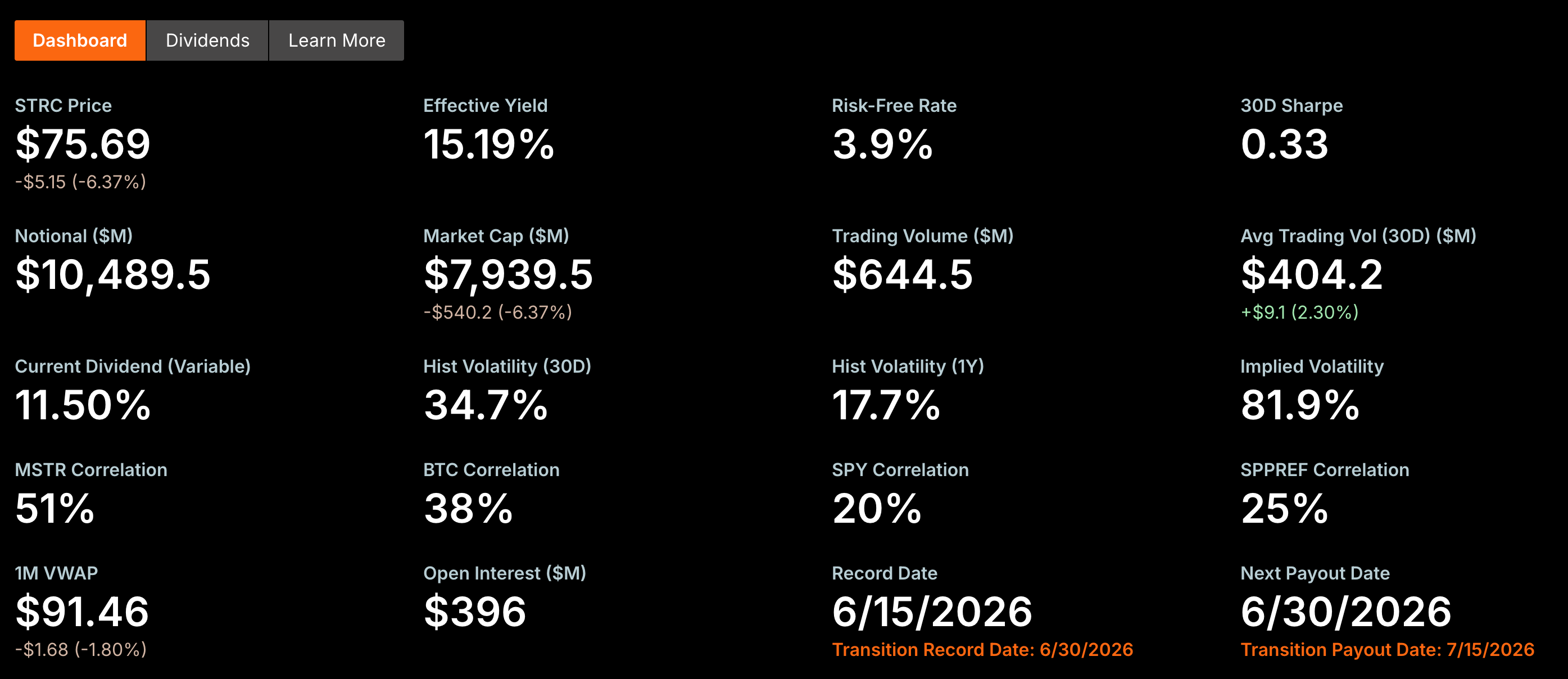
During yesterday's U.S. stock market session, STRC broke below the 80 mark for the first time, hitting a low of $73.62 at one point. Although it rebounded slightly at the close, the price was still only $75.69, nearly 25% "de-pegged" from the target par value of $100.

Last week, we wrote an article about STRC's de-pegging titled "STRC De-pegged by 11%, Can MicroStrategy's Perpetual Motion Machine Keep Running?", focusing on the reasons for STRC's de-pegging and briefly describing the potential future impacts.

However, based on community discussions, it seems many readers still don't fully understand just how dire the consequences of STRC's continued de-pegging are, so we decided to write another article to break down this issue.

MicroStrategy's Most Important Funding Channel Has Failed

What exactly is STRC? In a nutshell, this is MicroStrategy's cheapest and most efficient funding channel.

The essence of MicroStrategy's business model is to continuously raise funds from the market to accumulate more BTC, then raise more funds, and accumulate more BTC. This is a cycle that must keep running. MicroStrategy's high valuation, to a large extent, stems from the market's belief in its ability to continuously raise funds and buy BTC. As long as its fundraising ability exists, it can keep expanding its BTC holdings; and the growing BTC holdings, in turn, further support market expectations for its future fundraising capabilities.

Over the past few years, MicroStrategy has tried almost all fundraising methods—issuing common stock, convertible bonds, various types of preferred stock—and continuously invested the raised funds into BTC. Among all these fundraising instruments, STRC was once considered by the market to be the closest to "perfect," and Michael Saylor's proudest creation. Saylor once boasted that "STRC is a product designed by AI, humans couldn't have designed this."

As preferred stock, STRC's advantages are very clear. Issuing common stock could dilute existing shareholders' equity; issuing convertible bonds would burden the company with future debt repayment obligations; but STRC, as perpetual preferred stock, has no maturity date, does not dilute common shareholders, and only requires fixed dividend payments. For MicroStrategy and Saylor, this was almost the lowest-cost, most efficient way to raise funds.

From its inception, STRC was designed as a product pegged to $100. MicroStrategy's idea was to keep STRC trading around $100 long-term by dynamically adjusting the dividend rate (sounds a bit like an algorithmic stablecoin, doesn't it?). As long as the secondary market could maintain this price, the company could continuously issue new STRC close to par value, raising new funds to keep buying Bitcoin.

That is to say, STRC's core value lies in its continuous, never-ending fundraising capability, but this capability is premised on its price staying near the target par value. As STRC continues to de-peg, this funding channel has essentially been blocked. Because for any investor, if they can buy the same STRC in the secondary market for only $75, they would not participate in the company's new preferred stock issuance at a price close to $100.

For MicroStrategy, it must either keep increasing the dividend rate to attract funds (proven to have limited appeal), or accept the lower fundraising efficiency of discounted issuance (which actively breaks the original target par value). Either way, it means this funding machine is starting to experience increasing friction.

The Funding Tool Has Turned into a Cash Flow Burden

If it were just a temporary failure of fundraising ability, that might be one thing. The bigger problem is that STRC requires MicroStrategy to pay out substantial cash dividends continuously.

According to the latest official data disclosed by MicroStrategy, the current issuance size of STRC has reached approximately $10.49 billion, with a current dividend rate of 11.5%. This means that STRC alone corresponds to a cash dividend payment obligation of over $1.2 billion per year. Adding other preferred stocks like STRD, STRK, STRF issued by MicroStrategy, this number climbs further to about $1.7 billion.
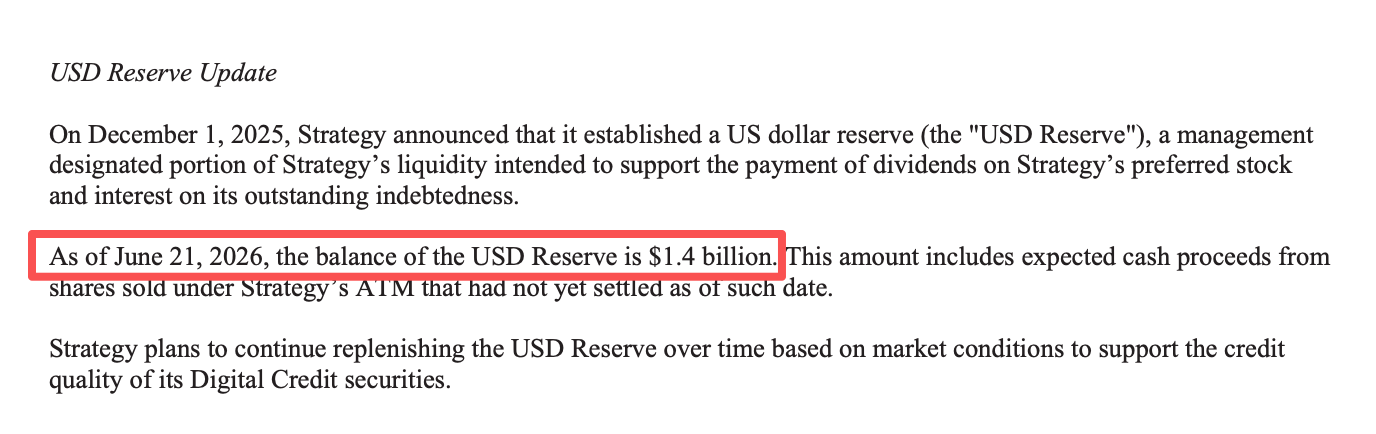
In the common stock issuance filing on June 21 (note, it's common stock, we'll discuss this in detail later), MicroStrategy disclosed that the company's cash reserves are approximately $1.4 billion. Based on this cash reserve level, MicroStrategy's book cash can cover less than a year of preferred stock dividend payments.
Breaking the Deadlock Requires Money, But Where Does the Money Come From?

Whether to sustain its own business model or to escape the current severe cash flow situation and avoid dividend payment default (more urgent now), MicroStrategy needs more funds. Theoretically, only three main "money-making" paths remain before MicroStrategy.

First, issuing common stock.

This is currently the most direct and mature method of financing. Through the ATM (At-the-Market Offering) program, MicroStrategy can continuously sell MSTR common stock to the market to raise funds.

However, common stock financing is not without cost. Continuous issuance means the number of outstanding shares keeps increasing. If the growth rate of BTC purchased with newly raised funds cannot outpace the share expansion rate, the growth of BTC per share will slow down, and common shareholders will face continuous dilution — note this point, it's important later.

Second, issuing more debt.

Over the past few years, MicroStrategy has repeatedly raised funds through debt instruments like convertible bonds, which were also an important funding source for its early large-scale BTC accumulation.

However, as preferred stock issuance expands and fixed cash outflows continue to increase, the market has started paying more attention to MicroStrategy's liquidity and debt repayment ability. In the current funding environment, if the company issues bonds again, investors will likely demand higher risk premiums, meaning financing costs will be significantly higher than in the past.

More importantly, bonds are different from preferred or common stock; their interest payments and principal repayments are rigid obligations. Against the backdrop of continuously declining cash reserves and increasing dividend payouts, further expanding debt will undoubtedly加重 the company's financial burden and also compress future fundraising space.

Third, selling BTC.

From a financial perspective, this is the fastest way to replenish cash reserves. MicroStrategy must have considered this path. The company stated on its official X account regarding dividend payment pressure: "When considering its massive Bitcoin reserves, it is sufficient to cover 32 years of dividend payments."

But for MicroStrategy, this is also an extremely risky choice. Earlier this month, MicroStrategy sold some of its Bitcoin holdings for the first time. Although the sale was only 32 BTC, and the official statement packaged it as an "active market desensitization test," mentioning that "more will be bought back later," it still caused a short-term market dip.

As the largest single holder of Bitcoin in the market, MicroStrategy's moves can easily trigger chain reactions. If it increases sales volume in the future, it will undoubtedly have a huge impact on the already fragile BTC price. If BTC declines further, MicroStrategy's so-called "reserves" would also shrink rapidly.

In summary, under the current circumstances, every feasible funding channel for MicroStrategy comes at a higher cost than before.

Has MicroStrategy Made Its Choice?

Based on MicroStrategy's latest moves, aside from hinting at possibly selling BTC, the company seems to have already chosen which path to take.

Since June, MicroStrategy has relied on its common stock ATM (At-the-Market Offering) program for three consecutive weeks to raise funds. The latest round (June 22) is particularly typical.
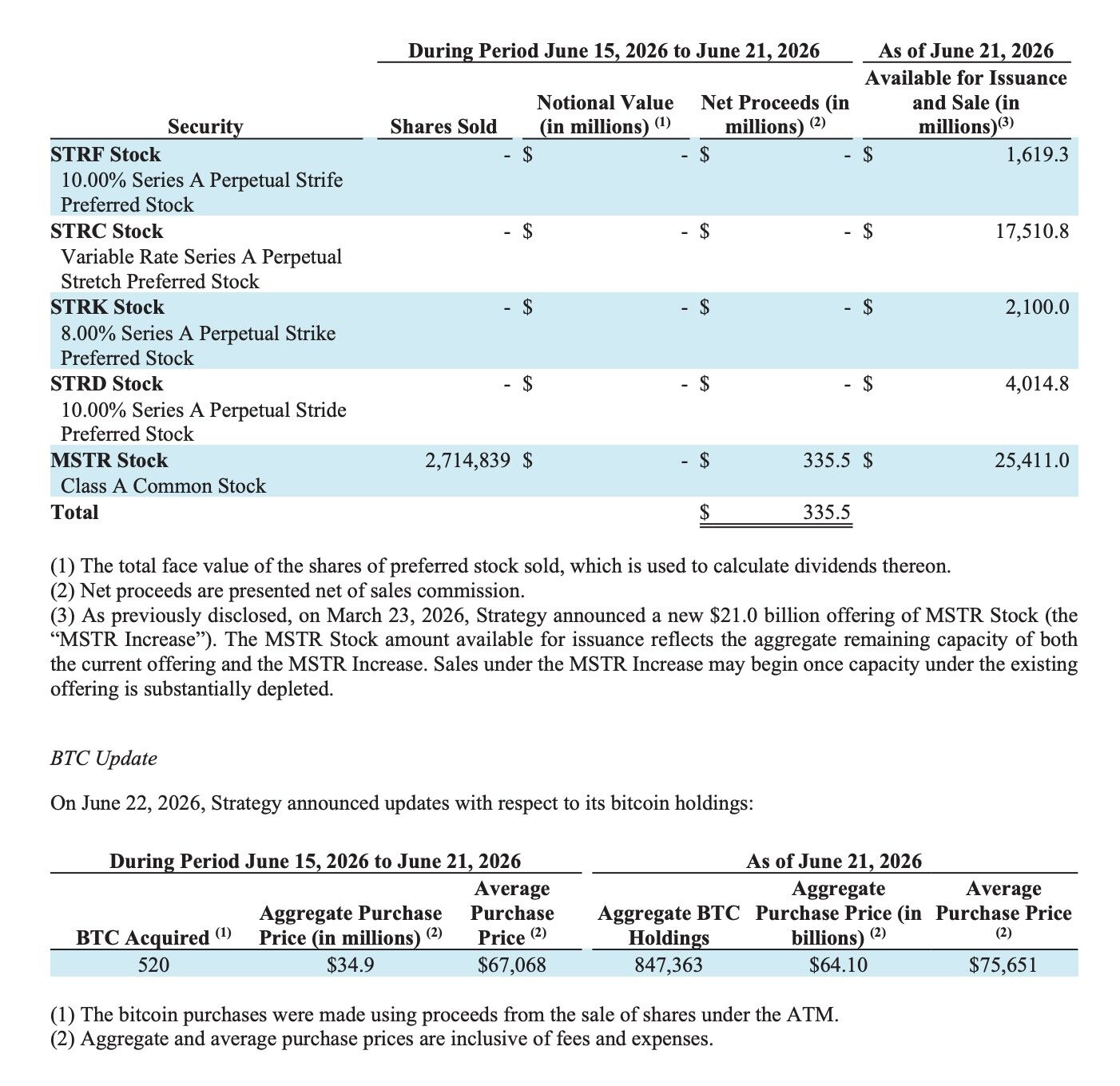
According to MicroStrategy's latest 8-K filing, the company sold a total of 2,714,839 shares of MSTR common stock within a week, raising $335.5 million in total. However, that same week, MicroStrategy only bought 520 BTC, spending a total of $34.9 million, with an average purchase price of about $67,068. In other words, out of the $335.5 million raised, only about one-tenth was actually used to continue accumulating BTC. The remaining funds were mainly used to replenish the company's cash flow reserves, increasing cash from about $1.1 billion to the current approximately $1.4 billion.

That seems somewhat effective? But there's another trap here.

For MSTR common shareholders, the most critical information to monitor is: for every new common share issued, how much BTC can ultimately be bought back with the funds raised, and is it enough to cover the BTC equity corresponding to this share? If the new fundraising can buy back more BTC than the amount originally corresponding to this share, then common shareholders' equity is actually increased; conversely, if the funds raised buy back less BTC than the amount corresponding to the new shares' BTC equity, then common shareholders experience dilution.

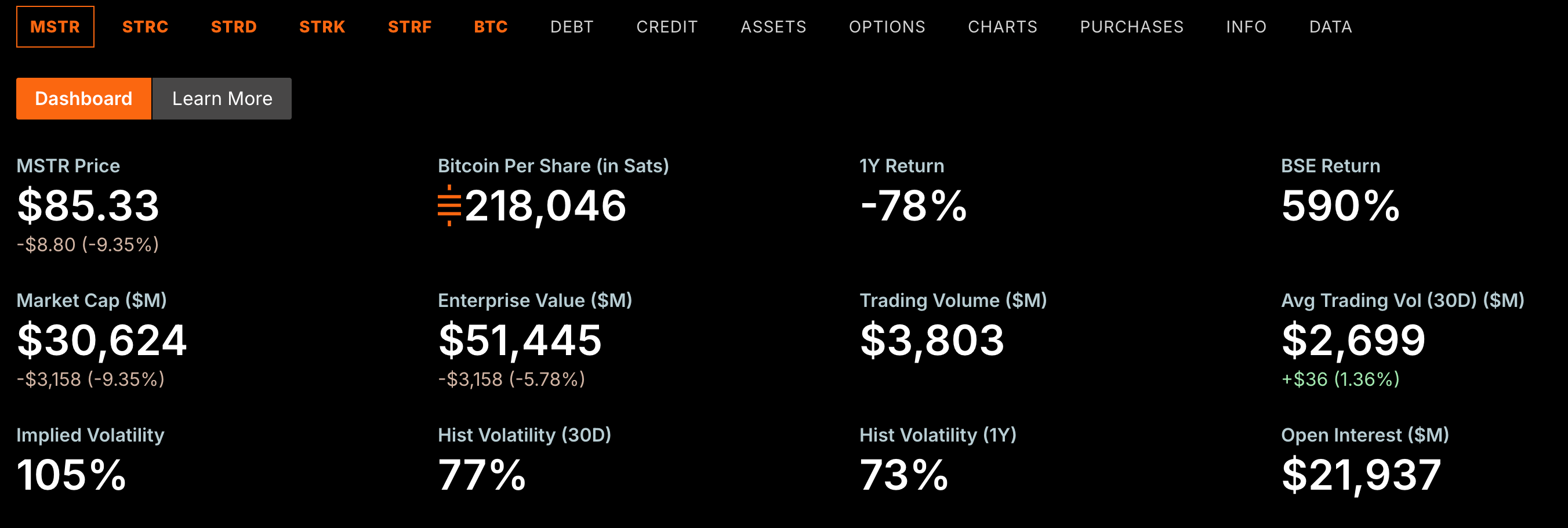
Clearly, MicroStrategy's recent common stock issuance has come at the cost of diluting common shareholder equity. MicroStrategy's official data also shows that the BTC per MSTR share has dropped from a peak of 220,900 Sats to 218,046 Sats.
This is the biggest limitation of common stock financing. For most listed companies, issuing common stock is just one of many financing methods; but for MicroStrategy, common stock is part of its business model itself.

Over the past few years, the reason MicroStrategy has been able to grow continuously is essentially by relying on the continuous operation of the "Raise Funds ➡️ Buy BTC ➡️ Consolidate Market Expectations ➡️ Raise Funds Again ➡️ Buy More BTC..." flywheel. The market's core expectation for MicroStrategy is its ability to continuously create more BTC equity for common shareholders, not dilution.

However, when MicroStrategy has to rely increasingly on common stock financing to replenish cash reserves rather than continue accumulating BTC, the operating logic of this flywheel changes. While in the short term, common stock financing can indeed alleviate MicroStrategy's cash pressure, it can hardly become a long-term solution to replace STRC.

Once common stock financing continuously erodes BTC per share equity, the foundation upon which MSTR's high premium relies may also be challenged, and this is precisely the core competitive advantage of MicroStrategy's entire business model.

What Will Happen to BTC?

Over the past few years, MicroStrategy has become the most important marginal buyer in the BTC market (arguably without the "one of"). To date, MicroStrategy has accumulated holdings of 847,363 BTC, accounting for about 4% of BTC's current circulating supply, worth over $50.7 billion. The market had long grown accustomed to Saylor's massive, unwavering weekly purchases.

But now, this situation is changing. MicroStrategy can still raise funds through common stock issuance, but most of the funds no longer flow into BTC; instead, they are prioritized for replenishing cash reserves. This means that under the same fundraising scale, the new buying pressure actually entering the BTC market is decreasing.

More disadvantageously, this situation may persist. If STRC cannot re-peg long-term, preferred stock financing remains blocked, MicroStrategy will have to rely long-term on common stock financing to maintain cash flow, possibly even further compressing the proportion of funds used for BTC accumulation. For the BTC market, this means the past's most stable and certain institutional buying pressure will no longer grow as consistently as it did in previous years.

But more alarmingly, if common stock issuance excessively dilutes MSTR shareholder equity, MicroStrategy may have to consider the other funding channel — selling BTC.

From weakened new buying pressure to the emergence of potential selling pressure, today's MicroStrategy is no longer BTC's biggest marginal buyer, but a giant sword hanging over BTC.


Criptos en tendencia

Preguntas relacionadas

QWhat is STRC, and why is it considered the most important financing channel for MicroStrategy?

ASTRC is a series of preferred stock issued by MicroStrategy. It is considered the company's cheapest and most efficient financing channel because, as a perpetual preferred stock, it has no maturity date, does not dilute common shareholders, and only requires payment of fixed dividends. This structure allows MicroStrategy to raise capital at a low cost to continuously purchase Bitcoin, which is central to its business model.

QWhat are the main consequences of STRC's persistent de-pegging from its $100 target?

AThe persistent de-pegging of STRC from its $100 target severely impairs MicroStrategy's ability to issue new preferred shares at or near par value, effectively blocking this crucial financing channel. More critically, it turns STRC from a financing tool into a significant cash flow burden, as the company is obligated to pay over $1.2 billion annually in cash dividends on STRC alone, straining its liquidity.

QWhat three main options does MicroStrategy have to raise funds in the current situation, and what are their drawbacks?

A1. Issue common stock (MSTR): This dilutes common shareholders and erodes the key metric of Bitcoin per share if the new capital doesn't buy enough BTC to offset the dilution. 2. Issue more debt: Likely requires higher risk premiums (higher cost) and adds rigid interest payment obligations, further straining cash flow. 3. Sell Bitcoin: This directly contradicts the company's core investment thesis, risks triggering negative market sentiment and price declines for BTC, and depletes its primary asset.

QHow has the purpose of MicroStrategy's recent common stock (MSTR) issuance changed, and what negative side effect has this caused?

ARecently, the purpose of MicroStrategy's common stock issuances has shifted. Instead of primarily using the raised funds to buy more Bitcoin, a large portion (around 90% in the latest example) is now being used to replenish the company's cash reserves to cover its dividend obligations. This has caused the dilution of common shareholder equity, as evidenced by the decline in the key metric of Bitcoin per MSTR share from 220,900 satoshis to 218,046 satoshis.

QAccording to the article, how has MicroStrategy's role in the Bitcoin market changed, and what potential future risk does it pose?

AMicroStrategy has transitioned from being the most stable and significant marginal buyer in the Bitcoin market to becoming a potential source of selling pressure or 'a giant sword hanging over BTC.' Its new common stock issuances contribute less fresh buying pressure for BTC, and if its financial situation worsens, the company might be forced to sell its Bitcoin holdings to raise cash, which could negatively impact the market.

Lecturas Relacionadas

Tras tres trimestres consecutivos de caída, ¿puede el mercado cripto encontrar una ventana de estabilización en el tercer trimestre?

El mercado cripto sufrió su peor trimestre desde 2022, con una caída del 12.6% en la capitalización total (ahora en $2.1 billones). El volumen de operaciones y el valor de las stablecoins también disminuyeron, señalando una salida generalizada de capitales. Bitcoin y Ethereum cayeron un 14.2% y 25.4% respectivamente, rompiendo su correlación con los mercados de riesgo tradicionales. Los ETFs de Bitcoin en EE.UU. registraron importantes salidas netas ($4.67 mil millones en Q2), aunque datos sugieren que el ciclo de ventas podría estar cerca de su fin. La atención del mercado se centra ahora en la reunión de la FED a finales de julio, cuya postura (halcón o paloma) podría definir el rango de trading de Bitcoin para el trimestre. El avance de la ley CLARITY en el Senado estadounidense se ha estancado, reduciendo la probabilidad de aprobación en 2026 y manteniendo una prima de riesgo regulatorio alta. Solo dos sectores mostraron crecimiento: los mercados de predicción (volumen +48.7%) y los coleccionables tokenizados (volumen +143% vs. Q1). El sentimiento general es de cautela. La lógica del mercado ha cambiado, priorizando fundamentos como la política monetaria y la regulación frente a los simples impulsos narrativos. Aunque las bases para una caída extrema parecen limitadas, la recuperación sostenida en Q3 depende críticamente de la FED y de un posible progreso regulatorio.

marsbitHace 15 hora(s)

Tras tres trimestres consecutivos de caída, ¿puede el mercado cripto encontrar una ventana de estabilización en el tercer trimestre?

marsbitHace 15 hora(s)

BIT Trading Moments: BTC aún presionado por la EMA 200 semanal, tras el rechazo podría reiniciar la caída, los valores de almacenamiento y semiconductores que subieron fuertemente anoche comenzaron a caer en la sesión nocturna

**BIT Trading Moments: BTC aún presionado por la EMA 200 semanal; almacenamiento y semiconductores caen en el after-hours** El mercado de cripto continúa su recuperación, con **Bitcoin** manteniéndose cerca de los $66,000. Enfrenta una fuerte resistencia en la zona de los $68,000, nivel que coincide con el costo promedio de los inversores en los últimos cinco meses y un punto de fallo anterior. Los analistas señalan que se encuentra atrapado entre la media móvil simple (MA) de 200 semanas (~$63,333) y la media exponencial (EMA) de 200 semanas (~$68,328). Se necesitaría un cierre semanal por debajo de $55,000 o por encima de $70,000 para confirmar una dirección de mayor alcance. Los ETF de Bitcoin registran entradas netas por sexto día consecutivo. En Wall Street, los **futuros de los principales índices** caen. Después de fuertes ganancias el martes, las acciones de **semiconductores y almacenamiento** retroceden en el after-hours: el ETF de semiconductores cae un 2.22%, Micron un 2.29% y SK Hynix casi un 5%. Sin embargo, **Super Micro Computer (SMCI)** se dispara más de un 20% tras el cierre, impulsada por sólidos pedidos. Otras noticias positivas incluyen un contrato de $266M de la Fuerza Aérea para **Rocket Lab**. A pesar del repunte bursátil, factores como el **crudo Brent por encima de $91** y el **rendimiento del bono estadounidense a 10 años subiendo a ~4.64%** generan preocupaciones inflacionarias y enfrían el optimismo. Las acciones relacionadas con cripto, como Coinbase y Robinhood, tuvieron un buen desempeño apoyadas por avances regulatorios. En Asia, los mercados siguieron la recuperación tecnológica. El **índice KOSPI de Corea del Sur** subió un 0.74%, con acciones de semiconductores mostrando volatilidad. El principal riesgo es el **yen japonés**, que tocó su nivel más bajo desde 1986, lo que genera temores a una intervención del gobierno. **Próximos eventos clave:** Este miércoles 22 de julio, el enfoque está en los eventos de **AMD AI** y los resultados financieros de **Alphabet (Google), Tesla e IBM** después del cierre. El jueves 23, la **decisión de tasas del BCE** y los resultados de **Intel** serán cruciales para el sentimiento del mercado.

marsbitHace 15 hora(s)

BIT Trading Moments: BTC aún presionado por la EMA 200 semanal, tras el rechazo podría reiniciar la caída, los valores de almacenamiento y semiconductores que subieron fuertemente anoche comenzaron a caer en la sesión nocturna

marsbitHace 15 hora(s)

Trading

Spot

Artículos destacados

Qué es BITCOIN

Comprendiendo HarryPotterObamaSonic10Inu (ERC-20) y Su Posición en el Espacio Cripto En los últimos años, el mercado de criptomonedas ha sido testigo de un aumento en la popularidad de las monedas meme, capturando el interés no solo de los traders, sino también de aquellos que buscan participación comunitaria y valor de entretenimiento. Entre estos tokens únicos se encuentra HarryPotterObamaSonic10Inu (ERC-20), un proyecto intrigante que fusiona referencias culturales en el tejido de las criptomonedas. Este artículo ahonda en los aspectos clave de HarryPotterObamaSonic10Inu, explorando sus mecanismos, su ética impulsada por la comunidad y su compromiso con el panorama cripto más amplio. ¿Qué es HarryPotterObamaSonic10Inu (ERC-20)? Como su nombre indica, HarryPotterObamaSonic10Inu es una moneda meme construida sobre la blockchain de Ethereum, clasificada bajo el estándar ERC-20. A diferencia de las criptomonedas tradicionales que pueden enfatizar la utilidad práctica o el potencial de inversión, este token prospera en el valor de entretenimiento y la fuerza de su comunidad. El proyecto tiene como objetivo fomentar un entorno donde los usuarios comprometidos puedan reunirse, compartir ideas y participar en actividades inspiradas por diversos fenómenos culturales. Una característica notable de HarryPotterObamaSonic10Inu es su cero impuesto sobre las transacciones. Este elemento atractivo busca incentivar el comercio y la participación comunitaria, sin cargos adicionales que puedan disuadir a los traders de pequeña escala. El suministro total de la moneda se establece en mil millones de tokens, cifra que marca su intención de mantener una circulación sustancial dentro de la comunidad. Creador de HarryPotterObamaSonic10Inu (ERC-20) Los orígenes de HarryPotterObamaSonic10Inu están algo envueltos en misterio; los detalles sobre el creador siguen siendo desconocidos. El desarrollo de este token carece de un equipo identificable o un plan explícito, lo cual no es raro dentro del sector de las monedas meme. En su lugar, el proyecto ha surgido de forma orgánica, con su progreso fuertemente dependiente del entusiasmo y la participación de su comunidad. Inversores de HarryPotterObamaSonic10Inu (ERC-20) En cuanto a inversiones externas y respaldo, HarryPotterObamaSonic10Inu también se mantiene ambiguo. El token no enumera ninguna fundación de inversión conocida o apoyo organizacional significativo. Más bien, la savia del proyecto es su comunidad de base, que informa su crecimiento y sostenibilidad a través de la acción colectiva y la participación en el espacio cripto. ¿Cómo Funciona HarryPotterObamaSonic10Inu (ERC-20)? Como una moneda meme, HarryPotterObamaSonic10Inu opera principalmente fuera de los marcos tradicionales que a menudo rigen el valor de los activos. Hay varios aspectos distintivos que definen cómo funciona el proyecto: Transacciones Sin Impuestos: Sin comisiones fiscales en las transacciones, los usuarios pueden comprar y vender el token libremente sin preocuparse por costos ocultos. Compromiso de la Comunidad: El proyecto prospera en la interacción comunitaria, aprovechando plataformas de redes sociales para crear expectación y facilitar la participación. Las discusiones, el intercambio de contenido y el compromiso son elementos cruciales que ayudan a expandir su alcance y fomentar la lealtad entre los seguidores. Sin Utilidad Práctica: Cabe señalar que HarryPotterObamaSonic10Inu no ofrece una utilidad concreta dentro del ecosistema financiero. Más bien, se clasifica como un token principalmente para actividades de entretenimiento y comunitarias. Referencia Cultural: El token incorpora hábilmente elementos de la cultura popular para atraer interés, conectando con entusiastas de los memes y seguidores de criptomonedas por igual. HarryPotterObamaSonic10Inu ejemplifica cómo las monedas meme operan de manera diferente a los proyectos de criptomonedas más tradicionales, ingresando al mercado como constructos sociales innovadores en lugar de activos utilitarios. Cronología de HarryPotterObamaSonic10Inu (ERC-20) La historia de HarryPotterObamaSonic10Inu se caracteriza por varios hitos notables: Creación: El token surgió de un meme viral, capturando la imaginación de muchos entusiastas de las criptomonedas. No se disponen de fechas específicas de creación, lo que subraya su ascenso orgánico. Listado en Exchanges: HarryPotterObamaSonic10Inu ha logrado estar presente en varios exchanges, facilitando el acceso y el comercio por parte de la comunidad. Iniciativas de Compromiso Comunitario: Actividades en curso destinadas a mejorar la interacción comunitaria, incluidos concursos, campañas en redes sociales y generación de contenido por parte de fans y defensores. Planes de Expansión Futura: La hoja de ruta del proyecto incluye el lanzamiento de una colección de NFT, mercancía y un sitio de comercio electrónico relacionado con sus temas culturales, involucrando aún más a la comunidad e intentando añadir más dimensiones a su ecosistema. Puntos Clave Sobre HarryPotterObamaSonic10Inu (ERC-20) Naturaleza Impulsada por la Comunidad: El proyecto prioriza la aportación y creatividad colectiva, asegurando que la participación de los usuarios esté en el centro de su desarrollo. Clasificación como Moneda Meme: Representa la epítome de la criptomoneda basada en el entretenimiento, diferenciándose de los vehículos de inversión tradicionales. Sin Afiliación Directa con Bitcoin: A pesar de la similitud en el nombre del ticker, HarryPotterObamaSonic10Inu es distinto y no mantiene ninguna relación con Bitcoin u otras criptomonedas establecidas. Enfoque en la Colaboración: HarryPotterObamaSonic10Inu está diseñado para crear un espacio para la colaboración y el intercambio de historias entre sus poseedores, proporcionando una vía para la creatividad y la unión comunitaria. Perspectivas Futuras: La ambición de expandirse más allá de su premisa inicial en NFTs y mercancía delinean un camino para que el proyecto potencialmente ingrese en avenidas más convencionales dentro de la cultura digital. A medida que las monedas meme continúan capturando la imaginación de la comunidad de criptomonedas, HarryPotterObamaSonic10Inu (ERC-20) destaca por sus lazos culturales y su enfoque centrado en la comunidad. Aunque puede no encajar en el molde típico de un token impulsado por la utilidad, su esencia radica en la alegría y la camaradería fomentadas entre sus simpatizantes, destacando la naturaleza evolutiva de las criptomonedas en una era cada vez más digital. A medida que el proyecto sigue desarrollándose, será importante observar cómo las dinámicas comunitarias influyen en su trayectoria en el panorama en constante cambio de la tecnología blockchain.

2.8k Vistas totalesPublicado en 2024.04.01Actualizado en 2024.12.03

Qué es BITCOIN

Cómo comprar BTC

¡Bienvenido a HTX.com! Hemos hecho que comprar Bitcoin (BTC) sea simple y conveniente. Sigue nuestra guía paso a paso para iniciar tu viaje de criptos.Paso 1: crea tu cuenta HTXUtiliza tu correo electrónico o número de teléfono para registrarte y obtener una cuenta gratuita en HTX. Experimenta un proceso de registro sin complicaciones y desbloquea todas las funciones.Obtener mi cuentaPaso 2: ve a Comprar cripto y elige tu método de pagoTarjeta de crédito/débito: usa tu Visa o Mastercard para comprar Bitcoin (BTC) al instante.Saldo: utiliza fondos del saldo de tu cuenta HTX para tradear sin problemas.Terceros: hemos agregado métodos de pago populares como Google Pay y Apple Pay para mejorar la comodidad.P2P: tradear directamente con otros usuarios en HTX.Over-the-Counter (OTC): ofrecemos servicios personalizados y tipos de cambio competitivos para los traders.Paso 3: guarda tu Bitcoin (BTC)Después de comprar tu Bitcoin (BTC), guárdalo en tu cuenta HTX. Alternativamente, puedes enviarlo a otro lugar mediante transferencia blockchain o utilizarlo para tradear otras criptomonedas.Paso 4: tradear Bitcoin (BTC)Tradear fácilmente con Bitcoin (BTC) en HTX's mercado spot. Simplemente accede a tu cuenta, selecciona tu par de trading, ejecuta tus trades y monitorea en tiempo real. Ofrecemos una experiencia fácil de usar tanto para principiantes como para traders experimentados.

6.8k Vistas totalesPublicado en 2024.12.12Actualizado en 2026.06.02

Cómo comprar BTC

Qué es $BITCOIN

ORO DIGITAL ($BITCOIN): Un Análisis Exhaustivo Introducción al ORO DIGITAL ($BITCOIN) ORO DIGITAL ($BITCOIN) es un proyecto basado en blockchain que opera en la red Solana, cuyo objetivo es combinar las características de los metales preciosos tradicionales con la innovación de las tecnologías descentralizadas. Aunque comparte un nombre con Bitcoin, a menudo denominado “oro digital” debido a su percepción como un almacén de valor, ORO DIGITAL es un token separado diseñado para crear un ecosistema único dentro del paisaje Web3. Su meta es posicionarse como un activo digital alternativo viable, aunque los detalles sobre sus aplicaciones y funcionalidades aún están en desarrollo. ¿Qué es ORO DIGITAL ($BITCOIN)? ORO DIGITAL ($BITCOIN) es un token de criptomoneda diseñado explícitamente para su uso en la blockchain de Solana. A diferencia de Bitcoin, que proporciona un papel de almacenamiento de valor ampliamente reconocido, este token parece centrarse en aplicaciones y características más amplias. Aspectos notables incluyen: Infraestructura Blockchain: El token está construido sobre la blockchain de Solana, conocida por su capacidad para manejar transacciones de alta velocidad y bajo costo. Dinámicas de Suministro: ORO DIGITAL tiene un suministro máximo limitado a 100 cuatrillones de tokens (100P $BITCOIN), aunque los detalles sobre su suministro circulante no se han divulgado actualmente. Utilidad: Aunque las funcionalidades precisas no están delineadas explícitamente, hay indicios de que el token podría ser utilizado para diversas aplicaciones, potencialmente involucrando aplicaciones descentralizadas (dApps) o estrategias de tokenización de activos. ¿Quién es el Creador de ORO DIGITAL ($BITCOIN)? En la actualidad, la identidad de los creadores y el equipo de desarrollo detrás de ORO DIGITAL ($BITCOIN) sigue siendo desconocida. Esta situación es típica entre muchos proyectos innovadores dentro del espacio blockchain, particularmente aquellos alineados con las finanzas descentralizadas y los fenómenos de monedas meme. Si bien tal anonimato puede fomentar una cultura impulsada por la comunidad, intensifica las preocupaciones sobre la gobernanza y la responsabilidad. ¿Quiénes son los Inversores de ORO DIGITAL ($BITCOIN)? La información disponible indica que ORO DIGITAL ($BITCOIN) no tiene patrocinadores institucionales conocidos ni inversiones destacadas de capital de riesgo. El proyecto parece operar bajo un modelo de peer-to-peer centrado en el apoyo y la adopción de la comunidad en lugar de rutas de financiación tradicionales. Su actividad y liquidez se sitúan principalmente en intercambios descentralizados (DEX), como PumpSwap, en lugar de plataformas de trading centralizadas establecidas, lo que resalta aún más su enfoque de base. Cómo Funciona ORO DIGITAL ($BITCOIN) Los mecanismos operativos de ORO DIGITAL ($BITCOIN) se pueden elaborar en función de su diseño blockchain y atributos de red: Mecanismo de Consenso: Al aprovechar el único mecanismo de prueba de historia (PoH) de Solana combinado con un modelo de prueba de participación (PoS), el proyecto asegura una validación eficiente de transacciones que contribuye al alto rendimiento de la red. Tokenómica: Aunque los mecanismos deflacionarios específicos no se han detallado extensamente, el vasto suministro máximo de tokens implica que podría atender microtransacciones o casos de uso nicho que aún están por definirse. Interoperabilidad: Existe el potencial de integración con el ecosistema más amplio de Solana, incluyendo varias plataformas de finanzas descentralizadas (DeFi). Sin embargo, los detalles sobre integraciones específicas siguen sin especificarse. Cronología de Eventos Clave Aquí hay una cronología que destaca hitos significativos relacionados con ORO DIGITAL ($BITCOIN): 2023: El despliegue inicial del token ocurre en la blockchain de Solana, marcado por su dirección de contrato. 2024: ORO DIGITAL gana visibilidad al estar disponible para el comercio en intercambios descentralizados como PumpSwap, permitiendo a los usuarios comerciar contra SOL. 2025: El proyecto presencia actividad de comercio esporádica y un posible interés en compromisos liderados por la comunidad, aunque no se han documentado asociaciones notables o avances técnicos hasta la fecha. Análisis Crítico Fortalezas Escalabilidad: La infraestructura subyacente de Solana soporta altos volúmenes de transacciones, lo que podría mejorar la utilidad de $BITCOIN en varios escenarios de transacción. Accesibilidad: El potencial bajo precio de negociación por token podría atraer a inversores minoristas, facilitando una participación más amplia debido a oportunidades de propiedad fraccionada. Riesgos Falta de Transparencia: La ausencia de patrocinadores, desarrolladores o un proceso de auditoría públicamente conocidos puede generar escepticismo sobre la sostenibilidad y confiabilidad del proyecto. Volatilidad del Mercado: La actividad comercial depende en gran medida del comportamiento especulativo, lo que puede resultar en una volatilidad de precios significativa e incertidumbre para los inversores. Conclusión ORO DIGITAL ($BITCOIN) surge como un proyecto intrigante pero ambiguo dentro del ecosistema de Solana en rápida evolución. Si bien intenta aprovechar la narrativa del “oro digital”, su alejamiento del papel establecido de Bitcoin como almacén de valor subraya la necesidad de una diferenciación más clara de su utilidad y estructura de gobernanza previstas. La futura aceptación y adopción dependerán probablemente de abordar la actual opacidad y definir sus estrategias operativas y económicas de manera más explícita. Nota: Este informe abarca información sintetizada disponible hasta octubre de 2023, y pueden haber ocurrido desarrollos más allá del período de investigación.

194 Vistas totalesPublicado en 2025.05.13Actualizado en 2025.05.13

Qué es $BITCOIN

Discusiones

Bienvenido a la comunidad de HTX. Aquí puedes mantenerte informado sobre los últimos desarrollos de la plataforma y acceder a análisis profesionales del mercado. A continuación se presentan las opiniones de los usuarios sobre el precio de BTC (BTC).

活动图片