Tether's New Business: Helping Small Countries Issue Stablecoins

marsbitPublicado a 2026-05-26Actualizado a 2026-05-26

Resumen

Tether has announced a partnership with the Georgian government to issue GEL₮, a Lari-pegged stablecoin, aiming to reduce costs, accelerate settlements, and promote cross-border payments. This move is part of Tether's broader strategy to establish a replicable, standardized business of issuing sovereign currency-backed stablecoins for smaller nations, alongside its flagship USDT and other regional offerings like MXNT (Mexican Peso) and CNHT (Offshore Yuan). Georgia represents an ideal test case due to its high reliance on remittances (~15% of GDP), established digital asset regulatory framework aligned with U.S. standards, and prior engagement with Tether. The country gains accelerated internationalization of its currency by accessing Tether's global distribution network and liquidity pools, where GEL₮ can be swapped directly with assets like USDT. For Tether, the immediate financial gain from Georgia's small market is minimal. The true value lies in creating a template. Successfully navigating the compliance, reserve, and redemption processes for GEL₮ allows Tether to replicate this model swiftly for other nations with similar profiles, such as Azerbaijan or Nigeria. The deeper strategy involves subtly integrating these national currencies into an informal USDT-anchored dollar system, positioning Tether as the essential routing infrastructure. This partnership highlights a potential new model: the outsourcing of sovereign currency globalization to private stablecoin issue...

Author: Xiaobing, Deep Chao TechFlow

On May 25th, stablecoin issuer Tether announced a collaboration with the Georgian government to issue GEL₮, a stablecoin pegged to the Lari.

The press release is written conventionally: reducing costs, accelerating settlement, promoting cross-border payments. CEO Ardoino reiterated that phrase again, stablecoins are becoming the infrastructure of global finance.

Looking at this announcement within the context of Tether's actions over the past 24 months, what Tether is doing is gradually connecting the issuance interfaces and global distribution channels for the on-chain currencies of small nations, one by one, into its own hands.

Tether's Product Line is Essentially a Business Map for Issuing Currencies on Behalf of Others

Let's lay out Tether's cards: USDT, $189 billion market cap, number one globally, but not usable by US users; USAT, a US dollar stablecoin launched earlier this year for the GENIUS Act-compliant market, essentially a "US version" of USDT; EURT, a Euro stablecoin, forced to retreat by MiCA, will cease redemptions in November 2025; MXNT is for the Mexican Peso; CNHT is for offshore Chinese Yuan, its scale has remained small; GEL₮, the upcoming Lari stablecoin.

Viewed by currency, it seems messy, but the strategic intent is clear. Tether is testing one thing: Outside the main channel of the US dollar, can "issuing national currency stablecoins on behalf of sovereign states" become a replicable, standardized business?

USDT is responsible for holding the position of the global dollar shadow currency. USAT and EURT are attempts at compliance in heavily regulated markets. The common denominators for the rest—MXNT, CNHT, GEL₮—are clear: weak internationalization of the local currency, expensive cross-border payments, high reliance on remittances, but not so severe as to face outright sanctions like Iran or North Korea.

Georgia is the latest blueprint for this strategy.

Why Was Georgia Willing to Sign?

A population of 3.7 million, GDP around $35 billion, smaller than Kunming, but it has three conditions that make it particularly suitable.

It has a pain point. IMF data shows that over the past decade, remittances have accounted for about 15% of Georgia's GDP. For 40-45% of recipient households, monthly income comes from remittances, mainly from Russia, Greece, and the US. The cost and time delay per traditional wire transfer represent real money lost for these families. If an on-chain Lari can work, it's a true benefit for the common people.

The compliance framework is ready. The National Bank of Georgia spent years building a digital asset regulatory framework covering reserves, redemption rights, issuer supervision, AML, and proactively aligning with the US GENIUS Act. This step was intentional, aiming to position itself as a digital asset hub in the Caucasus region.

Preliminary groundwork was laid. Georgia signed an MOU with Tether in 2023, conducted a digital Lari pilot with Ripple the same year, and also signed a collaboration with Hedera. GEL₮ did not appear out of thin air.

The logic is clear: Use Tether's global distribution network in exchange for accelerated internationalization of its own currency.

Georgia could also issue a CBDC itself, but even a fast CBDC only circulates within its own system. By plugging into Tether's network, the Lari can, for the first time, be directly swapped with USDT and USDC in the same liquidity pool, and be held in any crypto wallet. This is equivalent to Georgia using its compliance framework as a bargaining chip to rent Tether's already-established global pipeline.

What Did Tether Gain?

Georgia is too small. The annual remittance market is less than $5 billion. Adding domestic payments, the stablecoin circulation would be at most a few tens of billions, a drop in the bucket compared to USDT's $189 billion.

So Tether's goal is not Georgia itself, but thetemplate.

Each additional country makes the solution of "issuing national currency stablecoins on behalf of sovereign states" more mature. Once the compliance architecture, reserve mechanism, and redemption process for GEL₮ are proven, the next interested country—Azerbaijan, Armenia, Uzbekistan, Kenya, Nigeria—can directly apply the template, compressing the timeline from years to months.

The real moat lies even deeper. When a country's national stablecoin is swapped within the same liquidity network as USDT, that country's currency is quietly connected to an informal dollar system anchored by USDT. Tether doesn't need to fight for decision-making power in these countries' central banks; it only needs to ensure it is the middle router.

The logic resembles London's financial export in the 19th century. London's banks didn't become central banks in colonies; they just layered their clearing, discount, and exchange systems abroad, and then everyone had to use London's rails. The difference is that was one-way colonialism, whereas now it's two-way voluntary.Small countries are happy to sign, unable to wait for SWIFT's transformation; Tether is happy to do it, locking in a key position in the next generation of financial infrastructure.

Outsourcing Sovereign Currency

The digital Euro has been tangled in public consultations for five years by MiCA, ECB, and various national central banks.

Georgia, a country with a GDP smaller than Kunming, bypassed the entire process of "a country issuing its own CBDC" with a contract with a private company, sending its national currency directly onto a global circulation track on par with USDT.

If this happens in ten or twenty small countries over the next three years, it will be the embryo of a new international financial order: the outsourcing of sovereign currency globalization to private stablecoin issuers.

But this path is not without cost.

First is monetary sovereignty risk. If the liquidity, wallet access, and transaction routing of a national stablecoin all depend on Tether, what happens to the visibility and control over currency circulation by the local central bank? There is no clear answer yet.

In the future, if half of Georgian households use GEL₮ to receive remittances, then any reserve crisis Tether faces will not only pressure Tether's balance sheet but also Georgia's social stability.

Second, if all small countries' national stablecoins ultimately enter and exit via swaps through USDT, then superficially it's national currencies going on-chain, but in reality, it might be these countries further connecting to an on-chain dollar system centered on USDT. For countries doing this in a de-dollarization context, this is a paradox worth considering in advance.

The BIS has repeatedly warned about the impact of private stablecoins on monetary sovereignty and financial stability over the past two years, not without reason.

Details of GEL₮'s issuance structure, reserve custodian, and technical chain selection have not been disclosed. These details determine whether it is a true "sovereign-backed stablecoin" or a "regular Tether product with a government name attached."

But there is an observation point more important than details: In the next 12 months, will a second or third country sign a similar template collaboration with Tether?

If so, Tether will transform from a stablecoin issuance company into a cross-sovereign financial infrastructure service provider that issues national currency stablecoins on behalf of sovereign states.

This is a species we haven't had a word for before. It's not a bank, not a central bank, not a payments company, nor an ordinary stablecoin issuer. It's a cross-sovereign, on-chain currency-issuing organization pieced together by regulatory arbitrage, network effects, and technical standardization.

Looking back in three years, the contract signed on May 25, 2026, might be more important than any other crypto news from that week.


Preguntas relacionadas

QWhat is Tether's new business model with small countries like Georgia, as described in the article?

AThe article describes Tether's new business model as partnering with small sovereign nations to issue and distribute local currency stablecoins on their behalf. Tether provides the technological infrastructure, global distribution network, and operational template. In exchange, countries like Georgia gain access to a faster, cheaper system for cross-border payments and remittances, accelerating their currency's digital and international presence without building a Central Bank Digital Currency (CBDC) from scratch.

QWhy did Georgia agree to partner with Tether to issue the GEL₮ stablecoin?

AGeorgia agreed to partner with Tether due to a combination of three key factors: 1) A clear economic pain point, with remittances making up about 15% of its GDP, where high traditional wire transfer costs hurt citizens. 2) A pre-existing and compliant regulatory framework for digital assets that aligns with standards like the U.S. GENIUS Act, making it a safe jurisdiction. 3) Prior groundwork, including a 2023 Memorandum of Understanding (MOU) with Tether and other digital currency pilots. The deal allows Georgia to leverage Tether's global network for its currency's internationalization.

QWhat does the article suggest is Tether's main strategic goal in these partnerships, beyond the local market size?

AThe article suggests Tether's primary strategic goal is not the immediate market size of a small country's currency but the creation of a replicable 'template' or standardized service for issuing sovereign stablecoins. Each successful partnership refines this model. The deeper goal is to position Tether as the central 'router' in a new financial network, where various local stablecoins are interoperable with USDT. This subtly integrates these countries' currencies into a USDT-anchored, informal dollar system, cementing Tether's role as critical cross-sovereign financial infrastructure.

QWhat are the potential risks for a country that outsources its sovereign currency stablecoin to Tether?

AThe article highlights two main risks for countries: 1) **Monetary Sovereignty Risk**: Outsourcing the issuance and network for its digital currency could reduce the central bank's visibility and control over money flows, making monetary policy and financial stability management more complex. 2) **Systemic Dependency Risk**: If the local economy becomes reliant on the Tether-issued stablecoin (e.g., for remittances), any operational, reserve, or legal crisis at Tether could directly threaten the country's financial stability and social welfare. Additionally, using USDT as the primary swap pair may further embed the country into a dollar-centric system, which could be paradoxical for nations seeking de-dollarization.

QHow does the article characterize the potential long-term significance of Tether's Georgia deal?

AThe article characterizes the Georgia deal as a potential landmark event that could signify the emergence of a new type of financial entity and a shift in the international financial order. If replicated, Tether could evolve from a stablecoin issuer into a 'cross-sovereign chain money minting organization'—a unique hybrid that is not a bank, central bank, or payment company, but a private entity providing sovereign currency globalization as a service through regulatory arbitrage, network effects, and technical standardization. This could represent a form of 'sovereign currency outsourcing' on a global scale.

Lecturas Relacionadas

TechFlow Oficina de Inteligencia: Las probabilidades de que Anthropic realice una OPI superan el 80%, Irán vuelve a cerrar el estrecho de Ormuz y desestabiliza los precios del petróleo

Resumen del informe TechFlow: Los mercados anticipan que Anthropic anunciará su OPV antes de noviembre de 2026, planteando dudas sobre si una valoración billonaria puede coexistir con su promesa central de seguridad en IA. Otras tendencias clave: * **Marketing digital:** Marcas adoptan influencers virtuales generados por IA para promocionar productos. * **Energía y Geopolítica:** Irán anuncia el cierre del estrecho de Ormuz, causando volatilidad en el precio del petróleo, aunque datos de seguimiento muestran cierto tráfico marítimo persistente. Paralelamente, Irán reanuda la carga de crudo en la isla de Kharg. * **Finanzas/Tecnología:** Goldman Sachs advierte que los gastos de capital en IA (5,3 billones de dólares) podrían acercarse al límite de crédito. En Europa, se produce la primera incumplimiento en acciones de CLO desde la crisis financiera. * **Empresas tecnológicas:** Cloudflare introduce cuentas temporales para agentes de IA; el tráfico IPv6 de Google supera el 50%; Hyundai adquiere el control total de Boston Dynamics. * **Mercados:** Inversores minoristas invierten fuertemente en la OPV de SpaceX. Elon Musk especula sobre futuras inversiones astronómicas en antimateria para viajes interestelares. **Conclusión subyacente:** Tres señales (tensión en Ormuz, incumplimiento en CLO y advertencias sobre gasto en IA) apuntan a una creciente restricción de la liquidez global y al aumento de los costes marginales. Mientras tanto, el capital sigue buscando narrativas de crecimiento a gran escala (como la OPV de Anthropic, SpaceX y los proyectos de Musk), indicando una bifurcación entre un "viejo mundo" con creciente presión financiera y un "nuevo mundo" que construye narrativas aún más ambiciosas.

marsbitHace 34 min(s)

TechFlow Oficina de Inteligencia: Las probabilidades de que Anthropic realice una OPI superan el 80%, Irán vuelve a cerrar el estrecho de Ormuz y desestabiliza los precios del petróleo

marsbitHace 34 min(s)

El cazador cazado: el bot MEV más rentable fue hackeado

**El cazador cazado: El bot de MEV más rentable es hackeado** El conocido bot de MEV en Ethereum, Jaredfromsubway.eth, sufrió un ataque dirigido el sábado, perdiendo más de 7,5 millones de dólares. Según investigaciones, no fue un phishing tradicional ni una explotación de contrato inteligente, sino un sofisticado "ataque de honeypot contra-MEV" diseñado específicamente para explotar la lógica de comportamiento de estos bots. El atacante desplegó durante semanas 66 contratos de tokens falsos y pools de liquidez, disfrazados como activos principales como WETH, USDC o USDT, para crear rutas de arbitraje falsas. El bot, al detectar la aparente oportunidad, ejecutó una transacción que concedió permisos a un contrato controlado por el atacante. Estos permisos no fueron revocados, permitiendo finalmente que el atacante drenara los fondos del bot en una sola transacción. Jaredfromsubway.eth es uno de los bots de MEV más activos e infames de Ethereum, especializado en ataques de "sándwich" para capturar ganancias de los deslizamientos de precio en las transacciones de usuarios. Se estima que ha acumulado decenas de millones en ganancias y estaba relacionado con alrededor del 70% de estos ataques en un período reciente. Este incidente subraya la creciente sofisticación de las amenazas en cripto, demostrando que incluso los actores más agresivos y automatizados ("depredadores") ahora son vulnerables a ataques multidimensionales que explotan sus propias reglas y automatizaciones. Tras el hackeo, una cuenta no oficial en X se hizo pasar por el bot ofreciendo una recompensa falsa, lo que ha generado advertencias de seguridad adicionales.

marsbitHace 1 hora(s)

El cazador cazado: el bot MEV más rentable fue hackeado

marsbitHace 1 hora(s)

La realidad de los pagos en Latinoamérica es muy distinta a lo que imaginas

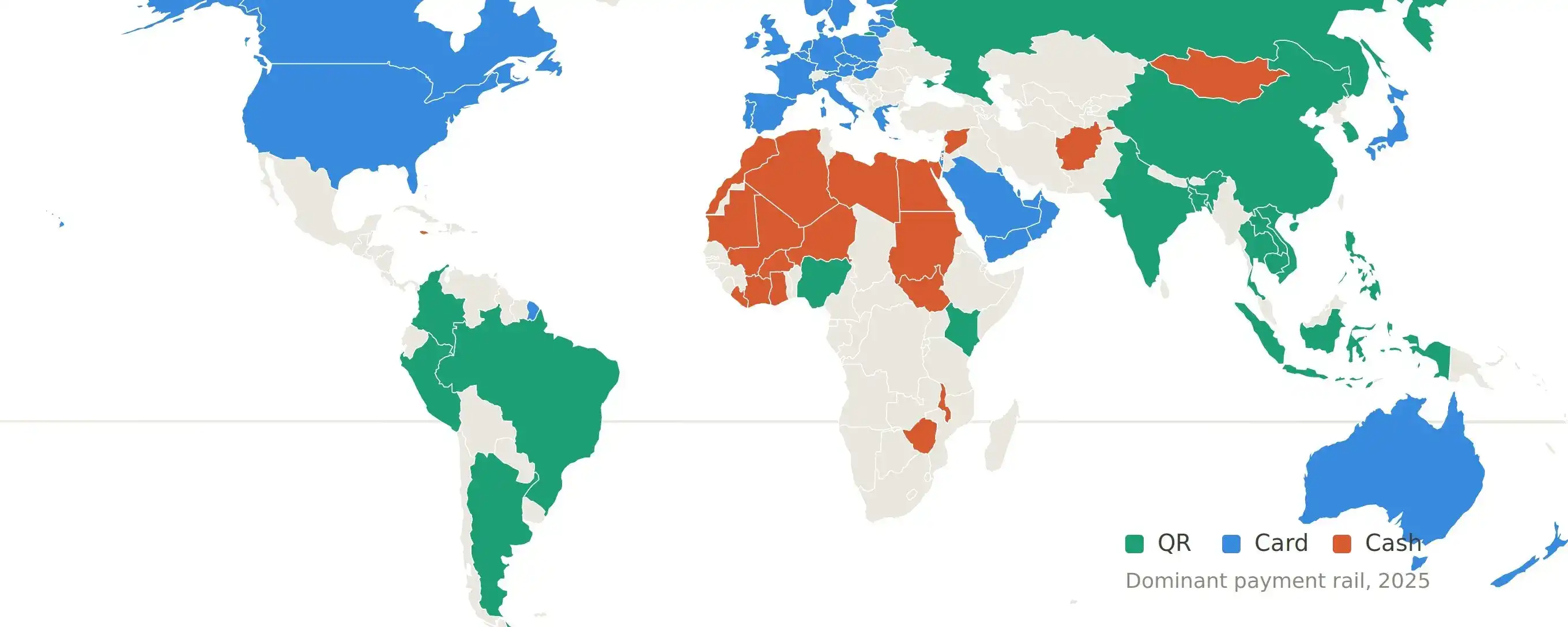
La realidad de los pagos en Latinoamérica desafía las percepciones. Tras una investigación de 500 horas, estos son los hallazgos clave: 1. Las tarjetas cripto generan volumen principalmente de profesionales que reciben salarios en dólares o USDT y convierten a moneda local vía Pix, no de compras minoristas pequeñas. 2. Los pagos con código QR (como Pix en Brasil) dominan en mercados emergentes, superando a las tarjetas. Es el sistema de pago principal para la mayoría de la población mundial. 3. Existe una gran oportunidad en la interoperabilidad internacional entre sistemas de pago instantáneo, ya que actualmente están aislados por país. 4. La competencia en pagos ahora se centra en controlar la infraestructura de liquidación, no solo en adquirir clientes. Las empresas líderes buscan licencias bancarias. 5. Latinoamérica no es un mercado único. Brasil, México, Argentina y otros tienen economías, regulaciones y flujos de capital muy diferentes. 6. El negocio de las remesas y el cambio de stablecoins se está commoditizando, con márgenes cayendo hacia cero. El valor está en los productos construidos encima. 7. La próxima generación de empresas de pagos debe tener una marca y tecnología escalable internacionalmente desde el inicio. 8. Brasil y México son mercados saturados ("rojos"). Oportunidades menos exploradas existen en países como Guatemala, Honduras, El Salvador, Nicaragua y República Dominicana. 9. El marketing debe segmentarse finamente según el flujo de fondos del usuario (ej. turistas, nómadas digitales, residentes extranjeros), no tratar a un país como un grupo homogéneo. 10. La regulación en Latinoamérica está más avanzada que en EE.UU. en aspectos como pagos instantáneos y cripto, con marcos más claros y pragmáticos. La conclusión: el futuro de los pagos en la región no está en replicar modelos basados en tarjetas, sino en conectar los sistemas QR locales, resolver la interoperabilidad transfronteriza y construir para segmentos de usuarios específicos.

marsbitHace 2 hora(s)

La realidad de los pagos en Latinoamérica es muy distinta a lo que imaginas

marsbitHace 2 hora(s)

Haciendo música en un mercado bajista: El experimento de supervivencia de una banda de Bitcoin

**Resumen: "Haciendo Música en un Mercado Bajista: El Experimento de Supervivencia de una Banda de Bitcoin"** Orange Pill Jam es una banda única que fusiona géneros como reggae gitano, afrolatino y hip-hop, mientras explora temas de soberanía financiera, privacidad y el declive de sistemas modernos. Aceptan pagos en bitcoin. Nacieron tras una actuación improvisada de la vocalista Mermaid en el Plan B Forum de Lugano en 2022, donde cantó "Dollar Apocalypse", dedicada al influyente podcaster Max Keizer. Este momento planteó la pregunta: ¿dónde está la música en la cultura bitcoin? Su proceso creativo combina las letras y melodías de Mermaid con la producción meticulosa y orientada al ritmo corporal de Michi. Canciones como "Cypherpunks' Manifesto" y "Fire of Freedom" abordan la privacidad digital, la soberanía personal y la adopción del bitcoin, con letras que permanecen intactas tras experiencias como la visita de Mermaid a El Salvador. Frente al auge de la IA generativa musical, Michi ve un paralelismo con la pintura y la fotografía: la IA puede replicar, pero no crear géneros nuevos o capturar la intención humana única. Ellos usan IA para tareas administrativas, no para la creación artística. En pleno mercado bajista de cripto, su modelo es "copyleft" (permite descargas y remezclas gratis) y aceptan donaciones en bitcoin. Su desafío es ser escuchados en un ecosistema como Spotify, saturado por 14.000 canciones diarias y algoritmos que no favorecen su temática. Su proyecto representa una apuesta por la creación humana auténtica e irrepetible en una era de contenido masivo y IA. Mientras los algoritmos se aceleran, Orange Pill Jam persevera, grabando por decimoséptima vez, defendiendo el valor de lo que no se puede generar ni optimizar fácilmente.

marsbitHace 2 hora(s)

Haciendo música en un mercado bajista: El experimento de supervivencia de una banda de Bitcoin

marsbitHace 2 hora(s)

Trading

Spot
Futuros
活动图片