Ethereum Price Surges Following The Final Testnet Details

newsbtcPublicado a 2022-07-31Actualizado a 2022-07-31

Resumen

The Ethereum community has been anticipating the move from the Proof-of-Work (PoW) to the Proof-of-Stake mechanism. Luckily for everyone, the Merge will soon occur, and reports show that the developers are approaching the final test phase before the significant event.

The Ethereum community has been anticipating the move from the Proof-of-Work (PoW) to the Proof-of-Stake mechanism. Luckily for everyone, the Merge will soon occur, and reports show that the developers are approaching the final test phase before the significant event.

Tim Beiko, the lead developer on Ethereum, disclosed these details on July 28. According to him, the testnet transition will take place on the Goerli testnet, a close simulation of the Ethereum mainnet.
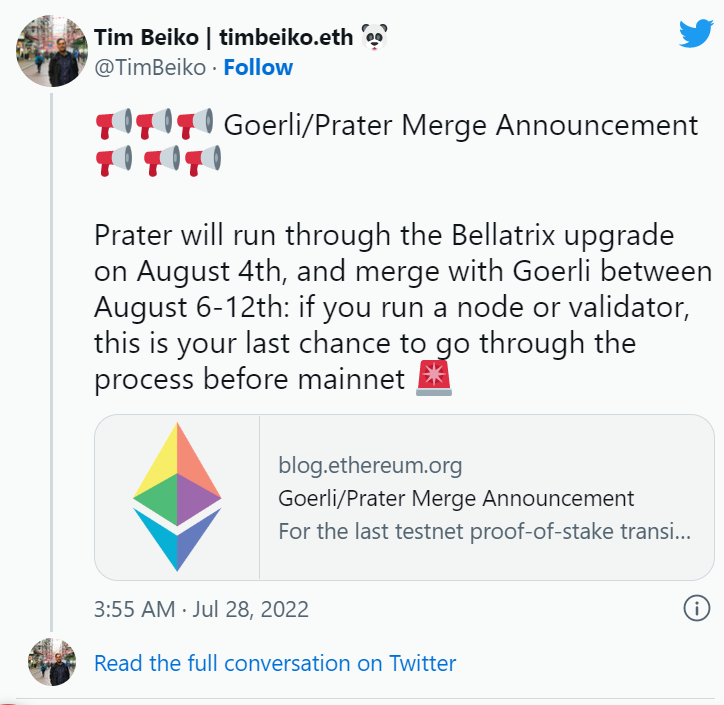
This version is known as Prator, and the date will be between August 6 and 12. The network upgrade will be called Paris, but another upgrade, Bellatrix, will position Prater well for the Goerl Merge.

According to Beiko, the date for the Bellatrix upgrade will be on August 4. However, the lead developer also stated that validators and those who run nodes on Ethereum should pass through the process to prepare thoroughly for the mainnet move to PoS.

Final Preparations Before Moving To PoS

According to the information released, the network has to complete one more testnet. The developers have completed many devnets, merges, and shadow forks on deprecated testnets. For instance, early in July, the developers ended the ninth shadow fork testing the MEV boost feature.

In the announcement, the lead developer stated that node operators must update their execution and consensus layer clients in tandem. But for stakers and holders of Ethereum, there’s nothing to do now. Those to take action are the testnet participants and node operators.

Regarding the significant Merge, the community already knows it will take place on September 19, as the developers previously announced. But if there is an issue with the Goerli testing phase, the date might be pushed forward again.

Merge Becomes The Most Significant Ethereum Upgrade

Since Ethereum started operating on July 30, 2015, this is the highest upgrade on the network. But the plans to migrate to the Poof-of-Work mechanism have been ongoing for some years. Unfortunately, the developers have had many delays, which haven’t been okay with the community.
Thankfully, September 2022 will mark the end of the frustrations. For instance, traders have staked 13.1 million ETH on Beacon Chain, worth $21.5 billion. Even though these stakers earn 4.6% APY in Ether, withdrawing the gains will only occur many months after the Merge.

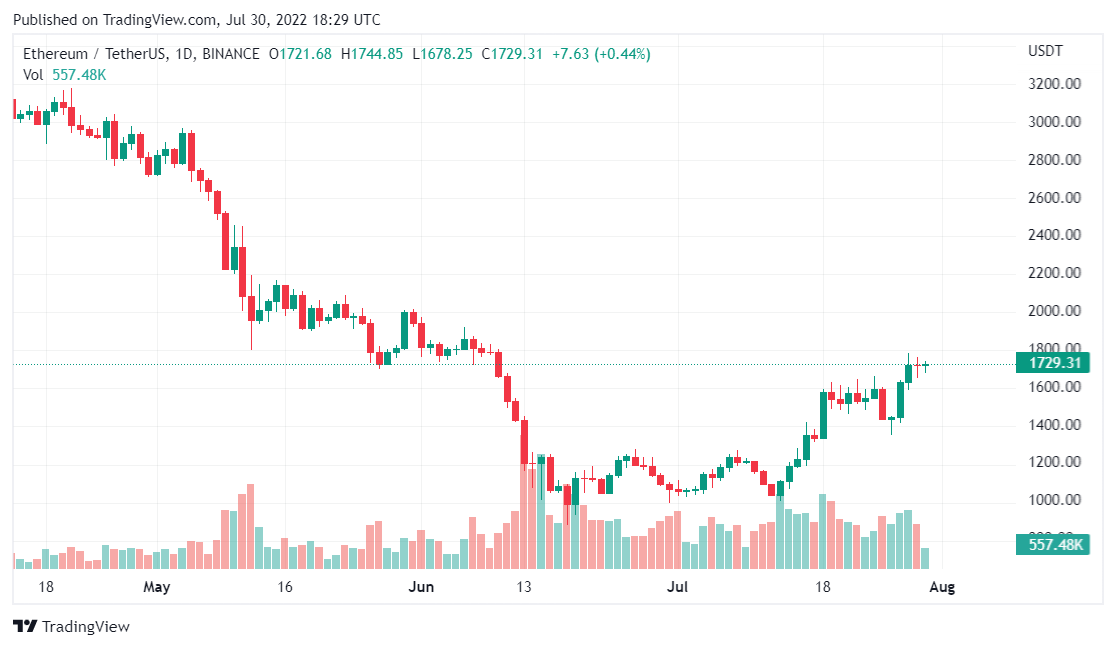
The announcement also brought another price surge for ETH as it gained by 15% on July 28 to sell at $1,667 during the morning hours of the Asian trading session. This position shows a 47% increase over two weeks, even though it has yet to reach its 2021 highest price point.


Lecturas Relacionadas

Gate Research Institute: Las salidas de ETF reprimen la preferencia por el riesgo, el sistema bidireccional supera los mercados débiles

**Resumen de la investigación de Gate sobre mayo: los flujos de ETF presionan la aversión al riesgo, un sistema bidireccional supera al mercado débil** En mayo, el mercado cripto pasó de una subida inicial a un retroceso y consolidación de baja volatilidad. BTC, ETH y SOL alcanzaron máximos a principios de mes antes de corregirse. La estrategia de ruptura de clúster de medias móviles **bidireccional** (4H, basada en EMA6-24 y SMA6-24) fue la más efectiva, con un rendimiento del +2,11% para una cartera equitativa, superando al buy-and-hold (-6,09%) y a la estrategia solo larga (-3,65%). Las ganancias provinieron principalmente de las fases bajistas en ETH y SOL, validando que el mercado era más apto para trading de tendencia en ambas direcciones. La estructura del mercado mostró una divergencia clave: la liquidez subyacente (stablecoins, TVL en DeFi) se mantuvo, pero la demanda en ETFs spot de BTC y ETH se debilitó, con flujos netos de salida consecutivos. Mientras, el volumen de derivados (perpetuos) dominó el descubrimiento de precios. Este entorno, junto con una alta correlación con el S&P 500 (~0,6), hizo que las rupturas alcistas fallaran a menudo, convirtiéndose en "trampas". El marco disciplinado de la estrategia demostró su valor: se activa tras una compresión del clúster de medias (<2,2%), permite señales largas o cortas, gestiona el ruido con una salida en EMA12, limita pérdidas con un stop loss del 2,5% y captura tendencias con un take profit de 3R (7,5%). Este enfoque sistemático superó al juicio subjetivo y la simple persecución de rallies en un mes de baja tasa de aciertos pero alto ratio beneficio/pérdida. Para junio, se recomienda mantener el sistema bidireccional, utilizando a BTC como filtro del estado general del mercado y dando mayor peso a las señales cortas si el activo se mantiene en zona débil. Es crucial monitorizar los flujos de ETFs, la relación con el mercado de valores (especialmente acciones tecnológicas) y los indicadores de fuerza spot para ponderar adecuadamente las señales. La disciplina en la gestión de riesgo (tamaño de posición, stops) sigue siendo prioritaria.

marsbitHace 2 min(s)

Gate Research Institute: Las salidas de ETF reprimen la preferencia por el riesgo, el sistema bidireccional supera los mercados débiles

marsbitHace 2 min(s)

Trading

Spot
Futuros
活动图片