JustLend DAO's Second JST Buyback and Burn: Cumulative 10.96% of Total Supply Destroyed, Accelerating Entry into a New Era of Value Growth

marsbitPublicado a 2026-01-16Actualizado a 2026-01-16

Resumen

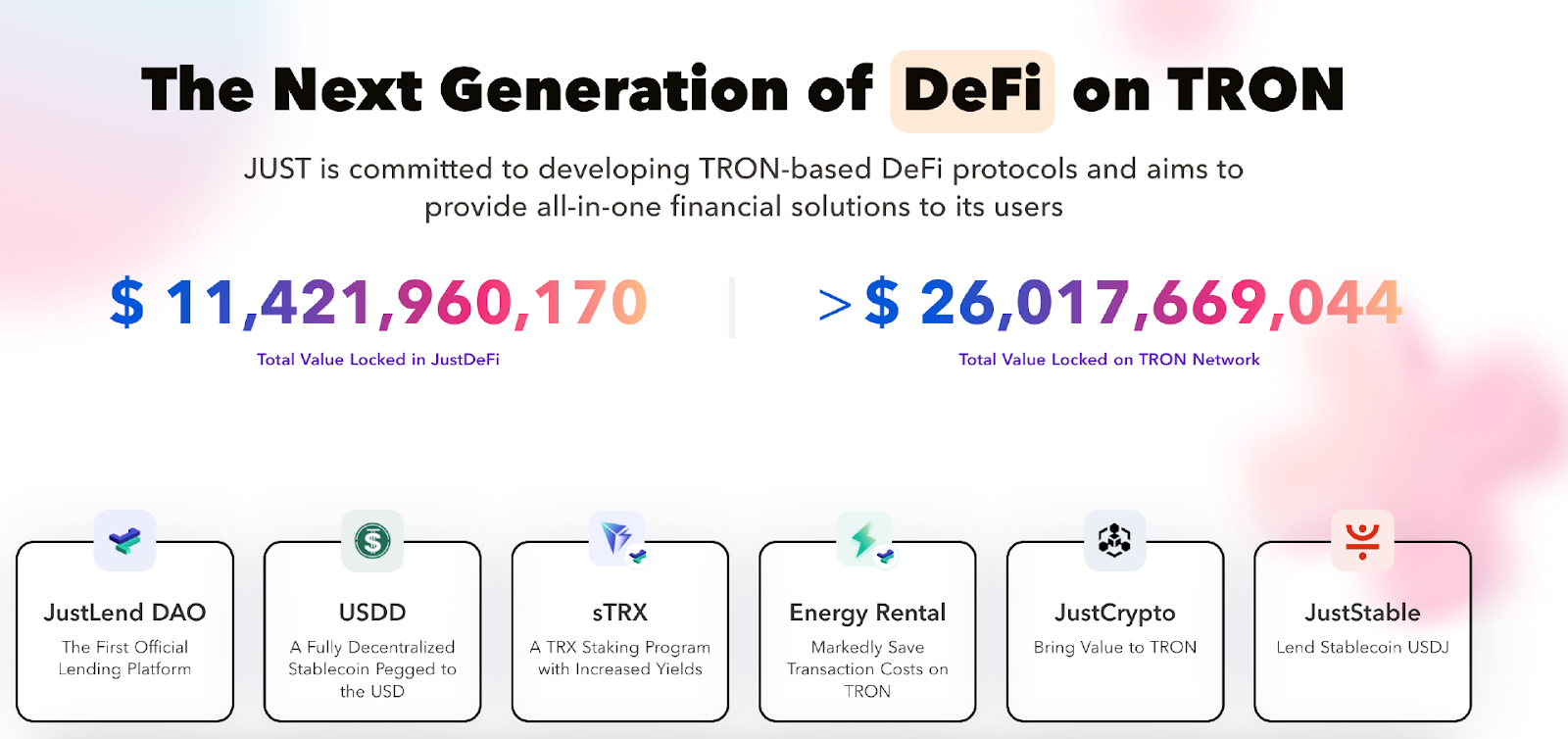
JustLend DAO has executed its second major JST token buyback and burn, permanently removing 525 million JST (5.3% of total supply) from circulation. This brings the cumulative burned amount to over 1.08 billion JST, representing 10.96% of the total supply, significantly accelerating JST’s deflationary trajectory. The burn was funded by $10.19 million from Q4 2025 net profits and $10.34 million from accumulated reserve earnings, demonstrating the protocol’s strong financial health and sustainable revenue model. Key drivers include JustLend’s TVL surpassing $7.08 billion, robust growth in sTRX staking (over 9.3 billion TRX staked), and widespread adoption of GasFree smart wallets, which have facilitated over $46 billion in transactions and saved users $36.25 million in fees. Additionally, USDD’s multi-chain ecosystem reached a milestone with TVL exceeding $1 billion, further supporting JST’s value accrual mechanism. This burn reinforces JST’s transition from a governance token to a yield-backed asset tied to ecosystem cash flow. Market response has been positive, with JST’s market cap breaking $400 million and trading volume rising 21.92% amid a 10.82% monthly price increase. The recurring burn mechanism establishes a deflationary model that enhances scarcity, governance weight per token, and long-term value alignment with holders, setting a new standard for sustainable tokenomics in DeFi.

JustLend DAO Launches Second Round of Buyback and Burn: 525 Million JST Permanently Destroyed, Deflation Engine Continues to Accelerate

525 Million JST Burn Executed! JustLend DAO's Deflation Mechanism Fulfilled Again

Summary: Profit returns and transparent burns form a closed loop for JST value growth, providing a new paradigm for the DeFi market driven by real yield for token value.

January 15, 2026 - The JST token has officially completed its second large-scale buyback and burn. This burn action not only demonstrates the project's firm commitment to its deflation mechanism but also, with the scale of 525,000,000 JST burned (5.3% of the total supply), showcases the strong profitability and financial health of the JUST ecosystem to the entire cryptocurrency market.

According to the official JustLend DAO announcement, the estimated value corresponding to this burn exceeds $21 million USD. Combined with the amount from the first JST burn, the cumulative number of JST tokens burned has reached 1,084,890,753, accounting for 10.96% of the total supply. This means that in less than three months, JST has achieved the permanent removal of over one-tenth of its total supply, a remarkable deflation speed.

From a broader perspective, this burn marks a fundamental evolution in JST's value narrative. It is transitioning from a governance token to an equity asset anchored to the growth of the ecosystem's cash flow. This process not only enhances the scarcity and value foundation of the JST token but also provides a clear, traceable, practical path for the decentralized finance sector—one driven by real yield for token value—demonstrating a transparent and sustainable new paradigm for deflation.

Strong JustLend DAO Ecosystem Performance Forms the Financial Cornerstone for Large-Scale Buybacks

Such a large-scale buyback and burn necessarily requires a solid financial foundation as support. The announcement clearly reveals the dual pillars of the funding source: $10,192,875 came from JustLend DAO's net profit in Q4 2025, while another $10,340,249 originated from the project's accumulated retained earnings reserve. These two figures are, in themselves, the most powerful proof of performance. They collectively point to one core fact: the JustLend DAO ecosystem not only possesses strong immediate profitability but also boasts a robust financial structure and sustainable cash flow, which is the solid foundation supporting its commitment to buybacks and its deflation strategy.

A deep dive into JustLend DAO's Q4 2025 performance reveals clear growth trajectories. First, as the flagship lending protocol of the JUST ecosystem, JustLend DAO benefits from the continuous improvement of the TRON infrastructure, with its Total Value Locked (TVL) breaking through the $7.08 billion mark in the fourth quarter, consistently ranking among the top three in the lending market, and the lending activity in its SBM market also climbed to a new cycle high.

It is worth noting that the source of the $10,340,249 in retained earnings, which forms a significant part of this buyback fund, can be traced back to the revenue generated from the reserve capital deposited into the SBM USDT market during the first JST buyback. The增值 process of this capital is itself the most direct proof of the SBM market's strong profitability. It demonstrates JustLend DAO's sophisticated financial operation model: strategically redeploying ecological profits for regenerative use within the protocol, allowing them to continue "self-generating blood," thereby providing an endogenous, sustainable source of funding for subsequent value returns.

On this basis, JustLend DAO's revenue structure shows a trend of diversification. While the traditional lending market, its fundamental business, maintains steady growth, JustLend DAO has innovatively built a product matrix including sTRX (Staked TRX) and Energy Rental, greatly expanding the boundaries and depth of its value capture.

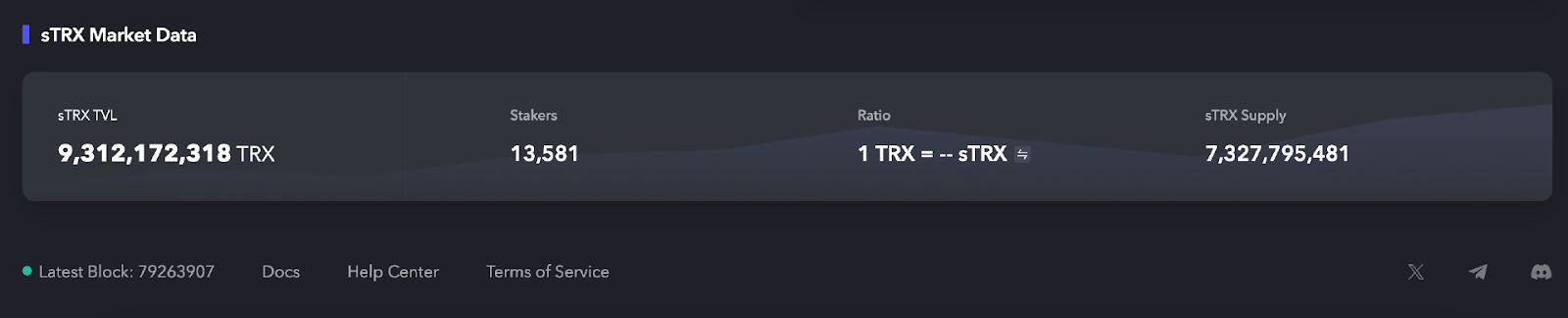
Among these, the sTRX service allows users to stake TRX to earn rewards while still flexibly participating in other DeFi activities. This innovative design significantly improves capital efficiency and user stickiness. As of January 15th, the platform's TRX staking volume has surpassed 9.3 billion tokens. This staggering figure not only reflects the community's high recognition of the sTRX product but also brings considerable and sustainable service revenue.
At the same time, the "Energy Rental" service, designed to reduce user on-chain operation costs, has also demonstrated strong market appeal through active rate optimization. Since September 2025, the base fee rate for this service was significantly reduced from 15% to a more competitive 8%. The fee optimization directly stimulated market demand and transaction frequency, thereby creating steady incremental revenue for the protocol through more active leasing business.

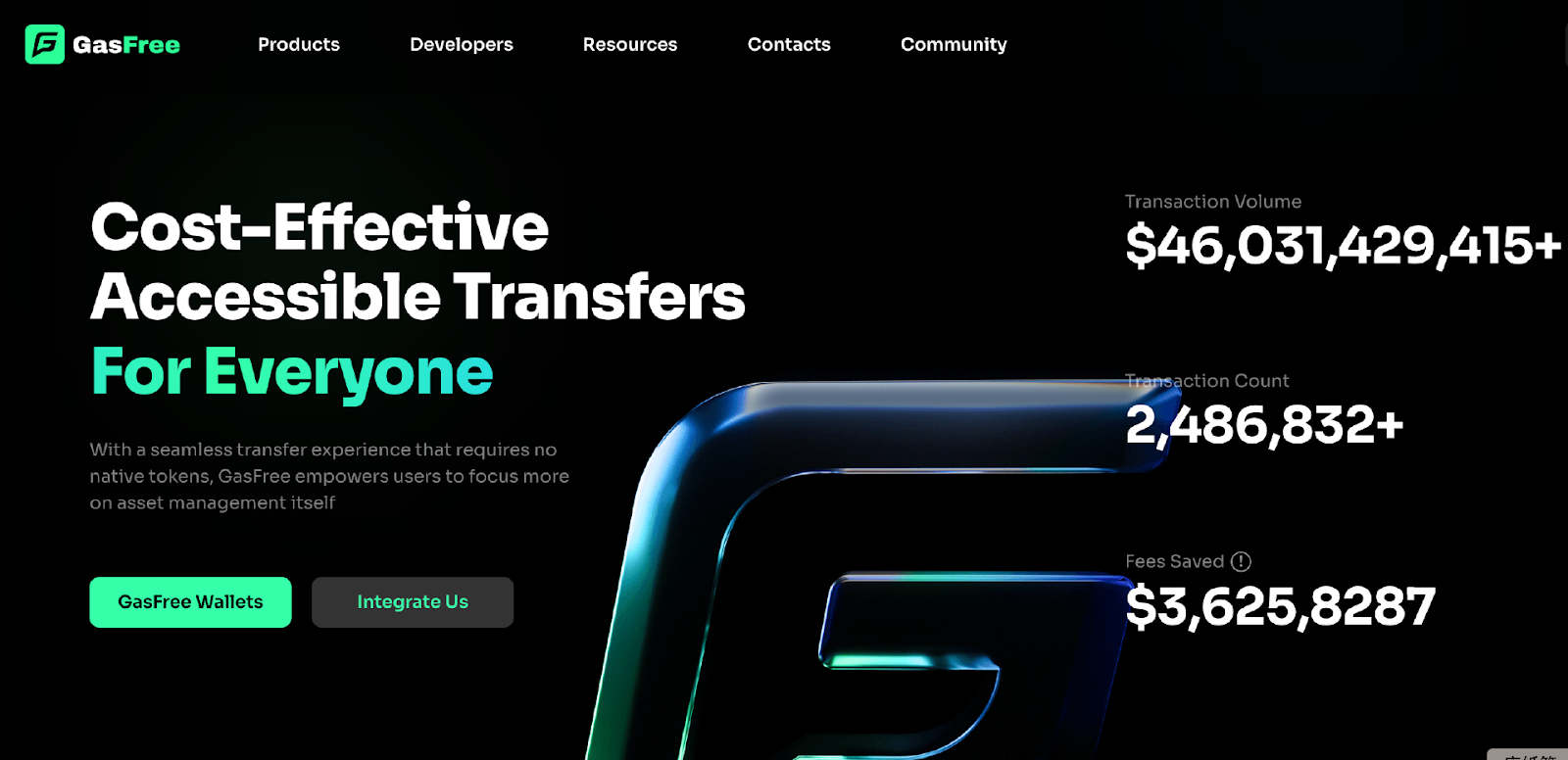
While the core product matrix continues to exert force, JustLend DAO, focusing on lowering the participation barrier for general users, innovatively launched the GasFree smart wallet in March 2025. This feature completely breaks the long-standing barrier for new users of having to pre-hold native tokens (TRX) to pay transaction fees. It allows users to deduct and pay the required network fees directly from the token assets they are transferring (e.g., USDT). This design not only achieves ultimate operational convenience but also fundamentally broadens the accessibility of blockchain finance.

To accelerate the adoption of this innovative feature, JustLend DAO simultaneously launched a highly attractive 90% transfer fee subsidy campaign. With this support, users using the GasFree function for USDT transfers only need to pay an extremely low fee of about 1 USDT. This combined strategy quickly ignited market demand. As of January 15th, the total transaction volume driven by the GasFree smart wallet has surpassed $46 billion. This staggering scale not only validates the market's strong desire for a frictionless transaction experience but also directly saved users a cumulative total of over $36.25 million in network fee costs. This innovation, by significantly reducing actual usage costs and cognitive barriers, has introduced massive incremental users and capital flow into the ecosystem, constituting another strong growth pole for the platform's network effects and revenue potential.
Meanwhile, another funding channel in the buyback and burn plan, the incremental revenue from the USDD multi-chain ecosystem (the portion exceeding $10 million), also constitutes a significant source. USDD, as the core decentralized stablecoin of the TRON ecosystem, has seen fruitful results from its multi-chain expansion strategy. It has been successfully deployed on mainstream public chains like Ethereum and BNB Chain, broadening its application scenarios and user base.

Its ecosystem value recently achieved a milestone breakthrough. On January 14th, USDD's TVL historically broke through the $1 billion mark. This means that in less than two months, USDD's TVL scale achieved an astonishing 100% growth, its expansion speed and market acceptance fully confirming the strong momentum and deep asset appeal of this stablecoin in the multi-chain ecosystem. The rapid growth of its TVL and the continued prosperity of its ecosystem significantly enhance the potential scale of this funding channel, providing an anticipated value source for JST's buyback and burn plans in subsequent quarters.

Through deep integration with various DeFi protocols, USDD not only consolidates its peg stability but also creates continuous value inflow for the entire ecosystem. The inclusion of USDD ecosystem's excess income in the JST buyback and burn plan builds a value closed loop of "stablecoin + lending protocol + governance token". In this model, the expansion and prosperity of USDD and JustLend DAO directly power JST's deflation, while the increase in JST's value in turn enhances the attractiveness and cohesion of the entire TRON DeFi ecosystem, creating a powerful internal synergy and value feedback effect.

Deepening Deflation Mechanism: Revolutionary Reshaping of JST's Value Foundation

In summary, the significance of this buyback and burn extends far beyond mere price support; it is triggering a series of profound structural changes. Most fundamentally, it completes the reshaping of JST's value support logic. JST is no longer merely a "utility token" for paying network fees or participating in governance votes; it has evolved into an "equity asset" directly anchored to the cash flow performance of JustLend DAO, USDD, and associated ecosystems.


Through the buyback and burn mechanism, the profit growth of the ecosystem is continuously injected into the value foundation of the JST token. This makes holding JST equivalent to holding an equity certificate that shares in the future profit growth of the ecosystem. On January 8th, CoinMarketCap data showed that JST market cap historically broke through the $400 million mark. This is not just a numerical leap but substantial market recognition of its new positioning. Along with the rising market cap came increased fund activity. On January 8th, its 24-hour trading volume significantly increased by 21.92%, reaching $31.49 million, and its price had also risen steadily by 10.82% over the past month, with a daily increase of 3.1%.

The synchronous expansion of trading volume and market cap at key junctures is not accidental market fluctuation but a clear "vote of confidence" from capital in response to the positive fundamentals of the JUST ecosystem, particularly the profitability and value return mechanism demonstrated by the buyback and burn.

Secondly, the JST buyback and burn also brings substantial增值 in governance power. As the total token supply is irreversibly reduced, the governance weight in the protocol represented by each remaining JST in the market will increase accordingly. This means long-term holders not only enjoy the economic benefits of value appreciation but also see their voice in key community decisions (such as parameter adjustments, new product launches, treasury fund usage, etc.) amplified simultaneously. This design deeply binds the interests of core community members to the long-term success of the protocol, greatly enhancing community stability and sense of participation.

From a broader industry perspective, JST's buyback and burn practice provides a clear, referable new paradigm for token economics in the DeFi field. Removing 10.96% of the total supply through two burns in a very short time not only demonstrates efficient execution but, more profoundly, deeply binds the protocol's financial success to the interests of token holders, thereby setting a benchmark for a virtuous cycle of "value creation - value return".

This model fundamentally shifts the old logic of token value relying on speculative narratives towards a sustainable path driven by the protocol's fundamental cash flow, providing a solid and credible case study for the industry on how to build economic models with substantial value support.

Looking ahead, with quarterly JST buyback and burn becoming the norm, a clear, predictable deflation path has been laid out. The scarcity of JST will be a certain narrative that strengthens over time. Each quarterly report disclosure and the subsequent burn will serve as a catalyst for reassessing its intrinsic value. This burn is not an endpoint but the beginning of a more magnificent chapter of value accumulation. A value revolution, supported by ecological profits and driven by product synergy, has already pressed the accelerator.


Preguntas relacionadas

QWhat was the total amount of JST tokens burned in the second round of JustLend DAO's buyback and burn, and what percentage of the total supply does this represent?

A525,000,000 JST tokens were burned in the second round, representing 5.3% of the total supply.

QWhat are the two main sources of funding for the JST buyback and burn initiative as detailed in the announcement?

AThe two main sources are $10,192,875 from JustLend DAO's net profit in Q4 2025 and $10,340,249 from the project's accumulated reserve earnings.

QWhat significant milestone did the Total Value Locked (TVL) of JustLend DAO achieve in the fourth quarter of 2025?

AJustLend DAO's Total Value Locked (TVL) surpassed $7.08 billion in Q4 2025.

QWhat is the name of the innovative, gas-free smart wallet feature launched by JustLend DAO, and what was the total transaction volume it facilitated by January 15th?

AThe feature is called the GasFree smart wallet, and it had facilitated a total transaction volume exceeding $46 billion by January 15th.

QWhat major milestone did the USDD ecosystem achieve on January 14th, and what does this signify for its growth?

AOn January 14th, the USDD ecosystem's TVL historically broke through the $1 billion mark, signifying a 100% growth in less than two months and demonstrating its rapid expansion and market adoption.

Lecturas Relacionadas

¿Podrían las opciones llevar a SpaceX a ser la empresa más valiosa del mundo, con SPCX subiendo a 400 dólares?

TL;DR ZeroHedge, un influyente y agresivo medio financiero, ha planteado la posibilidad de que la apertura de opciones de SPCX, la acción de SpaceX, pueda desencadenar una "gamma squeeze" extrema, impulsando hipotéticamente el precio hasta los 400 dólares. Esto supondría una capitalización de mercado cercana a los 5,2 billones de dólares, acercándose a NVIDIA. El argumento se basa en dos factores clave: la baja flotación inicial de acciones en circulación, que hace que el precio sea muy sensible a la compra minorista concentrada, y el próximo inicio de la negociación de opciones. Los contratos de opciones de compra (call) baratos y con precios de ejercicio por encima del mercado ("out-of-the-money") podrían atraer una gran demanda especulativa minorista. Para cubrirse del riesgo al vender estas opciones, los creadores de mercado se verían obligados a comprar acciones subyacentes, lo que podría crear un ciclo de retroalimentación positiva que impulse el precio al alza. Sin embargo, el artículo subraya que este escenario de 400 dólares es extremo y especulativo. Los datos de VandaTrack muestran una concentración de compra minorista en SPCX, pero no una euforia generalizada en el mercado. Para que la tesis de la "gamma squeeze" se valide, será necesario observar la distribución real del volumen y las posiciones abiertas en la cadena de opciones, especialmente en los calls con precios de ejercicio elevados, así como la evolución de la volatilidad implícita y la capacidad del mercado para absorber ventas en el precio de la acción. En resumen, aunque las condiciones estructurales (baja flotación, narrativa atractiva, apertura de opciones) permiten un escenario de alta volatilidad alcista a corto plazo, el objetivo de 400 dólares depende de que se materialice un mecanismo específico y extremo de opciones que aún no ha comenzado. La atención debe centrarse en los datos reales del mercado de derivados en los próximos días.

marsbitHace 6 min(s)

¿Podrían las opciones llevar a SpaceX a ser la empresa más valiosa del mundo, con SPCX subiendo a 400 dólares?

marsbitHace 6 min(s)

Xpeng y Nio compiten por potencia de cálculo, Li Auto cambia de arquitectura

En un evento del 15 de junio, Li Auto presentó su chip de conducción autónoma autodesarrollado Mahe M100 para el nuevo L9 Livis, enfatizando la innovación en arquitectura por sobre la potencia bruta de cálculo (TOPS). Mientras que competidores como NIO, Xpeng y Huawei destacan sus cifras de TOPS, Li Auto apuesta por un cambio fundamental: una arquitectura de flujo de datos dinámico que optimiza el procesamiento de modelos de IA, reduciendo la latencia y mejorando la eficiencia. El chip Mahe M100, cuyo diseño fue presentado en la conferencia ISCA 2026, promete hasta tres veces más potencia efectiva que el Nvidia Thor U en cargas de trabajo específicas de Li Auto, gracias a su co-diseño con el modelo de IA VLA2.1. Sin embargo, esta ventaja está ligada a sus algoritmos propietarios, lo que implica un alto costo de cambio si se modifica la ruta tecnológica. Li Auto también introdujo su visión de "vehículo de inteligencia encarnada", definiendo el coche como un sistema integral que combina transporte, asistencia y capacidad de aprendizaje. La compañía se comprometió a equiparar su sistema de conducción autónoma, Mahe VLA, con el Tesla FSD V14 en el cuarto trimestre, con actualizaciones mensuales concretas que mejorarán capacidades como el estacionamiento autónomo y los tiempos de reacción. A pesar de los desafíos financieros, con un margen decreciente en 2025 y un objetivo de ventas de 550,000 unidades para 2026, Li Auto mantiene una fuerte inversión en I+D, enfocándose en la integración vertical de hardware y software. Los próximos lanzamientos de productos y actualizaciones de software en el tercer trimestre serán cruciales para validar su estrategia en el competitivo mercado de vehículos eléctricos.

marsbitHace 48 min(s)

Xpeng y Nio compiten por potencia de cálculo, Li Auto cambia de arquitectura

marsbitHace 48 min(s)

Año Uno de las Aplicaciones de IA: ¿Solo sabe decir "sí", ignorando los riesgos? El cuaderno de bitácora del desarrollo de software se abre por completo

El año de la IA aplicada: ¿Solo "sí" y sin considerar riesgos? El diario de navegación del desarrollo de software se abre por completo. El rápido aumento del uso de IA para generar código, con menos supervisión, introduce riesgos ocultos en código aparentemente correcto, lo que puede provocar pérdidas de datos o activos. El proyecto de código abierto **Narwhal AI Code Risks**, de Narwhal-Lab (Universidad de Pekín), recopila casos reales, señales tempranas y rutas de riesgo típicas para ayudar a los desarrolladores a identificar peligros. Un ejemplo claro es el incidente de configuración del oráculo cbETH de Moonwell, donde un error semántico en un precio (1.12 USD en lugar de ~2200 USD) pasó todas las revisiones y causó una pérdida de ~1.78 millones de dólares. El riesgo no siempre se muestra con errores; a menudo, el código funciona pero su semántica es errónea. La IA ya no solo completa código, sino que modifica configuraciones, gestiona dependencias y actúa mediante agentes, creando cadenas de acciones más largas y difíciles de rastrear. Los riesgos se clasifican en 7 categorías: cadena de suministro, vulnerabilidades a nivel de código, configuración de nube/infraestructura, riesgos de agentes, riesgos en dominios verticales, propiedad intelectual/cumplimiento y factores humanos. El proyecto organiza la información en tres niveles: `cases/` (eventos reales verificados), `inferred/` (señales tempranas por confirmar) y `scenarios/` (patrones de riesgo claros). Su objetivo es convertir casos de riesgo en conocimiento reutilizable para que desarrolladores, investigadores y fabricantes de herramientas puedan detectar y prevenir problemas similares, creando un registro de navegación abierto para la era del desarrollo con IA.

marsbitHace 49 min(s)

Año Uno de las Aplicaciones de IA: ¿Solo sabe decir "sí", ignorando los riesgos? El cuaderno de bitácora del desarrollo de software se abre por completo

marsbitHace 49 min(s)

La base de la valoración billonaria de SpaceX: ¿Quién se reparte los miles de millones de gastos de capital anuales de Musk?

SpaceX, valorado en un billón de dólares, genera una cadena de suministro emergente que distribuye sus enormes gastos anuales de capital. Su negocio se divide en Starlink (que genera ingresos), cohetes (que reducen costes de lanzamiento) y centros de datos de IA en órbata. Este ciclo supone cientos de miles de millones en órdenes de compra para proveedores. Los proveedores se clasifican en tres grupos. Primero, los insustituibles a corto plazo: NVIDIA (GPUs para superordenadores), Eutelsat (espectro de radiofrecuencia), Filtronic (amplificadores de señal), Materion (berilio) y STMicroelectronics (chips para antenas). Segundo, aquellos cuyo reemplazo sería muy costoso: Honeywell (control de vuelo), Carpenter Technology (aleaciones especiales), Hexcel (fibra de carbono) y Broadcom/Linde (conmutación de datos/gases industriales). Tercero, proveedores de fabricación en masa a bajo coste, como Wistron NeWeb (ensamblaje de terminales) y varias empresas chinas (por ejemplo, Sunway Communication, Paixin New Materials) que suministran componentes clave. La oportunidad surge ahora porque el volumen de compras está creciendo, la transparencia aumenta tras la OPV y la cadena de suministro está en una fase temprana, comparable a la de Tesla en 2018. En lugar de invertir directamente en SpaceX, el artículo sugiere analizar a sus proveedores, cuyos ingresos están vinculados a pedidos concretos, no a la volatilidad de la acción. Se advierte de riesgos como ciclos de materias primas, geopolítica o cambios tecnológicos.

marsbitHace 1 hora(s)

La base de la valoración billonaria de SpaceX: ¿Quién se reparte los miles de millones de gastos de capital anuales de Musk?

marsbitHace 1 hora(s)

La base de la valoración de un billón de dólares de SpaceX: ¿Quién se está repartiendo los gastos de capital anuales de 100.000 millones de Musk?

SpaceX acaba de cotizar en bolsa con una valoración de un billón de dólares, pero su base real reside en su cadena de suministro. El artículo argumenta que, al igual que ocurrió con las cadenas de suministro de Apple, Tesla y Nvidia, los verdaderos beneficiarios de la revolución de SpaceX serán sus proveedores, quienes se repartirán sus enormes gastos de capital anuales. SpaceX genera un ciclo de negocio donde Starlink (con 113 mil millones de USD en ingresos en 2023) financia el desarrollo de cohetes (como Starship) y la infraestructura de IA. Este ciclo genera cientos de miles de millones en pedidos de compra para proveedores, clasificados en tres categorías: 1. **Irreemplazables a corto plazo:** Incluyen a **NVIDIA** (GPU para el superordenador Colossus), **Eutelsat (SATS)** (espectro de radiofrecuencia crucial), **Filtronic (FTC)** (amplificadores de ondas milimétricas para satélites), **Materion (MTRN)** (único productor integrado de berilio) y **STMicroelectronics (STM)** (chips para antenas de fase). 2. **Reemplazables, pero con un coste muy alto:** Empresas con una certificación y una integración profundamente arraigadas, como **Honeywell (HON)** (sistemas de guiado), **Carpenter Technology (CRS)** (aleaciones para motores), **Hexcel (HXL)** (fibra de carbono) y **Broadcom (AVGO)** (interconexión de datos). 3. **Proveedores de fabricación a gran escala y bajo coste:** Esenciales para productos masivos como los terminales Starlink (objetivo: 3000 millones de unidades). Aquí destacan **Wistron NeWeb (6285)** como principal ensamblador, y empresas chinas como **Xinwei Communication (300136), Paide New Materials (605123), Western Metal Materials (002149)** y **Yingliu Co., Ltd. (603308)**, que suministran componentes críticos. La tesis principal es que el crecimiento de SpaceX acaba de comenzar (con planes de 100 lanzamientos en 2026), la transparencia aumenta tras la OPV y su etapa actual se asemeja a la de Tesla en 2018, marcando el inicio de una oportunidad de inversión en su cadena de suministro, independientemente de la volatilidad de su acción. El artículo concluye sugiriendo observar a estos "proveedores silenciosos" que recibirán los pedidos recurrentes de SpaceX.

链捕手Hace 1 hora(s)

La base de la valoración de un billón de dólares de SpaceX: ¿Quién se está repartiendo los gastos de capital anuales de 100.000 millones de Musk?

链捕手Hace 1 hora(s)

Trading

Spot
Futuros

Artículos destacados

Cómo comprar DAO

¡Bienvenido a HTX.com! Hemos hecho que comprar DAO Maker (DAO) sea simple y conveniente. Sigue nuestra guía paso a paso para iniciar tu viaje de criptos.Paso 1: crea tu cuenta HTXUtiliza tu correo electrónico o número de teléfono para registrarte y obtener una cuenta gratuita en HTX. Experimenta un proceso de registro sin complicaciones y desbloquea todas las funciones.Obtener mi cuentaPaso 2: ve a Comprar cripto y elige tu método de pagoTarjeta de crédito/débito: usa tu Visa o Mastercard para comprar DAO Maker (DAO) al instante.Saldo: utiliza fondos del saldo de tu cuenta HTX para tradear sin problemas.Terceros: hemos agregado métodos de pago populares como Google Pay y Apple Pay para mejorar la comodidad.P2P: tradear directamente con otros usuarios en HTX.Over-the-Counter (OTC): ofrecemos servicios personalizados y tipos de cambio competitivos para los traders.Paso 3: guarda tu DAO Maker (DAO)Después de comprar tu DAO Maker (DAO), guárdalo en tu cuenta HTX. Alternativamente, puedes enviarlo a otro lugar mediante transferencia blockchain o utilizarlo para tradear otras criptomonedas.Paso 4: tradear DAO Maker (DAO)Tradear fácilmente con DAO Maker (DAO) en HTX's mercado spot. Simplemente accede a tu cuenta, selecciona tu par de trading, ejecuta tus trades y monitorea en tiempo real. Ofrecemos una experiencia fácil de usar tanto para principiantes como para traders experimentados.

326 Vistas totalesPublicado en 2024.12.11Actualizado en 2026.06.02

Cómo comprar DAO

Discusiones

Bienvenido a la comunidad de HTX. Aquí puedes mantenerte informado sobre los últimos desarrollos de la plataforma y acceder a análisis profesionales del mercado. A continuación se presentan las opiniones de los usuarios sobre el precio de DAO (DAO).

活动图片