Tesla announced a massive reduction in bitcoin holdings on Wednesday night, which seems to show that Musk is giving up his belief in bitcoin? But Tesla’s position on Dogecoin remains unchanged which indicates that this dump may respond to Chinna‘s Covid regulation.
Other analysts argue that a Tesla sale would relieve the potential disruption Musk may cause to the crypto ecosystem and be more conducive to the long-term development of the industry.
1. Tesla dumped 75% of its Bitcoin holdings
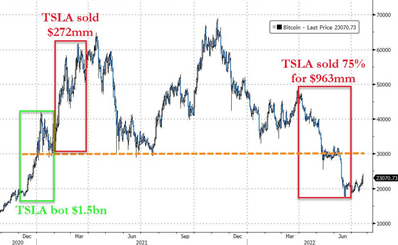
Tesla’s Q2 financial report shows that the company reduced its bitcoin holdings by 75% to about $30,000, which added nearly $1 billion cash to its balance sheet.
On the earnings conference call, Elon Musk stressed that this move is a pre-judgment of the uncertain impact of the external environment and did not represent Tesla's forecast on the price of Bitcoin. He also insisted that Tesla may increase its position on cryptocurrencies in the future.
2. Why did Tesla sell its bitcoin?
Tesla had announced a 10% layoff plan for its regular employees and closed an office in Silicon Valley in last month. This year, due to the closure of Shanghai factory, Tesla’s did tremendous job to keep a health cash flow. Selling bitcoins in a bad market environment is a good move to hedge risks.
Since the beginning of this year, Tesla's short-term solvency has deteriorated, with its quick ratio and current ratio hitting a quiet low position for few years. In addition, due to the shutdown of the Shanghai factory, the demand for working capital has continued to increase, and the company's solvency is being tested.
So far, Tesla has withdrawn about 123.5 million US dollars from Bitcoin, and has not fully refunded for its inverstment (150 million US dollars). This large-scale withdrawal of Bitcoin should be interpreted as a helpless move.
From another perspective, Elon Musk is still in the lawsuit trouble with Twitter. Selling Bitcoin can alleviate the market’s worries about Tesla’s stock price, which will provide more financial support for the upcoming lawsuit.
3. Will Tesla's move sabotage Bitcoin's upward trend?
While the market appears to have pulled back slightly over the past ten hours, Bitcoin quickly stabilize after aborbing this news.
Tesla's dump may not necessarily be a bad thing for the BTC. If we use logic like: "Pendulum Effect", this rebound of BTC may not have seen the peaked.
We may still need to pay attention to the final decision of the market who will decide the market will choose "bounce"or "reversal"?
Appendix. Musk's Web3.0 journey
In 2002, Musk sold PayPal, and this start-up experience gave him a deeper understanding of the monetary system.
In February 2019, Musk tweeted that Bitcoin is well structured. This paved the way for Tesla’s $1.5 billion purchase of Bitcoin in January 2021.
On February 8, 2021, Tesla announced that it would begin accepting Bitcoin as a form of payment to its cars.
But in its Q1 2021 report, Tesla announced it had sale of $272 million in bitcoin.
In May of the same year, Tesla called a halt to Bitcoin as a means of payment, citied his concerns about "the rapid increase in the use of fossil fuels for Bitcoin mining."
In the 2022 Q2 earnings report, Tesla announced the sale of $963 million in Bitcoin to meet the funding needs of the unexpected environment. He also mentioned that Tesla did not sell Dogecoin.