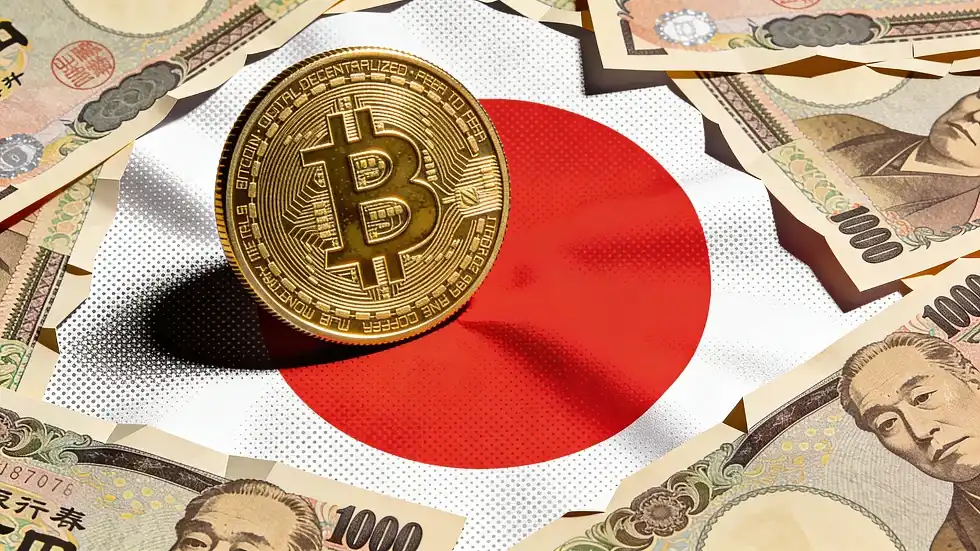
[Key interpretation] BTC has hit the cost price of long-term investors of $20239. What will happen next?

Huobi ResearchPublicado a 2022-07-11Actualizado a 2022-07-12

Resumen

Is BTC's trading volume amplified by 20 times in just 30 minutes a signal of bull counterattack?

1、 BTC volume fallback

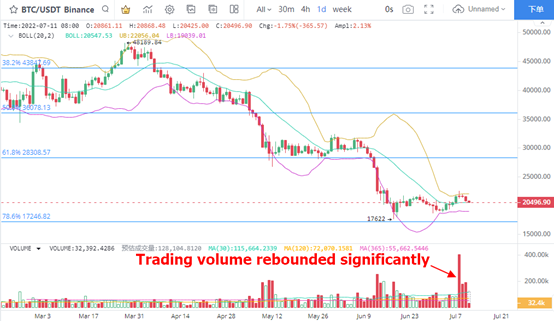
In the daily K-line chart of BTC, the rising and falling signal reappears, and the trading volume is significantly enlarged during this price fall.

On July 8, the trading volume reached 1.58 times of the recent peak, indicating that the high turnover performance of BTC has not ended. The record high peak trading volume means that the turnover rate has reached a higher level, making investors' holding costs more consistent. As a result, BTC will confirm important bottom signals in the performance of more trading volume.

However, the short-term trading volume of BTC is excessively enlarged, and the long and short competition of positive BTC is still quite fierce. The intensification of long and short competition in low-cost areas means that the signs of bottoming are not clear, and there is still a greater opportunity for the market to fluctuate repeatedly. In the short term, we cannot rule out the emergence of a relatively volatile market. In the near future, it is more likely that BTC will withdraw to the corresponding $19033 of brin line off track.
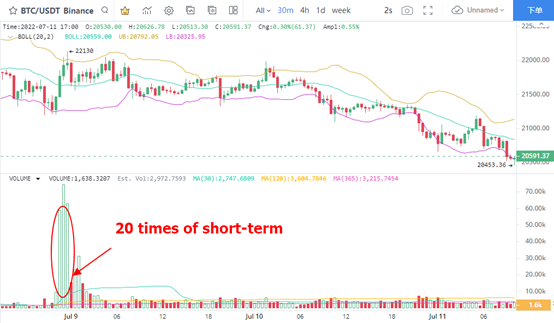
The basis for the daily K-line volume is the 20 times of the volume of BTC on July 8. The main force quickly increased in large quantities in the 30 minute K-line chart, and BTC rose. Although the BTC price finally rose and fell, the main trading intention is clear, and the further operation of bulls is worthy of attention.
2. Investors' cost of holding money has changed significantly

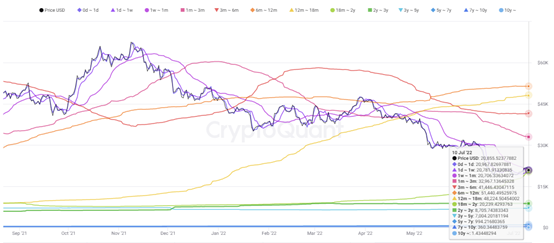
With the intensification of the volatility of BTC in a small price range, the cost price of currency held by different investors changes greatly.

From the change of short-term and long-term investors' holding money, the cost price of investors who hold money for a period of 1 week to 1 month fell to $20706. The cost price of investors with a holding period of 18 to 24 months rebounded to $20239. As the cost prices of short-term and long-term investors meet in the price range of $20000 to $21000, the market is on the verge of change. After 18 to 24 months of significant recovery in the cost price of investors, their holding cost is very close to the current price. Therefore, from the perspective of selling intention, the number of short-term BTC sales may decrease, which is beneficial to the stabilization of BTC price. The disadvantage is that BTC changes hands quickly, and the stability of investors' holdings in the short term is questionable.
3. The number of BTC giant whale addresses decreased

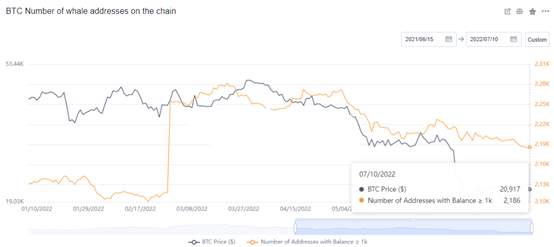
The number of BTC giant whale addresses showed signs of continuous decline. Although the decline trend was slow, it showed that the enthusiasm of the main force for holding coins continued to weaken. The number of giant whale addresses peaked at 2282 on March 21, and fell to 2186 on July 10, a decrease of 96. According to the calculation of more than 1000 BTCs held at each Jujing address, as many as 96000 BTCs have been transferred from Jujing. Generally speaking, the decline in the number of megawhale addresses indicates that BTC chips are loose, and more small and medium-sized investors hold BTC, so the price is unlikely to rise significantly in the short term.
4. Eth shrinkage fallback

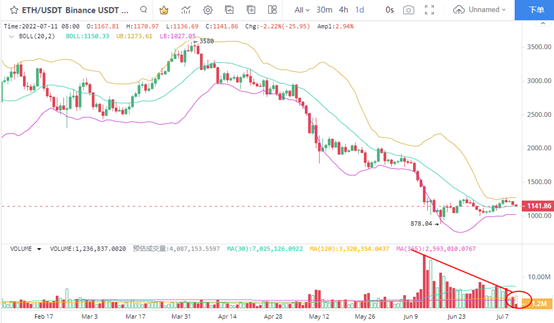
In the daily K-line chart of eth, with the short-term decline of eth, the adjustment performance reappears. The difference is that there was no volume signal during the price retreat of eth, indicating that after the trading heat cooled, the selling pressure decreased accordingly. This eth drawdown stage is the most important trading volume contraction performance. When the trading volume is close to falling below the equivalent line, the price may still rebound around $1000.

Therefore, while paying attention to the volatility intensity of eth, if the market heat remains the status quo, you can pay attention to the low buying point of $1000.
5. Eth estimated high leverage operation

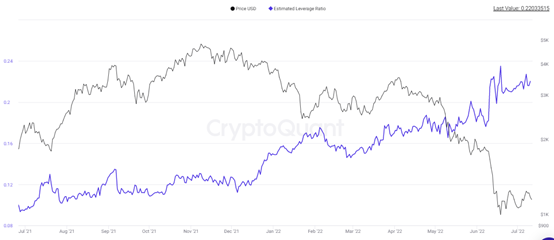
Recently, the estimated leverage ratio of eth has obviously been at a high level. This shows that when the price of eth is below $1300, investors make full use of leveraged trading eth. In terms of market conditions, ETH has little room for fluctuation under the premise of high leverage, and the intraday amplitude remains at a low level. The fluctuation intensity on most trading days is less than 10%. In terms of leverage ratio, the leverage ratio reached 0.22 on July 10, which was a high level in one month.

Compared with investors' eth reserves, investors' contract leverage ratio is high, which proves that investors' leverage energy is enhanced. When eth is around $1100, high leverage means that volatility is also high. Although the support of $1000 is still valid, it should be noted that after the fluctuation of eth price increases, the area that can be reached is the source of risk for leveraged traders.

Lecturas Relacionadas

¿Por qué está todo el mundo nervioso por la subida de tipos de Japón?

En junio de 2026, el Banco de Japón elevó los tipos de interés al 1%, su primer aumento significativo desde 1995. Aunque esta cifra sigue siendo baja comparada con Estados Unidos o Europa, marca un cambio de rumbo crucial para la economía global. Japón, tras casi tres décadas de tipos cero o negativos, había actuado como el principal centro de financiación barata del mundo. A través del conocido "carry trade del yen", los inversores internacionales tomaban préstamos en yenes de bajo coste para invertir en activos de mayor rendimiento en todo el mundo, impulsando así mercados bursátiles, bonos y bienes inmuebles a nivel global. La decisión del banco central japonés responde a un cambio estructural interno: una inflación sostenida por encima del objetivo del 2%, un crecimiento salarial notable tras décadas de estancamiento, y la presión del yen débil. Sin embargo, la preocupación global no se centra en el nivel del 1%, sino en la tendencia. Si Japón abandona permanentemente su política de dinero ultrabarato, podría desencadenar un proceso de desapalancamiento a escala mundial. Los inversores que dependían de financiación barata en yenes podrían verse forzados a revaluar sus estrategias y reducir riesgo, lo que contraería la liquidez global y afectaría a la valoración de los activos de riesgo. No obstante, la dirección final de los flujos de capital la marcará principalmente la política de la Reserva Federal de EE.UU. Mientras persista un amplio diferencial de tipos entre EE.UU. y Japón, el atractivo del dólar seguirá siendo fuerte. El verdadero punto de inflexión se produciría si la Fed inicia un ciclo de recortes mientras Japón sigue subiendo los tipos. En definitiva, el movimiento del Banco de Japón simboliza el posible fin de una era de financiación ilimitada y barata, lo que obligaría a los mercados globales a redefinir sus lógicas de inversión y riesgo.

marsbitHace 2 hora(s)

¿Por qué está todo el mundo nervioso por la subida de tipos de Japón?

marsbitHace 2 hora(s)

El Congreso Aplaza la Prohibición de la CBDC hasta 2030 mediante una Importante Ley de Reforma de Vivienda

Los legisladores han aprobado un proyecto de ley de reforma de vivienda, la "Ley del Camino a la Vivienda del Siglo XXI", que incluye una prohibición temporal hasta el 31 de diciembre de 2030 para que la Reserva Federal emita un dólar digital (CBDC). La medida, integrada en esta legislación bipartidista más amplia, define el CBDC como un activo digital denominado en dólares y accesible para todos los estadounidenses. Sus defensores argumentan que esta pausa permite más tiempo para evaluar los impactos potenciales, reflejando preocupaciones sobre privacidad, vigilancia financiera y el papel del gobierno en los pagos digitales. La prohibición se aplicaría a cualquier CBDC minorista, ya sea emitida directamente por la Fed o a través de intermediarios, aunque se contemplan excepciones para dólares digitales privados que mantengan un nivel de privacidad comparable al efectivo físico. Aunque el foco del proyecto de ley son las reformas para mejorar la vivienda asequible y la oferta, la cláusula sobre el CBDC ha captado una atención significativa en la comunidad cripto, ya que podría influir en el futuro de los pagos digitales y en el debate sobre el lugar de los activos digitales en el sistema financiero del país. El desarrollo del proceso legislativo determinará si la prohibición entra en vigor durante la próxima década.

TheNewsCryptoHace 2 hora(s)

El Congreso Aplaza la Prohibición de la CBDC hasta 2030 mediante una Importante Ley de Reforma de Vivienda

TheNewsCryptoHace 2 hora(s)

Interpretación de informe: MRVL, el auge de la IA óptica, ¿por qué un analista estrella de Morgan Stanley opta por mantenerse neutral ante la alta valoración?

**Resumen: Análisis de Morgan Stanley sobre Marvell - IA óptica despega, pero la valoración alta frena al analista** El analista Joseph Moore de Morgan Stanley actualizó su informe sobre Marvell (MRVL) el 28 de mayo. A pesar de unos resultados récord y una fuerte mejora en las perspectivas anuales de la dirección, Moore mantiene una calificación **"Equal-Weight" (Neutral)** y un precio objetivo de **$195**. **Motivos para el optimismo (impulsores de la IA):** 1. **Interconexión óptica**: Expectativas de crecimiento para FY27 elevadas a más del 70%. La línea de módulos ópticos podría alcanzar ingresos anualizados de $1,000 millones pronto. 2. **Chips personalizados para IA**: Creciente confianza en el crecimiento para FY28, con un nuevo gran cliente entrando en producción masiva ese año. **Motivo para la cautela (valoración):** El precio objetivo de $195 implica una valoración de ~40x las ganancias esperadas para 2027. Moore señala que, a precios de acción similares (~$198 vs ~$212), **Nvidia** ofrece más del doble de ganancias por acción esperadas para el próximo año fiscal que Marvell. La valoración actual de MRVL ya refleja un crecimiento futuro impecable. **Conclusión del analista:** La oportunidad en IA es real, pero el precio de la acción ya la descuenta. Para justificar la valoración, Marvell necesita ejecutar perfectamente en: 1) el despliegue continuo de óptica, 2) la rampa de producción de sus chips personalizados, y 3) la recuperación de sus negocios de almacenamiento y redes empresariales. Hasta ver más evidencia, se mantiene Neutral.

marsbitHace 3 hora(s)

Interpretación de informe: MRVL, el auge de la IA óptica, ¿por qué un analista estrella de Morgan Stanley opta por mantenerse neutral ante la alta valoración?

marsbitHace 3 hora(s)

Trading

Spot
Futuros
活动图片