This Swiss Boarding School Has Taught Crypto Literacy to Students for 3 Years

ccn.comPublicado a 2025-09-29Actualizado a 2025-09-29

Key Takeaways
  • Aiglon College has taught a compulsory crypto course to its youngest students for three years.
  • The 5-week course introduces the basic concepts of crypto and traditional finance.
  • The Swiss city of Lugano launched its own stablecoin, which allows citizens to pay taxes, fees, and make purchases with it, USDT, or BTC.

In Switzerland, certain academic institutions have recognized the profound role cryptocurrency will play in the future, making crypto education mandatory for students.

For the past three years, one college has been preparing students for the digital future with a compulsory crypto course for its year 7 and 8 students, aged 12 to 13.


New Trending Crypto Wallet Offers
Sponsored
Disclosure
We sometimes use affiliate links in our content, when clicking on those we might receive a commission at no extra cost to you. By using this website you agree to our terms and conditions and privacy policy.

Compulsory Crypto

Switzerland’s affluent academic institutions are known for offering students a world-class education in economics. And Switzerland’s non-profit international boarding school, Aiglon College, has taken an ambitious approach.

In an article co-authored by the college’s assistant head, Jack George, and its director of technology and digital strategy, Darren Wise, explain why.

To begin with, financial literacy is an essential in the 21st century, but the current systems don’t explore deeper concepts such as the “modern meaning” of money and its role in society.

It looks to answer questions such as how banks create more money, why some countries have currency and others don’t, and so on.

The college created a 5-week crypto micro-course, which starts off by giving kids an intro to the history of Bitcoin, its altcoin cousins, and how these tokens are created (minted).

A “Plato’s Cave” Moment

The article notes that students often react with outrage upon discovering that a Bitcoin is created by a computer winning a mathematical problem race.

It’s creating “money from nowhere,” the students will claim. At this point, the teachers redirect them to the traditional financial system.

Suddenly, the students realize they can’t be sure if the money in a banking app has any real backing or why coins have value.

It allows them to begin questioning the idea of money, a concept that is so deeply embedded in us that its workings are easily overlooked.

The article notes it’s a “Plato’s cave” moment.

In addition, Aiglon students are fortunate to live near Lugano, a Swiss city that has established crypto as legal tender.

The initiative that allows citizens to pay taxes or buy goods from shops using Bitcoin, Tether (USDT), and its own local stablecoin, LVGA .


Lecturas Relacionadas

¿Por qué Bitcoin realmente subió tanto? ¿Es suficiente un ciclo de cuatro años? Aquí la opinión de Caitlyn Long

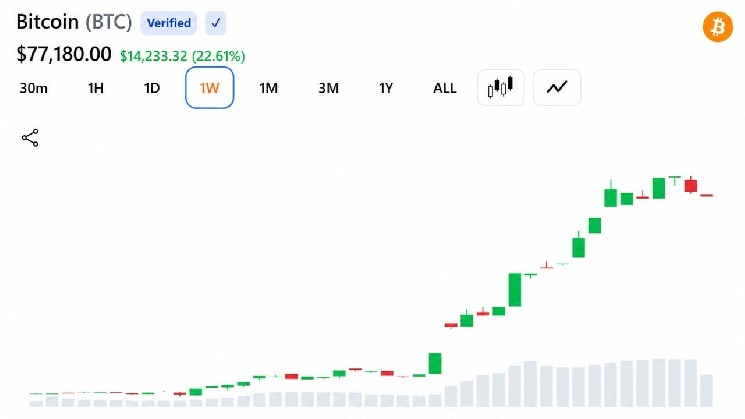
Después del repentino y fuerte repunte de los mercados de criptomonedas, Caitlin Long, fundadora y directora ejecutiva de Custodia Bank, analizó la actividad reciente en el mercado de Bitcoin y en los mercados financieros en general. Long atribuyó el fuerte aumento a razones macroeconómicas y a las acciones del Tesoro de EE. UU., específicamente a su anuncio de más que duplicar las recompras de bonos del Tesoro a largo plazo (a 30 años), lo que describió como una forma de "control de la curva de rendimiento". Este movimiento provocó un cambio abrupto en las tasas de interés y ejerció presión sobre el dólar estadounidense, debilitándolo. Según Long, un dólar más débil tiende a apoyar a los activos de riesgo, lo que impulsó el repunte de las principales criptomonedas como Bitcoin y Ethereum. Respecto al debate sobre si el "ciclo de 4 años" ha terminado, Long sostuvo que los gráficos y los datos fundamentales indican que el ciclo continúa. Explicó que los procesos dinámicos clave en la economía minera no han cambiado, y que la disminución de la rentabilidad y la salida del mercado debido a los altos costos de energía y potencia de cálculo son una parte natural del ciclo. Long se abstuvo de hacer pronósticos de precios, pero señaló que, basándose en experiencias pasadas, Bitcoin parece barato en los niveles actuales.

cryptonews.ruHace 1 hora(s)

¿Por qué Bitcoin realmente subió tanto? ¿Es suficiente un ciclo de cuatro años? Aquí la opinión de Caitlyn Long

cryptonews.ruHace 1 hora(s)

Zcash, Bitcoin Cash y Cardano muestran ganancias, con ZEC liderando el alza del 47%

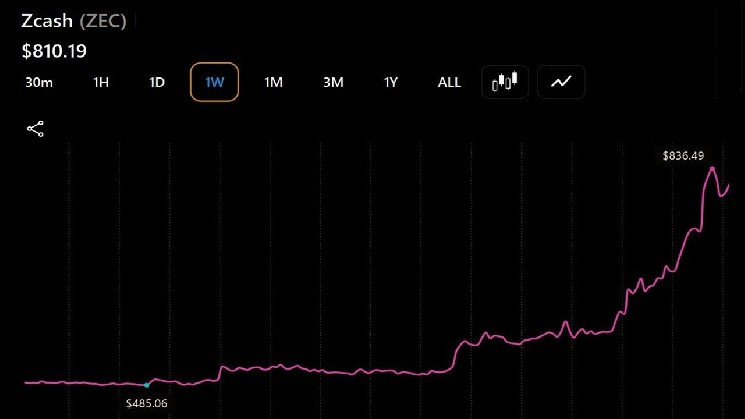
En las últimas 24 horas, varias altcoins han registrado fuertes ganancias, lideradas por Zcash (ZEC) con un impresionante aumento del 47.1% hasta los 836 dólares, antes de estabilizarse alrededor de 810 dólares. Bitcoin Cash (BCH) también subió un 31.4%, mientras que Cardano (ADA) avanzó un 19%. El crecimiento de Zcash se atribuye al interés por activos de privacidad y al esfuerzo de Grayscale por convertir su fondo de inversión en un ETF spot en EE.UU., lo que lo convertiría en el primer ETF de una criptomoneda centrada en la privacidad. El repunte se extendió a otras monedas como Dogecoin (DOGE), Stellar (XLM), Chainlink (LINK) e Hyperliquid (HYPE), lo que sugiere una inyección general de liquidez más que un catalizador específico. Este impulso alcista está respaldado por el renovado entusiasmo del presidente Trump hacia la futura regulación de activos digitales y por medidas del Tesoro de EE.UU. que reducen los rendimientos de los bonos, liberando capital para activos de riesgo. Analistas advierten que estos rápidos repuntes suelen estar acompañados de un alto apalancamiento, lo que podría amplificar futuras correcciones. El volumen de operaciones aumentó significativamente, confirmando la fuerza detrás del movimiento. La atención se centra ahora en el progreso legislativo en las próximas semanas para determinar si el rally puede sostenerse.

cryptonews.ruHace 2 hora(s)

Zcash, Bitcoin Cash y Cardano muestran ganancias, con ZEC liderando el alza del 47%

cryptonews.ruHace 2 hora(s)

Trading

Spot
活动图片